
惯性聚合 高效追踪和阅读你感兴趣的博客、新闻、科技资讯
阅读原文 在惯性聚合中打开

推荐订阅源

V
Vulnerabilities – Threatpost
aimingoo的专栏
aimingoo的专栏
B
Blog
H
Hackread – Cybersecurity News, Data Breaches, AI and More
GbyAI
GbyAI
阮一峰的网络日志
阮一峰的网络日志
Engineering at Meta
Engineering at Meta
IT之家
IT之家
V
Visual Studio Blog
The Cloudflare Blog
酷 壳 – CoolShell
酷 壳 – CoolShell
A
About on SuperTechFans
博客园 - 聂微东
Blog — PlanetScale
Blog — PlanetScale
N
News and Events Feed by Topic
A
Arctic Wolf
WordPress大学
WordPress大学
小众软件
小众软件
C
CERT Recently Published Vulnerability Notes
Threat Intelligence Blog | Flashpoint
D
Darknet – Hacking Tools, Hacker News & Cyber Security
F
Fortinet All Blogs
CTFtime.org: upcoming CTF events
Y
Y Combinator Blog
T
Threat Research - Cisco Blogs
Latest news
Latest news
Simon Willison's Weblog
Cyberwarzone
Cyberwarzone
S
Schneier on Security
让小产品的独立变现更简单 - ezindie.com
L
Lohrmann on Cybersecurity
Stack Overflow Blog
Stack Overflow Blog
钛媒体:引领未来商业与生活新知
钛媒体:引领未来商业与生活新知
P
Privacy International News Feed
J
Java Code Geeks
Spread Privacy
Spread Privacy
宝玉的分享
宝玉的分享
I
Intezer
L
LangChain Blog
Hacker News - Newest:
Hacker News - Newest: "LLM"
G
GRAHAM CLULEY
博客园 - 叶小钗
博客园 - 三生石上(FineUI控件)
The GitHub Blog
The GitHub Blog
奇客Solidot–传递最新科技情报
奇客Solidot–传递最新科技情报
N
News and Events Feed by Topic
AWS News Blog
AWS News Blog
Attack and Defense Labs
Security Archives - TechRepublic
K
KPMG report finds enterprise disconnect between AI and its ROI | CIO

PostHog's RSS Feed

Training our own AI models - PostHog From 270GB RAM to 5GB: Moving local flag evaluation from Django to Rust The best analytics stack for vibe-coded apps The do's and don'ts of minimum viable product marketing - PostHog The best MCP servers for startups, by workflow 4,063 errors closed without a human opening PostHog – here's what we learned - PostHog PostHog Code and the self-driving product - PostHog Why attacking your competitors online is dumb - PostHog The best real-time analytics platforms for developers, compared DuckDB vs ClickHouse: Why we use both at PostHog - PostHog PostHog's next chapter - PostHog Making Claude Cowork actually useful - PostHog PostHog vs Matomo in-depth tool comparison You're doing lifecycle emails wrong Untangling Tokio and Rayon in production: From 2s latency spikes to 94ms flat The best HIPAA-compliant A/B testing tools - PostHog A beginner's guide to testing AI agents - PostHog I hate the standup bot (so I built an agent to do it for me) - PostHog The best CDPs for developers, compared The best error tracking tools for developers, compared The best feature flag software for developers, compared 7 best session replay tools for mobile apps 7 best free open source business intelligence tools right now 7 best free and open source LLM observability tools PostHog vs LogRocket in-depth tool comparison The most popular PostHog alternatives, compared Open source (and self-hosted) session replay tools - PostHog The 9 best GA4 alternatives for apps and websites - PostHog PostHog vs Google Analytics 4 in-depth tool comparison How we built automatic clustering for LLM traces - PostHog The 7 best HIPAA-compliant analytics tools 8 best open source analytics tools you can self-host - PostHog The best product analytics tools for startups, compared PostHog vs FullStory in-depth tool comparison The best in-app survey tools for product teams, compared The 7 best mobile app analytics tools PostHog vs Hotjar in-depth tool comparison The 8 best free and open-source feature flag services - PostHog The 5 best free and open-source A/B testing tools - PostHog The best mobile app A/B testing tools, compared What is a feature flag? Feature Flags vs Remote Config vs A/B Testing PostHog is now available in Vercel’s v0 The best Heap alternatives & competitors, compared PostHog vs Heap in-depth tool comparison PostHog vs Pendo in-depth tool comparison PostHog × Vercel: feature flags, minus the plumbing Your logs' final destination is in GA. You always end up here anyway Behind the scenes of a PostHog hackathon - PostHog The most popular Mixpanel alternatives & competitors, compared PostHog vs Mixpanel in-depth tool comparison The 9 best GDPR-compliant analytics tools How we use Logs at PostHog The best web analytics tools for developers, compared Stop AI slop: Run evals with LLM-as-a-Judge - PostHog You product data just got a job: Workflows is now out App onboarding: How to fix drop-off points Meet Logs (beta) – logs with all the tools you’re already using Why small teams crush tiger teams How we built user behavior analysis with multi-modal LLMs (in 5 not-so-easy steps) - PostHog The best Contentsquare alternatives & competitors, compared 8 learnings from 1 year of agents – PostHog AI - PostHog Why we killed our AI product assistant Workflows graduate to beta! Product data, meet automation The best Rollbar alternatives & competitors, compared Workflows are now in Alpha and I already broke mine - PostHog I've consistently underestimated how important communication is as a CEO - PostHog How we made feature flags even faster and more reliable The best session replay tools for developers, compared What I learned attending my first ever hackathon - PostHog Did you know AI is answering our community questions? - PostHog How not to be boring - PostHog We built an internal tool to generate changelog images for social media - PostHog What we built at our windswept Mykonos hackathon - PostHog How we built our onboarding email flow (with actual performance data) - PostHog We're building a better PostHog community by closing our public Slack - PostHog Introducing Notebooks for PostHog - PostHog Why we've launched PostHog user surveys - PostHog How we made feature flags faster and more reliable - PostHog In-depth: ClickHouse vs Redshift - PostHog Introducing HouseWatch: An open-source toolkit for ClickHouse - PostHog Introducing HogQL: Direct SQL access for PostHog - PostHog What we built at our sun-kissed Aruba hackathon - PostHog In-depth: ClickHouse vs BigQuery - PostHog In-depth: ClickHouse vs Elasticsearch - PostHog HogMail #22: Why do companies over-hire?" - PostHog Our simpler goal: Help engineers to be better at product - PostHog In-depth: ClickHouse vs Snowflake - PostHog HogMail #21: Avoiding the "Product Death Cycle" - PostHog Sunsetting Kubernetes support for PostHog - PostHog Why 'Product Engineer' is the most fun role I've had in tech - PostHog HogMail #20: Why do startups fail? - PostHog The best Google Optimize alternatives for apps and websites - PostHog Array 1.43.0: Massive performance improvements! - PostHog In-depth: ClickHouse vs Druid - PostHog HogMail #19: Which meetings should you kill? - PostHog CEO diary: The things I learned in 2022 - PostHog The essential tools used by product engineers - PostHog HogMail #18: What can SaaS learn from the New York Times? - PostHog What is a product engineer? - Product Engineer Handbook - PostHog Array 1.42.0: Get beta features via our roadmap! - PostHog
5 essential tips for Customer Success teams on PostHog - PostHog
Joe Martin · 2022-10-10 · via PostHog's RSS Feed

While PostHog is obviously useful for product managers, engineers and analysts, there’s a lot it can do for other teams too — including customer success. Internally, for example, our CS team uses PostHog to track a variety of relevant metrics and to preemptively identify organizations that would benefit from their support.

You can find out more about how our customer success team works in the PostHog docs, but in the meantime here are five tips to help your CS team get started with PostHog…
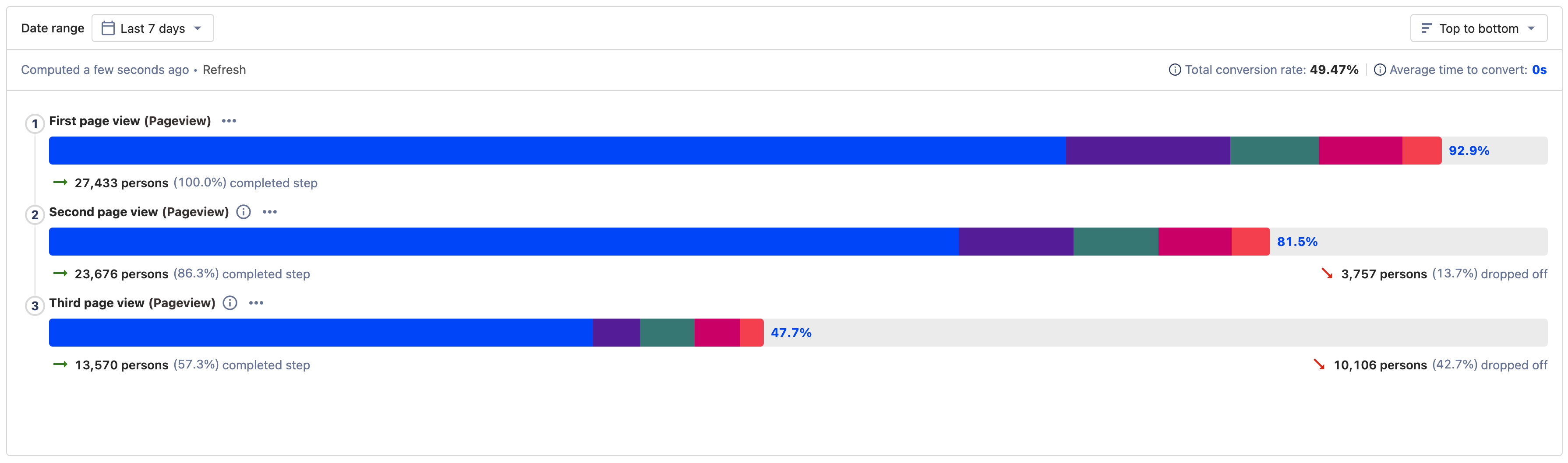
Top to bottom funnels in PostHog

Using a combination of autocapture and custom or calculated events, PostHog makes it possible to track every part of your product experience. This makes it trivial to track where users are getting stuck by using funnel insights to visualize the user journey.

At PostHog, for example, new users have to go through several common steps to be successful — they must create an account, login, ingest events and then make a discovery through an insight. Using funnels, we’re able to identify which stage users get stuck on and then monitor how successful we are in our attempts to fix the problem.

💡PostHog Tip: Want to delve deeper into the root causes behind a drop off? Use breakdowns to explore what groups of users have in common.
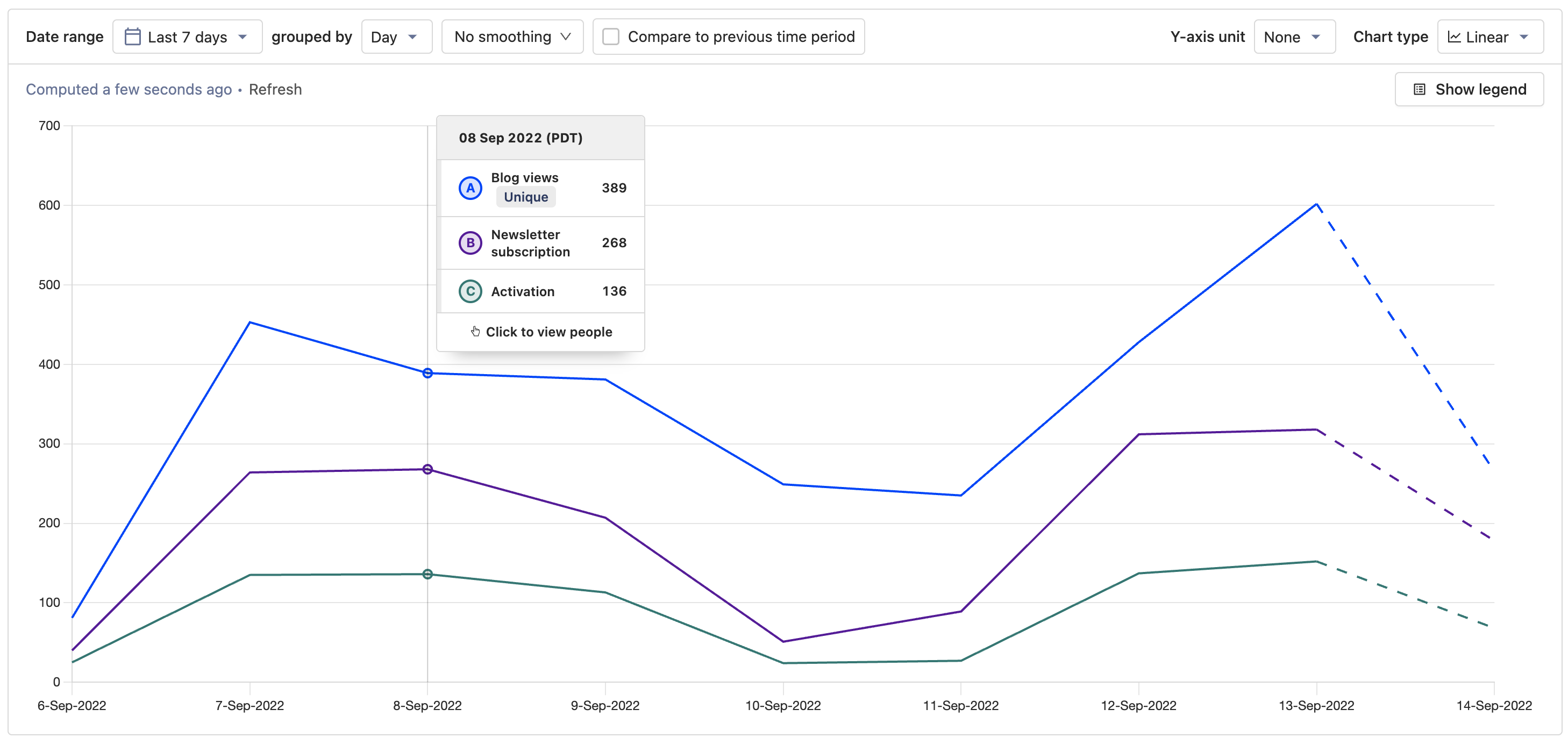
graph of an insight broken down by a property

If you, like PostHog, charge based on usage then you’ll want to keep a close eye on your usage metrics. This will both help you spot trends in declining usage so that you can react early, and also proactively reach out to customers with increasing usage too.

The simplest way to monitor usage is via a trends insight. Just create an insight which tracks your usage events on a reasonable timeline and you’ll be able to see how it changes over time. At PostHog, we actually monitor usage for each tool on the platform, as well as the overall events ingested — this helps us not only understand usage trends but also see which features are most popular.

💡PostHog Tip: If you’ve only got a small number of users, your results may get swayed by internal users or test accounts. Here’s how to filter them out.
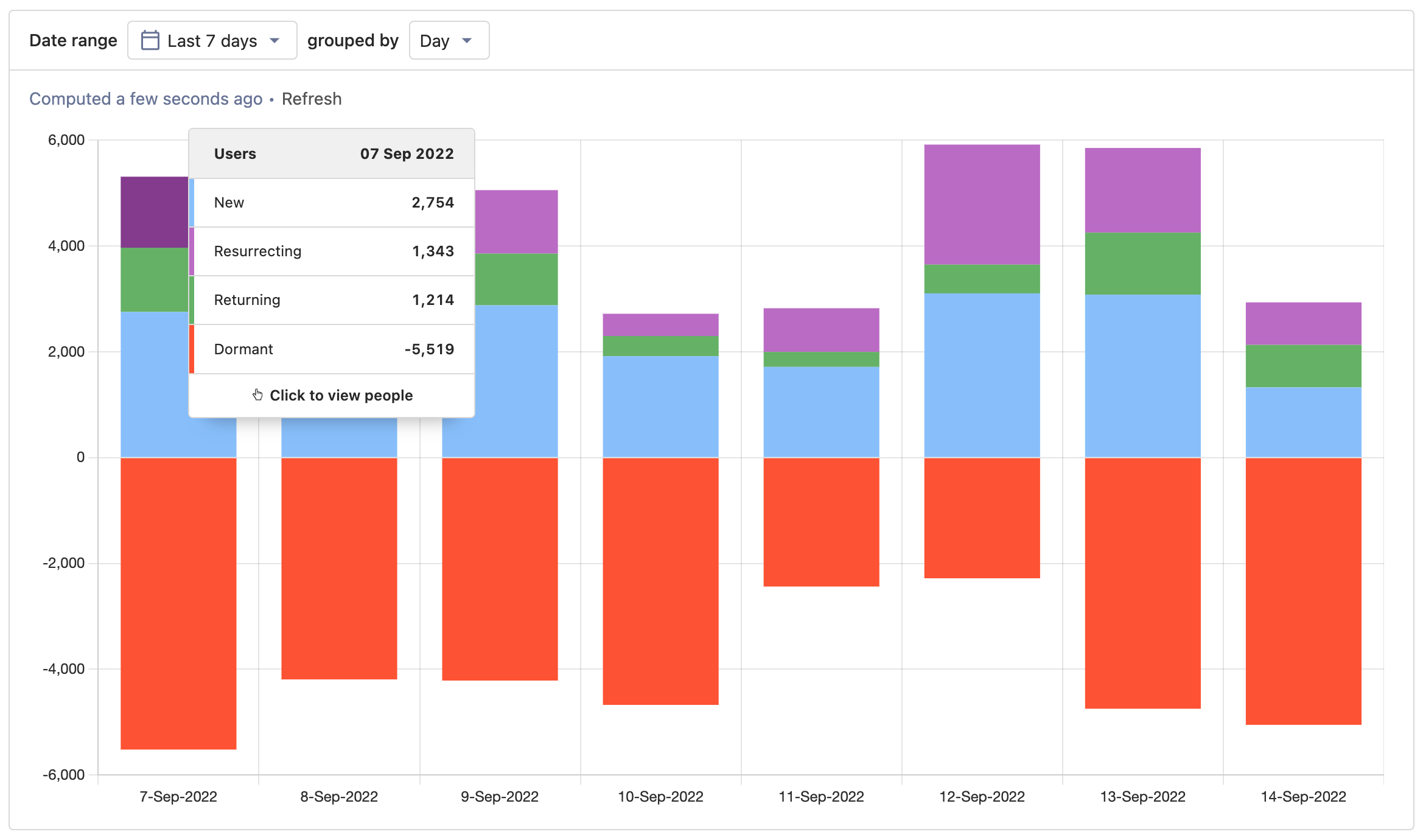
lifecycle chart in posthog

Regardless of whether or not your overall usage is growing, it’s a good idea to monitor your overall retention and identify which customers are falling dormant and are at risk of churning. The lifecycle insight exists exactly for this purpose.

Lifecycle insights categorize users based on whether they have completed any event within a specified period of time, then compare those results to the previous interval to tell you whether they’re falling dormant, returning, resurrecting, or active. Dormant users are the ones to watch out for, as they’re showing poor engagement and are at risk of churning — just click the relevant bar on the insight to get a list of them.

💡PostHog Tip: Curious about the difference between returning and resurrecting users? Check the lifecycle docs for a full explanation.
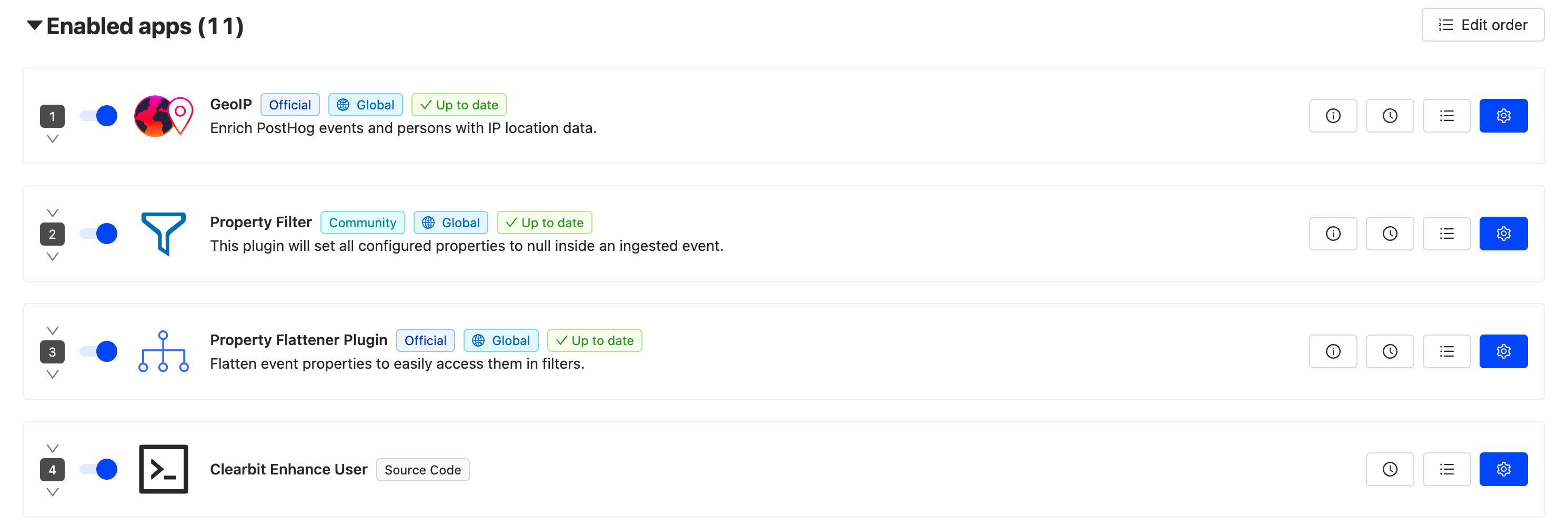
4. Install apps to integrate PostHog with your stack

apps for cs teams

We like to think PostHog works brilliantly on its own, but to get the most out of the platform you may want to connect it with other software in your stack. We have a library of over 50 apps to help you do this, so you can connect PostHog with tools such as Hubspot or Salesforce.

Best of all, because PostHog is entirely open source, you can build your own apps to enhance your data even further — all you need is a little Javascript or Typescript knowledge and you’re good to go!
subscriptions in posthog

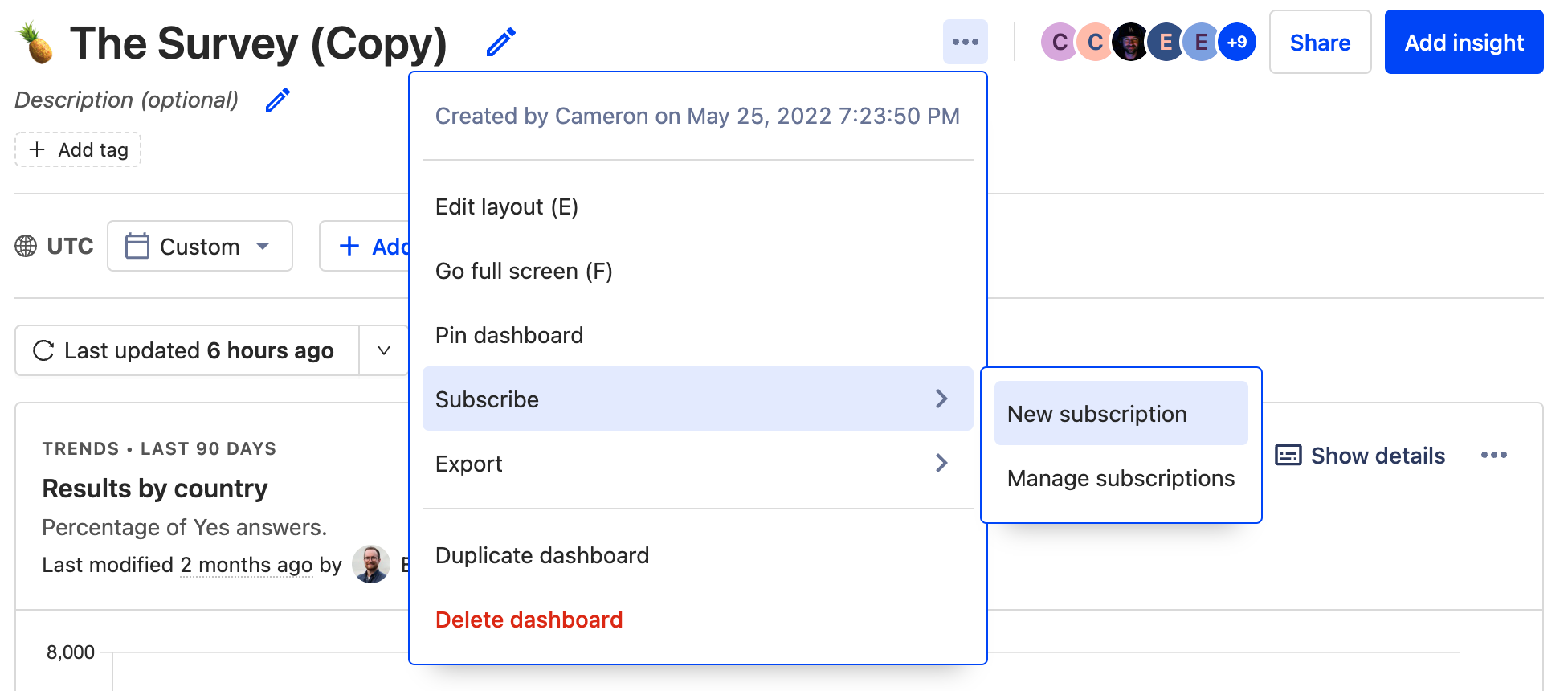
Once you’ve built the insights you need, an essential step is adding them all to a PostHog dashboard so that you don’t need to check them one-by-one. Once you’ve pinned all your insights to a dashboard, you can easily check everything in one place and export it as an image if you need to include it in reports.

At PostHog, we’re not big fans of lengthy meetings and reports — instead, we’ve set up a subscription which sends the insights to a thread in a shared Slack channel every week. Don’t use Slack? You can subscribe by email too.