惯性聚合 高效追踪和阅读你感兴趣的博客、新闻、科技资讯
阅读原文 在惯性聚合中打开

推荐订阅源

K
Kaspersky official blog
Threat Intelligence Blog | Flashpoint
AI
AI
SecWiki News
SecWiki News
宝玉的分享
宝玉的分享
Scott Helme
Scott Helme
D
Darknet – Hacking Tools, Hacker News & Cyber Security
Exploit-DB.com RSS Feed
Engineering at Meta
Engineering at Meta
博客园 - 叶小钗
The GitHub Blog
The GitHub Blog
Microsoft Azure Blog
N
News and Events Feed by Topic
Cloudbric
Cloudbric
B
Blog
Cisco Talos Blog
Cisco Talos Blog
V
Vulnerabilities – Threatpost
N
News and Events Feed by Topic
V
Visual Studio Blog
A
Arctic Wolf
奇客Solidot–传递最新科技情报
奇客Solidot–传递最新科技情报
U
Unit 42
S
Security @ Cisco Blogs
博客园 - 聂微东
T
Threat Research - Cisco Blogs
OSCHINA 社区最新新闻
OSCHINA 社区最新新闻
Apple Machine Learning Research
Y
Y Combinator Blog
G
GRAHAM CLULEY
L
LINUX DO - 热门话题
量子位
NISL@THU
NISL@THU
Webroot Blog
Webroot Blog
让小产品的独立变现更简单 - ezindie.com
T
Troy Hunt's Blog
Application and Cybersecurity Blog
T
Tenable Blog
月光博客
月光博客
S
Security Affairs
K
KPMG report finds enterprise disconnect between AI and its ROI | CIO
The Hacker News
The Hacker News
Spread Privacy
Spread Privacy
D
Docker
www.infosecurity-magazine.com
雷峰网
雷峰网
博客园 - 司徒正美
T
The Exploit Database - CXSecurity.com
Hugging Face - Blog
Hugging Face - Blog
Help Net Security
Help Net Security
D
DataBreaches.Net

PostHog's RSS Feed

Training our own AI models - PostHog From 270GB RAM to 5GB: Moving local flag evaluation from Django to Rust The best analytics stack for vibe-coded apps The do's and don'ts of minimum viable product marketing - PostHog The best MCP servers for startups, by workflow 4,063 errors closed without a human opening PostHog – here's what we learned - PostHog PostHog Code and the self-driving product - PostHog Why attacking your competitors online is dumb - PostHog The best real-time analytics platforms for developers, compared DuckDB vs ClickHouse: Why we use both at PostHog - PostHog PostHog's next chapter - PostHog Making Claude Cowork actually useful - PostHog PostHog vs Matomo in-depth tool comparison You're doing lifecycle emails wrong Untangling Tokio and Rayon in production: From 2s latency spikes to 94ms flat The best HIPAA-compliant A/B testing tools - PostHog A beginner's guide to testing AI agents - PostHog I hate the standup bot (so I built an agent to do it for me) - PostHog The best CDPs for developers, compared The best error tracking tools for developers, compared The best feature flag software for developers, compared 7 best session replay tools for mobile apps 7 best free open source business intelligence tools right now 7 best free and open source LLM observability tools PostHog vs LogRocket in-depth tool comparison The most popular PostHog alternatives, compared Open source (and self-hosted) session replay tools - PostHog The 9 best GA4 alternatives for apps and websites - PostHog PostHog vs Google Analytics 4 in-depth tool comparison How we built automatic clustering for LLM traces - PostHog The 7 best HIPAA-compliant analytics tools 8 best open source analytics tools you can self-host - PostHog The best product analytics tools for startups, compared PostHog vs FullStory in-depth tool comparison The best in-app survey tools for product teams, compared The 7 best mobile app analytics tools PostHog vs Hotjar in-depth tool comparison The 8 best free and open-source feature flag services - PostHog The 5 best free and open-source A/B testing tools - PostHog The best mobile app A/B testing tools, compared What is a feature flag? Feature Flags vs Remote Config vs A/B Testing PostHog is now available in Vercel’s v0 The best Heap alternatives & competitors, compared PostHog vs Heap in-depth tool comparison PostHog vs Pendo in-depth tool comparison PostHog × Vercel: feature flags, minus the plumbing Your logs' final destination is in GA. You always end up here anyway Behind the scenes of a PostHog hackathon - PostHog The most popular Mixpanel alternatives & competitors, compared PostHog vs Mixpanel in-depth tool comparison The 9 best GDPR-compliant analytics tools How we use Logs at PostHog The best web analytics tools for developers, compared Stop AI slop: Run evals with LLM-as-a-Judge - PostHog You product data just got a job: Workflows is now out App onboarding: How to fix drop-off points Meet Logs (beta) – logs with all the tools you’re already using Why small teams crush tiger teams How we built user behavior analysis with multi-modal LLMs (in 5 not-so-easy steps) - PostHog The best Contentsquare alternatives & competitors, compared 8 learnings from 1 year of agents – PostHog AI - PostHog Why we killed our AI product assistant Workflows graduate to beta! Product data, meet automation The best Rollbar alternatives & competitors, compared Workflows are now in Alpha and I already broke mine - PostHog I've consistently underestimated how important communication is as a CEO - PostHog How we made feature flags even faster and more reliable The best session replay tools for developers, compared What I learned attending my first ever hackathon - PostHog Did you know AI is answering our community questions? - PostHog How not to be boring - PostHog We built an internal tool to generate changelog images for social media - PostHog What we built at our windswept Mykonos hackathon - PostHog How we built our onboarding email flow (with actual performance data) - PostHog We're building a better PostHog community by closing our public Slack - PostHog Introducing Notebooks for PostHog - PostHog Why we've launched PostHog user surveys - PostHog How we made feature flags faster and more reliable - PostHog In-depth: ClickHouse vs Redshift - PostHog Introducing HouseWatch: An open-source toolkit for ClickHouse - PostHog Introducing HogQL: Direct SQL access for PostHog - PostHog What we built at our sun-kissed Aruba hackathon - PostHog In-depth: ClickHouse vs BigQuery - PostHog In-depth: ClickHouse vs Elasticsearch - PostHog HogMail #22: Why do companies over-hire?" - PostHog Our simpler goal: Help engineers to be better at product - PostHog In-depth: ClickHouse vs Snowflake - PostHog HogMail #21: Avoiding the "Product Death Cycle" - PostHog Sunsetting Kubernetes support for PostHog - PostHog Why 'Product Engineer' is the most fun role I've had in tech - PostHog HogMail #20: Why do startups fail? - PostHog The best Google Optimize alternatives for apps and websites - PostHog Array 1.43.0: Massive performance improvements! - PostHog In-depth: ClickHouse vs Druid - PostHog HogMail #19: Which meetings should you kill? - PostHog CEO diary: The things I learned in 2022 - PostHog The essential tools used by product engineers - PostHog HogMail #18: What can SaaS learn from the New York Times? - PostHog What is a product engineer? - Product Engineer Handbook - PostHog Array 1.42.0: Get beta features via our roadmap! - PostHog
The YC Interview - PostHog
James Hawkin · 2020-01-01 · via PostHog's RSS Feed

We submitted the application, then got back to work. We couldn't work out how long it'd take to hear back, but then we did.
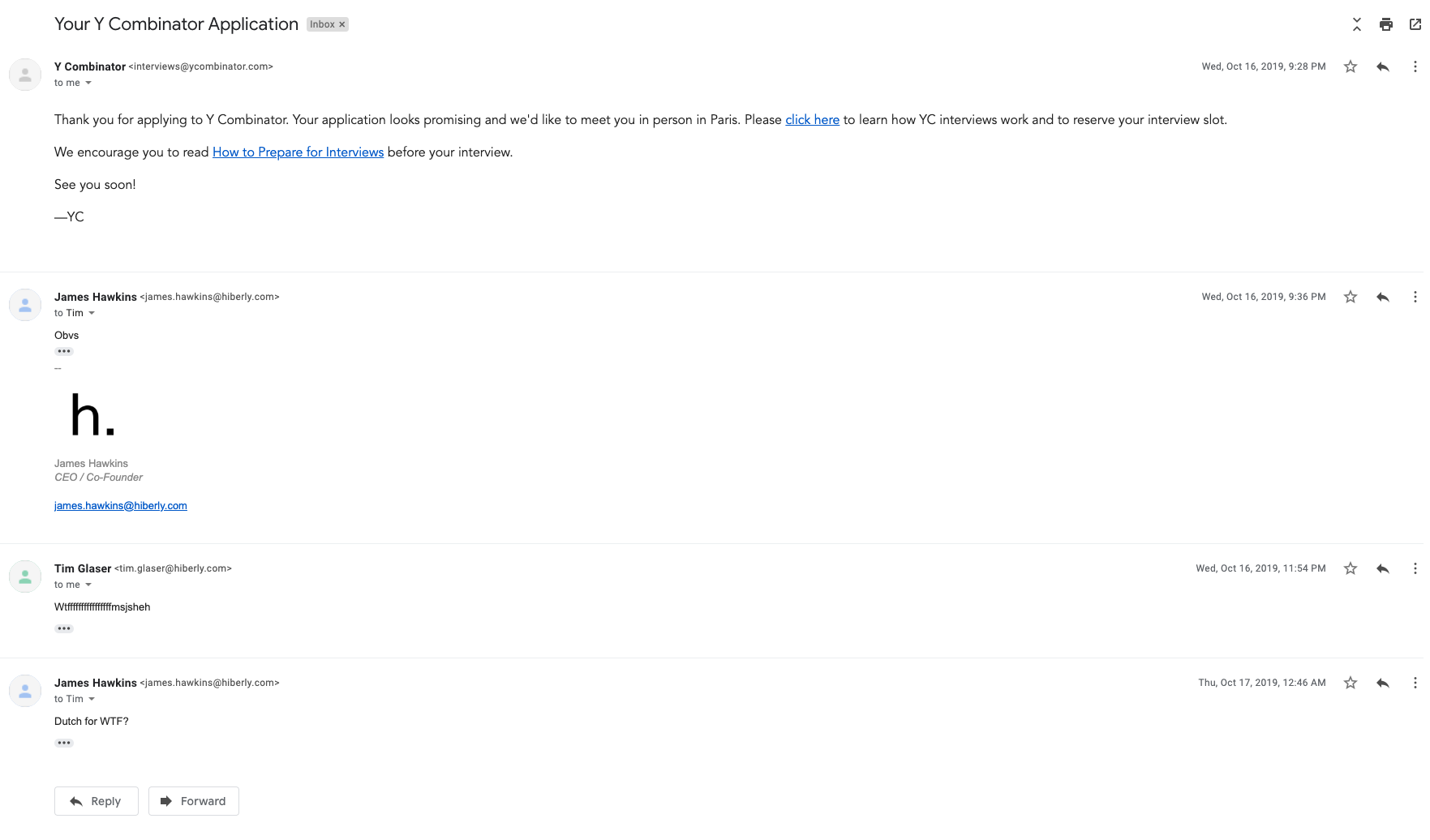
It was now October 16th. The interview was going to be November 7th.

We asked ourselves how we could make as much progress as possible between now and then.

Best case scenario, we'd get some paying customers. Worst case, we needed to show we had made a ton of progress.

Walking between meetings, we felt we had two plays. The first that came to mind was a Hacker News "show HN" post. That website is read by tens of thousands of developers, so to us represented a huge volume of relevant traffic.

We decided that was too risky - it'd be binary, either a couple of upvotes or a hundred. We felt the most likely outcome was that we'd get five upvotes from our friends and that would probably leave us with nothing to talk about if we put all our focus into it.

Instead, we worked out that if we could find a repeatable approach to generating users, we were guaranteed to be able to make progress. That felt achievable.

We took $2K of our $8K and set up ad campaigns on every display network - because there aren't many other platforms that tackle tech debt, so search traffic doesn't exist, yet.

We started getting a trickle of leads. They all bounced.

We put in place product tracking - we put UTM tags into every ad, so we'd know exactly which users came from which ad and each channel. We started putting more of our spend into the channels that worked.

We started experimenting with the website layout until more visitors installed the app, then we started tweaking the sign up process until people were starting to use it, then we started tweaking the product further until people were using it a lot. We just treated the whole thing and all our product development as a funnel.

In parallel, I'd email every single user who signed up, trying to learn from them. Almost no one spoke to us. You can find a lot out from data, but it's no substitute for the real thing. Developers are much less likely to take a call than salespeople from our previous experience.

We kept up the two meetings a day target, but often missed it. Engineering leaders were harder to get in front of than sales leaders.

Subscribe to our newsletter

Product for Engineers

Read by 100,000+ founders and builders

We'll share your email with Substack

The week before, we booked practice sessions with everyone we thought was relevant. This meant friends, family, a VC and two YC alumni who were offering to do this on Twitter.

We made these sessions realistic - we told them to cut us off, to interrupt if we weren't getting to the point, and to trip us up.

We focused on clarity. We had achieved a lot fast. We had signed up 400 people in just three weeks, for $10 per user (the cost came down a lot per user after a lot of tweaking, so the more recent ones were way less expensive). Given we'd charge $10 per month per user, the unit economics looked really good. We hadn't yet generated revenue, but we had 2 companies who said they would pay (and, a few weeks after the interview, they both did, which got us to our first $600 MRR).

Tim and I got the Eurostar from Kings Cross to France the night before. That evening, we went out for a beer and caught up with an old friend.

November the 7th swung around before we knew it. We did a final run through in the morning, wrote out some key stats on a notepad to take into the interview in case we needed them, and tried to catch each other out - we, finally, felt like we had a good shot at this.

We began the blustery but bright walk from our hotel to Front's offices, who were hosting it.

We walked in, got our badges and did our best to ignore everyone else. We were led into the room by Dalton Cadwell. He was the first person I'd met in real life that I already recognized from YouTube. Geoff Ralston, who also interviewed us, was the second. There was one other person who remained quiet.

The questions came thick and fast as soon as we started shaking hands, but the tone was bright, excited and helpful. We had a clear view of who would answer different types of question, which was important. The key thing we focused on was making ourselves pause before answering, and we took the time we needed to be clear. We'd endlessly rehearsed explaining what we do "off guard", so we wouldn't get caught out.

As we left, literally as the door was shutting, we were asked who we were. It's important you can describe your relevant experience as concisely as you can describe the product.

All of the questions went well, but we felt we didn't manage to answer one along the lines of "how could you show that you have solved this problem for a real user?" They asked us for a demo to see the data we had generated but we hadn't got the laptop connected to the wifi. There wasn't time.

Note: later on, now we come to write this, that precisely why we ended up pivoting. They're good.

We walked out thinking it's 50:50, we did a good job but got that question wrong, and we got hung up on it right at the end.

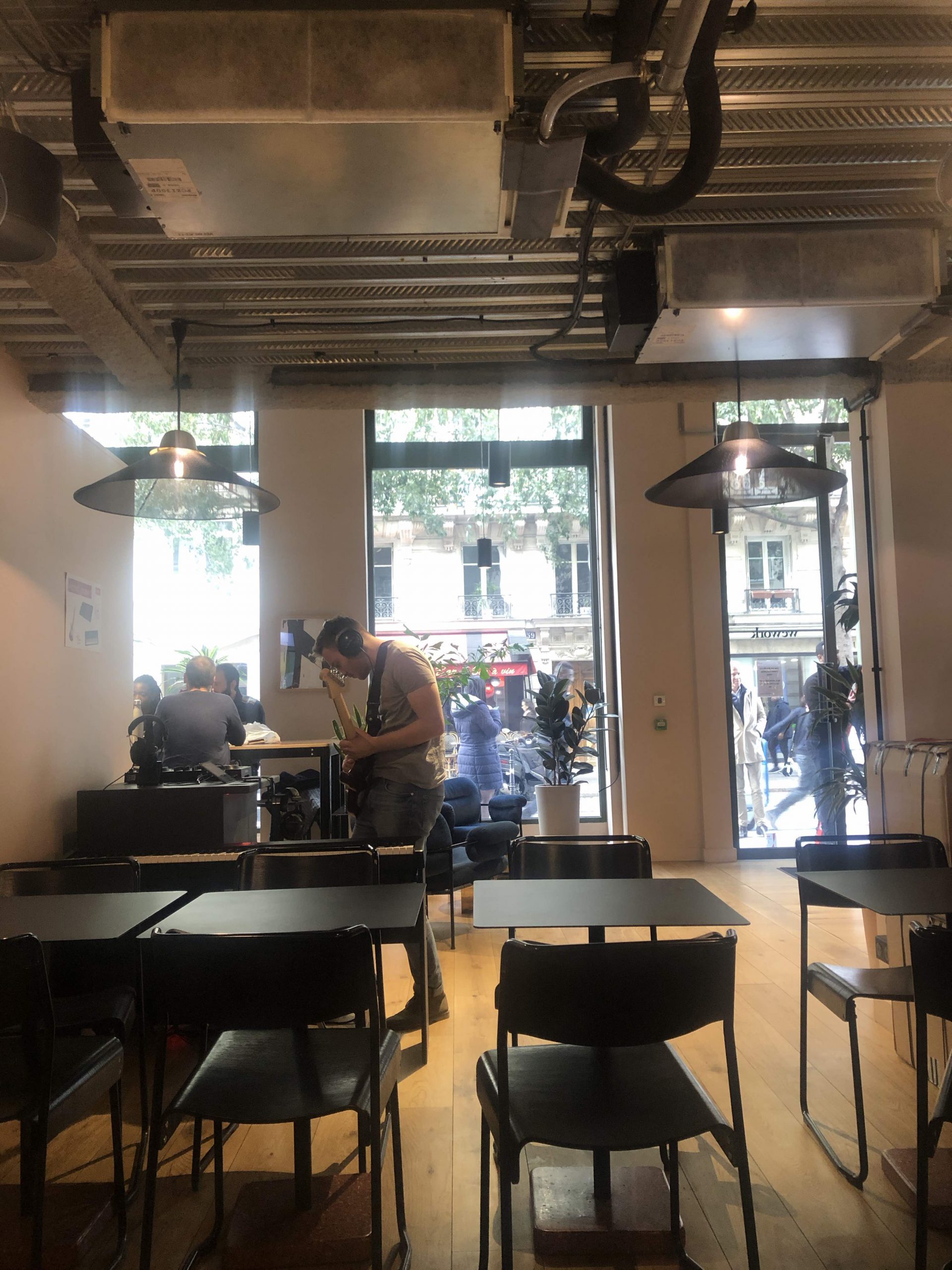
We grabbed a quick lunch then went to the nearest WeWork and got back to working. Tim found a guitar, the latest way to distract people who are coworking, it seems:
For this interview, we knew in advance we wouldn't find out for a few days, so we decided to assume we had failed. We met with friends again and got the train back to London.

That magical phone call came around a week later. Dalton called asking us to accept. We both were in the office, so it was nice to be able to listen to it together. We called our friends and family, and promised ourselves this was just the start. We had to make the most of this opportunity.

The weeks that followed were quite stressful. We suddenly had to find a lawyer to create a US parent company, we had to book an Airbnb, and work out if we needed an accountant, whilst still keeping the company growing and signing our first clients.

We immediately started doing regular calls with the partners and we chose to send a regular update once a week with our progress. Knowing this was coming up every Friday kept our urgency up.

Subscribe to our newsletter

Product for Engineers

Read by 100,000+ founders and builders

We'll share your email with Substack