


惯性聚合 高效追踪和阅读你感兴趣的博客、新闻、科技资讯
阅读原文 在惯性聚合中打开

推荐订阅源

GbyAI
GbyAI
L
LINUX DO - 热门话题
月光博客
月光博客
B
Blog
博客园 - 叶小钗
美团技术团队
D
Docker
A
About on SuperTechFans
Stack Overflow Blog
Stack Overflow Blog
酷 壳 – CoolShell
酷 壳 – CoolShell
WordPress大学
WordPress大学
P
Proofpoint News Feed
freeCodeCamp Programming Tutorials: Python, JavaScript, Git & More
Y
Y Combinator Blog
V
V2EX
Apple Machine Learning Research
博客园 - 三生石上(FineUI控件)
The Register - Security
博客园_首页
The Cloudflare Blog
I
InfoQ
T
Tailwind CSS Blog
MongoDB | Blog
MongoDB | Blog
Engineering at Meta
Engineering at Meta
CTFtime.org: upcoming CTF events
Microsoft Azure Blog
有赞技术团队
有赞技术团队
C
CERT Recently Published Vulnerability Notes
AWS News Blog
AWS News Blog
Spread Privacy
Spread Privacy
V
Visual Studio Blog
博客园 - Franky
Cloudbric
Cloudbric
Help Net Security
Help Net Security
钛媒体:引领未来商业与生活新知
钛媒体:引领未来商业与生活新知
N
News and Events Feed by Topic
OSCHINA 社区最新新闻
OSCHINA 社区最新新闻
K
KPMG report finds enterprise disconnect between AI and its ROI | CIO
Webroot Blog
Webroot Blog
博客园 - 【当耐特】
TaoSecurity Blog
TaoSecurity Blog
B
Blog RSS Feed
N
News | PayPal Newsroom
人人都是产品经理
人人都是产品经理
H
Heimdal Security Blog
L
LangChain Blog
PCI Perspectives
PCI Perspectives
Jina AI
Jina AI
Google DeepMind News
Schneier on Security

PostHog's RSS Feed

Training our own AI models - PostHog From 270GB RAM to 5GB: Moving local flag evaluation from Django to Rust The best analytics stack for vibe-coded apps The do's and don'ts of minimum viable product marketing - PostHog The best MCP servers for startups, by workflow 4,063 errors closed without a human opening PostHog – here's what we learned - PostHog PostHog Code and the self-driving product - PostHog Why attacking your competitors online is dumb - PostHog The best real-time analytics platforms for developers, compared DuckDB vs ClickHouse: Why we use both at PostHog - PostHog PostHog's next chapter - PostHog Making Claude Cowork actually useful - PostHog PostHog vs Matomo in-depth tool comparison You're doing lifecycle emails wrong Untangling Tokio and Rayon in production: From 2s latency spikes to 94ms flat The best HIPAA-compliant A/B testing tools - PostHog A beginner's guide to testing AI agents - PostHog I hate the standup bot (so I built an agent to do it for me) - PostHog The best CDPs for developers, compared The best error tracking tools for developers, compared The best feature flag software for developers, compared 7 best session replay tools for mobile apps 7 best free open source business intelligence tools right now 7 best free and open source LLM observability tools PostHog vs LogRocket in-depth tool comparison The most popular PostHog alternatives, compared Open source (and self-hosted) session replay tools - PostHog The 9 best GA4 alternatives for apps and websites - PostHog PostHog vs Google Analytics 4 in-depth tool comparison How we built automatic clustering for LLM traces - PostHog The 7 best HIPAA-compliant analytics tools 8 best open source analytics tools you can self-host - PostHog The best product analytics tools for startups, compared PostHog vs FullStory in-depth tool comparison The best in-app survey tools for product teams, compared The 7 best mobile app analytics tools PostHog vs Hotjar in-depth tool comparison The 8 best free and open-source feature flag services - PostHog The 5 best free and open-source A/B testing tools - PostHog The best mobile app A/B testing tools, compared What is a feature flag? Feature Flags vs Remote Config vs A/B Testing PostHog is now available in Vercel’s v0 The best Heap alternatives & competitors, compared PostHog vs Heap in-depth tool comparison PostHog vs Pendo in-depth tool comparison PostHog × Vercel: feature flags, minus the plumbing Your logs' final destination is in GA. You always end up here anyway Behind the scenes of a PostHog hackathon - PostHog The most popular Mixpanel alternatives & competitors, compared PostHog vs Mixpanel in-depth tool comparison The 9 best GDPR-compliant analytics tools How we use Logs at PostHog The best web analytics tools for developers, compared Stop AI slop: Run evals with LLM-as-a-Judge - PostHog You product data just got a job: Workflows is now out App onboarding: How to fix drop-off points Meet Logs (beta) – logs with all the tools you’re already using Why small teams crush tiger teams How we built user behavior analysis with multi-modal LLMs (in 5 not-so-easy steps) - PostHog The best Contentsquare alternatives & competitors, compared 8 learnings from 1 year of agents – PostHog AI - PostHog Why we killed our AI product assistant Workflows graduate to beta! Product data, meet automation The best Rollbar alternatives & competitors, compared Workflows are now in Alpha and I already broke mine - PostHog I've consistently underestimated how important communication is as a CEO - PostHog How we made feature flags even faster and more reliable The best session replay tools for developers, compared What I learned attending my first ever hackathon - PostHog Did you know AI is answering our community questions? - PostHog How not to be boring - PostHog We built an internal tool to generate changelog images for social media - PostHog What we built at our windswept Mykonos hackathon - PostHog How we built our onboarding email flow (with actual performance data) - PostHog We're building a better PostHog community by closing our public Slack - PostHog Introducing Notebooks for PostHog - PostHog Why we've launched PostHog user surveys - PostHog How we made feature flags faster and more reliable - PostHog In-depth: ClickHouse vs Redshift - PostHog Introducing HouseWatch: An open-source toolkit for ClickHouse - PostHog Introducing HogQL: Direct SQL access for PostHog - PostHog What we built at our sun-kissed Aruba hackathon - PostHog In-depth: ClickHouse vs BigQuery - PostHog In-depth: ClickHouse vs Elasticsearch - PostHog HogMail #22: Why do companies over-hire?" - PostHog Our simpler goal: Help engineers to be better at product - PostHog In-depth: ClickHouse vs Snowflake - PostHog HogMail #21: Avoiding the "Product Death Cycle" - PostHog Sunsetting Kubernetes support for PostHog - PostHog Why 'Product Engineer' is the most fun role I've had in tech - PostHog HogMail #20: Why do startups fail? - PostHog The best Google Optimize alternatives for apps and websites - PostHog Array 1.43.0: Massive performance improvements! - PostHog In-depth: ClickHouse vs Druid - PostHog HogMail #19: Which meetings should you kill? - PostHog CEO diary: The things I learned in 2022 - PostHog The essential tools used by product engineers - PostHog HogMail #18: What can SaaS learn from the New York Times? - PostHog What is a product engineer? - Product Engineer Handbook - PostHog Array 1.42.0: Get beta features via our roadmap! - PostHog
5 analytics ideas for marketing teams using PostHog - PostHog
Joe Martin · 2022-10-10 · via PostHog's RSS Feed

One of the great things about PostHog is that it democratizes your product strategy by making analytics accessible to more than just analysts. There’s no need for old-fashioned SQL queries or complex business intelligence tools — marketing teams are empowered to get all the information they need by themselves.

Internally, our marketing team uses PostHog for all their reporting, as well as for running ad-hoc analysis and testing new ideas. Here are some of the tips and tricks we recommend based on their experience...
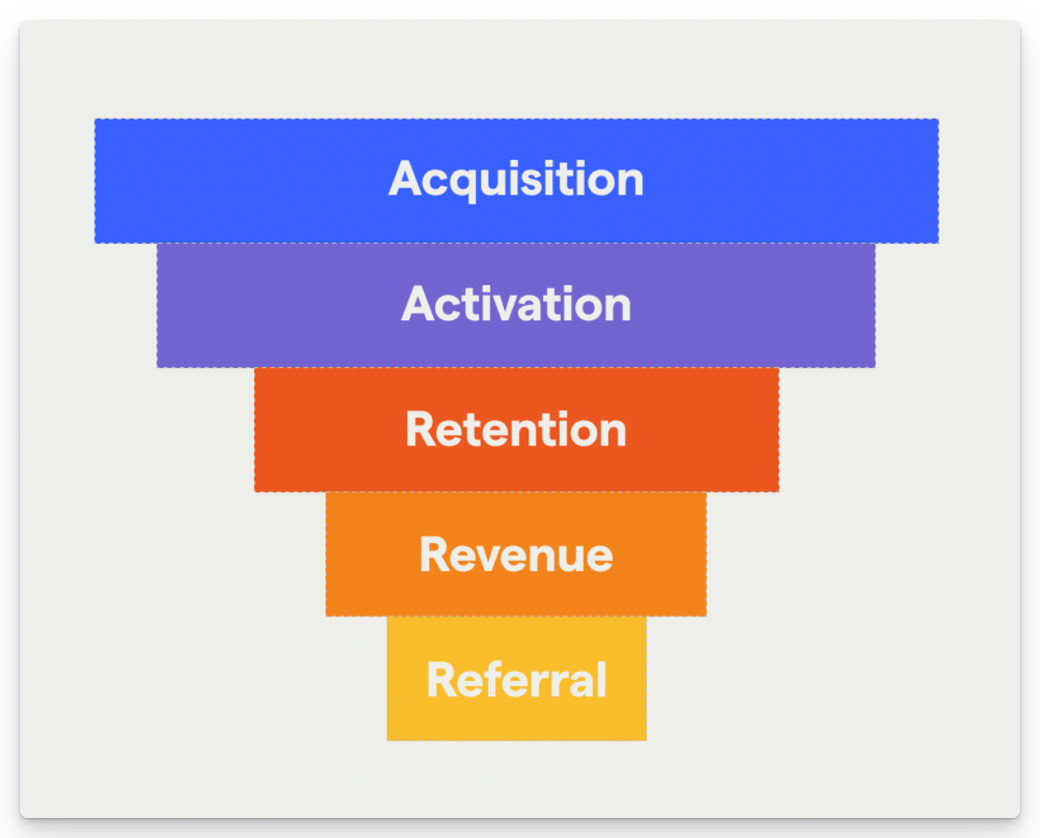
AARRR pirate metrics

AARRR funnels are a framework for understanding how users engage with your product at different stages of their journey — Acquisition, Activation, Retention, Revenue, and Referral. It’s especially useful for marketers, growth teams and product marketers because it enables you to see where your biggest drop-offs are at a glance.

The AARRR framework needs to be adapted slightly for each product — acquisition in your product, for example, may be a sign-up, a pageview, or something else entirely — but all stages can be tracked in PostHog using the funnels insight. We recommend creating a dashboard to help you track every stage in one place.

💡PostHog Tip: Want to know more? Check our complete guide to AARRR pirate funnels!
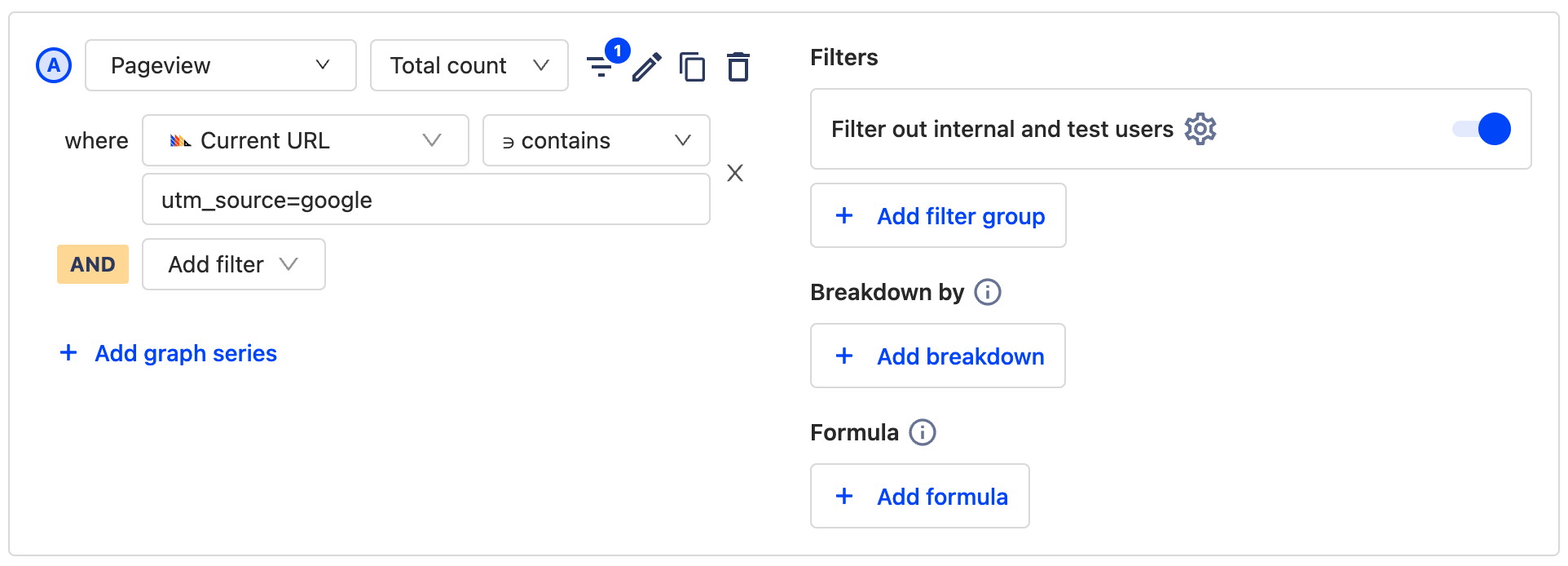
how to track utms in posthog

UTMs are an indispensable tool in the modern marketing arsenal, enabling you to track clicks by adding a customizable parameter after a URL. The URL posthog.com/?utm_campaign=opensource could be used in social media posts to track visits to the PostHog website via an open source campaign, for example. But how do you track these campaigns in PostHog?

The simplest way is to use a trends insight in PostHog that filters pageviews by a matching event property. Alternatively, you can filter pageviews by the Current URL event property and specify the UTM as contained in the URL. Either result gives you an effortless way to track the performance of campaigns and correlate the results with other analytics data.

💡PostHog Tip: Trends aren’t the only way to visualize UTM performance. You can also use the funnels insight to explore how users move between two events - such as viewing a landing page, and signing up.
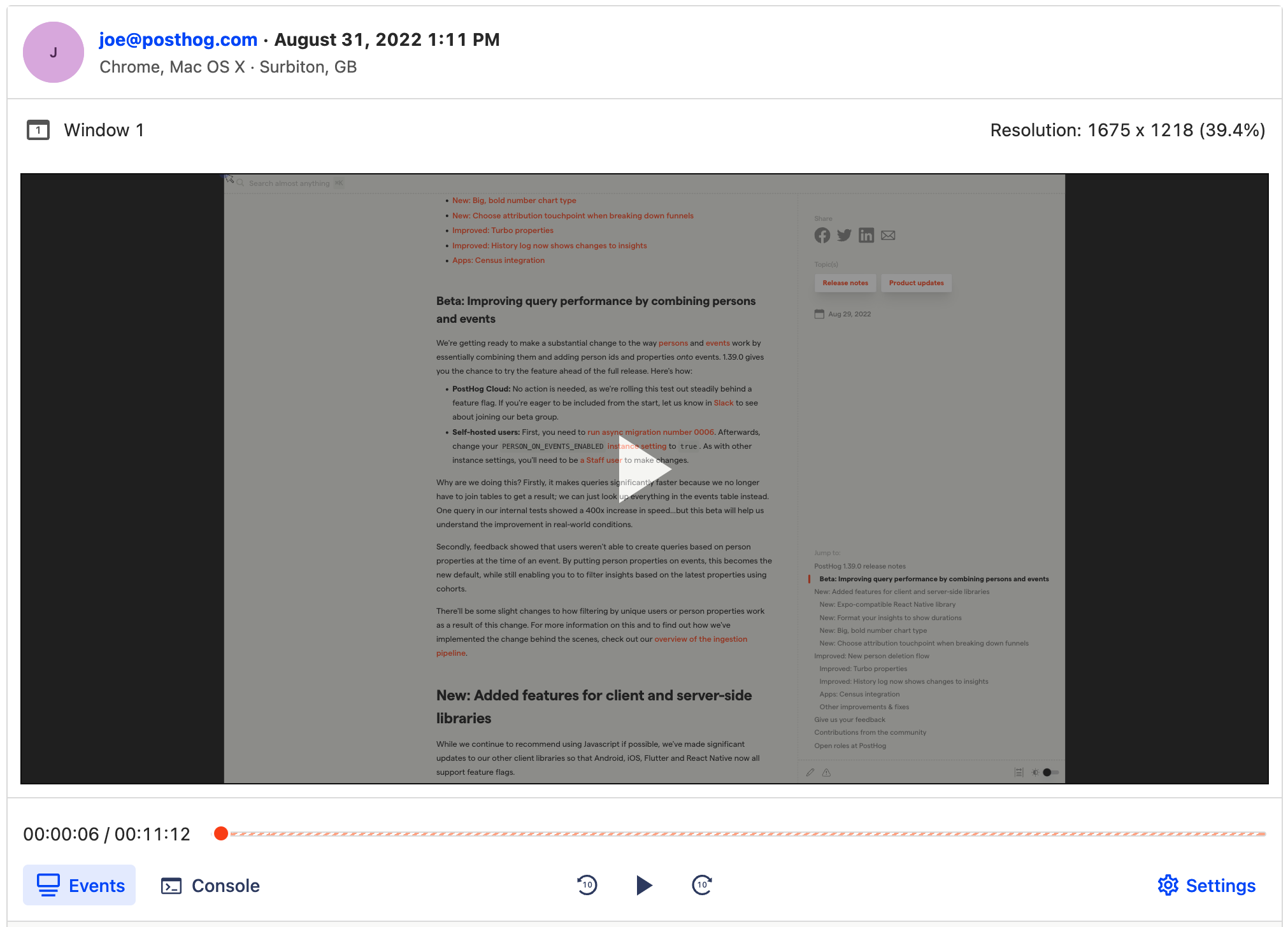
session recordings in posthog

You may think your sign-up flow is easy to navigate, but what really matters is what your users think. If only there was some way to watch how they use your site, so you can identify where they’re experiencing friction? Enter: session recordings.

Session recordings are like a DVR of people using your product and enable you to see every mouse movement, rageclick and pause that users make on your site — all without surfacing sensitive information. Design and marketing teams at organizations such as Hasura use session recordings to find ways to optimize their sites.

💡PostHog Tip: Watching lots of recordings can be time consuming. We recommend filtering recordings to focus on key events, such as new sign-ups, to make it easier to find valuable insights.
session recordings in posthog

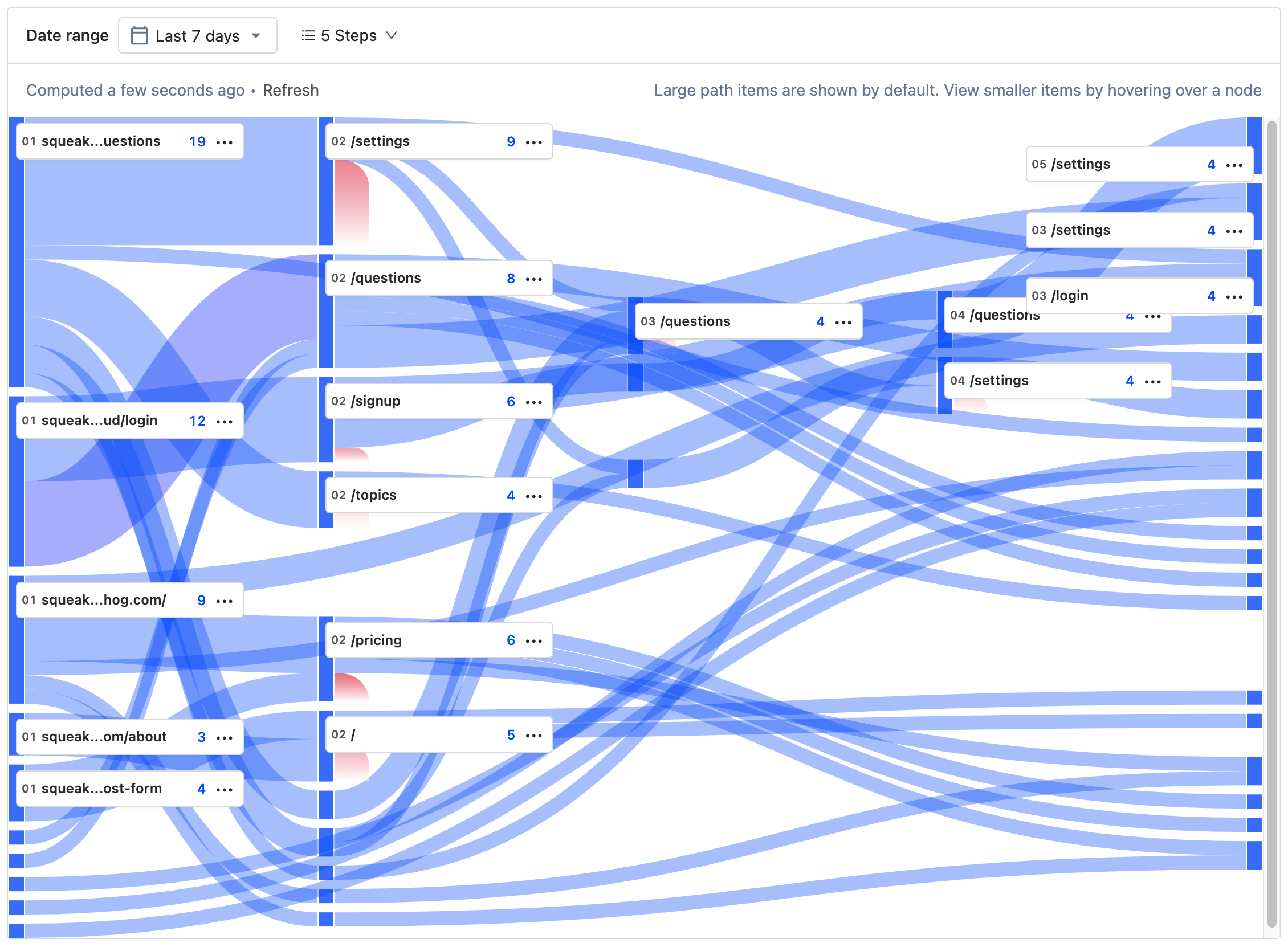
So, you know how to track performance of marketing campaigns and how to see how individual users engage with your content, but how can you get a view of the entire user journey? That’s where path analysis comes in.

Paths enable you to see the route every user takes between two points, as well as where they drop off or get lost. If you’ve ever wondered the route visitors take between a landing page and a successful sign-up, PostHog’s path analysis tool can give you the answer in seconds. Then, you can find ways to optimize or improve the route!

💡PostHog Tip: Path insights in PostHog don’t have to specify both the start and endpoint. If you’re curious how users get to a specific page, for example, you can just set an endpoint to see every path users took to reach that page.
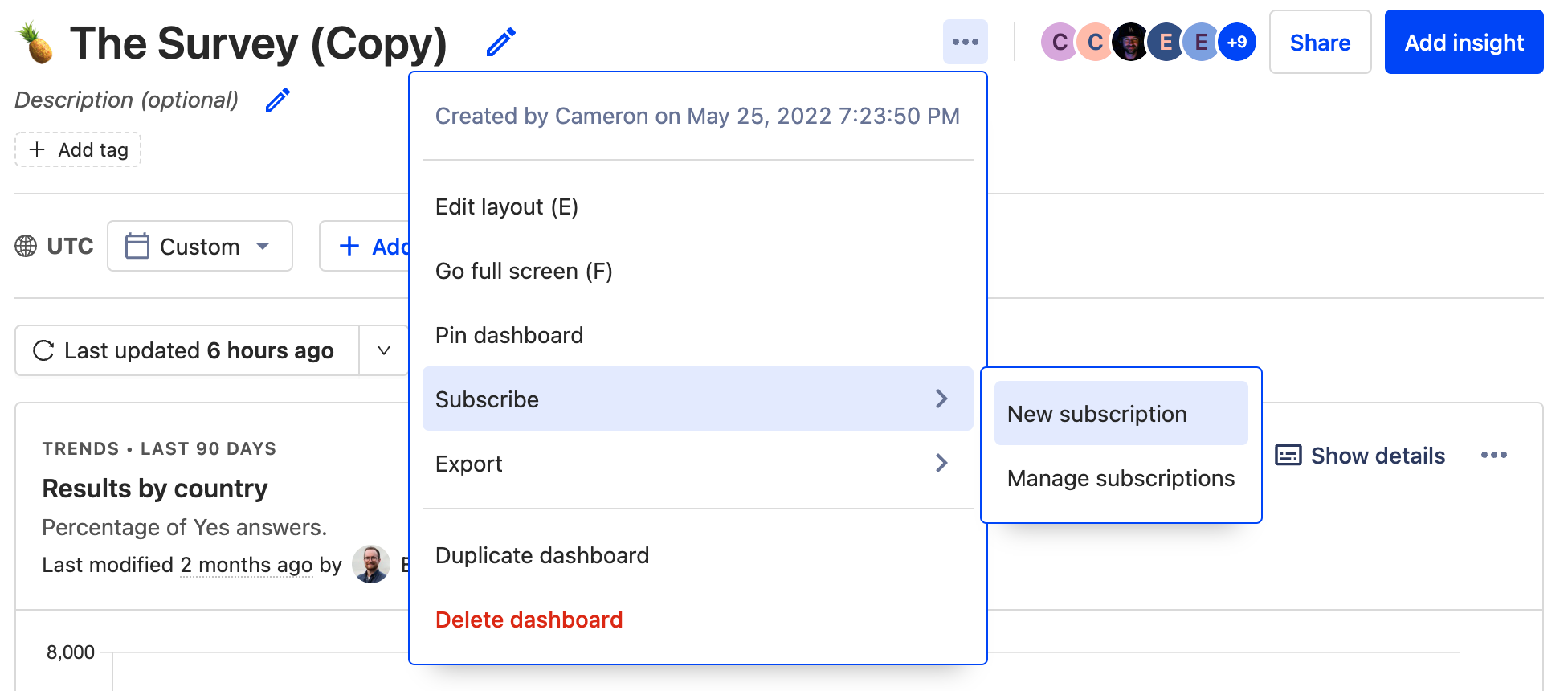
dashboard subscriptions in posthog

Maybe you want to share PostHog reports with the whole company, or maybe you’re just trying to cut down on time spent looking for credentials in 1Password. Either way, subscriptions are the solution.

Subscriptions are currently available via email, or Slack. In both cases, you’ll get regular updates from PostHog about each query on a dashboard so that you can see how results have changed since the last interval. Subscriptions work best for metrics you want to monitor closely over time, such as new customers or overall website traffic.