惯性聚合 高效追踪和阅读你感兴趣的博客、新闻、科技资讯
阅读原文 在惯性聚合中打开

推荐订阅源

量子位
小众软件
小众软件
S
SegmentFault 最新的问题
人人都是产品经理
人人都是产品经理
博客园 - 【当耐特】
博客园 - 三生石上(FineUI控件)
C
Check Point Blog
S
Schneier on Security
Microsoft Azure Blog
N
Netflix TechBlog - Medium
Engineering at Meta
Engineering at Meta
GbyAI
GbyAI
罗磊的独立博客
有赞技术团队
有赞技术团队
V
V2EX
Y
Y Combinator Blog
博客园 - 叶小钗
让小产品的独立变现更简单 - ezindie.com
freeCodeCamp Programming Tutorials: Python, JavaScript, Git & More
Cyber Security Advisories - MS-ISAC
F
Fortinet All Blogs
W
WeLiveSecurity
OSCHINA 社区最新新闻
OSCHINA 社区最新新闻
Stack Overflow Blog
Stack Overflow Blog
The Cloudflare Blog
S
Security @ Cisco Blogs
TaoSecurity Blog
TaoSecurity Blog
MyScale Blog
MyScale Blog
Hugging Face - Blog
Hugging Face - Blog
cs.AI updates on arXiv.org
www.infosecurity-magazine.com
PCI Perspectives
PCI Perspectives
H
Heimdal Security Blog
Schneier on Security
Security Latest
Security Latest
AWS News Blog
AWS News Blog
月光博客
月光博客
Security Archives - TechRepublic
Recent Announcements
Google DeepMind News
博客园 - Franky
Cisco Talos Blog
Cisco Talos Blog
T
Threat Research - Cisco Blogs
M
MIT News - Artificial intelligence
T
Troy Hunt's Blog
N
News and Events Feed by Topic
Cloudbric
Cloudbric
Scott Helme
Scott Helme
云风的 BLOG
云风的 BLOG
Attack and Defense Labs

PostHog's RSS Feed

Training our own AI models - PostHog From 270GB RAM to 5GB: Moving local flag evaluation from Django to Rust The best analytics stack for vibe-coded apps The do's and don'ts of minimum viable product marketing - PostHog The best MCP servers for startups, by workflow 4,063 errors closed without a human opening PostHog – here's what we learned - PostHog PostHog Code and the self-driving product - PostHog Why attacking your competitors online is dumb - PostHog The best real-time analytics platforms for developers, compared DuckDB vs ClickHouse: Why we use both at PostHog - PostHog PostHog's next chapter - PostHog Making Claude Cowork actually useful - PostHog PostHog vs Matomo in-depth tool comparison You're doing lifecycle emails wrong Untangling Tokio and Rayon in production: From 2s latency spikes to 94ms flat The best HIPAA-compliant A/B testing tools - PostHog A beginner's guide to testing AI agents - PostHog I hate the standup bot (so I built an agent to do it for me) - PostHog The best CDPs for developers, compared The best error tracking tools for developers, compared The best feature flag software for developers, compared 7 best session replay tools for mobile apps 7 best free open source business intelligence tools right now 7 best free and open source LLM observability tools PostHog vs LogRocket in-depth tool comparison The most popular PostHog alternatives, compared Open source (and self-hosted) session replay tools - PostHog The 9 best GA4 alternatives for apps and websites - PostHog PostHog vs Google Analytics 4 in-depth tool comparison How we built automatic clustering for LLM traces - PostHog The 7 best HIPAA-compliant analytics tools 8 best open source analytics tools you can self-host - PostHog The best product analytics tools for startups, compared PostHog vs FullStory in-depth tool comparison The best in-app survey tools for product teams, compared The 7 best mobile app analytics tools PostHog vs Hotjar in-depth tool comparison The 8 best free and open-source feature flag services - PostHog The 5 best free and open-source A/B testing tools - PostHog The best mobile app A/B testing tools, compared What is a feature flag? Feature Flags vs Remote Config vs A/B Testing PostHog is now available in Vercel’s v0 The best Heap alternatives & competitors, compared PostHog vs Heap in-depth tool comparison PostHog vs Pendo in-depth tool comparison PostHog × Vercel: feature flags, minus the plumbing Your logs' final destination is in GA. You always end up here anyway Behind the scenes of a PostHog hackathon - PostHog The most popular Mixpanel alternatives & competitors, compared PostHog vs Mixpanel in-depth tool comparison The 9 best GDPR-compliant analytics tools How we use Logs at PostHog The best web analytics tools for developers, compared Stop AI slop: Run evals with LLM-as-a-Judge - PostHog You product data just got a job: Workflows is now out App onboarding: How to fix drop-off points Meet Logs (beta) – logs with all the tools you’re already using Why small teams crush tiger teams How we built user behavior analysis with multi-modal LLMs (in 5 not-so-easy steps) - PostHog The best Contentsquare alternatives & competitors, compared 8 learnings from 1 year of agents – PostHog AI - PostHog Why we killed our AI product assistant Workflows graduate to beta! Product data, meet automation The best Rollbar alternatives & competitors, compared Workflows are now in Alpha and I already broke mine - PostHog I've consistently underestimated how important communication is as a CEO - PostHog How we made feature flags even faster and more reliable The best session replay tools for developers, compared What I learned attending my first ever hackathon - PostHog Did you know AI is answering our community questions? - PostHog How not to be boring - PostHog We built an internal tool to generate changelog images for social media - PostHog What we built at our windswept Mykonos hackathon - PostHog How we built our onboarding email flow (with actual performance data) - PostHog We're building a better PostHog community by closing our public Slack - PostHog Introducing Notebooks for PostHog - PostHog Why we've launched PostHog user surveys - PostHog How we made feature flags faster and more reliable - PostHog In-depth: ClickHouse vs Redshift - PostHog Introducing HouseWatch: An open-source toolkit for ClickHouse - PostHog Introducing HogQL: Direct SQL access for PostHog - PostHog What we built at our sun-kissed Aruba hackathon - PostHog In-depth: ClickHouse vs BigQuery - PostHog In-depth: ClickHouse vs Elasticsearch - PostHog HogMail #22: Why do companies over-hire?" - PostHog Our simpler goal: Help engineers to be better at product - PostHog In-depth: ClickHouse vs Snowflake - PostHog HogMail #21: Avoiding the "Product Death Cycle" - PostHog Sunsetting Kubernetes support for PostHog - PostHog Why 'Product Engineer' is the most fun role I've had in tech - PostHog HogMail #20: Why do startups fail? - PostHog The best Google Optimize alternatives for apps and websites - PostHog Array 1.43.0: Massive performance improvements! - PostHog In-depth: ClickHouse vs Druid - PostHog HogMail #19: Which meetings should you kill? - PostHog CEO diary: The things I learned in 2022 - PostHog The essential tools used by product engineers - PostHog HogMail #18: What can SaaS learn from the New York Times? - PostHog What is a product engineer? - Product Engineer Handbook - PostHog Array 1.42.0: Get beta features via our roadmap! - PostHog
Pivot to PostHog - PostHog
James Hawkin · 2020-02-25 · via PostHog's RSS Feed

YC has been running for 15 years, and getting bigger every year.

That means there are more than 2,000 companies in their network. Many are still small, many are dead, but many of them are huge – 102 are valued at more than $150M. The reason this is awesome if you are in the YC network is that it gives you a lot of customers that are slightly more likely to be friendly.

We focused on building pipeline, again – aiming for our 2 meetings a day routine. We went to as many of the meetings as we could in person.

A lot of these meetings went well – the product was getting stronger. We started talking money with people.

That’s when we realized, we had a problem.

We had 5 friendly companies in a row turn us down on price. We wanted to charge $39/month/user, but had clients telling us they’d pay just $5/month/developer. We could build a business like that, but it’d be tough to reach the kind of growth we wanted.

The final straw was when we dropped to $300/month for a team of 30 with one of the teams that was the most positive in the meeting (all based in SF, where the average software engineer salary is around $150K) and got told there was “no chance” of that working. Refusing to pay $10/month to power a $150,000 employee meant to us that our solution wasn’t good enough.

We came to the next group office hours saying we thought we needed to pivot – we couldn’t see a way to make the product more valuable. At the time, we decided we would produce a roadmap for tech debt – created by the engineering team, using surveys. The group convinced us to focus on using the surveys for engineering retention.

We used the rest of the meetings in our calendar to validate these ideas, but received little enthusiasm. We were starting to feel like a solution in search of a problem. We just stopped feeling excited about what we were doing.

Tim and I went to a YC dinner. It was an excellent talk by Mathilde, the CEO of Front. We decided in the car that we needed to start over.

Since we started in August, we kept a list of every single problem and startup idea that we’d had. It’s a long list – 3 pages. The reason we wrote them down is that writing them down stops you wasting time talking about them in more depth when you need to focus on something else.

One of the things that struck us was implementing product analytics was really frustrating – we wanted to be able to auto-capture all the front end events. We also, crucially, didn’t like sending user data to 3rd parties.

The last pre-booked meeting I had was with the founder of Sentry. They have a BSL license – their paid and open source versions are identical. I went to the meeting to talk about engineering retention, but it fell flat. Then I asked what they do about product analytics. “We would never send all our data to 3rd parties, we have a bunch of people who run our own data platform”. That was all the encouragement we needed to go with our gut.

We decided to build open source product analytics.

YC also let you book office hours with one partner at a time. This lets you go into more depth in whatever issue you want to talk about.

We spoke to our partners about the idea. They felt that auto-capture wasn’t really the highlight – it’s just a feature, but that the open source thing was pretty exciting. When Dalton described it as a 10/10 idea, his enthusiasm was infectious, and out we went to build it. Like, that evening.

We went home, and rebranded to PostHog, and got a new website live. Tim started the product. Aaron started booking discovery meetings. We were up until 3am.

What followed was the most intense 3 weeks of work of our lives. We started working from around 9am to anywhere between midnight and 3am, 7 days a week.

Our only break each day would be a 10 minute walk to the local sandwich shop, and a single episode of Parks and Recreation.

A PostHog lunch break

We kept exercising and eating healthily, but we had to make up for lost time to make the most of the opportunity of demo day.

We decided there would be two major goals. The first would be a Hacker News launch. The second would be landing a large paid pilot.

Our partners encouraged us to speak to the best people in the world at running open source companies – we reached out, and every single one of them said yes! In general, we’ve found that people are really helpful when you’re seeking advice and not trying to sell them something.

We emailed or met the founders of GitLab, Mattermost, and Docker, on top of the meeting with the folks from Sentry we’d already had. They helped us understand how open source business models work. They also made us realize that we needed to work on the community before anything else – that with a lot of usage, and a vibrant community, what follows is inbound interest.

In parallel, we took $1K, and spent it on some paid ads on a few display networks online. We wanted to get the product in more people’s hands to iron out some bugs. We got really positive feedback from the developer community, and a few constructive ideas, which we put into the product before the Hacker News launch.

January 23rd was when we started writing code for PostHog. We set a deadline for the Hacker News launch of February 20th. We had one day off in this period – we went hiking at the hills around Stinson Beach with friends:
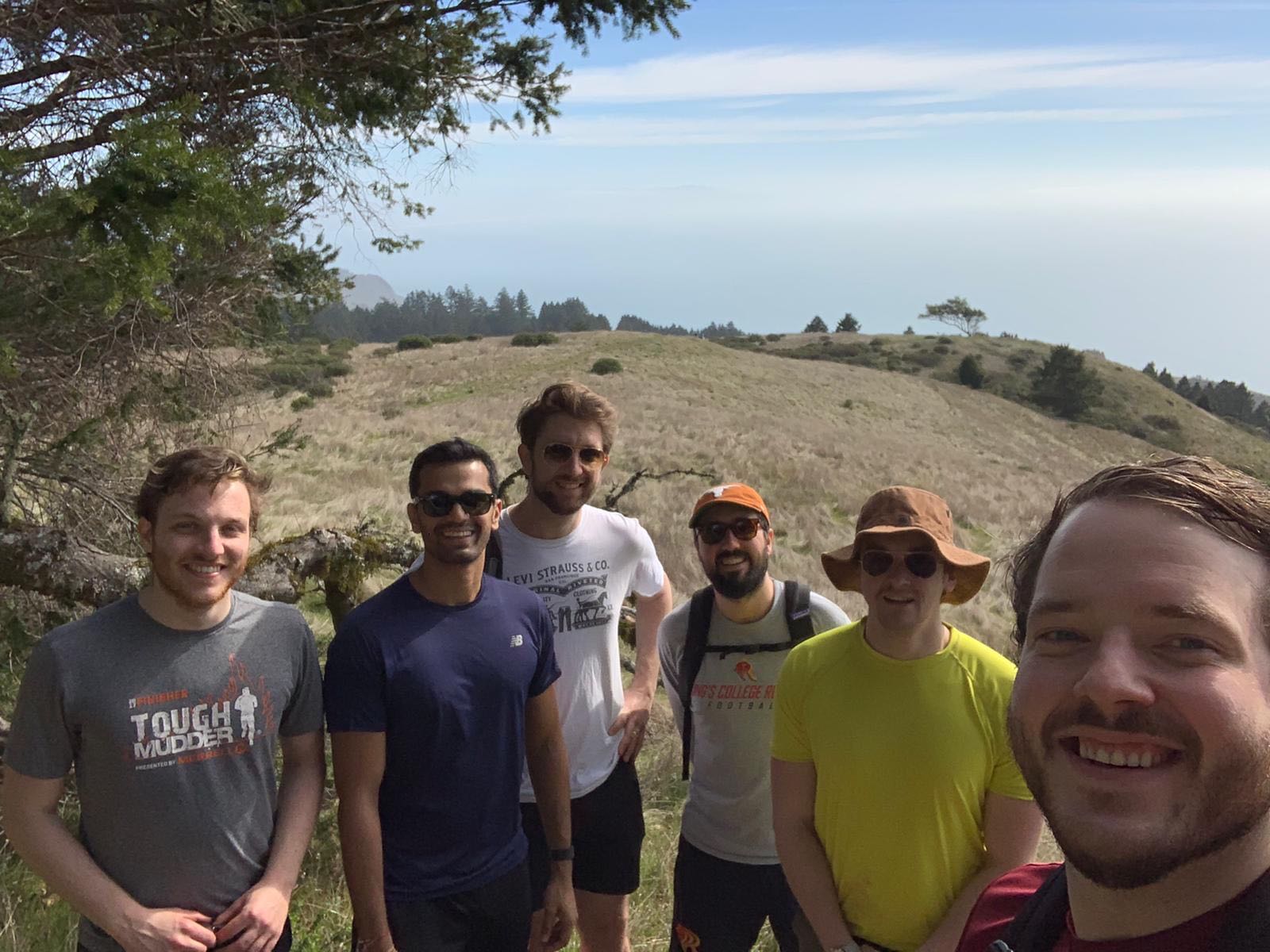
Hiking at Stinson Beach with friends

We wanted to have complete documentation, SDKs, and the product all in existence for that date. Surprise, surprise, after a 3.45am finish the night before, it was done.

We put the post live and told a couple of early users. It immediately started getting upvotes and made it to the front page.

We got significantly over 100 sign ups (and may have had more – we let users opt out of our tracking), and within a week of the repo going public, we were at 800 stars. We had a bunch of inbound demand ranging from indie developers through to multinational corporates who liked our product from a data privacy perspective.

More pleasingly, we had a bunch of GitHub issues raised, and even a PR or two from people we didn’t know. That was a good sign that we could build a community.

We were off to the races!

Subscribe to our newsletter

Product for Engineers

Read by 100,000+ founders and builders

We'll share your email with Substack