The benefits of feature flags are numerous. They help you mitigate risk, test changes in production, manage access, and most important of all, ship faster.
While it's tempting to build your own tools, there's no shortage to feature flag services with decent free tiers, or open-source feature flag tools you can self-host. These are the best and most popular right now.
A good open-source feature flag tool gives you control over how and when users see new features without locking you into a proprietary platform. Most solid tools include:
More advanced tools go further with:
Here's how the most popular open-source feature flag tools compare:
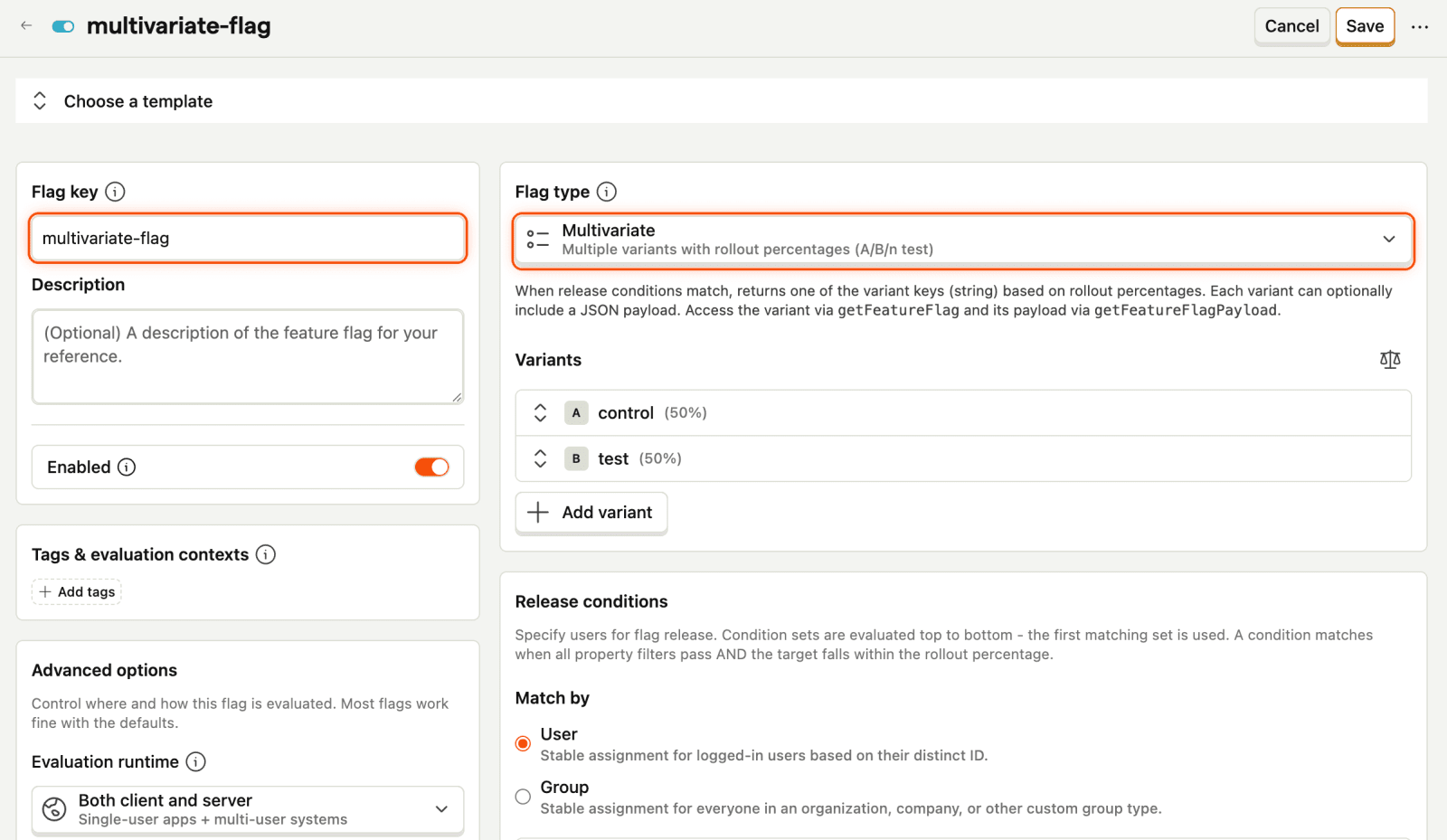
PostHog is an all-in-one platform, which means it offers product analytics, session replay, A/B testing, user surveys, error tracking, LLM observability, and a lot more in addition to feature flags.
It's a popular alternative to LaunchDarkly and analytics tools like Amplitude.
PostHog's feature flags enable conditional rollouts, multivariate flags, JSON payloads, automated usage reports, local evaluation, and more. They power its A/B testing features, so you can test product changes for their impact on key metrics.
PostHog also offers an early access feature management feature, which enables users to self-onboard to beta features behind feature flags.
Client-side: JavaScript, React Native, React, Android, iOS, Flutter, Remix, Angular, Next.js, Svelte, Capacitor, Unity
Server-side: Node.js, Python, PHP, Ruby, Go, Java, .NET, Elixir, Rust
You can also evaluate feature flags using PostHog's API from any language that can make HTTP requests.
PostHog's free tier includes 1 million feature flag requests per month. After that, you pay $0.0001 per request, with costs decreasing the more you use. You can set billing limits to avoid surprise bills – see the pricing page for more info.
Bottom line
PostHog is the best choice if you want feature flags alongside product analytics, session replay, A/B testing, and more in a single platform. Its generous free tier makes it especially appealing for startups and scaleups.
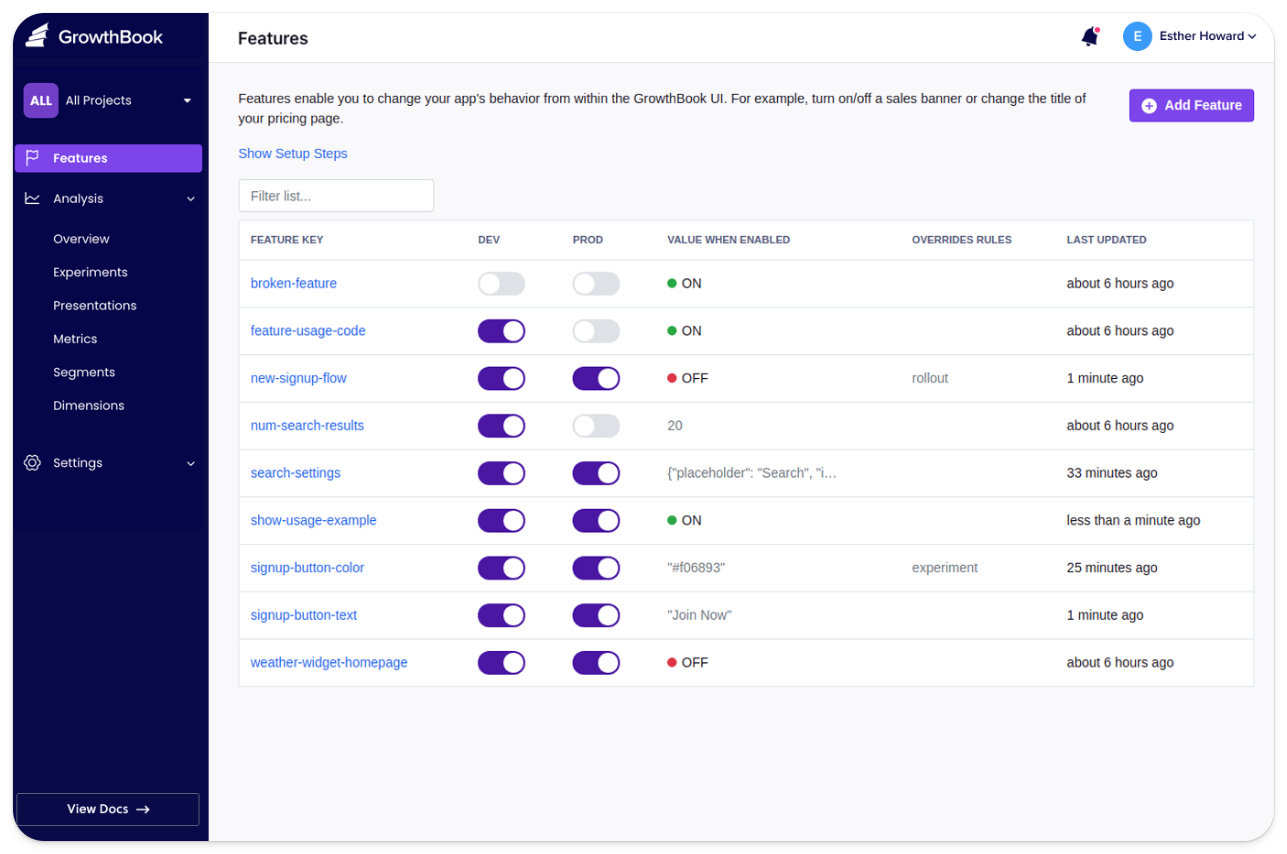
GrowthBook is a warehouse-native, open-source feature flagging and experimentation platform built to help companies make better data-driven decisions. Its flag tool features advanced targeting, gradual rollouts, and experiments.
It's warehouse native with support for most major SQL data sources, and there's a code-free visual experiment editor that can used be less technical end users.
Client-side: JavaScript, React, Android (Kotlin), iOS (Swift), Flutter, Vue
Server-side: PHP, Ruby, Python, Go, Java, C#.
GrowthBook's open-source self-hosted plan is free with unlimited users, flags, and experiments. The cloud-hosted Starter plan is free for up to 3 users. If you need advanced features like CUPED variance reduction, a visual editor, or multi-arm bandits, you'll need the Pro plan at $40/user/month.
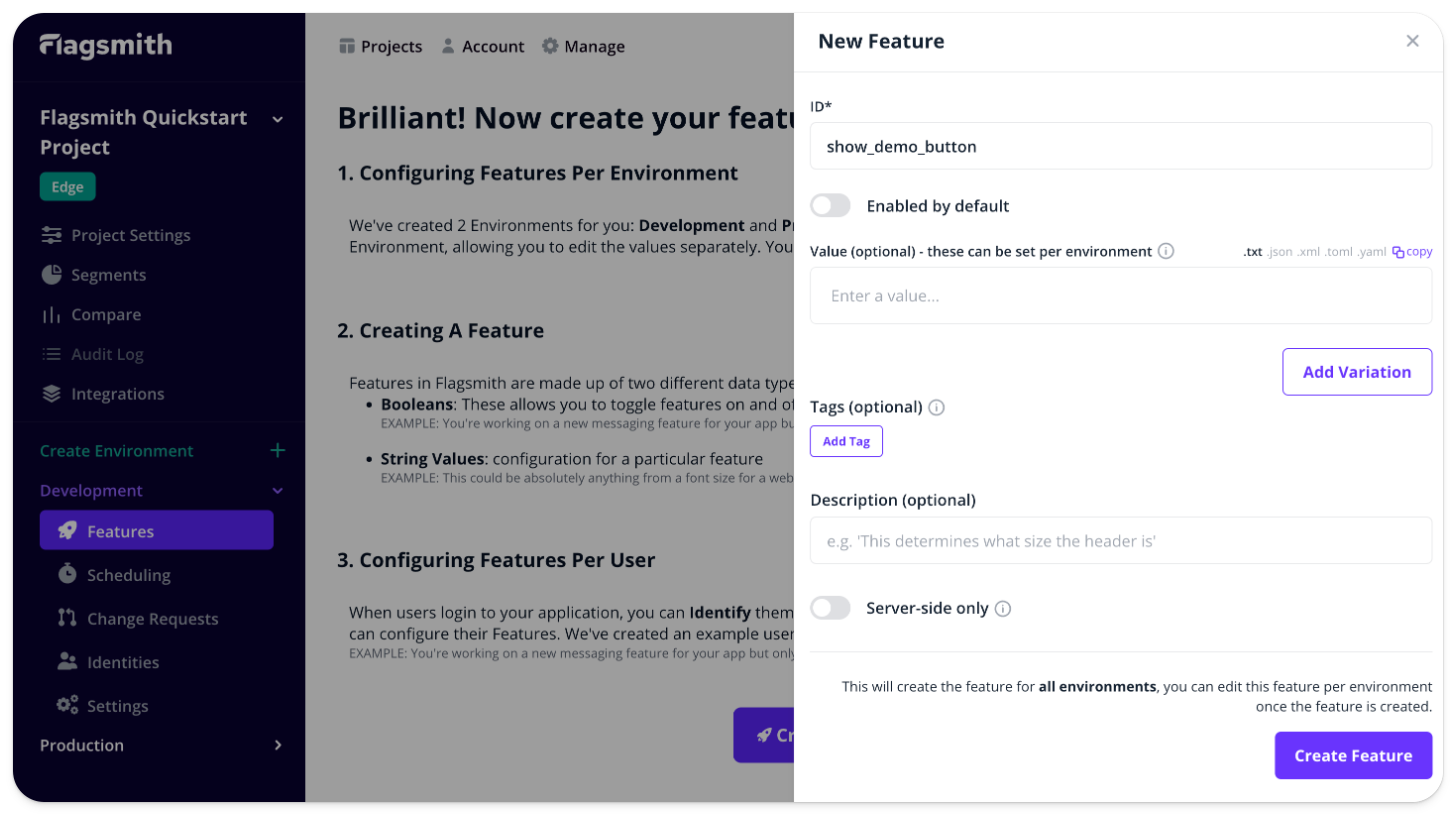
Flagsmith is a feature flag tool that makes it easy to test and deploy new functional and visual changes to users without pushing updates to code.
All flags in Flagsmith are capable of being configured for cross-platform remote configuration, so you can alter an app in real-time without having to wait for app store approval.
It supports local evaluation, scheduling, and paid plans offer an Edge API that automatically routes requests to the closest data center to the user.
Client-side: JavaScript, React Native, React, Android, iOS, Next.js.
Server-side: Node.js, Python, PHP, Ruby, Go, .NET, Ruby, Rust, Elixir.
Flagsmith's cloud free plan includes 50,000 requests per month for 1 user and 1 project. The Start-Up plan is $45/month for up to 1 million requests and 3 users. Enterprise and on-premises pricing is available for larger teams. The open-source self-hosted version is free with no usage limits.
Bottom line
Flagsmith is a solid open-source option for teams that need feature flags with remote configuration and flexible deployment options, including on-premises hosting. Its free cloud tier is limited to a single user, but the self-hosted version has no restrictions.
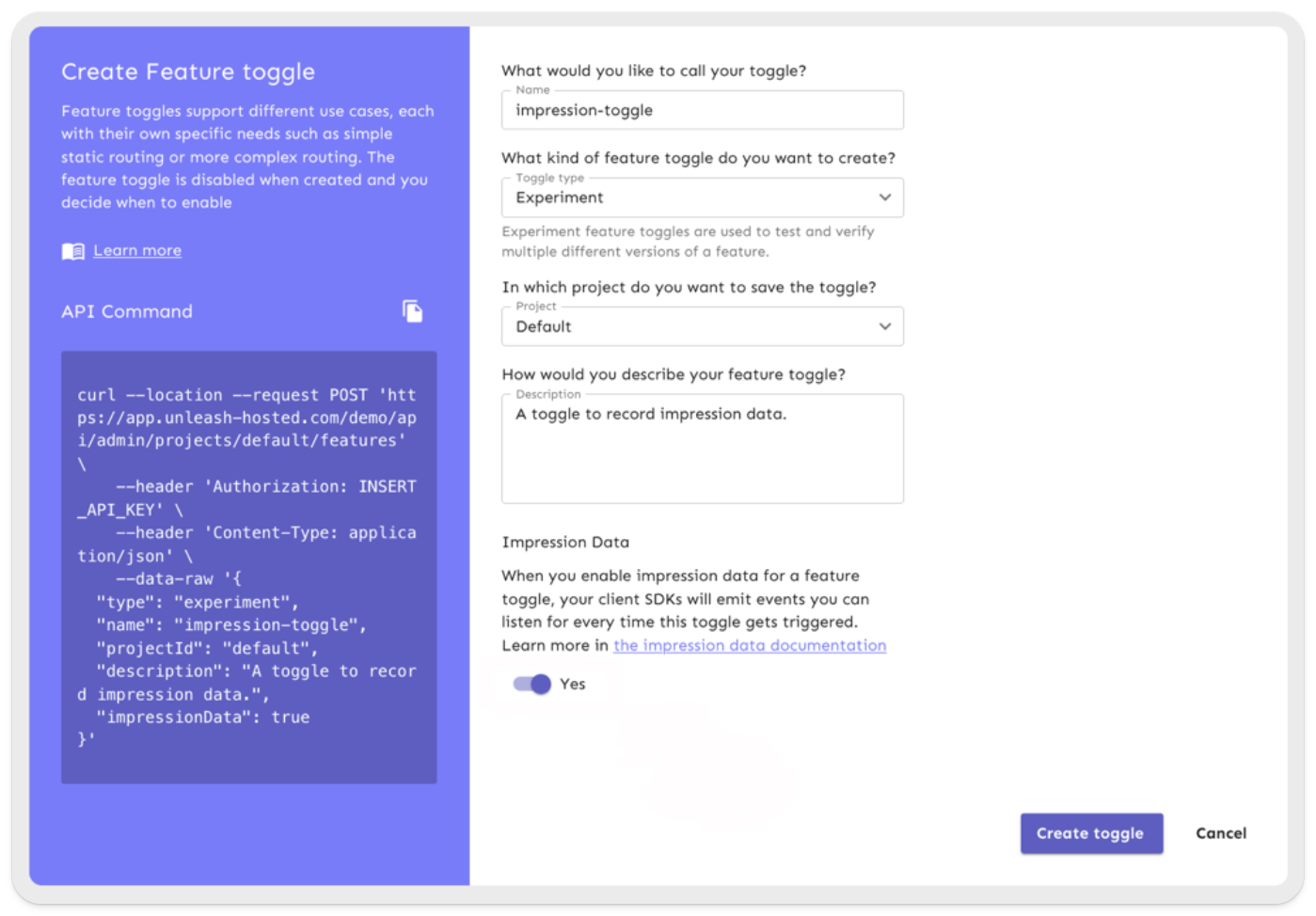
Unleash is a flag service with a public roadmap and a strong community. Official SDK support is comprehensive and there's a large selection of community maintained SDKs for less popular frameworks, too.
Unleash is particularly popular with privacy-conscious organizations since user data never leaves your infrastructure. You can use it to define targeting rules, gradual rollouts, and custom activation strategies, and it integrates with tools like Jira, Datadog, Microsoft Teams, and Slack.
Client-side: JavaScript, Android, Flutter, iOS, React, Svelte, Vue.
Server-side: Go, Java, Node.js, PHP, Python, Ruby, Rust, .NET.
Community maintained: Angular, Clojure, C++, ColdBox, Dart, Elixir, Haskell, Laravel, NestJS, React Native, Solid.
Unleash's open-source self-hosted version is free with unlimited feature flags. A self-service Enterprise plan starts at $75 per seat per month with a 5-seat minimum, available as cloud-hosted or self-hosted. Custom Enterprise pricing is available for annual contracts and dedicated support.
Bottom line
Unleash has the largest community and most extensive SDK support of any open-source feature flag tool. Its privacy-first architecture makes it a strong choice for organizations with strict data requirements.
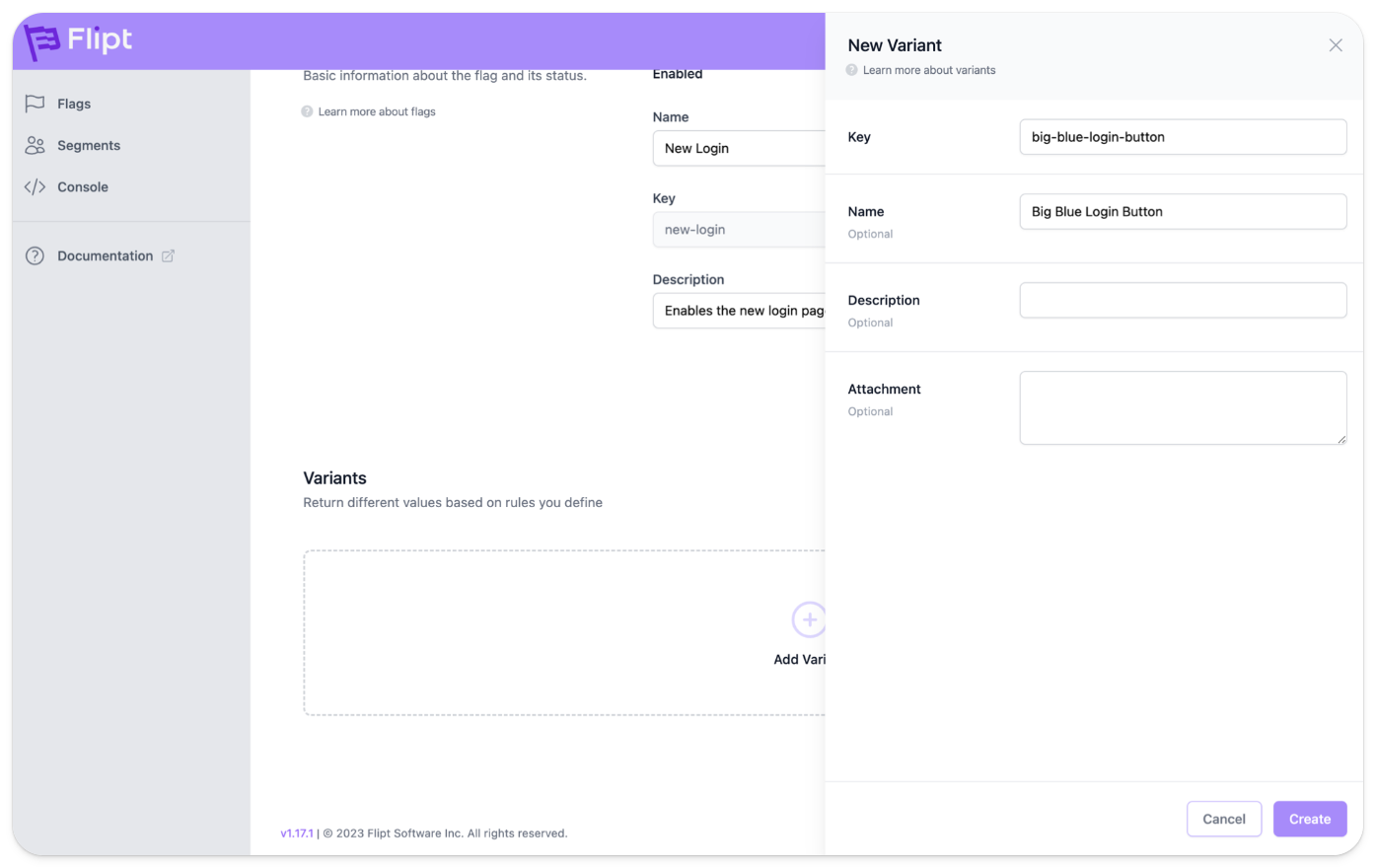
Flipt is a popular open-source option for feature flagging. It's 100% open source with no paid editions. It supports all basic feature flag use cases, such as rolling out features based on segments (e.g. new users, email, country etc.), multiple variations, and percentage thresholds for rollouts. It also supports storing your flags in Git, so it can be used without a database.
Client-side: JavaScript/TypeScript, React, Android (Kotlin).
Server-side: C#, .NET, C++, Dart, Go, Java, Node, PHP, Python, Ruby.
Nothing. There is no paid version of Flipt. It's distributed under a GPL-3.0 license.
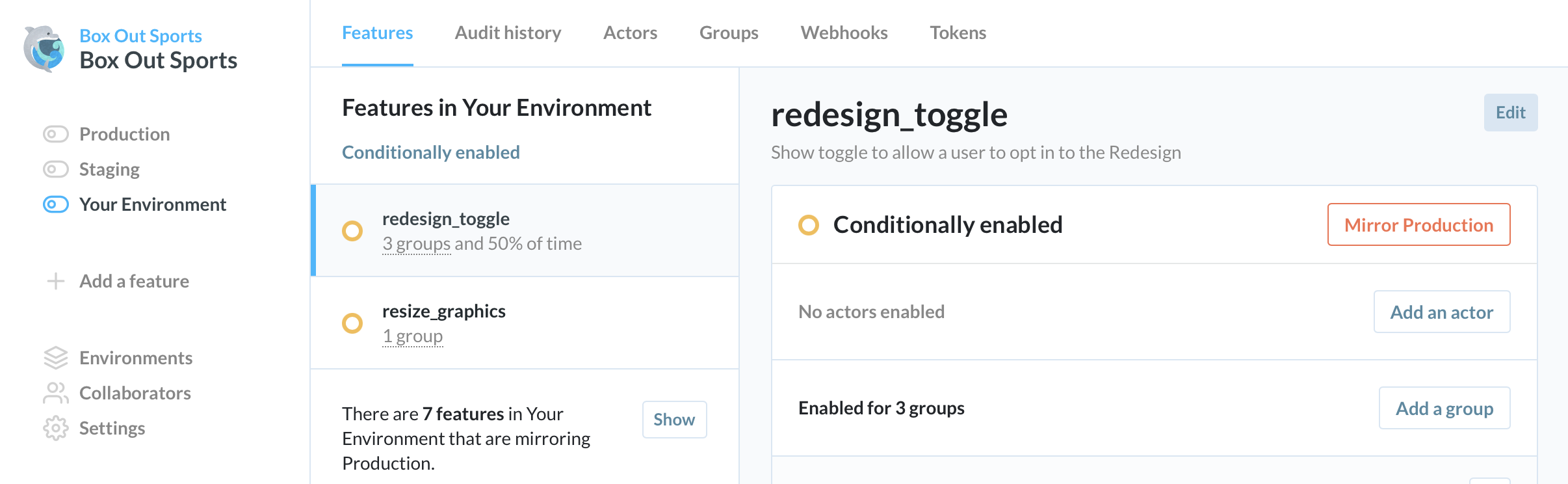
Flipper is a rebuilt version of the feature flag platform used by GitHub, maintained by a small team of ex-GitHub engineers. It supports all the common use cases for feature flags, such as boolean flags, group targeted flags, and targeting by actors or a percentage of actors. It currently only supports Ruby applications, though support for other languages is planned.
Ruby only
The open-source gem is free with unlimited flags. Flipper Cloud offers a free plan (2 seats, 5 flags) and fixed-price paid tiers: Bronze at $49/month (up to 10 seats), Silver at $149/month (up to 25 seats), and Gold at $299/month (up to 50 seats). Custom plans are available for larger teams needing higher seat limits, extended retention, or custom terms.
Bottom line
Flipper is the best feature flag tool for Ruby on Rails teams. Its developer experience is exceptional, and its fixed-price Cloud plans are straightforward. However, it's Ruby-only, which limits its audience.
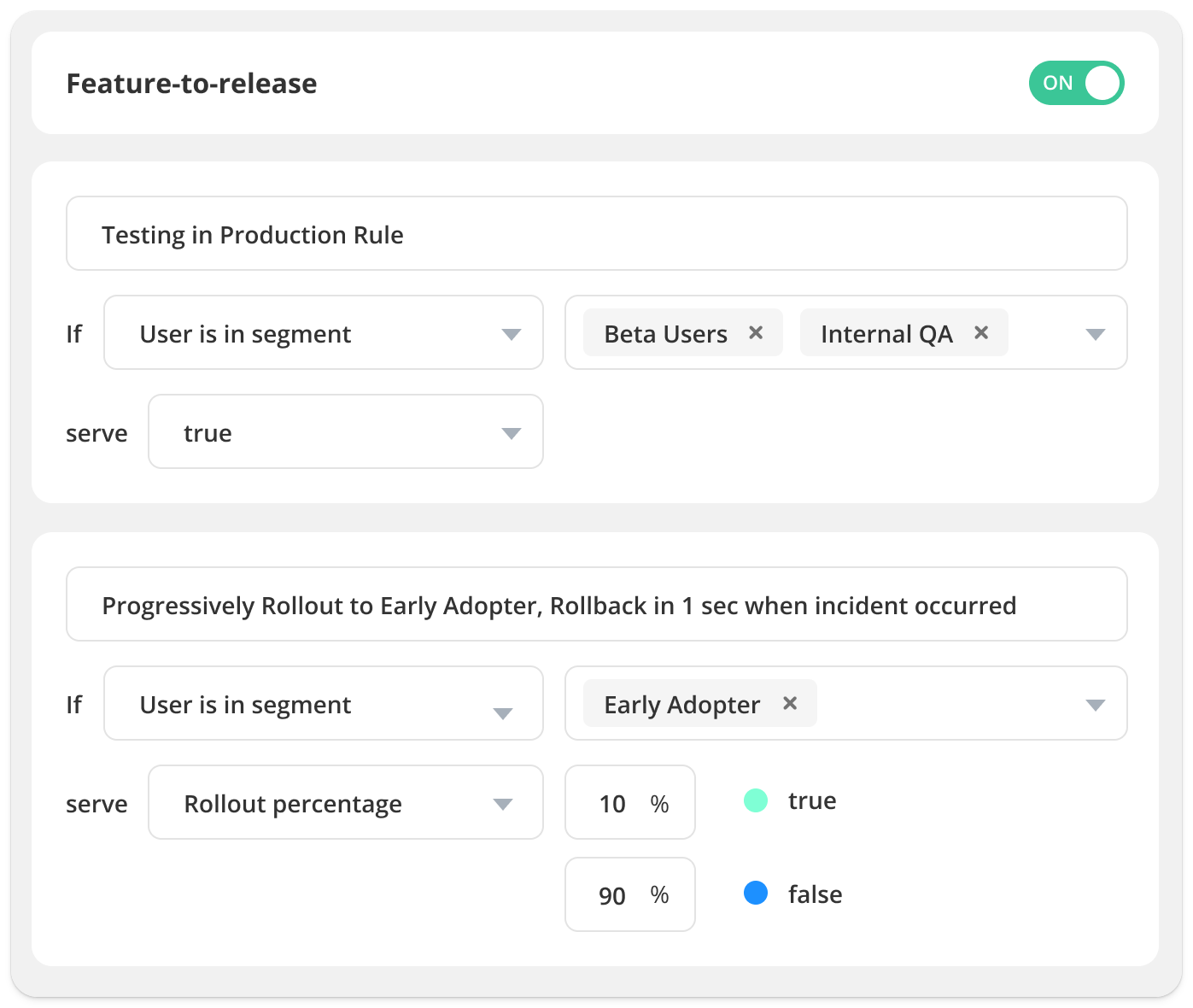
FeatBit is an open-source feature flag and A/B testing tool that's available in Standard (for small businesses) and Professional (for enterprises) flavors – the Standard edition is easier deploy due to fewer dependencies. It supports custom user segments, rolling out by percentages, and feature flag scheduling. A/B testing data can also be exported to tools like Datadog, Grafana, and Amplitude.
FeatBit is designed for self-hosting, with support for Helm Charts, Terraform, and OpenTelemetry for observability. It's capable of supporting over 1 million simultaneous online users.
Client-side: JavaScript, React, Vue.
Server-side: Python, PHP, Ruby, Go, .NET, Java.
All features are completely free. FeatBit monetizes its platform by offering premium support packages, which start at $399 per month for dedicated support with a 2-hour reply SLA during business hours. Enterprise and cloud options are also available.
Bottom line
FeatBit is a strong choice for teams that want a feature-rich, self-hosted feature flag tool with no artificial feature gates. Its .NET foundation and enterprise-grade scalability make it appealing for larger organizations, though its community is smaller than the other tools on this list.
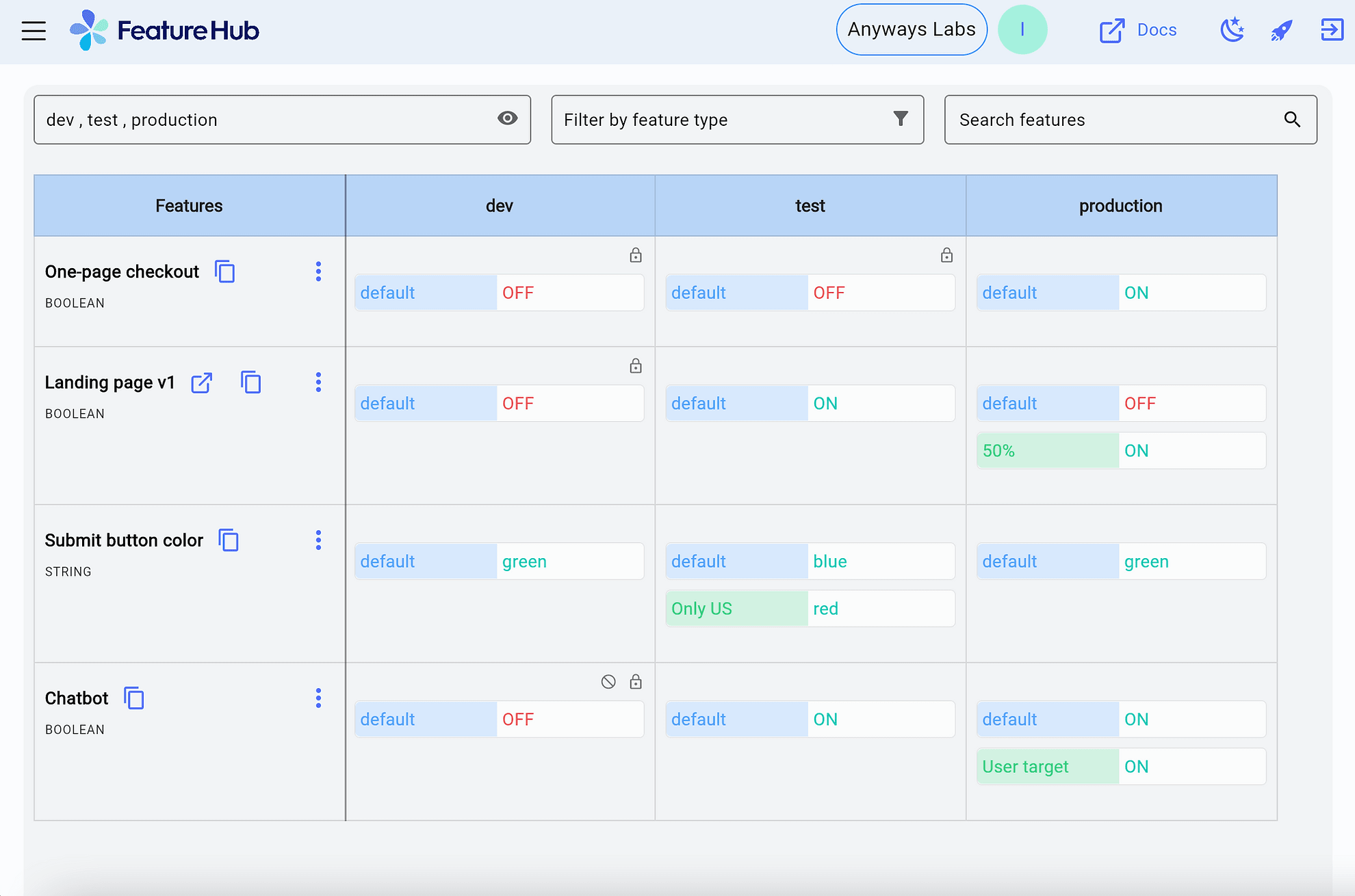
FeatureHub is an open-source feature flag tool that offers all the basics you need, including multivariate flags, client and server-side evaluation, and percentage rollouts.
The open-source version has no usage limits – it even supports SAML and social sign-in via Microsoft, Google and GitHub. There's also a Google Analytics integration, though this is the only analytics integration it offers at present.
Client-side: JavaScript, React, Flutter, iOS (Swift), Android, Angular.
Server-side: Node, C#, Dart, Go, Python, Ruby, Java.
FeatureHub offers a hosted option in addition to its open-source edition, and both versions offer the same features. The hosted version is $4.99 per user per month, plus API request charges: $0.38 per 10,000 streaming requests, $0.35 per 10,000 REST requests, and $0.33 per 10,000 test requests. A 30-day free trial with 10,000 API requests is included.
Bottom line
FeatureHub is a solid, no-frills open-source feature flag tool with a straightforward pricing model. Its smaller community and more limited integrations mean it's best suited for teams that value simplicity and just need the basics done well.
Here's the (short) sales pitch.
We're biased, obviously, but we think you'll love PostHog if:
It's completely free to get started – no credit card required. Our setup wizard handles configuration in minutes, or you can check out our docs to do it yourself.
For more options beyond open source, check out our guide to the best feature flag tools for developers.
Feature flags let you toggle features on or off for specific users without deploying new code. A/B testing uses feature flags to randomly split users into groups (variants) and then measures which variant performs better against a goal metric.
In practice, most A/B testing tools — including PostHog, GrowthBook, and FeatBit – are built on top of a feature flagging engine. The distinction matters because tools like Unleash, Flagsmith, and Flipt are primarily feature flag tools that can be used for basic split testing, while PostHog and GrowthBook provide end-to-end experimentation with built-in statistical analysis.
To learn more, read our guide on what is a feature flag (and how it compares to remote config and A/B testing).
For simple boolean flags, building your own is tempting and straightforward. But feature flag tools quickly become complex once you need targeting rules, percentage rollouts, audit logs, multi-environment support, and experimentation. Most teams are better off using an existing tool – especially since open-source options are free to self-host. For a deeper dive, read our guide on feature flags as a service.
Yes – that's one of the main advantages of open-source feature flag tools. All eight tools on this list can be self-hosted. PostHog, GrowthBook, Unleash, Flagsmith, FeatBit, and FeatureHub offer both cloud and self-hosted options. Flipt and Flipper are self-hosted first (though Flipper also offers a cloud service). Self-hosting gives you complete control over your data, which is particularly important for teams with strict privacy requirements or regulatory compliance needs.
Local evaluation means feature flags are checked locally within your application rather than making a network request to a remote server for every check. This reduces latency and means your feature flags keep working even if the flag service goes down. PostHog, Flagsmith, Flipper, and Flipt all support local evaluation. It's especially important for performance-sensitive applications and high-traffic services.
Subscribe to our newsletter
Read by 100,000+ founders and builders
We'll share your email with Substack
此内容由惯性聚合(RSS阅读器)自动聚合整理,仅供阅读参考。 原文来自 — 版权归原作者所有。