
惯性聚合 高效追踪和阅读你感兴趣的博客、新闻、科技资讯
阅读原文 在惯性聚合中打开

推荐订阅源

cs.CL updates on arXiv.org
B
Blog RSS Feed
宝玉的分享
宝玉的分享
腾讯CDC
博客园_首页
T
Tailwind CSS Blog
月光博客
月光博客
博客园 - 司徒正美
奇客Solidot–传递最新科技情报
奇客Solidot–传递最新科技情报
M
MIT News - Artificial intelligence
A
About on SuperTechFans
云风的 BLOG
云风的 BLOG
钛媒体:引领未来商业与生活新知
钛媒体:引领未来商业与生活新知
有赞技术团队
有赞技术团队
freeCodeCamp Programming Tutorials: Python, JavaScript, Git & More
大猫的无限游戏
大猫的无限游戏
MongoDB | Blog
MongoDB | Blog
博客园 - 聂微东
V
Visual Studio Blog
H
Hackread – Cybersecurity News, Data Breaches, AI and More
SecWiki News
SecWiki News
美团技术团队
P
Privacy International News Feed
H
Help Net Security
让小产品的独立变现更简单 - ezindie.com
Microsoft Security Blog
Know Your Adversary
Know Your Adversary
Y
Y Combinator Blog
D
DataBreaches.Net
Project Zero
Project Zero
T
The Blog of Author Tim Ferriss
Cyberwarzone
Cyberwarzone
C
Cybersecurity and Infrastructure Security Agency CISA
C
Cisco Blogs
S
Schneier on Security
G
GRAHAM CLULEY
博客园 - 三生石上(FineUI控件)
Cisco Talos Blog
Cisco Talos Blog
小众软件
小众软件
Forbes - Security
Forbes - Security
D
Docker
T
Tenable Blog
S
Secure Thoughts
雷峰网
雷峰网
S
Security @ Cisco Blogs
T
The Exploit Database - CXSecurity.com
The Cloudflare Blog
博客园 - 【当耐特】
Spread Privacy
Spread Privacy
阮一峰的网络日志
阮一峰的网络日志

Inside Nutrient

A guide to the invisible work behind documents Introducing Nutrient Documents for Salesforce: Native document generation and signing Document AI vs. traditional OCR: Choosing between OCR, AI, and hybrid pipelines PDF SDK compliance and security evaluation checklist for enterprise teams (2026) Invariant Corp replaces paper processes with Nutrient Workflow and scales without limits What is process mapping? A complete guide Nutrient vs. Conga Composer for Salesforce document generation (2026) Document routing: How to automate document distribution The CTO’s AI playbook: Why accountability architecture beats orchestration Compliance workflow automation: Why built-in compliance is table stakes Workflow diagrams: Examples, symbols, and how to build one that actually runs Digital forms: Replace paper forms with automated workflows Approval workflow software: How to automate approvals Why document-centric automation is different The CEO’s AI playbook: Why decision architecture beats model selection Nutrient SDK product updates for Q1 2026 PDF redaction verification: How to prove sensitive data is permanently removed What is a VPAT? The complete guide to accessibility conformance reports What is PDF/UA? The accessible PDF standard explained Salesforce eSignatures: Generate, sign, and track documents in one flow Online document viewer: Options, tradeoffs, and how to embed one Document viewer for web apps: React, Vue, Angular (2026) Best document viewers in 2026: A buyer’s guide How to edit a PDF in Python: Add text, images, and annotations Nutrient advances Workflow platform with agentic AI for enterprise-grade speed and consistency in document-heavy operations How to create a Salesforce quote template from opportunity data The business case for accessibility: Five ways it drives enterprise value Python PDF library comparison (2026): 7 libraries for developers Why your AI agent hallucinates PDF table data PDF.js limitations: When to upgrade to a commercial PDF SDK How Subject scaled 5× with Nutrient’s PDF SDK without rebuilding its document layer I replaced our sales training with an AI coach that runs in Slack — here’s what broke Redirecting to: https://securitybuzz.com/cybersecurity-news/why-enterprise-permissions-are-ais-most-dangerous-inheritance/ Nutrient .NET SDK vs. iText Core: Complete comparison for .NET developers DocuVieware: Support’s most frequently asked setup questions Introducing Nutrient Workflow How to convert PDF to Word in C# (.NET) When email and spreadsheets stop working: Work order approval workflows for field teams on the move Compliance with confidence: Why document-centric automation is the foundation of your mission Nutrient expands AI Assistant, automating multistep document workflows inside any application What is document generation? A developer’s guide to PDF generation Document Converter data flow and how real-time watermarks skip the queue PDF/UA compliance guide: Requirements, standards, and best practices Computers still can’t understand you How Athena Intelligence built AI agents for regulated enterprises with Nutrient’s document infrastructure How to convert HTML to PDF (2026): 4 methods from browser print to SDK How to build a document extraction pipeline with Nutrient Vision API OCR vs. intelligent document processing: Choosing the right document extraction engine Beyond OCR: How document intelligence eliminates manual processing in regulated industries Nutrient vs. IronPDF: Complete comparison for .NET developers Nutrient vs. Aspose.PDF: Complete comparison for .NET developers Redirecting to: https://fortune.com/2026/02/19/openclaw-who-is-peter-steinberger-openai-sam-altman-anthropic-moltbook/ Lufthansa Systems uses Nutrient to deliver reliable, scalable PDF rendering for pilots worldwide Nutrient vs. Syncfusion: Complete comparison for .NET developers React’s useTransition: The hook you’re probably using wrong First City Monument Bank streamlines banking processes with Nutrient Workflow Redirecting to: https://www.sdcexec.com/warehousing/automation/article/22957364/nutrient-workflow-automation-the-missing-link-in-supply-chain-efficiency The complete guide to digital signatures: PAdES, CAdES, and XAdES explained Nutrient Python SDK: Production-grade document processing for Python Introducing agentic document editing for web applications with AI Assistant Nutrient vs. QuestPDF: Complete comparison for .NET developers How we fixed the GdPicture license expiration (and what to do if you’re affected) Red team security testing with agentic AI The future of healthcare document automation Best healthcare workflow software compared Nutrient SDK product updates for Q4 2025 How Harvey scaled legal document workflows 50 percent MoM without rebuilding infrastructure HIPAA-compliant document management in hospitals How we optimized rendering performance while handling thousands of annotations in React — Part 2 Automated PII removal with Nutrient API Redirecting to: https://www.devopsdigest.com/2026-low-code-no-code-predictions Redirecting to: https://www.kmworld.com/Articles/Editorial/ViewPoints/Leaders-predict-AI-to-continue-permeating-all-aspects-of-KM-in-2026-172594.aspx What are deep agents and how do they solve complex problems? Whipping up document magic: Your easy-bake recipe for Vue and Nutrient Web SDK 🧁 What I’ve learned about product iteration planning while building SDKs Passwordless document signing: Three-layer security guide New zip folder functionality streamlines file management in Document Automation Server The keyboard shortcuts playbook: Taking control of keyboard events in Nutrient Web SDK From experienced engineer to AI beginner: My unexpected journey AI-assisted manual testing: Handling Safari’s PDF rendering and UI quirks How to keep a 20-year-old SDK up to date How we optimized rendering performance while handling thousands of annotations in React — Part 1 Nutrient announces new executive hires to accelerate next phase of growth High performance UI using web workers Automate document conversion at scale with Python and Nutrient DCS From curiosity to PLG (and AI): My journey to understanding product-led growth Prost to progress: One year as Nutrient Pigeon usage at Nutrient: Bridging native SDKs to Flutter Modernizing CI build servers: How to migrate from Chef to Ansible Unix man pages: AI-friendly documentation since 1971 Consistent hashing for even load distribution Best AI redaction APIs: Complete comparison guide for 2025 Why AI document redaction matters for modern security From coding to coordinating: How AI transformed my workflow What is intelligent document processing (IDP)? A complete guide Enterprise PDF SDKs: Best PSPDFKit (now Nutrient) alternatives Nutrient SDK product updates for Q3 2025 GdPicture support best practices Redacting sensitive data with Nutrient AI redaction API How AI is transforming the customer experience at Nutrient: From instant answers to intelligent support
PDFium: Separating fact from fiction on open source security
Jonathan D. Rhyne · 2023-12-10 · via Inside Nutrient

Table of contents

    PDFium: Separating fact from fiction on open source security

    From the desk of Jonathan Rhyne, co-founder and CEO of Nutrient

    In the first article of our Fact vs. fiction series, I covered some of the most common myths surrounding the security of open source technology and shared all the reasons why Nutrient trusts and uses PDFium for PDF rendering. Today, I’ll take it a step further.

    Purpose and intended audience

    As with my previous article, this is aimed at decision makers who work for companies that are in the process of choosing a trusted technology partner for PDF processing, manipulation, and rendering. Whether you have a custom web, desktop, or mobile application, we understand that managers and decision makers need to be well-informed and equipped with all the facts to make such an important decision.

    So I’m now going to address how and why Nutrient is committed to supporting the open source PDFium project. Google, Microsoft, Dropbox, and Nutrient are all contributors to PDFium, and that’s not going to change anytime soon. So let’s take a look at a big myth regarding open source and PDFium.

    Myth — Open source technology is impossible to support and maintain

    In conversations with people in this industry, we’ve heard rumors circulating that some organizations are claiming “open source technology is impossible to support and maintain.” This also infers that since Nutrient uses and leverages open source technology, we can’t properly protect our customers from malicious code or vulnerabilities.

    This is simply not the case, so let me explain the “how” and the “why.”

    Fact #1 — The most successful open source projects worldwide are maintained by a team of organizations

    The strength of any open source project lies within its community. Full stop.

    Now, I want to bring to your attention two well-known examples to analyze the criteria of what makes a successful open source project. And in fact, one of the projects leverages the other project.

    Of course, I’m talking about Android OS and the Linux kernel. Here are some facts and figures to digest:

    Android OS

    • Most commonly used in smartphones and tablet devices.
    • Commands a global market share of 75 percent of the mobile device market.
    • Has 2.8 billion active users.
    • Corporate contributors include Google, Intel, Samsung, IBM, and Sony.

    The Linux kernel

    • Most commonly used within Android devices, cloud servers, supercomputers, network routers, and automobiles.
    • Commands a global market share of 100 percent of the supercomputer device market.
    • Commands a global market share of 75 percent of the mobile device market (thanks to Android OS).
    • Commands a global market share of 50 percent of the automotive market.
    • Has more active users than Android OS.
    • Corporate contributors include Google, Intel, Samsung, and IBM.

    So whether you’re checking your email, using your phone for social media, or simply driving a car, there’s an extremely high probability that you’re interacting with a device that runs Android or Linux.

    Now, I can name countless other examples, but as you can see from both cases above, these massively successful open source projects are maintained by a group of companies that have a combined stake in the success of the project.

    In fact, I challenge you: Can you think of any successful open source project that’s dominated and controlled by the decisions of a single company?
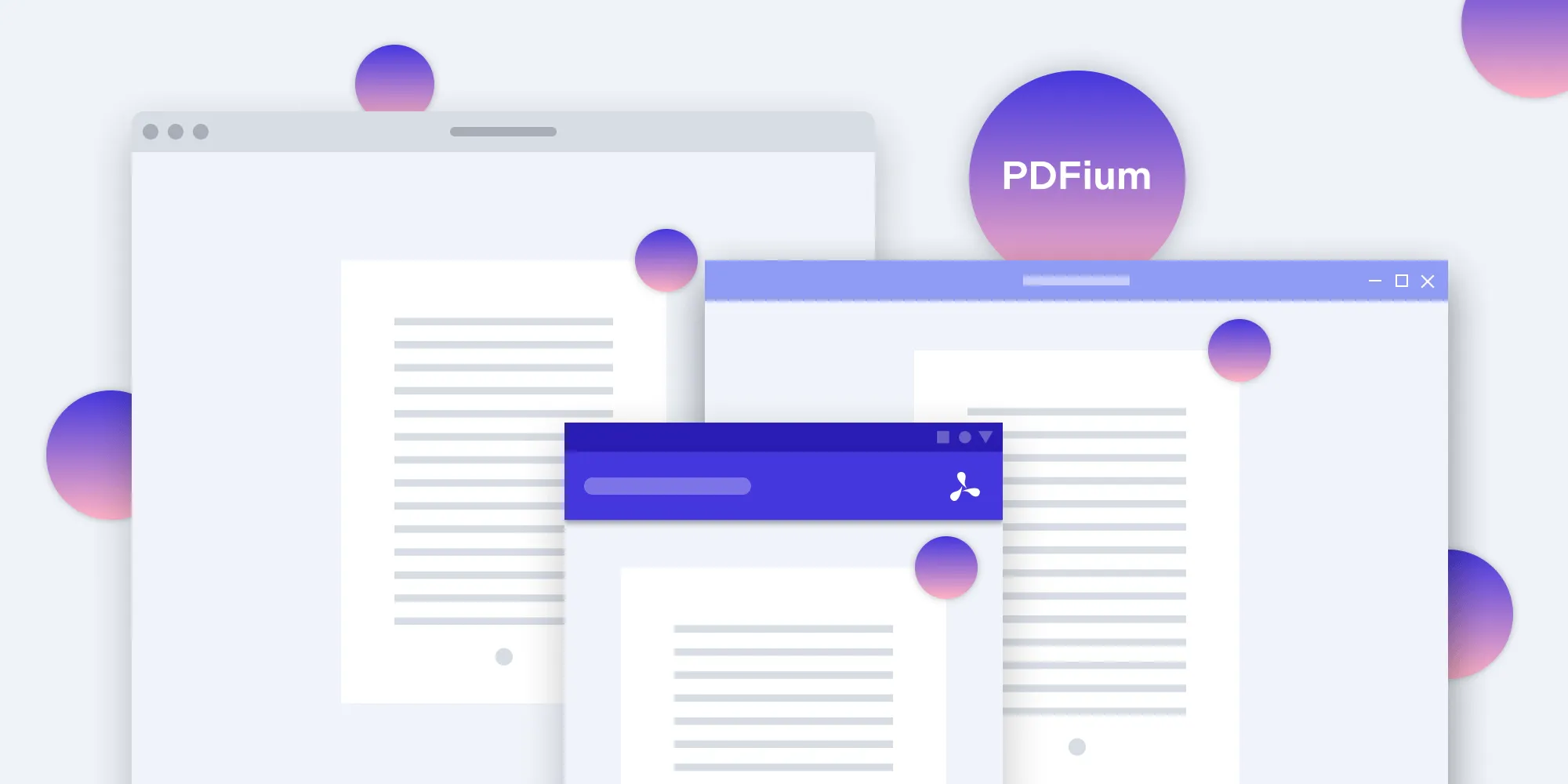
    PDFium’s presence in web browsers, Android devices, and Nutrient

    Figure 1 — PDFium is used inside countless web browsers, Android devices, and Nutrient

    Fact #2 — Nutrient is an active supporter of the open source PDFium project

    Now, just like the Android OS and the Linux kernel, PDFium is a widely successful open source project used by billions of consumers worldwide. PDFium has reached ubiquity due to the multiple companies and the passionate developers (us included!) who support it.

    For years, Nutrient has been an active supporter of PDFium by contributing source code to improve the stability and performance of the platform, and of course, by embedding it into Nutrient’s SDKs for developers.

    You’ve seen the statistics for Android and Linux, so now let’s look at the stats for PDFium:

    PDFium

    • The most widely used PDF rendering library worldwide.
    • Used as the PDF renderer in Android OS.
    • Used as the PDF renderer in the Chrome and MS Edge web browsers.
    • Used as the PDF renderer for Dropbox.
    • Used as the PDF renderer in Nutrient (and for all our happy customers).
    • Has more active users than Android OS.
    • Corporate contributors include Google, Microsoft, Dropbox, and Nutrient.

    Quite impressive! Over the past few years, our code contributions to PDFium have been peer reviewed, battle tested, and vetted by some of the largest companies in the industry. Did you know that even Google lists PDFium on its Security Brag Sheet(opens in a new tab) for its web browser engine? This is how open source is done by professionals.

    Conclusion

    Anyone trying to convince you that open source projects can’t be maintained is lying to you. In fact, the model followed by the most widely used and successful open source projects is to team up with other organizations who all have a combined interest in seeing the product be safe and successful. So let me repeat myself: This is how open source is done by professionals, because anything else is amateurish.

    Sources

    FAQ

    Nutrient is committed to supporting PDFium because it’s a highly successful open source project maintained by a community of companies, including Google, Microsoft, Dropbox, and Nutrient. This collaborative effort ensures continuous improvement, stability, and security of the PDF rendering engine.

    PDFium is successful due to its active community of contributors and users, including major corporations. This widespread support and collaboration lead to regular updates, security enhancements, and feature additions, making PDFium a reliable and robust PDF rendering engine.

    Nutrient contributes to the PDFium project by providing source code improvements, enhancing stability and performance, and embedding PDFium within its own SDKs. These contributions are peer-reviewed and vetted by the community, ensuring high-quality standards.

    Using open source PDF rendering engines like PDFium offers transparency, security, and continuous innovation. The collaborative nature of open source projects ensures any vulnerabilities are quickly identified and resolved, and new features are regularly added.

    The security of PDFium is ensured by the collective efforts of its community, which includes extensive code reviews, regular updates, and contributions from major tech companies. This collaborative approach ensures PDFium remains secure, stable, and up to date with the latest security standards.

    Explore related topics

    Try for free Ready to get started?

    Related SDK articles

    Explore more