









When I sat down to write last year’s retreat recap, I remember feeling overwhelmed by the enormity of it all — we were in the middle of a rebrand, launching a new identity, and trying to capture the chaos and excitement of becoming Nutrient. Now, a year later and a couple months off our Munich retreat, I find myself in a completely different headspace. Where Prague felt like transformation, Munich felt like… settling in. And I mean that in the best possible way.
We arrived in Munich in early September with almost a year of the Nutrient brand under our belts. The website was launched, the messaging was refined, and we’d spent the better part of a year living and breathing our new identity. This retreat wasn’t about becoming something new; it was about reinforcing who we already are — and pushing forward into what comes next.
Read about our 2024 retreat in Prague.
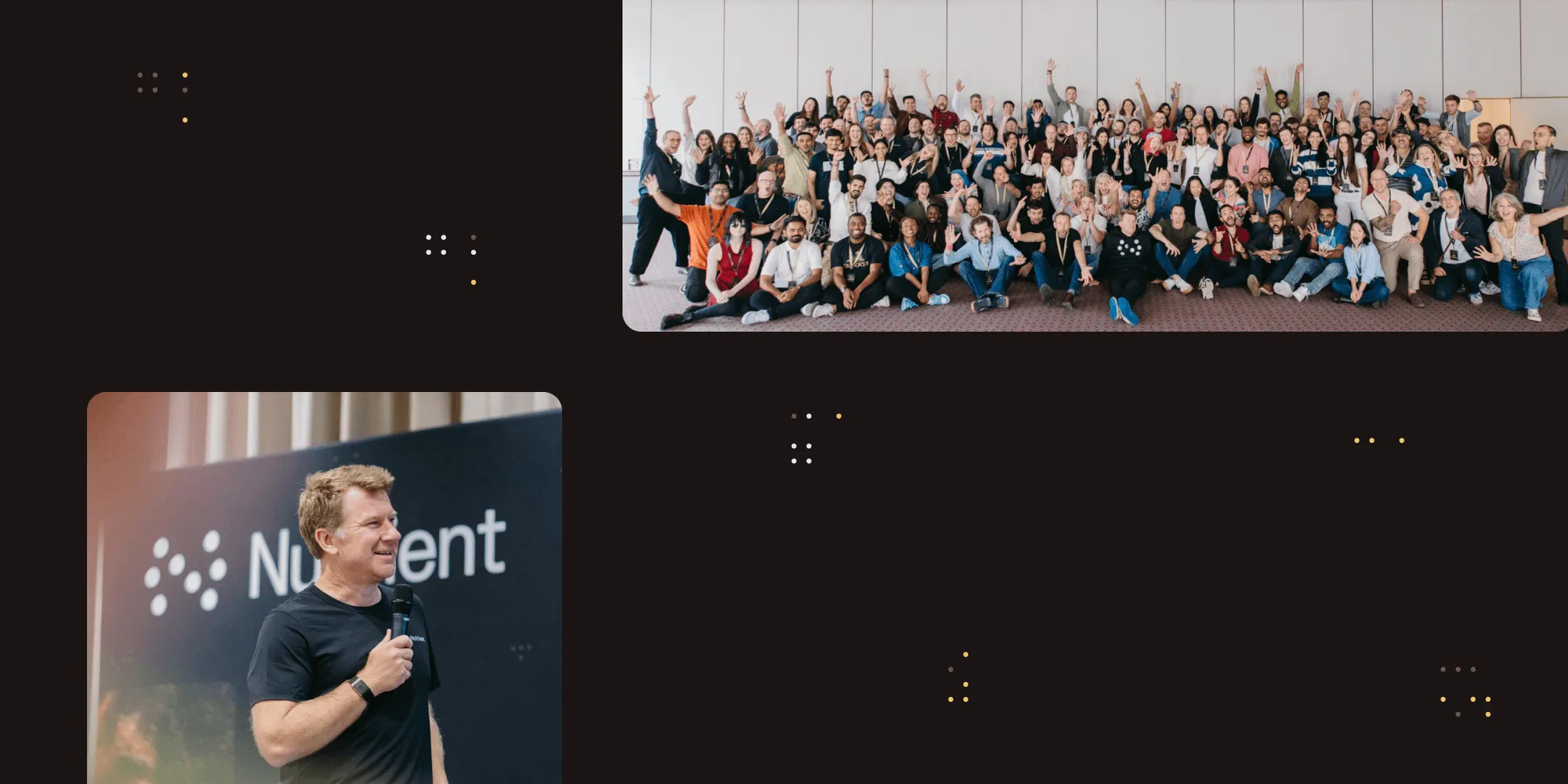
One of the most striking differences between this retreat and previous ones was the overall atmosphere. Last year, we were juggling the stress of a rebrand, the excitement of a new chapter, and the pressure to get everything right. This year? We felt settled. There’s something powerful about spending a year as Nutrient — working together under this new banner, refining our processes, growing our teams — that created a sense of cohesion I’m not sure we’ve ever had before.
It wasn’t just me who felt it, either. In conversations throughout the week, colleagues kept using words like “aligned” and “connected.” We’ve grown into our new skin, and it shows.
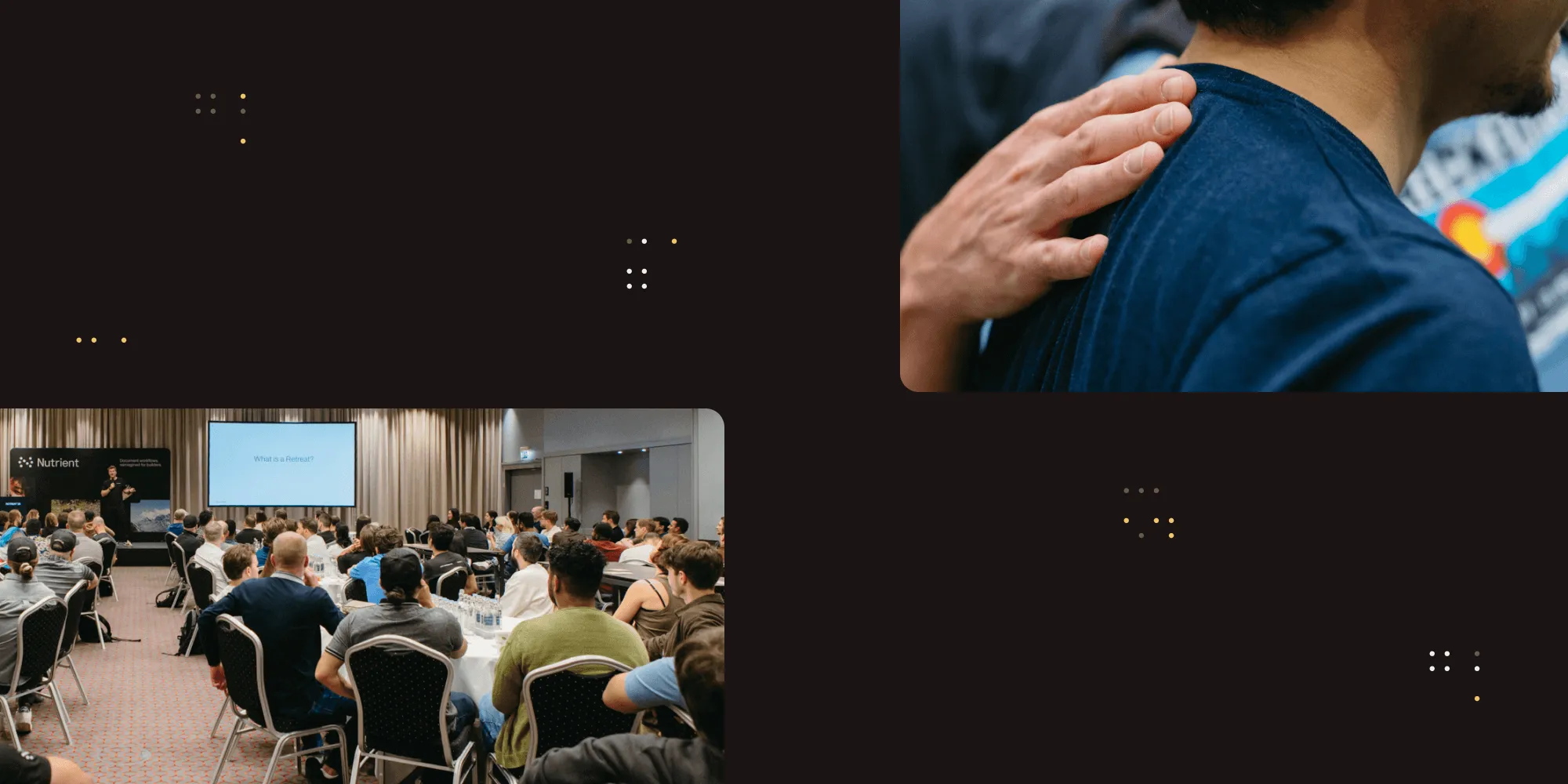
A major focus of this year’s retreat was intentional team bonding — specifically with people outside our normal teams. As we’ve grown to 150+ people, it’s become increasingly easy to stick within our own bubbles: our teams, our timezones, our Slack channels. So this time around, the retreat organizers made a conscious effort to mix things up.
Throughout the week, we had structured icebreakers and activities designed to push us out of our comfort zones and into conversation with colleagues we might not otherwise spend time with. This took on the form of things like Swagventure (being paired with a partner and answering questions to retrieve our swag); Carbohydrate Chats (speed “dating” where we spoke with new people in short sprints before moving on to the next one); and Rock, Document Solutions, Scissors (a play on the classic rock, paper, scissors, where only one person could emerge victorious).
In particular, I really enjoyed the Swagventure. Instead of just standing in line to claim our retreat swag, we had to spend time asking questions and getting to know someone we don’t normally work with and provide specific answers to claim the swag at different tables. I walked away from that week not only with a bunch of fun knowledge about this person, but with a new workplace pal!
Read about our 2023 retreat in Budapest.
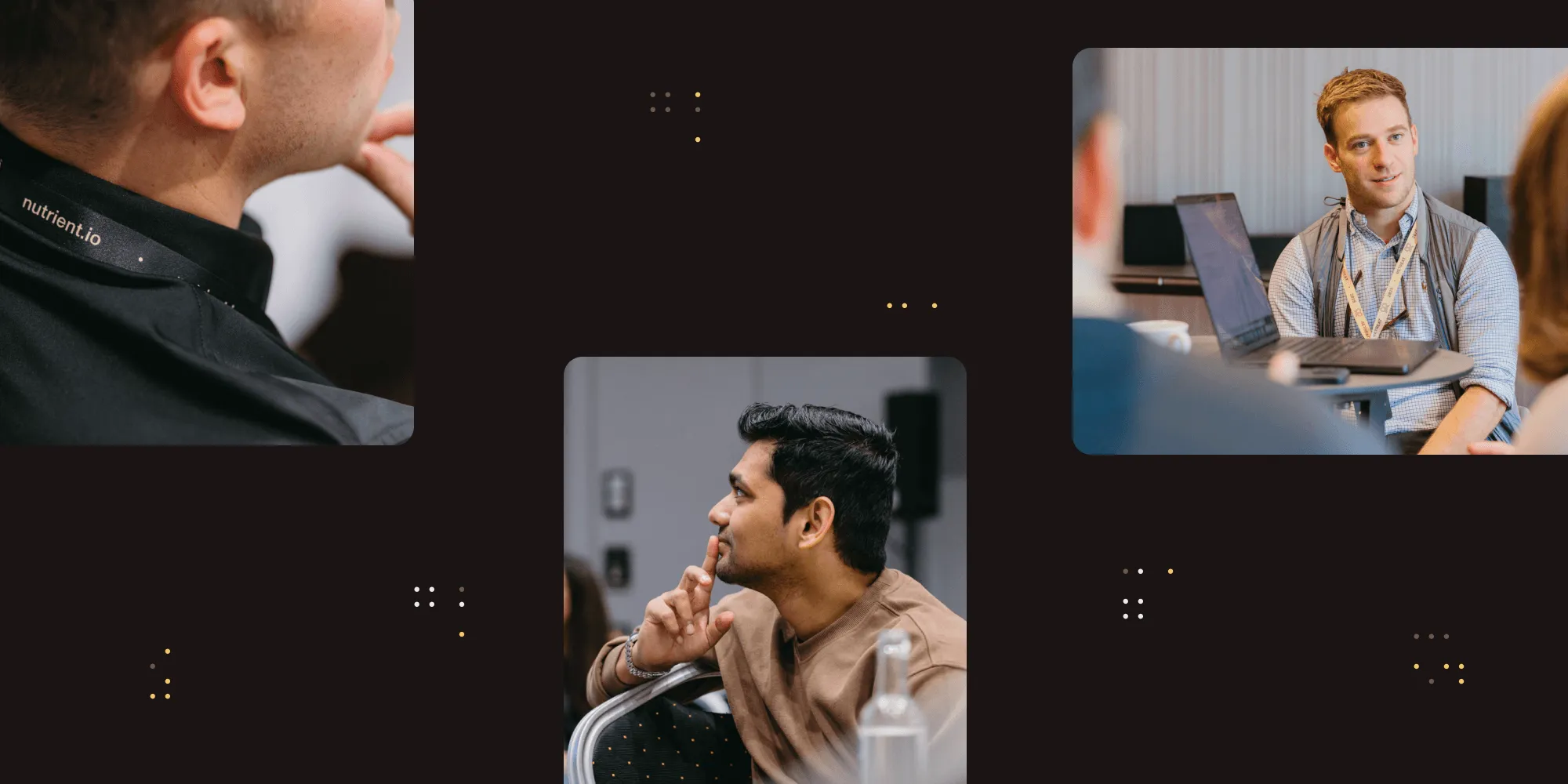
However, if there was one theme that defined this retreat, it was AI. Not just talking about it or strategizing around it, but actually doing something with it. We’ve been integrating AI into our products and workflows for a while now, but this retreat took it a step further.
The highlight (or lowlight, depending on who you ask) was the vibe coding hackathon that took up an entire afternoon. Teams were formed, problems were presented, and we were turned loose to build, experiment, and see what we could create using AI tools in just a few hours. Some teams built impressive prototypes, and others… well, let’s just say the vibe was strong even if the code wasn’t always functional.
But that was the point, really. It wasn’t about perfection; it was about exploration, collaboration, and getting comfortable with AI as a tool rather than just a buzzword. By the end of the afternoon, even the most skeptical among us had to admit there was something exciting about what we’d accomplished — and what we could accomplish if we keep pushing forward. Me personally? I’d been dreading the hackathon, but when it was over, I was surprised by how much fun I’d had.
We also had sessions dedicated to AI strategy, brainstorming how we can continue to innovate in this space and what that means for our products, our customers, and our teams. We were lucky enough to have members of the AI team (normally spread across Asia, Oceania, and Europe) in one room to explain what they’re working on and answer all of our questions — something that isn’t that easy to coordinate remotely.
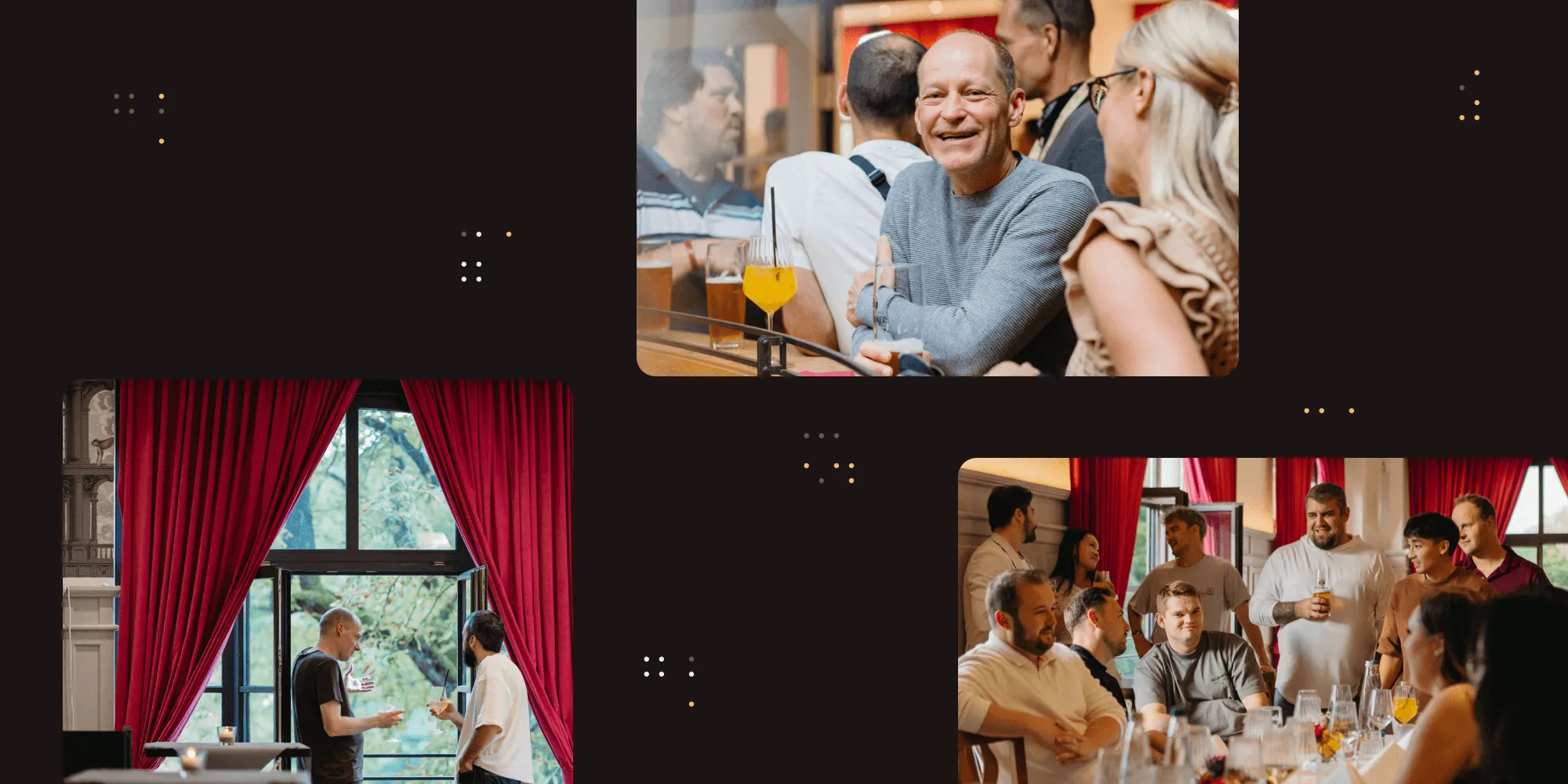
Of course, no retreat is complete without taking advantage of the local culture, and Munich delivered on that front in spades. Bavaria is famous for its beer gardens and breweries, and we made it our mission to experience as many as possible.
Our company dinners took place at traditional breweries and beer gardens — including Paulaner am Nockherberg(opens in a new tab) and Augustiner Keller(opens in a new tab) — where we sat at long communal tables, clinked steins, and bonded over classic German meals — which of course, meant a lot of meat and potatoes, but luckily there were options for the herbivores among us. In any case, regardless of what’s on the plate, there’s something about sharing a meal (and a drink) in that kind of setting that breaks down barriers and makes conversation flow more easily. By the end of the first dinner, I’d had conversations with half a dozen people I’d never really talked to before. And since we were on my home turf, I found myself moonlighting as one of the unofficial company translators: decoding menus, ordering rounds of beer, and helping colleagues navigate everything from bathroom signs to coffee orders.
In our free time, many of us continued the beer garden tour. Some groups visited Hofbräuhaus(opens in a new tab) (because when in Munich…), others found quieter spots tucked away in neighborhoods. A few of us even went on a bikes and beer tour, learning about the history of Bavarian brewing while sampling our way through the city.
Munich itself was a joy to explore. The architecture, the parks, the history — it all added to the experience. On our free day, people visited further away spots like Neuschwanstein Castle(opens in a new tab) and Zugspitze(opens in a new tab), others stuck close to the city center and wandered through the Englischer Garten or went on food tours with their teams, and still others (myself included) just meandered through the streets, soaking (literally, because it was raining all day!) in the atmosphere and the company of colleagues-turned-friends. A handful of folks also took the opportunity to visit the Dachau Concentration Camp Memorial(opens in a new tab) for somber reflection on important history — a meaningful reminder that exploration isn’t always about celebration, but sometimes about bearing witness and honoring the past.
Read about our 2022 retreat in Lisbon.
While we spent a good chunk of time pushing ourselves to connect with people outside our usual circles, we also made sure to nurture the bonds within our teams. Throughout the week, teams had the opportunity to go out for dinners together — not the big all-company dinners, but smaller, more intimate gatherings where you could actually hear what everyone was saying and have deep conversations. These team dinners were a chance to strengthen the relationships with the people we work with day in and day out — the ones who understand the specific challenges and victories of our shared work. On my team, Marketing, we even threw a surprise birthday celebration for a colleague.
But what retreat would be complete without a few beloved traditions? This year marked the third annual international snack competition, and let me tell you, people came prepared. Colleagues brought snacks from their home countries, ranging from the familiar to the utterly perplexing. There were sweet treats, salty snacks, and a few things that defied categorization entirely. We sampled the impressive variety while the judges deliberated, and in the end, a few people walked away victorious (though honestly, we were all winners for getting to try so many delicious — and sometimes questionable — snacks).
The retreat wouldn’t be complete without the annual pub quiz either. Teams formed, competitive spirits emerged, and we argued over trivia questions, second-guessed our answers, and celebrated (or commiserated) over our collective knowledge — or lack thereof. It’s one of those events that brings out a different side of people; you learn who’s secretly a history buff, who knows way too much about pop culture, and who just really, really wants to win.
These traditions — the snack competition, the pub quiz, the team dinners — might seem like small things, but they’re the threads that weave us together as a company. They’re the shared experiences we reference in Slack channels months later, the inside jokes that make us laugh, and the memories that remind us we’re not just colleagues, but a community.
As I reflect on the week, it’s not the sessions or the hackathon or even the beer gardens that stand out the most (though they were all wonderful). It’s the small moments: the late-night conversations in the hotel lobby, the 3am pretzel and beer runs at the gas station, the inside jokes that formed over the course of a few days, the way someone I didn’t know before the retreat now feels like an old friend.
It’s easy to focus on the logistics of a retreat — the schedule, the activities, the deliverables. But the real value lies in the connections we make and the sense of belonging we cultivate. This year, more than any retreat before, I feel like we nailed that balance.
When I wrote about our first retreat as Nutrient last year, I talked about how it felt like a bridge between our past and our future. Munich, on the other hand, felt like solid ground. We’ve crossed that bridge. We’re here. And we’re ready for whatever comes next.
One year into this new chapter, we’re no longer figuring out who Nutrient is — we’re living it. We’re pushing the boundaries of what’s possible with AI, we’re building deeper connections across teams and timezones, and we’re doing it all with a sense of purpose and cohesion that feels hard-won and well-earned.
As I boarded my train home, exhausted but energized, I couldn’t help but think: This is what it’s all about. Not just the work we do, but the people we do it with. Munich was a reminder that no matter how much we grow, no matter how much we evolve, at the heart of Nutrient is a group of people who genuinely care about each other and the work we’re building together.
And that’s worth raising a stein to. Prost! 🍻
此内容由惯性聚合(RSS阅读器)自动聚合整理,仅供阅读参考。 原文来自 — 版权归原作者所有。