


惯性聚合 高效追踪和阅读你感兴趣的博客、新闻、科技资讯
阅读原文 在惯性聚合中打开

推荐订阅源

K
KPMG report finds enterprise disconnect between AI and its ROI | CIO
S
SegmentFault 最新的问题
Last Week in AI
Last Week in AI
阮一峰的网络日志
阮一峰的网络日志
Cloudbric
Cloudbric
www.infosecurity-magazine.com
S
Security @ Cisco Blogs
月光博客
月光博客
T
Troy Hunt's Blog
H
Help Net Security
Forbes - Security
Forbes - Security
博客园 - 叶小钗
Apple Machine Learning Research
IT之家
IT之家
L
LINUX DO - 最新话题
Hacker News - Newest:
Hacker News - Newest: "LLM"
GbyAI
GbyAI
S
Schneier on Security
Spread Privacy
Spread Privacy
Attack and Defense Labs
Blog — PlanetScale
Blog — PlanetScale
N
News | PayPal Newsroom
F
Fortinet All Blogs
Latest news
Latest news
人人都是产品经理
人人都是产品经理
Recent Announcements
博客园_首页
Martin Fowler
Martin Fowler
Stack Overflow Blog
Stack Overflow Blog
雷峰网
雷峰网
O
OpenAI News
I
Intezer
S
Security Affairs
罗磊的独立博客
T
Tailwind CSS Blog
小众软件
小众软件
P
Palo Alto Networks Blog
Help Net Security
Help Net Security
V
Vulnerabilities – Threatpost
博客园 - 【当耐特】
F
Full Disclosure
cs.AI updates on arXiv.org
J
Java Code Geeks
H
Hackread – Cybersecurity News, Data Breaches, AI and More
博客园 - 聂微东
博客园 - 司徒正美
T
The Exploit Database - CXSecurity.com
L
Lohrmann on Cybersecurity
C
Cisco Blogs
Security Latest
Security Latest

Inside Nutrient

A guide to the invisible work behind documents Introducing Nutrient Documents for Salesforce: Native document generation and signing Document AI vs. traditional OCR: Choosing between OCR, AI, and hybrid pipelines PDF SDK compliance and security evaluation checklist for enterprise teams (2026) Invariant Corp replaces paper processes with Nutrient Workflow and scales without limits What is process mapping? A complete guide Nutrient vs. Conga Composer for Salesforce document generation (2026) Document routing: How to automate document distribution The CTO’s AI playbook: Why accountability architecture beats orchestration Compliance workflow automation: Why built-in compliance is table stakes Workflow diagrams: Examples, symbols, and how to build one that actually runs Digital forms: Replace paper forms with automated workflows Approval workflow software: How to automate approvals Why document-centric automation is different The CEO’s AI playbook: Why decision architecture beats model selection Nutrient SDK product updates for Q1 2026 PDF redaction verification: How to prove sensitive data is permanently removed What is a VPAT? The complete guide to accessibility conformance reports What is PDF/UA? The accessible PDF standard explained Salesforce eSignatures: Generate, sign, and track documents in one flow Online document viewer: Options, tradeoffs, and how to embed one Document viewer for web apps: React, Vue, Angular (2026) Best document viewers in 2026: A buyer’s guide How to edit a PDF in Python: Add text, images, and annotations Nutrient advances Workflow platform with agentic AI for enterprise-grade speed and consistency in document-heavy operations How to create a Salesforce quote template from opportunity data The business case for accessibility: Five ways it drives enterprise value Python PDF library comparison (2026): 7 libraries for developers Why your AI agent hallucinates PDF table data PDF.js limitations: When to upgrade to a commercial PDF SDK How Subject scaled 5× with Nutrient’s PDF SDK without rebuilding its document layer I replaced our sales training with an AI coach that runs in Slack — here’s what broke Redirecting to: https://securitybuzz.com/cybersecurity-news/why-enterprise-permissions-are-ais-most-dangerous-inheritance/ Nutrient .NET SDK vs. iText Core: Complete comparison for .NET developers DocuVieware: Support’s most frequently asked setup questions Introducing Nutrient Workflow How to convert PDF to Word in C# (.NET) When email and spreadsheets stop working: Work order approval workflows for field teams on the move Compliance with confidence: Why document-centric automation is the foundation of your mission Nutrient expands AI Assistant, automating multistep document workflows inside any application What is document generation? A developer’s guide to PDF generation Document Converter data flow and how real-time watermarks skip the queue PDF/UA compliance guide: Requirements, standards, and best practices Computers still can’t understand you How Athena Intelligence built AI agents for regulated enterprises with Nutrient’s document infrastructure How to convert HTML to PDF (2026): 4 methods from browser print to SDK How to build a document extraction pipeline with Nutrient Vision API OCR vs. intelligent document processing: Choosing the right document extraction engine Beyond OCR: How document intelligence eliminates manual processing in regulated industries Nutrient vs. IronPDF: Complete comparison for .NET developers Nutrient vs. Aspose.PDF: Complete comparison for .NET developers Redirecting to: https://fortune.com/2026/02/19/openclaw-who-is-peter-steinberger-openai-sam-altman-anthropic-moltbook/ Lufthansa Systems uses Nutrient to deliver reliable, scalable PDF rendering for pilots worldwide Nutrient vs. Syncfusion: Complete comparison for .NET developers React’s useTransition: The hook you’re probably using wrong First City Monument Bank streamlines banking processes with Nutrient Workflow Redirecting to: https://www.sdcexec.com/warehousing/automation/article/22957364/nutrient-workflow-automation-the-missing-link-in-supply-chain-efficiency The complete guide to digital signatures: PAdES, CAdES, and XAdES explained Nutrient Python SDK: Production-grade document processing for Python Introducing agentic document editing for web applications with AI Assistant Nutrient vs. QuestPDF: Complete comparison for .NET developers How we fixed the GdPicture license expiration (and what to do if you’re affected) Red team security testing with agentic AI The future of healthcare document automation Best healthcare workflow software compared Nutrient SDK product updates for Q4 2025 How Harvey scaled legal document workflows 50 percent MoM without rebuilding infrastructure HIPAA-compliant document management in hospitals How we optimized rendering performance while handling thousands of annotations in React — Part 2 Automated PII removal with Nutrient API Redirecting to: https://www.devopsdigest.com/2026-low-code-no-code-predictions Redirecting to: https://www.kmworld.com/Articles/Editorial/ViewPoints/Leaders-predict-AI-to-continue-permeating-all-aspects-of-KM-in-2026-172594.aspx What are deep agents and how do they solve complex problems? Whipping up document magic: Your easy-bake recipe for Vue and Nutrient Web SDK 🧁 What I’ve learned about product iteration planning while building SDKs Passwordless document signing: Three-layer security guide New zip folder functionality streamlines file management in Document Automation Server The keyboard shortcuts playbook: Taking control of keyboard events in Nutrient Web SDK From experienced engineer to AI beginner: My unexpected journey AI-assisted manual testing: Handling Safari’s PDF rendering and UI quirks How to keep a 20-year-old SDK up to date How we optimized rendering performance while handling thousands of annotations in React — Part 1 Nutrient announces new executive hires to accelerate next phase of growth High performance UI using web workers Automate document conversion at scale with Python and Nutrient DCS From curiosity to PLG (and AI): My journey to understanding product-led growth Prost to progress: One year as Nutrient Pigeon usage at Nutrient: Bridging native SDKs to Flutter Modernizing CI build servers: How to migrate from Chef to Ansible Unix man pages: AI-friendly documentation since 1971 Consistent hashing for even load distribution Best AI redaction APIs: Complete comparison guide for 2025 Why AI document redaction matters for modern security From coding to coordinating: How AI transformed my workflow What is intelligent document processing (IDP)? A complete guide Enterprise PDF SDKs: Best PSPDFKit (now Nutrient) alternatives Nutrient SDK product updates for Q3 2025 GdPicture support best practices Redacting sensitive data with Nutrient AI redaction API How AI is transforming the customer experience at Nutrient: From instant answers to intelligent support
From DOS to developer: How “Thor’s Hammer” forged a career
Rachel Moore · 2025-08-26 · via Inside Nutrient

In the latest episode of The Source Branch podcast(opens in a new tab), our CEO Jonathan Rhyne dives deep into the life and professional reflections of one of Nutrient’s very own architects, Patrik Weiskircher. Patrik is the leader of the Core team, overseeing the shared codebase between Nutrient’s products. He’s the kind of guy who can make a PDF do things you didn’t even know were possible.

He shares his story, how he got started, and unique ideas about software engineering. This episode has important lessons that make it a must-watch (or must-listen) for people who want to be programmers, people who are already programmers, and anyone else who loves building great software.

PDF engineering, Thor’s Hammer coding, and AI adoption in legacy systems

Patrik’s role in PDF engineering at Nutrient

Patrik kicks things off with a brief intro to his work at Nutrient, where he focuses on crafting precise PDF solutions. He explains that his team handles all the “PDF things” for the company and manages a shared C++ codebase for many of its products. His depth of experience is evident in the fact that he can write PDFs in Notepad if necessary.

Patrik Weiskircher

Core Team Lead

I literally knew nothing about PDFs except that they’re always annoying when you have to open them. But they’re getting better, thanks to us.

Nutrient

It’s a testament to his versatility and skill that he has to be fluent in a variety of programming languages, from C++ to TypeScript, and everything in between. He describes his work as backend SDK development and shared that he makes a point to “dabble in all those languages like Java, Kotlin, TypeScript, Swift, whatever comes around.” Basically, he’s the one making sure all the puzzle pieces fit together perfectly.

The road to software engineering

Everyone has a career-defining moment, and for Patrik, it started with a natural curiosity about computers and early experiences working with Linux. Patrik grew up in Austria, and he reminisces about time spent tinkering with DOS systems and building the exact configurations needed to get old-school games to run. He notes that the very earliest thing was just trying to run games on a computer during “the fun DOS time that you had different configurations.”

His interest only deepened when he got into Linux, where hands-on experimentation meant building kernels and compiling software — a process that took him about two weeks to get working.

Patrik’s path to software engineering also highlights the role of mentorship over formal education. He says his first job at a small company in Vienna helped him grow as a professional, and that he learned a lot from his coworkers there. From Patrik’s point of view, if you don’t have a college education, landing a first job where people teach you and you can prove your capabilities can make all the difference.
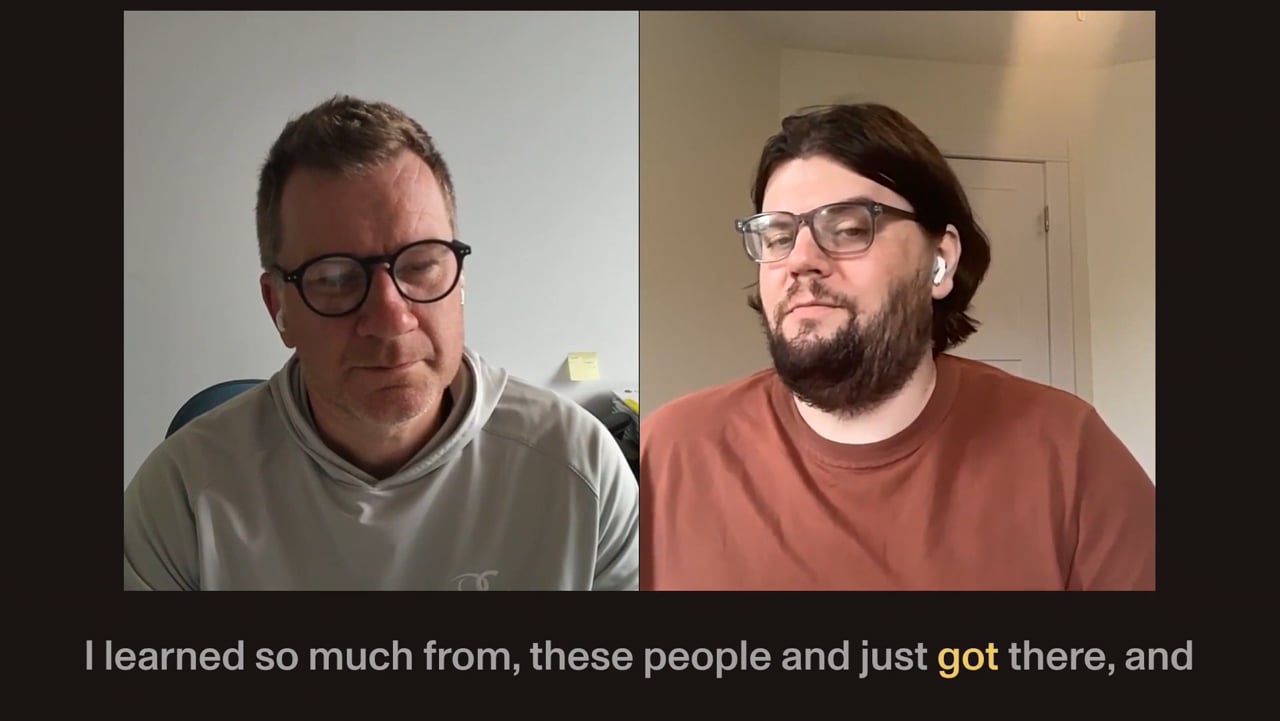
First job success: Learning and growth in Vienna startup

In a nostalgic twist, he shares that his initial job opportunities came from connections on Internet Relay Chat (IRC) — a theme that seems to recur throughout his career. It’s the kind of serendipitous networking story that proves you just never know where your next big break will come from.

Speed vs. quality in software development

“Thor’s Hammer,” Patrik’s nickname at Nutrient, enters the chat as the episode dives into the eternal debate between speed and quality in software engineering. Jonathan mentions Patrik’s moniker as he expands on the importance of maintaining rapid development cycles despite customer demands for perfection. He makes the point that you’re essentially “flying a plane while building it,” where keeping the plane in the sky is as important as building a plane that can continue to stay in the sky.

Patrik echoes this sentiment, emphasizing pragmatism in development. While challenges and technical constraints may evolve, he encourages engineers to focus on gradual, continuous improvements to manage technical debt effectively. He advises that if you know something needs refactoring, you can just add a little time to an estimate to clean it up a bit, with the goal of slowly but surely improving the code. It’s a refreshing take on what’s often seen as a black-and-white issue.

The role of AI tools in modern workflows

The discussion shifts to AI and its growing importance in software engineering. Jonathan asks about Patrik’s initial skepticism toward tools like Copilot, and Patrik explains that he tries to be “hype-resistant” because there are “too many hypes going on in the world.”

Fast-forward to today, when Patrik sees tools like Copilot as powerful assistants for automating routine tasks, allowing him to focus on complex, high-level thinking. He makes it clear that AI can’t replace a developer’s domain expertise, and that AI workflows are iterative, where precision and adaptability are key. Jonathan reinforces this perspective, explaining that large language models (LLMs) are like a car for driving, not fully autonomous technology. You still have to be the one behind the wheel.
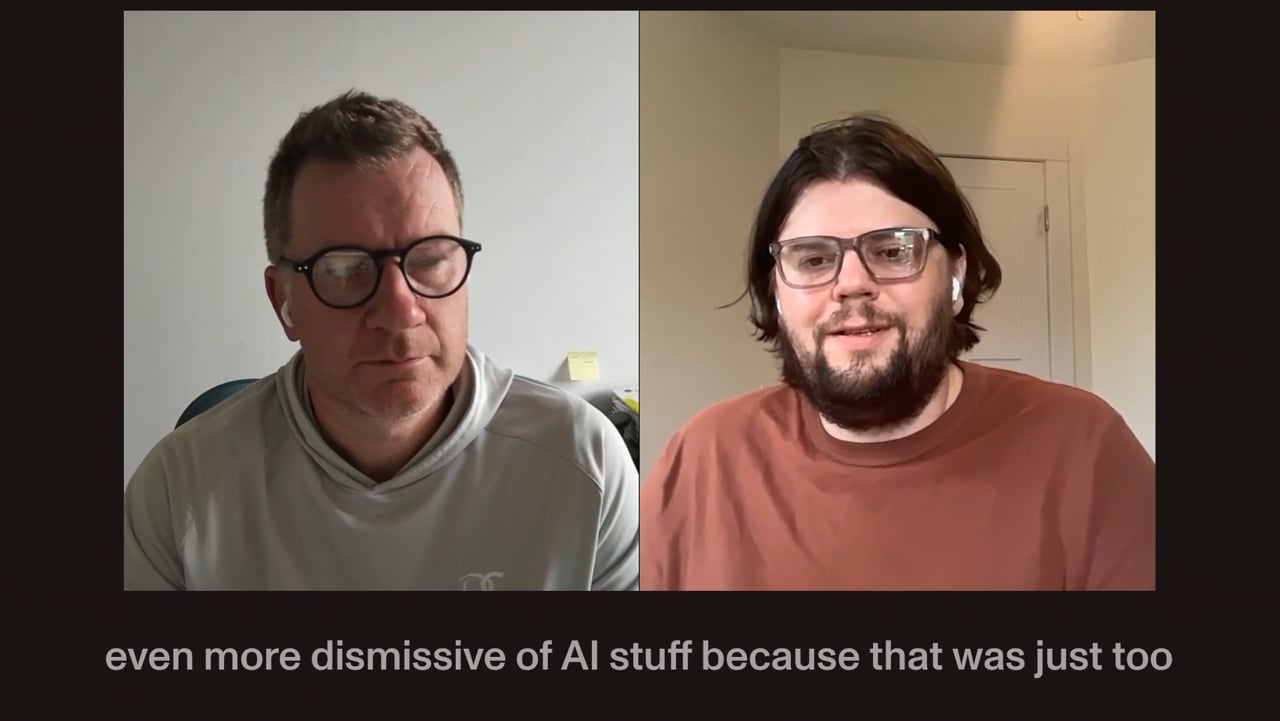
Embracing AI: Navigating the learning curve

Gaming and alternative career paths

When asked about what he might do apart from software engineering, Patrik admits with a smile that it’d still have to be something in front of a computer, adding that he probably would still want to solve customers’ problems. Interestingly, Patrik applies the same problem-solving mindset to his gaming habits, with factory-building games like Satisfactory becoming his current obsession.

He explains that Satisfactory is all about building factories to make resources, which you then put together to get the right things out; it’s basically just optimizing. Jonathan reflects on how gaming fosters social connections and unexpected friendships — a theme that resonates deeply with Patrik’s own career story. After all, if you can land a job on IRC, you can probably land one on Steam, right?
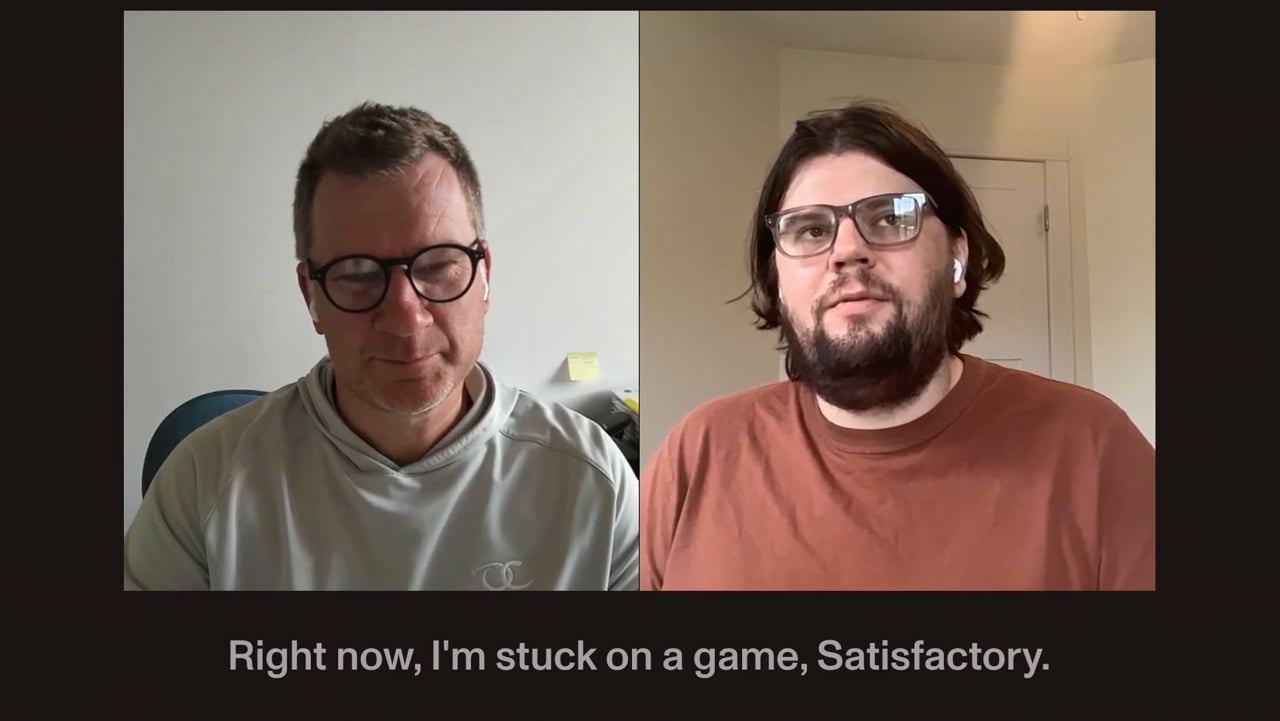
Satisfactory: Building, optimizing, and the factory addiction

Final thoughts

From Linux kernels to enterprise-grade PDF technologies, Patrik’s journey is a powerful example of the importance of curiosity, adaptability, and a customer-centric approach in software engineering. This episode is a treasure trove of insights, covering career growth, practical workflows, and the exciting possibilities of AI integration into development.

Whether you’re a seasoned engineer or an aspiring programmer, this conversation offers valuable lessons on how to navigate challenges, embrace innovation, and thrive in the dynamic world of tech.

Learn about Patrik’s journey of curiosity, mentorship, and engineering leadership.