

惯性聚合 高效追踪和阅读你感兴趣的博客、新闻、科技资讯
阅读原文 在惯性聚合中打开

推荐订阅源

B
Blog RSS Feed
Spread Privacy
Spread Privacy
T
Threatpost
C
Cisco Blogs
P
Palo Alto Networks Blog
AI
AI
Cyberwarzone
Cyberwarzone
NISL@THU
NISL@THU
P
Privacy & Cybersecurity Law Blog
G
GRAHAM CLULEY
Simon Willison's Weblog
T
Tor Project blog
Latest news
Latest news
AWS News Blog
AWS News Blog
D
Docker
S
SegmentFault 最新的问题
博客园 - 聂微东
WordPress大学
WordPress大学
Vercel News
Vercel News
S
Securelist
爱范儿
爱范儿
J
Java Code Geeks
Know Your Adversary
Know Your Adversary
S
Schneier on Security
Hugging Face - Blog
Hugging Face - Blog
F
Fortinet All Blogs
Last Week in AI
Last Week in AI
D
DataBreaches.Net
宝玉的分享
宝玉的分享
D
Darknet – Hacking Tools, Hacker News & Cyber Security
MongoDB | Blog
MongoDB | Blog
Engineering at Meta
Engineering at Meta
K
Kaspersky official blog
美团技术团队
博客园 - 叶小钗
阮一峰的网络日志
阮一峰的网络日志
量子位
博客园_首页
Attack and Defense Labs
S
Secure Thoughts
Google Online Security Blog
Application and Cybersecurity Blog
Threat Intelligence Blog | Flashpoint
腾讯CDC
T
Threat Research - Cisco Blogs
雷峰网
雷峰网
有赞技术团队
有赞技术团队
www.infosecurity-magazine.com
P
Privacy International News Feed
S
Security Affairs

Inside Nutrient

A guide to the invisible work behind documents Introducing Nutrient Documents for Salesforce: Native document generation and signing Document AI vs. traditional OCR: Choosing between OCR, AI, and hybrid pipelines PDF SDK compliance and security evaluation checklist for enterprise teams (2026) Invariant Corp replaces paper processes with Nutrient Workflow and scales without limits What is process mapping? A complete guide Nutrient vs. Conga Composer for Salesforce document generation (2026) Document routing: How to automate document distribution The CTO’s AI playbook: Why accountability architecture beats orchestration Compliance workflow automation: Why built-in compliance is table stakes Workflow diagrams: Examples, symbols, and how to build one that actually runs Digital forms: Replace paper forms with automated workflows Approval workflow software: How to automate approvals Why document-centric automation is different The CEO’s AI playbook: Why decision architecture beats model selection Nutrient SDK product updates for Q1 2026 PDF redaction verification: How to prove sensitive data is permanently removed What is a VPAT? The complete guide to accessibility conformance reports What is PDF/UA? The accessible PDF standard explained Salesforce eSignatures: Generate, sign, and track documents in one flow Online document viewer: Options, tradeoffs, and how to embed one Document viewer for web apps: React, Vue, Angular (2026) Best document viewers in 2026: A buyer’s guide How to edit a PDF in Python: Add text, images, and annotations Nutrient advances Workflow platform with agentic AI for enterprise-grade speed and consistency in document-heavy operations How to create a Salesforce quote template from opportunity data The business case for accessibility: Five ways it drives enterprise value Python PDF library comparison (2026): 7 libraries for developers Why your AI agent hallucinates PDF table data PDF.js limitations: When to upgrade to a commercial PDF SDK How Subject scaled 5× with Nutrient’s PDF SDK without rebuilding its document layer I replaced our sales training with an AI coach that runs in Slack — here’s what broke Redirecting to: https://securitybuzz.com/cybersecurity-news/why-enterprise-permissions-are-ais-most-dangerous-inheritance/ Nutrient .NET SDK vs. iText Core: Complete comparison for .NET developers DocuVieware: Support’s most frequently asked setup questions Introducing Nutrient Workflow How to convert PDF to Word in C# (.NET) When email and spreadsheets stop working: Work order approval workflows for field teams on the move Compliance with confidence: Why document-centric automation is the foundation of your mission Nutrient expands AI Assistant, automating multistep document workflows inside any application What is document generation? A developer’s guide to PDF generation Document Converter data flow and how real-time watermarks skip the queue PDF/UA compliance guide: Requirements, standards, and best practices Computers still can’t understand you How Athena Intelligence built AI agents for regulated enterprises with Nutrient’s document infrastructure How to convert HTML to PDF (2026): 4 methods from browser print to SDK How to build a document extraction pipeline with Nutrient Vision API OCR vs. intelligent document processing: Choosing the right document extraction engine Beyond OCR: How document intelligence eliminates manual processing in regulated industries Nutrient vs. IronPDF: Complete comparison for .NET developers Nutrient vs. Aspose.PDF: Complete comparison for .NET developers Redirecting to: https://fortune.com/2026/02/19/openclaw-who-is-peter-steinberger-openai-sam-altman-anthropic-moltbook/ Lufthansa Systems uses Nutrient to deliver reliable, scalable PDF rendering for pilots worldwide Nutrient vs. Syncfusion: Complete comparison for .NET developers React’s useTransition: The hook you’re probably using wrong First City Monument Bank streamlines banking processes with Nutrient Workflow Redirecting to: https://www.sdcexec.com/warehousing/automation/article/22957364/nutrient-workflow-automation-the-missing-link-in-supply-chain-efficiency The complete guide to digital signatures: PAdES, CAdES, and XAdES explained Nutrient Python SDK: Production-grade document processing for Python Introducing agentic document editing for web applications with AI Assistant Nutrient vs. QuestPDF: Complete comparison for .NET developers How we fixed the GdPicture license expiration (and what to do if you’re affected) Red team security testing with agentic AI The future of healthcare document automation Best healthcare workflow software compared Nutrient SDK product updates for Q4 2025 How Harvey scaled legal document workflows 50 percent MoM without rebuilding infrastructure HIPAA-compliant document management in hospitals How we optimized rendering performance while handling thousands of annotations in React — Part 2 Automated PII removal with Nutrient API Redirecting to: https://www.devopsdigest.com/2026-low-code-no-code-predictions Redirecting to: https://www.kmworld.com/Articles/Editorial/ViewPoints/Leaders-predict-AI-to-continue-permeating-all-aspects-of-KM-in-2026-172594.aspx What are deep agents and how do they solve complex problems? Whipping up document magic: Your easy-bake recipe for Vue and Nutrient Web SDK 🧁 What I’ve learned about product iteration planning while building SDKs Passwordless document signing: Three-layer security guide New zip folder functionality streamlines file management in Document Automation Server The keyboard shortcuts playbook: Taking control of keyboard events in Nutrient Web SDK From experienced engineer to AI beginner: My unexpected journey AI-assisted manual testing: Handling Safari’s PDF rendering and UI quirks How to keep a 20-year-old SDK up to date How we optimized rendering performance while handling thousands of annotations in React — Part 1 Nutrient announces new executive hires to accelerate next phase of growth High performance UI using web workers Automate document conversion at scale with Python and Nutrient DCS From curiosity to PLG (and AI): My journey to understanding product-led growth Prost to progress: One year as Nutrient Pigeon usage at Nutrient: Bridging native SDKs to Flutter Modernizing CI build servers: How to migrate from Chef to Ansible Unix man pages: AI-friendly documentation since 1971 Consistent hashing for even load distribution Best AI redaction APIs: Complete comparison guide for 2025 Why AI document redaction matters for modern security From coding to coordinating: How AI transformed my workflow What is intelligent document processing (IDP)? A complete guide Enterprise PDF SDKs: Best PSPDFKit (now Nutrient) alternatives Nutrient SDK product updates for Q3 2025 GdPicture support best practices Redacting sensitive data with Nutrient AI redaction API How AI is transforming the customer experience at Nutrient: From instant answers to intelligent support
Use your favorite automation apps to integrate Nutrient DWS API
Matthew Manderson · 2025-07-25 · via Inside Nutrient

Table of contents

    Use your favorite automation apps to integrate Nutrient DWS API

    For teams looking to automate complex document tasks, platforms like Power Automate, Zapier, and Make offer intuitive ways to build powerful workflows without writing code.

    There are more than 500 user interface-based options on the market, and while these platforms make it easy to build workflows, they often rely on external services to handle intensive document processing.

    That’s where Nutrient DWS API comes in — it expands access to advanced document processing by making its tools compatible with many of these visual automation platforms. In short, it does the heavy lifting, enabling features like OCR, file conversion, redaction, and more.

    This guide demonstrates how to integrate Nutrient DWS API into an automation workflow using a standard HTTP module. Make (formerly Integromat) is used as the example, though the approach applies broadly to similar platforms.

    What can Nutrient DWS API do?

    Nutrient DWS API offers comprehensive document processing capabilities, including:

    • PDF management — Create, edit, merge, split, watermark, and secure PDFs.
    • File conversion — Convert between formats like PDF, images (JPG, PNG, TIFF), HTML, and MS Office documents.
    • OCR and data extraction — Extract text, tables, and data from scanned or digital documents.
    • Annotations and forms — Add annotations, fill forms, and create interactive PDF forms.
    • Digital signatures — Apply and collect trusted digital signatures.
    • Redaction — Permanently remove sensitive information from PDFs.
    • Optimization — Reduce file sizes, optimize for web viewing, and improve document performance.
    • Archiving — Convert PDFs to PDF/A format and validate for long-term storage.
    • Automation — Convert URLs to PDFs and streamline workflows programmatically.

    How to build an automated workflow

    This guide will show how to use OCR to convert a scanned image into a PDF with searchable text using a real-life example.

    Get started with Nutrient DWS Processor API today and receive 50 free credits monthly! Perfect for watermark-free document processing targeting many use cases.

    Automating patient records the easy way

    Meet Vicky the vet. She runs a busy veterinary clinic where she cares for pets of all shapes and sizes. But there’s one problem: Her clinic relies on paper-based records, which makes it hard to find the information she needs quickly. For example, answering a question like “How many pets over 10 years old need a health check?” can take hours of digging through files.

    With a simple automation setup, Vicky can:

    • Scan paper records into searchable digital PDFs so she can quickly search for specific pet details.
    • Save time and reduce errors by having everything organized in one digital folder.

    Here’s how it works

    1. Vicky uses her office scanner to digitize paper records. These scanned files are automatically saved to a folder on her computer that syncs with Google Drive.
    2. The automation system checks this folder for new scans, converts them into searchable PDFs, and saves them back into Google Drive, so they’re ready to be searched whenever needed.

    By setting up this automation, Vicky can:

    • Instantly find answers to questions like “Which pets are due for vaccinations?”
    • Keep records secure and organized.
    • Focus more on her patients and less on paperwork.

    Why this is a game-changer?

    This process doesn’t require Vicky to write any code or hire a developer. By using an automation tool like Make in combination with an account with Nutrient DWS API, she can automate everything with a few clicks and let the system handle the rest. It’s like having a digital assistant that works behind the scenes!

    A step-by-step overview

    1. Set up your Nutrient DWS API and Make accounts.
    2. Created a fully automatic document-centric workflow in Make with Nutrient DWS API processing tools.

    That’s it.

    You don’t have to start from scratch. We’ve created a prebuilt blueprint of the scenario from this tutorial that you can import directly into Make. This means you can skip most of the setup and get started faster.

    Once you’ve imported the scenario, just remember to:

    1. Update each module with your own API key from Nutrient DWS.
    2. Set the Google Drive folder locations to match where your files are stored.

    With just a few quick edits, you’ll have your automation up and running in no time!

    To use Nutrient DWS API without writing code, you’ll need:

    1. A no-code automation platform such as Make, Zapier, or Power Automate (this guide uses Make).
    2. An API key from Nutrient DWS API.

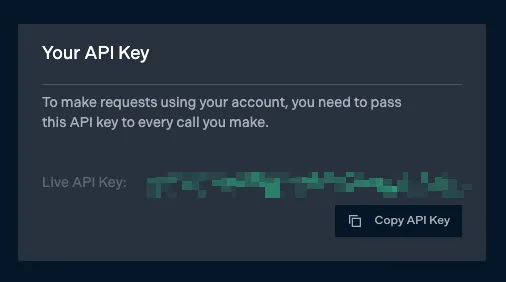
    An API key is like a password that authorizes your system (e.g. Make) to interact with Nutrient’s API. You’ll paste this secret key into your Make scenario once, and it’ll automatically be included in every request.

    Step 2 — Get your API key

    1. Go to the Nutrient DWS API dashboard(opens in a new tab) and create an account if you haven’t already.
    2. After logging in, locate your API key in the dashboard. This key is required to authenticate every API request, so keep it safe.
    Data extraction

    Step 3 — Set up your Make automation

    1. Sign up for a free account at Make(opens in a new tab).
    2. Select the option to Create a new scenario(opens in a new tab).

    Overview of the automation
    Data extraction

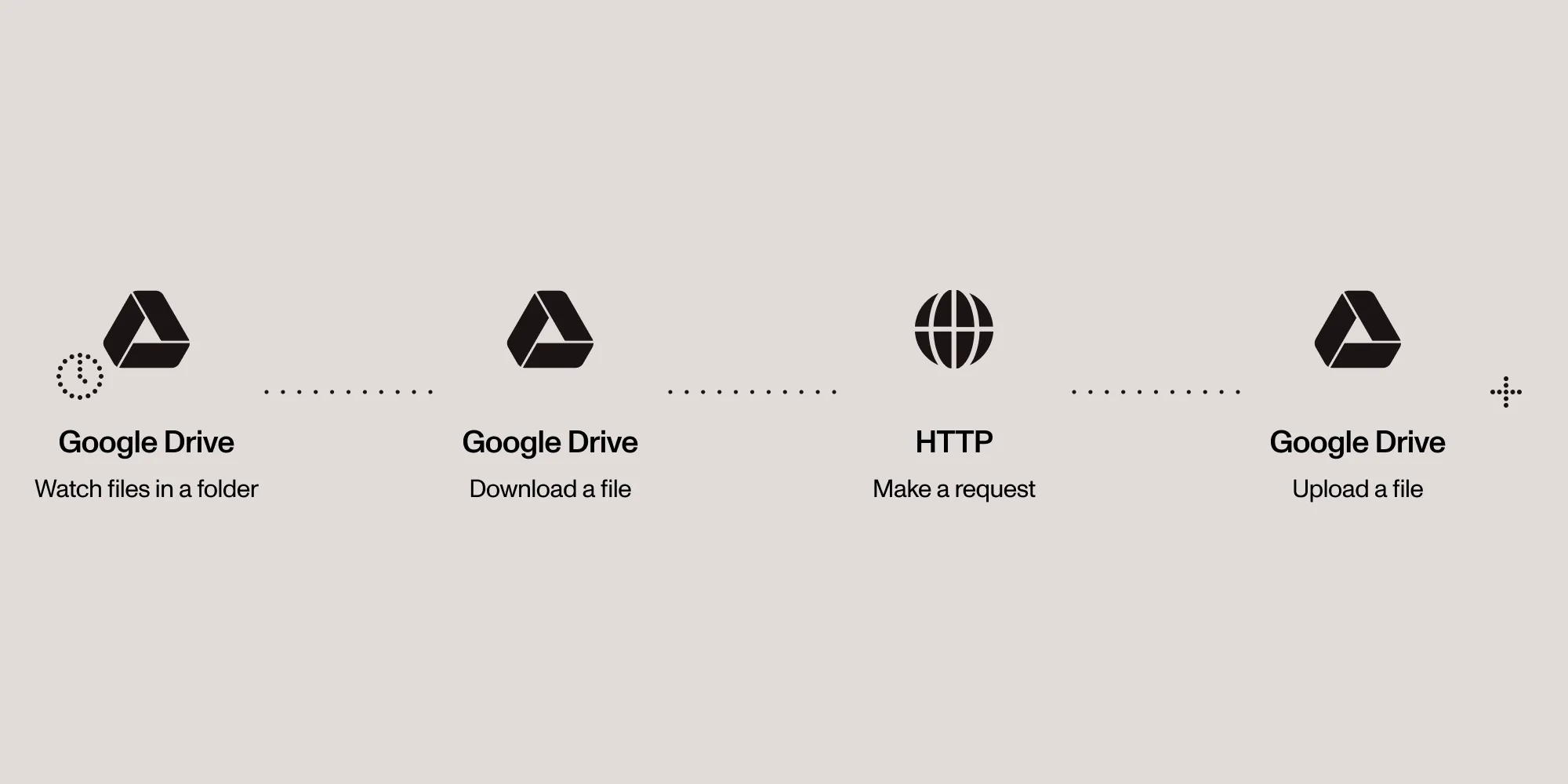
    Here’s what your final Make scenario will do:

    1. Watch a Google Drive folder for new files.
    2. Download the file once it appears.
    3. Send it to Nutrient DWS API for OCR processing.
    4. Upload the processed PDF back into Google Drive.

    Step 4 — Watch files in a Google Drive folder

    1. Right-click in the scenario editor and Add a module.
    2. Choose Google Drive > Watch Files in a Folder.
      • Connection — Set up or select your Google account.
      • Watch FilesBy Created Time
      • DriveMy Drive
      • Folder — Choose the folder to monitor.
      • File TypesAll
      • Limit1
    3. Click OK to save the module.

    Step 5 — Download the file

    1. Select + > Add a new module, and then choose Google Drive > Download a File.
      • Connection — Use the same Google Drive connection.
      • Enter a File ID — Enter manually
      • File ID — Select 1. File ID to reference the file from the previous step.
    2. Click OK to save.

    Step 6 — Send the file to Nutrient DWS API

    1. Select + > Add a new module, and then choose HTTP > Make a request.
      • URLhttps://api.nutrient.io/build
      • MethodPOST
    2. Add headers:
      • Under Name, choose Content-Type, and under Value, choose multipart/form-data.
      • Then, under Name, choose Authorization, and under Value, choose Bearer your_api_key.
    3. Body TypeMultipart/form-data
    4. Add the body fields:
      1. Body type: Multipart/form-data
      2. Add two body field items:
        • Field 1
          • Field typeText
          • Keyinstructions
          • Value

            {

            "parts": [

            {

            "file": "scanned"

            }

            ],

            "actions": [

            {

            "type": "ocr",

            "language": "english"

            }

            ]

            }

        • Field 2
          • Field typeFile
          • Keyscanned
          • FileGoogle Drive - Download a File
    5. Click OK to save.

    Replace your_api_key with your actual API key from step 2. Make sure there’s a space after “Bearer.”

    Step 7 — Add a Google Drive module to upload a file

    1. Select + > Add a new module, and then choose Google Drive > Upload a File.
      • Connection — Use the existing Google Drive connection you created in step 4.
      • Enter a Folder IDSelect from the list
      • New Drive LocationMy Drive
      • New Folder Location — Choose your folder here.
      • FileMap
      • File Name7. Name.pdf
      • Data3. Data from the HTTP step.

    Step 8 — Test the automation

    1. Upload an image file with text to the Google Drive folder you configured in step 4.
    2. In Make, click Run once to manually trigger the workflow.
    3. Wait for the scenario to complete (you’ll see animated progress).
    4. Check your destination folder in Google Drive to confirm the processed .pdf file appears.
    5. If successful, enable the scenario to run automatically every 15 minutes.

    Recap

    You helped Vicky the vet, a non-programmer, make her paper-based animal records searchable in just two steps. You:

    1. Set up accounts with Make and Nutrient DWS API.
    2. Built a fully automatic document-centric workflow in Make with Nutrient DWS API.

    What’s next?

    With her first automation live, Vicky can now also setup the ability to:

    • Generate reports automatically from forms or spreadsheets.
    • Redact sensitive data for privacy compliance.
    • Add branding with watermarks or logos.
    • Protect documents with passwords.
    • Organize data by extracting pet or owner information for database filing.
    • Archive efficiently with smaller file sizes or PDF/A format.
    • Comply with regulations via automatic deletion or archiving.
    • Merge or split PDFs for pet health packs or summaries.
    • Digitally sign vaccination records or contracts.

    By building on her initial workflow, Vicky can continue to save time, reduce manual errors, and provide even better care for her furry patients — all while keeping her records secure and compliant. These advanced tools will let her focus on what she loves most: helping animals.

    Nutrient DWS API offers more than 30 powerful features to help you streamline and enhance your workflows.

    View the full range of capabilities(opens in a new tab) and see how you can take your automation to the next level.

    Have questions or want to discuss your use case? Contact our Sales team to find the right solution for your organization.

    Explore related topics

    Try for free Ready to get started?

    Related Cloud articles

    Explore more