


惯性聚合 高效追踪和阅读你感兴趣的博客、新闻、科技资讯
阅读原文 在惯性聚合中打开

推荐订阅源

S
SegmentFault 最新的问题
B
Blog
P
Proofpoint News Feed
美团技术团队
The GitHub Blog
The GitHub Blog
Y
Y Combinator Blog
A
About on SuperTechFans
让小产品的独立变现更简单 - ezindie.com
Cyber Security Advisories - MS-ISAC
Vercel News
Vercel News
有赞技术团队
有赞技术团队
小众软件
小众软件
H
Hackread – Cybersecurity News, Data Breaches, AI and More
Google DeepMind News
Martin Fowler
Martin Fowler
OSCHINA 社区最新新闻
OSCHINA 社区最新新闻
aimingoo的专栏
aimingoo的专栏
H
Help Net Security
罗磊的独立博客
L
LangChain Blog
GbyAI
GbyAI
腾讯CDC
T
The Blog of Author Tim Ferriss
Microsoft Security Blog

Inside Nutrient

A guide to the invisible work behind documents Introducing Nutrient Documents for Salesforce: Native document generation and signing Document AI vs. traditional OCR: Choosing between OCR, AI, and hybrid pipelines PDF SDK compliance and security evaluation checklist for enterprise teams (2026) Invariant Corp replaces paper processes with Nutrient Workflow and scales without limits What is process mapping? A complete guide Nutrient vs. Conga Composer for Salesforce document generation (2026) Document routing: How to automate document distribution The CTO’s AI playbook: Why accountability architecture beats orchestration Compliance workflow automation: Why built-in compliance is table stakes Workflow diagrams: Examples, symbols, and how to build one that actually runs Digital forms: Replace paper forms with automated workflows Approval workflow software: How to automate approvals Why document-centric automation is different The CEO’s AI playbook: Why decision architecture beats model selection Nutrient SDK product updates for Q1 2026 PDF redaction verification: How to prove sensitive data is permanently removed What is a VPAT? The complete guide to accessibility conformance reports What is PDF/UA? The accessible PDF standard explained Salesforce eSignatures: Generate, sign, and track documents in one flow Online document viewer: Options, tradeoffs, and how to embed one Document viewer for web apps: React, Vue, Angular (2026) Best document viewers in 2026: A buyer’s guide How to edit a PDF in Python: Add text, images, and annotations Nutrient advances Workflow platform with agentic AI for enterprise-grade speed and consistency in document-heavy operations How to create a Salesforce quote template from opportunity data The business case for accessibility: Five ways it drives enterprise value Python PDF library comparison (2026): 7 libraries for developers Why your AI agent hallucinates PDF table data PDF.js limitations: When to upgrade to a commercial PDF SDK
Incident workflow automation
Mike Raia · 2024-02-01 · via Inside Nutrient

Table of contents

    Incident workflow automation

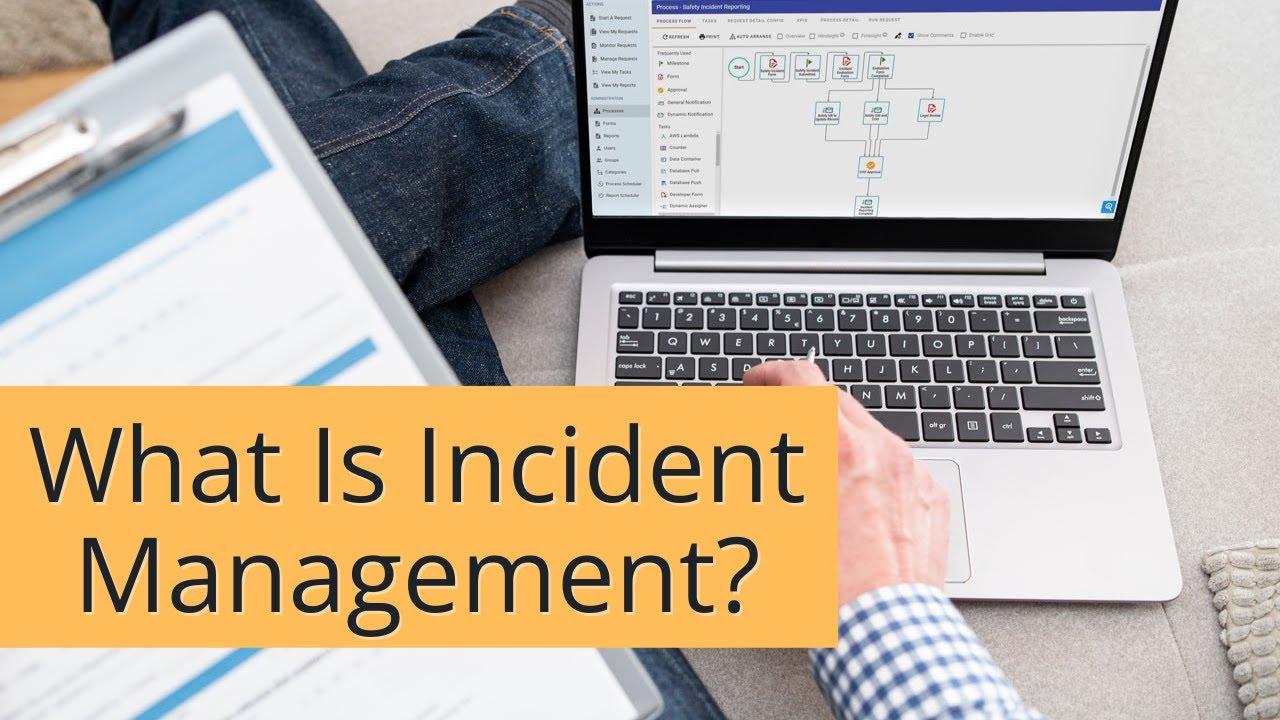
    While workflows (and workflow automation) are often thought of for processes that involve approvals of some kind, there is a workflow type you may not have considered—incident reporting.
    YouTube video player

    Incident reporting in your business

    When something critical and unexpected happens in the business, your company should have a mechanism in place to report it so action can be taken. That action might include follow-ups, investigations, procedure changes, legal action, etc., as part of the remediation.

    Some examples of incident reporting processes that can be automated:

    Incidents as workflows

    Thinking of incidents in terms of the workflow required to manage them can help provide an organization with an actionable, consistent, auditable way of ensuring resolution.

    Most incidents follow the same pattern.

    1. Something happens.
    2. It gets reported.
    3. Follow-up activities are performed.
    4. The matter is resolved.
    5. Analysis begins.

    When these workflows are automated, they are bolstered by routing logic, notifications, escalations, and more. Those involved know what to do now, what needs to be done next, and who needs to do it. In addition, all this critical activity is tracked and provided in an audit report, which becomes especially important in the case of incidents with legal or regulatory implications.

    Example: Safety Incident Reporting

    As an example of an incident reporting process, we created a simple safety incident reporting process template(opens in a new tab) that allows employees to report accidents and initiates an investigation into what happened. Notifications ensure that stakeholders know about the incident and audit activities as needed.

    Now, what types of incidents exist in your organization that should be part of a consistent workflow? How serious are the risks to the business (legal, lost revenue, etc.)? Share in the comments.

    Explore related topics

    Try for free Ready to get started?

    Related Workflow articles

    Explore more