





Digital archiving of documents has many benefits, such as preventing data loss, reducing operational costs, improving security, and enhancing compliance. It also supports the process of document auditing, because archived documents are audit-proof and cannot be lost or changed over time. As a result, it’s important that Legacy Council documents — such as planning applications, tree protection orders, and more — are digitized, archived, and fully searchable and accessible.
The New Forest National Park Authority(opens in a new tab) (NFNPA) is one of 15 national parks in the UK. According to its website, its goal is to “conserve and enhance the natural beauty, wildlife and cultural heritage,” as well as “promote opportunities for the understanding and enjoyment of the special qualities of national parks by the public.” Additionally, the NFNPA provides a planning service for people who want to plan or build within the park boundaries. This is where the need for PDF archiving and document accessibility is mostly present. Before choosing Nutrient, the NFNPA used to scan old paper records and put them on its website, and each scan was a separate TIFF file. As these documents are used by the public, there were problems with document accessibility and viewing. For example, each page of a document was viewed as a separate file, and the TIFF files weren’t easily accessible. NFNPA started using Nutrient Document Automation Server to convert TIFF files to searchable PDFs and merge multiple documents into one. This solution not only reduced the time someone needed to view the files, but additionally, all the pages were in the same document, and PDFs were fully searchable.
Historical archiving of tree preservation orders is very important for the NFNPA, as it has 2 million paper documents that need to be archived and digitally accessible. Not only does having physical documents increase the chance that things can get lost, but some of the documents are very old and were created in the ‘70s and ‘80s, and the paper quality can deteriorate over time.
When NFNPA started using Document Automation Server, the digitization process was already complete, but the result was many separate TIFF files, which were sometimes images of text pages or related buildings and landscapes.
The NFNPA had an old system for planning applications that did a good job of converting TIFF files to PDF. However, at one point, the NFNPA had to shift to a new system, which was a downgrade when it came to the usability of documents.
As an example, in the old system, for a 50-page document, someone could view all the pages as one PDF, but in the new system, there were 50 separate documents — one for each page. With the new system, paper documents were scanned as TIFF files; however, TIFF files don’t open easily on mobile devices, and applicants were required to install third-party applications to view them.
As the NFNPA’s planning applications are used by hundreds of people, a lot of issues pertaining to document viewing and accessibility were reported.
New Forest is a government organization, and part of its responsibility is hitting document accessibility targets. This was challenging to achieve with the new system, as TIFF files (scans) aren’t easily accessible. Therefore, it was necessary to find a solution that would help create searchable PDF files out of TIFF scans.
Document Automation Server is an economical and scalable document processing solution that helps the NFNPA digitize old records and make them searchable. The whole process is run automatically, and Nutrient smoothly processes a high volume of documents. More specifically, the NFNPA uses Document Automation Server for the following capabilities:
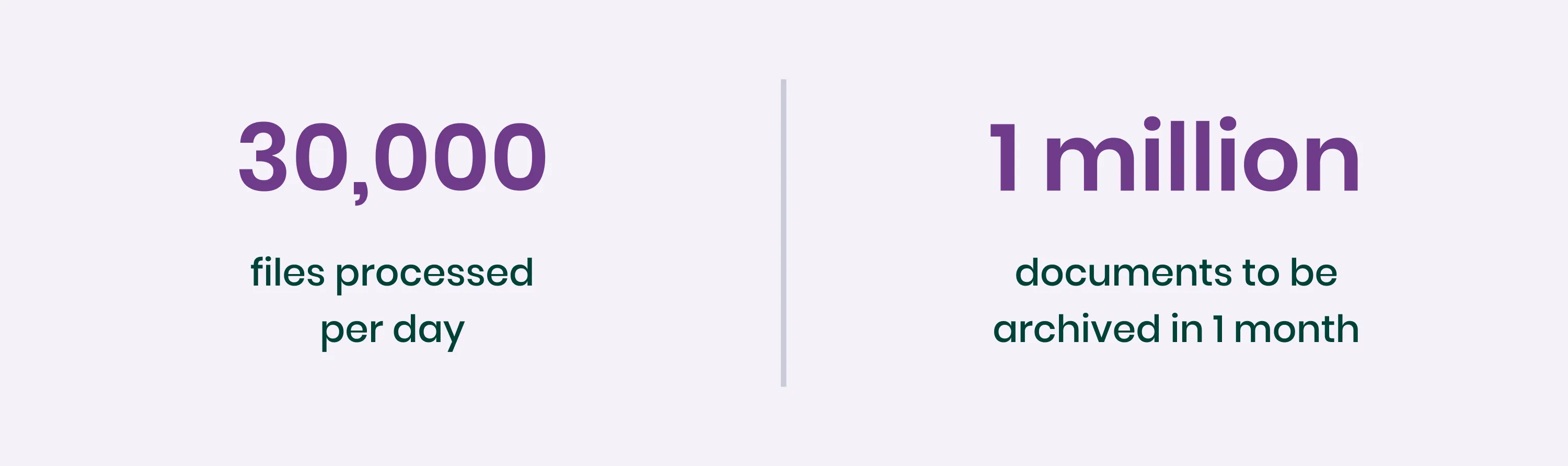
The NFNPA has 2 million files to process, and 50 percent of them are TIFF files that need to be scanned and merged into fully searchable and accessible PDF files. With Document Automation Server, the NFNPA processes 30,000 files per day and plans to process 1 million documents in a month. Some of these files have dozens of pages, and there are also files with more than 100 pages each. The ability to combine multiple TIFF files into one searchable and accessible PDF document makes the planning application process quicker, as applicants need less time to view one document as opposed to dozens of documents, and they won’t encounter viewing problems on different devices. Finally, the NFNPA hit document accessibility goals and has safely archived valuable documents dating back 40-to-50 years.
此内容由惯性聚合(RSS阅读器)自动聚合整理,仅供阅读参考。 原文来自 — 版权归原作者所有。