








Whenever I talk to other YC founders in my batch, the number one question I get is:
"How did you get the resend.com domain?"
Instead of repeating myself, I decided to write this post with two goals in mind:
When we began discussing the idea of starting this, we decided we wouldn't spend even 1 minute thinking about naming in the beginning.
We wanted to focus on building the product and nothing else, so we got a domain that combined our first names. My name is Zeno, and my co-founder's name is Bu, so we bought zeebbu.com.
I know, I know, terrible name! But it didn't matter. At that point, we were building a prototype and just needed a URL to deploy and test.
As the MVP evolved, we realized we needed a better name before sending the link to people.
We were looking for a domain that was free and a little bit easier to type, so we bought klotty.com. We knew that was still a very bad name and definitely not the final one, but it was good enough to start putting it in the hands of early adopters.
One day we applied to Y Combinator and got accepted (a crazy story for another day).
So now it was time to go all in. We wanted a strong name, a name that would send a message, a name that could communicate that we were serious about this company idea.
We started by brainstorming a list of words that we thought were cool, and then we combined them in different ways. Here are some of the methods we used:
tail-wind, planet-scale, up-stash, super-human
git-hub, drop-box, fire-base, mail-gun
flickr, tumblr, grindr, scribd, checkr
linear, stripe, convoy, notion
brex, google, kodak, sony
dribbble, fiverr, groww
At this point, we had a list of dozens of names, but how do you know which one is the best?
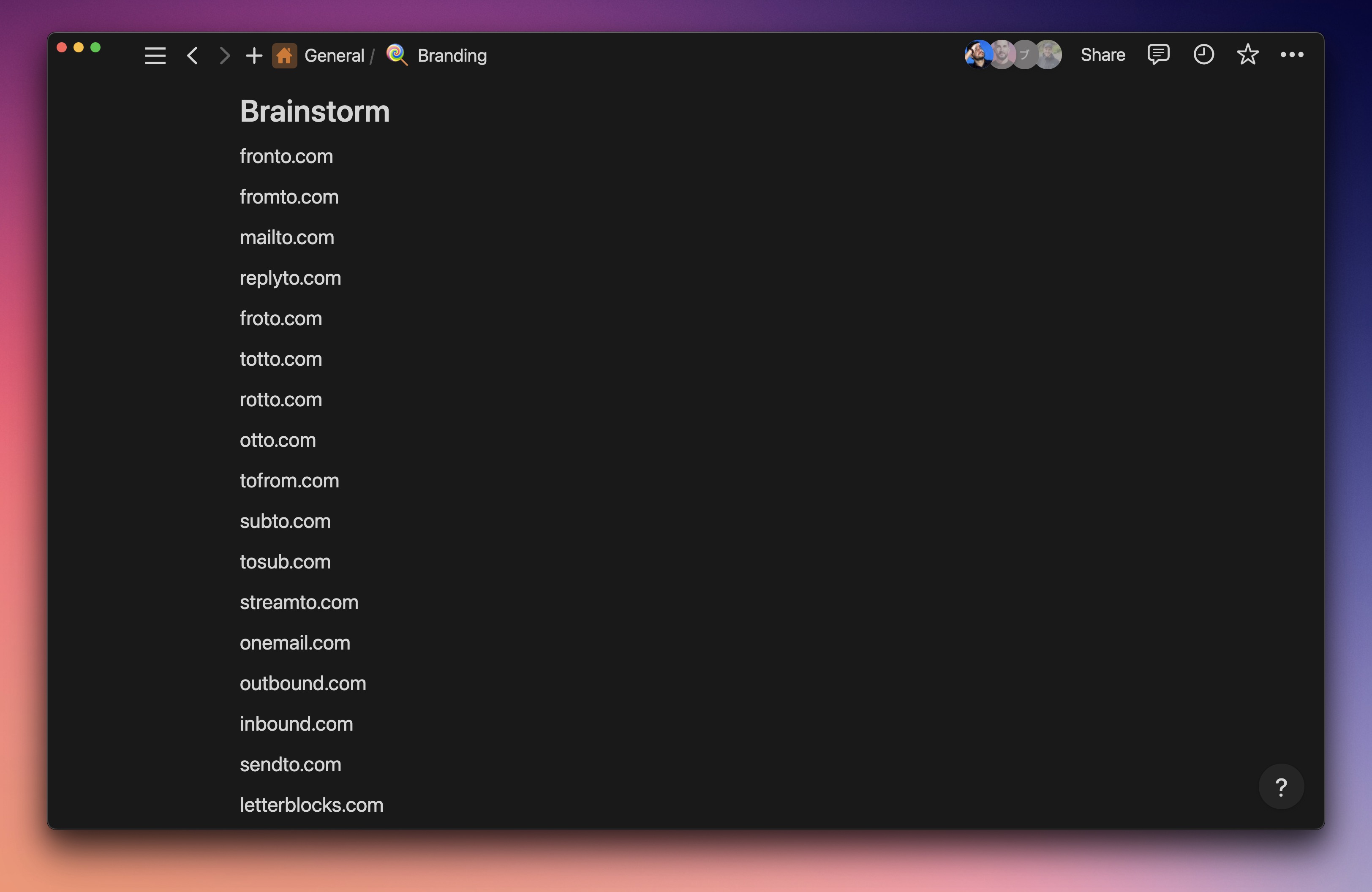
We had to narrow down the options somehow, that's why we came up with a system to filter the name ideas and make the decision easier. This was our list of must-haves:
Another good idea is to set a timebox for making this decision. It's easy to go down the rabbit hole and spend months thinking about the perfect name. You need to set a deadline and stick to it.
Once you have a list of names, you need to check if they are available. We did this manually by checking the whois records and trying to find the owner. Nowadays, with all the privacy laws, it's much harder to find contact information online, so you need to get creative and look for clues.
One thing I like to do is check the source code of the website or look for web.archive.org snapshots to see if there's anything that could help track the owner.
For this part, you have to be prepared to be disappointed. Many people won't return your emails, and you'll have to move on to the next name.
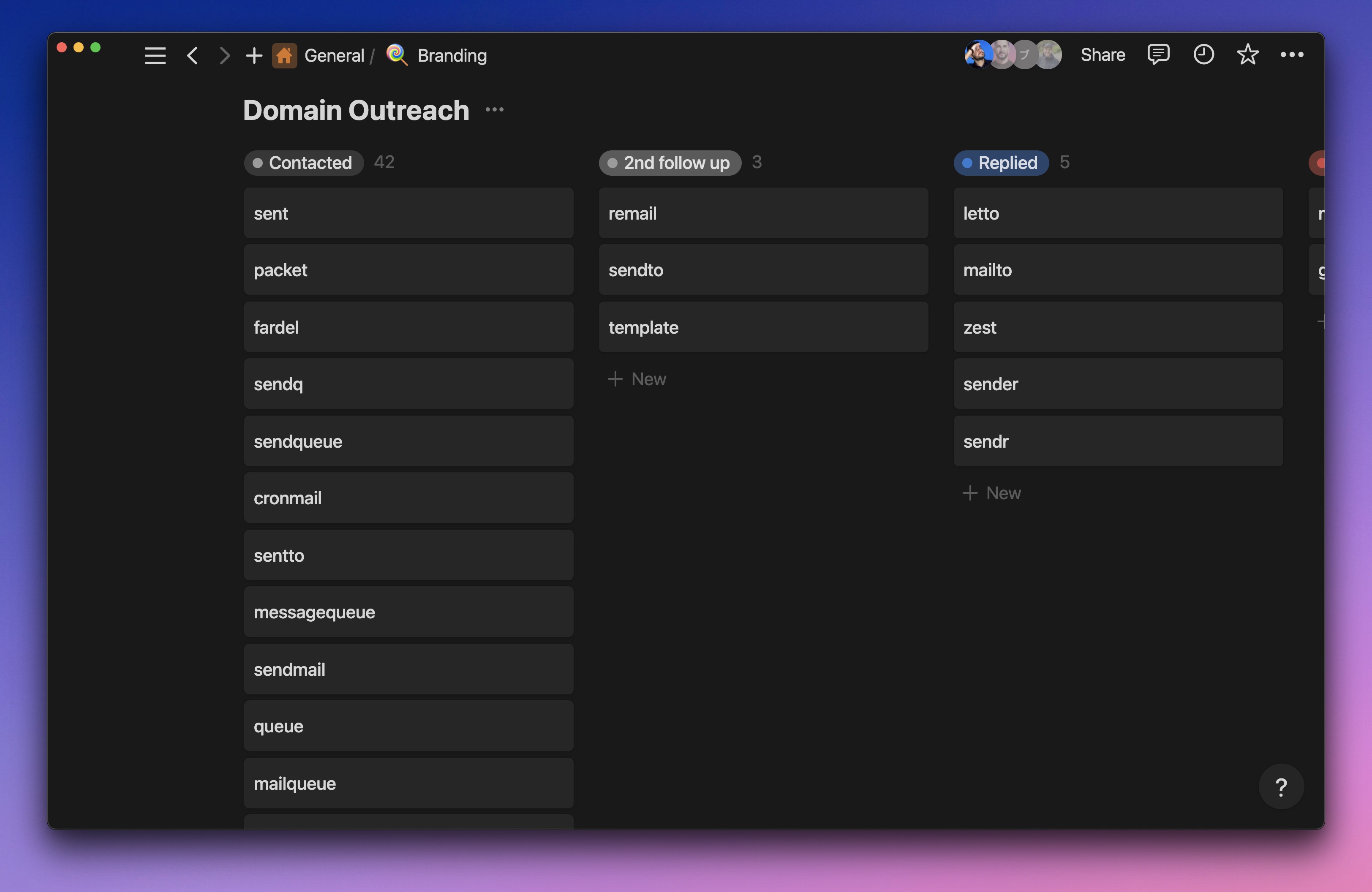
Outreach database to keep track of who responded or not
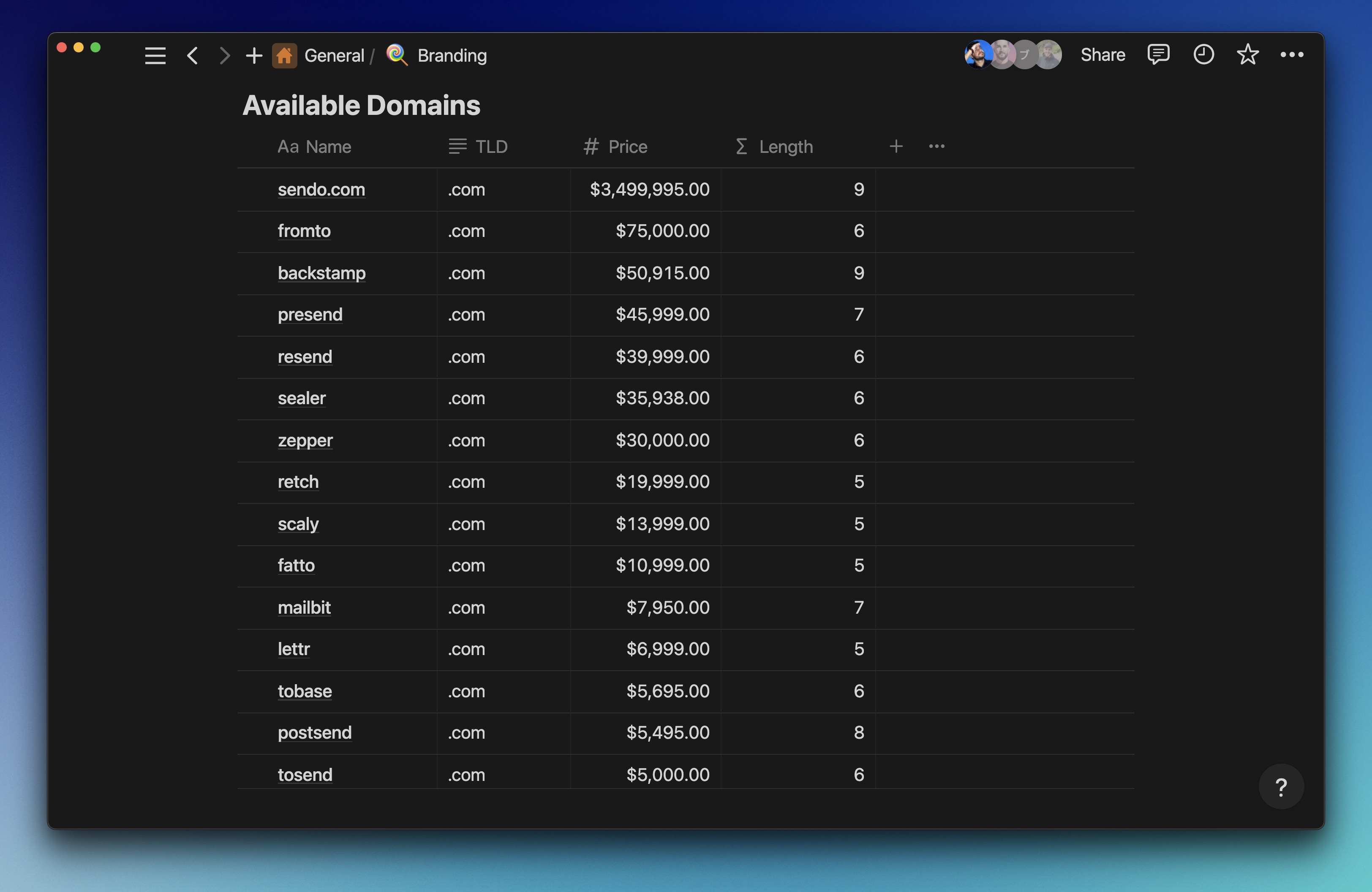
Once you finally get a reply from the domain owner, it's time to start cataloging the initial prices.
It's important that you open multiple negotiations at the same time, so you can compare prices and better understand the market.
Some numbers are just too high, and there's nothing you can do about it. However, you can get a good deal if you play your cards right.
I'm not going to lie, this is the hardest part. You need to be persistent, and you need to be prepared to walk away at any moment.
When I first saw the asking price for resend.com I was in shock. No way I'd pay $39,999 for a domain.
Still, this was a 6-letter dictionary word domain, so it was worth digging deeper.
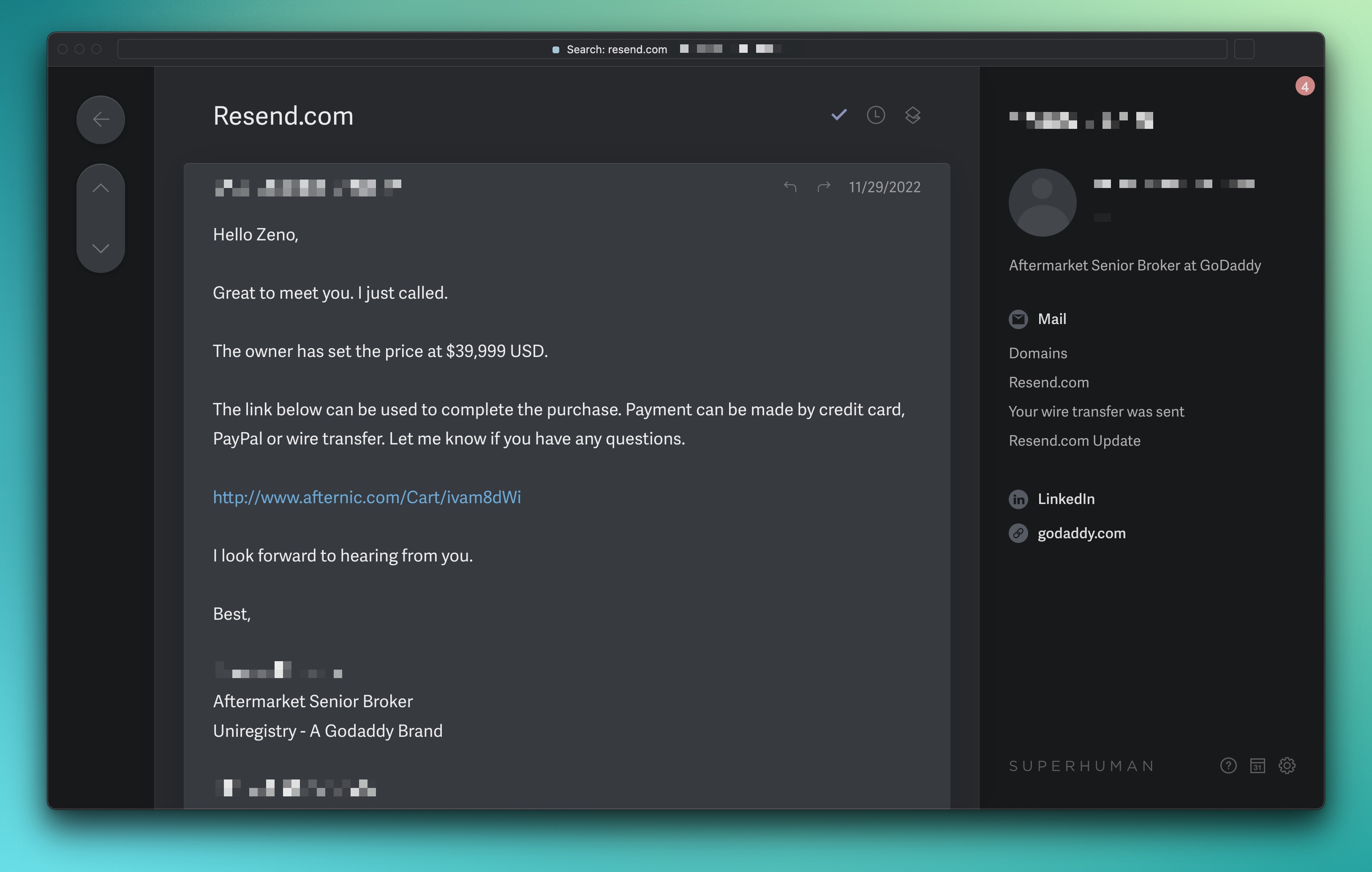
I replied to the email with a lowball offer of $7,999 and waited for a response.
For sure I was going to get a rejection, but this was a test to see if they were willing to negotiate or not.
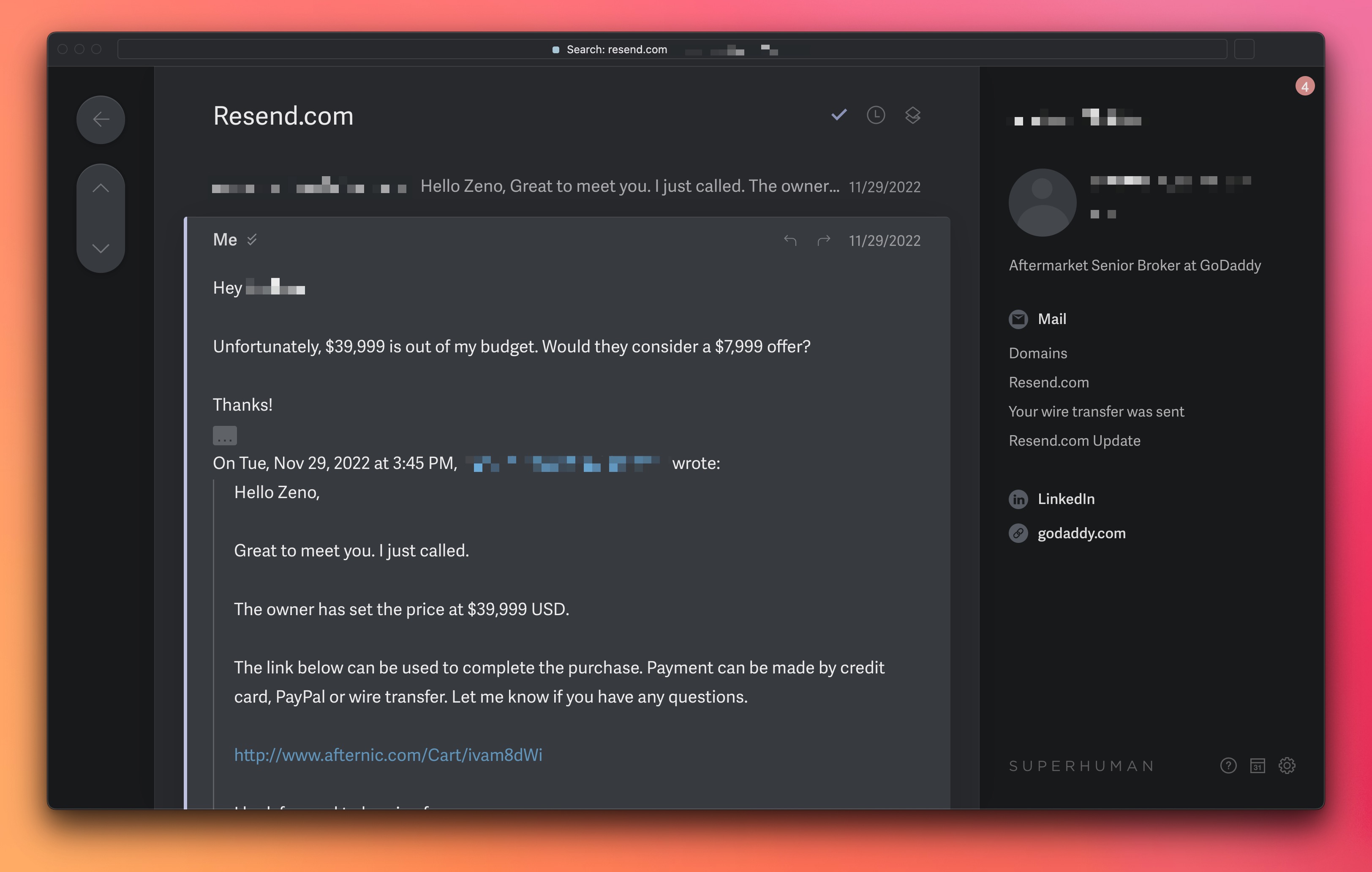
They sent a counteroffer of $35,000, and we started negotiating.
After a few of days of back and forth, we settled on $25,000.
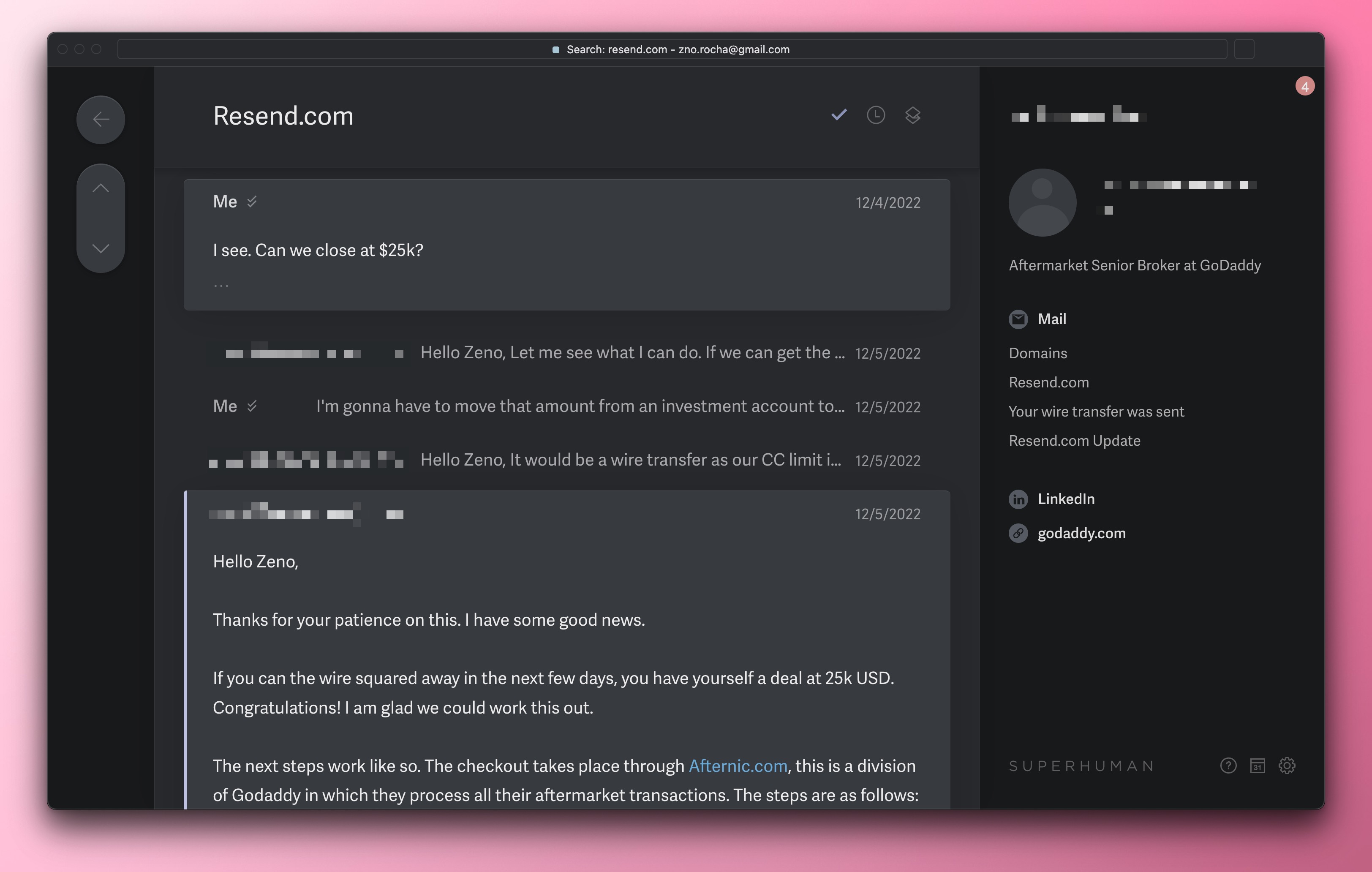
I can't tell you how happy I was when they finally transferred the domain.
It was a long and painful process, but it was worth it.
It's easy to think that a good name is the key to success, but that's not true. You can have the best name in the world, but if you don't have a good product, you won't get anywhere.
Paul Graham once wrote an essay called Change Your Name, and he said:
If you have a US startup called X and you don't have x.com, you should probably change your name.
Of course, every rule has exceptions. Just look at notion.so and linear.app. These companies are winning not because of their domains but because of their amazing products.
The ultimate value of a domain name depends on how well it is utilized.
此内容由惯性聚合(RSS阅读器)自动聚合整理,仅供阅读参考。 原文来自 — 版权归原作者所有。