



惯性聚合 高效追踪和阅读你感兴趣的博客、新闻、科技资讯
阅读原文 在惯性聚合中打开

推荐订阅源

腾讯CDC
Microsoft Azure Blog
B
Blog
S
SegmentFault 最新的问题
WordPress大学
WordPress大学
P
Proofpoint News Feed
Hugging Face - Blog
Hugging Face - Blog
MyScale Blog
MyScale Blog
A
About on SuperTechFans
雷峰网
雷峰网
奇客Solidot–传递最新科技情报
奇客Solidot–传递最新科技情报
T
The Blog of Author Tim Ferriss
MongoDB | Blog
MongoDB | Blog
博客园 - 【当耐特】
The Cloudflare Blog
F
Fortinet All Blogs
小众软件
小众软件
博客园 - 三生石上(FineUI控件)
宝玉的分享
宝玉的分享
罗磊的独立博客
量子位
有赞技术团队
有赞技术团队
V
V2EX
Engineering at Meta
Engineering at Meta

Inside Nutrient

A guide to the invisible work behind documents Introducing Nutrient Documents for Salesforce: Native document generation and signing Document AI vs. traditional OCR: Choosing between OCR, AI, and hybrid pipelines PDF SDK compliance and security evaluation checklist for enterprise teams (2026) Invariant Corp replaces paper processes with Nutrient Workflow and scales without limits What is process mapping? A complete guide Nutrient vs. Conga Composer for Salesforce document generation (2026) Document routing: How to automate document distribution The CTO’s AI playbook: Why accountability architecture beats orchestration Compliance workflow automation: Why built-in compliance is table stakes Workflow diagrams: Examples, symbols, and how to build one that actually runs Digital forms: Replace paper forms with automated workflows Approval workflow software: How to automate approvals Why document-centric automation is different The CEO’s AI playbook: Why decision architecture beats model selection Nutrient SDK product updates for Q1 2026 PDF redaction verification: How to prove sensitive data is permanently removed What is a VPAT? The complete guide to accessibility conformance reports What is PDF/UA? The accessible PDF standard explained Salesforce eSignatures: Generate, sign, and track documents in one flow Online document viewer: Options, tradeoffs, and how to embed one Document viewer for web apps: React, Vue, Angular (2026) Best document viewers in 2026: A buyer’s guide How to edit a PDF in Python: Add text, images, and annotations Nutrient advances Workflow platform with agentic AI for enterprise-grade speed and consistency in document-heavy operations How to create a Salesforce quote template from opportunity data The business case for accessibility: Five ways it drives enterprise value Python PDF library comparison (2026): 7 libraries for developers Why your AI agent hallucinates PDF table data PDF.js limitations: When to upgrade to a commercial PDF SDK
The Power of Microproductivity: Small Steps, Big Results
Toni Buffa · 2023-12-06 · via Inside Nutrient

Have you heard of motivational quotes like this before - “Focus on the step in front of you, not the whole staircase” or “Don’t let the fear of the unknown stop you, just take one step at a time.”? Both have one thing in common – by starting small, you don’t have to look at the bigger picture, but it’ll come.

Microproductivity is the same principle. Discover the transformative power of microproductivity, breaking down daunting tasks into manageable steps, learning effective techniques to tackle microtasks seamlessly, and mastering the art of productivity.

What Is Microproductivity?

Microproductivity(opens in a new tab) is the process of dividing an enormous task into smaller ones. “Breaking tasks down helps us to see large tasks as more approachable and doable and reduces our propensity to procrastinate or defer tasks because we simply don’t know where to begin,” explains Melissa Gratias(opens in a new tab), Ph.D., a workplace productivity coach and speaker.

Why Does Microproductivity Work?

This “one step at a time” approach works wonders. It takes a lot of work to look at a vast project or goal and immediately see the finish line. It’s easier to tackle smaller, specific tasks, leading you to the bigger picture. Specificity is one of the core elements of the Goal-Setting Theory(opens in a new tab), established by psychologist Edwin Locke. Specific goals are often smaller and incite effort – making it easier to complete one thing at a time and lead to significant results.

Different Microproductivity Techniques

Consider these methods to get started to tackle these smaller tasks effectively and get more done.

First, create your microtasks.

Look at your goal and break it into small tasks. For example, if a project you’re working on is documenting company processes, you won’t start with all of them at once. It’s one process at a time, and even then, each workflow must be broken down into smaller tasks. Examples of smaller bits would be:

  • Picking a process
  • List out steps
  • Create a flow chart of the procedure
  • And on… We have great resources on our site if you want to see the complete guide on documenting your processes.

Back to micro-tasks, the larger picture will come into focus when you break it down one step at a time, and the project will move seamlessly. After creating these smaller tasks, here are two methods to help you stay on track.
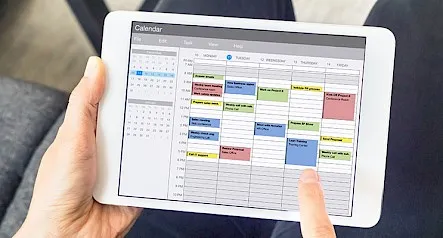
Time/Calendar Blocking


Calendar Blocking is a time management strategy that involves dividing your day into dedicated blocks of time — and then adding those blocks to your calendar. Use your predefined microtasks and lay them out for you to see. Instead of trying to find time in the day to get things done, you’re creating time to get things done — which can help you prioritize the most important things.
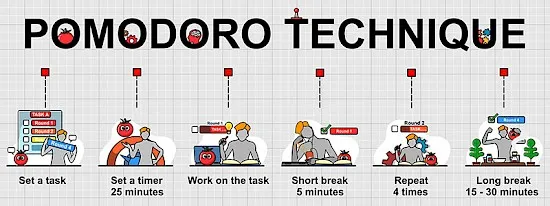
The Pomodoro Technique

When working in your blocks on time, try incorporating The Pomodoro Technique. Giving yourself some break time is essential to accomplish those smaller parts of your day. It’s easy to add to your workday. Just follow these six steps:

  1. Pick the task you would like to work on; it can be one of the blocked-off times from your calendar.
  2. Set a 25-minute timer and begin your job.
  3. Work on your task until the timer goes off.
  4. After 25 minutes, take a 5-minute break.
  5. After your 5-minute break, continue on your second Pomodoro 25-minute session.
  6. After 4 Pomodoro sessions, take a more extended break of 15-30 minutes.

Start Small to Gain Significant Results!

To master the art of microproductivity, take your projects one step at a time. By implementing these strategies into your daily routine, you will see the big picture come into focus faster and feel more accomplished.