


I thought it’d be fun to do a series where I answer questions, or write essays in reaction to prompts you give me. This essay is the first attempt.
If you want to submit a question or a prompt for a future essay, you can do so in the comments to this post, or in the Google Form I link at the end.
RJ: What books/authors have influenced you?
I’ll give you a list. But first some context.
When our oldest daughter, Maud, was a toddler, she used books with author portraits on them as her dolls. She had Crime and Punishment in a baby stroller, Joan Didion’s A Year of Magical Thinking in a diaper, and on the sofa, Maud herself sat, breastfeeding Thomas Bernhard.
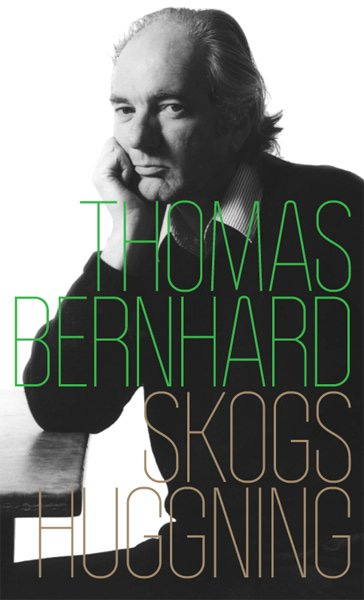
This amused me no end because I love seeing books brought down to that level: it’s where they belong. It always felt strange to me how some people put famous authors on pedestals. Authors are our friends! They are odd people who talk to us, sometimes from across the grave.
I haven’t always found it easy to relate to people in everyday life, so Tolstoy and Tranströmer and others I have read and reread since I was a teenager feel closer to me than most people I have met; they feel a bit like my high school friends. When Johanna and I talk, we’ll say Tomas and mean Tranströmer; he is one of our mutual friends, and we gossip lovingly about him. My journals are filled with thoughts I have had as I’ve read him and the rest—it feels like we’ve been talking for years, and in some ways, I know them better than my parents.
If I am to name a single literary event that has shaped me most as a writer, it is the publication of Karl Ove Knausgård’s My Struggle, 2009–2011. I was living only a few blocks away from Knausgård, in Malmö, while he wrote the books—every street and store and park in book 6, which describes his life while working on the series, were streets and stores and parks that I was walking in. If you live in Paris or New York, I guess it is quite common to read well-written books that describe your everyday life, but living in the provinces of Sweden, it was a revelation: literature is not something that happens far away, or in the past; it might as well happen right here. You can write about what you feel, and what you see, and if you infuse it with enough care, it will become literature.
One of the things I’ve gotten from repeatedly rereading My Struggle and Knausgård’s essays is the permission to cease play-acting when I write; I don’t have to do the “literary” stuff; I am allowed to just type what I actually think. There is a passage in Inadvertent, where Knausgård describes one of the insights that unblocked his writing:
There are some fundamental rules of writing, for example that one shouldn’t psychologize when describing characters, or the related dictum “Show, don’t tell,” both of which spring from the realization that literature by its very nature always seeks complexity and ambiguity, and that monologic claims of truth about the world are antiliterary. [...] For many years I followed these rules of writing, that one shouldn’t psychologize and that one shouldn’t tell, but show. However, the texts I wrote ended up being neither complex nor ambiguous; on the contrary they were closed and unfree, as if the space they unfolded in was a prison, with locked doors and no windows. It wasn’t until I started breaking the rules, showing how something was and should be understood, very precisely and with no room for doubt, and describing people in psychological terms, that my writing came alive. This was so, I think, because even in the most meticulous and exhaustive explanation of a person’s character or actions, even in the most heavy-handed explication, there is always an outside.
This realization has influenced me a lot. If I think something, I don’t need to go through this big roundabout thing, where I “show” it and make it literary. I don’t need to make my writing ambiguous. If I just pay close enough attention to reality, the complexity of reality will seep into the writing and make it ambiguous and charged anyway. There is no need for me to be clever and artful and introduce mystery. Just “telling” it as I see it, if done with enough detail and care, is mysterious enough.
Another author who has greatly shaped my view of life and literature is Dostoevsky. In particular, Dostoevsky as seen by the Russian literary theorist Mikhail Bachtin. Bachtin’s core observation is that Dostoevsky, unlike most other authors, treats his characters as full individuals, as if they are too big to fit in his head: he isn’t using them as mouth pieces but is listening to them. His books are polyphonic: they are made up of a multitude of voices, each with their own inner logic and perspective, and there is no voice that stands above the others and knows the final truth. There are, of course, many books that have multiple voices in them, especially after Dostoevsky, but when I read these books, there is nearly always a subtle feeling that the characters are being used as dolls by the author, who is trying to get a view across; you can sense what the author thinks of everyone. But in Dostoevsky, each character is so strong and independent that they feel like authors in their own right.
I remember that this fundamental respect for the unknowability of others was a deep revelation to me when I read it, at 24. It completely changed how I viewed myself and others. It made me more curious about the inner lives of others, and the dialogue between us; I started to pay attention to how the words I was saying, even inside my head, were always in reaction to and in dialogue with things others had said or things I expected them to say in the future. This was immensely useful, and for Johanna and me, Dostoevsky and Bakhtin have been valuable touchstones as we have built our relationship and learned how to talk in a way that enables each other to grow.
Another thing I love about Dostoevsky is how he incorporates long essayistic segments in his novels, but he always makes sure to undermine the authority of the person expressing the ideas. You get these wonderful philosophical tracts about free will and the Russian church and utilitarianism and the nature of love, but you don’t know what to make of it, really, because the person saying it seems a bit deranged. This is closely connected to his deep respect for the individual: rhetorically convincing the reader of a perspective would undermine their autonomy. Compromising the characters forces the reader to stand alone, to borrow Kirkegaard’s phrase. Since there is no safe authority that you can submit to in Dostoevsky’s books, it is up to you to meet these hurting, strange voices with compassion, critical thinking, and curiosity; you have to evaluate if anything they say is valuable and true and applies to your life. As Ivan in The Brothers Karamazov says, there is nothing more painful to humans than our freedom, that we are responsible for everything we do, and so we long to submit to an authority. But Dostoevsky just won’t let us do that. He forces us to face our freedom.
With Knausgård and Dostoevsky, I found an ideal to orient toward. They wrote in a way that was driven by their minds and their curiosity; their writing was jagged and strange, since they ignored many of the “rules” that make a piece of writing “literary,” and they did so to be able to be more direct and honest. They also shared a deep respect for reality and its complexity, especially the reality and complexity of human beings. I haven’t been able to get anywhere close to writing in a way that approaches the ideals I found in them, but it has provided me with a direction that I’ve been following for more than a decade now.
There is a third author, too, whom I need to mention before I get to the list of books I have been inspired by, and this is the author who made my own writing snap into place.
此内容由惯性聚合(RSS阅读器)自动聚合整理,仅供阅读参考。 原文来自 — 版权归原作者所有。