







At the end of the post, I’ve listed some good things I’ve read / watched / listened to recently.
Here is something I’m think about—
The day before we left for Málaga, Johanna was talking to me about how a lot of consumption tends to make us lose touch with ourselves.
If she goes to check something on the internet, for instance, she often forgets what she meant to do and discovers, half an hour later, that she’s aimlessly scrolling things that make her feel ambiently bad. Even just having internet turned on at home makes her—and me—feel less in touch with ourselves, as if some distracting noise is heard in the back of the head, making it harder to fully tune into ourselves. The internet (and other similar types of consumption, such as TV series) often creates some sort of insatiable hunger that makes you lose touch with yourself.
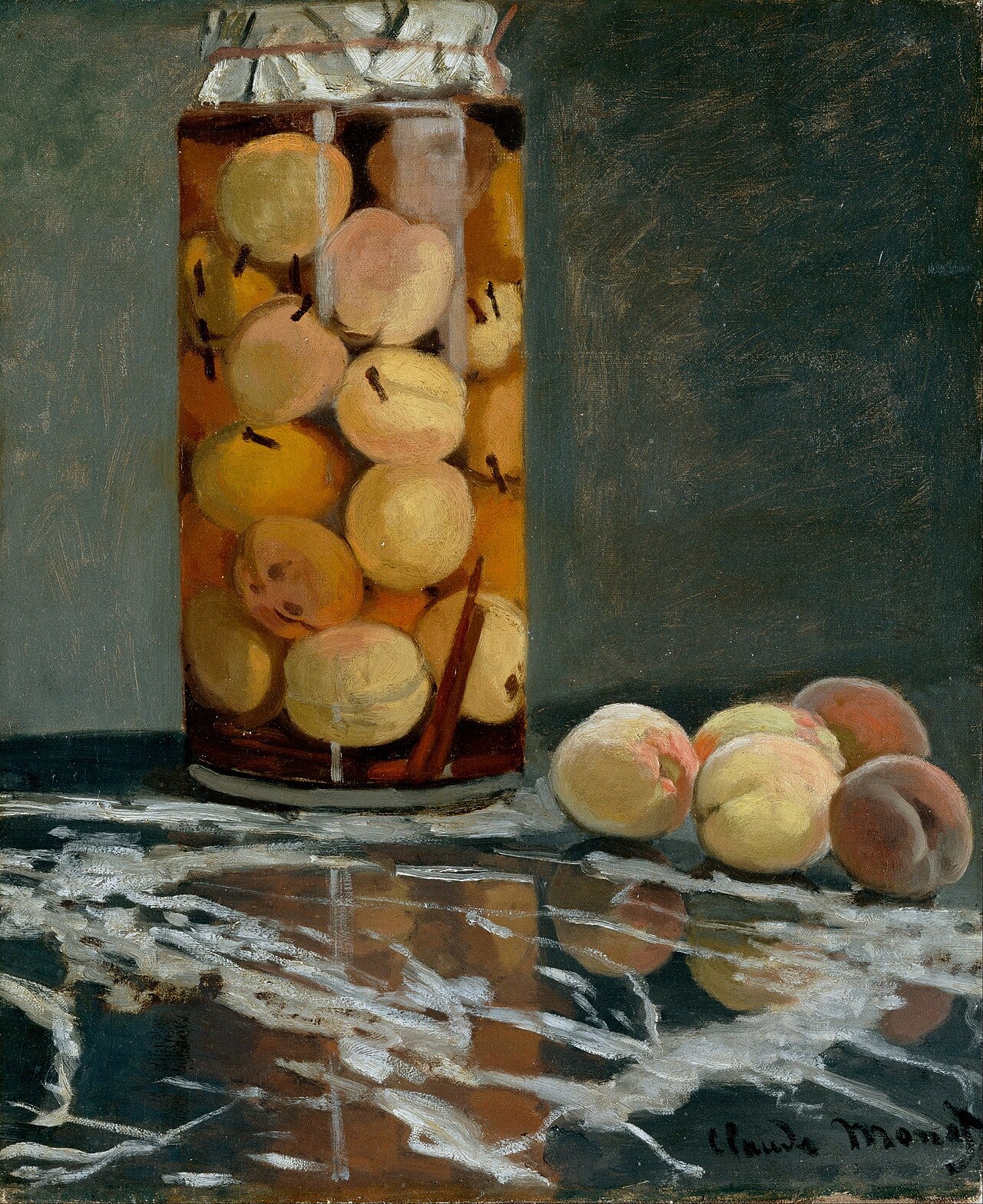
And then there are the other kinds of consumption (if consumption is even the right word): the kinds that tend to bring us back into ourselves. Looking at paintings, for example. In the evenings, when we’re too tired to work, Johanna and I sometimes open a page in an art book and look at it for 10 minutes (we can’t do it for much longer than that: paintings, unlike reading the internet, spit us back out after a while). And despite having allowed ourselves to get completely absorbed by something external, when we close the art book, we feel more attuned to ourselves.
On the ferry, traveling to the airport, Johanna and I discussed why this is.
There’s this passage from the memoirs of the composer Philip Glass, which I think can shed some light on why art—good art—can bring us into a closer connection with ourselves. Glass writes that,
[when I compose music for films,] I don’t spend a lot of time looking at the image. I look at it once. Maybe twice, but not more than twice. Then I depend on the inaccuracy of my memory to create the appropriate distance between the music and the image. I knew right away that the image and the music could not be on top of each other, because then there would be no room for the spectators to invent a place for themselves. Of course, in commercials and propaganda films, the producers don’t want to leave a space: the strategy of propaganda is not to leave a space, not to leave any question. Commercials are propaganda tools in which image and music are locked together in order to make an explicit point, like “Buy these shoes” or “Go to this casino.”
Because art has a gap, a distance, a space we need to fill, well—there is little wonder that, at the end of a session sitting before a painting, we feel more connected to ourselves. To make a painting meaningful, we need to fill it with meaning; we need to listen inward and channel the felt sense that the painting evokes into the gaps left in the art. We need to attune to ourselves. And so when we step out of it, we feel closer to ourselves.
Art can in this way be seen as a kind of guided meditation. It is an external structure that guides our attention until we’ve achieved an interesting and deep connection to what happens inside of us. But it is not only art that is like this. Many things can attune us to ourselves if we attune to them.
I thought about this a lot during the week we spent in Málaga.
此内容由惯性聚合(RSS阅读器)自动聚合整理,仅供阅读参考。 原文来自 — 版权归原作者所有。