

惯性聚合 高效追踪和阅读你感兴趣的博客、新闻、科技资讯
阅读原文 在惯性聚合中打开

推荐订阅源

T
Threatpost
OSCHINA 社区最新新闻
OSCHINA 社区最新新闻
Engineering at Meta
Engineering at Meta
T
The Blog of Author Tim Ferriss
Recent Announcements
G
Google Developers Blog
Google DeepMind News
The Register - Security
MongoDB | Blog
MongoDB | Blog
U
Unit 42
B
Blog
H
Hackread – Cybersecurity News, Data Breaches, AI and More
L
LangChain Blog
Stack Overflow Blog
Stack Overflow Blog
P
Privacy International News Feed
L
LINUX DO - 最新话题
博客园_首页
博客园 - Franky
大猫的无限游戏
大猫的无限游戏
小众软件
小众软件
Threat Intelligence Blog | Flashpoint
T
Tor Project blog
V
Visual Studio Blog
让小产品的独立变现更简单 - ezindie.com
P
Privacy & Cybersecurity Law Blog
C
Cyber Attacks, Cyber Crime and Cyber Security
K
Kaspersky official blog
C
Cisco Blogs
博客园 - 【当耐特】
阮一峰的网络日志
阮一峰的网络日志
I
Intezer
罗磊的独立博客
MyScale Blog
MyScale Blog
Last Week in AI
Last Week in AI
A
About on SuperTechFans
G
GRAHAM CLULEY
Y
Y Combinator Blog
Microsoft Security Blog
GbyAI
GbyAI
T
Threat Research - Cisco Blogs
P
Proofpoint News Feed
D
DataBreaches.Net
The Hacker News
The Hacker News
Spread Privacy
Spread Privacy
AWS News Blog
AWS News Blog
I
InfoQ
T
The Exploit Database - CXSecurity.com
Simon Willison's Weblog
博客园 - 叶小钗
Project Zero
Project Zero

Maggie Appleton

The Dark Forest and Generative AI One Developer, Two Dozen Agents, Zero Alignment Gas Town’s Agent Patterns, Design Bottlenecks, and Vibecoding at Scale January 2026 | Maggie Appleton A Treatise on AI Chatbots Undermining the Enlightenment A Brief History & Ethos of the Digital Garden Vibe Code is Legacy Code May 2025 | Maggie Appleton Home-Cooked Software and Barefoot Developers Statistically, When Will My Baby Be Born? Speculative Calendar Events ChatGPT Would be a Decent Policy Advisor March 2025 | Maggie Appleton The Expanding Dark Forest and Generative AI Humanity's Last Exam Squish Meets Structure Common Misconceptions in AI Undetected AI Exam Answers Unbaited Smidgeons Growing a Human: The First 30 Weeks How to Import Academic Papers from Zotero into Tana December 2024 | Maggie Appleton Aesthetic Command Lines with Hyper, Spaceship, and Oh My Zsh Leaving Elicit July 2024 | Maggie Appleton A Short History of Bi-Directional Links The Pattern Language of Project Xanadu Assumed Audiences Ambient Co-presence On Opening Essays, Conference Talks, and Jam Jars Spinning Worlds, Seasickness, and Dealing with Vestibular Neuritis A Collection of Design Engineers Gathering Structures Daily Notes Pages Historical Trails December 2023 | Maggie Appleton September 2023 | Maggie Appleton Digital Gardening for Non-Technical Folks Language Model Sketchbook, or Why I Hate Chatbots June 2023 | Maggie Appleton Computational Notebooks Folk Interfaces Reverse Outlining with Language Models Command K Bars Spatial Web Browsing A Picture Worth a Thousand Programmes Programmable Notes Programming Portals Teenage Skeuomorphic Desktop Designs Tending Evergreen Notes in Roam Research Growing the Evergreens Why You Own an iPad and Still Can't Draw A Brief Introduction to Digital Anthropology Transclusion and Transcopyright Dreams The Block-Paved Path to Structured Data Empty Pointers and Constellations of AI Metaphors We Web By The Gift Economy Epistemic Disclosure November 2022 | Maggie Appleton Joining Ought July 2022 | Maggie Appleton The Linear Oppression of Note-taking Apps Paleolithic Nostalgia Interoperable Personal Libraries and Ad Hoc Reading Groups The Finest Narrative Non-Fiction Essays Algorithmic Transparency October 2021 | Maggie Appleton Plebeian Programming with Keyboard Maestro The Cultural Anthropology of React August 2021 | Maggie Appleton Natureculture, Moral Purity, and Cultural Boundaries The Echo & Narcissus Writing Club Pink, Soft, Glittering Developers Fetishism & Mechanical Keyboards Making Programming Visual, Spatial, and Learnable Organic, Local, Artisan Data Storage Positioning Elements & Scrollytelling in CSS Painting Roam Research with Custom CSS A Digital Anthropology Reading List The Eponymous Laws of Programming A History of Cyborgs Neologisms GreenSock Animations with React Hooks The Bare Essentials of Greensock September 2020 | Maggie Appleton Illustrating Gatsby's Key Concepts Problematic Proteins New Harvest & Illustrating the Cultivated Meat Podcast Synecdoche: Drawing the Part for the Whole A Meta-Tour of This Site Douglas, Dirt, and Matter Out of Place The Knowledge Hydrant A Naïve Exploration of Computer-Supported Collaborative Learning Silent Synchronous Reading Sessions What the Fork is React Suspense? Visually Workshopping the AWS Cloud Are Data Unions the Future of Data? A Metaphorical Reading Collection
Pattern Languages in Programming and Interface Design
2020-06-03 · via Maggie Appleton

A Pattern Language is a set of flexible, reusable solutions to common design problems. These patterns evolve naturally within systems, and are found rather than crafted. Identifying and recognising these patterns gives us a framework to craft solutions with.

There is no one way to implement a design pattern – they are purposefully abstract enough that you can apply them to the situation at hand. They’re guiding principles instead of formulaic instructions.

Languages like The Knowledge Hydrant

The Knowledge Hydrant

Illustrated notes on the Knowledge Hydrant guide to collaborative learning for collaborative learning and Material Design for digital screens are examples of pattern languages working out in the wild.

The history of pattern languages

Christopher Alexander developed the idea of Pattern Languages in their 197749ya book by the same name.
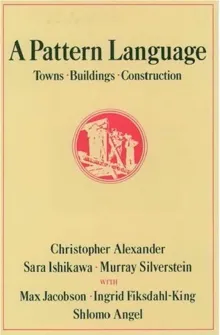
A Pattern Language

Alexander was an architect and urban planner working on building cities and homes condusive to harmonious living.

Pattern languages in programming

The programming community picked up on on Christopher Alexander’s ideas in the late 1980’s.

Despite the original book being primarily about public transportation tempos and cafe sidewalk strategies, the notion of design patterns heavily influenced the development of Object-Oriented Programming languages like Smalltalk and C++.

In a charming presentation at the 199630ya OOPSLA conference (Object-Oriented Programs, Systems, Languages and Applications, obviously), Alexander openly admits “I’m about to address a room full of people and I don’t know hardly anything about what all of you do”.

Some computer scientist called me and said they had a group of people in Silicon Valley willing to pay $3,000 to have dinner with me… and I thought “What the hell is this?”

Richard Gabriel , an engineer at IBM, was one of the ring leaders actively building these bridges between software and built landscapes.

Pattern languages in interface design and design systems

Coming Soon

Feel free to bug me on Bluesky to finish writing this.