惯性聚合 高效追踪和阅读你感兴趣的博客、新闻、科技资讯
阅读原文 在惯性聚合中打开

推荐订阅源

F
Fortinet All Blogs
MyScale Blog
MyScale Blog
Microsoft Security Blog
量子位
B
Blog
aimingoo的专栏
aimingoo的专栏
Apple Machine Learning Research
阮一峰的网络日志
阮一峰的网络日志
The GitHub Blog
The GitHub Blog
T
The Exploit Database - CXSecurity.com
N
News | PayPal Newsroom
Cloudbric
Cloudbric
A
About on SuperTechFans
AI
AI
Hacker News: Ask HN
Hacker News: Ask HN
S
Schneier on Security
Recent Commits to openclaw:main
cs.CL updates on arXiv.org
C
Cyber Attacks, Cyber Crime and Cyber Security
L
LINUX DO - 最新话题
T
The Blog of Author Tim Ferriss
Simon Willison's Weblog
有赞技术团队
有赞技术团队
H
Heimdal Security Blog
J
Java Code Geeks
大猫的无限游戏
大猫的无限游戏
D
Docker
Security Archives - TechRepublic
N
News and Events Feed by Topic
IT之家
IT之家
Know Your Adversary
Know Your Adversary
N
Netflix TechBlog - Medium
T
Tailwind CSS Blog
B
Blog RSS Feed
C
Cybersecurity and Infrastructure Security Agency CISA
C
Cisco Blogs
博客园 - 叶小钗
美团技术团队
钛媒体:引领未来商业与生活新知
钛媒体:引领未来商业与生活新知
H
Hackread – Cybersecurity News, Data Breaches, AI and More
L
LangChain Blog
The Hacker News
The Hacker News
Y
Y Combinator Blog
I
Intezer
The Register - Security
F
Full Disclosure
V
V2EX
freeCodeCamp Programming Tutorials: Python, JavaScript, Git & More
Last Week in AI
Last Week in AI
Martin Fowler
Martin Fowler

Maggie Appleton

The Dark Forest and Generative AI One Developer, Two Dozen Agents, Zero Alignment Gas Town’s Agent Patterns, Design Bottlenecks, and Vibecoding at Scale January 2026 | Maggie Appleton A Treatise on AI Chatbots Undermining the Enlightenment A Brief History & Ethos of the Digital Garden Vibe Code is Legacy Code May 2025 | Maggie Appleton Home-Cooked Software and Barefoot Developers Statistically, When Will My Baby Be Born? Speculative Calendar Events ChatGPT Would be a Decent Policy Advisor March 2025 | Maggie Appleton The Expanding Dark Forest and Generative AI Humanity's Last Exam Squish Meets Structure Common Misconceptions in AI Undetected AI Exam Answers Unbaited Smidgeons Growing a Human: The First 30 Weeks How to Import Academic Papers from Zotero into Tana December 2024 | Maggie Appleton Aesthetic Command Lines with Hyper, Spaceship, and Oh My Zsh Leaving Elicit July 2024 | Maggie Appleton A Short History of Bi-Directional Links The Pattern Language of Project Xanadu Assumed Audiences Ambient Co-presence On Opening Essays, Conference Talks, and Jam Jars Spinning Worlds, Seasickness, and Dealing with Vestibular Neuritis A Collection of Design Engineers Gathering Structures Daily Notes Pages Historical Trails December 2023 | Maggie Appleton September 2023 | Maggie Appleton Digital Gardening for Non-Technical Folks Language Model Sketchbook, or Why I Hate Chatbots June 2023 | Maggie Appleton Computational Notebooks Folk Interfaces Reverse Outlining with Language Models Command K Bars Spatial Web Browsing A Picture Worth a Thousand Programmes Programmable Notes Programming Portals Teenage Skeuomorphic Desktop Designs Growing the Evergreens Why You Own an iPad and Still Can't Draw A Brief Introduction to Digital Anthropology Transclusion and Transcopyright Dreams The Block-Paved Path to Structured Data Empty Pointers and Constellations of AI Metaphors We Web By The Gift Economy Epistemic Disclosure November 2022 | Maggie Appleton Joining Ought July 2022 | Maggie Appleton The Linear Oppression of Note-taking Apps Paleolithic Nostalgia Interoperable Personal Libraries and Ad Hoc Reading Groups The Finest Narrative Non-Fiction Essays Algorithmic Transparency October 2021 | Maggie Appleton Plebeian Programming with Keyboard Maestro The Cultural Anthropology of React August 2021 | Maggie Appleton Natureculture, Moral Purity, and Cultural Boundaries The Echo & Narcissus Writing Club Pink, Soft, Glittering Developers Fetishism & Mechanical Keyboards Making Programming Visual, Spatial, and Learnable Organic, Local, Artisan Data Storage Positioning Elements & Scrollytelling in CSS Painting Roam Research with Custom CSS A Digital Anthropology Reading List The Eponymous Laws of Programming A History of Cyborgs Neologisms GreenSock Animations with React Hooks The Bare Essentials of Greensock September 2020 | Maggie Appleton Illustrating Gatsby's Key Concepts Problematic Proteins New Harvest & Illustrating the Cultivated Meat Podcast Synecdoche: Drawing the Part for the Whole A Meta-Tour of This Site Douglas, Dirt, and Matter Out of Place The Knowledge Hydrant A Naïve Exploration of Computer-Supported Collaborative Learning Silent Synchronous Reading Sessions What the Fork is React Suspense? Visually Workshopping the AWS Cloud Are Data Unions the Future of Data? Pattern Languages in Programming and Interface Design A Metaphorical Reading Collection
Meat Planet: The Illustrated Notes
2019-12-28 · via Maggie Appleton

This site spans the full array of my weirdo interests and niches. And cultured meat is certainly part of that equation. If you’ve never heard of “cultured meat”, this will be a great primer.

I spent the Christmas lull of 20197ya devouring Ben Wurgaft’s book ‘Meat Planet’. Needing an outlet for my over-enthusiasm for it, I started working through my notes and picking out the best themes and ideas to turn into a set of illustrated explorations.
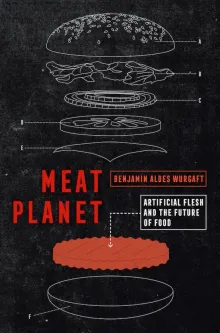
Meat Planet: Artificial flesh and the future of food

I’d been following the media hype around the promise of ‘cultivated meat’ since early 20179ya — mostly as a curious layperson who indulges in reading Silicon Valley techno-utopian gossip the way others watch Keeping Up with Ru Paul’s Real Housewives of Love Island.

I was primarily drawn to the cultural implications of the idea.

Seen through an anthropological lens, cultivated meat prompts a series of fascinating questions;

  • What do we mean by ‘natural’ and ‘unnatural’, ‘real’ and ‘fake’?
  • Why do some people react to the idea with disgust and revulsion? What makes us culturally categorise things as ‘icky’ and ‘gross’?
  • How do we define the categorical boundaries and rules around food, and how malleable is that framework?

Since most of the discussion was happening on Hacker News and Twitter (not usually founts of philosophical reflection), I didn’t expect anyone to meaningfully explore these questions.

The chatter instead orbited around short-term technological viability, or time-to-market, or IPO stock price speculations of hypothetical products.

I was then thrilled to see an anthropologist & historian step into the ring among all the TED-talky-thought-leadering-VCs.

Ben approached the topic through a series of wide-scale historical, cultural, and sociopolitical questions on the nature of what meat is without the dead cow involved.

He uses the promise of animal-free meat as a jumping off point into deeper historical trends about scientific ideologies, Calvinistic Capitalism, paleolithic nostalgia

Paleolithic Nostalgia

Longing for the paleolithic past in the Anthropocene and the presumed division of nature and culture

Natureculture, Moral Purity, and Cultural Boundaries

Why there is nothing natural about the idea of 'nature'
.

Ben’s neutrality is a large part of what makes this a good read - he’s not for or against it. He’s curious.

His agenda is to make you think on a very different level than the mountain of Wired articles on the topic. And he’s asking way better questions than when can I buy it?, will it give me cancer?, and what will we do with all the cows??

Reading this book was akin to having a far more intelligent and academically informed companion take my half-formed pedestrian observations and flesh them out into high-definition, coherent scenes.

The illustrations below are not a comprehensive summary of the book. They’re selected snippets filtered through my own research interests and curiosities. With a good dose of extra commentary layered on top. If they pique your interest, I promise there’s plenty more meat in the actual book 🍖
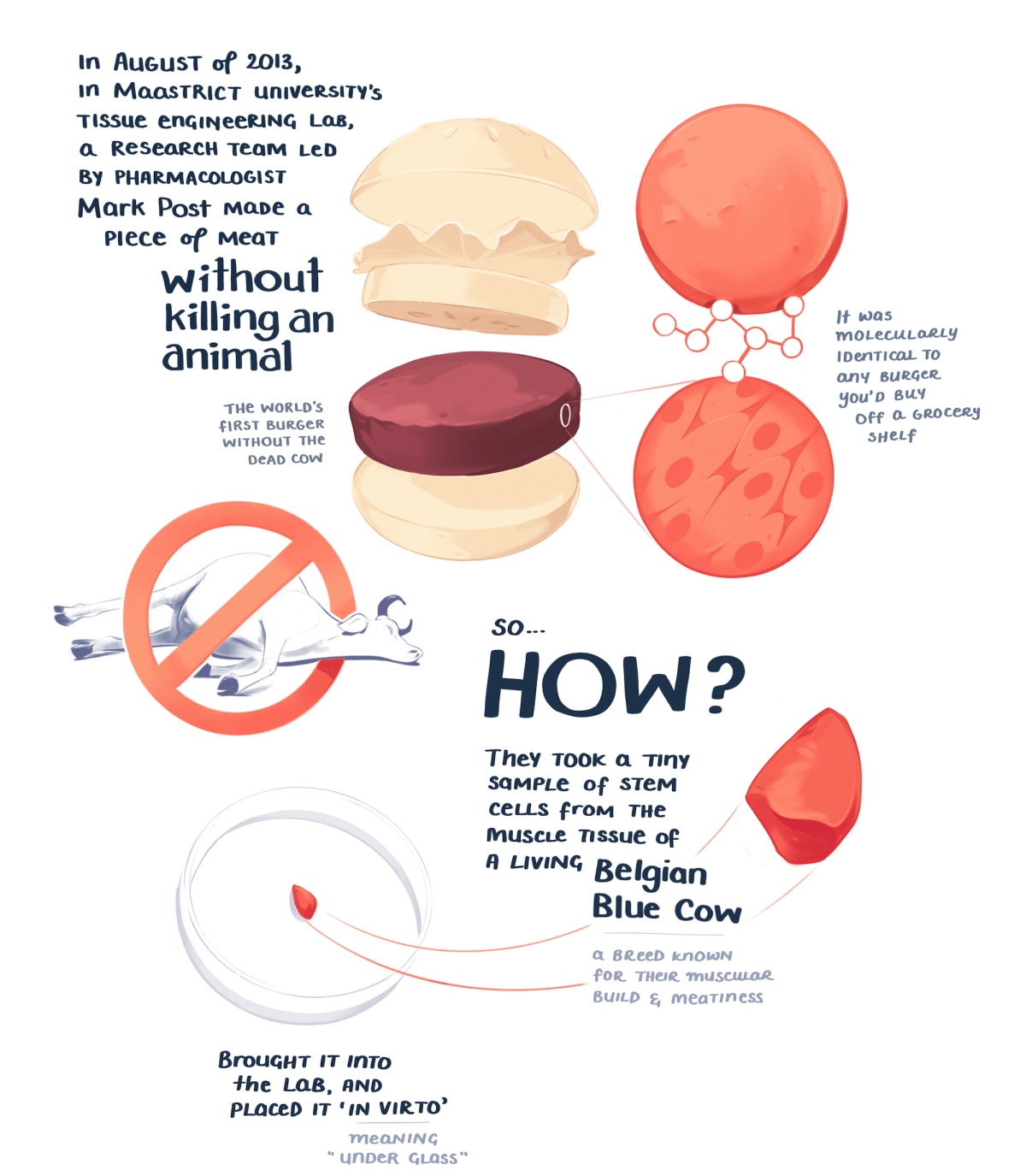
In august of 2013, a research team led by pharmacologist  mark post made a piece of meat without killing an animal. They took a tiny sample of stem cells from the muscle tissue of  a living belgian blue cow, brought it into the lab, and placed it 'in virto' meaning under glass.

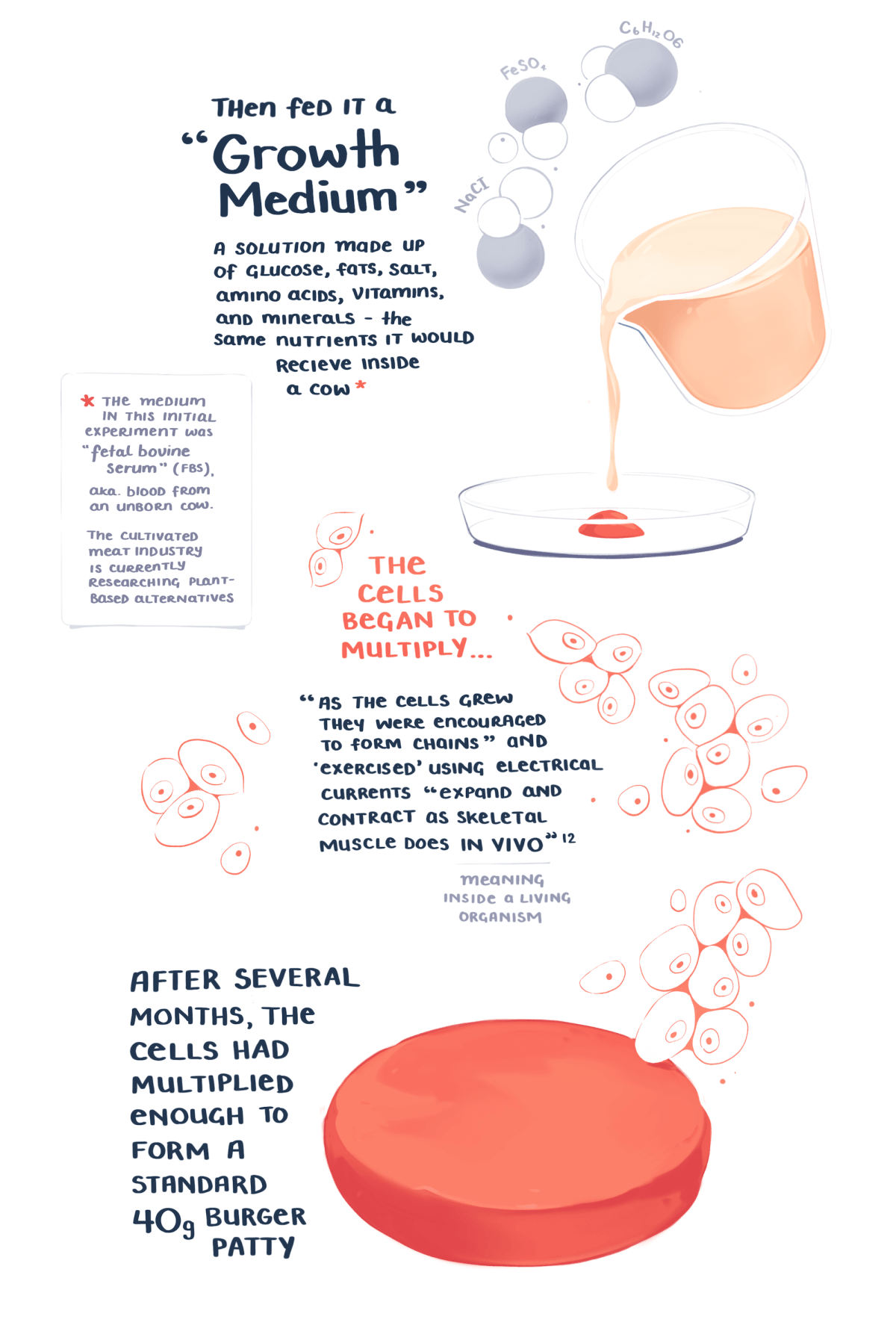
Then fed it a 'growth medium' – a solution made up of glucose, fats, salt,  amino acids, vitamins and minerals. The same nutrients it would receive inside a cow. After several months, the cells had multiplied enough to form a standard 40 gram burger patty.

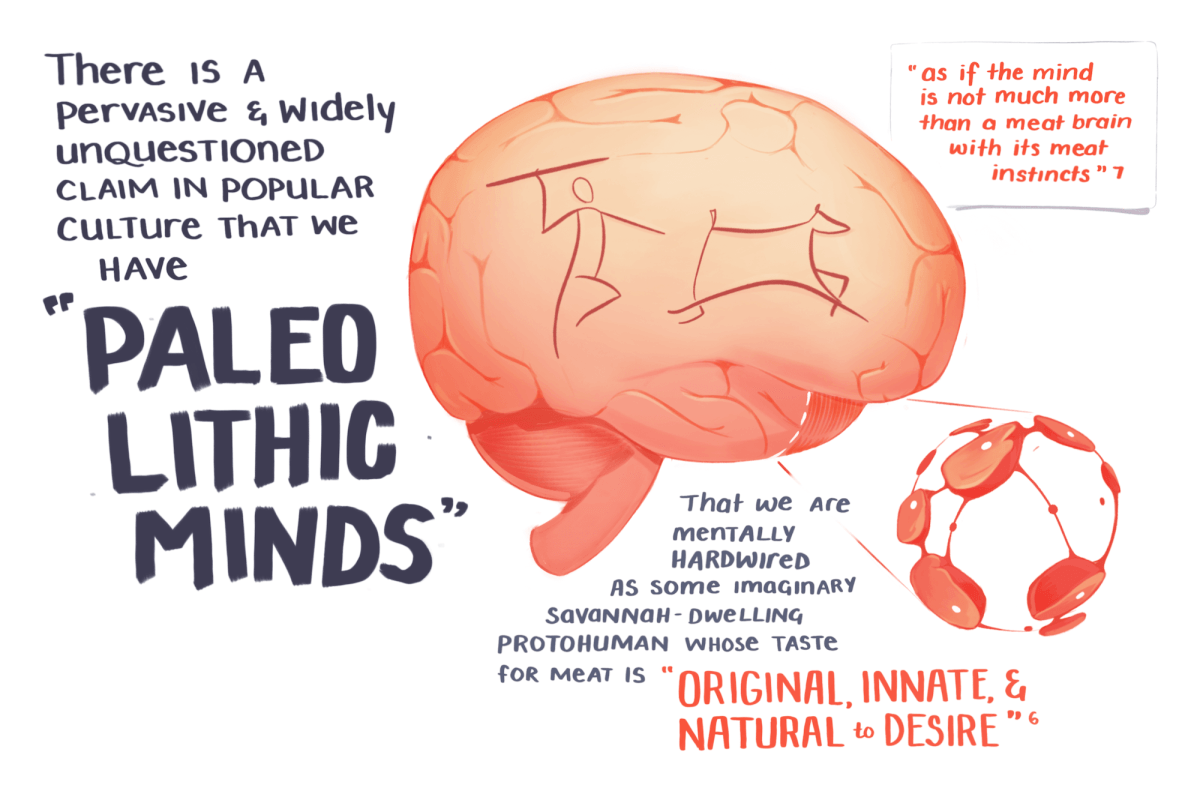
There is a pervasive and widely unquestioned claim in popular culture that we have paleolithic minds. That we are mentally hardwired as some imaginary savannah dwelling protohuman whose taste for meat is 'original, innate, and natural to desire'

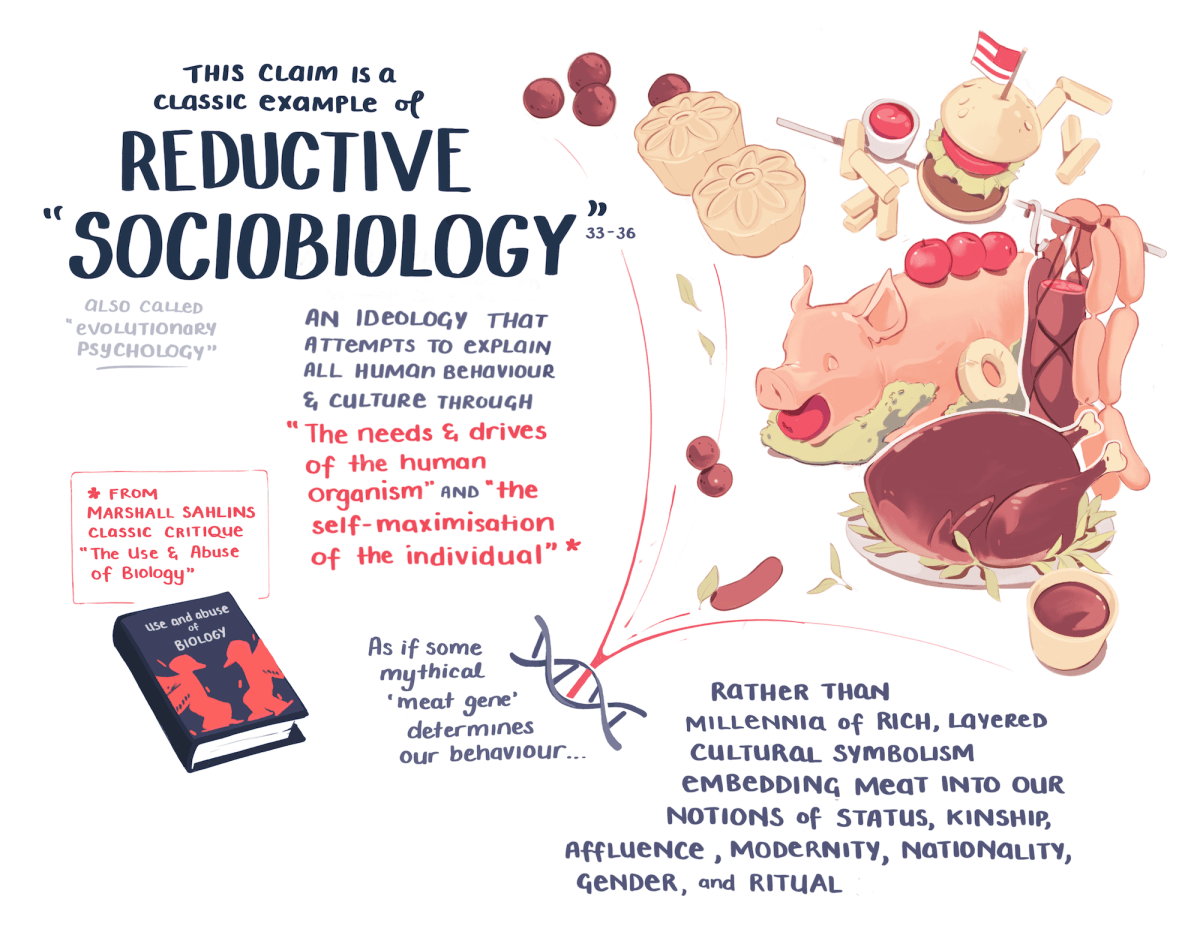
This claim is a classic example of reductive sociobiology – an ideology that evolutionary psychology attempts to explain all human behaviour and culture through

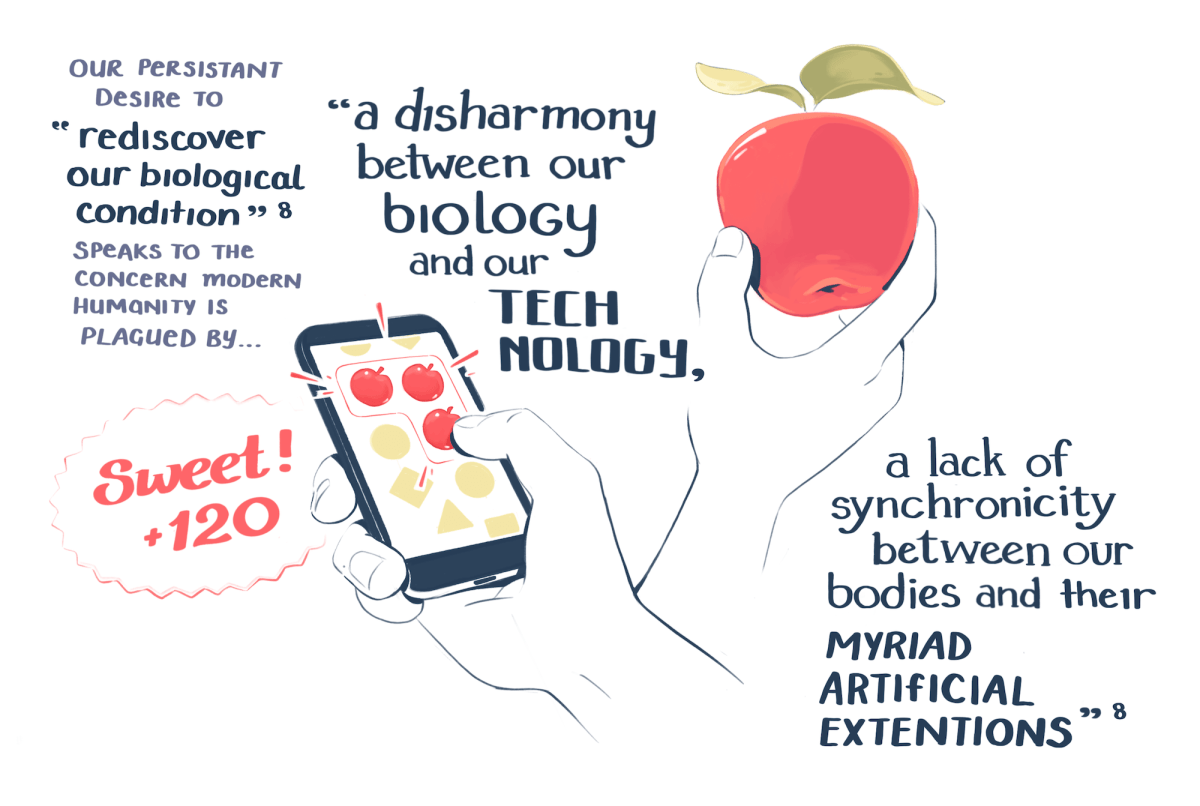
Our persistent desire to rediscover our biological condition speaks to the concern modern humanity is plagued by a lack of synchronicity between our bodies and their myriad artificial extensions

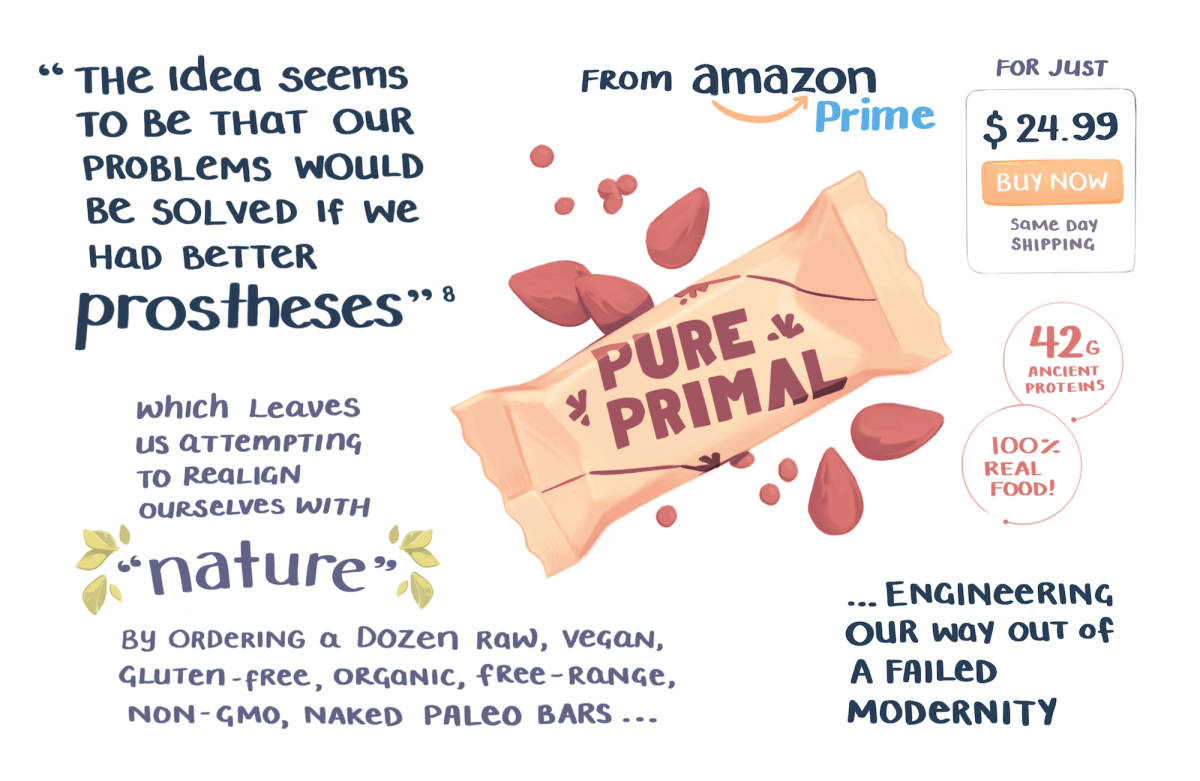
The idea seems to be that our problems would be solved if we had better prostheses. Which leaves us attempting to realign ourselves with nature by ordering a dozen raw, vegan, gluten free, organic, free-range, non-gmo, naked paleo bars

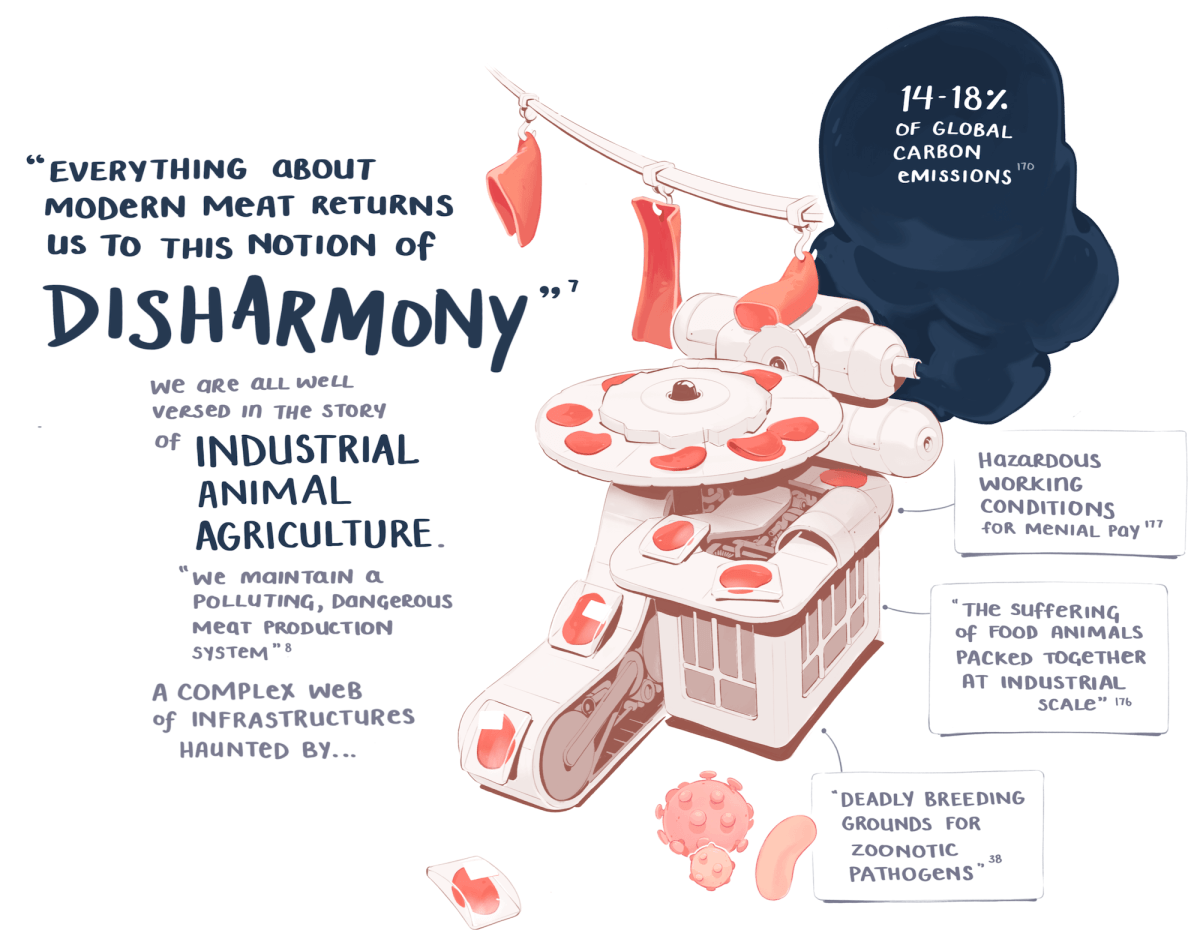
Everything about modern meat returns us to this notion of disharmony. We are all well versed in the story of industrial animal agriculture. We maintain a polluting, dangerous meat production system

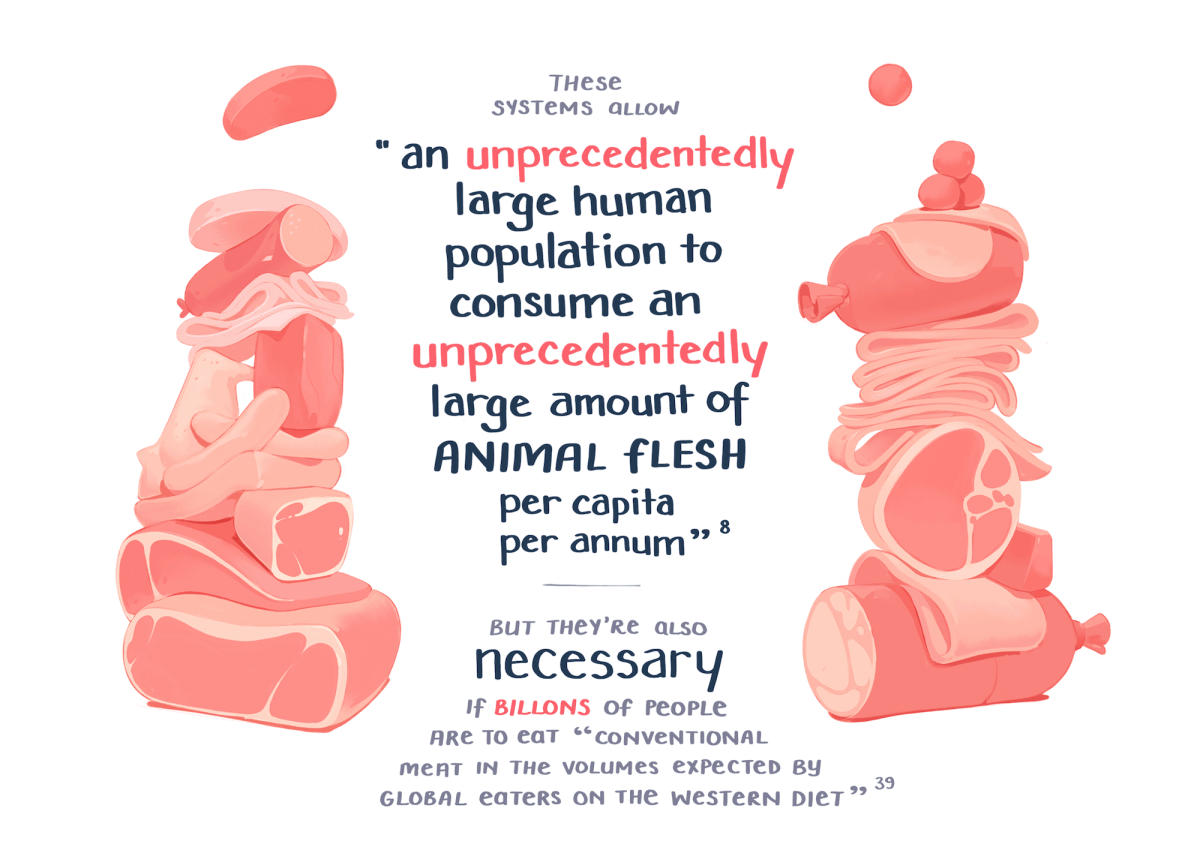
These systems allow an unprecedentedly large human population to consume an unprecedentedly large amount of animal flesh per capita per annum

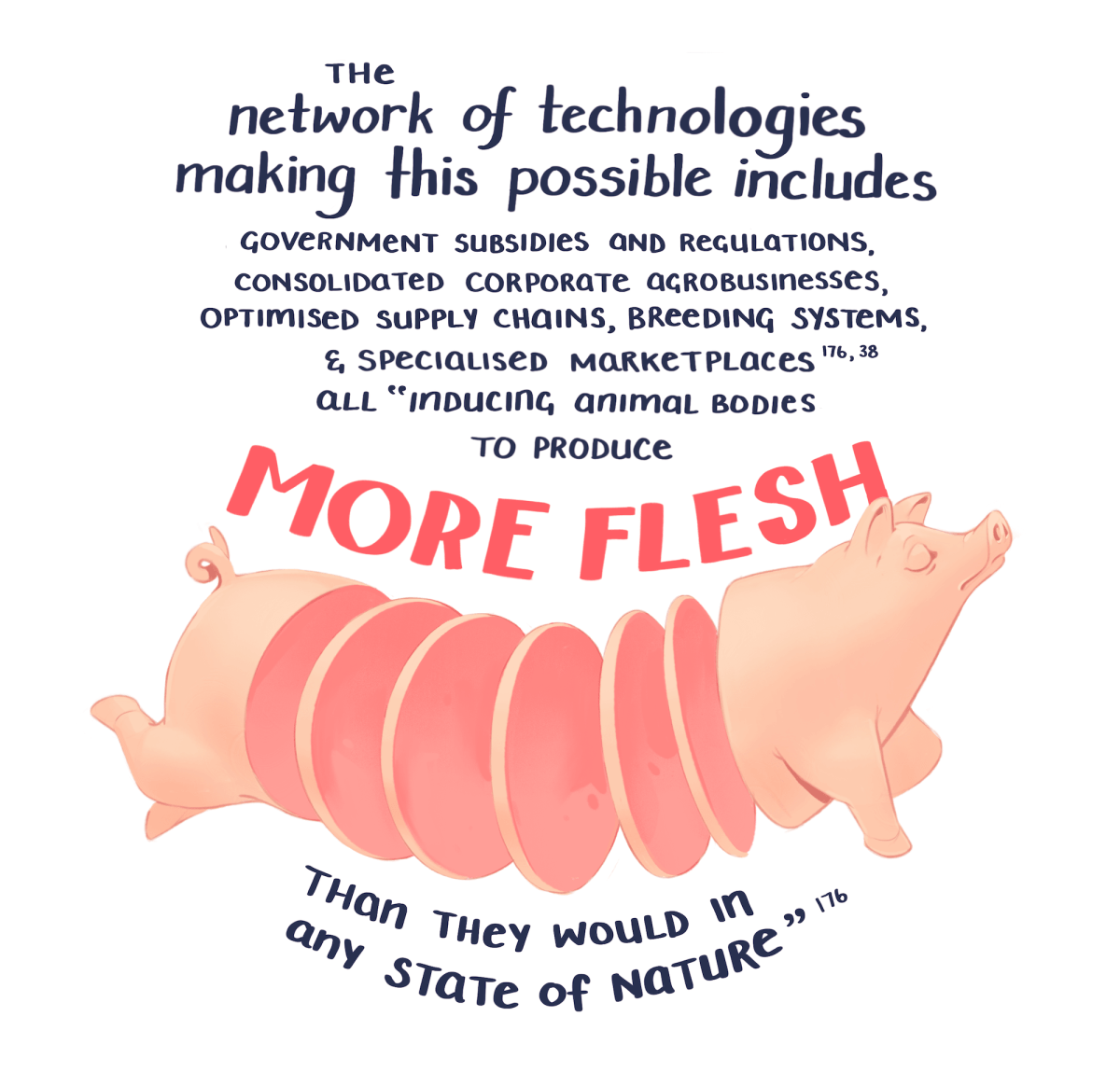
The network of technologies making this possible includes government subsidies and regulations, consolidated corporate agro-businesses, optimised supply chains, breeding systems, and specialised marketplaces

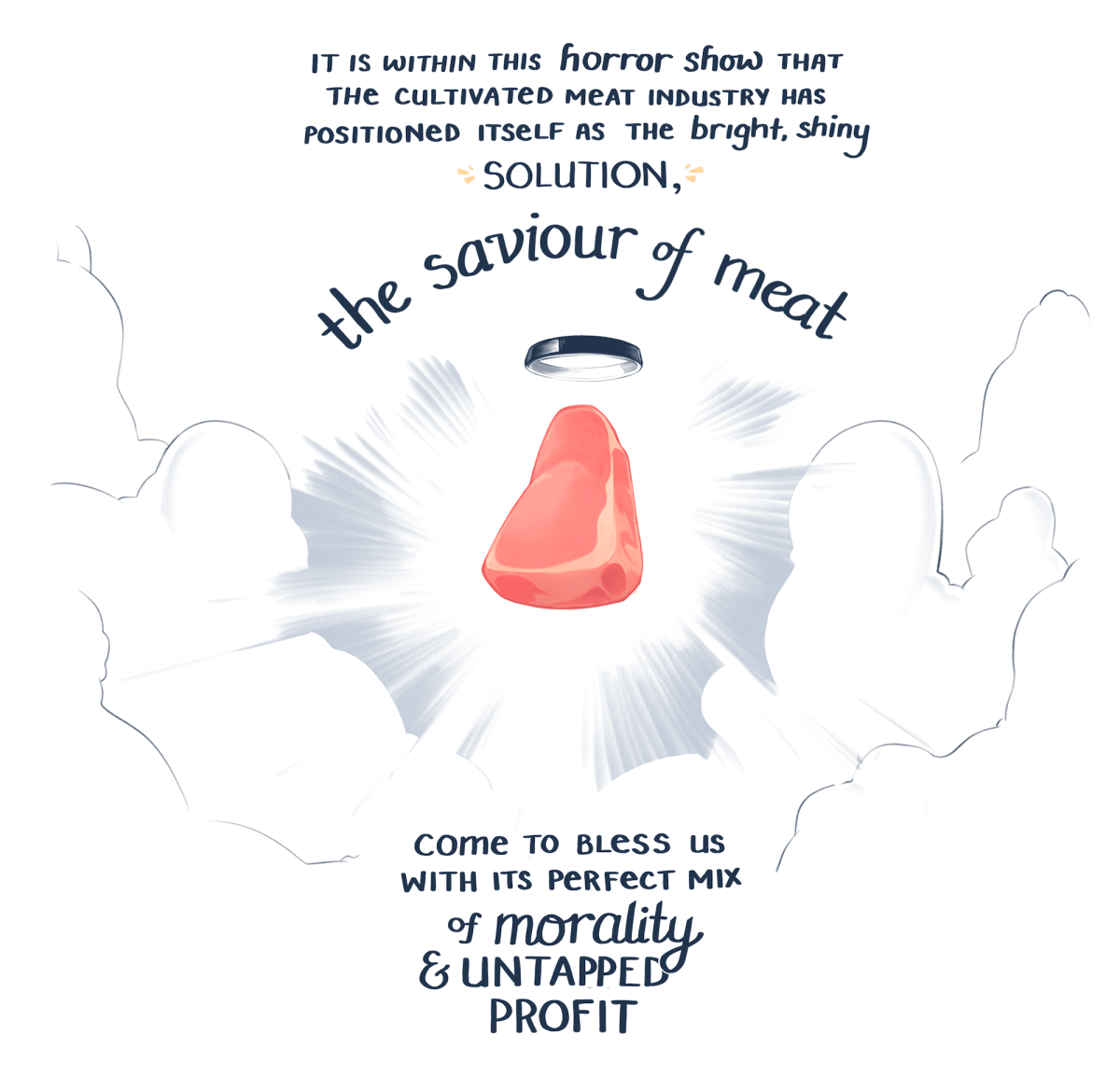
It is within this horror show that the cultivated meat industry has positioned itself as the bright, shiny solution. The saviour of meat come to bless us with its perfect mix of morality and untapped profit