











Focus on what matters
RustWeek 2026: What We Learned, Who We Met, and What’s Next for Rust
RustWeek 2026 brought more than 900 Rust developers, educators, and maintainers to Utrecht, Netherlands, for a few days of talks, hallway conversations, community meetups, hackathons, and workshops about all things Rust.
As a Gold sponsor for the third year in a row, the RustRover team joined the event to support the Rust ecosystem, connect with developers in person, and learn more about how people are building with Rust today.
Along the way, we sat down with members of the Rust community for a series of quick interviews about the future of Rust. In this post, we’re sharing the conversations, trends, and community moments that stood out most to us.
What brought RustRover to RustWeek 2026
Developer conferences are one of the few places where conversations happen completely outside of tickets, issue trackers, and release notes. For our team, RustWeek 2026 was an opportunity to step away from our screens and spend time with the people building real projects with Rust every day.
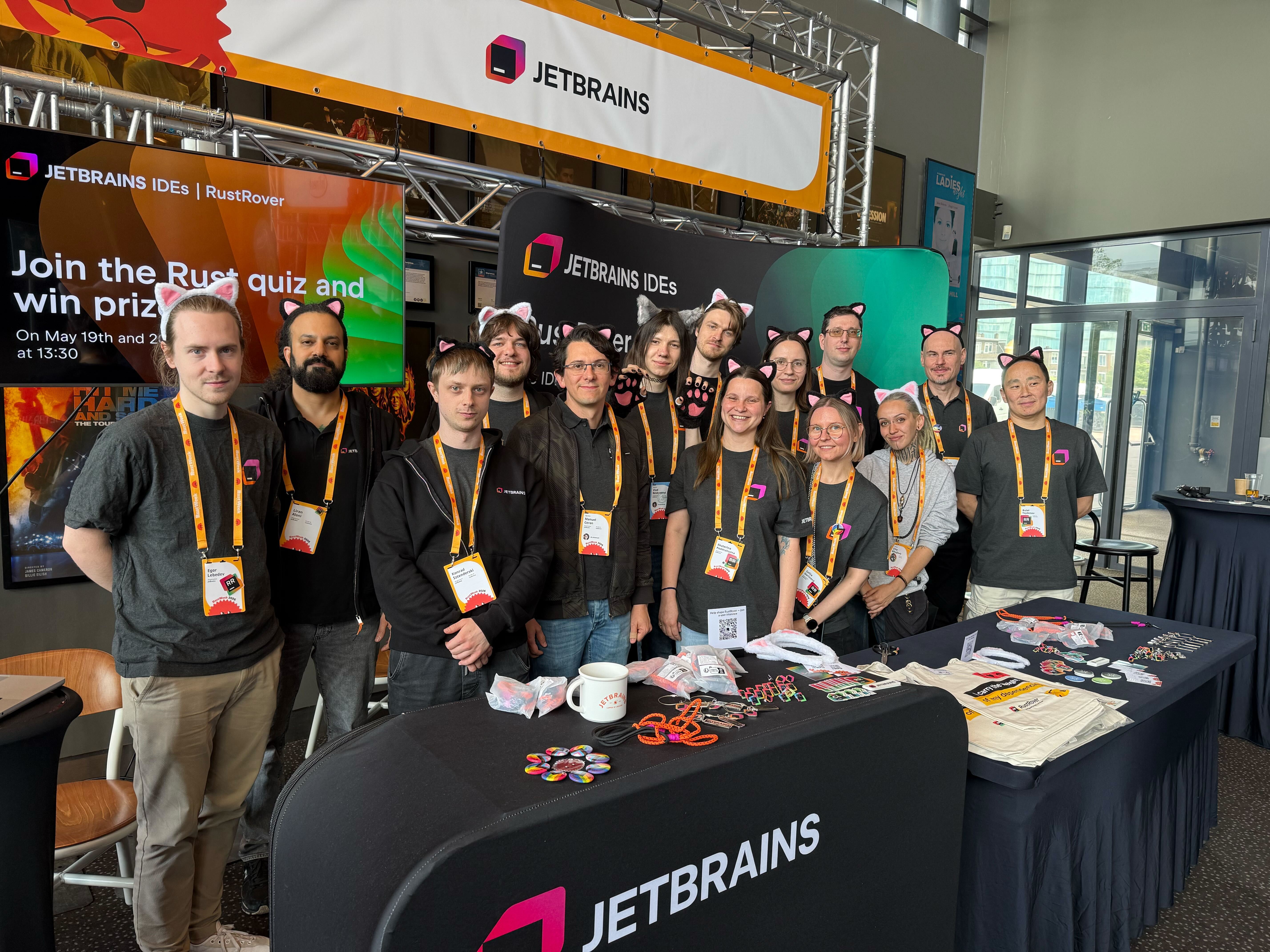
We brought demos, stickers, quizzes, a few quirky prize ideas, and some of our latest RustRover updates, including ACP, Cargo nextest support, and call hierarchy features.
We also came with a camera and five quick questions for members of the Rust community. Our goal was simple – to capture honest perspectives from the people shaping, teaching, and working with Rust in different ways – and we think we succeeded.
At the booth
One thing we underestimated before RustWeek was how competitive Rust developers can get during quiz sessions.
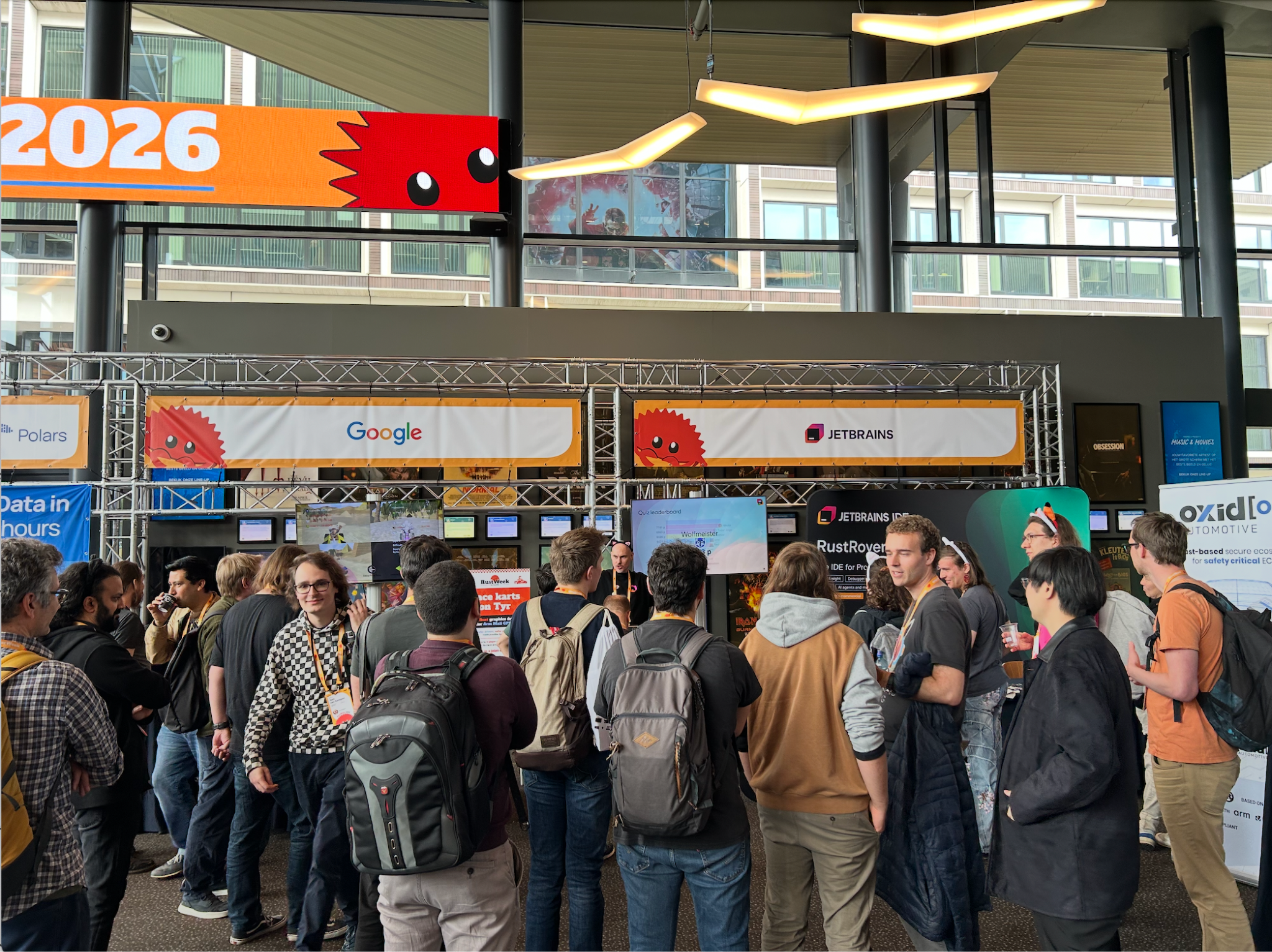
We hosted one Rust quiz each day of the conference, with attendees testing their knowledge. At the end of the quiz, the winner got to choose a prize from the booth table, which somehow made stickers, cat ears, and Francesco Ciulla’s The Rust Programming Handbook feel incredibly high stakes.
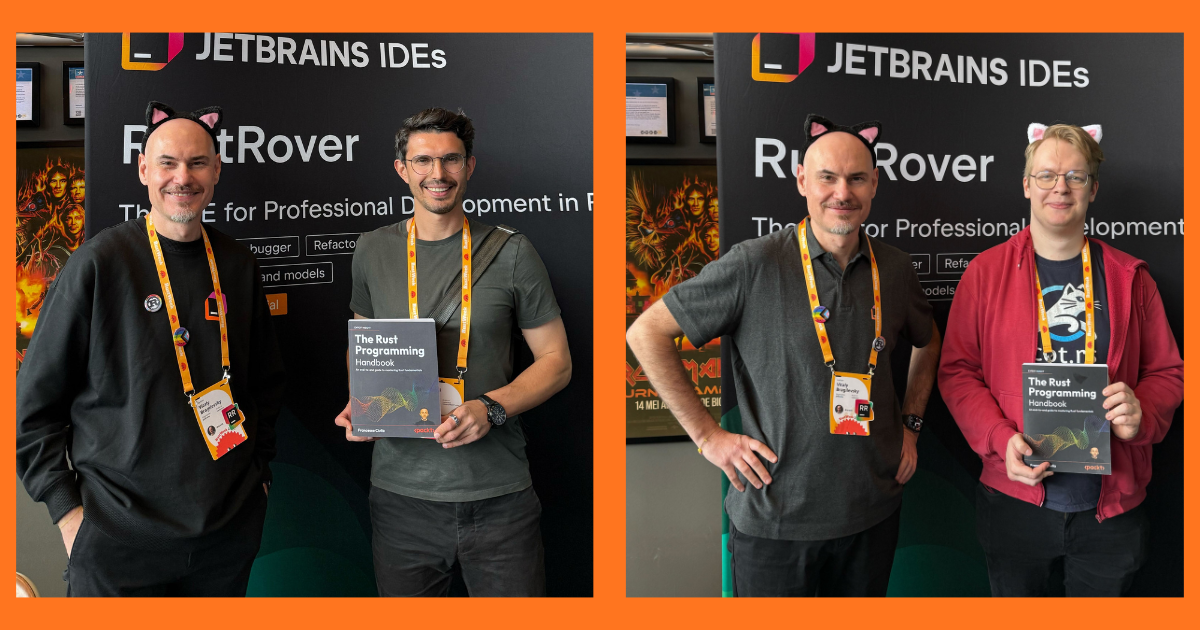
Congratulations to our two Rust quiz champions Nikolai Golub and Mateusz Mackowski, who survived ownership questions, async trivia, and increasingly competitive crowd reactions!
Conversations naturally drifted toward the kinds of projects people are building with Rust today. Embedded systems came up far more often than we expected, especially discussions around probe-rs, remote workflows, and debugging setups. Other attendees shared onboarding stories, editor preferences, or simply stopped by to talk about their experience learning Rust.
The most common questions we heard about RustRover
Many attendees were curious about how RustRover fits into existing Rust workflows, especially for developers already using VS Code, Vim, or Zed. Conversations often centered around debugging, Cargo integration, embedded development, and onboarding to Rust for newer developers.
Several attendees were also interested in remote workflows, custom toolchains, and how RustRover handles larger multi-language projects.
5 questions, 3 perspectives from the Rust community
One of the best parts of RustWeek was the chance to hear what different people in the Rust ecosystem think about the language and its future. To capture some of those perspectives, we caught three members of the Rust community between sessions for separate one-on-one conversations. Same five questions, three very different perspectives.
Our guests: Vlad Beskrovny from the RustRover team, Lori Lorusso from the Rust Foundation, and Stefan Baumgartner, Rust educator and author.
“In five years, Rust will be ___”
We asked each of our guests how they see Rust evolving over the next few years.
“Rust will become a boring language, and that’s a good thing. It’ll become boring when it’s adopted by everyone.”
Vladislav Beskrovny RustRover team, JetBrains
“Adopted by more companies than you would have imagined.”

Lori Lorusso Rust Foundation
”What’s your unpopular opinion about Rust?”
“Everyone says it’s really hard to learn, but it’s just finding the right pathway in. It’s not that hard”

Lori Lorusso
“Rust is an easy language to learn. It’s just really hard to unlearn old habits”

Stefan Baumgartner
”What are you most excited about at RustWeek 2026?”
“Every corner you turn, you see someone you haven’t met in a year.”
Stefan Baumgartner
“I’m excited about giving my talk. It’s a movie theater, so it’s just awesome.”
Lori Lorusso
“I’m really excited about my talk with Lukas Wirth about IDE engines.”
Vlad Beskrovny
One of the conference highlights for the RustRover team was Vlad’s talk with Lukas Wirth, where they explored IDE architecture, developer tooling, and ideas behind modern Rust language support.
What Rust developers were talking about at RustWeek 2026
A few themes kept coming up throughout the conference, both at the booth and in hallway conversations.
Embedded Rust is growing. The Espressif booth stayed consistently busy, and multiple attendees stopped by to talk about embedded workflows, no_std development, and debugging setups. While many projects were still experimental or hobby-focused, interest in embedded Rust continues to grow steadily.
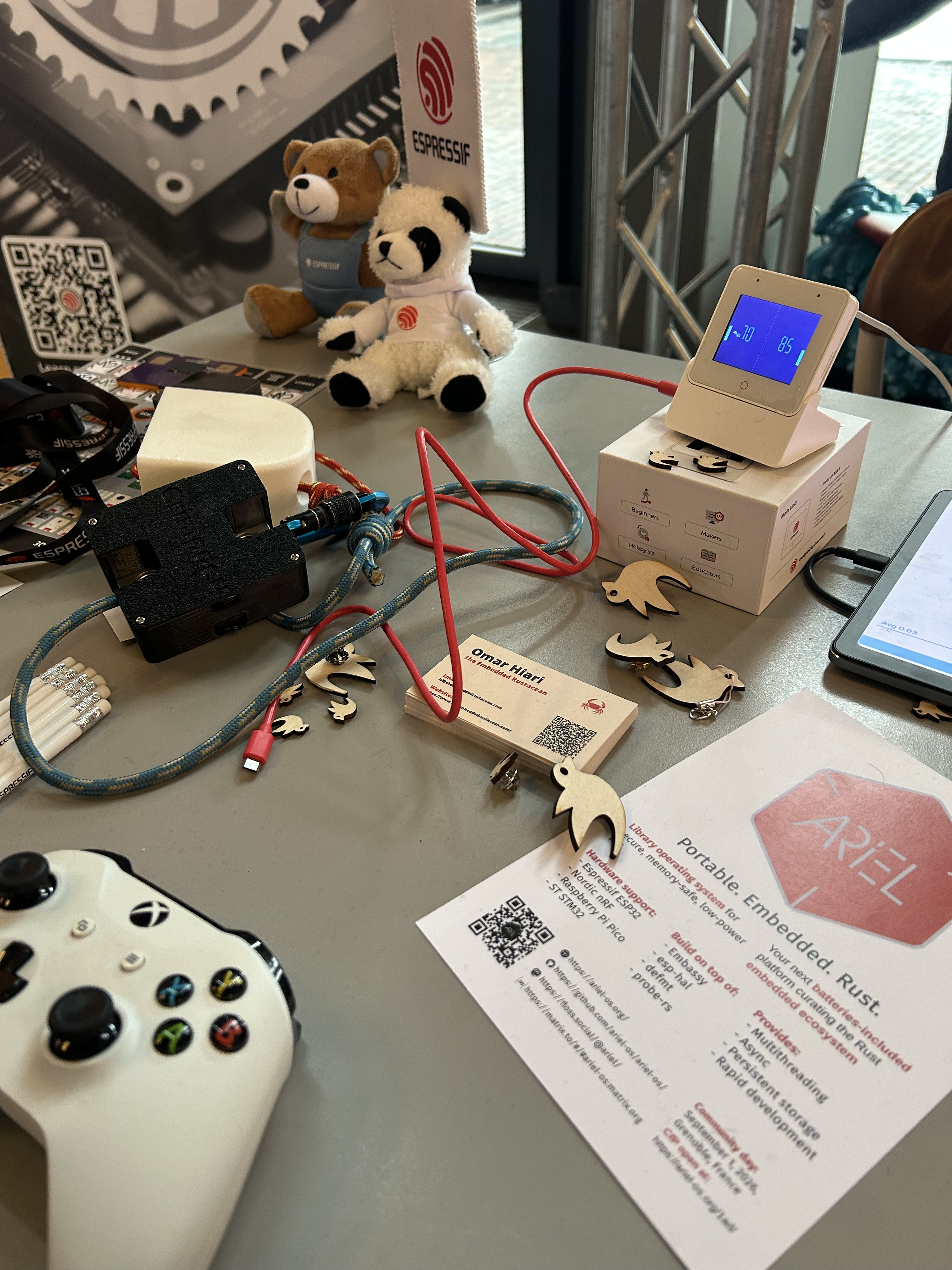
Beyond embedded, a lot of conversations centered around tooling, learning resources, and how developers are integrating Rust into existing workflows. Compared to previous years, there also seemed to be more people actively using Rust professionally rather than experimenting with it on the side.
More than anything, RustWeek felt energetic. Every hallway conversation seemed to turn into another recommendation, debate, or spontaneous deep dive into someone’s latest project.
What the RustRover team learned at RustWeek 2026
RustWeek reinforced something our team already believed but doesn’t always get to experience firsthand: The most useful feedback often comes from the conversations you don’t plan. Between talks, during quiz sessions, or while someone’s waiting for a sticker – that’s where the real insights surface.
We left Utrecht with a clearer picture of where the Rust ecosystem is heading: more embedded interest, more developers using Rust professionally, and a growing focus on tooling and developer experience. And we left with a long list of ideas, feature requests, and conversations we want to continue.
RustWeek reminded us that the Rust community continues to grow without losing what makes it special: the curiosity, the willingness to help, and the kind of enthusiasm that makes you want to start a new project on the train ride home.
Subscribe to Rust Blog updates