


You can still do code reviews manually, but AI-powered tools can catch more issues, faster, and help your team move efficiently.
Aikido’s 2026 State of AI in Security & Development report found that 73% of teams still depend on manual reviews, often causing delays and missed issues.
If AI helps you write code, it makes sense to use it for reviews too. Building automated checks into the pipeline helps teams scale securely without slowing down. As Julian Deborré, Head of Engineering at Panaseer, shared in Aikido’s report, “AI helps us write code faster, so it makes sense for AI to review it too.”
Today’s AI code review tools now go beyond basic linting, offering context-aware analysis, real-time security scanning, and adaptive integrations.
While CodeRabbit remains popular, it does have its issues. This guide highlights the best 2026 CodeRabbit alternatives and how they excel in accuracy, security, and pricing flexibility.
Code review tools are built to make life easier for developers by catching issues early and improving code quality before release. Instead of relying solely on manual checks, these tools streamline collaboration by allowing multiple reviewers to comment and suggest changes.
In 2026, code review is no longer just about finding errors; it’s about intelligent prevention. Modern platforms now leverage AI to predict potential risks before code reaches production. AI-powered insights flag security vulnerabilities and suggest optimized solutions.
Today’s tools are also deeply integrated into developer workflows. They connect seamlessly with popular IDEs and version control systems. This lets developers take corrective actions without leaving their environment, keeping the feedback loop tight.
Ultimately, great code review tools empower teams to write cleaner, more maintainable code faster. They transform code review from a tedious checkpoint into a high-impact process that strengthens engineering culture and enhances security.
When evaluating alternatives to CodeRabbit for AI-powered code review, Aikido Code Quality stands out as the most comprehensive and developer-friendly option. It delivers context-aware reviews with real-time pull request feedback and multi-file analysis, learning from past reviews to suggest custom rules that reflect your team’s best practices and filter out false positives.
Aikido goes beyond line-by-line checks with AutoFix features for secure code fixes and single-click suggestions for SAST and IaC issues. Its IDE plugins catch secrets and code problems in real-time, preventing issues before they reach the repository and ensuring faster, safer code reviews.
With flexible pricing, including a free tier and flat-rate plans, teams can start immediately and scale without hidden fees. By combining deeper analysis, strong security coverage, and automated workflow support, Aikido proves itself as the most effective alternative to CodeRabbit.
Here's how Aikido compares to CodeRabbit for teams evaluating code review tools:
| Feature | Aikido | CodeRabbit |
|---|---|---|
| Primary Focus | Aikido Security’s code quality tool uses AI for real-time PR feedback and custom rules while reducing false positives by up to 95% through intelligent triaging. | CodeRabbit provides AI-generated summaries and line-by-line analysis on pull requests. |
| Security Capabilities | Aikido performs multi-file analysis to trace tainted inputs, detect security vulnerabilities, and identify secrets across cloud providers using hundreds of detection patterns. | CodeRabbit integrates with third-party security tools for vulnerability detection. |
| Deployment & Setup | Aikido deploys in under 10 minutes (both on prem) and integrates seamlessly with GitHub, GitLab, and Bitbucket to scan every pull request and code push. | CodeRabbit integrates with GitHub and GitLab repositories. |
| False Positive Management | Aikido combines 100+ custom rules to reduce false positives and irrelevant alerts. Up to 85%. | CodeRabbit learns from user feedback when developers react with thumbs up/down to comments. |
| Context-Aware Analysis | Aikido adjusts issue severity by assessing if repositories are internet-facing or handle sensitive data, scoring risks higher for sensitive or exposed projects. | CodeRabbit maps dependencies and downstream effects of changes across the codebase. |
CodeRabbit is an AI-powered code review assistant that gives context-aware feedback on pull requests. It connectswith GitHub, GitLab, Azure DevOps, and Bitbucket, spotting bugs, style issues, and missing tests.
For example, CodeRabbit reviews each pull request using trusted linters and security analyzers, then turns the results into useful comments. Public repositories can use its Pro features for free, which makes it popular among small teams and open-source contributors.
As projects grow and codebases become more complex, some teams may want deeper insights, stronger security checks, or more advanced reporting than CodeRabbit currently offers.
Why or when to Look for CodeRabbit Alternatives?
With AI code review tools, developers can automate much of the review process while maintaining quality and context. CodeRabbit, for example, works well for simple file-by-file reviews and catching common issues. It integrates smoothly with platforms like GitHub, adding AI-generated comments directly into pull requests. You can also pair it with linters such as Semgrep by adding a `semgrep.yml` file and configuring CodeRabbit to use it. This setup helps identify unsafe patterns and missing standard checks. For small teams or simple projects, that’s often enough.
As your codebase grows with more services, modules, and contributors, you may start needing a code review tool that offers more advanced support. You might want one that:
Here are seven top CodeRabbit alternatives, highlighting their features, pricing, and key pros and cons to help you make the best choice for your team.
When your codebase spans multiple services, languages, and environments, you need more than a tool that only checks lines of code. The alternatives below provide deeper analysis, solid integrations, and flexible rules that fit complex, enterprise-level projects.
Let’s get started.
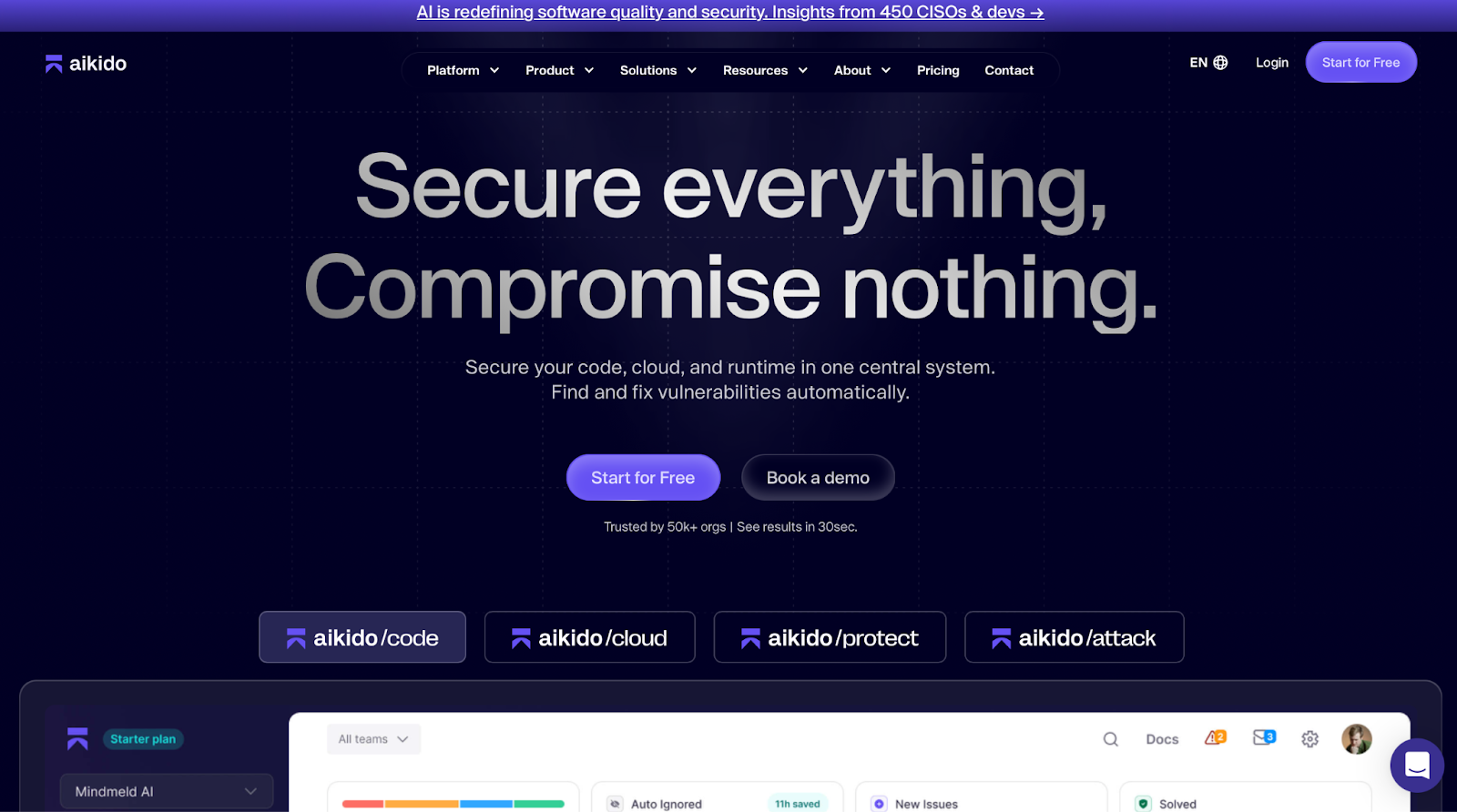
Aikido Security’s Code Quality module uses AI-powered reviews to make the entire process faster and smoother, integrating seamlessly with your version control and IDEs. It ensures your code is reviewed at every stage of the software development lifecycle (SDLC), bringing AI-driven intelligence directly into your workflow by offering:
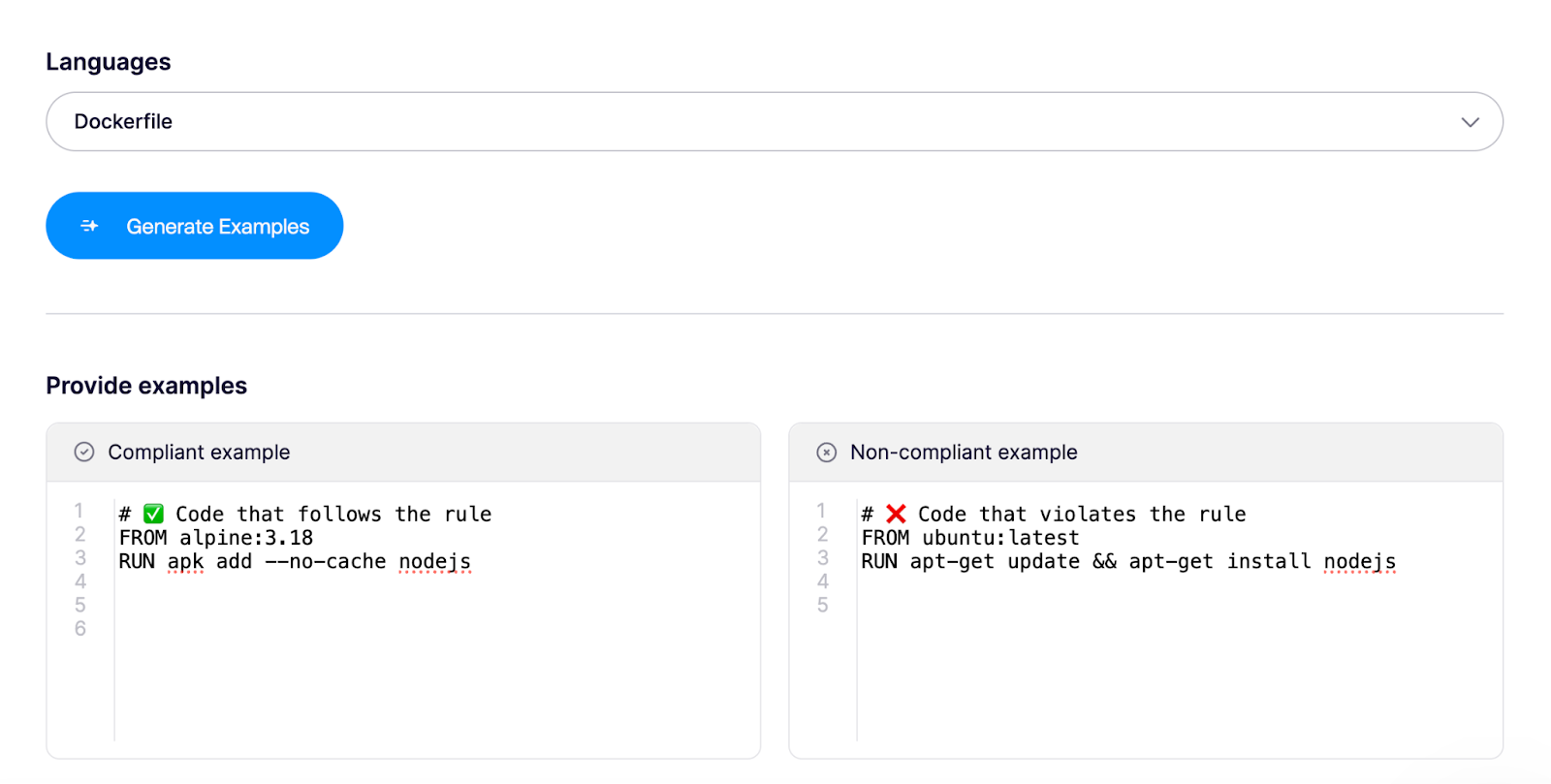
For example, if want a rule that says:
Allow only Alpine base images in Dockerfiles as base images
You can simply create one by giving compliant and non compliant examples so Aikido code quality knows what to look for aside from industry best practices.
Beyond custom rules, one common challenge developers face with code review tools is getting them to understand the specific context of their projects. Every organization works differently, and Aikido gets that. It lets you teach the system your team’s coding standards, best practices, and exceptions, so it truly reflects how your team writes and reviews code.
For example, you can add context like:
“We store dates as UTC in the database but always display them in the user’s local time; all conversion logic is in utils/timezone.js, so don’t flag timezone conversions as redundant.”
And even tailor it to specific repositories:

You can even fine-tune these rules for specific repositories. By adding this kind of context, Aikido’s AI-powered reviews better understand your codebase’s unique logic and intent, avoiding false positives and focusing on feedback that actually matters.
Plus, because it’s system and language agnostic, Aikido Security’s code quality tool lets you review, comment, or approve changes right within your environment. It’s a seamless blend of automation and adaptability, making it one of the most developer-friendly AI code review tools available today.
|
Developer (Free Forever): |
|
|
Basic: |
|
|
Pro: |
|
|
Advanced: |
|
|
Enterprise: |
|
Pros
Beyond Gartner, Aikido Security also has a rating of 4.7/5 on Capterra and SourceForge. Users consistently praise its intuitive interface, developer-first workflow, and smooth integration into CI/CD pipelines.

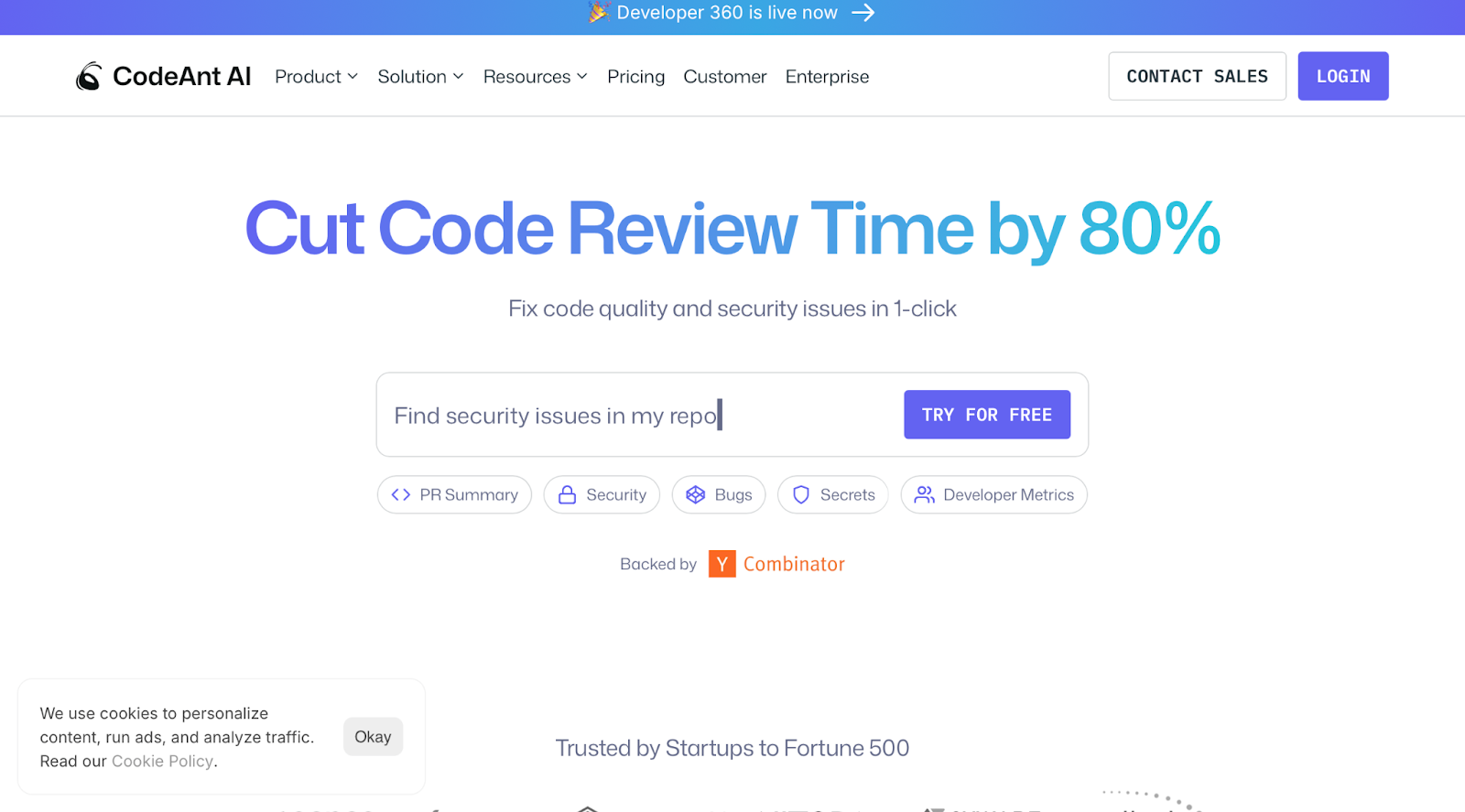
Codeant AI, a strong option among CodeRabbit alternatives for AI code review, combines artificial intelligence with Static Application Security Testing (SAST) to detect critical code issues and vulnerabilities. It performs detailed line-by-line analysis, generates concise pull request summaries, and integrates with GitHub, GitLab, Bitbucket, Azure DevOps, and IDEs like Visual Studio Code and JetBrains. The platform also offers customizable rules and real-time AI code reviews to help teams maintain secure, high-quality code.
CodeAnt AI detects and auto-fixes over 5,000 code quality issues and security vulnerabilities across IDEs, pull requests, and CI/CD pipeline. It includes over 30,000 deterministic checks alongside AI-based checks for 30+ programming languages. The platform cuts manual code review time and bugs by over 50% with single-click fix suggestions.
CodeAnt AI is good for teams that want to ship faster without trading off quality or security.
|
Free Trial: |
|
|
Basic Plan ($10/user/month): |
|
|
Premium Plan ($20/user/month): |
|
|
Enterprise Plan (Custom Pricing): |
|
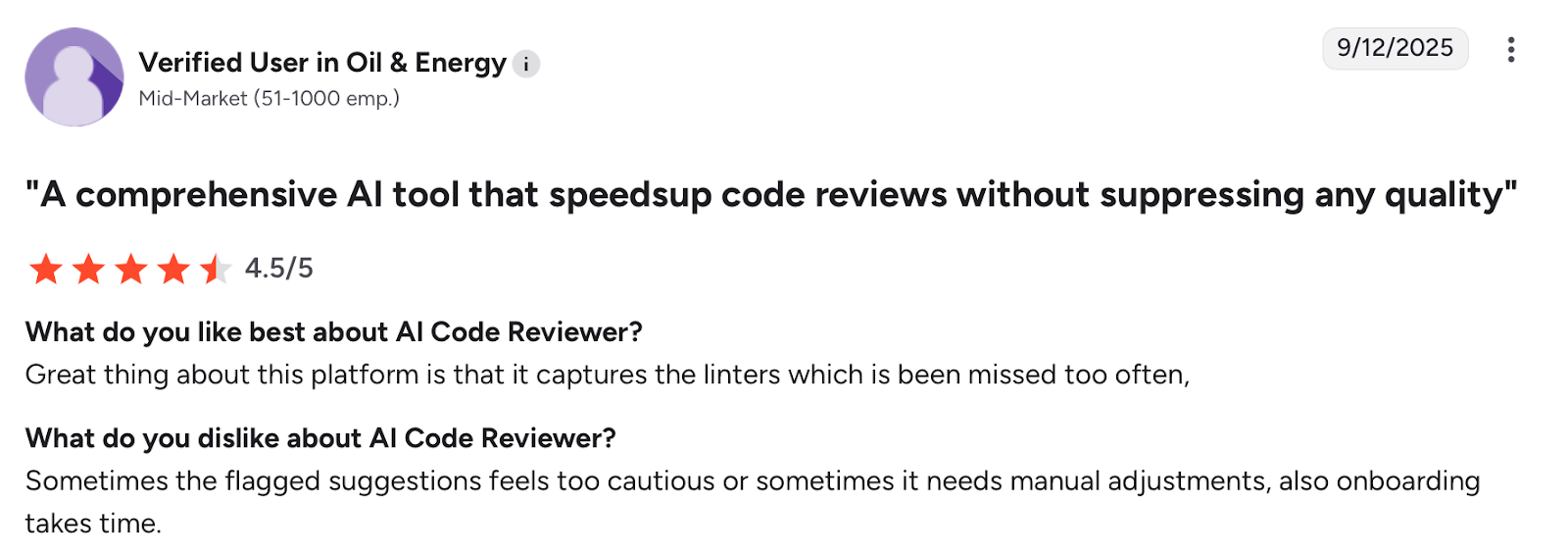
CodeAnt AI’s 4.9/5 rating is based on only 5 reviews, meaning the sample size is too small to represent consistent, real-world performance.
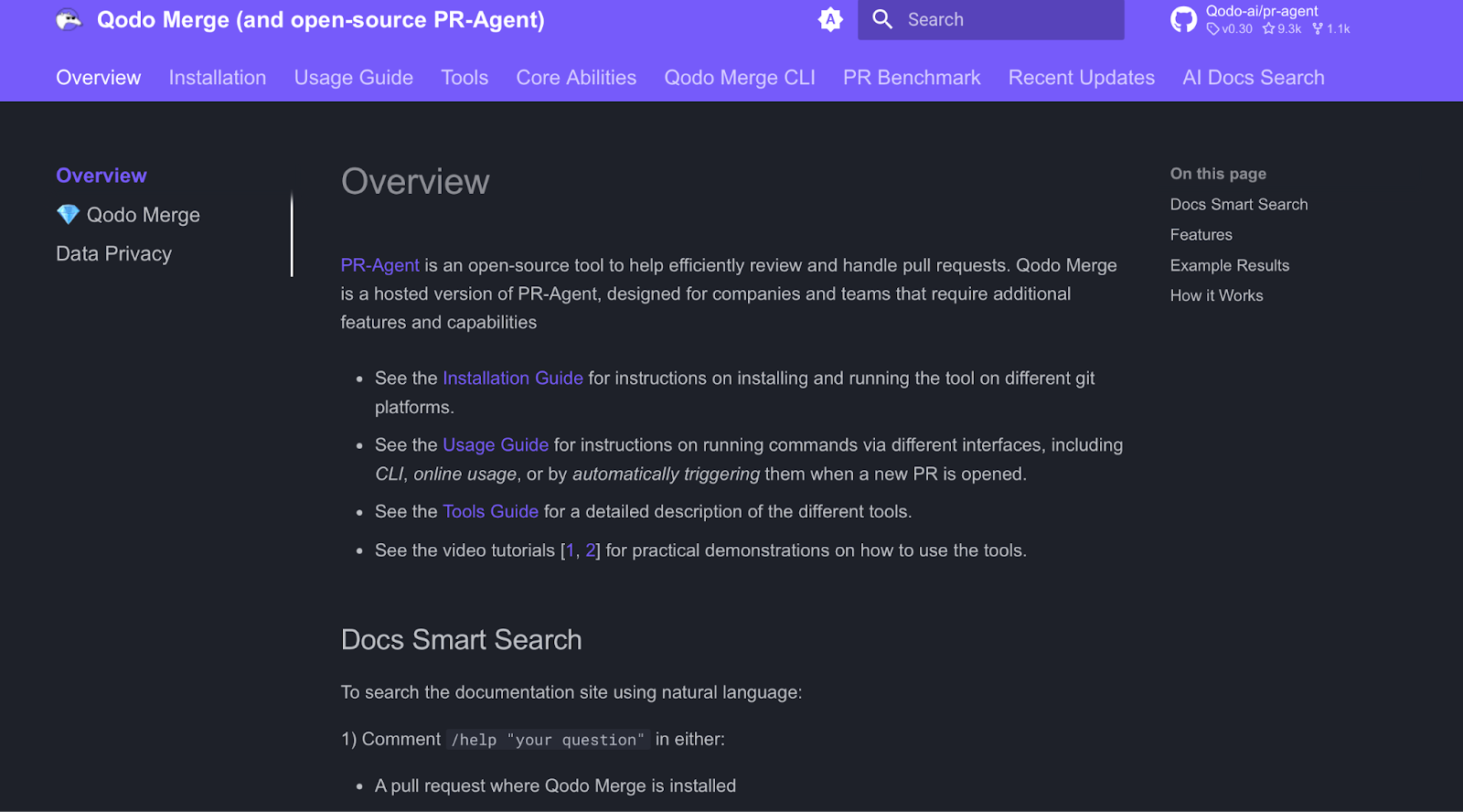
Qodo Merge , a notable choice among CodeRabbit alternatives for AI code review, is an open-source tool designed to simplify pull request reviews. It analyzes PRs, adapts to your coding style, and suggests improvements accordingly. Reviews can be triggered manually or run automatically, saving time in the review process, and it integrates smoothly with platforms like GitHub to provide quick analysis and actionable recommendations for better code quality.
Qodo Merge uses advanced AI to understand your code, pull requests, and broader codebase context. It integrates with Jira, Linear, and Monday dev to provide compliance ratings based on how closely code changes align with ticket requirements.
Qodo Merge is best for teams and companies that need to enforce organization's best practices and compliance with engineering policies across their PR workflow.
|
Free Tier: |
|
|
Developer Plan: |
|
|
Team Plan: |
|
|
Enterprise Plan: |
|
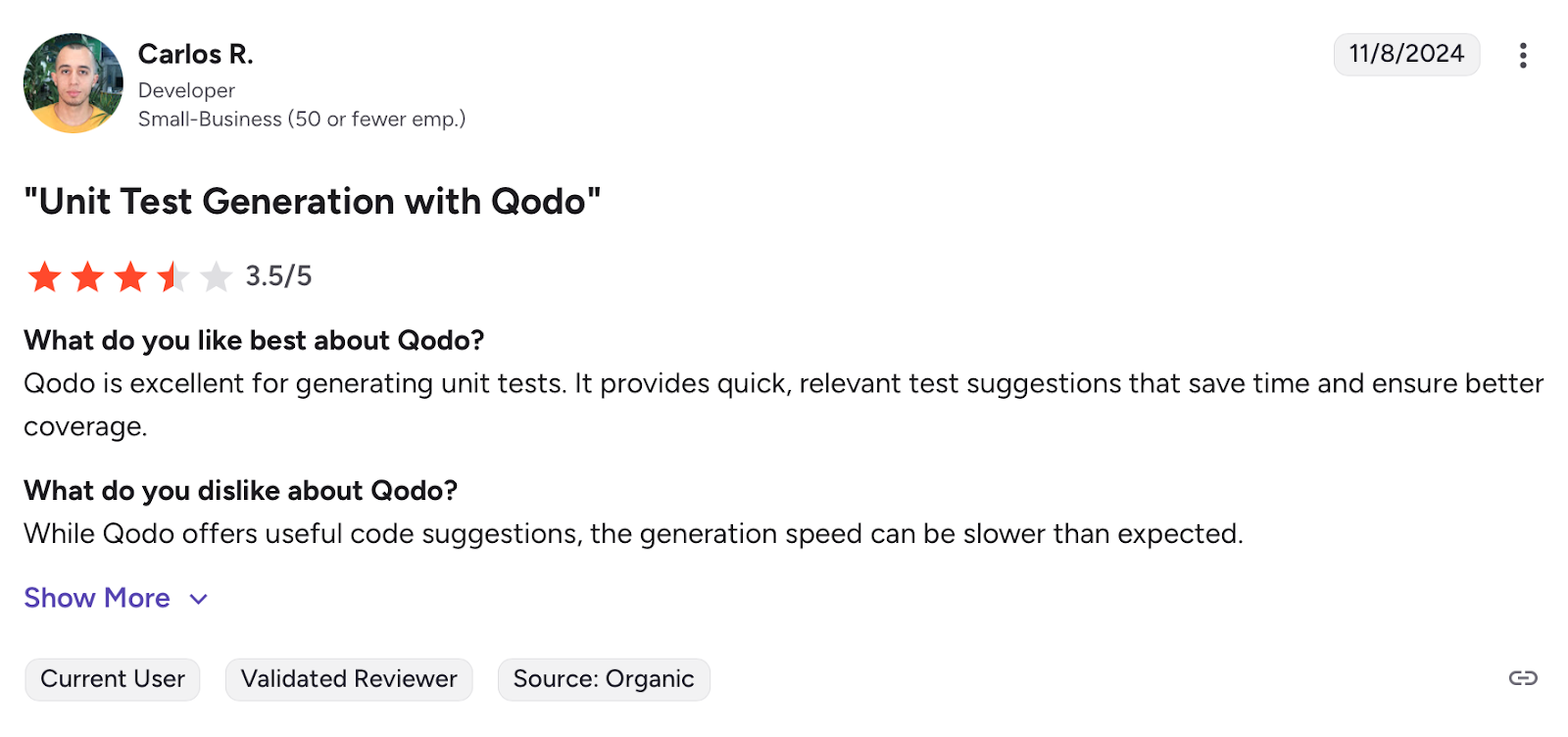
On Gartner Peer Insights, Qodo Merge holds an impressive 4.5 out of 5 rating in the “AI Code Assistants” category, based on feedback from 34 users.
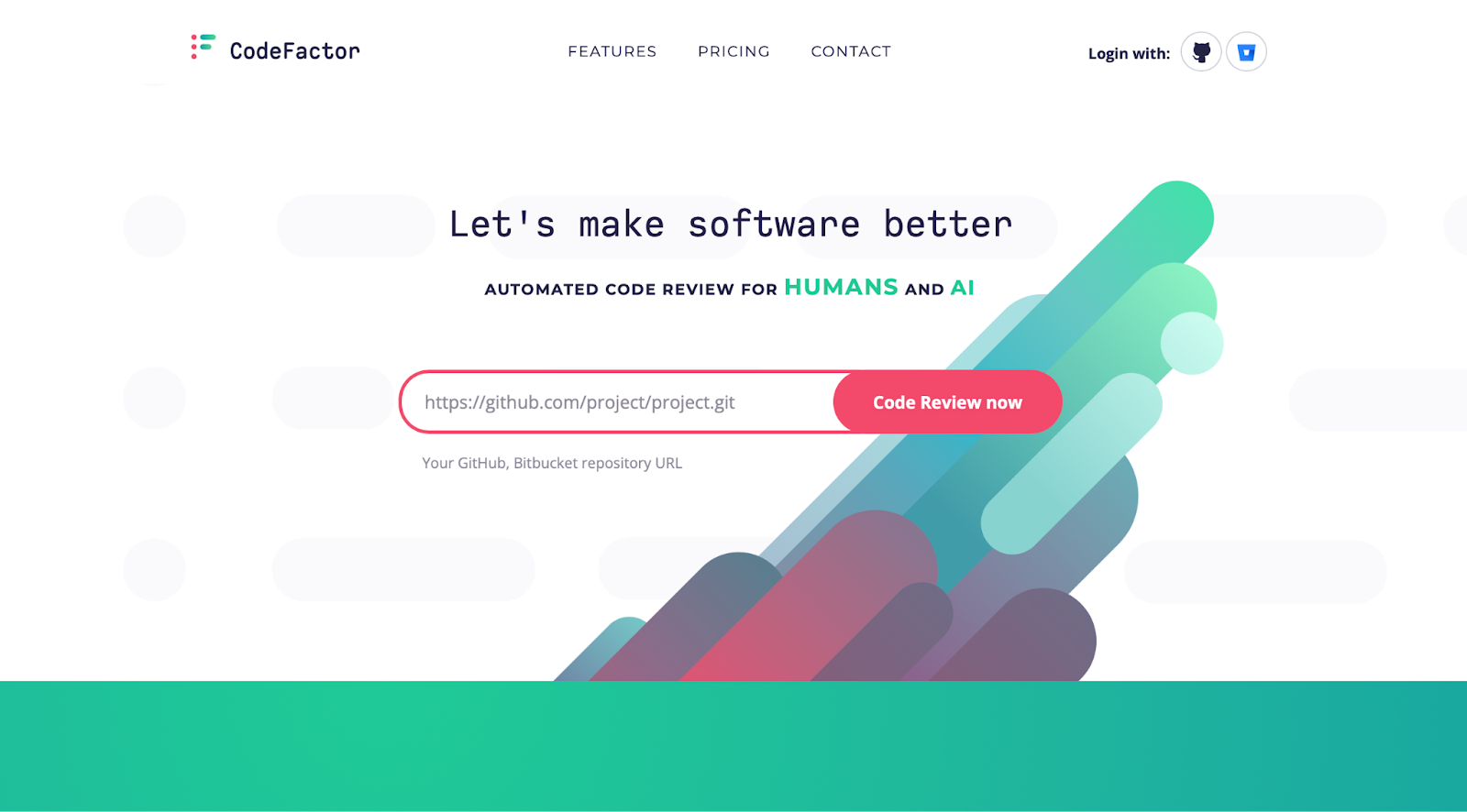
CodeFactor automatically tracks code quality with every GitHub or Bitbucket commit and pull request, helping developers save time in code reviews and tackle technical debt. It instantly reviews every commit or PR and provides actionable feedback within seconds. The platform requires zero setup time and allows teams to customize rules, get refactoring tips, and ignore irrelevant issues.
CodeFactor supports over 20 programming languages including JavaScript, Python, Java, Go, Ruby, PHP, Swift, and Kotlin. The tool can autofix certain issues on-demand or automatically, supporting ESLint, PHP_CodeSniffer, Stylelint, RuboCop, and SwiftLint. It prioritizes the most critical issues based on code size, file change frequency, and file size, so teams fix only what's important.
|
Community Plan: |
|
|
Pro Plans (Paid): |
|
|
Features with Paid Plans: |
|
|
Flexible Billing & Discounts: |
|
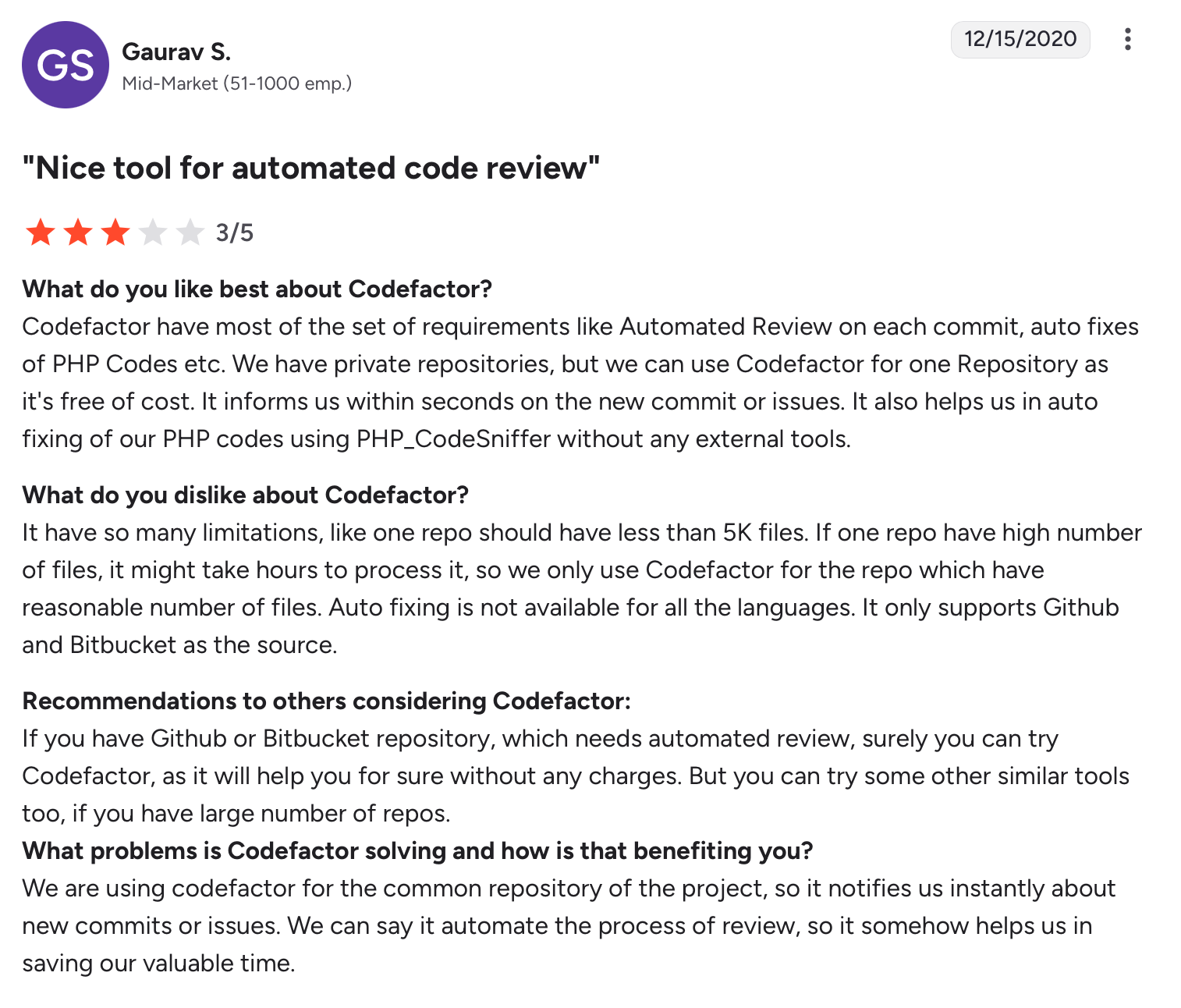
CodeFactor earns a rating of 3.8/5 based on a small sample of reviews. It’s a useful tool if you fit those strengths, but its rating and review volume suggest you should assess it carefully for your context.
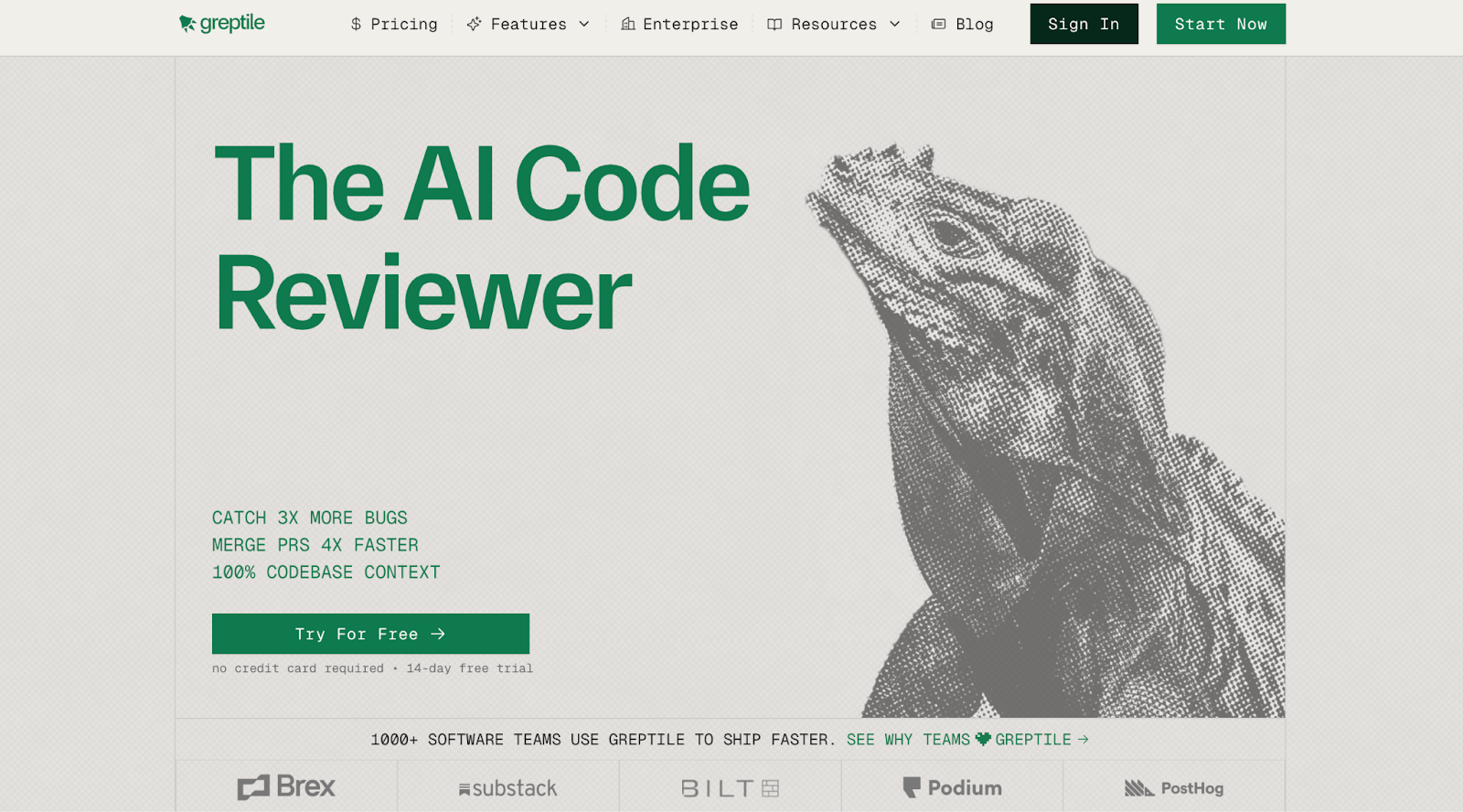
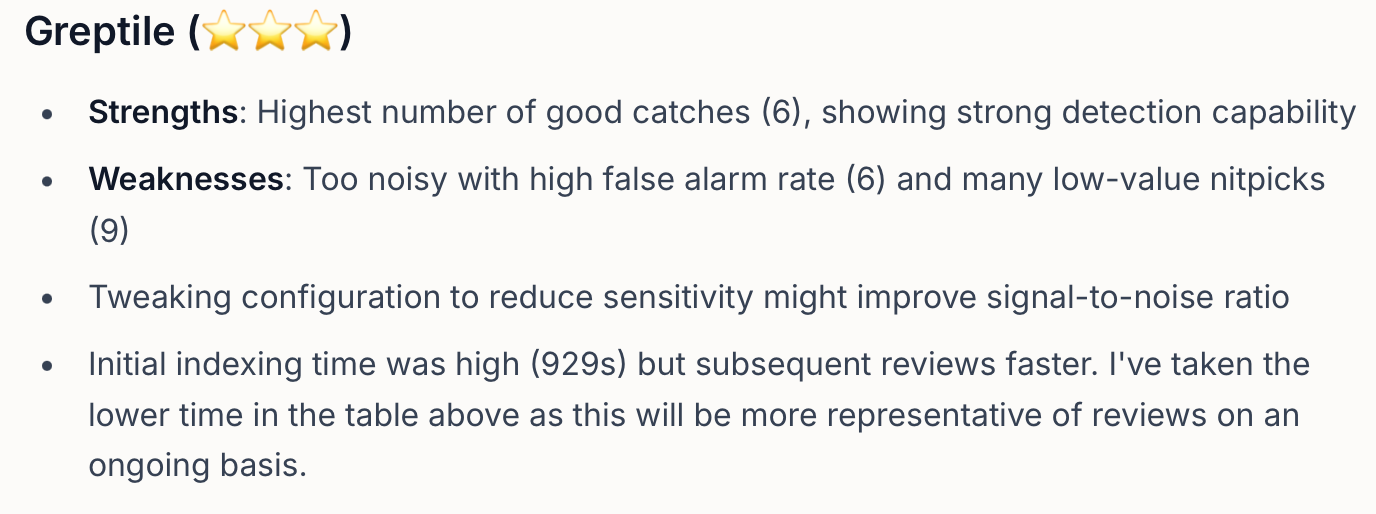
Greptile is a code review tool that specializes in providing full context of the codebase during reviews. By analyzing the entire repository, it helps developers understand how specific changes impact the broader system. Greptile is designed to reduce blind spots in reviews, offering insights into dependencies, functionality, and potential issues that might not be obvious from isolated changes.
Greptile generates a detailed graph of functions, variables, classes, files, and directories, showing how they're connected and using this context to evaluate code changes during reviews. Teams using Greptile catch more bugs and merge PRs 4x faster on average, with companies like PostHog, Raycast, and YC's internal team reviewing millions of changes weekly. The platform learns from thumbs up/down feedback and integrates with Jira and Notion to provide context-aware feedback based on related tickets.
|
Cloud Plan: |
|
|
Enterprise Plan: |
|
|
Special Discounts: |
|
While Greptile does not yet have a widely published numerical rating like “4.5 / 5 based on X reviews” on major review platforms.
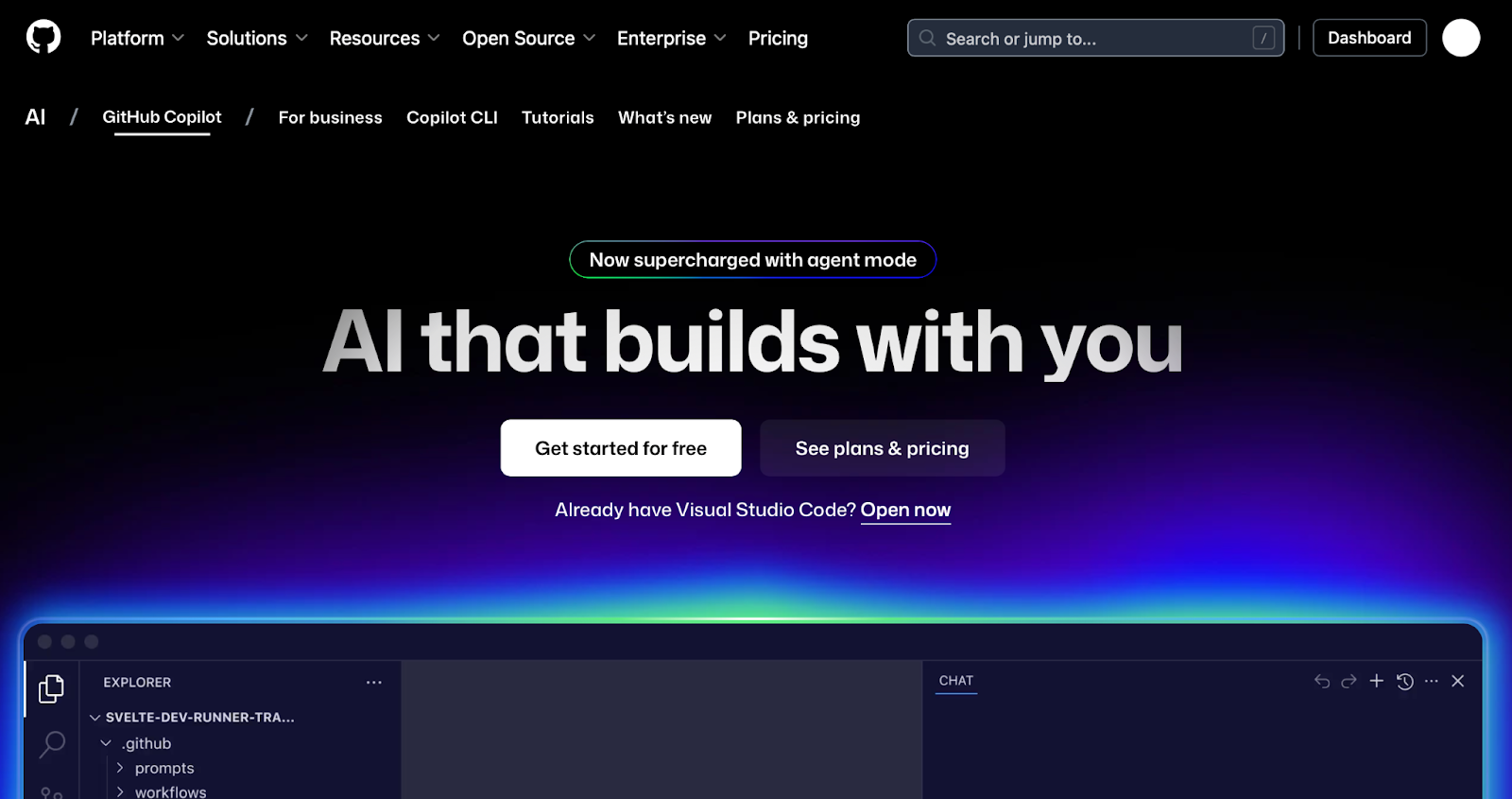
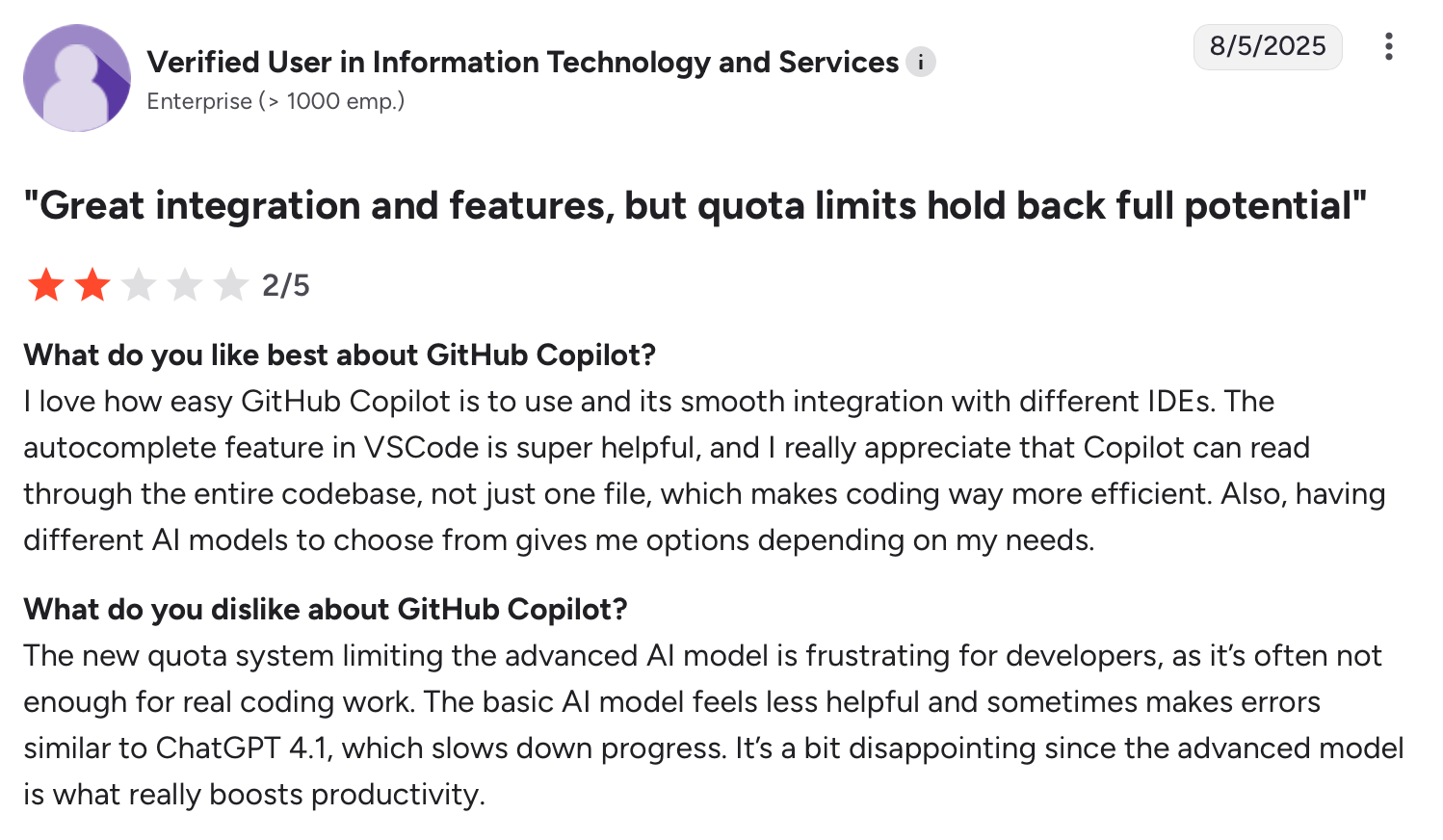
GitHub Copilot , a notable contender among CodeRabbit alternatives for AI code review, is powered by OpenAI and helps developers by suggesting code snippets or even generating full functions from comments. It integrates directly into your IDE, providing real-time suggestions to accelerate coding and improve workflow efficiency.
While it's helpful for individual developers and small teams, enterprises benefit most from its ability to speed run repetitive coding tasks at scale. However, it can occasionally produce overly complex or irrelevant suggestions.
|
Free Plan: |
|
|
Pro Plan: |
|
|
Pro+ Plan: |
|
|
Business & Enterprise Plans: |
|
On G2, GitHub Copilot holds an average rating of 4.5 out of 5 stars from 166 user reviews.

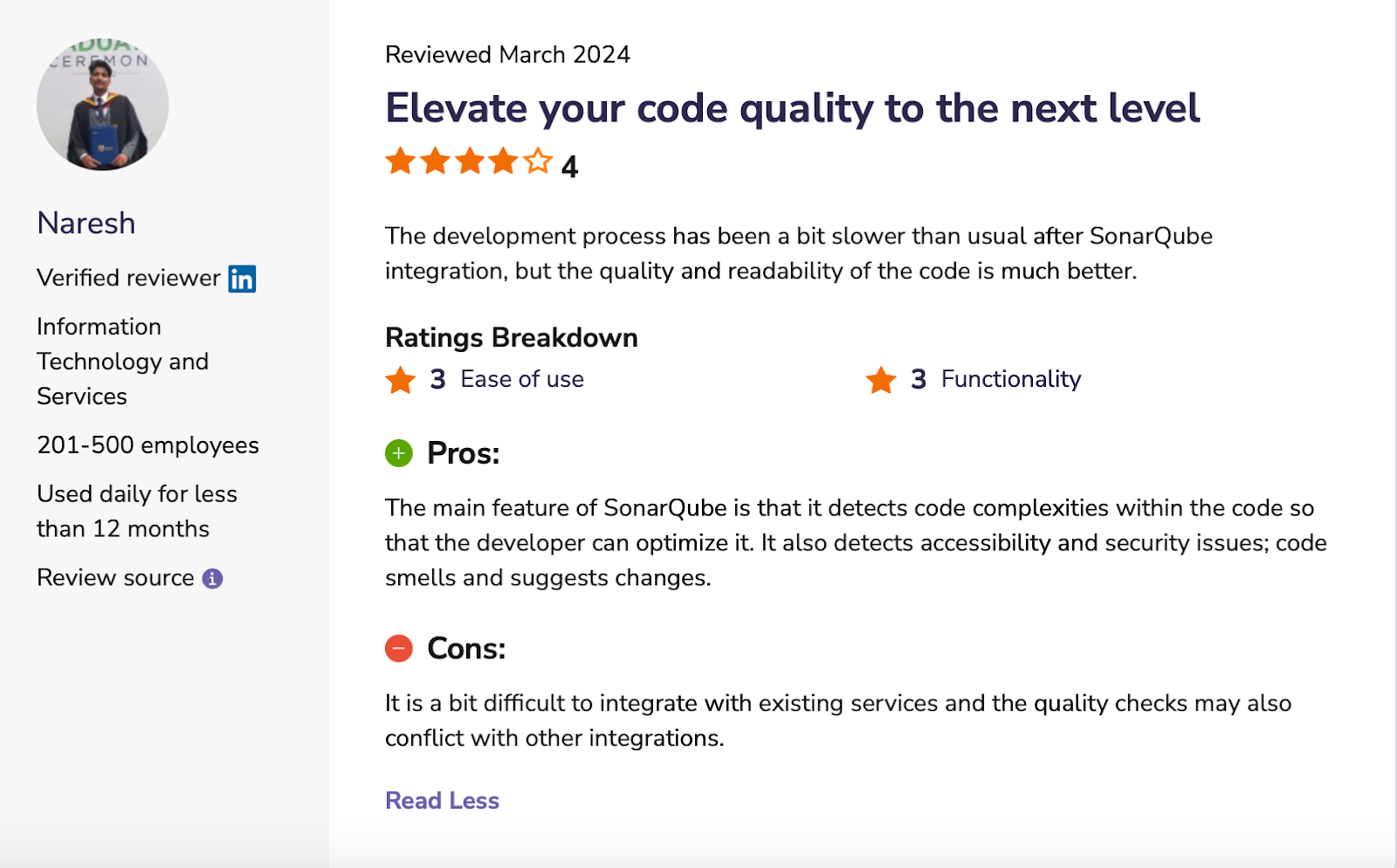
SonarQube is an open-source platform that integrates into software development workflows, ensuring continuous code quality and security through automatic reviews. It detects bugs, vulnerabilities, and code smells across over 35 programming languages with over 6,500 rules. Quality gates prevent substandard code from reaching production while dashboards offer real-time insights for monitoring code health.
|
Free Tier: |
|
|
Team (Cloud) Plan: |
|
|
Enterprise (Cloud) Plan: |
|
|
Server / Self-Managed Editions: |
|
On Capterra, SonarQube holds an average rating of 4.5 out of 5 stars from 65 user reviews.
Here’s a clear comparison of how these alternatives perform across key criteria:
| Tool | Integrations | Pricing | Best Features | Drawbacks |
|---|---|---|---|---|
| Aikido Code Quality | 100+ integrations (GitHub, GitLab, Jenkins, CI/CD tools and more) | Free tier, Flat-rate, 10 users included. | Multi-file analysis, 85% false positive reduction, AutoFix, custom rules | None |
| CodeAnt AI | GitHub, GitLab, Bitbucket, Azure DevOps | Free tier; paid plans | 5,000+ issues, 30,000+ checks, 30+ languages, bulk fix 200 files | May require adjustment period |
| Qodo Merge | GitHub, GitLab, Bitbucket | Free 75 PRs/month; paid for more | Ticket compliance (Jira, Linear), /improve command, best practices learning | 75 PRs monthly limit on free |
| Greptile | GitHub, GitLab, GitHub Enterprise | Paid (pricing not public) | Full codebase context, mermaid diagrams, merges 80% faster | Self-hosting requires VPC |
| GitHub Copilot | GitHub, VS Code, JetBrains, Eclipse | Business/Enterprise (custom) | Inline suggestions, autonomous agent, custom Enterprise models | Can produce complex suggestions |
| CodeFactor | GitHub, Bitbucket, VS Code | Free for open source; paid for private | 20+ languages, autofix, zero setup | Autofix limited to specific linters |
| SonarQube | CI/CD, VS Code, IntelliJ, Eclipse | Community free; paid (LOC-based) | 35+ languages, 6,500+ rules, AI CodeFix, quality gates | Expensive at scale |
CodeRabbit delivers solid AI code reviews, but for many teams, it falls short for teams that need deeper insights and scalability. The good news? You've got stronger alternatives.
Whether you need real-time security scanning, smarter false positive filtering, or context-aware risk management that actually understands your codebase, Aikido Security gets you there with AI-powered code reviews that provide faster, more focused feedback on pull requests. It learns from your team's past reviews and automatically suggests custom rules based on how your best engineers work.
Want smarter code reviews with real protection? Try Aikido for free or book a demo today.
Q1: Why should I consider Aikido over CodeRabbit?
Aikido offers smarter, context-aware code reviews with stronger security checks, minimizing noise and focusing only on high-impact feedback. It’s designed for growing teams and complex codebases, giving you real protection and actionable suggestions.
Q2: Can Aikido integrate with my existing workflow?
Yes. Aikido integrates seamlessly with popular platforms like GitHub, GitLab, Bitbucket, Azure DevOps, and 100s more ensuring your team can adopt it without disrupting current processes.
Q3: How does Aikido improve code quality compared to CodeRabbit?
Aikido goes beyond simple line-by-line checks. It provides in-depth analysis, detects security risks, enforces coding standards, and learns from your team’s feedback to give smarter, context-aware suggestions.
Q4: Is Aikido suitable for small teams or solo developers?
Absolutely. Aikido scales to any team size. Small teams benefit from automated yet precise code reviews, while larger teams can manage multiple contributors with advanced reporting and customizable rules.
此内容由惯性聚合(RSS阅读器)自动聚合整理,仅供阅读参考。 原文来自 — 版权归原作者所有。