


While roasting tech CEOs isn’t my usual job (that falls more into Madeline Lawrence’s territory), Coinbase CEO Brian Armstrong’s recent tweet about layoffs and AI is so out of pocket that I had to write something. In short, the CEO announced that he’s firing 14% of the workforce to rebuild Coinbase to “be lean, fast, and AI-native,” which apparently involves everyone at the company shipping AI-generated code, including “non-technical teams.”
Armstrong must have thought this was as good a time as any to make more cuts, perhaps because it seems in vogue (see: Microsoft, Amazon, and soon PayPal). No one is shocked, since Coinbase laid off staff in 2022, 2023, and even earlier this year. But this time is different, and not in a good way. Armstrong latches onto the whole “AI is here, we’re in a down market, time to be more efficient” spiel that everyone else is using, and doubles down on the rhetoric.
Among the laundry list of problems with the tweet (including the tweet being written by AI itself), one of the biggest concerns is the implications of what this means for Coinbase’s security posture.
We’re in the midst of a new generation of AI vibe code founders. But Coinbase isn’t some niche SaaS product. It’s a large financial exchange.
"If I was managing one of the largest crypto exchanges in the world, managing assets on behalf of sovereigns and institutions, I would not be letting my technical staff vibecode... idk, but that's just me." — @Crypto_Mags
In his long tweet, Armstrong said, “The biggest risk now is not taking action. We are adjusting early and deliberately to rebuild Coinbase to be lean, fast, and AI-native. We need to return to the speed and focus of our startup founding, with AI at our core.” This reads like pandering to shareholders. The biggest risk to users is losing their money or personal data in a cybersecurity attack.
Coinbase customers already know what a breach looks like. The 2025 breach exposed personal data on 70,000 users and drained hundreds of millions from victims through follow-on phishing attacks, with Coinbase itself absorbing $180-400M in remediation costs.
“This is crazy ->
> Non-technical teams are now shipping production code
As a software engineer and a customer of Coinbase I find this deeply concerning” — @mikeneder
The stakes of getting security right at a crypto exchange are high, and we expect more from our financial institutions than we do from other companies. We want them to be mature, which sometimes necessitates being slow and deliberate, instead of being an AI-powered startup. Imagine Wells Fargo or HSBC announcing that they’re going to act like a startup and make the bank tellers write code.
Instead of leaving coding to the experts, Armstrong shared in his tweet that “Non-technical teams are now shipping production code, and many of our workflows are being automated.”
Non-technical teams shipping production code is so unhinged.
While non-technical people can prompt Claude Code to produce something that looks functional, they don’t have the training to understand the security implications of how a given piece of code works. It’s not their job to know, and frankly, people in non-engineering roles have other jobs they were hired to do.
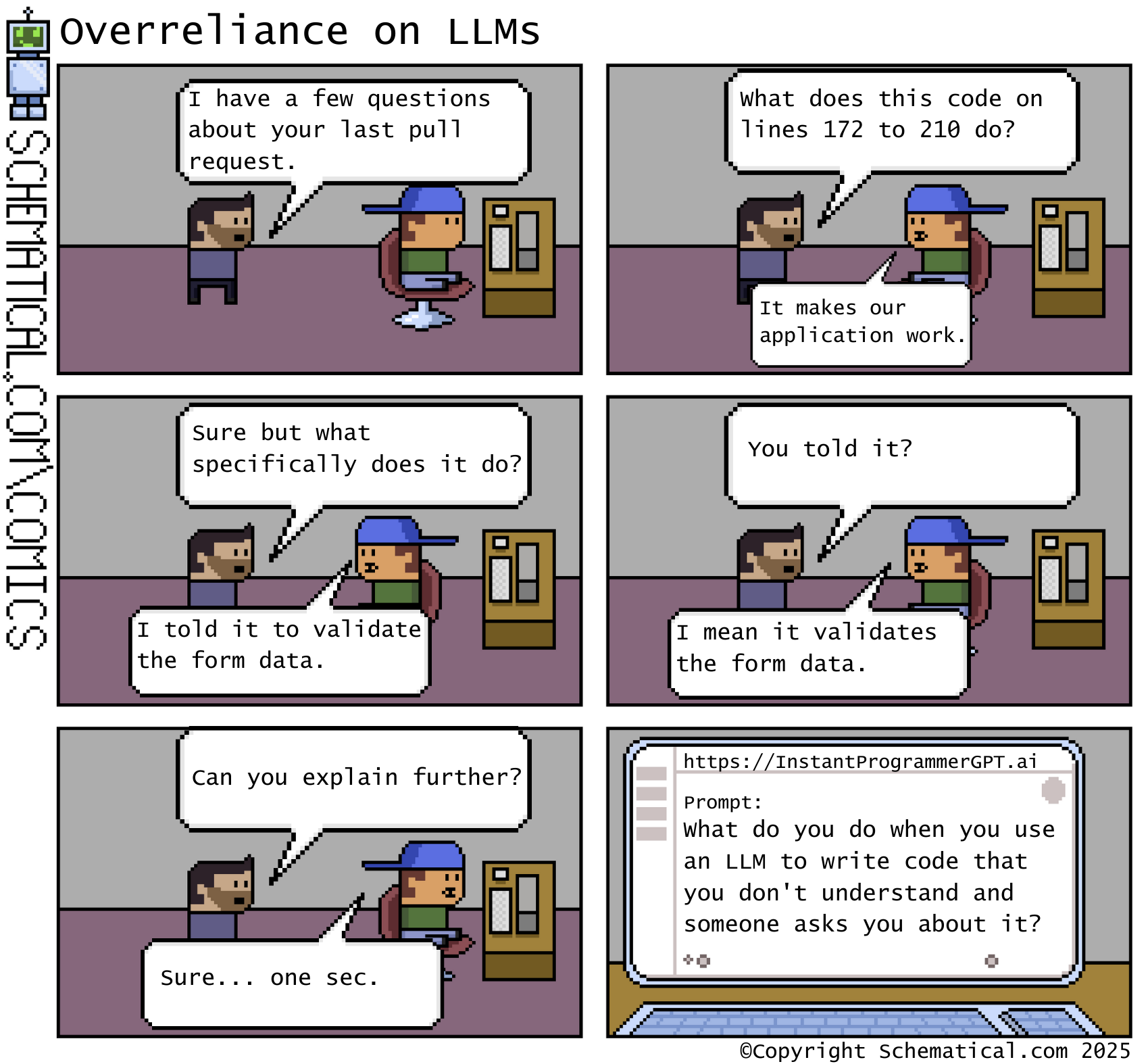
Vibe-code code will get better over time, but it’s not production-ready yet. According to our research at Aikido, 1 in 5 organizations last year reported an incident that was caused by AI-generated code. One thing that vibe-code advocates seem to forget is that the hard part of software development has never been individual lines of code. AIs don’t always capture the big picture when they write, like how different components come together, and the result is that more vulnerabilities make it into the code.
Simply prompting AI to “do security better” doesn’t fix this. When left to their own devices, AIs tend to make less secure code over time. According to research, LLMs writing code are optimizing functional completeness, performance, maintainability, and security, with security as a soft prompt. Over multiple iterations, the model gradually drifts away from the security spec because it's trying to satisfy the other three objectives.
People tend to assume the opposite. Studies show that people tend to overestimate AI’s ability to write secure code, and as a result, developers with coding assistance write less secure code than those without access. Given reality, then, AI-generated code needs more oversight, not less. Non-technical people, and even junior engineers, are not equipped to do this.
“This tells me that tech is being run so incompetently at Coinbase that:
- They're effectively letting random employees push code. The unknown unknowns and totally unnecessary risk is off the charts.
- They can't imagine a way to put those people to work building value.” —@DragonStacker
With the layoffs, Armstrong also throws organization and leadership out the window. “Leaders will own much more, with as many as 15+ direct reports... Managers should be like player-coaches, getting their hands dirty alongside their teams.” So now MORE people are creating code, and the senior staff have more responsibilities than ever. Who is supposed to be reviewing all this code? Seriously.
Setting aside the "is anyone looking at the PM’s code being thrown into prod" question, there are the operational concerns that don’t seem to be addressed in Armstrong’s tweet. Nothing he said explains how piles of vibe-coded features are supposed to run effectively in production (and it doesn’t scale by adding more AI).
What's the rollback plan when something breaks or causes a security incident at 2 a.m., and the code was written by a PM and an AI agent? Who's on call? This PM is certainly not being asked to debug code they didn't really write, in a system they don't really understand. Definitely not the AI agent. Perhaps it was an engineer who was fired for not writing enough AI code? Godspeed to the surviving DevOps and security teams.
In his announcement, Armstrong states a “plan” of how to become AI-native: “To get there, we are not just reducing headcount and cutting costs, we’re fundamentally changing how we operate: rebuilding Coinbase as an intelligence, with humans around the edge aligning it.”
I don’t know what “Coinbase as an intelligence” means, and it doesn’t quite get explained (is my crypto custodian app sentient?). But what is clear is that the CEO is treating humans as secondary.
The correct response to agentic AI is not to fire the engineers and ship code as fast as possible. It’s recognizing that agentic AI has made cybersecurity more important than ever. The people making decisions to replace experts with AI clearly are not getting their hands dirty writing production-quality code daily (vibe-coded personal productivity apps don’t count).
I’ll likely be moving my Bitcoin out of Coinbase soon.
"The people who survived this layoff just got assigned 15 direct reports, mandatory IC work, and managing a fleet of AI agents. honestly getting laid off might be the better deal here." — @siddsax
此内容由惯性聚合(RSS阅读器)自动聚合整理,仅供阅读参考。 原文来自 — 版权归原作者所有。