








The hype around AI-driven security has turned into genuine adoption. From AI code reviews to incident response, teams are now exploring how far AI-native intelligence can go in replacing manual work. And nowhere is that shift more visible than in penetration testing. What used to take weeks and only carried out twice a year, can now be autonomous and continuous.
In fact, 97% of CISOs, AppSec engineers and developers shared in the Aikido's 2026 State of AI in Security & Development report that they would consider AI penetration testing and 9 in 10 believe AI would take over the penetration testing field. The promise is irresistible: faster tests, deeper coverage, and continuous insight into your attack surface without waiting weeks or depending on consultants.
That’s where tools like XBOW entered the conversation. Positioned as a human-level AI penetration testing tool, promises to automatically discover, exploit, and prioritize vulnerabilities across your environment. In theory, it should replace manual penetration testing and give you real-time visibility into your attack surface.
In practice? Teams report limited coverage and depth, data sovereignty concerns (hosted in US only), and limited integrations with existing CI/CD pipelines to compliance tools.
That’s why security leaders are now asking a different question. Not “Is AI pentesting real?” but “Which AI pentesting tools actually deliver?”.
In this guide, we’ll explore the top XBOW alternatives in 2026. You’ll see how options like Aikido Security and others compare in scope, usability, and coverage, so you can choose the right fit for your security maturity and speed.
Aikido Security stands out as the #1 XBOW alternative, offering the best-in-class AI penetration testing tool for start-ups to enterprises, coming out on top in technical comparisons and POC head-to-heads. Aikido’s breadth of offensive testing uses agentic AI and reactive exploitation simulations that go beyond traditional passive analysis.
50,000+ organizations already use Aikido security across their code, cloud and runtime security. And this primarily because Aikido achieves deep coverage without forcing codebase access, with faster onboarding and fewer obstacles.
Unlike XBOW, customers get value early for free without having to commit before proof of value. After commitment, Aikido’s pricing stays predictable and continuous without forced credit bundles.
Also with EU and US hosting options, you don’t have to worry about compliance and legal requirements.
| Feature | Aikido Security | XBOW |
|---|---|---|
| Ease of deployment | Can be deployed in under an hour. | Talk to sales before you start |
| Attack-path visibility | End-to-end attack paths/attack graphs across code, cloud, runtime. | Autonomous discovery & exploitation |
| Integrations & workflow | Integrated with CI/CD, issue trackers, IDEs, and Aikido’s broader security platform. | Compliance integrations only. |
| Hosting and Compliance | Hosted in EU or US; You choose. | Hosted in the US only |
| Coverage & Depth | Full-stack coverage. Mature, enterprise-grade platform. | Source-level scanning, misses depth. |
| Pricing | Transparent and predictable pricing. | Opaque pricing. Talk to sales. |
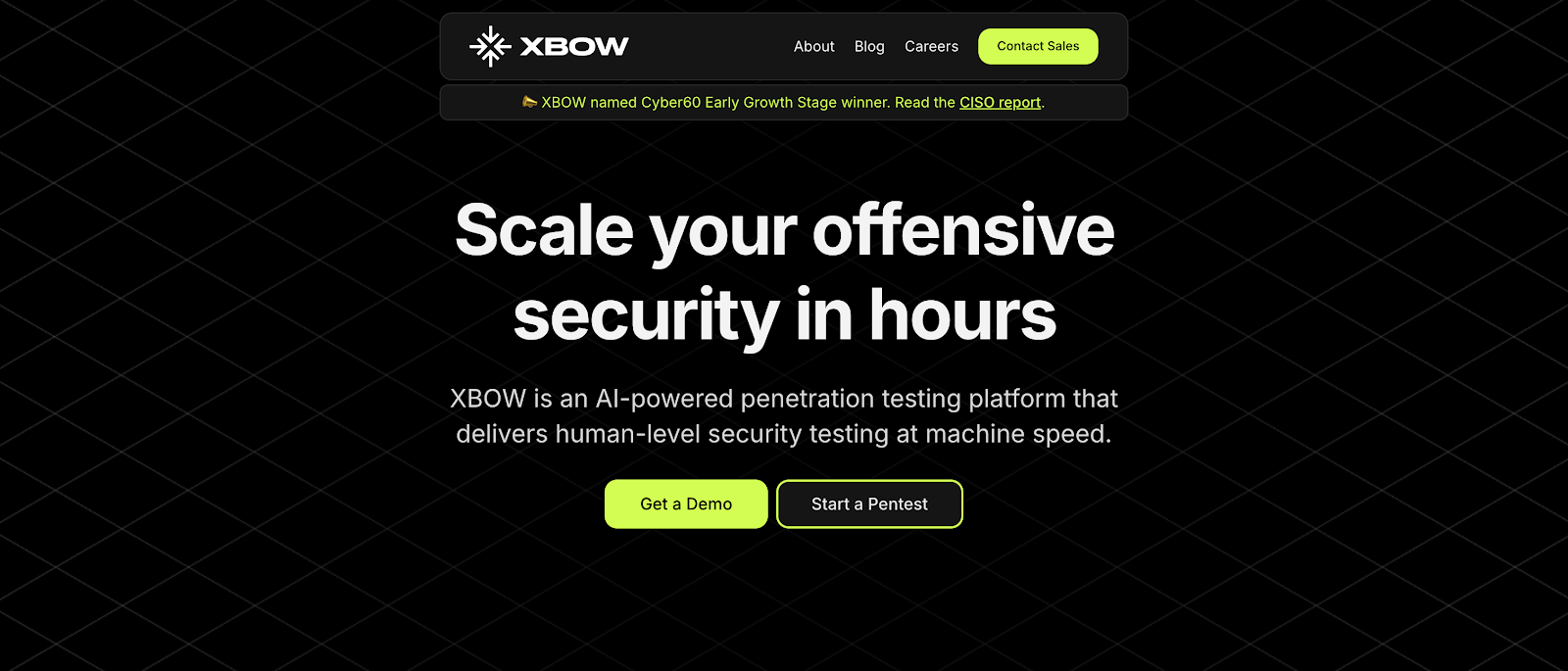
XBOW markets itself as an AI-powered penetration testing platform that delivers human-level security testing at machine speed. Founded by former GitHub Copilot and GitHub Advanced Security engineers, XBOW’s mission is to transform application security with AI-powered continuous offense.
In essence, XBOW AI promises to think like a hacker by automatically mapping your environment, finding exploitable paths, and simulating real-world attacks. To achieve this, it uses hundreds of AI agents that work in parallel to discover, validate, and exploit vulnerabilities without human intervention.
Its features at a glance:
With all these, you may ask, why look for alternatives?
While XBOW’s approach has been dedicated to using AI from the outset , feedback from early adopters paints a more nuanced picture.
Here are the five most common reasons teams start exploring XBOW alternatives:
In short, XBOW delivers on vision, but not yet on completeness. It represents where AI pentesting is headed but not necessarily where it needs to be for today’s developer-first security programs.
Don’t take it from us, here are a few reviews from XBOW users:


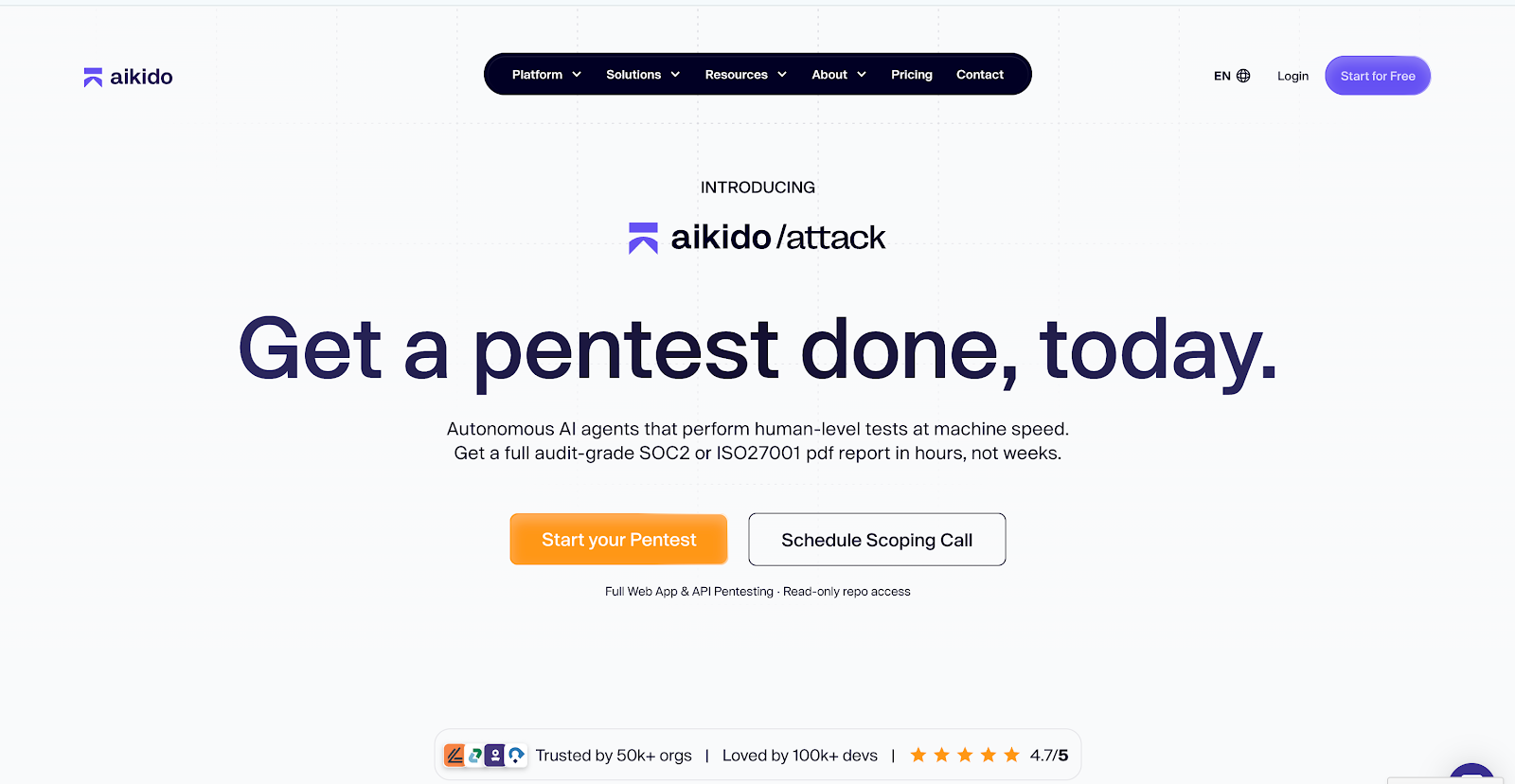
When compared side-by-side with XBOW, Aikido Security consistently comes out ahead, offering a more mature, transparent, and technically advanced AI pentesting platform.
Where XBOW focuses on surface-level automation, Aikido delivers true attacker-style simulations that mirror how real adversaries operate.
Aikido’s Security Attack module uses agentic AI to run dynamic exploit simulations across your environments, validating which vulnerabilities are truly exploitable and how they can be chained into full attack paths. This goes beyond simply listing issues, but also providing proof of exploitability, helping teams focus on what really matters.
Unlike XBOW, which often produces opaque results and requires manual validation, Aikido automatically filters out noise, reducing false positives by up to 95%. This results in no endless lists, just verified, exploitable risks.
Aikido also makes remediation seamless:
Every scan automatically produces audit-ready reports mapped to frameworks like SOC 2, ISO 27001, and OWASP Top 10, cutting down certification effort and cost.
With its fully autonomous AI pentesting model, Aikido helps organizations complete human-level pentests in hours and not weeks. It replaces repetitive manual testing with continuous, intelligent validation that scales across codebases and deployments.
For compliance-driven teams, Aikido supports custom region hosting in the EU or US, ensuring full data sovereignty, which is a flexibility XBOW currently lacks. And with transparent, predictable pricing (no “talk to sales” roadblocks), organizations can start testing in minutes and know exactly what they’ll spend in a year.
That combination of technical depth, speed, and developer-first design is why 50,000+ teams already trust Aikido Security across their applications and infrastructure.
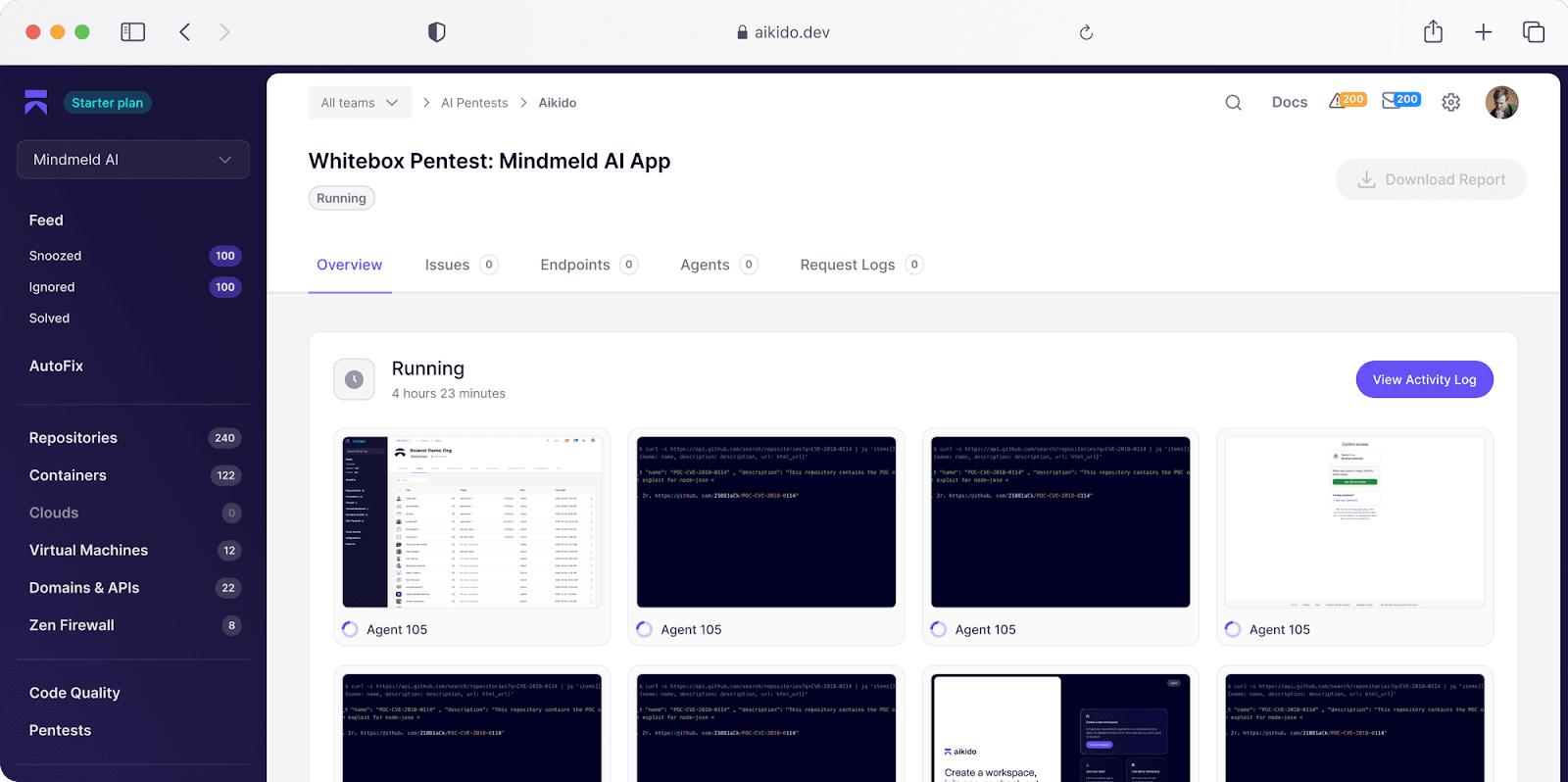
Coming out on top in technical comparisons and POC head-to-heads, Aikido’s breadth of offensive testing is why it’s trusted by 50,000+ customers, and is already proven across code, cloud, and runtime security.
Key Features:
Pros
Hosting/Data Residency
Aikido Security supports hosting in the US and EU.
Testing Approach
Aikido map end-to-end attack paths and surface real vulnerabilities with a 3 step approach:
Pricing:
| Assessment type | Cost |
|---|---|
| Release Scan | $500 |
| Regular Scan (Simulates an advanced, human-led attack. The standard for quarterly audits and mission-critical systems) |
$6,000 |
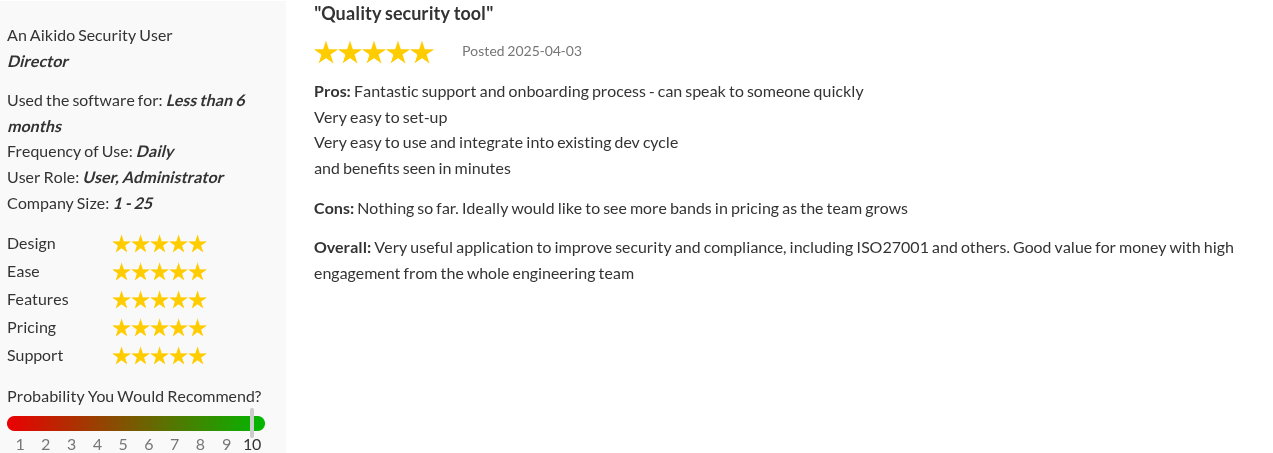
Aikido Security Reviews:
Beyond Gartner, Aikido Security also has a rating of 4.7/5 on Capterra and SourceForge.
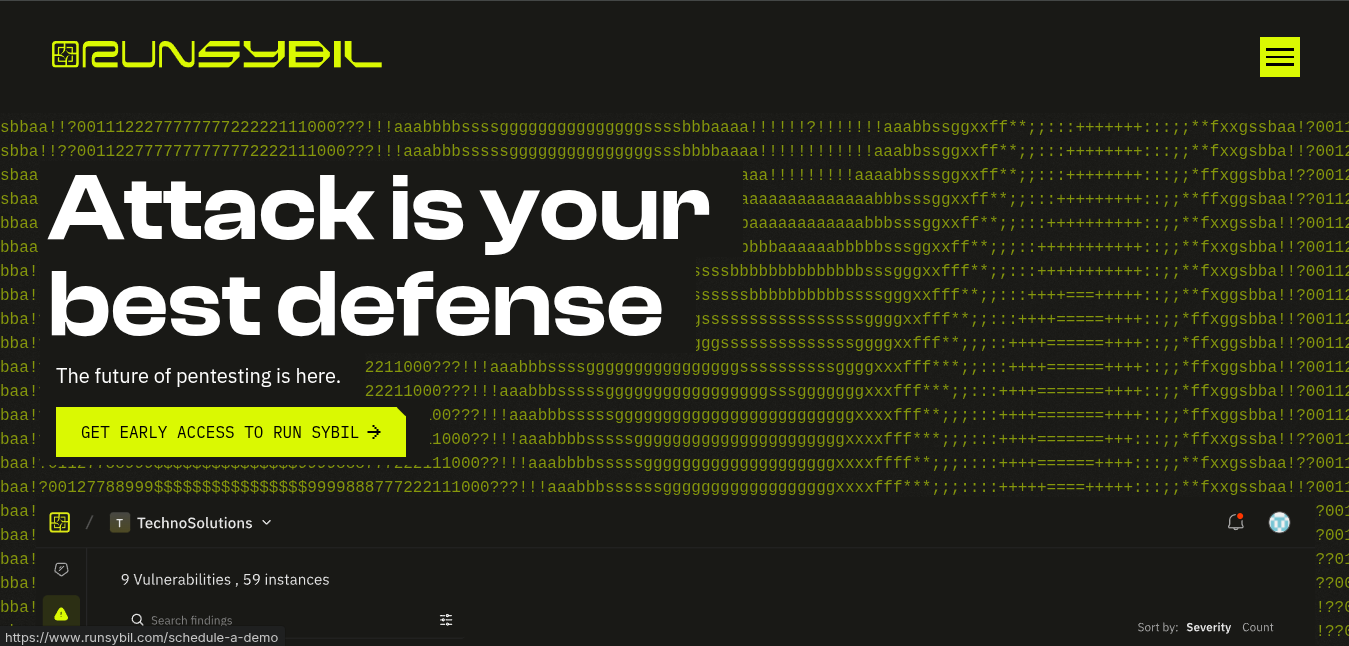
RunSybil uses an autonomous orchestrator AI agent named “Sybil” to control specialized AI agents, each tailored to a particular pentest phase. Its aim is to mimic hacker intuition and perform reconnaissance, exploit simulation, and vulnerability chaining. With a promise to execute all pentesting phases without any human intervention.
Key Features:
Pros:
Cons:
Hosting/ Data Residency:
Not publicly available
Testing Approach:
RunSybil’s testing approach involves coordinating fully autonomous AI-agents to map applications, probe inputs, and attempt chained exploits.
Pricing:
Custom pricing
Gartner Rating:
N/A (early-access only)
RunSybil Reviews:
No independent user generated review.
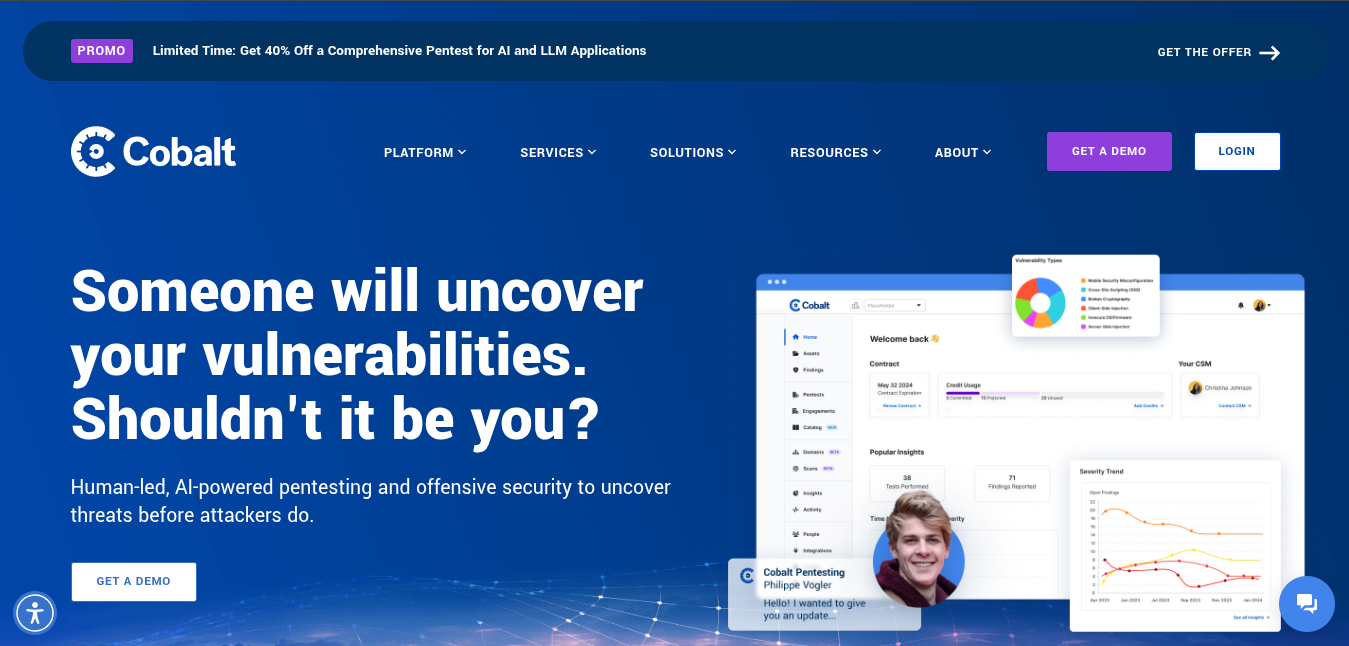
Cobalt is a pentesting-as-a-service (PTaaS) tool that connects companies with pentesters via crowdsourcing. It provides on-demand access to its community of security experts "Cobalt Core." Automated tools are used to map a customer's attack surface, and then a specialized pentesting team is assigned to them.
Key Features:
Pros:
Cons:
Hosting/ Data Residency:
Cobalt supports hosting in the US and EU
Testing Approach:
Cobalt’s testing approach uses a "human-led, AI-powered" approach to run its Pentest-as-a-Service (PTaaS) model that pairs vetted human pentesters with companies.
Pricing:
Custom Pricing
Gartner Rating: 4.5/5.0
Cobalt Reviews:


Astra Security is a Pentest-as-a-Service (PTaaS) platform that uses a hybrid approach of cloud-based vulnerability assessments and manual penetration testing to identify flaws in web applications, cloud environments, and networks.
Key Features:
Pros:
Cons:
Pricing:
Hosting/ Data Residency:
Astra Security supports hosting in the US and EU
Testing Approach:
Astra Security uses a hybrid testing approach that combines its automated vulnerability scanner with manual expert penetration testing for continuous discovery, reporting, and remediation.
Gartner Rating: 4.5/5.0
Astra Security Reviews:


Terra Security is an Agentic-AI PTaaS platform. It combines autonomous AI agents with expert pentesters to continuously perform web-app penetration testing.
Key Features:
Pros:
Cons:
Hosting/ Data Residency:
Terra Security supports hosting in the US and Israel
Testing Approach:
Terra Security’s testing approach involves using autonomous agentic AI’s with human-in-the-loop validation to run continuous, context-aware web-application penetration testing.
Pricing:
Custom pricing
Gartner Rating:
No Gartner review.
Terra Security Reviews:
No independent user generated review.
| Tool | Strengths | Limitations | Best For |
|---|---|---|---|
| Aikido Security | ✅ AI-driven pentesting, end-to-end attack paths, prioritized risk, exploit simulations, 90% fewer false positives, compliance mapping | ✅ None | Modern teams needing continuous pentesting and low-noise security |
| RunSybil | ✅ Mimics “human intuition”, continuous coverage | ⚠️ Still early stage, risk of false positives | Early adopters exploring autonomous red teaming |
| Cobalt.io | ✅ Real-time collaboration, human-led expertise | ⚠️ Pricing can become expensive, pentest quality depends on tester | Companies seeking human pentesters |
| Astra Security | ✅ Compliance focused, WAF, hybrid approach | ⚠️ Pricing can be expensive, less customization for experts | Teams seeking hybrid VAPT and compliance-focused testing |
| Terra Security | ✅ Agentic AI + Human-in-loop, business-context mapping | ⚠️ Enterprise-focused, may miss deep business logic | Enterprises seeking context-aware PTaaS |
The rise of AI penetration testing tools has completely reshaped how security teams think about offensive testing. Tools like XBOW, Terra Security, and Astra have pushed the industry forward. But not every team needs a black-box AI or enterprise-only setup to get real results.
The best choice is the one that fits your workflow, compliance needs, and security maturity, not just the one with the loudest AI claims. For most organizations, that means balancing automation with clarity, coverage, and developer-first design.
That’s exactly where Aikido Security stands out.
Aikido brings the same cutting-edge AI power as XBOW, but with the transparency, flexibility, and maturity modern teams need.
Whether you’re a startup scaling fast or an enterprise with a mature environment, Aikido delivers continuous, autonomous, and auditable AI security.
If you’re serious about replacing XBOW with a platform that actually fits your team’s speed and security goals, start your pentest in 5 minutes.
Will XBOW or AIs be able to replace Pentesters?
AI tools can handle the breadth and speed of testing, but humans are still needed for depth, business-logic flaws, and context-aware validation. It’s essential to understand that AI is an augmentative tool, not a replacement for human expertise. YET!
What is the best alternative to Xbow?
For most teams, the best XBOW alternatives in 2026 are Aikido Security for its full-stack pentest coverage, EU/US hosting flexibility and predictable pricing. Unlike XBOW, Aikido offers value early rather than having to commit before proof of value.
Is AI penetration testing suitable for compliance audits?
Partially — but not on its own. Most compliance frameworks (SOC 2, ISO 27001, PCI DSS) still require human validation or independent assurance. However, AI pentesting tools like Aikido Security are closing that gap by mapping results to OWASP Top 10, CWE, and major compliance standards, producing audit-ready reports that accelerate certification prep and evidence collection.
How accurate are AI pentesting tools like XBOW compared to human-led tests?
AI pentesting tools have made huge strides in speed and automation, but accuracy still depends on context. While AI agents can identify common vulnerabilities faster than humans, most often struggle with business-logic flaws, chained exploits, or environment-specific edge cases.
此内容由惯性聚合(RSS阅读器)自动聚合整理,仅供阅读参考。 原文来自 — 版权归原作者所有。