惯性聚合 高效追踪和阅读你感兴趣的博客、新闻、科技资讯
阅读原文 在惯性聚合中打开

推荐订阅源

GbyAI
GbyAI
Threat Intelligence Blog | Flashpoint
P
Proofpoint News Feed
L
Lohrmann on Cybersecurity
S
Secure Thoughts
Attack and Defense Labs
人人都是产品经理
人人都是产品经理
Stack Overflow Blog
Stack Overflow Blog
W
WeLiveSecurity
O
OpenAI News
SecWiki News
SecWiki News
博客园 - Franky
NISL@THU
NISL@THU
Microsoft Azure Blog
T
Tor Project blog
Microsoft Security Blog
aimingoo的专栏
aimingoo的专栏
Security Latest
Security Latest
H
Hacker News: Front Page
Google Online Security Blog
P
Privacy & Cybersecurity Law Blog
Cyber Security Advisories - MS-ISAC
D
Darknet – Hacking Tools, Hacker News & Cyber Security
月光博客
月光博客
李成银的技术随笔
Spread Privacy
Spread Privacy
F
Full Disclosure
F
Fortinet All Blogs
T
The Exploit Database - CXSecurity.com
Vercel News
Vercel News
AWS News Blog
AWS News Blog
WordPress大学
WordPress大学
IntelliJ IDEA : IntelliJ IDEA – the Leading IDE for Professional Development in Java and Kotlin | The JetBrains Blog
V
Visual Studio Blog
J
Java Code Geeks
博客园 - 三生石上(FineUI控件)
G
Google Developers Blog
云风的 BLOG
云风的 BLOG
博客园 - 司徒正美
Engineering at Meta
Engineering at Meta
Last Week in AI
Last Week in AI
P
Palo Alto Networks Blog
宝玉的分享
宝玉的分享
T
True Tiger Recordings
N
News and Events Feed by Topic
酷 壳 – CoolShell
酷 壳 – CoolShell
Cisco Talos Blog
Cisco Talos Blog
N
News | PayPal Newsroom
S
SegmentFault 最新的问题
Jina AI
Jina AI

Aikido Security's Blog

Google API keys keep working after you delete them The Wild West of VS Code extensions and how a poisoned extension breached GitHub GitHub breached via a malicious VS Code extension: why developer devices are the real target Microsoft's durabletask package on PyPi Compromised. Mini Shai Hulud attacks again... again! Supply Chain Security: The Ultimate Guide to Software Composition Analysis (SCA) Tools Cloud Security Architecture: Principles, Frameworks, and Best Practices Cloud Security for DevOps: Securing CI/CD and IaC Compliance in the Cloud: Frameworks You Can’t Ignore Using Generative AI for Pentesting: What It Can (and Can’t) Do Top Cloud Security Tools for Modern Teams Top 8 Checkmarx Alternatives for SAST and Application Security Mini Shai-Hulud strikes again: npm worm compromises hundreds of @antv packages The Top 6 Best AI Tools for Coding in 2025 Top XBOW Alternatives In 2026 Top SonarQube Alternatives in 2025 Top 7 CodeRabbit Alternatives for AI Code Review in 2026 Best Orca Security Alternatives for Cloud & CNAPP Security 2026 Top 6 Wiz.io Alternatives for Cloud & Application Security in 2026 Top DevSecOps Tools to Replace GitLab Ultimate’s Security Features Top 5 GitHub Advanced Security Alternatives for DevSecOps Teams in 2026 Best 6 Veracode Alternatives for Application Security (Dev-First Tools to Consider) Top 10 Software Composition Analysis (SCA) tools in 2026 Top 10 AI-powered SAST tools in 2026 Top 12 Dynamic Application Security Testing (DAST) Tools in 2026 Penetration testing vs. red teaming: what’s the difference? Pentest GPT: How LLMs Are Reshaping Penetration Testing One year of Opengrep: What we built and what’s next Shadow AI is a fear response, and banning it makes it worse Mini Shai-Hulud Is Back: npm Worm Hits over 160 Packages, including Mistral and Tanstack Security Checklist for GitHub Actions Coinbase's layoffs signal a dangerous move into a vibe-coding security mess Securing Legacy Dependencies with Aikido and TuxCare Top OWASP scanners in 2026 for web application security Rolling out developer security in a 5,000+ engineer organization Security metamorphosis: a Mythos-ready architecture checklist for autonomous AI attacks Why browser extensions are a major security risk and what you can do about it Popular PyTorch Lightning Package Compromised by Mini Shai-Hulud Aikido integrates with AWS Kiro: Catching in review doesn't scale anymore Top CVE scanners in 2026 to identify known vulnerabilities A practical CTO security checklist to be Mythos-ready Mini Shai-Hulud Targets SAP npm Packages With a Bun-Based Secret Stealer Someone published four versions of a fake "tanstack" package in 27 minutes to steal your .env files It's time to treat browser extensions like supply chain attack vectors Introducing Safe Chain: Stopping Malicious npm Packages Before They Wreck Your Project What is a CVE? Is Shai-Hulud Back? Compromised Bitwarden CLI Contains a Self-Propagating npm Worm GPT-Proxy Backdoor in npm and PyPI turns Servers into Chinese LLM Relays Roundcube XSS chained with cookie tossing for full inbox access Introducing Endpoint Protection: Security for Developer Devices Multiple Cross-Site Scripting (XSS) Vulnerabilities in Mailcow Reliable CVE sources in the age of NIST NVD cutbacks Ship Fast, Stay Secure: Better Alternatives to Jit.io Axios CVE-2026-40175: a critical bug that’s… not exploitable Bug bounty isn’t dead, but the old model is breaking GlassWorm goes native: New Zig dropper infects every IDE on your machine Aikido Attack finds multiple 0-days in Hoppscotch The cybersecurity doomerism around Mythos doesn't match what we see on the ground Top Vibe Coding Tools for a Seamless Workflow in 2026 Top Software Security Testing Tools Top Security Monitoring Tools Top Runtime Security Tools Top IAST Tools For Interactive Application Security Testing Top GCP Security Tools For Safeguarding Google Cloud Top Docker Security Tools Top Azure Security Tools Top AI Coding Assistants Top AI Code Generators Top 8 AWS Security Tools in 2026 Top Secret Scanning Tools Top 12 Software Supply Chain Security Tools in 2026 axios compromised on npm: maintainer account hijacked, RAT deployed Popular telnyx package compromised on PyPI by TeamPCP Top RSAC 2026 Parties, Side-Events & Security Meetups Aikido × Lovable: Vibe, Fix, Ship CanisterWorm Gets Teeth: TeamPCP's Kubernetes Wiper Targets Iran TeamPCP deploys CanisterWorm on NPM following Trivy compromise Security testing is validating software that no longer exists Aikido Recognized by Frost & Sullivan with the 2026 Customer Value Leadership Award in ASPM GlassWorm Hides a RAT Inside a Malicious Chrome Extension fast-draft Open VSX Extension Compromised by BlokTrooper npm debug and chalk packages compromised Best 6 AI Pentesting Tools in 2026 Top 9 Best AI Code Review Tools in 2026 The 6 Best Code Quality Tools for 2026 Top 18 Automated Pentesting Tools Every DevSecOps Team Should Know Glassworm Strikes Popular React Native Phone Number Packages Glassworm Is Back: A New Wave of Invisible Unicode Attacks Hits Hundreds of Repositories How Security Teams Fight Back Against AI-Powered Hackers Introducing Betterleaks, an open source secrets scanner by the author of Gitleaks Trump’s 2026 cybersecurity strategy: From compliance to consequence How does AI pentesting work with compliance? What continuous pentesting actually requires Rare Not Random: Using Token Efficiency for Secrets Scanning Persistent XSS/RCE using WebSockets in Storybook’s dev server Why Determinism Is Still a Necessity in Security WAF vs. RASP vs. ADR Introducing Aikido Infinite: A new model of self-securing software How Aikido secures AI pentesting agents by design Astro Full-Read SSRF via Host Header Injection How to Get Your Board to Care About Security (Before a Breach Forces the Issue)
Top 12 ASPM Tools in 2026
2026-04-03 · via Aikido Security's Blog

Modern application environments are complex and constantly changing. As organizations adopt microservice architectures, APIs, and multi-cloud infrastructures, maintaining consistent visibility into security risks has become difficult.

According to the IBM 2025 Cost of a Breach Report, cross-environment breaches took an average of 276 days to detect and contain, significantly longer than breaches to isolated private cloud, public cloud, or on-premises environments. 

Application Security Posture Management (ASPM) tools address this challenge by unifying your AppSec ecosystem, allowing  teams to continuously monitor, identify and fix vulnerabilities throughout the application lifecycle. These tools provide the visibility and control needed to protect your applications.In this guide we’ll explore the top ASPM tools teams are using today, along with side-by-side comparisons to help you determine which ASPM tools fits your team’s workflow, 

TL;DR

Aikido Security stands out as the #1 ASPM solution, thanks to its developer-first design and end-to-end Application Security Posture Management platform. It gives security teams and developers a single pane of glass, from code vulnerabilities to cloud misconfigurations,  with AI-driven analytics and correlation to cut through noise and surface real exploitable vulnerabilities

Aikido Security’s ASPM integrates SAST, SCA, IaC, secrets scanning, and more into a single workflow, ensuring critical issues are fixed directly within the development workflow. No more context switching.

For both start-ups and enterprises, compared with other ASPM solutions, Aikido Security comes out top in technical comparisons and POC head-to-heads. 
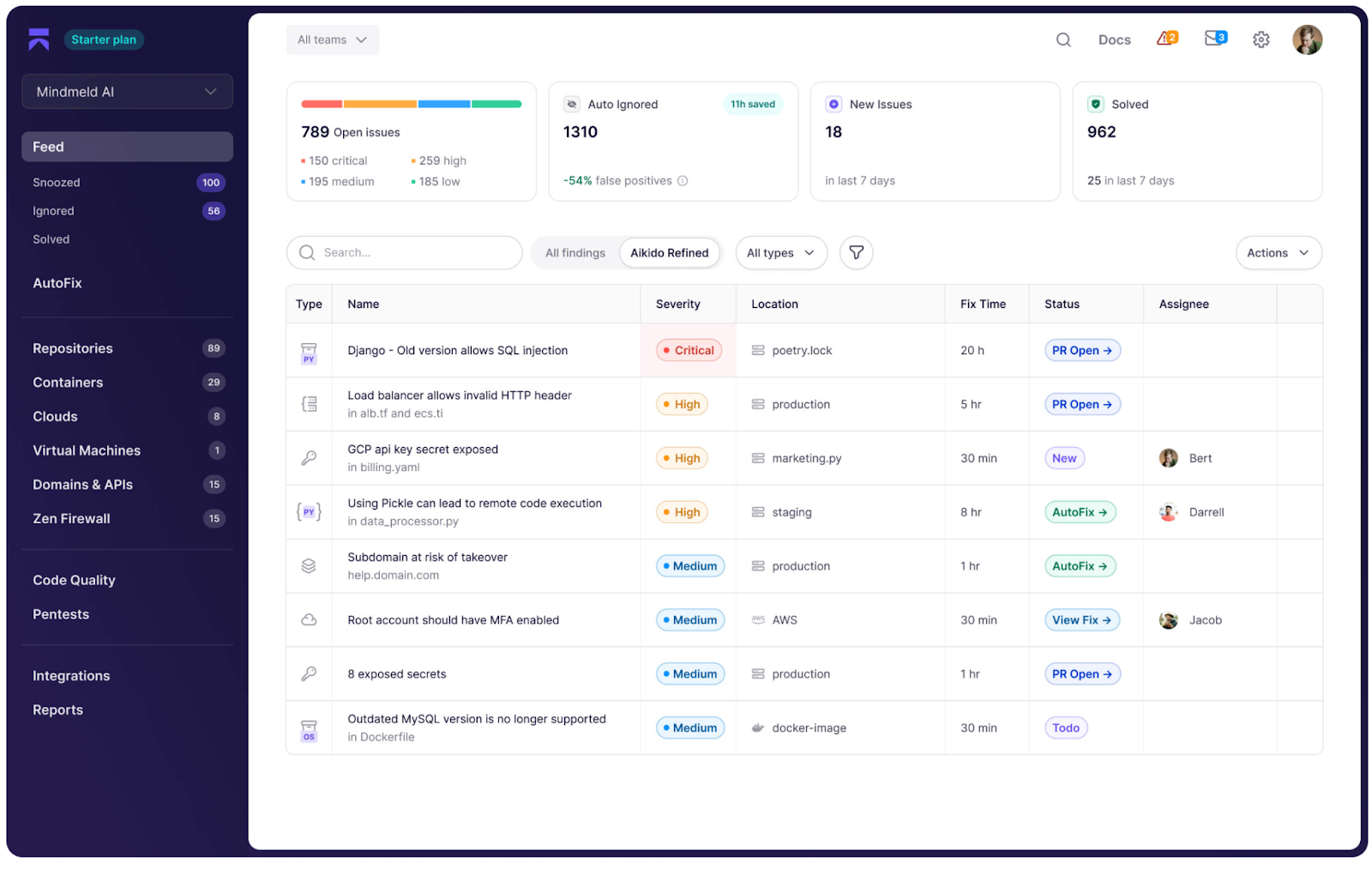
Aikido ASPM

Aikido ASPM In Action

What is Application Security Posture Management (ASPM)?

Application Security Posture Management (ASPM) involves managing application security risks. ASPM tools collect, analyze, and prioritize security issues throughout the software development lifecycle, offering a complete view of your application security landscape.

ASPM tools utilize advanced technologies like AI and machine learning to prioritize vulnerabilities by severity. Consolidating data from various security testing tools and integrating with development workflows. Helping teams identify and resolve vulnerabilities faster and more efficiently.

Why You Need an ASPM Tool

Application Security Posture Management (ASPM) tools play a crucial role in maintaining a strong security posture across the software development lifecycle. Some of its key benefits include:

  • Centralized Visibility: Provides a unified view of security risks, simplifying the tracking and management of vulnerabilities.
  • Contextual Prioritization: Helps teams focus on critical risks by considering business impact, likelihood of exploitation, and asset value.
  • Seamless Integration: Works with existing development tools and workflows, allowing developers to address security issues without unnecessary context-switching.
  • Continuous Monitoring: Offers real-time monitoring and alerts to maintain security posture throughout the application lifecycle.
  • Aggregated Findings: Collect vulnerability data from multiple Application Security Testing (AST) tools, such as SAST, DAST, SCA, and IaC scanners.
  • Enforce Security Policies and Compliance: Teams can define and enforce compliance security policies such as GDPR, HIPAA, SOC 2 and much more.

What to Look for in ASPM Tools

Here are the key criteria you should consider when evaluating ASPM tools:
  • Risk-Based Prioritization: Does it use AI to prioritize vulnerabilities based on exploitability? Can it correlate risks across multiple scanners?
  • Developer-Friendly UI: Is the UI  intuitive for developers, not just security teams? Does it provide clear remediation guidance directly within developer workflows
  • Inventory Monitoring: Does it automatically detect applications, APIs, and cloud assets across environments? Can it map the relationship between assets?
  • Pricing: Can you predict how much it will cost you in the next 1 year? Or is it all vibes?
  • Vendor Support: How responsive is the vendor’s customer support? Are there detailed documentation, community forums, or dedicated success teams available?
  • Cross-Team Collaboration: Does it support role-based access control and shared dashboards? Can DevSecOps teams collaborate on findings directly from integrated tools like GitHub, GitLab, Jira and Slack?

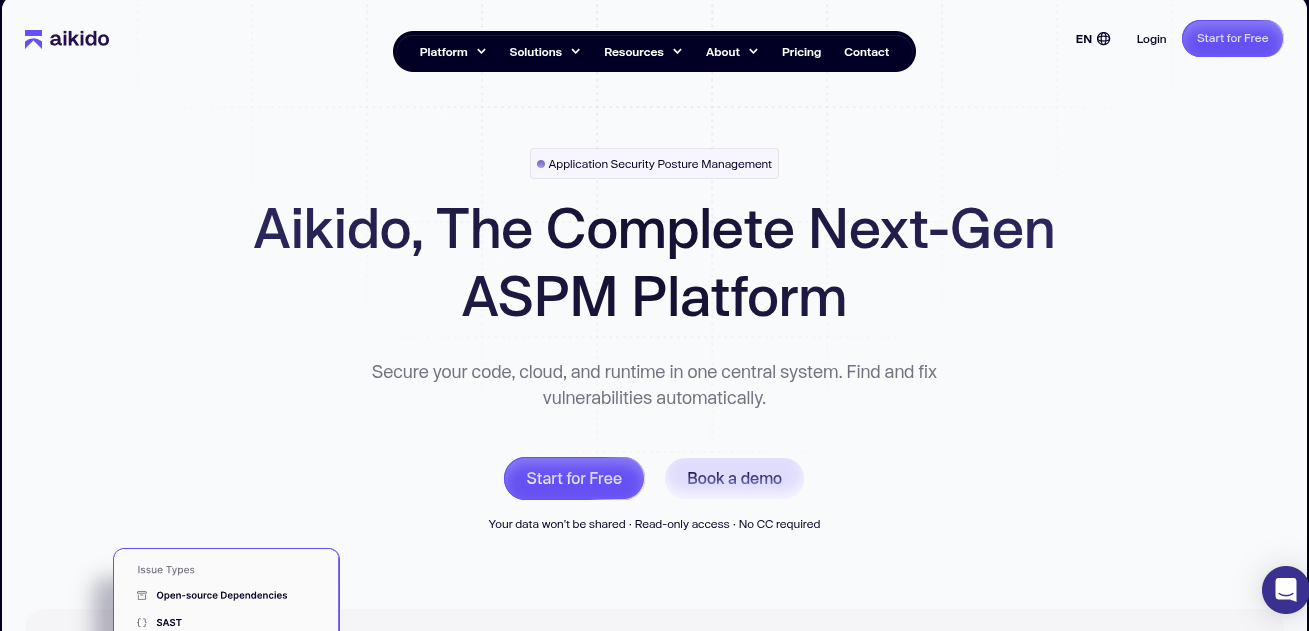
1. Aikido Security

Aikido Security website

Aikido Security is a developer-first, AI-driven Application Security Posture Management (ASPM) platform that focuses heavily on securing the entire Software Development Lifecycle (SDLC), from code to cloud. It uses AI-powered risk analytics, to automatically correlate issues across SAST, DAST, SCA, IaCsecrets scanners and CSPM .

Instead of drowning you in alerts, Aikido Security cuts through the noise by using graph-based intelligence to highlight the actual, exploitable attack paths across your entire environment, code, containers, and cloud.

Now with your entire development process covered, what’s next? 

Aikido Security gives developers everything they need to fix issues quickly:

  • Clear, context-based explanations of each vulnerability
  • Fix suggestions right in their development workflow (IDE, PRs) and 
  • One-click AI-remediation.

Every scan is automatically into actionable, audit-ready compliance evidence mapped to leading frameworks such as SOC 2 and ISO 27001. You can then use a trusted advisor and partner to Aikido to rubber stamp the certification at a much lower cost. 

With Aikido Security, development and security teams move from detection to resolution in minutes, securing applications with less noise, friction, and stronger confidence in their security posture.

Key Features:

  • AI-driven Prioritization: Aikido Security cuts out noise by auto-triaging results. If an issue isn’t exploitable or reachable, it’s automatically silenced.
  • Cross-Scanner Correlation: Integrates with the best-in-class scanners; SAST, SCA, secrets, IaC, containers, and much more, and correlates the data in a unified dashboard.
  • Seamless integration: Provides seamless integration with GitHub, GitLab, Bitbucket and much more.
  • Security and compliance mapping: Supports major security and compliance frameworks like GDPR, SOC 2, ISO 27001, PCI DSS, and much more.
  • Developer-first Workflow: Provides instant AI powered feedback in PRs and IDEs, IDE plugins for real-time feedback, AI-powered autofix and actionable remediation workflows.
  • Continuous Compliance Monitoring: Automates SOC 2, GDPR, HIPAA, and other compliance frameworks with up-to-date, exportable compliance reports. Ideal for highly regulated industries where audit readiness is essential.
  • Automatic Asset Discovery: Automatically discovers and inventories all cloud services, domains, API endpoints and code repositories.
  • Dynamic Asset Graph: It builds a real-time graph of your assets and their relationships.
  • Code-to-cloud Coverage: Aikido Security links code, cloud, and runtime into one seamless workflow. You can start with a single module and expand (code scanning, container scanning, Iac scanning, API security, and runtime protection).

Pros:

  • Best-in-class scanners
  • Developer-first UI
  • Predictable pricing
  • Strong compliance features
  • Strong vendor support
  • Centralized reporting and compliance templates
  • Broad language support 
  • Context-aware remediation guidance and risk scoring 
  • Advanced filtering reduces false positives, making alerts actionable.

Ideal Use Case:

  • Startups looking for an easy-to-use, developer-first ASPM tool with AI-driven risk correlation, automated remediation, and intelligent noise reduction.
  • Enterprises in highly regulated industries that require strong governance, detailed compliance reporting, and secure SDLC management.

Pricing:

All paid plans starting from $300/month for 10 users

  • Developer (Free Forever):  Free for up to 2 users. Supports 10 repos, 2 container images, 1 domain, and 1 cloud account.
  • Basic: Supports 10 repos, 25 container images, 5 domains and 3 cloud accounts.
  • Pro: Supports 250 repos, 50 container images, 15 domains, and 20 cloud accounts.
  • Advanced: Supports 500 repos, 100 container images, 20 domains, 20 cloud accounts, and 10 VMs.

Custom offerings are also available for startups (30% discount) and enterprises.
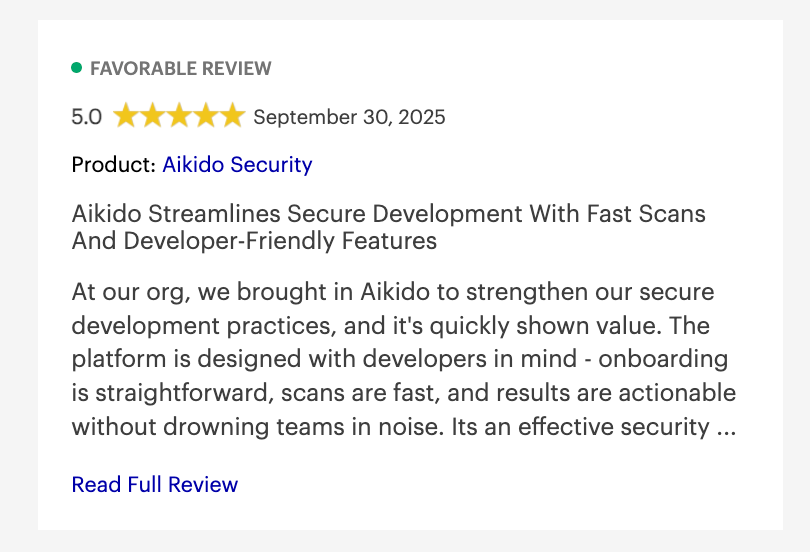
Gartner Rating: 4.9/5.0

Aikido Security Reviews:

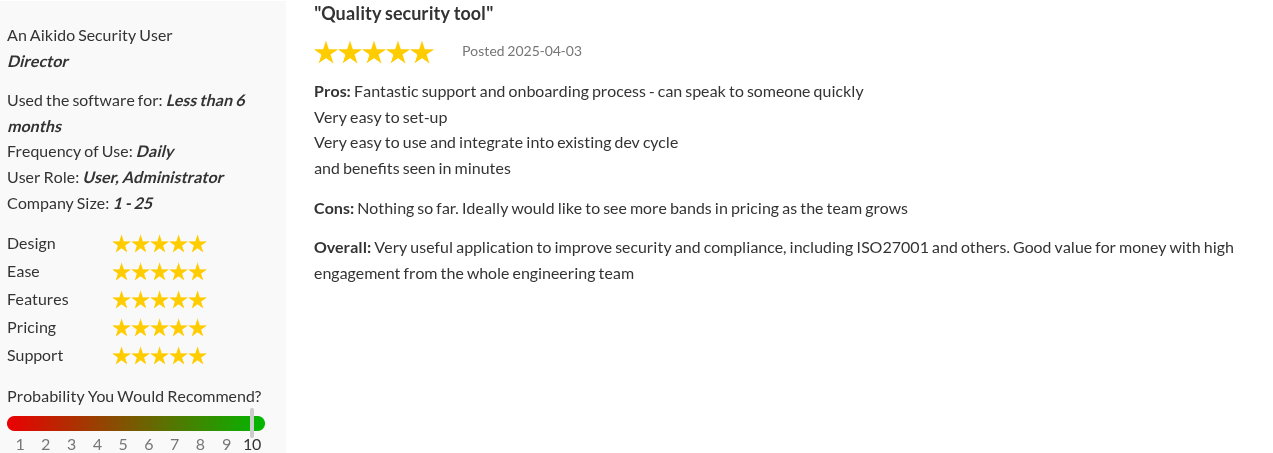
Aikido Security Reviews

User sharing how Aikido enabled secure development in their organization

Aikido Security Reviews

User sharing how easy Aikido was to setup

2. Xygeni

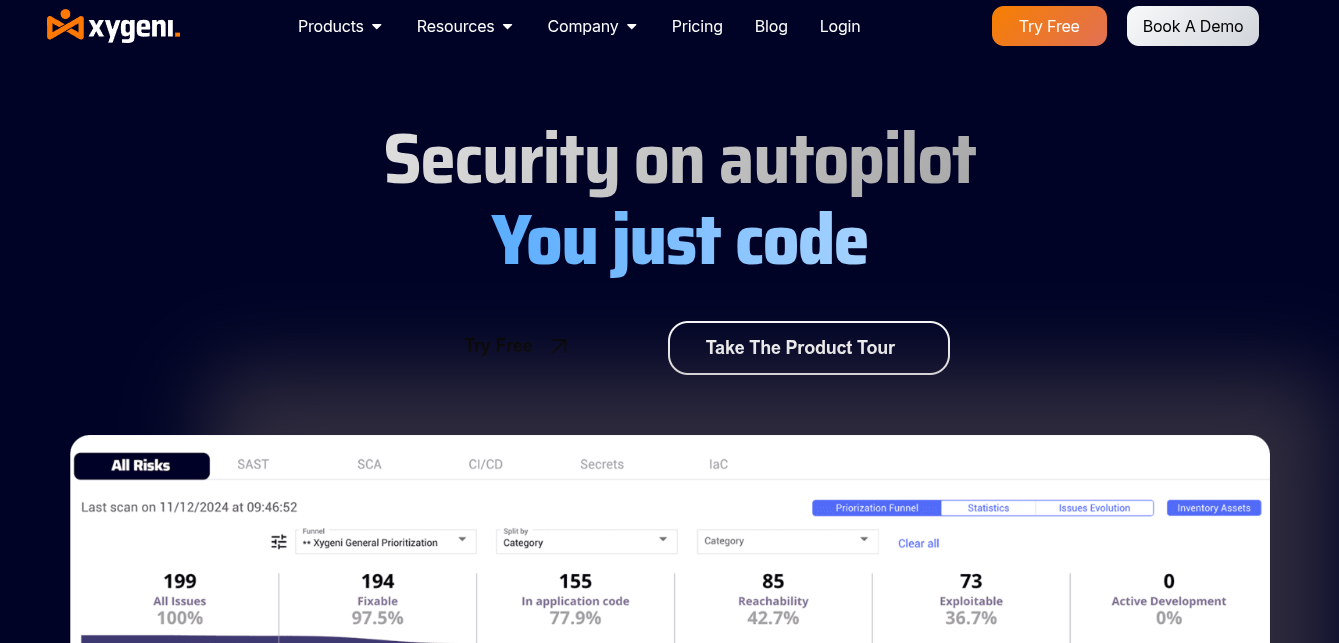
Xgeni website

Xygeni offers detailed insights into security postures across development stages, identifying both common vulnerabilities and subtle issues like data leaks. It extends protection to open-source components and container environments for a comprehensive approach.

Key Features:

  • Compliance and audit features: Includes audit trail of security events, and supports policy enforcement.
  • Malicious Code Detection: Automatically detect malicious code in open-source components and application code in real-time.
  • Risk‑based prioritization: Uses contexts such as exploitability, and production proximity to rank vulnerabilities

Pros:

  • Malware detection
  • Context-aware prioritization
  • Dependency graphs

Cons:

  • Steep learning curve
  • It can become expensive when scaling
  • It can be complex to configure
  • Users have reported high alert volume
  • Users have reported historical or invalid leaks being flagged as active

Ideal Use Case:

Ideal for security teams that need contextual insights and linking of application risks to business impact.

Pricing:

  • Standard: $399 per month
  • Premium: $715 per month
  • Enterprise: Custom pricing

Gartner Rating:

No Gartner review.

Xygeni Reviews:

No independent user generated review.

3. ArmorCode

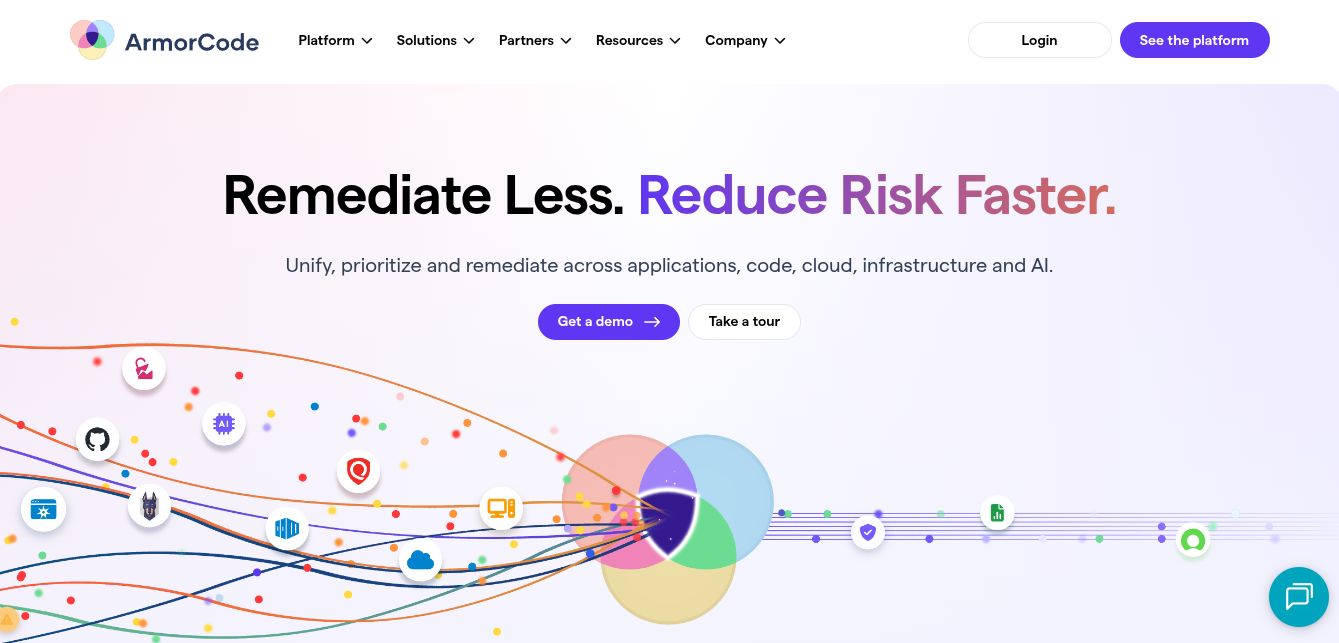
ArmorCode website

ArmorCode consolidates data and  uses intelligent algorithms to prioritize risks, ensuring immediate attention to critical vulnerabilities. 

Key Features:

  • Compliance and Reporting: Provides real-time dashboards and reporting features to track security KPIs, and compliance.
  • Data Correlation: Aggregates findings from sources into a single platform.
  • Supply Chain Security: Includes CI/CD posture management, and SBOM monitoring

Pros:

  • Workflow automation
  • Remediation guidance

Cons:

  • Enterprise focused
  • Primarily an aggregation and orchestration layer
  • Teams need to source for compatible third-party scanners.
  • Initial configuration can be complex
  • Clunky User Interface (UI)

Ideal Use Case:

Enterprises managing complex hybrid environments that require centralized orchestration to consolidate fragmented security tools.

Pricing:

Custom pricing

Gartner Rating: 4.7/5.0

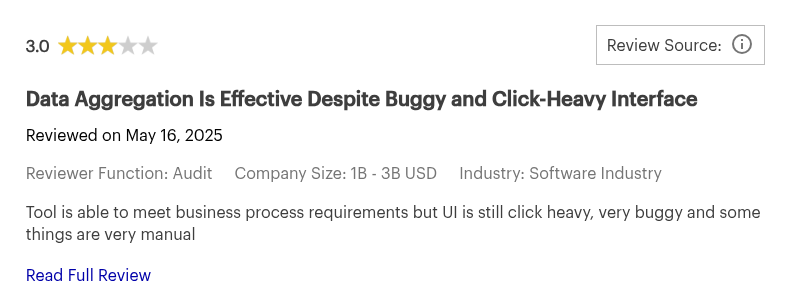
ArmorCode Reviews:

User sharing their experience with ArmorCode’s User Interface

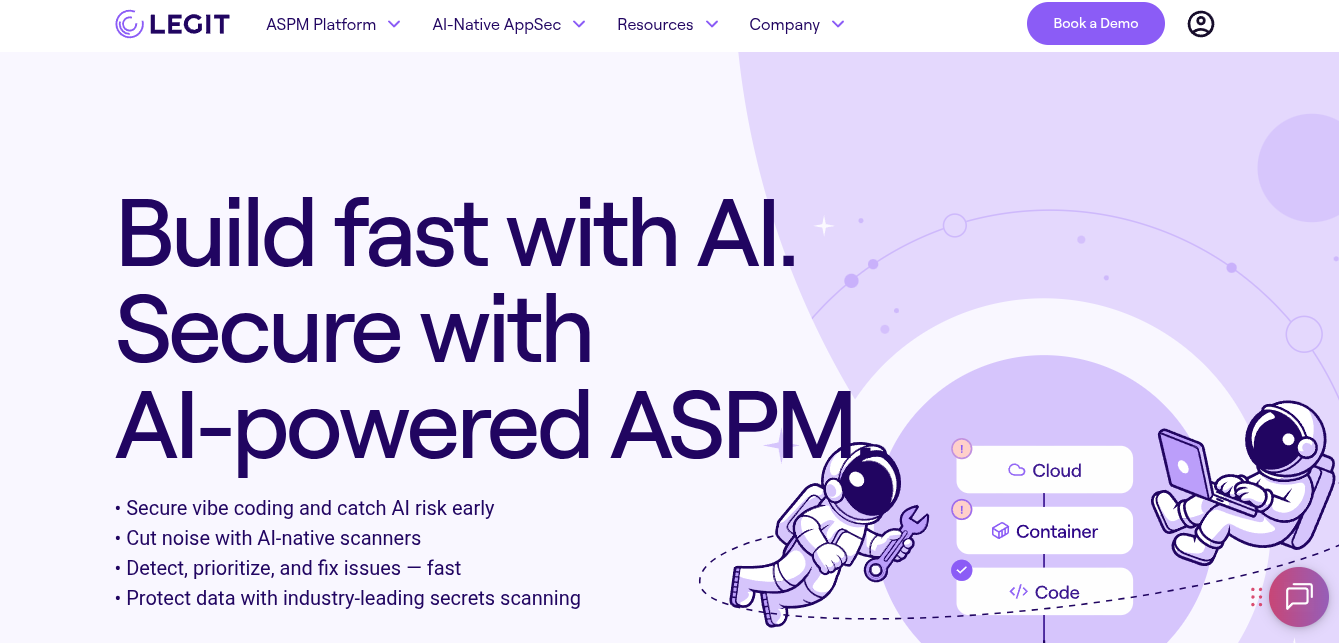
4. Legit Security

Legit Security website

Legit Security strengthens pipeline security by identifying vulnerabilities in the development infrastructure. It offers a detailed overview of the environment, protecting against data breaches and internal threats.

Key Features:

  • Policy Enforcement: Allows teams create and enforce  custom policies as code , "Legit Query".
  • Contextual Risk Scoring: Ranks risks based on context, such as business impact and environment.

Pros:

  • Strong governance and compliance features
  • End-to-end visibility
  • AI-driven remediation

Cons:

  • Primarily enterprise focused
  • Requires existing scanners
  • Steep learning curve
  • Initial configuration can be complex
  • Less developer-centric when compared to tools like Aikido Security

Ideal Use Case:

Large, complex organizations that need a unified and automated approach to managing their security posture.

Pricing:

Custom Pricing

Gartner Rating: 4.8/5.0

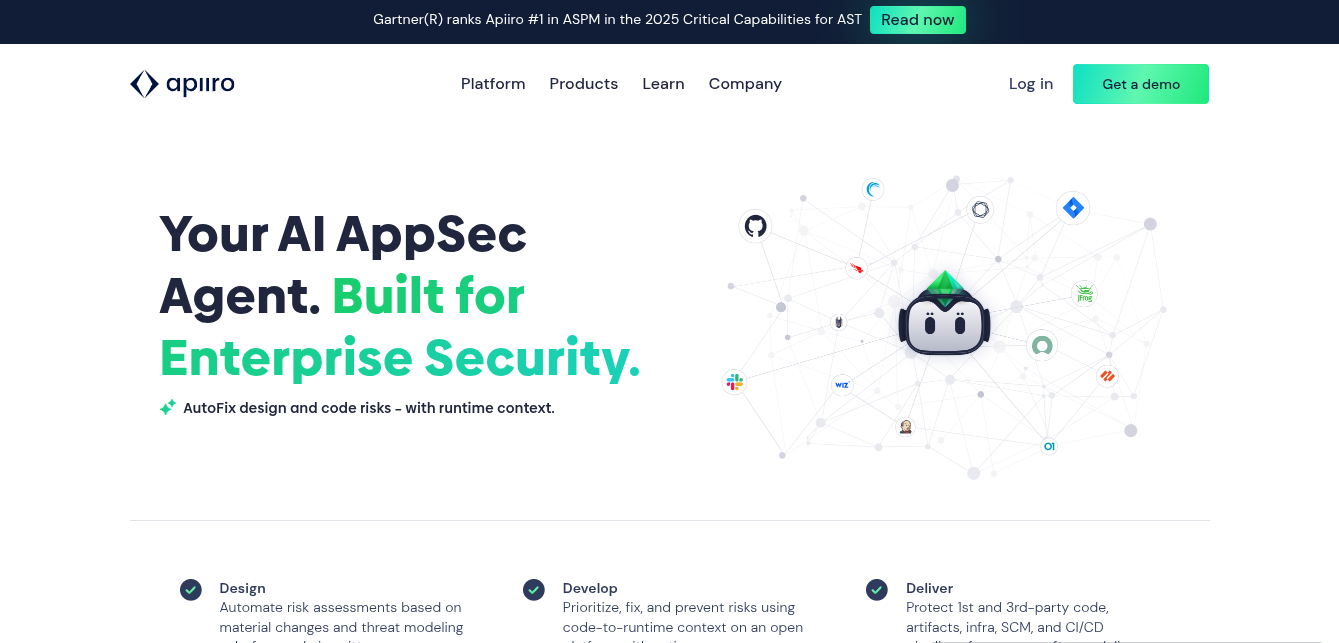
5. Apiiro

Apiiro website

Apiiro is an Application Security Posture Management (ASPM) platform that provides end-to-end visibility, prioritization, and automated remediation. It  uses its proprietary "Risk Graph" to connect security findings with business context and runtime exposure

Key Features:

  • Risk Graph: Constructs an application/supply-chain graph to show the relationship between vulnerabilities and the associated code and cloud assets.
  • Code-to-Runtime Visibility: Links vulnerabilities in code to their actual exposure in the runtime environment.
  • Design-first posture: Detects design-level risks to prevent issues earlier in the SDLC.

Pros:

  • AI-driven remediation
  • Context-aware prioritization

Cons:

  • Enterprise focused
  • Steep learning curve
  • False positives
  • Primarily enterprise focused
  • Requires third-party scanners

Ideal Use Case:

Large enterprises with complex, interconnected application and cloud environments that require contextual risk analysis and powerful remediation playbooks.

Pricing:

Custom pricing

Gartner Rating: 4.7/5.0

Apiiro Reviews:

No independent user generated review.

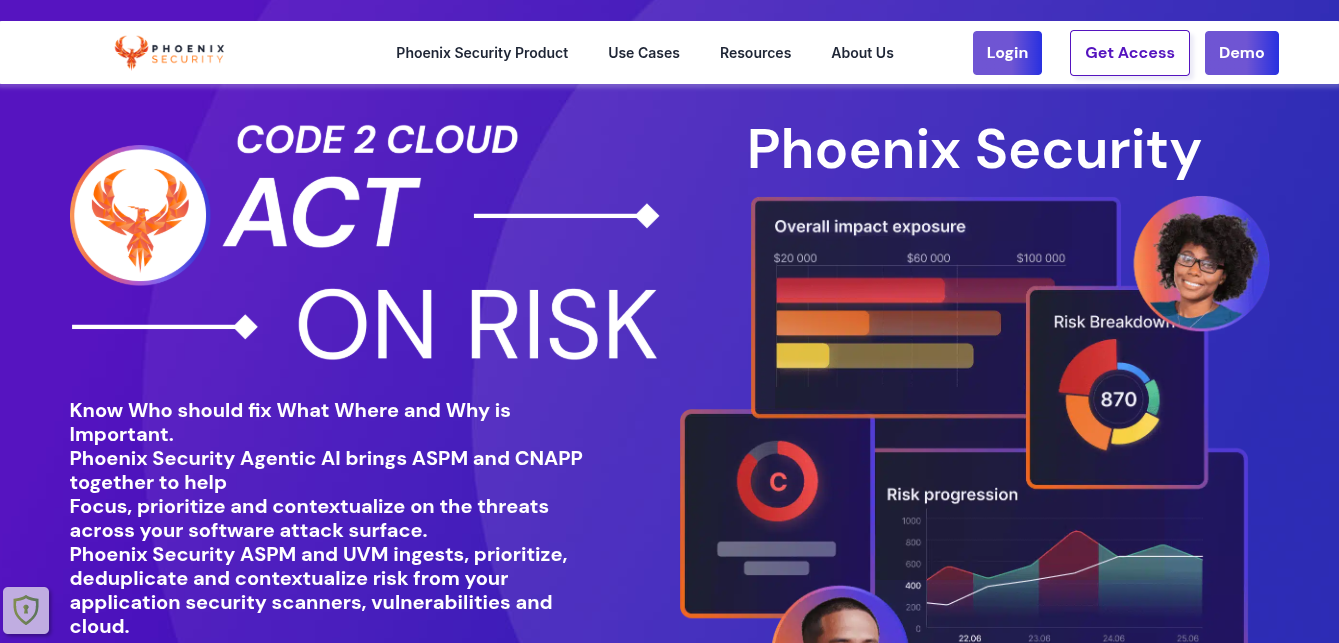
6. Phoenix Security

Phoenix Security website

Phoenix Security is an AI-powered Application Security Posture Management (ASPM) platform. It uses its real-time threat intelligence engine and reachability analysis to filter out noise and focus on exploitable risks. .

Key Features:

  • Reachability Analysis: Determines whether a vulnerability is actually exploitable by checking if the vulnerable code is actively being used.
  • Ownership and Attribution: Automatically attributes vulnerabilities to the correct code owners and teams.
  • Risk Quantification: Helps quantify cybersecurity risk in monetary terms using methodologies like FAIR,

Pros:

  • Comprehensive Visibility
  • Offers governance features

Cons:

  • Primarily enterprise focused
  • Requires third-party scanners
  • Initial configuration is complex

Ideal Use Case:

Enterprises with mature security teams that need a customizable risk-based vulnerability management (RBVM) platform to consolidate vulnerability data across large, complex environments
Pricing:

  • Phoenix Free: Free
  • Phoenix Professional: £1,495 per month (~ $1,963 per month)
  • Phoenix Enterprise: Custom pricing

Gartner Rating: 4.4/5.0

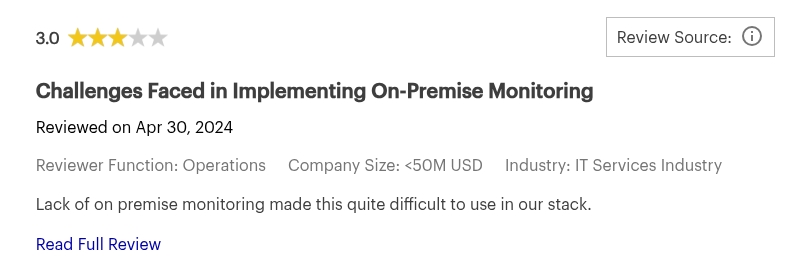
Phoenix Security Reviews:

User sharing experience with Phoenix Security

7. OX Security

OX Security

OX Security website

OX Security is an Application Security Posture Management (ASPM) platform that provides contextual prioritization and automated remediation. It is primarily known for its "Code Projection” approach and an AI-backed data fabric for mapping risks.

Key Features:

  • AI Data Lake: Uses its AI data fabric (“AI Data Lake”) to align security signals.
  • Integrations: Integrates with common DevOps tools and platforms.

Pros:

  • Code-to-cloud coverage
  • Strong vendor support

Cons:

  • Steep learning curve
  • Primarily enterprise focused
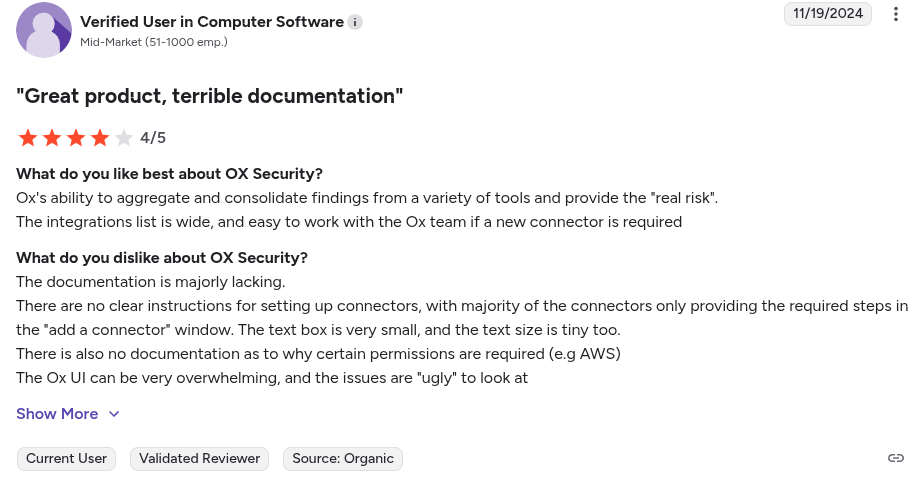
  • Users have reported a lack of proper documentation for some of its features
  • Users report limited customization for reports
  • Lacks advanced Role-Based Access Control (RBAC) features

Ideal Use Case:

Enterprises with large DevSecOps ecosystems requiring supply chain transparency and continuous security posture monitoring.

Pricing:

Custom pricing

Gartner Rating: 4.7/5.0

OX Security Reviews:

User sharing their experience with OX Security

8. Veracode

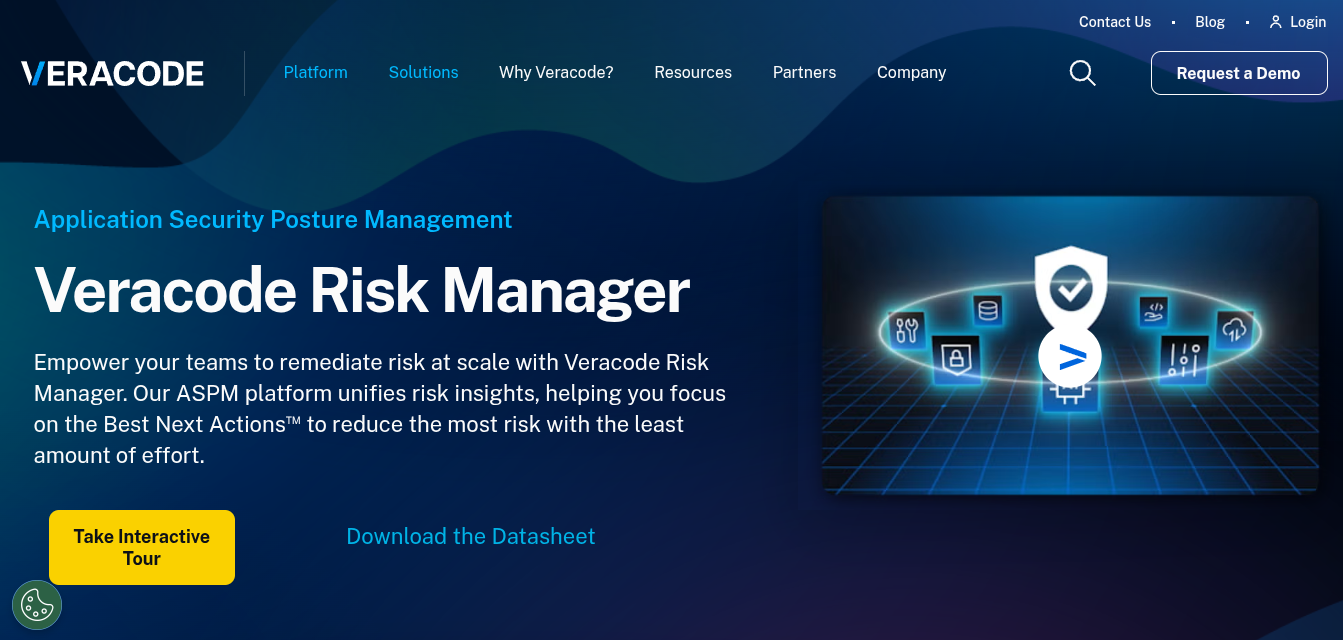
Veracode

Veracode website

Veracode is an Application Security Posture Management (ASPM) tool designed to help enterprises identify, manage, and remediate application-layer risks at scale.

Key Features:

  • Binary Analysis: Scans compiled applications binaries for vulnerabilities
  • Enterprise Compliance: Provides reporting and governance features to support audit and compliance workflows. 

Pros:

  • Strong Compliance Focus
  • Context-based insights

Cons:

  • Primarily enterprise focused
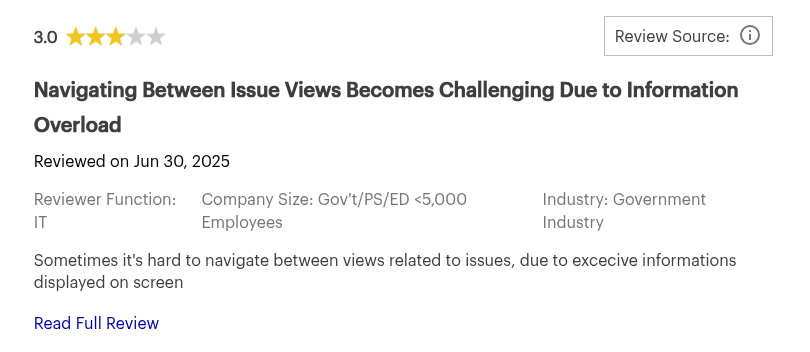
  • Poor Developer Experience
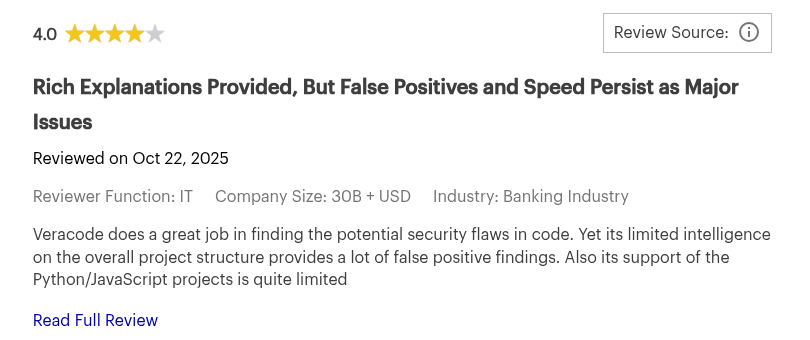
  • High False Positives
  • Steep Learning Curve
  • Users have reported limitations when integrating with certain scanners
  • Does not support on-premise applications

Ideal Use Case:

Large companies with a mix of in-house developed code and third-party commercial software where scanning compiled code is essential.

Pricing:

Custom pricing

Gartner Rating: 4.6/5.0

Veracode Reviews:

User sharing experience with Veracode’s interface

Veracode Reviews

User sharing their experience with Veracode’s false positives

9. Invicti

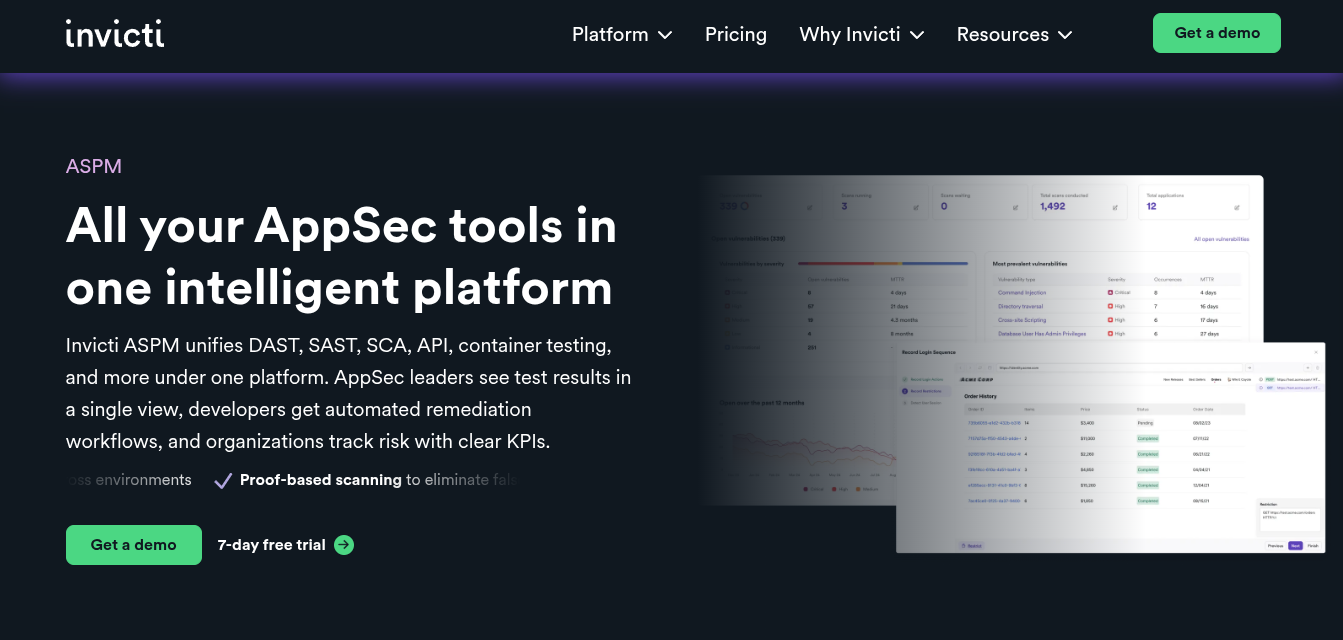
Invicti

Invicti website

Invicti is an application security platform best known for "proof-based scanning" philosophy. It focuses on providing accurate, verified vulnerability data to eliminate false positives and streamline remediation efforts.

Key Features:

  • Automated Asset Discovery: It continuously searches web applications, APIs, and cloud assets  across environments.
  • Risk Prioritization: Aggregated data across tools and uses its “proof-based” scanning engine to determine exploitable vulnerabilities.

Pros:

  • Asset discovery
  • Supports common CI/CD platforms
  • AI-guided remediation

Cons:

  • Heavily enterprised focused
  • Steep learning curve
  • Users have reported additional configuration for complex applications
  • It needs to be whitelisted to prevent being blocked by WAFs and IPS/IDS
  • It is DAST-centric, and requires third part scanners for full coverage

Ideal Use Case:

Teams prioritising thorough DAST scans to find vulnerabilities in complex Single Page Applications (SPAs) and dynamic JavaScript applications.

Pricing:

Custom pricing

Gartner Rating: 4.5/5.0

Invicti Reviews:

Wiz

User sharing their experience using Invicti

10. Wiz

Wiz website

Wiz is a cloud-native security platform with an integrated Application Security Posture Management (ASPM) platform. It creates a "Security Graph" connecting application-layer risks in code to their potential impact on the runtime and cloud infrastructure. 

Key Features:

  • Automated Remediation: Generates actionable remediation guidance  and one-click pull requests in CI/CD platforms.
  • Compliance Support: Assesses compliance posture against its built-in compliance frameworks 

Pros:

  • Security graph
  • Attack path analysis
  • Cloud discovery and inventory

Cons:

  • Primarily cloud-focused
  • Only suitable for enterprises 
  • Pricing can become expensive when scaling
  • May require complementary tools for full AppSec coverage
  • It’s not as developer-centric as platforms like Aikido Security

Ideal Use Case:

Companies operating exclusively in public cloud (AWS, Azure, GCP) that need instant, agentless visibility across all environments

Pricing:

Custom pricing

Gartner Rating: 4.7/5.0

Wiz Reviews:

“We use Wiz. There's a lot of features in there and I'm overall pretty impressed with it, but it's mostly the security team using it and me keeping an eye on things…” – Platform engineer on Reddit

“While Wiz excels in many areas, its pricing can be on the higher side for smaller teams or organizations, and the vast amount of data and alerts can sometimes feel overwhelming without proper tuning.” – G2 reviewer (Head of Engineering)

11.  Crowdstrike Falcon Cloud Security

Crowdstrike Falcon Cloud Security website

CrowdStrike offers an integrated Application Security Posture Management (ASPM) solution as part of its Falcon Cloud Security platform. It operates by delivering deep, agentless visibility into applications, APIs, and microservices running across multi-cloud environments.

Key Features:

  • Integration with CrowdStrike Falcon platform: Integrates seamlessly with CrowdStrike ecosystem.
  • Real-time threat detection with AI: Uses AI and behavioral analytics to detect  threats.
  • Agentless Application Mapping: Provides a real-time map of all applications, microservices, APIs, and dependencies running in the cloud. 

Pros:

  • Strong threat intelligence
  • Code-Level Insight

Cons:

  • Primarily enterprise focused
  • Learning Curve
  • False positives
  • Users have reported issues integrating with custom third part tools

Ideal Use Case:

Organizations that already use CrowdStrike for EDR/XDR and want to consolidate security tools into a unified platform

Pricing:

Custom pricing

Gartner Rating: 4.8/5.0

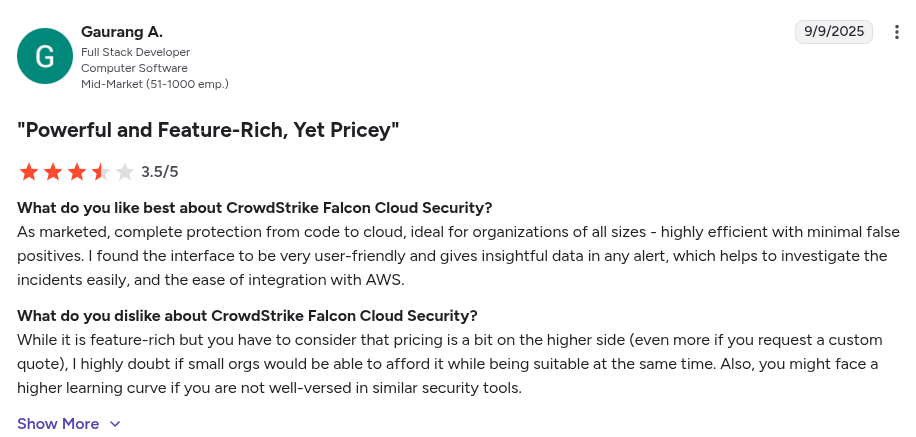
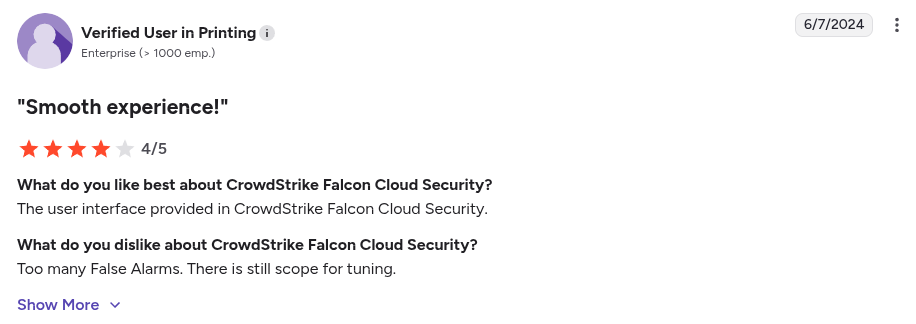
Crowdstrike Falcon Cloud Security Reviews:

Crowdstrike Falcon Cloud Security Reviews

User sharing their experience with Falcon Cloud Security’s pricing and learning curve

Crowdstrike Falcon Cloud Security Reviews

User sharing their experience with Falcon Cloud Security

12. AccuKnox

AccuKnox

AccuKnox website

AccuKnox’s ASPM solution combines  security testing tools and runtime insights to provide a unified, contextual view of application risks from code to cloud. It is primarily focused on runtime enforcement via eBPF.

Key Features:

  • Code-to-Runtime Correlation: Analyzes findings from build phases with runtime behavior to provide actionable insights and help trace vulnerabilities back to the source code.
  • Flexible Deployment Options: Supports SaaS, on-premises, and air-gapped deployments.
  • AI-Powered Risk Prioritization: It uses AI to correlate vulnerabilities, exploitability data, and business impact.

Pros:

  • Compliance Support
  • Flexible deployment
  • Open-source foundation

Cons:

  • Enterprise focused
  • Initial configuration can be complex
  • Steep learning curve
  • Users have reported slow responses from customer support

Ideal Use Case:

Security teams that prefer solutions built on transparent, open-source foundations (CNCF projects).

Pricing:

Custom pricing

Gartner Rating: 4.5/5.0

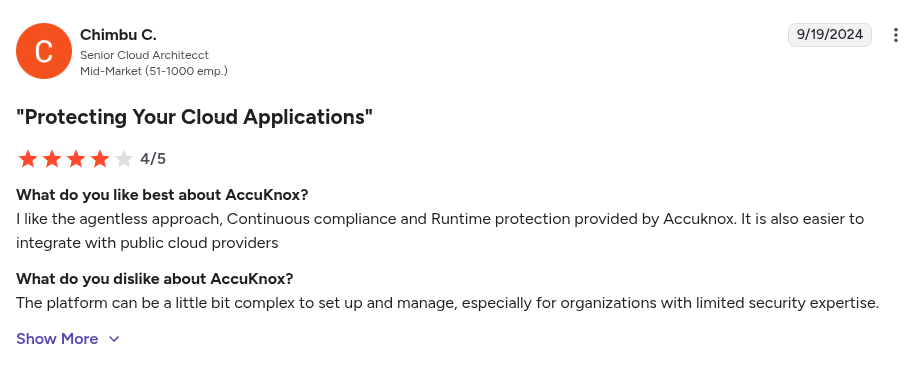
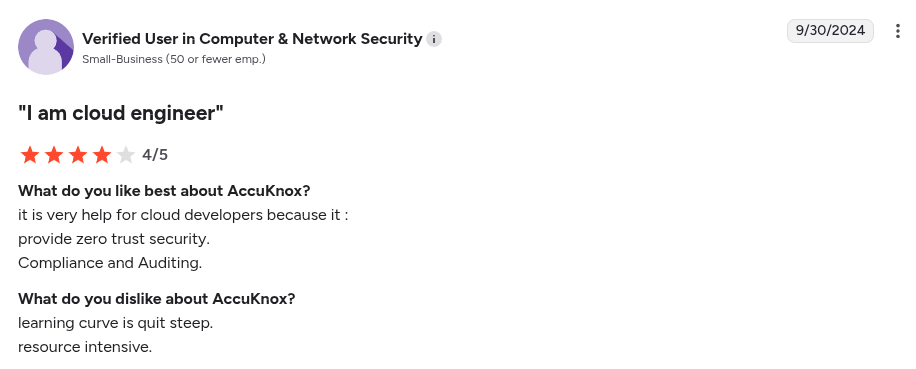
AccuKnox Reviews:

AccuKnox Reviews

User sharing their experience with AccuKnox

AccuKnox Reviews

User sharing their experience with AccuKnox

Comparing The Top 12 ASPM Tools

To help you compare the capabilities of the tools above, the table below compares each tool's features along with their ideal use case.

Tool AI-Driven Remediation Developer Experience Coverage Best For
Aikido Security ✅ AI-autofix and PRs, AI-driven remediation AI-auto triage, reachability analysis, integrated IDE/CI/CD, AI-assisted PR fixes ✅ Comprehensive Dev-first teams seeking a low-noise ASPM solution with automated AI-driven fixes.
Apiiro ✅ AI Fix Agent Context-aware guidance ⚠️ Good Large enterprises seeking deep application context.
Legit Security ❌ Offers manual steps only Enforces compliance on releases ⚠️ Good Organizations prioritizing CI/CD pipeline security and compliant releases
ArmorCode ✅ AI Remediation Automates ticket creation ✅ Comprehensive Security teams seeking to aggregate and orchestrate findings.
OX Security ❌ Offers manual steps only Prioritises actionable threats ⚠️ Good Teams focused on securing the software supply chain and VibeSec.
Phoenix Security ✅ AI Agents (GitHub fixes) Automated triage, integrates into dev backlogs ⚠️ Good Teams prioritizing active risk management
xygeni ❌ Offers manual steps only Integrates into DevSecOps processes ⚠️ Good Organizations prioritizing data leak detection.
Veracode ✅ AI-generated patch suggestions IDE integration, human oversight ✅ Comprehensive Enterprises needing robust governance and accurate binary analysis.
Invicti ✅ AI remediation guidance Proof-based scanning, auto-ticketing in Jira/Azure ✅ Comprehensive Organizations focused on automating DAST workflows.
Wiz ✅ AI remediation guidance Code-to-cloud tracing, IDE integration ⚠️ Good Cloud-native organizations seeking contextual risk prioritization
CrowdStrike ❌ Guided remediation Code-level insight, ownership identification ⚠️ Good Enterprises consolidating security tools across cloud environments.
AccuKnox ✅ AI-powered prioritization Automated policy generation ⚠️ Good Teams who require deep runtime Zero Trust enforcement

Choosing the Right ASPM Tool for Your Workflow

Developing applications in today’s environment can be challenging, but securing them doesn’t have to be. The right tools give teams end-to-end visibility, actionable insights, and seamless integration with existing workflows.

Aikido Security delivers all this for both startups and enterprises. Its AI-driven, developer-first ASPM platform provides a centralized view of application security, correlating risks across code and cloud environments while reducing alert fatigue from SAST, SCA, IaC, and secrets scanners.

Want full visibility across your applications? Start your free trial or book a demo with Aikido Security today.

FAQ

How do ASPM tools integrate with existing DevSecOps workflows?

ASPM tools integrate by connecting with source control systems, CI/CD pipelines, issue tracking, and collaboration platforms. This allows security findings from SAST, DAST, SCA, and IaC scans to flow directly into developers’ workflows, minimizing context switching. For example, Aikido Security provides in-PR feedback, IDE plugins, and native integrations with GitHub, GitLab, Jira, and Slack, making security part of the natural DevOps flow.

What is the difference between DAST and ASPM?

DAST (Dynamic Application Security Testing) analyzes running applications to find security vulnerabilities, focusing mainly on runtime behavior. ASPM, on the other hand, offers a broader view, aggregating results from multiple scanners (SAST, DAST, SCA, IaC), prioritizing risks, and continuously monitoring application posture across the software lifecycle. Tools like Aikido Security unify these approaches, correlating findings from DAST and other sources into actionable, developer-friendly remediation workflows.

Why is using ASPM tools important for enterprise security?

ASPM tools help enterprises maintain consistent visibility into vulnerabilities, prioritize risks based on business impact, and enforce compliance policies across large applications. By unifying the AppSec ecosystem, organizations can reduce alert fatigue and improve remediation efficiency. Aikido Security, for example, uses AI-driven risk prioritization and automated remediation to strengthen security posture while enhancing developer productivity.

How do you benchmark and POC ASPM solutions?

Benchmarking ASPM solutions involves evaluating integration ease, coverage of scanners and cloud assets, AI-driven prioritization, developer experience, and compliance capabilities. A proof of concept (POC) usually tests real pipelines, sample applications, and remediation workflows to validate effectiveness. Solutions like Aikido Security provide fast onboarding for POCs, in-PR guidance, and actionable feedback, making it easier to assess both security impact and developer usability.

You might also like: