






In 2026, most organizations still take weeks to detect threats that later turn into breaches, even when the indicators were there from day one. That is not a minor issue. It is a signal that something in our security practice is broken.
Today, you are swimming in tools, alerts, and feeds, but you are starving for insights because there’s little to nothing that tells you what to do next. According to Aikido’s State of AI Security Development 2026 report, around 15% of engineering time is lost to triaging alerts, time that should be spent building, fixing, and shipping software.
Instead, teams push cards around Kanban boards and hire more analysts just to keep up. That looks less like security at scale and more like crisis management on repeat.
As such, threat intelligence should be the thing that cuts through the chaos, points to the real risks, and helps you decide confidently what to fix now and what can wait. Most tools today give you more data, but not the right context. That leaves you in an endless loop of chasing ghosts.
In this article, we are going to do three things. First, we will break down what threat intelligence actually means today and why it matters. Then we will examine the strengths and weaknesses of the top 7 threat intelligence tools and platforms. Finally, we will show you how to choose the right one.
Let us get into it, however, before that, here’s an overview of the top 7 threat intelligence tools:
Among the threat intelligence tools we reviewed, Aikido Security stands out as a unified security platform built for modern development teams.
Rather than siloed point tools, Aikido brings code security, dependency analysis, infrastructure and cloud posture management, dynamic testing, and runtime protection into one seamless system that works with the tools developers already use. This unified approach reduces noise and false positives, so security teams and developers can focus on real risks and accelerate remediation.
The platform uses AI-driven features like AutoTriage and AI Autofix to automatically prioritize alerts and even generate fixes that can be merged through pull requests, cutting down manual work and alert fatigue. Aikido’s scanning capabilities span static application security testing (SAST), open-source dependency analysis (SCA), secrets and misconfiguration detection, and container and cloud risk assessment.
Aikido also includes advanced threat testing and runtime defense, with authenticated DAST, API fuzzing, AI-assisted pentesting, and real-time protections that block attacks before they impact production. This breadth of functionality helps teams find and fix vulnerabilities earlier, enforce security continuously, and test defenses just like attackers would.
Finally, Aikido integrates with numerous development, cloud, and collaboration tools and supports compliance automation for standards like SOC 2 and ISO 27001, enabling scalable security governance without disrupting developer workflows. Its focus on actionable insights, contextualized alerting, and developer-friendly automation makes it a comprehensive platform for threat intelligence.
Aikido can also help make threat modelling practical for developers.
Threat intelligence is the ability to understand which security risks actually matter to your environment, and why they matter right now.
Threat intelligence used to mean feeds: lists of IPs, domains, hashes, and CVEs pulled from somewhere else and dropped into your tooling. If you have been in security long enough, you have probably watched those feeds grow while their usefulness quietly shrank.
But today, threat intelligence means decision support.
Threat intelligence is about understanding which risks are relevant to your environment, your code, and your cloud setup, not what is theoretically dangerous somewhere on the internet. Without context, intelligence is just data and malware signatures, and neither will help you ship securely or sleep better at night.
Modern threat intelligence tools should answer practical questions:
If it cannot help you answer those questions quickly, it is background noise.
The way we build and run software has changed and is continuously changing, and security isn’t getting any simpler. As such, you need a threat detection tool that simplifies building and maintaining your applications.
You need a threat detection tool when you are dealing with:
Attackers understand this speed and exploit it. They do not need zero days all the time; they thrive on known issues that never get prioritized. This is where threat intelligence becomes critical.
At its core, threat intelligence tools matter because they:
A good threat detection tool helps restore focus. It helps teams move from reactive firefighting to informed prioritization.
By now, one thing should be clear. Threat intelligence does not fail because teams lack data. It fails because most tools operate in isolation, each seeing a fragment of the risk while leaving you to connect the dots.
With that in mind, let us look at seven widely used threat detection tools and platforms.
| Tool | Primary Focus | Threat Context | Noise Reduction | Automation | Engineering Workflow Fit | Best For |
|---|---|---|---|---|---|---|
| Aikido Security | App, cloud, and runtime intelligence | High, exposure-aware | High; built-in prioritization and reachability analysis | High; intelligence automatically informs triage and remediation | Native to DevSecOps | Teams that want actionable threat detection with minimal operational overhead. |
| Flare | External threat intelligence | Broad, external-only | Medium | High | CTI and SOC-focused | Teams monitoring for credential exposure and dark web activity |
| Recorded Future | External threat intelligence | Broad, external-only | Low, analyst-driven | Low | SOC-focused | Tracking global threats |
| CrowdStrike Falcon | Endpoint-linked intelligence | Strong for endpoints | Medium | Medium, Falcon-only | Endpoint workflows | CrowdStrike users |
| Mandiant Advantage | Threat actor research | Strategic, not asset-level | Low | Low | Leadership and SOCs | Advanced threat planning |
| Palo Alto Unit 42 | Security research | Advisory-level | Low | Low | Palo Alto stack | PA ecosystem users |
| Anomali | Threat intelligence ingestion and sharing | Feed-dependent | Low without tuning | Low to medium | SIEM/SOAR-based | Feed management |
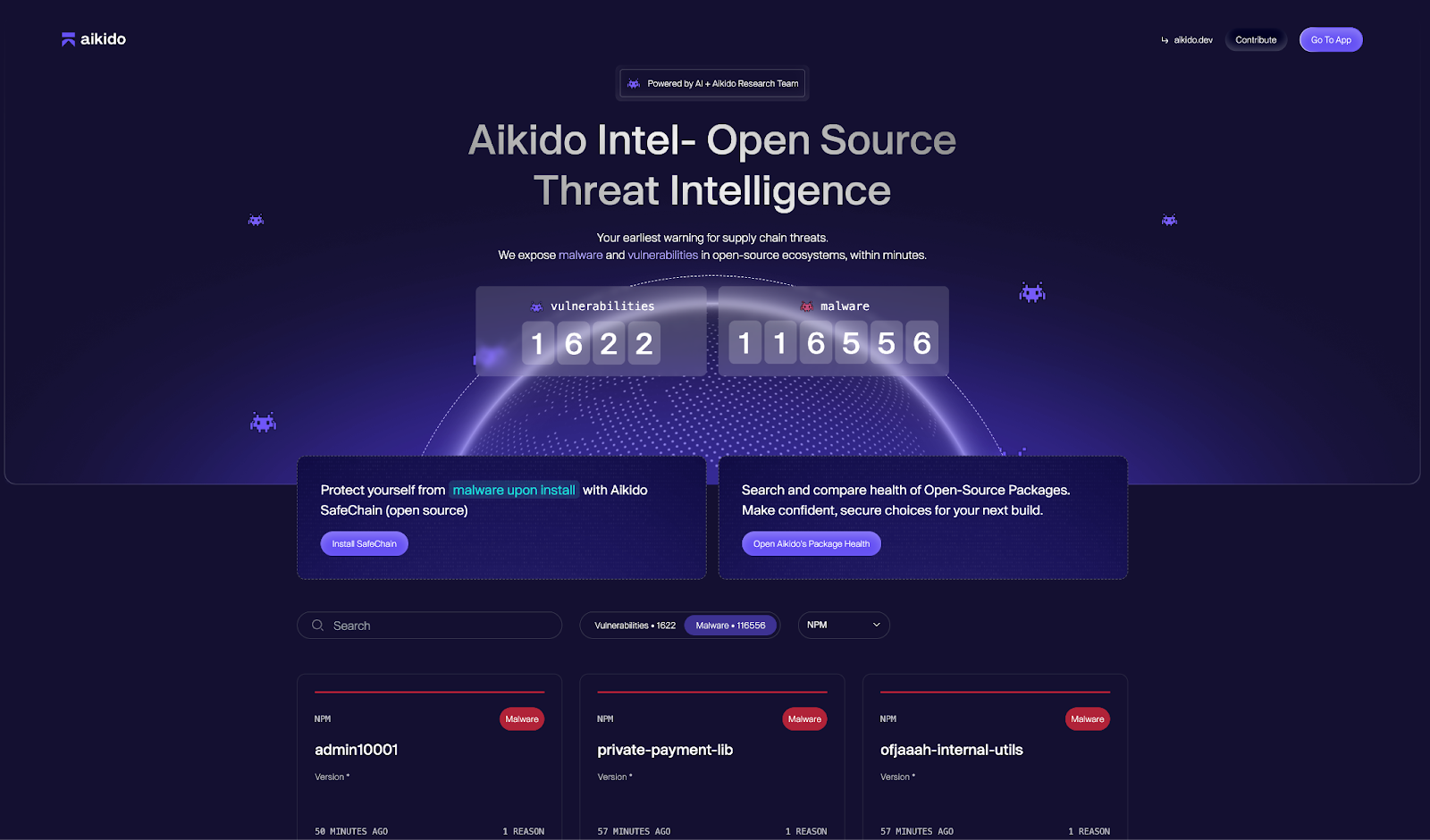
Aikido Security brings threat intelligence, code security, and runtime protection together in a single, unified platform designed to secure the entire software development lifecycle. It combines early visibility into emerging threats with automated scanning across code, dependencies, cloud, and infrastructure, helping teams detect vulnerabilities, misconfigurations, secrets, and malware before they become production issues.
At the intelligence layer, Aikido Intel continuously tracks vulnerabilities and malicious activity across open-source ecosystems, including issues that do not yet have CVEs. This intelligence feeds directly into Aikido’s broader security capabilities, such as software composition analysis, license compliance, malware detection, and supply chain protection. With features like SafeChain and package health insights, teams can make informed dependency decisions and block malicious packages at install time.
Beyond pre-production scanning, Aikido extends protection into production with Zen, its embedded runtime protection layer. Zen blocks common injection attacks, bot abuse, and zero-day exploits in real time, without external infrastructure or rule tuning. Because it runs inside the application, it provides accurate, low-noise protection while feeding runtime context back into vulnerability prioritization.
Together, these capabilities allow Aikido to connect threat intelligence with real-world exploitability. By unifying open-source intelligence, application and cloud security, and runtime defense into a single platform, Aikido reduces tool sprawl, improves signal quality, and helps teams focus on the risks that matter most across build, deploy, and runtime stages.
Key Features
Pros
Pricing Model
Aikido offers flexible plans designed to scale with your team’s size and security needs.
Pricing starts from the free tier, with higher tiers available based on scale and required features.
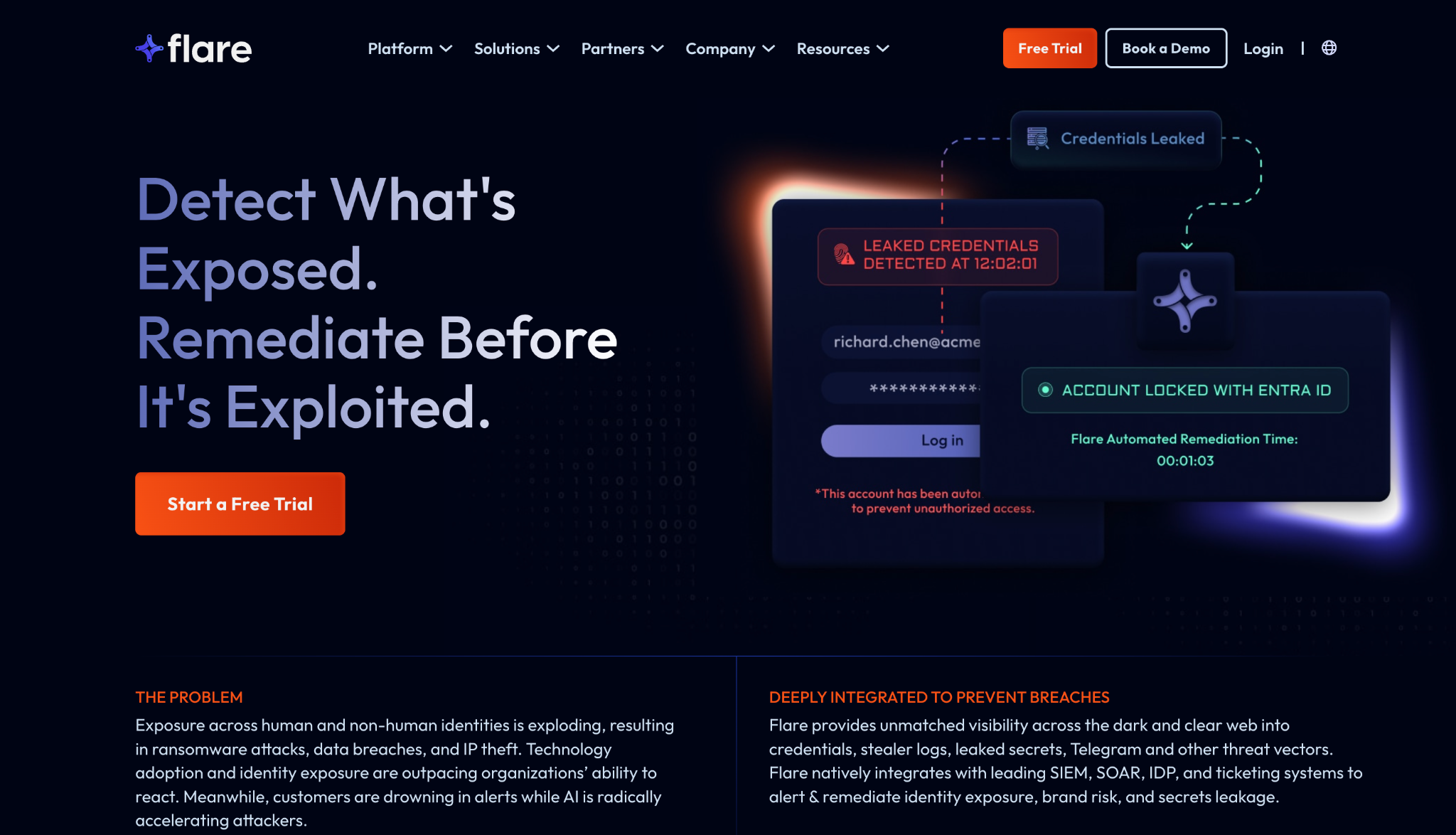
Flare is a cyber threat intelligence platform that monitors dark web forums, stealer log markets, and Telegram channels for signs of organizational exposure, including leaked credentials, ransomware activity, and initial access broker listings. Where most CTI platforms stop at collecting and reporting threat data, Flare is oriented around collapsing the intelligence-to-action lifecycle, with automated remediation through integrations with identity providers, SIEM, SOAR, and ticketing systems.
Key features
Pros
Cons
Pricing Model
Flare uses a subscription model with pricing based on monitored identifiers rather than seats. All plans include unlimited users. A free trial is available.
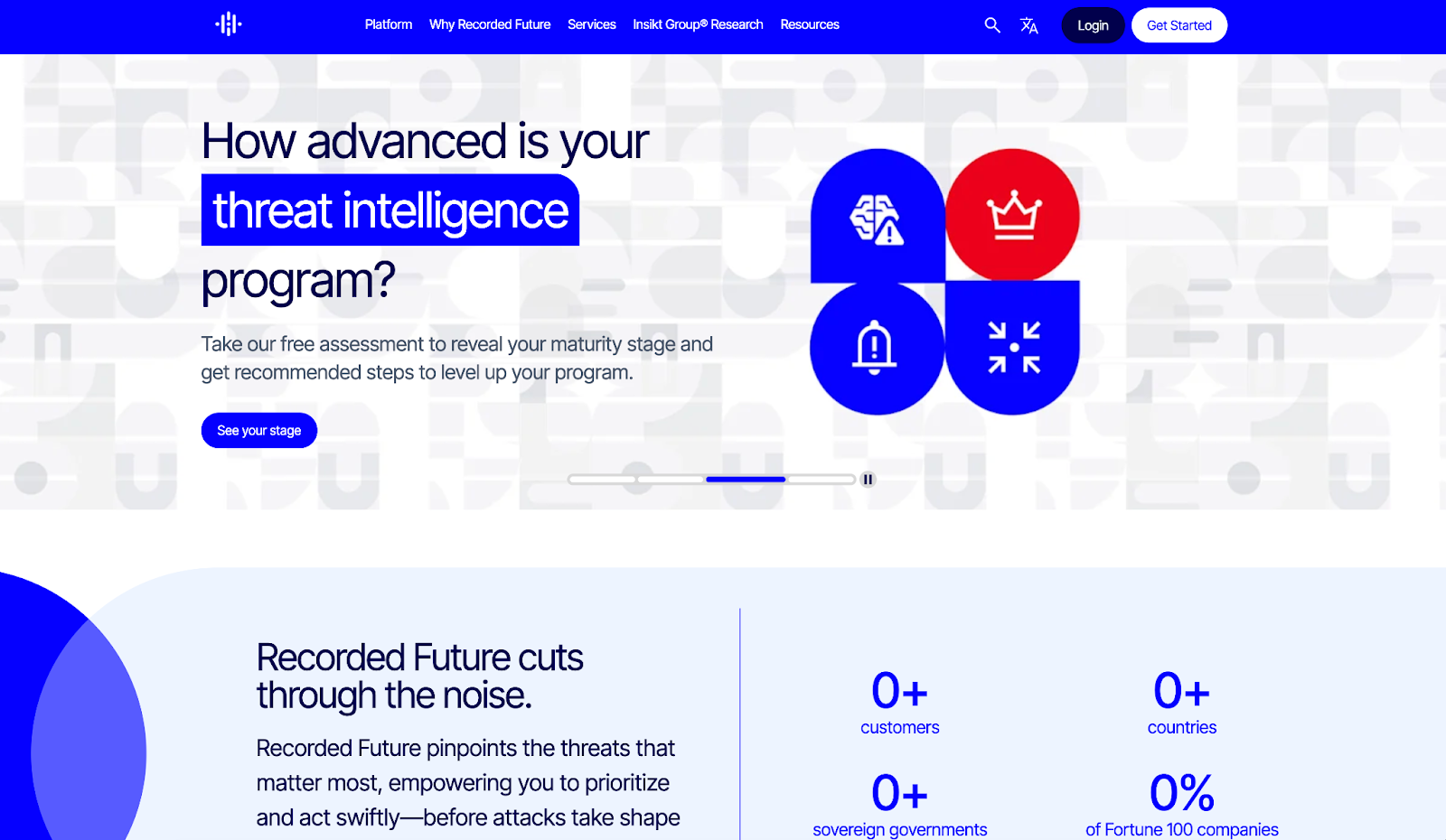
Recorded Future is a threat intelligence platform that primarily focuses on aggregating and analysing external threat data at scale. It pulls intelligence from a wide range of sources, including the open web, dark web, and technical feeds, and presents this information through risk scores and reports.
Key Features
Pros
Cons
Pricing Model
Recorded Future uses a tiered, subscription-based pricing model, typically aligned with organization size and data access levels. Costs can increase as additional modules and integrations are added.
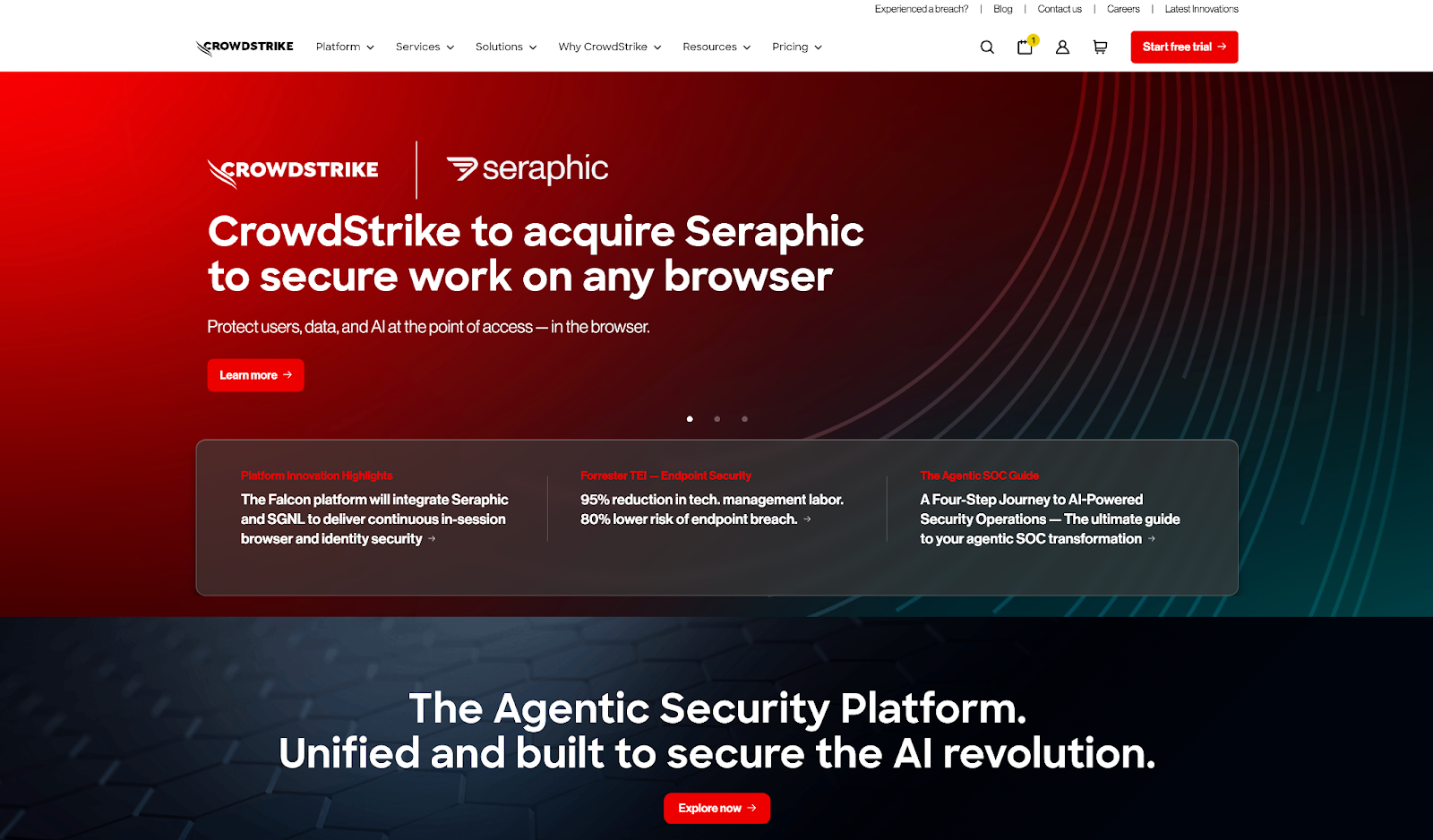
CrowdStrike Falcon Intelligence is the threat intelligence arm of the CrowdStrike ecosystem. It is tightly coupled with endpoint protection and focuses heavily on adversary tracking, malware analysis, and intrusion-related intelligence.
The platform is most effective in environments where CrowdStrike endpoint tooling is already central to security operations.
Key Features
Pros
Cons
Pricing Model
Falcon Intelligence is typically licensed as an add-on within the broader CrowdStrike platform, with pricing dependent on endpoint coverage and selected modules.
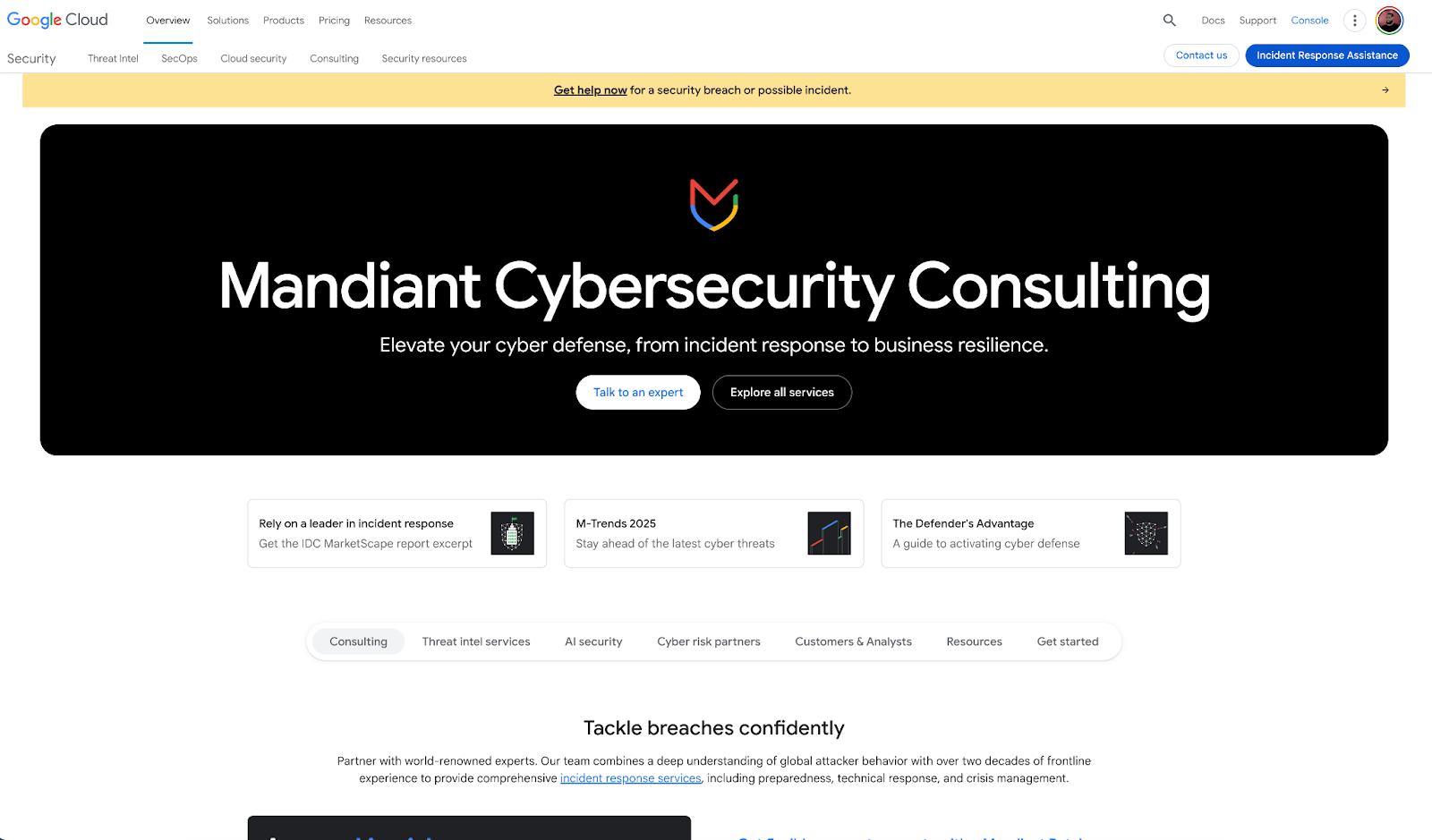
Mandiant Advantage is a threat intelligence platform built around incident response expertise and adversary research. It emphasizes understanding attacker behaviour, campaigns, and techniques based on real-world breach investigations.
Organizations that prioritize preparedness for advanced threats and post-incident learning commonly use the platform.
Key Features
Pros
Cons
Pricing Model
Mandiant Advantage follows a subscription pricing model, typically positioned for mid to large organizations with established security operations.
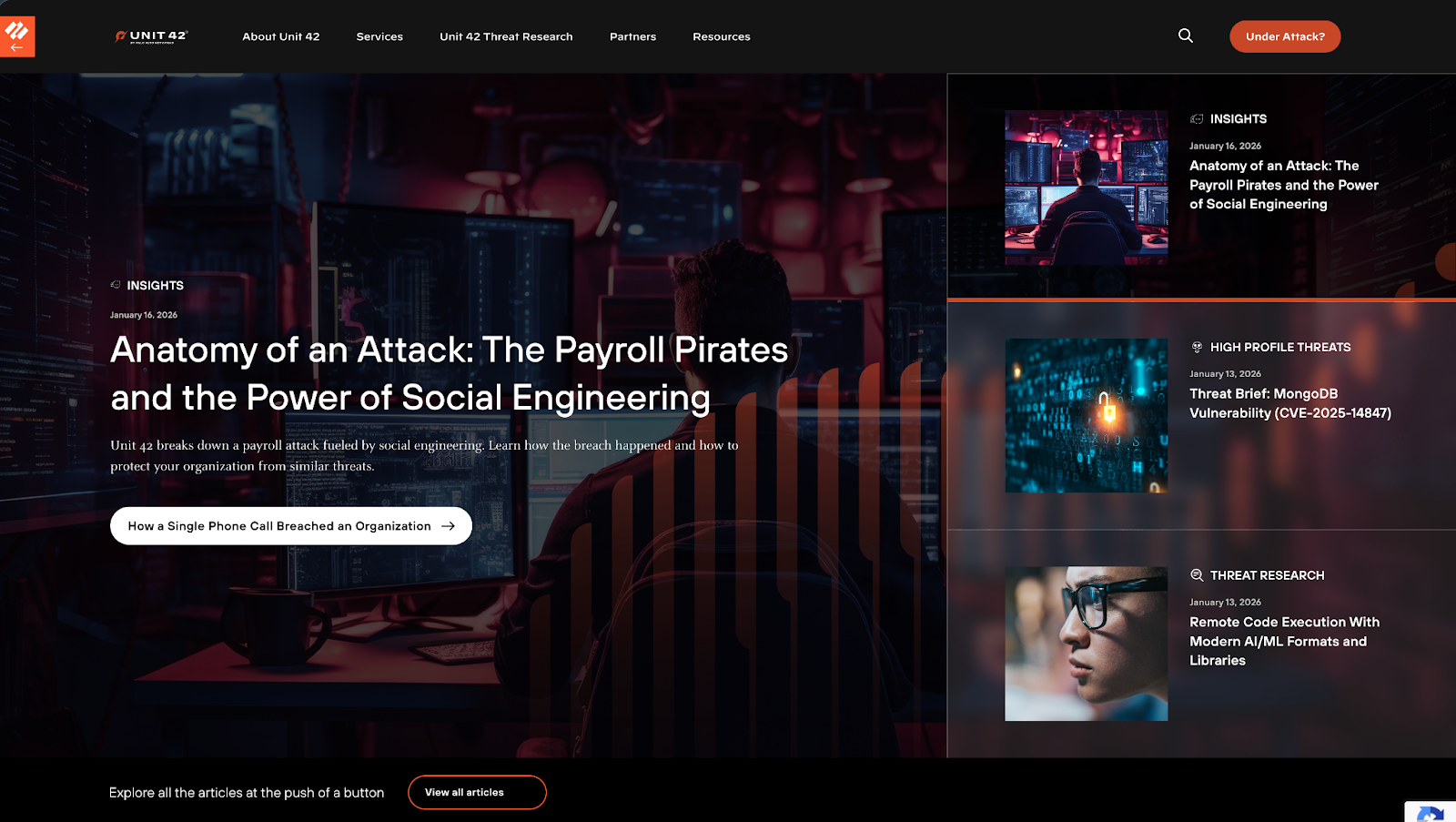
Unit 42 is Palo Alto Networks’ threat research and intelligence group. Its intelligence feeds into Palo Alto’s broader security ecosystem, supporting firewall, cloud, and endpoint products.
The focus is on research-driven insight rather than standalone threat intelligence consumption.
Key Features
Pros
Cons
Pricing Model
Access to Unit 42 intelligence is generally bundled within Palo Alto Networks' product offerings rather than sold independently.
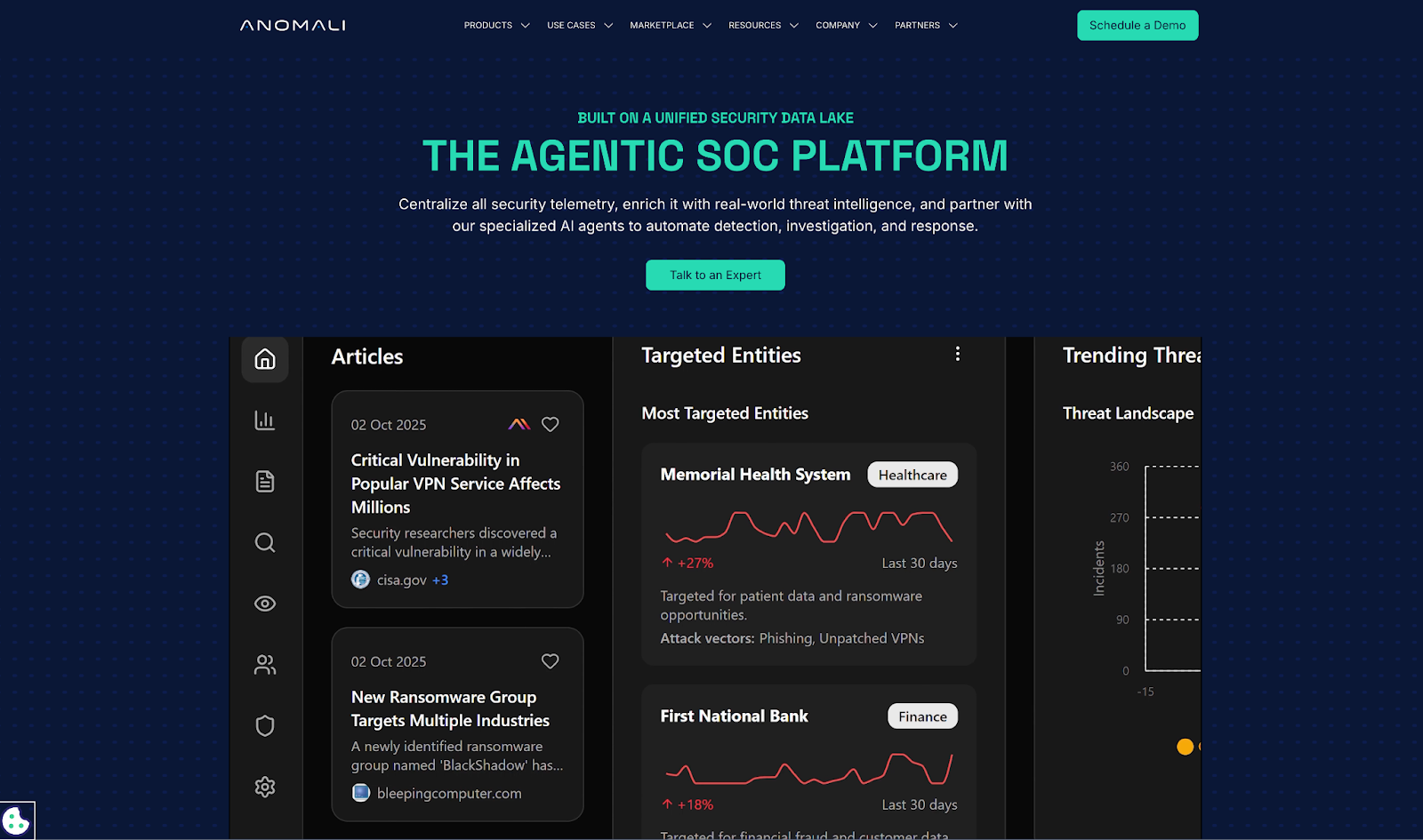
Anomali is a threat intelligence platform focused more on the ingestion, normalization, and sharing of threat data. It is often used as a central hub for collecting intelligence from multiple sources and distributing it across security tools.
You are going to get more of interoperability than opinionated prioritization with Anomali.
Key Features
Pros
Cons
Pricing Model
Anomali uses a modular subscription model, with pricing influenced by data volume, integrations, and feature selection.
When it comes down to choosing a threat intelligence, your focus shouldn’t be on which tool has the longest feature list, but which is compatible with your team’s workflow.
Here are the key principles in the decision.
1. Look Beyond Features and Focus on Outcomes: You can compare features, but not outcomes. Instead of asking what a platform can do, ask what it helps you stop doing. Does it reduce time spent triaging alerts? Does it help engineers fix the right issues faster? Does it lower the number of unresolved findings sitting in your backlog? If a threat detection tool creates more work for your security team, it is not doing its job.
2. Prioritize Compatibility With Your Existing Workflows: Great threat intelligence tools meet teams at the level they operate. This means that if a platform forces you to redesign workflows or introduce new processes, it will be harder to get everyone on the team on board. The best platforms integrate naturally with how your engineers build, deploy, and operate systems because they feel like part of the system.
3. Demand Coverage That Reflects Your Real Attack Surface: Modern environments consist of code, dependencies, cloud configuration, and runtime behaviour. A platform that sees only one slice of that picture will always leave gaps in your security makeup because you do not get to see how signals across layers connect and how risks interact.
4. Think Carefully About Scalability and Operational Load: What works for a small environment may collapse as you grow. Ask how the platform behaves as your organization scales. Does noise increase linearly, or does prioritization improve as more context becomes available? Does the platform require more analysts over time, or does it reduce dependence on manual effort? Scalability is more about human effort than data volume.
5. Be Honest About Cost Stability Over Time: \Some platforms appear affordable until you add required modules, integrations, or headcount to operate them effectively. Others remain predictable because they consolidate capabilities rather than fragment them. A good threat intelligence platform should help control long-term cost by reducing tool sprawl and operational complexity, not quietly increasing it.
By this point, one thing should be clear. Threat intelligence is only useful when it keeps pace with modern teams. If it lives in reports, separate dashboards, or weekly reviews, it will always arrive too late to change outcomes.
The teams getting the most value today are not chasing more data. They are choosing platforms that reduce friction, cut noise, and help engineers make better decisions without slowing delivery. That means looking beyond features and asking harder questions about fit, scalability, and operational effort.
This is where threat detection tools like Aikido Security stand out. By embedding threat intelligence directly into security workflows across code, cloud, and runtime, Aikido helps teams move from awareness to action faster, without adding more tools to manage or more alerts to triage.
See how Aikido Security helps teams bring threat intelligence back to day-to-day security, book a demo and explore the platform today.
Most traditional threat intelligence tools focus on collecting and presenting external data, then rely on analysts to interpret it. Aikido Security embeds threat intelligence directly into a security platform that understands your applications, cloud environment, and runtime behaviour. The focus is not on showing more information, but on helping teams decide what to fix first with less effort.
For many teams, yes. Aikido Security is designed to remove the need for separate threat intelligence feeds by providing prioritized, context-aware insight as part of its security capabilities. Instead of managing feeds and dashboards, teams get intelligence that is already mapped to real exposure in their environment.
Aikido Security reduces noise by correlating findings with exploitability, reachability, and real-world risk. Rather than surfacing every possible issue, it highlights the ones that matter most, which helps teams spend less time triaging and more time fixing meaningful risks.
Aikido Security works best for engineering-led teams that want strong security outcomes without heavy operational overhead. It is particularly well-suited for DevSecOps teams that need threat intelligence to fit naturally into development and cloud workflows, rather than living in a separate security silo.
Yes. Aikido Security is built to scale with modern, fast-changing environments by reducing dependency on manual analysis and tuning. As applications, dependencies, and cloud resources grow, the platform continues to automatically prioritize risk, without requiring proportional increases in tooling or headcount.
You Might Also Like:
此内容由惯性聚合(RSS阅读器)自动聚合整理,仅供阅读参考。 原文来自 — 版权归原作者所有。