惯性聚合 高效追踪和阅读你感兴趣的博客、新闻、科技资讯
阅读原文 在惯性聚合中打开

推荐订阅源

GbyAI
GbyAI
Threat Intelligence Blog | Flashpoint
P
Proofpoint News Feed
L
Lohrmann on Cybersecurity
S
Secure Thoughts
Attack and Defense Labs
人人都是产品经理
人人都是产品经理
Stack Overflow Blog
Stack Overflow Blog
W
WeLiveSecurity
O
OpenAI News
SecWiki News
SecWiki News
博客园 - Franky
NISL@THU
NISL@THU
Microsoft Azure Blog
T
Tor Project blog
Microsoft Security Blog
aimingoo的专栏
aimingoo的专栏
Security Latest
Security Latest
H
Hacker News: Front Page
Google Online Security Blog
P
Privacy & Cybersecurity Law Blog
Cyber Security Advisories - MS-ISAC
D
Darknet – Hacking Tools, Hacker News & Cyber Security
月光博客
月光博客
李成银的技术随笔
Spread Privacy
Spread Privacy
F
Full Disclosure
F
Fortinet All Blogs
T
The Exploit Database - CXSecurity.com
Vercel News
Vercel News
AWS News Blog
AWS News Blog
WordPress大学
WordPress大学
IntelliJ IDEA : IntelliJ IDEA – the Leading IDE for Professional Development in Java and Kotlin | The JetBrains Blog
V
Visual Studio Blog
J
Java Code Geeks
博客园 - 三生石上(FineUI控件)
G
Google Developers Blog
云风的 BLOG
云风的 BLOG
博客园 - 司徒正美
Engineering at Meta
Engineering at Meta
Last Week in AI
Last Week in AI
P
Palo Alto Networks Blog
宝玉的分享
宝玉的分享
T
True Tiger Recordings
N
News and Events Feed by Topic
酷 壳 – CoolShell
酷 壳 – CoolShell
Cisco Talos Blog
Cisco Talos Blog
N
News | PayPal Newsroom
S
SegmentFault 最新的问题
Jina AI
Jina AI

Aikido Security's Blog

Google API keys keep working after you delete them The Wild West of VS Code extensions and how a poisoned extension breached GitHub GitHub breached via a malicious VS Code extension: why developer devices are the real target Microsoft's durabletask package on PyPi Compromised. Mini Shai Hulud attacks again... again! Supply Chain Security: The Ultimate Guide to Software Composition Analysis (SCA) Tools Cloud Security Architecture: Principles, Frameworks, and Best Practices Cloud Security for DevOps: Securing CI/CD and IaC Compliance in the Cloud: Frameworks You Can’t Ignore Using Generative AI for Pentesting: What It Can (and Can’t) Do Top Cloud Security Tools for Modern Teams Top 8 Checkmarx Alternatives for SAST and Application Security Mini Shai-Hulud strikes again: npm worm compromises hundreds of @antv packages The Top 6 Best AI Tools for Coding in 2025 Top XBOW Alternatives In 2026 Top SonarQube Alternatives in 2025 Top 7 CodeRabbit Alternatives for AI Code Review in 2026 Best Orca Security Alternatives for Cloud & CNAPP Security 2026 Top 6 Wiz.io Alternatives for Cloud & Application Security in 2026 Top DevSecOps Tools to Replace GitLab Ultimate’s Security Features Top 5 GitHub Advanced Security Alternatives for DevSecOps Teams in 2026 Best 6 Veracode Alternatives for Application Security (Dev-First Tools to Consider) Top 10 Software Composition Analysis (SCA) tools in 2026 Top 10 AI-powered SAST tools in 2026 Top 12 Dynamic Application Security Testing (DAST) Tools in 2026 Penetration testing vs. red teaming: what’s the difference? Pentest GPT: How LLMs Are Reshaping Penetration Testing One year of Opengrep: What we built and what’s next Shadow AI is a fear response, and banning it makes it worse Mini Shai-Hulud Is Back: npm Worm Hits over 160 Packages, including Mistral and Tanstack Security Checklist for GitHub Actions Coinbase's layoffs signal a dangerous move into a vibe-coding security mess Securing Legacy Dependencies with Aikido and TuxCare Top OWASP scanners in 2026 for web application security Rolling out developer security in a 5,000+ engineer organization Security metamorphosis: a Mythos-ready architecture checklist for autonomous AI attacks Why browser extensions are a major security risk and what you can do about it Popular PyTorch Lightning Package Compromised by Mini Shai-Hulud Aikido integrates with AWS Kiro: Catching in review doesn't scale anymore Top CVE scanners in 2026 to identify known vulnerabilities A practical CTO security checklist to be Mythos-ready Mini Shai-Hulud Targets SAP npm Packages With a Bun-Based Secret Stealer Someone published four versions of a fake "tanstack" package in 27 minutes to steal your .env files It's time to treat browser extensions like supply chain attack vectors Introducing Safe Chain: Stopping Malicious npm Packages Before They Wreck Your Project What is a CVE? Is Shai-Hulud Back? Compromised Bitwarden CLI Contains a Self-Propagating npm Worm GPT-Proxy Backdoor in npm and PyPI turns Servers into Chinese LLM Relays Roundcube XSS chained with cookie tossing for full inbox access Introducing Endpoint Protection: Security for Developer Devices Multiple Cross-Site Scripting (XSS) Vulnerabilities in Mailcow Reliable CVE sources in the age of NIST NVD cutbacks Ship Fast, Stay Secure: Better Alternatives to Jit.io Axios CVE-2026-40175: a critical bug that’s… not exploitable Bug bounty isn’t dead, but the old model is breaking GlassWorm goes native: New Zig dropper infects every IDE on your machine Aikido Attack finds multiple 0-days in Hoppscotch The cybersecurity doomerism around Mythos doesn't match what we see on the ground Top Vibe Coding Tools for a Seamless Workflow in 2026 Top Software Security Testing Tools Top Security Monitoring Tools Top Runtime Security Tools Top IAST Tools For Interactive Application Security Testing Top GCP Security Tools For Safeguarding Google Cloud Top Docker Security Tools Top Azure Security Tools Top AI Coding Assistants Top AI Code Generators Top 8 AWS Security Tools in 2026 Top 12 ASPM Tools in 2026 Top Secret Scanning Tools Top 12 Software Supply Chain Security Tools in 2026 axios compromised on npm: maintainer account hijacked, RAT deployed Popular telnyx package compromised on PyPI by TeamPCP Top RSAC 2026 Parties, Side-Events & Security Meetups Aikido × Lovable: Vibe, Fix, Ship CanisterWorm Gets Teeth: TeamPCP's Kubernetes Wiper Targets Iran TeamPCP deploys CanisterWorm on NPM following Trivy compromise Security testing is validating software that no longer exists Aikido Recognized by Frost & Sullivan with the 2026 Customer Value Leadership Award in ASPM GlassWorm Hides a RAT Inside a Malicious Chrome Extension fast-draft Open VSX Extension Compromised by BlokTrooper npm debug and chalk packages compromised Best 6 AI Pentesting Tools in 2026 The 6 Best Code Quality Tools for 2026 Top 18 Automated Pentesting Tools Every DevSecOps Team Should Know Glassworm Strikes Popular React Native Phone Number Packages Glassworm Is Back: A New Wave of Invisible Unicode Attacks Hits Hundreds of Repositories How Security Teams Fight Back Against AI-Powered Hackers Introducing Betterleaks, an open source secrets scanner by the author of Gitleaks Trump’s 2026 cybersecurity strategy: From compliance to consequence How does AI pentesting work with compliance? What continuous pentesting actually requires Rare Not Random: Using Token Efficiency for Secrets Scanning Persistent XSS/RCE using WebSockets in Storybook’s dev server Why Determinism Is Still a Necessity in Security WAF vs. RASP vs. ADR Introducing Aikido Infinite: A new model of self-securing software How Aikido secures AI pentesting agents by design Astro Full-Read SSRF via Host Header Injection How to Get Your Board to Care About Security (Before a Breach Forces the Issue)
Top 9 Best AI Code Review Tools in 2026
2026-03-17 · via Aikido Security's Blog

Seventy three percent of teams still rely on manual reviews, even as GenAI contributes to more-and-more of their code. If you’re one of them, that’s fine, but there’s a better way.

Human oversight is invaluable, but at scale, it’s slow, inconsistent, and prone to errors, that’s where AI code review tools come in. They catch overlooked issues, enforce style consistency, and free developers to focus on more complex and higher priority reviews. 

Modern AI code review platforms integrate directly into developer workflows (PRs, IDEs), providing automated, context-aware feedback, real-time insights, and repository-wide visibility, helping teams ship faster without sacrificing quality.

In this guide, we’ll explore the top AI code review tools teams are using today, including a side-by-side comparison to make your decision easier..

Curious about how AI code reviews work? Check out these articles on, Using AI for Code Review: What It Can (and Can’t) Do Today and Manual vs. Automated Code Review: When to Use Each.

TL;DR  

Aikido Security earns the #1 spot as the top AI code review tool in this list, thanks to its developer-first design and extensive features. It delivers instant, automated, context-aware code reviews, code suggestions, auto-remediations, and much more, directly into your IDE, PR or CI/CD pipelines. No more context switching.

In 2025, Aikido acquired Trag AI, a company known for training custom large language models on real-world codebases, to enhance its engine with deeper semantic understanding of code and better context awareness across complex codebases.

The result: An AI code review tool that continuously learns and improves over time, adapting to your team’s coding patterns, suggesting fixes that match your style, and keeping your code clean and secure.

{{cta}}

Top 4 AI Code Review Tools (Comparison Table)

Tool Strengths Use Cases Limits
Aikido Security ✅ Instant feedback, focused high-signal reviews, compliance, AI-native, system & language-agnostic Enterprises, startups, smarter & faster PR reviews, compliance-heavy organizations and more ✅ None
Codacy ✅ Quality gates, multi-language, quick setup SMBs, startups, style checks ⚠️ Many alerts
❌ Limited security
DeepCode (Snyk) ✅ ML bug detection, OSS focus Security teams, OSS projects ⚠️ Less context
❌ Higher cost
Tabnine ✅ AI completions, IDE support Solo devs, productivity boost ❌ No bug or vuln detection

How Aikido Security Handles Code Review

Code Review Challenges How Aikido Security Solves It
Inconsistent Code Quality Uses AI-driven rules and security best practices to enforce coding standards
Missed Security Vulnerabilities Utilizes AI models trained on real-world CVEs, CWE patterns, and historical exploits to identify vulnerabilities
Manual Review Delay Provides instant feedback in pull requests
Enforcing Specific Team Standards (“Tribal Knowledge”) Teams can define custom rules and standards, automatically enforced across all reviews
Reviewer Fatigue Automates repetitive tasks like checking formatting, unused code, and dependency issues
Slow Detection of Bugs Flags logic errors, potential runtime failures, and risky code segments before deployment
Lack of Context in Feedback Provides remediation guidance to help developers understand why an issue matters and how to fix it

1. Aikido Security

Aikido Security

Aikido Security Website

Aikido Security is  an AI code review tool designed to make reviews faster, easier and more secure. It delivers AI-driven insights and integrates seamlessly into your existing workflows (version control, PRs, CI/CD pipelines and IDEs), ensuring your code is reviewed at every stage of the Software Development Lifecycle (SDLC).

Aikido Security brings AI-native intelligence into your development workflow by providing:

  • Instant and context-aware feedback in pull requests
  • Adaptive learning that understands your codebase and improves with past reviews
  • Custom rule definitions and code context.

As a result developers only receive actionable, high-severity notifications, allowing them move from detection to remediation without unnecessary context switching.

Key Features:

  • Data Privacy: Aikido Security does not store your source code after analysis or use it to train its LLMs.
  • Business-logic awareness via LLMs: Unlike static-only tools, Aikido leverages LLMs to understand intent and context. This means it can flag “good-looking” code that compiles fine but could still break production.
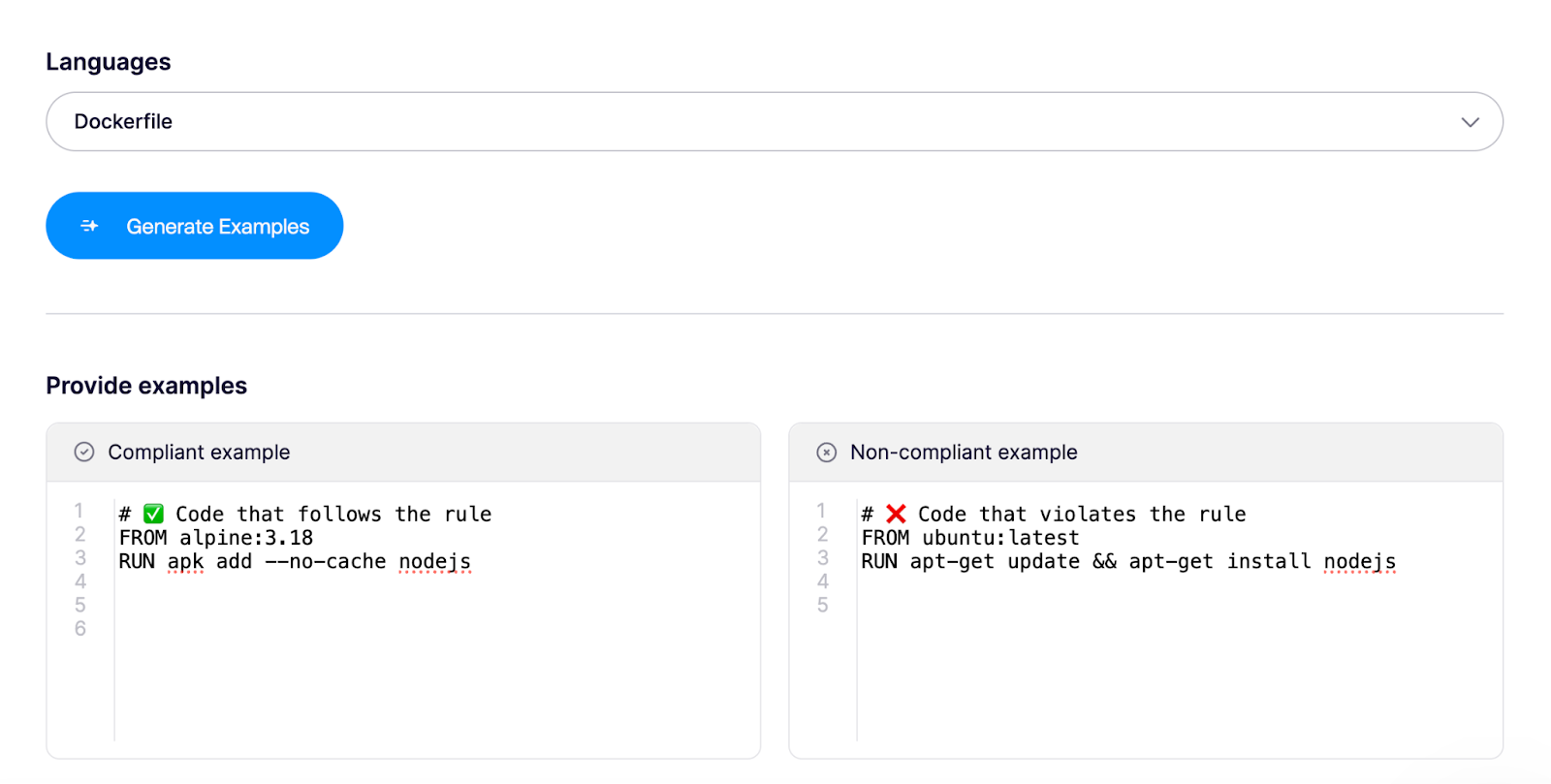
  • Custom rules: Teams can define custom rules based on their "tribal" knowledge and coding standards. This makes code review adaptive to each team’s style and industry needs.

Dockerfile

  • Codebase-Aware Rule Generation: Aikido learns from your team’s past PRs and review patterns. It turns tribal knowledge into reusable rules, so your best engineers’ instincts become baked into every review.
  • AI-Driven Static Code Analysis (SAST): Quickly scans repositories for vulnerabilities, misconfigurations, and code quality issues at both pre-commit and merge stages.
  • Secrets Detection: Spots hardcoded credentials or API keys before they reach production, adding a critical layer of protection.
  • Continuous Compliance Monitoring: Automates SOC 2, GDPR, HIPAA, and other compliance frameworks with up-to-date, exportable compliance reports. Ideal for regulated industries where audit readiness is a constant concern.

Pros:

  • Supports multiple repositories
  • Supports custom rules
  • Data privacy
  • Broad language support
  • Strong compliance features
  • Predictable pricing
  • Developer-first UI

Pricing:

All paid plans starting from $300/month for 10 users

  • Developer (Free Forever):  Free for up to 2 users. Supports 10 repos, 2 container images, 1 domain, and 1 cloud account.
  • Basic: Supports 10 repos, 25 container images, 5 domains and 3 cloud accounts.
  • Pro: Supports 250 repos, 50 container images, 15 domains, and 20 cloud accounts.
  • Advanced: Supports 500 repos, 100 container images, 20 domains, 20 cloud accounts, and 10 VMs.

Custom offerings are also available for startups (30% discount) and enterprises 

Ideal Use Cases:

  • Scaling SaaS Teams: Where finding and fixing issues quickly is mission-critical for rapid deployments.
  • Regulated Environments: Companies where audit trails and compliance are essential.
  • High-velocity CI/CD pipelines: Teams that have high-commit frequency and multiple repositories.

Gartner Rating: 4.9/5.0

Aikido Security Reviews:

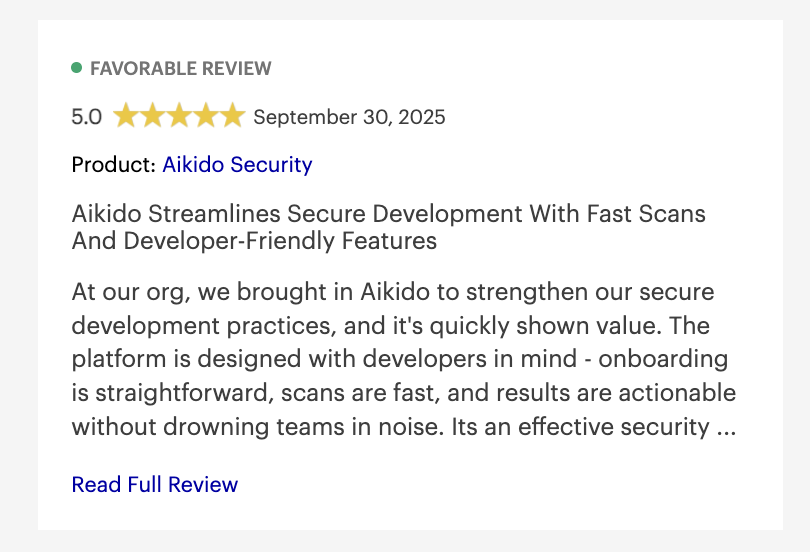
Beyond Gartner, Aikido Security also has a rating of 4.7/5 on Capterra and SourceForge.

User sharing how Aikido enabled secure development in their organization


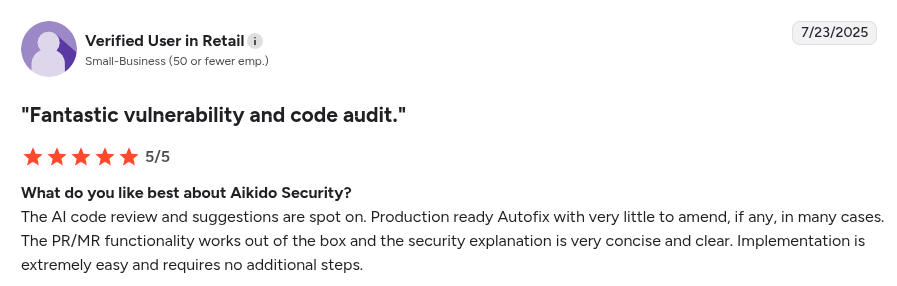
Aikido Security Reviews

User sharing experience using Aikido Security’s

Curious about the difference between AI code review tools and automated code review tools? Check out our article, AI Code Review vs Automated Code Review: The Complete Guide.

2. Codacy

Codacy

Codacy website


Codacy is a code quality automation tool that focuses on code style, static analysis, duplication detection, and standards enforcement..

Key Features:

  • Customizable Quality Gates: Teams can set minimum criteria for merging code, like coverage or linting thresholds.
  • Real-Time Feedback: As soon as code is pushed, it provides automated insights into issues-speeding up iteration cycles.
  • Multiple Language Support: Works well for diverse stacks, enforcing standards consistently.

Pros:

  • Broad language support
  • Customizable quality gates
  • Supports common CI/CD platforms
  • Automates reviews by commenting on pull requests.

Cons:

  • Pricing can be expensive for larger teams.
  • Limited Customization for Advanced Rules
  • Users report slow support response
  • Users report slower analysis in large codebases
  • Limited security and compliance features

Ideal Use Cases:

  • Small to Medium-Size Teams: Especially those seeking to formalize quality practices without heavy configuration.
  • Early-Stage Startups: Where resources for manual code reviews are limited, but basic static checks are critical.

Pricing:

  • Developer: Free
  • Team: $21 per developer/month (billed monthly)
  • Business: Custom Pricing

Gartner Rating: 4.4/5.0

3. DeepCode AI (now integrated with Snyk)

DeepCode AI website


DeepCode AI(now part of Snyk) uses machine-learning and semantic analysis to identify security risks and recurring code patterns  that would have been missed by traditional linters. 

Key Features:

  • AI-Powered Semantic Analysis: Sifts through vast open-source datasets to flag unusual or previously unknown bug patterns.
  • Integration with Snyk: Integrates with the Synk platform for deeper dependency and license risk analysis.
    Custom Rules: Allows teams to define and save their own rules.

Pros:

  • Multi-language support
  • Dependency-aware insights
  • CI/CD integration

Cons:

  • False positives 
  • Learning curve
  • Requires tuning for noise
  • It can miss issues in non-standard or proprietary codebases
  • Fix suggestions are sometimes generic
  • Users report slow scans on large repositories

Ideal Use Cases:

  • Security-Focused Teams: Projects dealing with open-source dependencies where subtle security bugs can sneak in.
  • Open-Source Projects: Where detection of unconventional vulnerabilities is a priority.

Pricing:

  • Free
  • Team: $25 per month/contributing developer (min. 5 devs)
  • Enterprise: Custom pricing

Gartner Rating: 4.4/5.0

DeepCode AI Reviews:

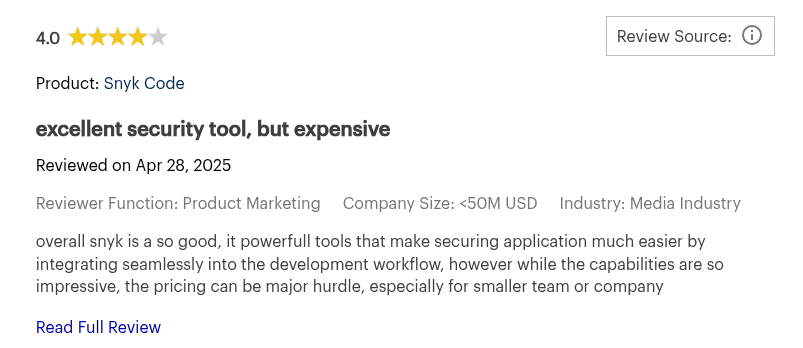
User sharing experience with DeepCode AI’s( now integrated with Snyk) pricing

4. Tabnine

Tabnine website


Tabnine is an AI-powered coding assistant that specializes in code completion, offering real-time suggestions as developers' type. It’s primarily focused on improving productivity and code consistency. 

Key Features:

  • Real-Time Code Completions: Boosts developer velocity, especially for repetitive or boilerplate-heavy work.
  • Works with Popular IDEs: Integration with VS Code, JetBrains IDEs, and others brings AI suggestions to daily coding workflows.
  • Team Knowledge Sharing: Trains on your project's codebase to offer tailored suggestions, fostering team consistency.

Pros:

  • Multi-language support
  • Context-aware suggestions
  • Integrates with major IDE’s

Cons:

  • Learning curve
  • AI code review agent is limited to its enterprise plan
  • Limited free features
  • May cross-file semantics in large projects.
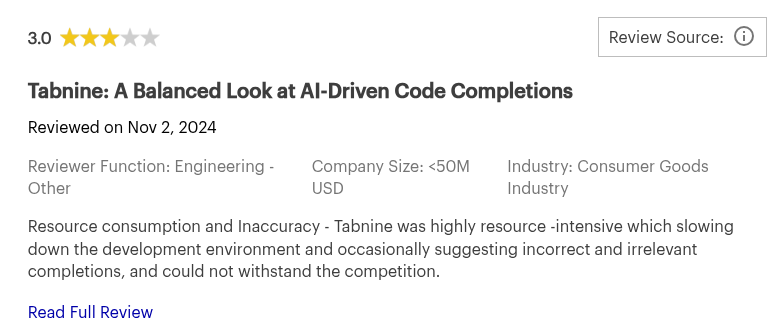
  • Users have reported high resource consumption during use

Ideal Use Cases:

  • Individual Developers: Those looking for speed and efficiency, especially in fast-paced product teams.
  • Repetitive Tasks: Projects with a lot of repetitive or formulaic code structures.

Pricing:

  • Dev Preview: Free
  • Dev: $9 per user/month
  • Enterprise: $39 per user/month

Gartner Rating: 4.1/5.0

Tabnine Reviews:

Tabnine Reviews

User sharing their experience with Tabnine


Exploring more tools and how they compare? Check out our article on The Top 18 Best Code Review Tools of 2026

5. CodeRabbit

CodeRabbit website

CodeRabbit streamlines code review processes by providing automated feedback, collaboration, and customizable rules to meet project standards. 

Key Features:

  • PR Summaries and Explanations: Provides summaries of code changes to help reviewers understand pull requests.
  • Context Visualization: Can generate sequence diagrams or flow explanations for complex code changes.

Pros:

  • Supports multiple programming languages
  • Integrates with Git workflows and IDEs like VS Code
  • Zero-data retention policy

Cons:

  • Advanced features (like self-hosting or compliance options) are available only in higher-tier plans
  • Limited customization
  • Users have reported performance issues in large repositories and complex PRs
  • May generate noisy or irrelevant comments if not fine-tuned

Ideal Use Cases:

  • Startups and mid-sized teams: Teams that want to maintain code quality while scaling quickly.

Pricing:

  • Free
  • Lite: $15 per month/developer
  • Pro:  $30 per month/developer 
  • Enterprise: Custom pricing

Gartner Rating: 4.0/5.0

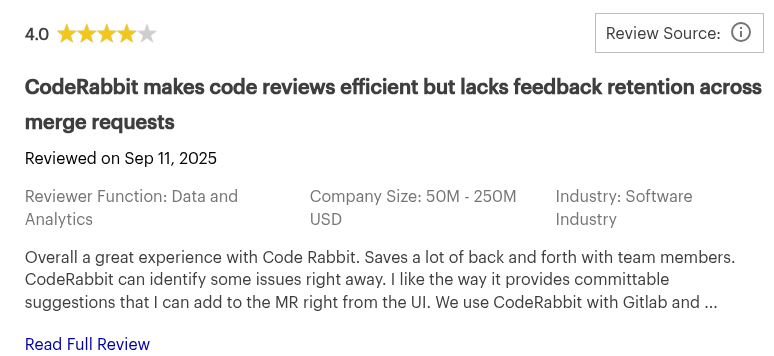
CodeRabbit Reviews:

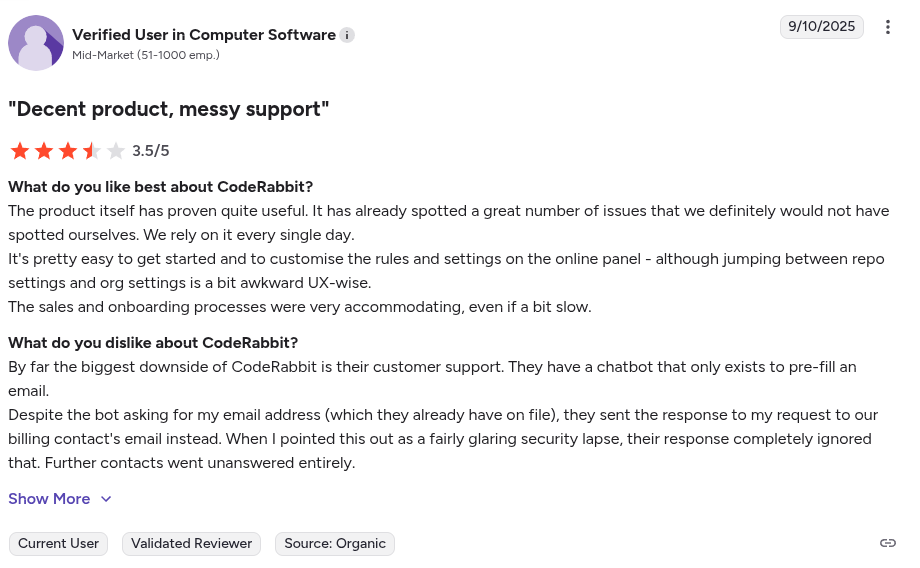
User sharing their experience using CodeRabbit

CodeRabbit Reviews

User sharing their experience with CodeRabbit Support

6. CodeAnt AI

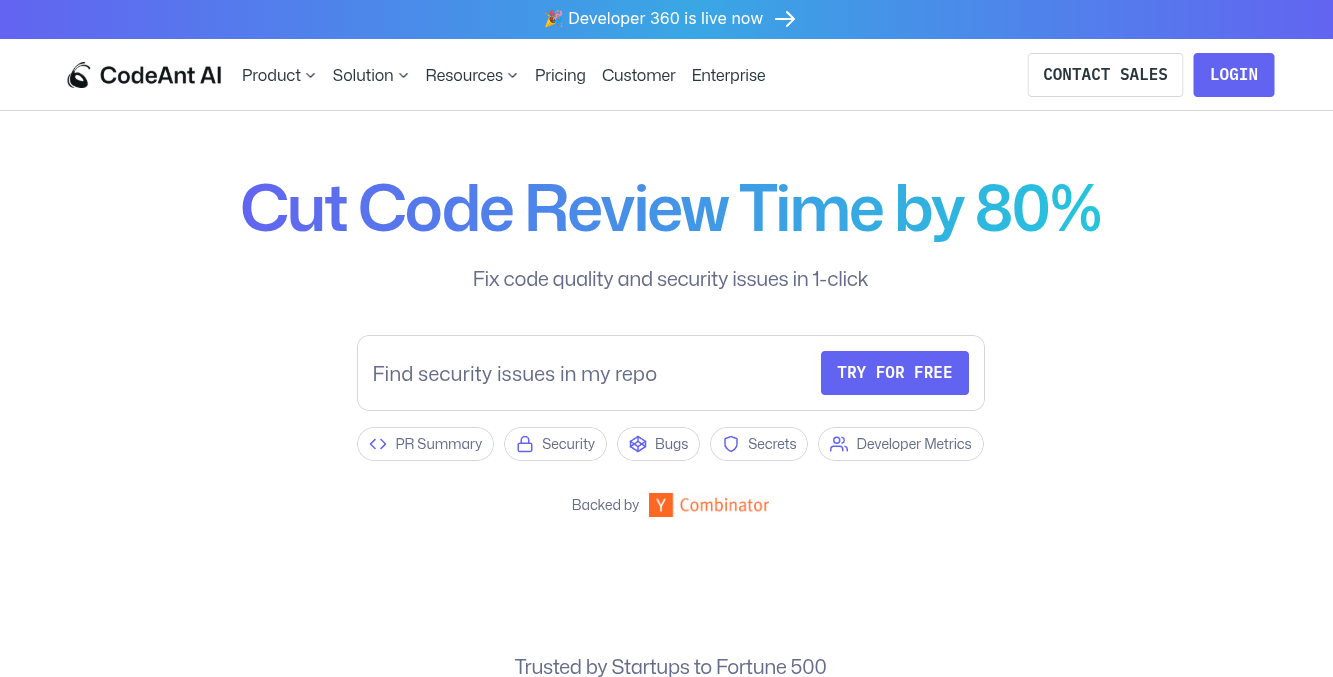
CodeAnt AI website

CodeAnt AI combines automation with flexibility, offering tools to detect, fix, and optimize code efficiently. Developers primarily use it because of its end-to-end AI-augmented code review and understanding of abstract syntax trees (ASTs).

Key Features:

  • CI/CD integration: Supports common CI/CD tools.
  • Automated Documentation: It can automatically generate documentation for the entire codebase.
  • Custom Rules: Allows teams define and enforce custom coding standards.

Pros:

  • Custom rules
  • Built-in security features
  • Automated documentation
  • Automatic PR summaries

Cons:

  • Learning curve
  • Still a relatively new tool
  • False positives
  • May require additional configuration 
  • Review speed and performance may degrade with very large repositories
  • Slow response time

Ideal Use Cases:

  • Startups and scaling tech teams: Especially useful for fast-growing teams that want to enforce code standards and security checks without needing a large team of senior reviewers.

Pricing:

  • Basic plan: $12 per user/month
  • Premium plan: $25 per user/month
  • Enterprise plan: Custom pricing

Gartner Rating:

No Gartner review.

CodeAnt AI Reviews:

No independent user generated review.

7. Qodo (formerly Codium)

Qodo

Qodo website

Qodo (formerly Codium) is an AI-driven code integrity platform that helps teams write, test, and review code with advanced automation and contextual understanding. 

Key Features:

  • Context-Aware Analysis: Uses retrieval-augmented generation (RAG) to index codebases and understand architectures
  • Automated Test Generation: Generate unit tests, suggest coverage improvements.
  • Multi-Agent Framework: Qodo is built around agents (e.g., Gen for code generation/testing, Merge for PR review)

Pros:

  • Context-Aware suggestions
  • Automated PR workflows
  • Broad language support

Cons:

  • Learning curve for advanced features
  • False Positives
  • Users have reported the user interface as confusing/clunky

Ideal Use Cases:

  • Engineering teams practicing shift-left testing: Automatically generate tests and surface issues early in PRs to catch bugs before they reach CI.

Pricing:

  • Developer: Free
  • Teams: $19 per user/month
  • Enterprise: Custom pricing

Gartner Rating: 4.5/5.0

Qodo Reviews:

Qodo Reviews

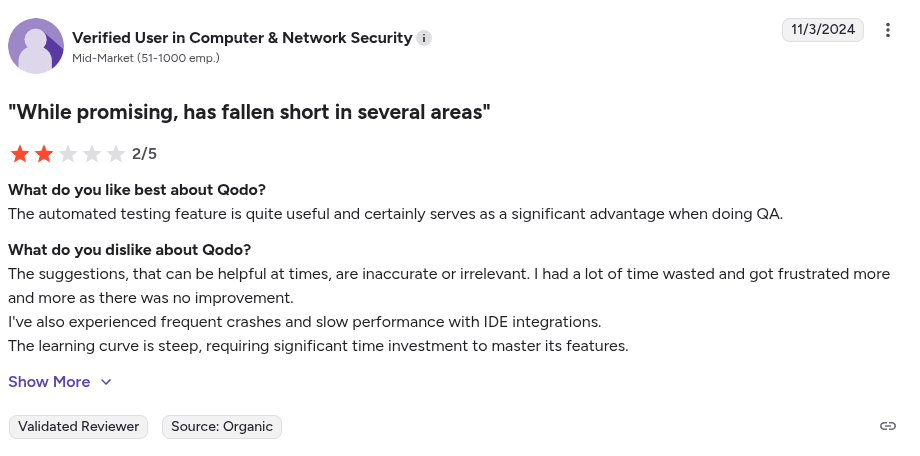
User sharing experience using Qodo

Qodo Reviews

User sharing experience using Qodo

8. Sourcery

Sourcery

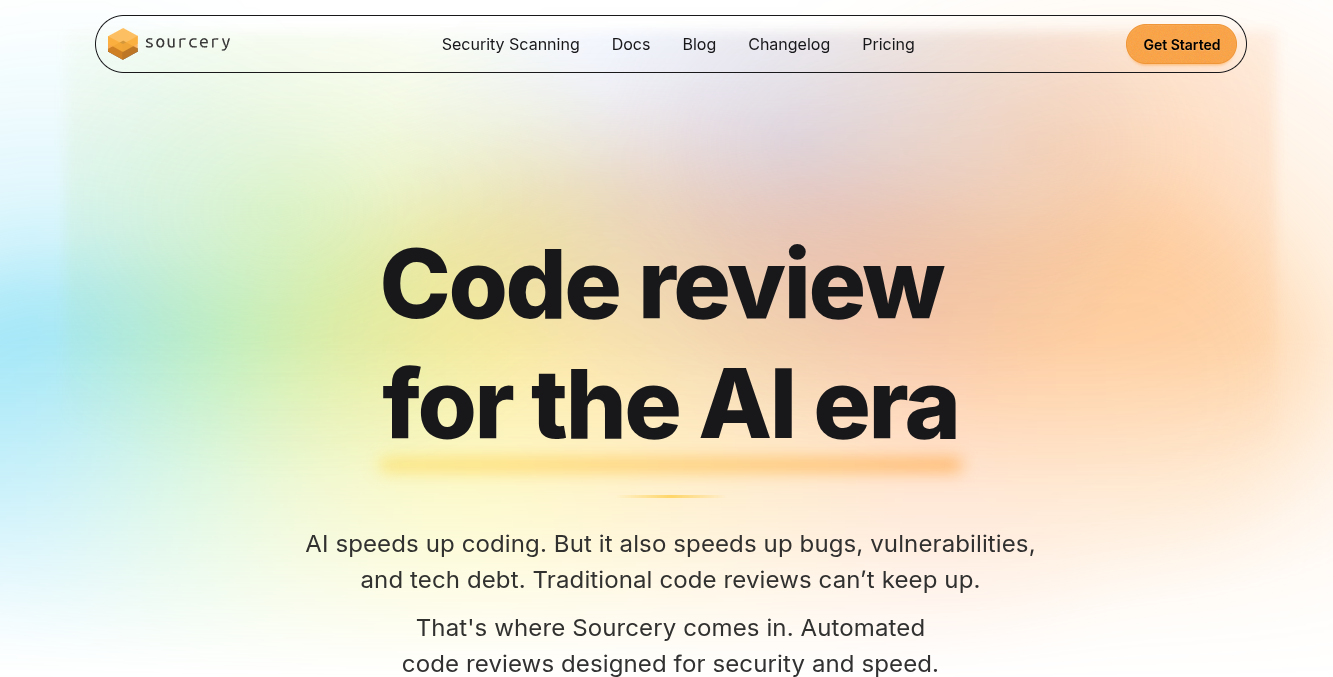
Sourcery website

Sourcery uses a hybrid approach for its code review. It uses LLMs for contextual tasks like generating pull request summaries and a rule-based static analysis engine for code quality.

Key Features:

  • Code Quality Metrics and Scoring: Provides metrics for functions, such as Quality Score, Complexity and Method Length.
  • Security Scanning (SAST): Actively scans for security vulnerabilities and secrets within the code.

Pros:

  • Automated Feedback
  • Strong Data Privacy

Cons:

  • Lack of Conversational Review
  • May struggle with complex logic
  • False positives
  • Advanced features (robust custom rules) are locked behind the paid tiers

Ideal Use Cases:

  • Individual Developers: As an automated "pair programmer" and learning tool that provides instant feedback to help improve coding skills and efficiency.

Pricing:

  • Open-source
  • Pro: $12 per developer/month
  • Team: $24 per developer/month
  • Enterprise: Custom Price

Gartner Rating:

No Gartner review.

Sourcery Reviews:

No independent user generated review.

9. Greptile

Greptile

Greptile website

Greptile is an AI code review tool designed to catch bugs, antipatterns, and mismatches that simpler linters or difference-only tools might miss.

Key Features:

  • AI Code Review: Automatically reviews pull requests (PRs) with full codebase context.
  • Learning Capability: Greptile can learn  from your feedback and adapt to your project.
  • Contextual Assistance: Developers can ask Greptile natural language questions about the codebase

Pros:

  • Actionable Feedback
  • Full Codebase Context

Cons:

  • Learning Curve
  • Depends on third-party models for LLM inference
  • Pricing can become expensive when scaling
  • Limited support for multi-repository architectures

Ideal Use Cases:

Pricing:

  • Cloud: $30 per active developer/month
  • Enterprise: Custom pricing

Gartner Rating:

No Gartner review.

Greptile Reviews:

No independent user generated review.

Not sure how you can improve your team's code quality? Check out our article on Code Quality: What Is It and Why It Matters

Comparing the Top 9 AI Code Review Tools

To help you compare the capabilities of the tools above, the table below summarizes each tool's supported features with their ideal use cases.

Tool Noise Reduction Git Integration Compliance Automation AI Insights Pricing
Aikido Security ✅ (up to 95%) ✅ Easy setup (GitHub, GitLab, ADO, CircleCI, and more) ✅ Full support (SOC 2, GDPR, ISO, and more) ✅ Advanced (Contextual, actionable) ✅ Predictable
Codacy ❌ High ✅ Supported ❌ Limited ❌ Basic ✅ Reasonable
DeepCode AI ❌ Moderate ✅ Supported ❌ Limited ✅ Moderate ❌ High
Tabnine ❌ N/A ✅ Limited ❌ None ✅ Completion ✅ Reasonable
CodeRabbit ✅ High ✅ Supported (GitHub, GL, ADO) ✅ Supported (SOC 2, GDPR) ✅ Advanced (Contextual, learning) ❌ High
CodeAnt AI ✅ High ✅ Supported (GitHub, GL, BB, ADO) ✅ Full support (SOC 2, ISO 27001) ✅ Advanced (AST-based context) ✅ Moderate
Qodo (formerly Codium) ❌ Moderate ✅ Supported ❌ Limited (Ultimate Plus tier only) ✅ Basic (Static analysis) ✅ Reasonable
Sourcery ✅ High ✅ Supported (GitHub, GL) ❌ None ✅ Advanced (Contextual feedback) ✅ Moderate
Greptile ✅ High ✅ Supported (GitHub, GL) ❌ None ✅ Advanced (Full codebase context) ❌ High

Choosing the Right AI Code Review Tool for Your Workflow  

AI-powered code review tools can accelerate development and reduce human errors, but only when they’re precise, developer-friendly, and integrate seamlessly with your existing workflows. Aikido Security delivers exactly that. 

Aikido Security offers the best-in-class AI code reviews for start-ups to enterprises, coming out on top in technical comparisons and POC head-to-heads in each of these categories. 

No more juggling multiple tools, drowning in false positives, or spending hours on manual reviews, just cleaner, faster, and more reliable code.

Want faster reviews and cleaner code? Start your free trial or book a demo with Aikido Security today.

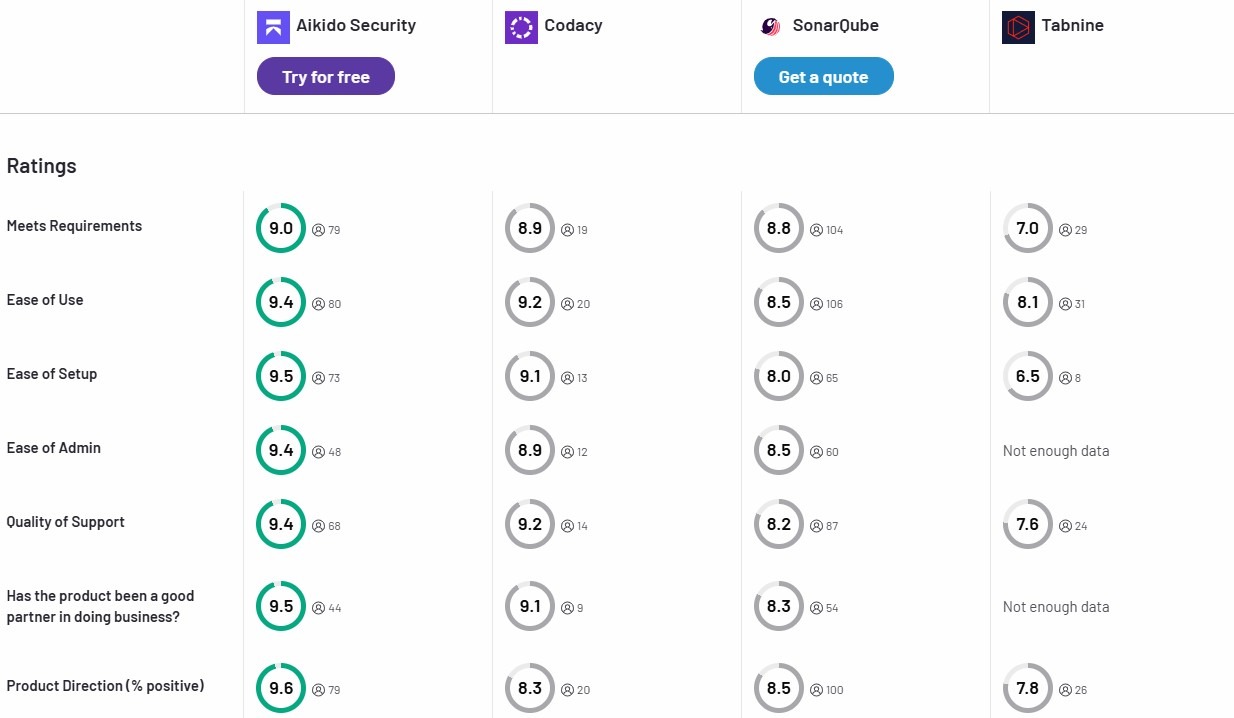
Aikido Comparison Rating Scores

FAQ

How accurate is Aikido Security’s AI review?

Aikido prioritizes signal over noise. It filters out over 90% of false positives before alerts reach developers. This reduces alert fatigue and keeps feedback actionable.

Can it suggest or apply fixes automatically?

Yes. Aikido Security provides AI-generated fixes and one-click pull request patches for supported languages and vulnerabilities.

Does it only scan full repositories, or can it scan just PRs?

It scans both. By default, Aikido Security run on pull requests to give feedback early, but you can also configure full repository scans or scheduled pipeline checks.

Is there support for monorepos or large codebases?

Yes. Aikido Security is built for scaling teams and monorepos. It can scan multi-service architectures and high-commit environments without slowing workflows.

Can we customize the rules or severity levels?

Yes. You can define internal coding standards, modify severity levels, suppress specific rules, or set quality/security gates before merges.

Does Aikido Security support compliance requirements like ISO, SOC 2, HIPAA, or GDPR?

Yes. It maps findings to major compliance frameworks and helps maintain audit-ready records for regulated industries like healthcare and finance

You Might Also Like: