惯性聚合 高效追踪和阅读你感兴趣的博客、新闻、科技资讯
阅读原文 在惯性聚合中打开

推荐订阅源

月光博客
月光博客
Cyberwarzone
Cyberwarzone
L
LINUX DO - 最新话题
N
News and Events Feed by Topic
T
Troy Hunt's Blog
Help Net Security
Help Net Security
S
Security @ Cisco Blogs
Google DeepMind News
Security Archives - TechRepublic
M
MIT News - Artificial intelligence
G
Google Developers Blog
Cyber Security Advisories - MS-ISAC
V2EX - 技术
V2EX - 技术
Y
Y Combinator Blog
D
Darknet – Hacking Tools, Hacker News & Cyber Security
大猫的无限游戏
大猫的无限游戏
OSCHINA 社区最新新闻
OSCHINA 社区最新新闻
Microsoft Security Blog
Cisco Talos Blog
Cisco Talos Blog
T
Threatpost
Recent Commits to openclaw:main
S
SegmentFault 最新的问题
I
InfoQ
H
Hacker News: Front Page
D
Docker
Scott Helme
Scott Helme
Threat Intelligence Blog | Flashpoint
Blog — PlanetScale
Blog — PlanetScale
人人都是产品经理
人人都是产品经理
博客园 - 叶小钗
freeCodeCamp Programming Tutorials: Python, JavaScript, Git & More
N
Netflix TechBlog - Medium
AWS News Blog
AWS News Blog
Know Your Adversary
Know Your Adversary
博客园 - 【当耐特】
T
Tor Project blog
U
Unit 42
H
Heimdal Security Blog
Microsoft Azure Blog
K
KPMG report finds enterprise disconnect between AI and its ROI | CIO
P
Privacy & Cybersecurity Law Blog
PCI Perspectives
PCI Perspectives
美团技术团队
O
OpenAI News
T
Tailwind CSS Blog
H
Hackread – Cybersecurity News, Data Breaches, AI and More
B
Blog
GbyAI
GbyAI
cs.CL updates on arXiv.org
MyScale Blog
MyScale Blog

Step Security Blog

Announcing Dependabot Configuration Enhancements: Cooldown and Group Support - StepSecurity Securing Vibe Coding and AI Coding Agents: An End-to-End Approach with StepSecurity - StepSecurity Introducing StepSecurity Dev Machine Guard: Protecting Developer Machines from Supply Chain Attacks - StepSecurity Top 2024 Predictions for CI/CD Security - StepSecurity Dev Machine Guard Is Now Open Source: See What's Really Running on Your Developer Machine - StepSecurity Datadog's DevSecOps 2026 Report Validates What We've Been Building - StepSecurity hackerbot-claw: An AI-Powered Bot Actively Exploiting GitHub Actions - Microsoft, DataDog, and CNCF Projects Hit So Far - StepSecurity Cline Supply Chain Attack Detected: cline@2.3.0 Silently Installs OpenClaw - StepSecurity StepSecurity’s Unified Protection Across the SDLC Infrastructure Threat Framework (SITF) - StepSecurity @velora-dex/sdk Compromised on npm: Malicious Version Drops macOS Backdoor via launchctl Persistence - StepSecurity axios Compromised on npm - Malicious Versions Drop Remote Access Trojan - StepSecurity Behind the Scenes: How StepSecurity Detected and Helped Remediate the Largest npm Supply Chain Attack - StepSecurity 10 Layers Deep: How StepSecurity Stops TeamPCP's Trivy Supply Chain Attack on GitHub Actions - StepSecurity Malicious IoliteLabs VSCode Extensions Target Solidity Developers on Windows, macOS, and Linux with Backdoor - StepSecurity TeamPCP Plants WAV Steganography Credential Stealer in telnyx PyPI Package - StepSecurity litellm: Credential Stealer Hidden in PyPI Wheel - StepSecurity Checkmarx KICS GitHub Action Compromised: Malware Injected in All Git Tags - StepSecurity CanisterWorm: How a Self-Propagating npm Worm Is Spreading Backdoors Across the Ecosystem - StepSecurity Trivy Compromised a Second Time - Malicious v0.69.4 Release, aquasecurity/setup-trivy, aquasecurity/trivy-action GitHub Actions Compromised - StepSecurity bittensor-wallet 4.0.2 Compromised on PyPI - Backdoor Exfiltrates Private Keys - StepSecurity Malicious npm Releases Found in Popular React Native Packages - 130K+ Monthly Downloads Compromised - StepSecurity Malicious Polymarket Bot Hides in Hijacked dev-protocol GitHub Org and Steals Wallet Keys - StepSecurity ForceMemo: Hundreds of GitHub Python Repos Compromised via Account Takeover and Force-Push - StepSecurity xygeni-action Compromised: C2 Reverse Shell Backdoor Injected via Tag Poisoning - StepSecurity kubernetes-el Compromised: How a Pwn Request Exploited a Popular Emacs Package - StepSecurity How StepSecurity Caught a Release Storm in Microsoft’s @types Packages - StepSecurity Harden Runner Now Supports Windows and macOS GitHub Actions Runners - StepSecurity 20+ Popular NPM Packages Compromised (Chalk, Debug, Strip-ANSI, Color-Convert, Wrap-ANSI...) - StepSecurity 2024 in Review: The Evolution of CI/CD Security & What's Next - StepSecurity How to Use Docker in Actions Runner Controller (ARC) Runners Securely - StepSecurity Celebrating 1000 Repositories Secured with Harden Runner: A Journey of Growth and Collaboration - StepSecurity StepSecurity Detects Early Supply Chain Risk Signals in kilocode npm - StepSecurity Another npm Supply Chain Attack: The 'is' Package Compromise - StepSecurity anthropics/claude-code-action Security: How to Secure Claude Code in GitHub Actions with Harden-Runner - StepSecurity Harden-Runner detection: tj-actions/changed-files action is compromised - StepSecurity StepSecurity's Catalog of Fixes - StepSecurity Orchestrating Security: StepSecurity's Impact on 400+ Repositories and Future Plans - StepSecurity Announcing Anomalous Outbound Call Detection Using Machine Learning - StepSecurity Announcing GitHub Actions Advisor and StepSecurity Maintained Actions - StepSecurity Analysis of Backdoored XZ Utils Build Process with Harden-Runner - StepSecurity Announcing General Availability of Harden Runner - StepSecurity Milestone Achieved: 2500+ Public Repositories Secured with Harden-Runner - StepSecurity Build secretless CI/CD pipelines using wait-for-secrets - StepSecurity Introducing Apps & PATs: Centralized Visibility for GitHub Apps and Personal Access Tokens - StepSecurity CVE-2026-22709: Critical Sandbox Escape Vulnerability in vm2 - StepSecurity StepSecurity Now Supports Dark Mode - StepSecurity 2025 in Review: The Evolution of Supply Chain Security & What's Next - StepSecurity Bake Harden-Runner Into GitHub's Custom Runner Images for Organization-Wide CI/CD Security - StepSecurity StepSecurity Is Now Available on Azure Marketplace - StepSecurity Critical Remote Code Execution Vulnerabilities Discovered in React Server Components and Next.js - StepSecurity How Harden Runner Detected the Sha1-Hulud Supply Chain Attack in CNCF's Backstage Repository - StepSecurity Sha1-Hulud: The Second Coming - Zapier, ENS Domains, and Other Prominent NPM Packages Compromised - StepSecurity Supply Chain Security Alert: eslint-config-prettier Package Shows Signs of Compromise - StepSecurity 9,000 Open-Source Projects Now Secured by Harden-Runner - StepSecurity Shai-Hulud: Self-Replicating Worm Compromises 500+ NPM Packages - StepSecurity Introducing npm Package Search: Find Where Any Package Was Introduced Across Your GitHub Organizations - StepSecurity StepSecurity Is Sponsoring GitHub Universe 2025 - StepSecurity s1ngularity: Popular Nx Build System Package Compromised with Data-Stealing Malware - StepSecurity Introducing StepSecurity Threat Intelligence: Real-Time Supply Chain Attack Alerts for Your SIEM - StepSecurity 8,000 Strong: Harden-Runner's Growing Impact on CI/CD Security - StepSecurity Securing Google Gemini in GitHub Actions with Harden-Runner - StepSecurity GhostAction Campaign: Over 3,000 Secrets Stolen Through Malicious GitHub Workflows - StepSecurity Introducing the NPM Package Cooldown Check - StepSecurity Securing GitHub Copilot in GitHub Actions with Harden-Runner - StepSecurity Calculate Your CI/CD Security ROI with StepSecurity's New ROI Calculator - StepSecurity How StepSecurity Harden Runner Detected Unexpected Microsoft Defender Installation on GitHub-hosted Ubuntu Runners - StepSecurity StepSecurity Harden Runner: Detect source code tampering during the build process - StepSecurity Suspicious Tag Movement in AWS’s GitHub Action: What Happened and Why It Matters - StepSecurity When 'Changed Files' Changed Everything: Our Black Hat 2025 Presentation on the tj-actions Supply Chain Breach - StepSecurity Lessons from AWS CodeBuild’s Memory-Dump Incident (CVE-2025-8217) - StepSecurity Supply Chain Security Alert: num2words PyPI Package Shows Signs of Compromise - StepSecurity When AI Meets CI/CD: Coding Agents in GitHub Actions Pose Hidden Security Risks - StepSecurity The GitHub Warning Everyone Ignores: 'This Commit Does Not Belong to Any Branch' - StepSecurity 8 GitHub Actions Secrets Management Best Practices to Follow - StepSecurity reviewdog GitHub Actions are compromised - StepSecurity 7,000 Open-Source Projects Now Secured by Harden-Runner - StepSecurity Replace Third-Party Actions with StepSecurity Maintained Actions via Automated Pull Requests - StepSecurity StepSecurity Is Now Available on AWS Marketplace - StepSecurity Introducing StepSecurity Artifact Monitor: Detect Unauthorized Software Releases in minutes, not months - StepSecurity Introducing Workflow Run Policies: Guardrails for Blocking Non-Compliant GitHub Actions Runs - StepSecurity Harden-Runner Detects New Traffic to release-assets.githubusercontent.com Across Multiple Customers - StepSecurity Grafana GitHub Actions Security Incident - StepSecurity Export Harden-Runner Security Insights and Detections to Amazon S3 - StepSecurity Evolving Harden-Runner’s disable-sudo Policy for Improved Runner Security - StepSecurity Announcing Policy-Driven Automated Pull Requests for CI/CD Misconfiguration Remediation - StepSecurity Announcing StepSecurity’s Integration with RunsOn: Secure and Optimized CI/CD Pipelines - StepSecurity Secure Repo Just Got Better: New Features for GitHub Actions Security Best Practices - StepSecurity Why Compliance Auditors Are Looking at Your CI/CD Runners - And How to Prepare - StepSecurity Harden-Runner Flags Anomalous Outbound Call, Leading to Docker Documentation Update - StepSecurity StepSecurity Harden-Runner Now Secures GitHub Actions Workflows for Over 5,000 Open Source Projects - StepSecurity GitHub Actions Pwn Request Vulnerability - StepSecurity Prevent Ultralytics Style CI/CD Security Attacks with Network Security Controls - StepSecurity PyTorch Supply Chain Compromise - StepSecurity Unified Network Egress View: Centralize GitHub Actions Network Destinations for Your Enterprise - StepSecurity Uniting Developers and Security: Celebrating the Success of 500+ Open Source Projects Using StepSecurity's Orchestration Platform - StepSecurity 5 Effective Third-Party GitHub Actions Governance Best Practices - StepSecurity StepSecurity Recognized Among CRN’s "10 Hottest DevOps Startups Of 2024" - StepSecurity Streamline Your GitHub Actions Workflows with StepSecurity’s Latest Feature - StepSecurity StepSecurity Steps Up the Security Game with SOC 2 Type 2 Compliance - StepSecurity StepSecurity's Alignment with CISA's CI/CD Security Guidance - StepSecurity
10,000 Open-Source Projects Now Secured by Harden-Runner Community-Tier: A Milestone Three Years in the Making - StepSecurity
2026-02-15 · via Step Security Blog

At StepSecurity, we set out to solve a fundamental problem

CI/CD pipelines had become the highest-value target in the software supply chain, yet they operated with virtually no runtime security.

Today, we're celebrating a milestone that validates this mission.

Harden-Runner now protects over 10,000 open-source repositories. Harden-Runner is also used by companies across open source, security, and enterprise environments. A public list of organizations using Harden-Runner is available in our documentation

What Harden-Runner Actually Does

Harden-Runner is essentially an EDR solution for CI/CD runners.

Just as traditional endpoint detection and response (EDR) protects laptops and servers by monitoring activity, detecting threats, and enforcing protections, Harden-Runner extends the same security model to CI/CD runners. It continuously observes workflows, inspects runtime behavior, and blocks malicious activity before it can cause damage.

As strong believers in open-source, we also offer a free community tier for open-source projects, making it easier for maintainers to secure their CI/CD pipelines without added cost.

This number reflects a fundamental shift in how organizations approach pipeline security, moving from reactive incident response to continuous, proactive protection. It represents three years of relentless focus on making CI/CD secure by default

The Journey: From Zero to 10,000

When we launched Harden-Runner in March 2022, the CI/CD security landscape was vastly different. Most organizations treated their build pipelines as trusted environments—a dangerous assumption that attackers had already begun exploiting. We built Harden-Runner to change that assumption, bringing endpoint-style runtime security to CI/CD runners.

The growth trajectory tells the story:
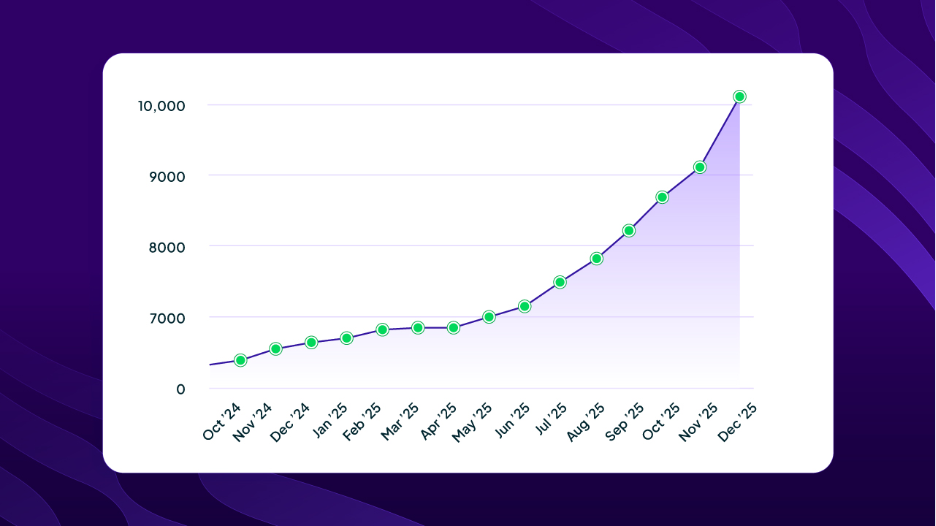
  • March 2022: Harden-Runner launches with core network monitoring and egress control
  • End of 2024: 5,000 open-source repositories protected
  • End of 2025: 10,000 repositories protected. We doubled our adoption in a single year

That acceleration reflects a critical industry awakening. Organizations now recognize that securing the build process is just as important as securing the application itself. With over 13 million jobs monitored weekly, we're seeing this shift play out across individual developers, open-source projects, and Fortune 500 enterprises.

Real-World Impact: When Detection Matters Most

Harden-Runner's value isn't just measured in features; it's measured in threats detected and attacks prevented. Over the past three years, we've caught supply chain attacks that others missed, often becoming the first line of defense when trusted components turned malicious.

The tj-actions Compromise: Detection Before Public Disclosure

In one of our most significant detections, Harden-Runner flagged suspicious behavior in the widely-used tj-actions/changed-files Action before any public disclosure. The Action had been compromised through a sophisticated supply chain attack, and malicious code was executing in thousands of workflows.

Harden-Runner detected anomalous network traffic patterns that didn't match established baselines. This early warning allowed affected organizations to respond immediately, preventing potential credential theft and code tampering. The incident demonstrated why runtime monitoring is critical: static analysis can't catch what happens when trusted dependencies turn malicious at runtime.

Shai Hulud: Catching a Novel Attack Pattern

When the Shai Hulud supply chain attack targeted CNCF's Backstage repository, Harden-Runner was there to catch it. This attack represented a new category of threat, one that traditional security tools weren't designed to detect. Our runtime monitoring identified the attack's signature behavior, providing immediate visibility into the compromise.

s1ngularity: Nx Package Compromise and AI CLI Weaponization

In August 2025, the popular Nx build system was compromised in an incident dubbed s1ngularity. Malicious versions were published to npm and delivered a data-stealing payload via a post-install script that harvested developer secrets like GitHub and npm tokens, SSH keys, environment variables, and wallet data.

The malware also attempted to abuse local AI CLI tools such as Claude, Gemini, and q to help with reconnaissance and data collection, marking a new escalation in supply chain attacker tradecraft.  

Harden-Runner successfully flagged the activity as anomalous during runtime analysis. The compromised install path made unexpected outbound calls to api.github.com during npm install, which is not normal package-install behavior. The process chain also revealed the malicious post-install script spawning credential theft actions like gh auth token, which Harden-Runner surfaced clearly in workflow telemetry.  

Flank: Detecting a Real Supply Chain Attack

When an independent security researcher demonstrated a supply chain attack on Flank, Google's open-source mobile testing project, Harden-Runner detected it in real time. The researcher exploited a vulnerable GitHub Actions workflow to gain access to an elevated GITHUB_TOKEN with write permissions to the repository. They crafted an innovative exploit that attempted to blend in with normal traffic patterns, downloading and executing code that exfiltrated the token by reading runner worker memory.

Harden-Runner had been monitoring Flank's workflows since December 2022, building baselines of normal network behavior. When the exploit made an outbound call to raw.githubusercontent.com, a domain that had never appeared in previous runs, Harden-Runner immediately flagged it as anomalous. The detection happened despite the researcher's efforts to circumvent monitoring by using familiar GitHub endpoints.

In the researcher's own words: "Ran into StepSecurity Harden-Runner while executing a PoC against a Google OSS repository and it picked up an anomalous curl to raw.githubusercontent.com despite some initial effort I made to blend in. The maintainers had Harden Runner in audit mode, but that telemetry could very well be the difference between a supply chain attack and successful incident response for an organization that actually alerts on it."

Had this been a real attack instead of ethical security research, the compromised token could have been used to tamper with Flank's releases, potentially affecting all downstream users. Harden-Runner's detection provided the visibility needed to identify and respond to the threat in real time.

Microsoft Azure Karpenter Provider: Real-Time Detection in a High-Trust Project

Harden-Runner also detected a real-time CI/CD supply chain attack in Microsoft’s open-source Azure Karpenter Provider project. An independent security researcher exploited a misconfigured GitHub Actions workflow that allowed untrusted code to run with elevated permissions, resulting in access to a GITHUB_TOKEN with id-token: write scope. In a real attack, this token could have been used to access cloud resources tied to the workflow.

Because Harden-Runner had been deployed across the project’s workflows, the exploit was detected immediately through anomalous outbound network activity. The malicious run attempted to fetch code from a GitHub gist and exfiltrate credentials to an external domain, both of which deviated from the established baseline of normal workflow behavior. StepSecurity reported the issue to Microsoft’s Security Response Center within an hour, and the disclosure was formally acknowledged by Microsoft.

Building the Platform: Three Years of Innovation

Reaching 10,000 protected repositories required building a platform that adapts to how teams actually work. Since launch, we've focused on making Harden-Runner powerful enough for enterprise environments while remaining simple enough for individual developers.

2023: Expanding Beyond GitHub-Hosted Runners

  • Kubernetes-Based Self-Hosted Runners (March 29, 2023): We launched support for Kubernetes-based GitHub Actions runners using Actions Runner Controller (ARC). This brought Harden-Runner's runtime security to organizations running ephemeral runners in their own infrastructure, providing the same visibility and control regardless of where workflows execute.  
  • Policy Store (April 4, 2023): Managing security policies through workflow files created friction. Every policy change required modifying potentially hundreds of workflows. The Policy Store changed this by allowing teams to define and enforce policies centrally.  
  • Runtime Detections UI (June 6, 2023): We introduced a dedicated UI for investigating runtime detections, making it easier for security teams to triage alerts, understand attack timelines, and respond to incidents. The UI shows exactly what happened during a workflow run: which processes executed, what network calls were made, and which files were accessed.  
  • Self-Hosted VM Runners (October 5, 2023): Organizations running self-hosted virtual machine runners gained full Harden-Runner support. Whether you're running on AWS, Azure, GCP, or on-premises infrastructure, Harden-Runner provides consistent runtime security across all environments.

2024: Enhanced Visibility and Control

  • HTTPS Outbound Request Monitoring (February 20, 2024): We launched support for monitoring outbound HTTPS requests from GitHub-hosted and self-hosted VM runners. This capability provides deep visibility into encrypted traffic, allowing teams to see not just which domains workflows connect to, but the specific API endpoints and methods used. HTTPS monitoring enables more precise security policies and helps detect sophisticated exfiltration attempts that try to hide in legitimate traffic.  
  • Unified Network Egress Management (September 19, 2024): We introduced unified network egress insights and outbound endpoint management for GitHub Organizations and Actions Runner Controller (ARC) clusters. This feature provides a centralized view of all network activity across your entire GitHub organization or ARC cluster, making it easier to identify patterns, set organization-wide policies, and detect anomalies that span multiple repositories or runners.

2025: Platform Expansion and Intelligence

  • Amazon S3 Integration (April 23, 2025): We launched direct export of Harden-Runner insights and detections to Amazon S3, enabling integration with existing security information and event management (SIEM) platforms. Security teams can now incorporate CI/CD runtime data into their broader security operations workflows.  
  • GitHub-Hosted Custom Runner Images (December 16, 2025): GitHub's introduction of custom runner images created a new opportunity: bake Harden-Runner directly into your infrastructure. Instead of adding Harden-Runner to each workflow, you can now embed it in your custom image. Every workflow that uses the image automatically gets runtime protection. No workflow changes required. This dramatically reduces configuration overhead while ensuring comprehensive coverage.

What the Community Says

The 10,000 repositories protected by Harden-Runner represent thousands of individual decisions to prioritize runtime security. Here's what developers and security engineers are saying:

“Before StepSecurity, detecting the origin of a suspicious outbound network connection was challenging with traditional CNAPPs or IDS solutions, as we’d only see a general alert. StepSecurity gives us complete visibility into which specific Action triggered a connection and even lets us drill down into host processes tied to that Action. Now, we have a clear and actionable picture of every network connection our runners make, and we can respond with confidence”

--Jean-Philippe Lachance, Staff Security Specialist, R&D, Coveo

“It’s easy to get started with GitHub Actions, but using it securely has historically required manual effort and configuration, which isn’t as straightforward. StepSecurity solves this by automating security best practices for workflows, as well as through their Harden-Runner action, which provides protection against exfiltration and source code tampering throughout the lifecycle of a workflow. Leveraging the Harden-Runner action is both painless and an absolute must for any project.”

--Evan Gibler, Staff Security Engineer, Chainguard  

"Harden-Runner strikes an elegant balance between ease-of-use, maintainability, and mitigation that I intend to apply to all of my 300+ npm packages. I look forward to the tool's improvement over time."

--Jordan Harband, Open Source Maintainer

"Harden-Runner is a Must-Have GitHub Action to Prevent Supply Chain Attacks. StepSecurity is the one-stop-shop to harden your GitHub Actions and ensure peace of mind."

--Wenqi Glantz, Software Architect

"Harden-runner is an amazing project by StepSecurity! You can easily integrate it in your GitHub Actions and it will block egress traffic and ensure your code isn't overwritten at runtime, to protect against malicious or compromised dependencies."

--Christophe Tafani-Dereeper, Cloud Security Engineer

"Since enabling Harden Runner in our projects, we have much higher confidence and observability into what our build process is doing. This is just one step in a much broader piece of work we are doing to increase the trust in our supply chain security."

--Cam Parry, Senior Site Reliability Engineer, Kapiche

The Harden-Runner Community Tier is trusted by some of the most widely used open-source projects and ecosystems in the world. These projects sit at the core of modern software development and infrastructure, which makes their CI/CD pipelines especially attractive targets for supply chain attacks.

Today, Harden-Runner helps protect workflows across projects and organizations including:
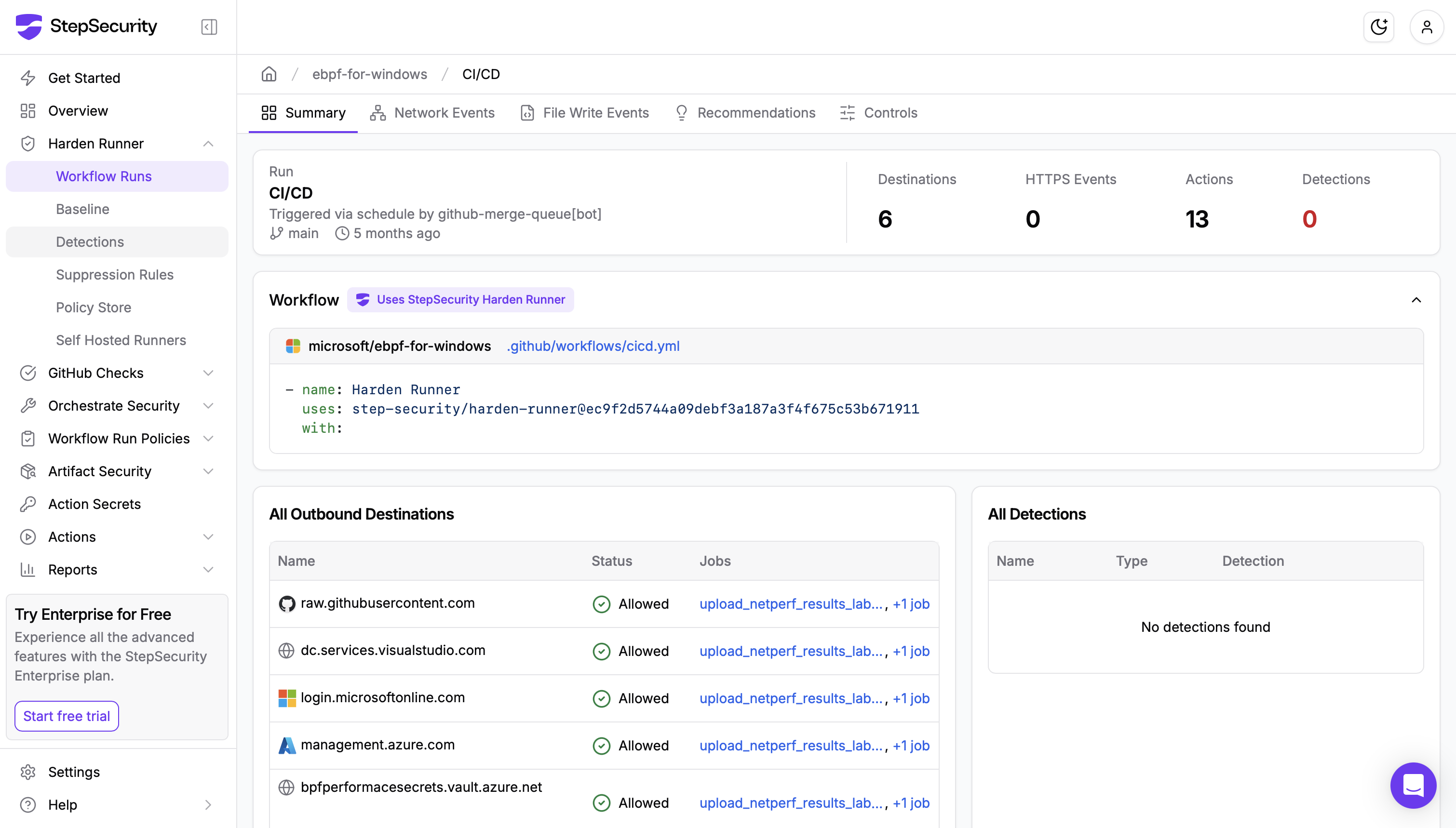
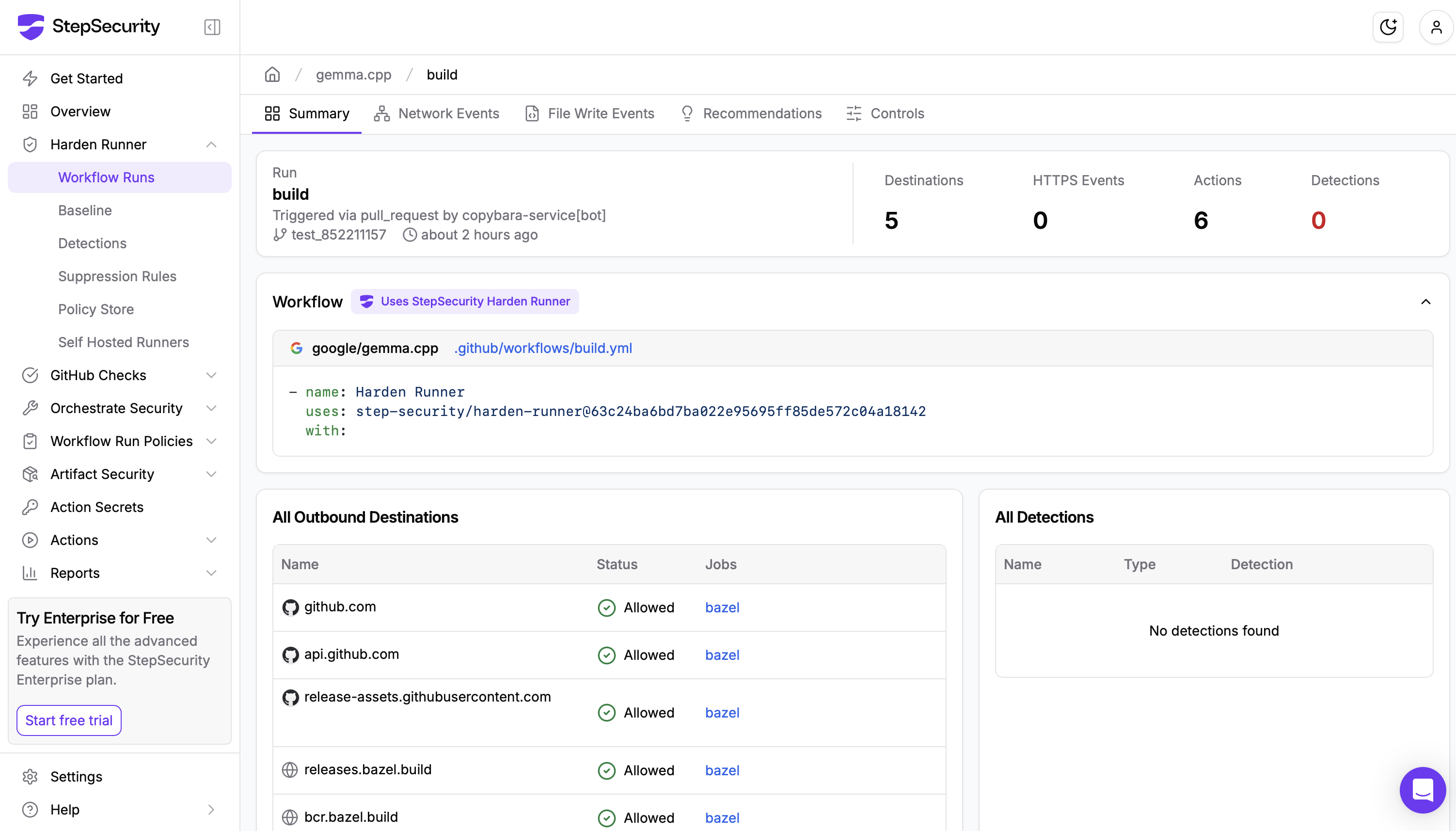
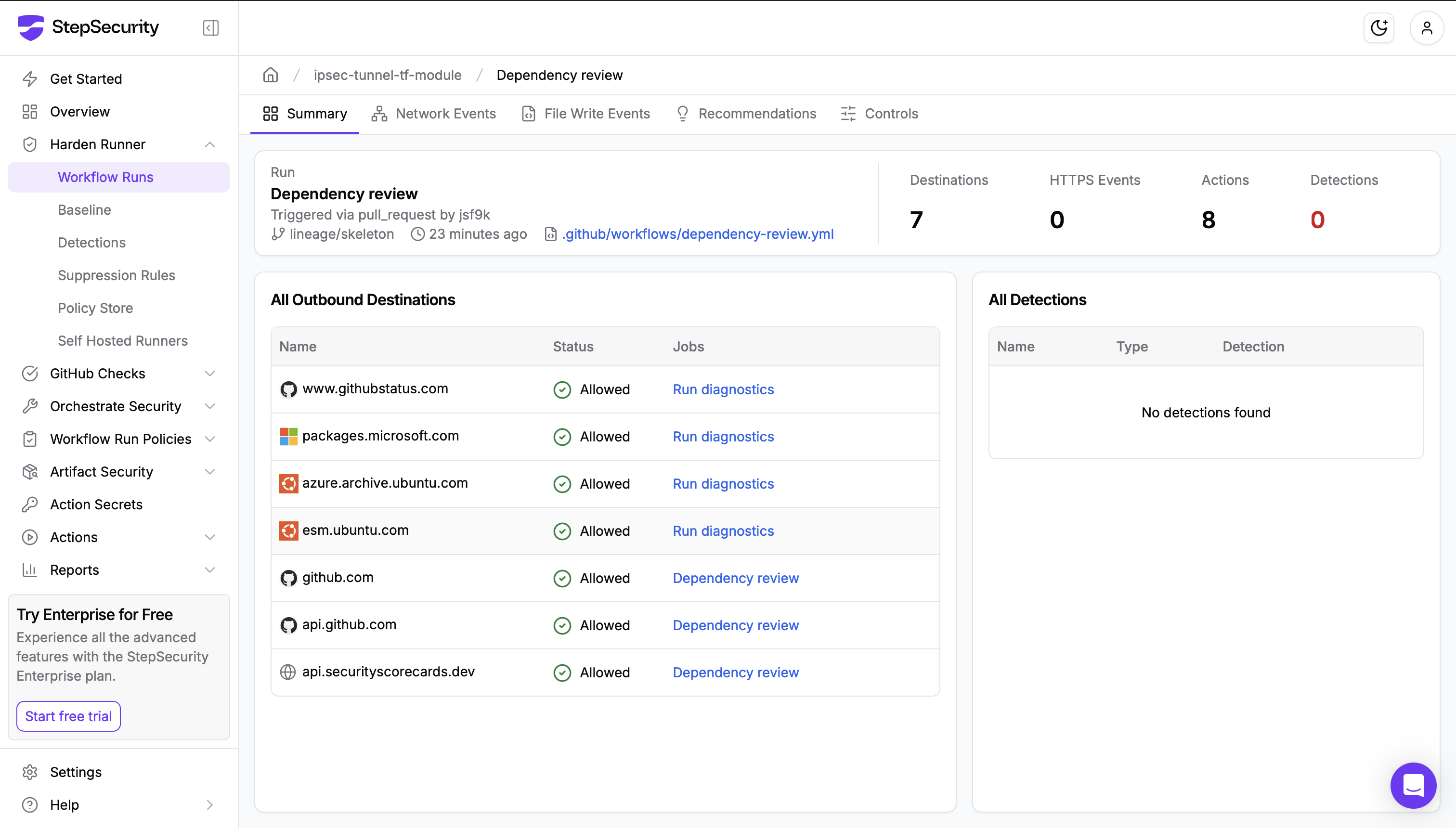
  • Microsoft – Securing CI/CD pipelines that support widely used developer tools and cloud services.

Microsoft Run
  • Google – Protecting open-source workflows that underpin large-scale infrastructure and developer ecosystems.

Google Run
  • CISA (Cybersecurity and Infrastructure Security Agency) – Supporting secure build practices in projects tied to critical infrastructure and national security.

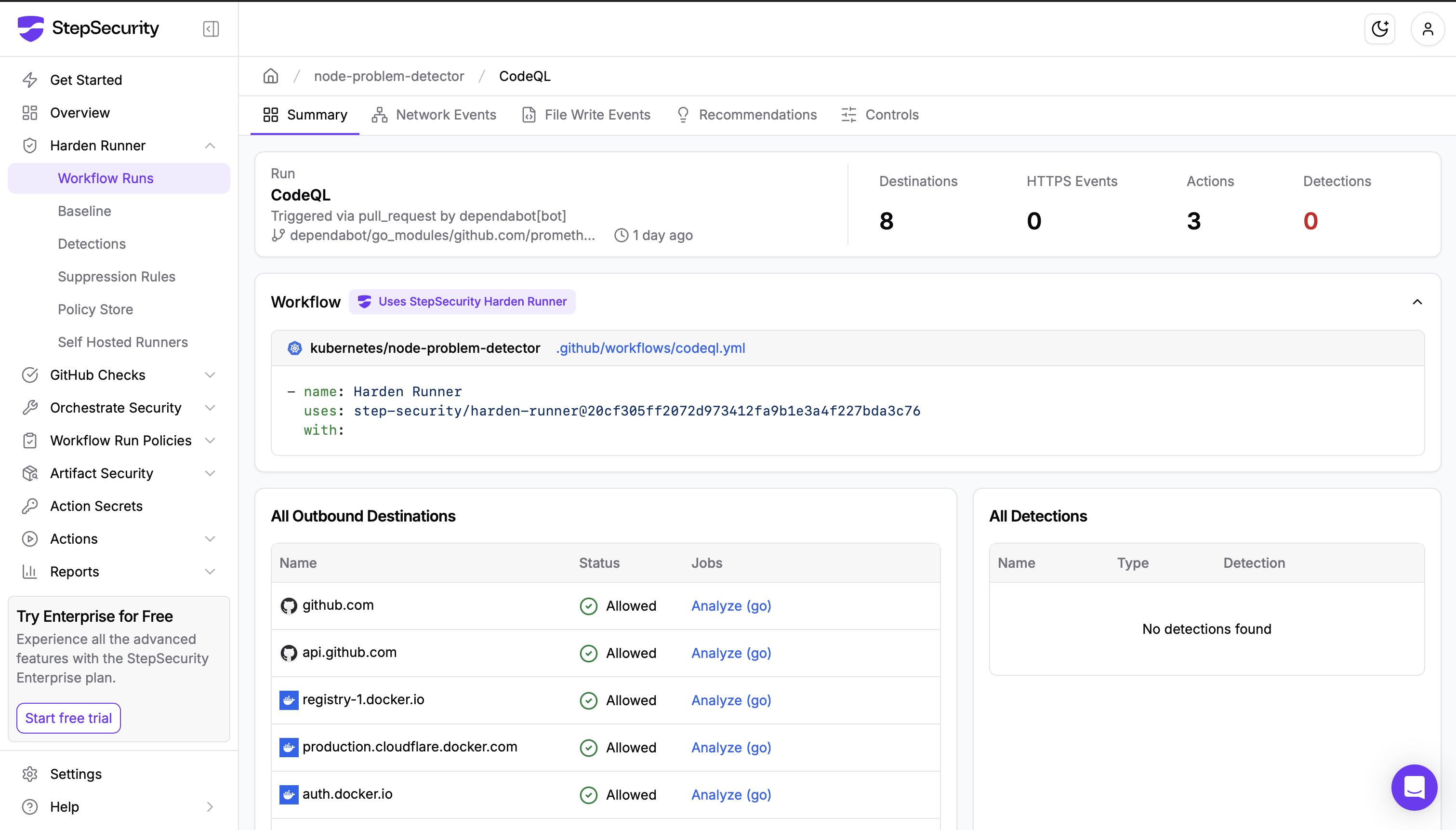
  • Kubernetes – Helping safeguard the CI/CD pipelines behind one of the most foundational cloud-native platforms.

Kubernetes Run

Many more projects use Harden-Runner across the open-source ecosystem. You can see more here

Looking Ahead: The Next 10,000

Reaching 10,000 protected repositories marks a significant milestone, but it's just the beginning. The threats facing CI/CD pipelines continue to evolve, and so must our defenses. We're focused on three key areas:

  • Platform Expansion: We're actively developing Harden-Runner support for macOS and Windows runners. These platforms present unique security challenges, and we're working with design partners to ensure we deliver the same level of visibility and control that Linux users expect.  
  • Deeper Intelligence: As our detection data grows, we're building more sophisticated baseline learning and anomaly detection. The goal is to catch threats earlier while reducing false positives, providing security teams with the high-fidelity signals they need to respond effectively.  
  • Ecosystem Integration: Security doesn't happen in isolation. We're expanding integrations with security platforms, making it easier for teams to incorporate CI/CD runtime data into their existing security operations.

Join the Next Wave

Whether you're protecting a solo project or enterprise infrastructure, Harden-Runner delivers the runtime visibility and control that modern CI/CD demands. Our Community Tier remains free for all public repositories, making it easy to get started.

Ready to secure your workflows?

Use our Secure Workflow tool to automatically integrate Harden-Runner into your GitHub Actions with minimal configuration. Join the 10,000+ repositories that have made runtime security a default part of their development process.

Together, we're building a future where CI/CD pipelines are secure by default, not as an afterthought, but as a fundamental property of how we build software.