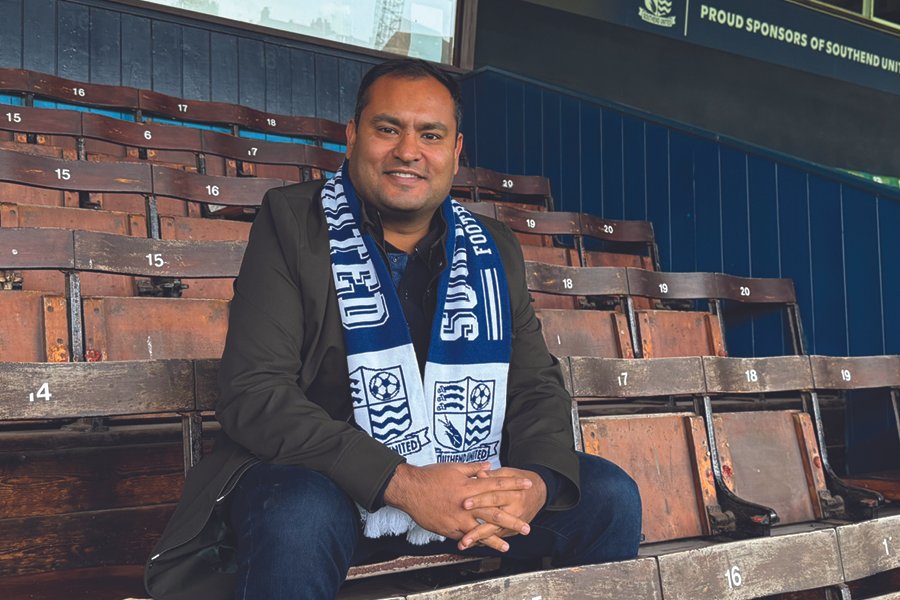
Early in his career at the Homewood Children’s Village, Walter Lewis (SCS 2011) learned something interesting about the high school students who participated in their afterschool program. Most teenagers who had 100 hours or more of engagement raised their grades by an entire point within a year and continued to improve beyond that. Those whose grades didn’t improve at first, but were putting in the time, showed acquisitions of soft skills and changes in their disposition toward school and life. Both of those shifts led to later academic improvement.
Lewis realized while digging deeper into this data that the successes surrounding 100 hours of engagement weren’t about participating in specific activities but were about devoting the time to form meaningful relationships. In those 100 hours, a young person could see “someone cares about me, someone wants me to succeed, someone believes in me,” said Lewis.
It was a feeling Lewis knew well from the adults who invested in him as a teenager and young adult in Philadelphia.
The Village, a nonprofit that serves children and their families in Pittsburgh’s Homewood neighbor- hood, has long operated on the importance of communities. “We’ve got this falsehood in our culture that says we’re supposed to do everything by ourselves,” said Lewis. “It’s just not real. It’s not how people really operate and not how people really succeed.”
Seeing that communal ethos play out in quantifiable ways with teenage engagement, “helped shape the way that we deliver programs and deliver interventions,” said Lewis, now the Village’s president and chief executive officer.
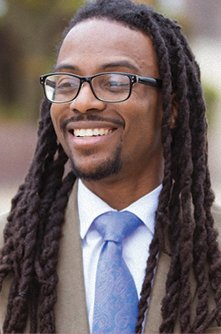
Walter Lewis (SCS 2011), President and CEO of Homewood Children’s Village
While his work in human services may not look much like computer science, Lewis’s impulse to investigate the data from the Village’s afterschool program came directly from earning his master’s degree in computational biology from Carnegie Mellon University. Like other SCS alumni, Lewis' career showcases the versatility of his education, allowing him to apply concepts he's learned to a field that suits his passion.
“As a researcher, it was about learning. So, when I do this work, I’m always trying to learn.” Lewis wants to know why an intervention is successful, not just that it is. “If you don’t understand why it worked in the first place, it’s going to be hard for you to make the adjustments while preserving what is working already.”
Solving Cellular-Level Problems With Machine Learning
Less than two miles from the Homewood Children’s Village, Sarah Fisher (SCS 2025) sits at a counter in her favorite coffee shop. She’s one day away from the end of a three-week sprint to build an entirely new modeling engine for Revilico, an eight-person startup dedicated to creating virtual experimentation platforms. Her work allows chemical researchers to tweak their approaches to protein folding on a massive scale.
Fisher has windows open on her laptop for coding, connecting with her colleagues on the West Coast
and the company’s user-facing portal. The portal shows a 3D image of a protein sequence, a clump of green spirals like a bow on a package. An orange compound, which, from one angle, looks like a tiny pair of scissors, binds to the protein. Each click on the screen reveals a new combination of protein sequences and bonding chemical compounds.
Three weeks to build something new is unusually fast, but Fisher was ready for the challenge. To help herself think through a different approach to a model, she filled a notebook page with formulas and sketches of protein bonds.
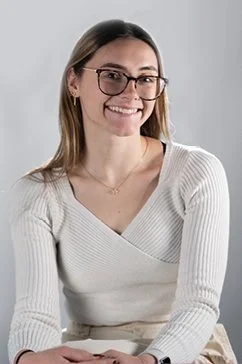
“We can cure many more diseases if we’re able to automate this process.”
— Sarah Fisher (SCS 2025)
The Revilico team completed the engine earlier in the week and the next task is running validation to ensure the product’s reliability before they release it to the public. When they do, scientists will be able to use the engine to run computational chemical and biological simulations to test combinations of chemical compounds and targeted proteins. Tiny alterations and iterations made possible through Fisher’s work reduce the time and cost of otherwise lengthy and expensive wet lab experiments.
“Traditionally, a bunch of super smart people sit around and talk about ways that you can alter these chemicals,” said Fisher. “Then they think really hard about it and then they try it. If it doesn’t work, they have to start all over again.”
As that generation of scientists reaches retirement, the next generation, even though they have less research experience, have the talent, new skills and tools necessary to take advantage of the sweeping advancements in machine learning. Completing months’ or years’ worth of finding and testing potential chemical iterations can now happen in an instant. The math behind the algorithms always existed, of course, but it wasn’t possible to function at this scale, where a 24-hour turnaround for complex, heavy-computing-power problems is considered “a really long time,” said Fisher. “We can cure many more diseases if we’re able to automate this process.”
Zhen (Jack) Liu (MCS 2024) is part of this new generation of scientists, working as a machine learning engineer at Genentech, a 50-year-old biotech company. He designs drug molecules with both efficacy and safety in mind.
“I’ve always really seen myself as a chemist who is dedicated to developing computational tools for faster or better drug discovery,” Liu said. “What really helped me in my development is the interdisciplinary research culture at CMU.”
About two years before completing his undergraduate degree in 2019, Liu read Olexandr Isayev’s research on deep reinforcement learning and drug design. Through the journal article, Liu learned about not just computational chemistry, but also the concept of machine learning itself. The combination of fields piqued Liu’s interest even though he had no computer science experience.
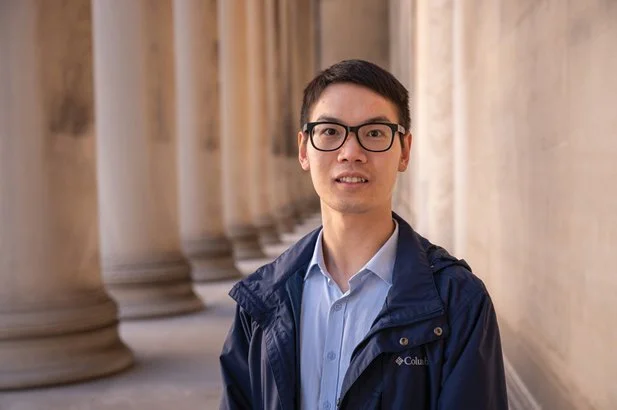
“What really helped me in my development is the interdisciplinary research culture at CMU.”
— Zhen (Jack) Liu (MCS 2024)
He decided to take the risk and pursue computational chemistry anyway. Liu received admission to the Department of Chemistry’s doctorate program and joined Isayev’s lab. “It was a hard transition,” he said, but he made it. His eventual dissertation in computational chemistry centered on using machine learning for predicting chemical reactions. His research has led to 11 peer-reviewed publications and conference papers.
Fisher also applied to CMU without a prior computer science education. “The field had been framed to me as problem-solving, and I was really excited to solve problems. I love puzzles and logic.” She possessed a love of biology, too, and learning about the computational biology major seemed like a perfect combination.
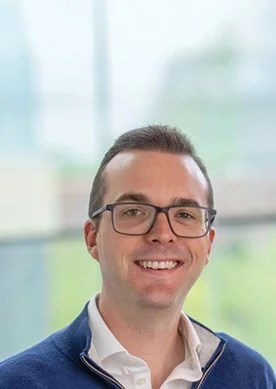
Phillip Compeau, Assistant Dean for Innovation in Computing Education and Teaching Professor in the Ray and Stephanie Lane Computational Biology Department
Her real “aha!” moment happened in Phillip Compeau’s Great Ideas in Computational Biology class. “The transition to college was really hard,” she said. “It was a whirlwind. I was learning so much so fast.”
Compeau’s course — and his enthusiasm for teaching it — inspired Fisher to truly take in the possibilities in front of her. Her final project for the course, a four-week, small group endeavor, acted as a capstone for everything she learned in her first year in the program. The group created a model to find correlations within protein interaction networks. They not only successfully replicated the research paper they were working from, but furthered its results as well.
Compeau’s course — and his enthusiasm for teaching it — inspired Fisher to truly take in the possibilities in front of her. Her final project for the course, a four-week, small group endeavor, acted as a capstone for everything she learned in her first year in the program. The group created a model to find correlations within protein interaction networks. They not only successfully replicated the research paper they were working from, but furthered its results as well.
“It changed my life,” she said. “I was actually doing science for the first time. I was programming. I was using all of these skills that I had been trying to grab for two semesters.” Fisher knew then that she wanted to be a researcher. She loved the work, she loved knowing she was capable of it and she loved that she could apply it in the real world.
Like Fisher, Meghana Tandon (SCS 2023) also took Compeau’s class to heart during her first year at CMU. “That first course confirmed that I wanted to pursue this,” she said.
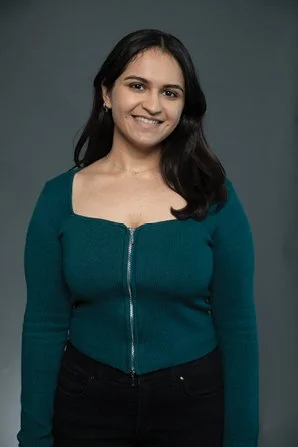
Meghana Tandon (SCS 2023)
In addition to computational biology, Tandon also wanted a solid foundation in computer science. With her dual major, she spent her time at SCS modeling and interpreting cellular signals for genetic and protein content, and conducting statistical analysis and analyzing images using machine learning. “I became a really well-rounded engineer because of that,” said Tandon. In her professional life, her fluency in both biology and machine learning “garners trust and credibility a lot more quickly,” she said.
“That little bit of exposure in every field has paid off significantly,” Tandon added. “I was able to shape my degree in a way that was very valuable to my immediate career. So much so that I was able to move up faster than maybe I would have otherwise.”
Tandon applies her skills at Insitro, a mid-sized biotech drug discovery startup, where she works on a clinical data team as a software engineer. She builds the tools to support the scientists’ day-to-day jobs, looking for sticking points in their workflows. “Things sometimes take months or years because of how tedious each microstep is along the way. Nobody really realizes how time-consuming they are,” she said.
As an example, Tandon helped create a piece of visualization software that helps research teams fine-tune their machine learning models for segmenting cells or structures in an image, such as extracting information from layers of the retina to learn how far an eye disease has progressed. “It’s one of those things that is so microscopic that no human can actually sit there and measure it with a ruler, but it’s in the imaging data that they collect anyway. By refining the model, we’ve brought the lifecycle down from months to days and weeks.”
Tandon notes that it can be easy to feel detached from a company’s mission when working upstream. Her initial work only reaches a handful of colleagues. “But then you hear it all coming together at company-wide meetings and that gets me really excited,” said Tandon. “I know I had some part in it, and here are the outcomes of all of us working together.”
Liu finds satisfaction in being part of the process, as well. “I’m always proud to be part of these efforts, especially seeing how the discoveries of the company really impact patients,” said Liu.
Computational Biology Goes to Medical School
Not all health-based SCS trajectories involve helping people so far upstream. For Zahra Ahmad (SCS 2023) and Annie Nadkarni (SCS 2022), earning their degrees in computational biology helped them get into medical school.
“I think in general a lot of people have a specific view of what a path to med school looks like,” said Nadkarni. She and Ahmad both credit the supportive environment of the Ray and Stephanie Lane Computational Biology Department in SCS for being able to take the time to find the best fit. Ahmad said SCS faculty “really care. They want you to succeed. They want to figure out a path with you.”
For Ahmad, now a student at Georgetown University Medical School, the computational biology curriculum integrated well with completing pre-med requirements like cell biology and genetics. Even so, “it was still kind of a new path that I was trying.” Compeau worked with her to figure out course sequencing and the result, Ahmad said, “ended up working perfectly in the end.”
Nadkarni, currently a student at Hofstra/Northwell’s Donald and Barbara Zucker School of Medicine, became interested in learning more about mental health in college populations while she was at CMU.
“I was interested in the brain and the mind,” said Nadkarni. Realizing she could study neurological and neuropsychiatric disease from a computational perspective (neurogenomics) lit her up. “Oh my God, this is what I’ve been searching for,” she said.
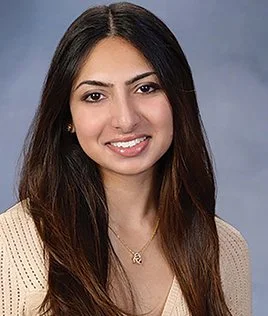
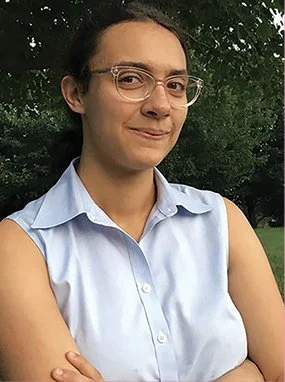
Studying neurogenomics allowed her to approach conditions like bipolar disorder and schizophrenia from a single-cell perspective. “You can try to figure out the molecular underpinnings of these diseases, but then you have that clinical side complement it,” she said. “What is a clinician’s model of disease versus a researcher’s model of disease, and how do we bring those closer together?”
Her SCS background gives Nadkarni an advantage in a new era of medicine where everyone has a computer in their pocket, but doesn’t necessarily know how to make the most of it. “You need to know how to utilize the resources available to you, and a lot of those are going to be computational tools,” said Nadkarni.
Nadkarni doesn’t know yet what her day-to-day career will look like. But she does know that, fundamentally, she “would like to revolutionize the way mental health is approached.” She’s particularly interested in treatment efficacy and why some classes of medicine work for some people and not for others, and what makes some conditions resistant to treatment.
Ahmad is leaning toward specializing in oncology, though she’s still not certain. “Whatever I end up doing, I know that my eventual practice as a clinician should involve a fair bit of research,” she said.
“The Way I think”
No matter where their careers lead them after CMU, computational biology graduates know there are parts of SCS they’ll never leave behind.
Lewis, who also sits on the SCS Dean’s Advisory Board, said his time in the computational biology program “fundamentally shifted the way I think, the way I approach problem solving.” He tells people that he uses his degree every day in the way he values listening, names problems and applies existing knowledge. “Oftentimes, the solution already exists,” he said. “We just need to understand what someone else has already implemented and figure out ‘how do you pour it over into this new context?’”
He points out that, for instance, afterschool programs aren’t new and neither is the idea of working with children and their families. “But every environment is different. Every child is different. Every family is different,” he said. What worked in one environment or with one child might not work when copied directly to another. “What might we need to tweak in our approach?” he asked.
For Nadkarni, looking at medicine through a computer science lens offers diversity of thought among her medical school peers. In SCS, she learned to strip complicated problems down to their core principle and then use that core principle to tie back to the complexities. “I actually found organic chemistry far easier after I took a theoretical computer science class,” she added. Ahmad made the same observation about taking the Medical College Admission Test.
Nadkarni said that the dual language of computational biology taught her how to talk to people across disciplines. “How do I communicate what I do understand and what I don’t, so we can get closer to the truth?” she asked.
“Now that I’m in med school and I’m actually talking to clinicians, explaining my research, I feel like I can properly explain: Here’s a technical basis and this is how it applies to medicine,” said Ahmad.
Fisher said she didn’t realize in the moment how much the program’s emphasis on logic would alter how she interacts with the world. “I think about everything better, and I can solve problems everywhere in my life better because I went to CMU. ■
More from the Spring 2026 LINK Issue
From the Dean: Widening the Aperture