









A decade-long collaboration with media artist Refik Anadol culminates in Dataland, the world's first museum of AI arts. The interactive space is powered by Google Cloud and includes a new artist residency supported by Google Arts & Culture.
General summary
Google is partnering with artist Refik Anadol to launch Dataland, the world’s first artificial intelligence art museum, opening June 20th in Los Angeles. The museum uses Google Cloud technology to transform environmental data into immersive, real-time sensory experiences. You can support the next generation of creators by checking out the new AI Artist Residency or visiting the museum in person to see these digital landscapes firsthand.
Summaries were generated by Google AI. Generative AI is experimental.
Bullet points
- "Powering the world’s first AI art museum" explores how Google technology brings art to life.
- Dataland is a new Los Angeles museum where data acts as digital paint.
- Google Cloud powers real-time, multisensory art that reacts to your presence and emotions.
- The museum uses sustainable computing to run complex AI models for immersive exhibits.
- A new residency program gives artists grants and tools to create future digital works.
Summaries were generated by Google AI. Generative AI is experimental.
Basic explainer
Google teamed up with artist Refik Anadol to open Dataland, the world’s first museum dedicated to AI art. The museum uses Google’s technology to turn environmental data into massive, shifting digital displays that react to visitors in real time. It’s a cool way to see how AI can act like a paintbrush to create immersive, living art. Google is also giving grants to new artists so they can learn to use these tools for their own projects.
Summaries were generated by Google AI. Generative AI is experimental.
Explore other styles:
What happens when you give an artist a neural network instead of a paintbrush?
Ten years ago, that foundational question brought Google researchers together with media artist and director Refik Anadol.
That journey is reaching a milestone with the public opening of Dataland on June 20th — the world’s first museum of AI arts — with Google serving as a technology and creative collaborator. Located in The Grand LA, a Frank Gehry-designed mixed-use development in Los Angeles, Dataland is a 25,000-square-foot omni-sensory ecosystem where data becomes pigment and art evolves in real time.
Photo credit: Refik Anadol Studio
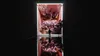
When Refik joined our first Artists and Machine Intelligence (AMI) cohort in 2016, generative AI was not yet a global headline. We collaborated on projection-mapping the LA Philharmonic's archives onto architecture in 2018, visualizing Google Quantum AI data in 2020, and launching the MRI of the Earth project to reframe planetary data through a neural lens. And in 2025, we commissioned the large-scale immersive installation “Machine Dreams: Biophilia” for our Mountain View campus — where Refik Anadol Studio’s Large Nature Model (LNM) and Gemini transformed regional ecosystem data into an ever-shifting digital landscape. Together, we’ve seen firsthand that technology can be an expansive new medium that amplifies human craftsmanship.
Powering a living museum
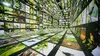
Dataland’s inaugural exhibition, “Machine Dreams: Rainforest,” is powered by the Large Nature Model — a foundational AI trained on an extensive dataset of the natural world. To transform this complex environmental data into 1.2 billion pixels of hyper-generative reality, Dataland uses Google Cloud tools to power:
- Omni-sensory experiences: Dataland introduces a new paradigm for interactive art where the gallery becomes an active dialogue with its visitors. Google’s infrastructure processes data to create generative soundscapes, sense emotions in real time and augment scents algorithmically, responding dynamically to human interaction inside the space.
- Real-time generation: Running on Google Cloud’s efficient computing infrastructure powered by 87% carbon-free renewable compute, the Gemini Enterprise Agent Platform and Compute Engine coordinate complex AI models — including generative adversarial networks (GANs), diffusion models and Gemini — to bring the galleries to life.
From the ticketing pipeline at the front door to the pixels shifting on the gallery walls, Google Cloud helps ensure the entire museum runs smoothly and sustainably.
Photo credit: Refik Anadol Studio
Nurturing the next generation of creators
Pushing this medium forward means opening up these advanced tools so that the broader creative community can actively shape them.
In tandem with the museum’s opening, Google Arts & Culture is supporting the Dataland AI Artist Residency. This six-month incubator program will provide four artists with $25,000 grants, expert mentorship from Refik Anadol Studio and direct access to advanced Google Cloud tools and machine learning models. The work developed during this residency will be featured on Dataland’s global stage and Google Arts & Culture website later this year, ensuring the next generation of digital creators has a seat at the table.
When the boundaries of machine intelligence meet the depth of human artistry, the result is a brand-new space for wonder, environmental awareness and connection. To learn more about the technology behind the museum, read our full Refik Anadol Studio Google Cloud customer case study or better yet, experience Dataland in person.
Done. Just one step more.
Check your inbox to confirm your subscription.
You are already subscribed to our newsletter.
You can also subscribe with a