


We’re introducing new efforts to support teen mental health and provide families with the tools they need to navigate the digital world safely.
General summary
Google.org has increased its digital wellbeing fund to over $50 million to help children and teens navigate the internet safely. We are now expanding this support by partnering with organizations like Active Minds and the Child Mind Institute to improve mental health literacy and provide new digital tools for emotional support. These initiatives aim to foster healthier technology habits and combat social isolation among young people nationwide.
Summaries were generated by Google AI. Generative AI is experimental.
Bullet points
- Google’s "Expanding our U.S. digital wellbeing fund" article details new support for youth mental health.
- The fund has grown to over $50 million to help kids stay safe online.
- New programs will teach 100,000 young adults how to advocate for their mental health.
- Google is funding a new California institute to improve how tech supports student wellbeing.
- A new digital journaling tool will help kids track emotions and find support quickly.
Summaries were generated by Google AI. Generative AI is experimental.
Basic explainer
Google is putting $50 million into a fund to help kids and teens stay safe and healthy online. They’re working with experts to create tools that support mental health and teach better digital habits. This includes new apps for journaling and programs that help young people advocate for their own wellbeing. It’s all about making sure technology helps you grow instead of holding you back.
Summaries were generated by Google AI. Generative AI is experimental.
Explore other styles:
Your browser does not support the audio element.
Listen to article
This content is generated by Google AI. Generative AI is experimental
[[duration]] minutes
Growing up today means living in a connected world, and we believe every child should be able to learn, explore and grow safely online with the help of technology. To help lead the way, we’ve increased our U.S. digital wellbeing fund to more than $50 million to support a healthier, more resilient generation of kids and teens.
Because online safety is a shared responsibility, we support child development and mental health experts to provide resources for families and support a safe digital ecosystem for everyone. Here’s what our fund has already accomplished:
- Highlights for Children equipped one million second to fifth graders across the country with the skills to be thoughtful digital citizens.
- Girl Scouts of the USA taught girls how to confidently and safely engage with the digital world, including 79,000 Girl Scouts who have participated in the program.
- The Rare Impact Fund and Project Evident are supporting a cohort of 30 youth mental health nonprofits worldwide, equipping leaders with digital tools to increase their capacity and serve millions of young people each year.
At an event Google.org and Highlights for Children hosted in Columbus, Ohio, second grade students tackled a variety of educational games and puzzles teaching them skills like how to create a safe and strong password, why it’s important to take breaks from screens and the value of being kind online.

Now, we’re expanding our digital safety and wellbeing support for teens, introducing new interventions focused on best practices for healthy technology interactions and supports that combat social isolation. Here’s how:
- To mobilize teen advocacy and engagement, we’re supporting Active Minds by funding a major national expansion of long-term mental health and digital wellbeing programming aimed at equipping 100,000 youth and young adults with the knowledge, skills and self-efficacy to take action for mental health. The initiative will ensure more youth and young adults have opportunities to develop mental health literacy, strengthen peer networks and build the confidence to advocate for wellbeing in their communities.
- To promote behavioral health and digital wellbeing in California, the California Behavioral Health Association is launching their new Behavioral Health Innovation Institute with Google.org support. The institute will engage youth, caregivers, educators and community partners across California in reimagining how technology can be used to strengthen mental health, connection, resilience and overall wellbeing.
- To help bridge gaps in youth mental health resources, we’re supporting the Child Mind Institute’s Mirror initiative, a privacy-first, evidenced-based digital journaling platform designed to help young people reflect on their emotions and connect with support when needed. The project will integrate Gemma to advance early crisis detection and strengthen referrals, and allow for further scaling with high-need populations in school and community-based organizations nationally.
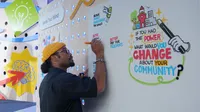
In Altadena, California, Google.org and Active Minds celebrated our new national youth-led mental health and digital wellbeing movement with an engaging workshop at The Eaton Fire Collaborative. Senior Director of Health, Megan Jones Bell spoke on the panel alongside Assemblymember John Harabedian, Active Mind's Brandi Pretlow and local student leaders.

From support to child development and mental health experts to the robust parental controls and dedicated features across our platforms, everything we do for kids, teens and families is created to support, designed to respect and built to protect. This way, they can seize the incredible opportunities that technology presents for learning, connection and innovation.
Done. Just one step more.
Check your inbox to confirm your subscription.
You are already subscribed to our newsletter.
You can also subscribe with a