







Taiwan is transforming public health with Google. By integrating a predictive AI risk model into a universal clinician system and a Gemini assistant into the population-scale health app, the partnership turns 20+ years of securely-aggregated data into proactive care for millions of patients.

Finding health risks earlier can make all the difference. That’s the goal of a collaboration between Google and Taiwan’s National Health Insurance Administration (NHIA), which uses Gemini to help doctors analyze data from Taiwan's unified health system. Even with one of the best health systems in the world, doctors' time is limited, and AI can help them make the most of it. Today, we’re sharing how Gemini technology is helping doctors spot health risks earlier than ever before. Taiwan’s health system is a global leader, with a single payer and population-scale healthcare database that has helped care for almost all Taiwanese for over 20 years. But even with great data, doctors only have so many hours in the day.
From weeks of work to a few seconds
The first major milestone in this collaboration is AI-on-DM (Artificial Intelligence on Diabetes Mellitus), an AI model by NHIA under the Ministry of Health and Welfare (MOHW) that helps assess diabetes risk. Previously, a risk assessment for a single patient averaged 20 minutes. Screening 20,000 people would have taken 40 professionals three weeks of non-stop work. Using the AI-on-DM model, which digitizes clinical logic and leverages Google Cloud’s concurrency, reduces processing time to just 25 seconds per case. This 14,400x efficiency boost allows the system to complete 20,000 evaluations in under 90 minutes, making population-scale risk assessment a scalable tool for public health.
More time for what matters
The model flags potential data patterns for clinical review and assists doctors to help them intervene before complications occur. Soon, patients will have expert support in their pockets, too. This month, the NHIA will launch a Gemini-powered health assistant that will generate personalized insights in its government app used by 10 million people in Taiwan. The tool provides personalized, secure suggestions grounded in clinical guidelines to help people with their daily care.
This shift ensures that expertise is focused where it matters most: high-risk interventions and human-centric support. It also ensures every citizen gets the same high-quality assessment, no matter where they live.
The AI-on-DM project builds on successful AI collaborations with hospitals across Taiwan. Key milestones include CMUH’s adoption of MedLM for cancer care, Chang Gung Memorial’s AI-enhanced ultrasound diagnostics and TMU affiliated hospital’s use of automated workflows to address clinician shortages. The NHIA also used MedGemma to process over 30,000 pathology reports.

AI-personalized health risk
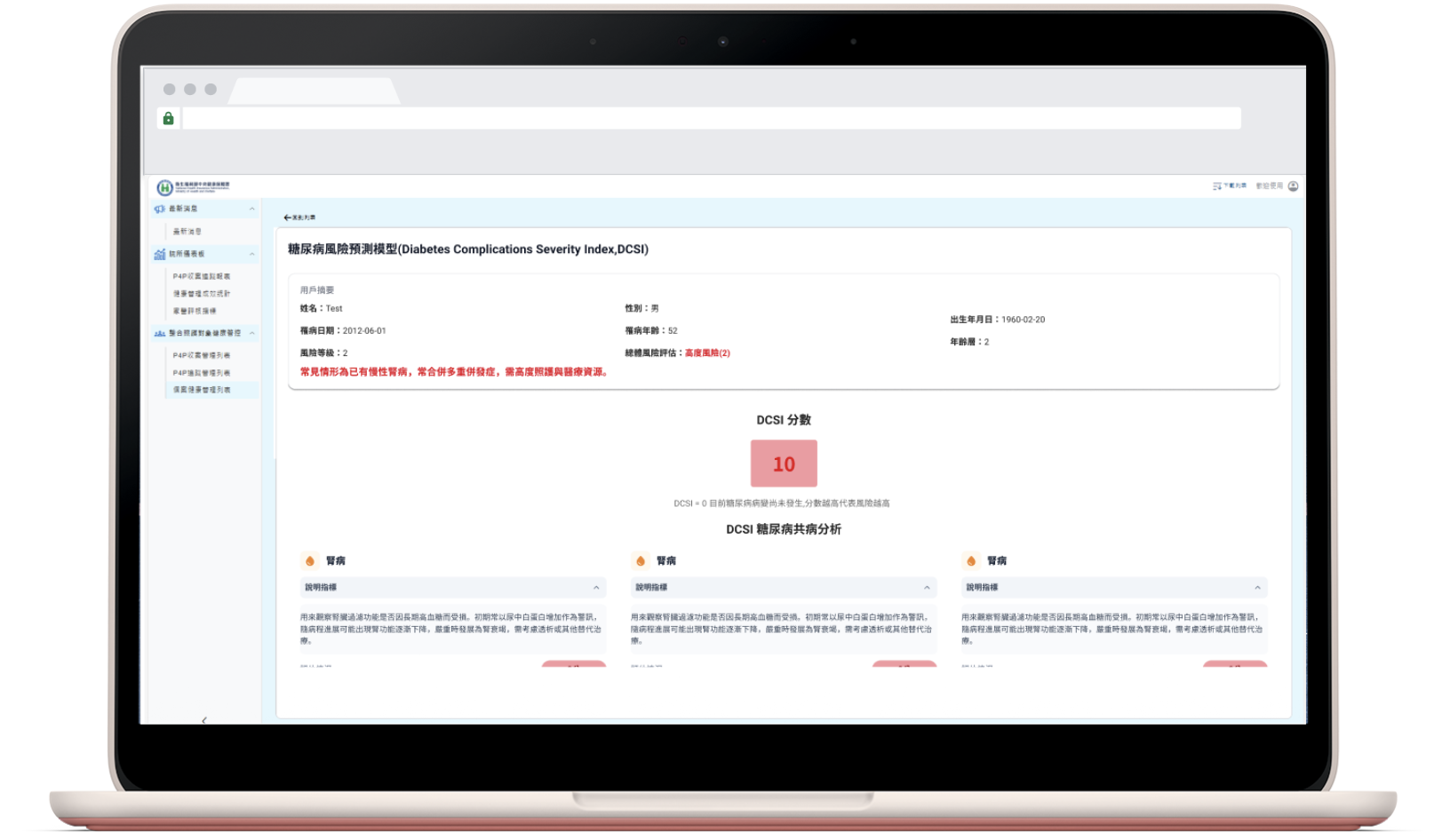
AI-powered clinical dashboard

AI care in rural communities
Reaching every community
To ensure these tools help everyone, Google.org has awarded a $1 million USD fund to the Digital Humanitarian Association (DHA). Through this funding, DHA aims to bring health services for diabetes management and digital training to 300 community centers, supporting 240,000 health check-ins and training 200 local caregivers of patients with diabetes. Going forward, the NHIA plans to use this same framework to help treat hypertension and hyperlipidemia. By proving what is possible to improve population health in Taiwan, we are building a blueprint for preventative, predictive and proactive health systems everywhere.