

惯性聚合 高效追踪和阅读你感兴趣的博客、新闻、科技资讯
阅读原文 在惯性聚合中打开

推荐订阅源

K
Kaspersky official blog
Engineering at Meta
Engineering at Meta
D
DataBreaches.Net
Stack Overflow Blog
Stack Overflow Blog
Microsoft Security Blog
Y
Y Combinator Blog
B
Blog RSS Feed
GbyAI
GbyAI
P
Proofpoint News Feed
aimingoo的专栏
aimingoo的专栏
MyScale Blog
MyScale Blog
D
Docker
阮一峰的网络日志
阮一峰的网络日志
Cyber Security Advisories - MS-ISAC
Recorded Future
Recorded Future
美团技术团队
The Register - Security
V
Visual Studio Blog
H
Hackread – Cybersecurity News, Data Breaches, AI and More
T
Tailwind CSS Blog
爱范儿
爱范儿
freeCodeCamp Programming Tutorials: Python, JavaScript, Git & More
T
The Blog of Author Tim Ferriss
博客园 - 司徒正美
量子位
B
Blog
F
Fortinet All Blogs
Martin Fowler
Martin Fowler
博客园 - 【当耐特】
MongoDB | Blog
MongoDB | Blog
A
About on SuperTechFans
I
InfoQ
钛媒体:引领未来商业与生活新知
钛媒体:引领未来商业与生活新知
有赞技术团队
有赞技术团队
雷峰网
雷峰网
大猫的无限游戏
大猫的无限游戏
J
Java Code Geeks
L
LangChain Blog
Latest news
Latest news
S
SegmentFault 最新的问题
Exploit-DB.com RSS Feed
Blog — PlanetScale
Blog — PlanetScale
Threat Intelligence Blog | Flashpoint
Cisco Talos Blog
Cisco Talos Blog
F
Full Disclosure
C
Cisco Blogs
D
Darknet – Hacking Tools, Hacker News & Cyber Security
W
WeLiveSecurity
T
Tenable Blog
T
Tor Project blog

Common Crawl

Common Crawl - Blog - Introducing the AI Visibility Audit Common Crawl - Blog - Host- and Domain-Level Web Graphs March, April, and May 2026 Common Crawl - Blog - May 2026 Crawl Archive Now Available Common Crawl - Blog - April 2026 Crawl Archive Now Available in a Hugging Face Storage Bucket Common Crawl - Blog - You can now build directly on Common Crawl from the browser Common Crawl - Blog - Host- and Domain-Level Web Graphs February, March, and April 2026 Common Crawl - Blog - April 2026 Crawl Archive Now Available Common Crawl - Blog - April 2026 Common Crawl Newsletter Common Crawl - Blog - Announcing a Change to Common Crawl Dataset Size Reporting Common Crawl - Blog - Host- and Domain-Level Web Graphs January, February, and March 2026 Common Crawl - Blog - March 2026 Crawl Archive Now Available Common Crawl - Blog - IPv6 Adoption Across the Top 100K Web Hosts Common Crawl - Blog - Web Graph Statistics Gets a Proper Upgrade Common Crawl - Blog - Measuring Web Accessibility from Crawl Archives Common Crawl - Blog - Announcing the Whirlwind Tour of Common Crawl's Datasets Using Java Common Crawl - Blog - Host- and Domain-Level Web Graphs December 2025 and January/February 2026 Common Crawl - Blog - Introducing the New Examples & Resources Browser Common Crawl - Blog - February 2026 Crawl Archive Now Available Common Crawl - Blog - AI Plumbers at FOSDEM’26 Common Crawl - Blog - CC-Citations: A Visualization of Research Papers Referencing Common Crawl Common Crawl - Blog - CommonLID: Re-evaluating State-of-the-Art Language Identification Performance on Web Data Common Crawl - Blog - Host- and Domain-Level Web Graphs November/December 2025 and January 2026 Common Crawl - Blog - January 2026 Crawl Archive Now Available Common Crawl - Blog - Web Archives for Social Sciences Datathon, Bristol Common Crawl - Blog - How SEOs Are Using Common Crawl's Web Graph Data for AI Ranking Signals Common Crawl - Blog - GneissWeb Annotations Examples Common Crawl - Blog - Common Crawl at the Mozilla Festival 2025 Common Crawl - Blog - Host- and Domain-Level Web Graphs October, November, December 2025 Common Crawl - Blog - December 2025 Crawl Archive Now Available Common Crawl - Blog - A Sampling of 2025 Research Referencing Common Crawl Common Crawl - Blog - Host- and Domain-Level Web Graphs September, October, and November 2025 Common Crawl - Blog - November 2025 Crawl Archive Now Available Common Crawl - Blog - Common Crawl Celebrates World Digital Preservation Day Common Crawl - Blog - Setting the Record Straight: Common Crawl’s Commitment to Transparency, Fair Use, and the Public Good Common Crawl - Blog - October/November 2025 Newsletter Common Crawl - Blog - Common Crawl Foundation at Stanford HAI Common Crawl - Blog - Host- and Domain-Level Web Graphs August, September, and October 2025 Common Crawl - Blog - October 2025 Crawl Archive Now Available Common Crawl - Blog - Common Crawl Foundation at COLM 2025 Common Crawl - Blog - Announcing GneissWeb Annotations Common Crawl - Blog - Web Languages Needing Review by Native Speakers Common Crawl - Blog - Host- and Domain-Level Web Graphs July, August, and September 2025 Common Crawl - Blog - From SEO to AIO: Why Your Content Needs to Exist in AI Training Data Common Crawl - Blog - September 2025 Crawl Archive Now Available Common Crawl - Blog - Common Crawl Foundation Opt-Out Registry Common Crawl - Blog - Trip Report: AI_dev (Linux Foundation) August 2025 Common Crawl - Blog - Common Crawl Foundation at Stanford HAI: A Shared Legacy of Data and Innovation Common Crawl - Blog - July/August 2025 Newsletter Common Crawl - Blog - Host- and Domain-Level Web Graphs June, July, and August 2025 Common Crawl - Blog - August 2025 Crawl Archive Now Available Common Crawl - Blog - Common Crawl Foundation at ACL 2025 Common Crawl - Blog - IETF 123 Report Common Crawl - Blog - Host- and Domain-Level Web Graphs May, June, and July 2025 Common Crawl - Blog - July 2025 Crawl Archive Now Available Common Crawl - Blog - WMDQS Shared Task on Language Identification Common Crawl - Blog - The First WMDQS-Masakhane LangID Hackathon Common Crawl - Blog - Host- and Domain-Level Web Graphs April, May, and June 2025 Common Crawl - Blog - Common Crawl at the United Nations Open Source Week, June 2025 Common Crawl - Blog - June 2025 Crawl Archive Now Available Common Crawl - Blog - May/June 2025 Newsletter Common Crawl - Blog - Announcing the Whirlwind Tour of Common Crawl's Datasets using Python Common Crawl - Blog - Host- and Domain-Level Web Graphs March, April, and May 2025 Common Crawl - Blog - May 2025 Crawl Archive Now Available Common Crawl - Blog - Announcing the First Workshop on Multilingual Data Quality Signals Common Crawl - Blog - Host- and Domain-Level Web Graphs February, March, and April 2025 Common Crawl - Blog - April 2025 Crawl Archive Now Available Common Crawl - Blog - Introducing the Host Index Common Crawl - Blog - IIPC General Assembly & Web Archiving Conference 2025 Common Crawl - Blog - March/April 2025 Newsletter Common Crawl - Blog - Providing Authenticity & Data Provenance for Common Crawl Using Blockchain: Our Work with Constellation Network Common Crawl - Blog - Host- and Domain-Level Web Graphs January, February, and March 2025 Common Crawl - Blog - March 2025 Crawl Archive Now Available Common Crawl - Blog - Introducing Common Crawl AI Agent by ReadyAI Common Crawl - Blog - Submission to the UK’s Copyright and AI Consultation Common Crawl - Blog - Host- and Domain-Level Web Graphs December 2024 and January/February 2025 Common Crawl - Blog - February 2025 Crawl Archive Now Available Common Crawl - Blog - Opening the Gates to Online Safety Common Crawl - Blog - January/February 2025 Newsletter Common Crawl - Blog - Host- and Domain-Level Web Graphs November/December 2024 and January 2025 Common Crawl - Blog - January 2025 Crawl Archive Now Available Common Crawl - Blog - Introducing cc-downloader Common Crawl - Blog - Host- and Domain-Level Web Graphs October, November, and December 2024 Common Crawl - Blog - December 2024 Crawl Archive Now Available Common Crawl - Blog - Common Crawl Foundation at NeurIPS 2024: Expanding Horizons and Building Connections Common Crawl - Blog - Expanding the Language and Cultural Coverage of Common Crawl Common Crawl - Blog - October/November 2024 Newsletter Common Crawl - Blog - Host- and Domain-Level Web Graphs September, October, November 2024 Common Crawl - Blog - November 2024 Crawl Archive Now Available Common Crawl - Blog - Reflections on Recent Talks at the Turing Institute and UCL Common Crawl - Blog - Introducing the Common Crawl Errata Page for Data Transparency Common Crawl - Blog - Host- and Domain-Level Web Graphs August, September, and October 2024 Common Crawl - Blog - October 2024 Crawl Archive Now Available Common Crawl - Blog - White House Briefing on Open Data’s Role in Technology Common Crawl - Blog - IAB Workshop on AI-CONTROL Common Crawl - Blog - Host- and Domain-Level Web Graphs July, August, and September 2024 Common Crawl - Blog - September 2024 Crawl Archive Now Available Common Crawl - Blog - August/September 2024 Newsletter Common Crawl - Blog - Host- and Domain-Level Web Graphs June, July, and August 2024 Common Crawl - Blog - August 2024 Crawl Archive Now Available Common Crawl - Blog - The Increase of Common Crawl Citations in Academic Research
Common Crawl - Blog - AI Optimization Is Here: Are You Ready for Search 2.0?
2025-08-11 · via Common Crawl

Publishers and brands are shifting from search engine optimization (SEO) to AI optimization (AIO). Many SEOs unknowingly block their sites from AI search by restricting CCBot in robots.txt. As Search 2.0 transforms discovery, ensuring content can train AI models becomes as crucial as traditional SEO.

As an SEO professional, you’ve spent years mastering the art of visibility in Google’s ecosystem. You understand crawlers, you optimize for algorithms, and you’ve built strategies around how search engines discover and rank content.

Now, the landscape is shifting quickly. AI-powered search and answer engines are fundamentally changing how people find information, and many SEOs are discovering that their traditional optimization strategies leave gaps in this new environment.
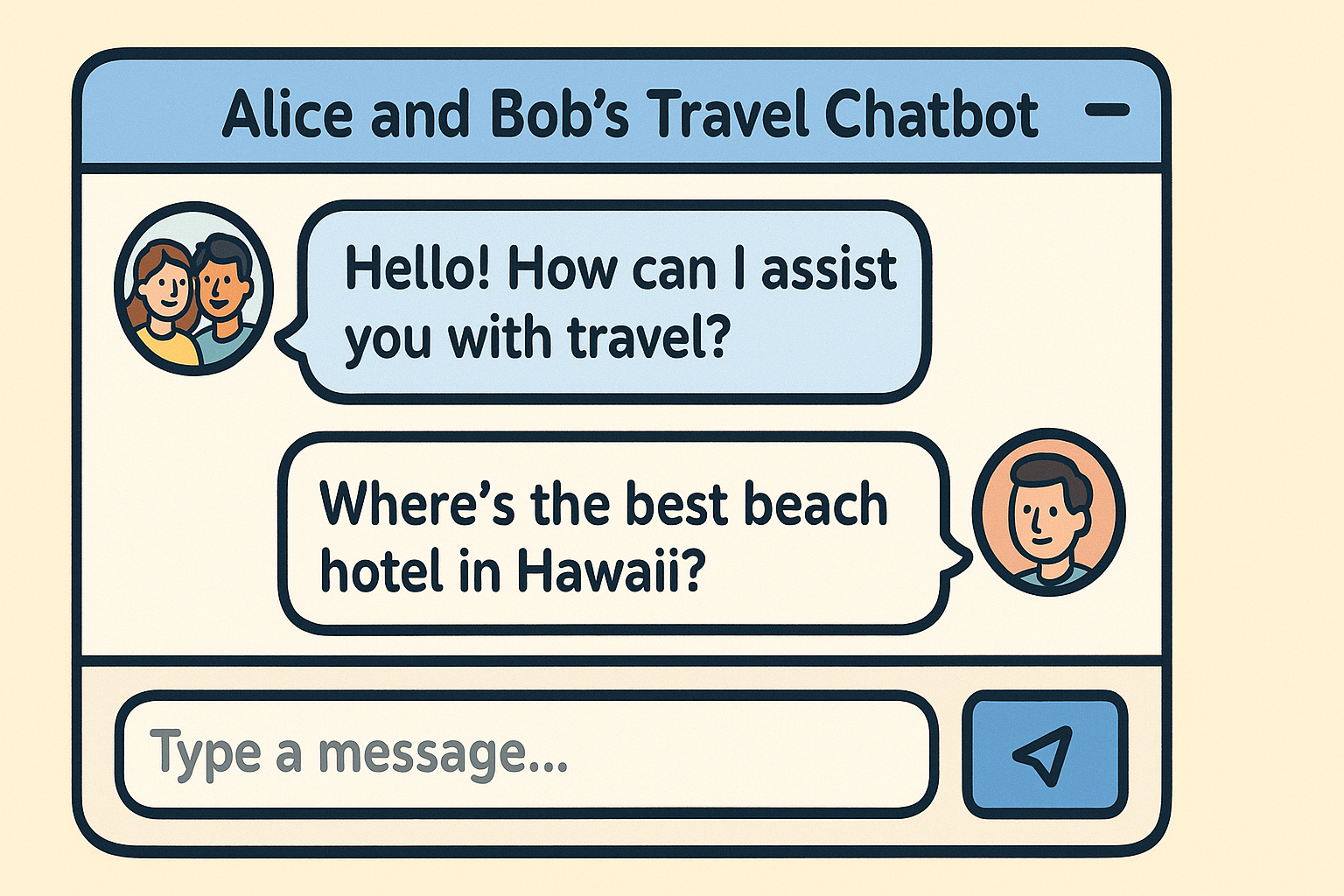
A conversation with a chatbot called “Alice and Bob’s Travel Chatbot” where the user is asking “Where’s the best beach hotel in Hawaii?”

Alice and Bob’s Travel Chatbot could be how your brand’s information is surfaced

The Evolution from Search 1.0 to Search 2.0

Search 1.0 was dominated by a single player with a clear business model: Google controlled the index, you optimized for their algorithm, and everyone understood the rules. The SEO industry grew to $80 billion, and search ads became a $300 billion market.

Search 2.0 is different. Multiple AI providers are creating search experiences of different kinds, and large language models power everything from ChatGPT’s web search to Google’s AI Overviews to specialized answer engines. It’s ensuring your content can inform and appear in AI-driven responses.  Google’s Web Guide Labs is a good illustration of this.

Of course, search algorithms have always involved ML and tuned parameters. Even classical information retrieval (IR) algorithms like BM25 required parameter tuning for optimal results. Modern AI-powered search goes far beyond traditional ranking algorithms, incorporating complex language understanding and generation capabilities that fundamentally change how content gets discovered and presented.

How AI Models Actually Work (And Where Your Content Fits)

Understanding AIO requires knowing how these systems actually function.

Foundational Model Training

Large models are trained on massive web datasets to understand language, concepts, and factual relationships. The foundation model knows that “United” is a word in the dictionary, and an airline.

Common Crawl has played a critical role in AI development by providing open, transparent access to web data since 2007. Major models including GPT, BERT, and countless research projects have used Common Crawl data as foundational training material.

If your brand exists on the web, it’s likely to already be in these models, but the information might be outdated or incomplete.

Fine-Tuning

Models are then specialized for specific tasks using curated Q&A datasets. A travel chatbot gets fine-tuned on travel-specific conversations, while a customer service bot trains on support interactions.

Bonus: it’s worth looking at Google’s FAQPage structured data documentation, schema.org’s documentation on FAQPages, Questions, and Answers to understand more about how your FAQs are processed and surfaced to users searching for answers.

Real-Time Retrieval (or Retrieval-Augmented Generation, known as “RAG”)

Models access live information through web searches, databases, and specialized knowledge bases to provide current answers.

Your content needs to be accessible at all three levels to maximise visibility.

The CCBot Reality Check

Here’s where many SEOs discover an unexpected gap in their strategy: their robots.txt files.

A significant number of websites currently block CCBot (Common Crawl’s web crawler), often without realizing its role in the ML and research ecosystems. Common Crawl publishes monthly web datasets which serve as foundational training data for major AI models and research initiatives.

As one SEO Ash Nallawalla (Author of The Accidental SEO Manager) wrote:

A manager asked me why our leading brand was not mentioned by an AI platform, which mentioned obscure competitors instead. I found that we had been blocking ccBot for some years, because some sites were scraping our content indirectly. After some discussion, we felt that allowing LLM crawlers was more beneficial than the risk of being scraped, so we revised our exclusion list.

If CCBot can’t crawl your site, your content is absent from one of the key datasets on which AI models are trained, potentially making your brand less visible in AI-powered search results.
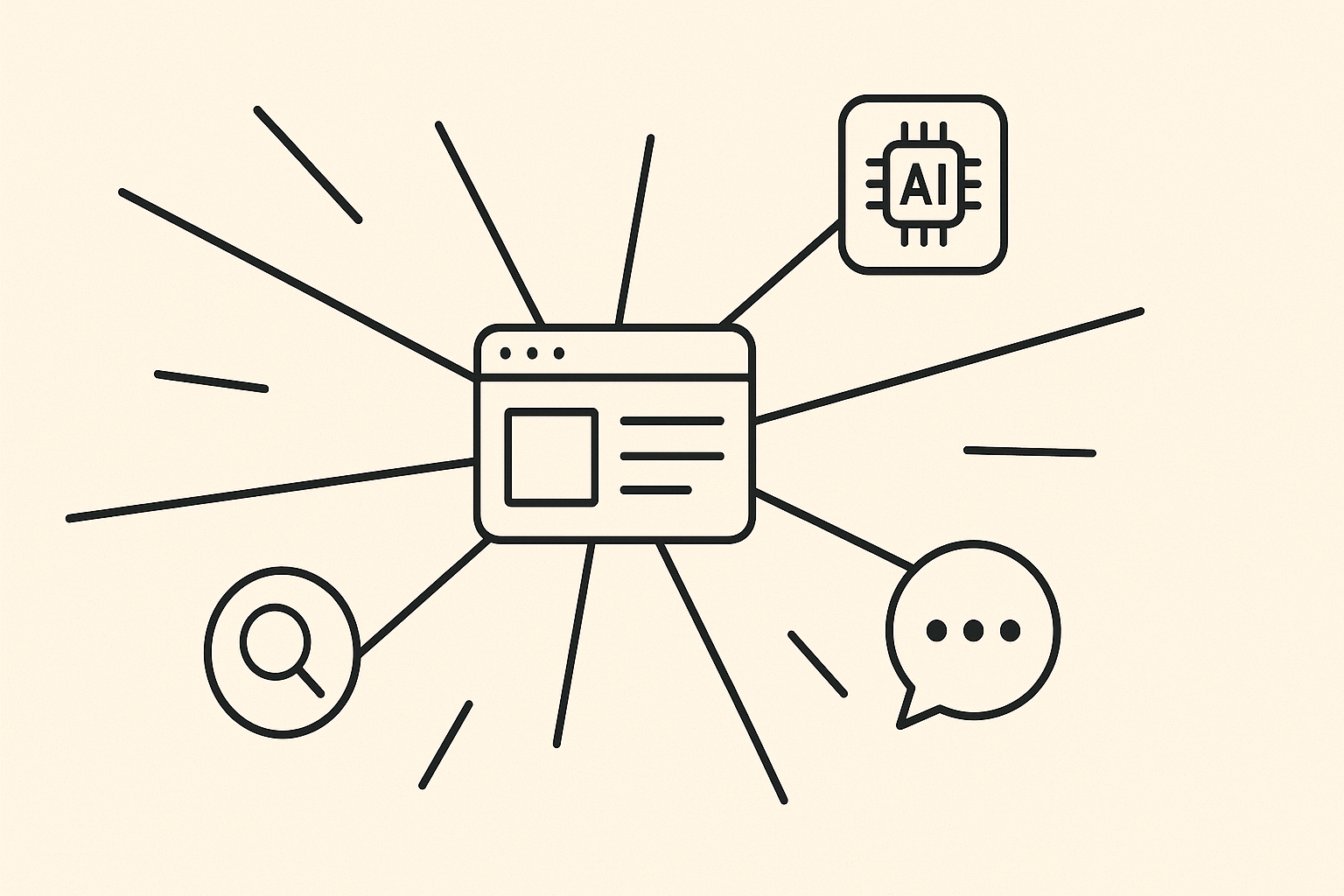
Network diagram showing a website connected to multiple search engines and AI platforms, illustrating modern search visibility strategy.

Modern search visibility requires connections across traditional search engines and AI-powered platforms.

What This Means for Your Strategy

Check your robots.txt file. Look for entries that disallow CCBot or use overly broad blocking rules.

Consider tradeoffs. Yes, there are legitimate concerns about content usage and AI training. The industry is actively working on standards to address these issues, with organizations like the IETF developing mechanisms for better handling of AI training consent and data usage (see the AIPREF Working Group’s mailing list to read the discussions there so far).

While those standards are being developed, blocking CCBot means potentially excluding yourself from how your audience increasingly discovers information.

Think strategically. AI optimization isn’t just about allowing crawlers. It’s about creating content that works well in AI contexts, developing structured data strategies, and potentially creating specialized datasets for AI training.

Simple Technical Steps

By default, CCBot interprets the absence of blocking rules as permission to crawl. If you decide inclusion makes sense for your strategy, you simply need to ensure that CCBot isn’t explicitly blocked.

You can also specifically allow it:

User-agent: CCBot
Allow: /

CCBot identifies clearly in logs, respects standardised Robots Exclusion Protocol directives, even the non-standard directive crawl-delay, and we are careful to operate it with full transparency.

Following the Crawler Best Practices draft by Gary Illyes, Common Crawl has implemented a ccbot.json file at https://index.commoncrawl.org/ccbot.json that provides information about the crawler’s IP ranges, and as recommended by Gary you can also find <link rel="help" href="https://index.commoncrawl.org/ccbot.json"> tags on the appropriate Common Crawl web pages, demonstrating our commitment to crawler transparency standards. You can also refer to our CCBot page for more tips on how to verify CCBot, such as via rDNS.

MERJ’s blog post explains why sites often unintentionally block valuable bots. Their live JSON endpoint which tracks bots provides JSON-based IP data and when it was last updated, including CCBot.

The Bigger Picture

AIO is becoming as crucial as traditional SEO. The businesses that figure this out early (understanding how to be visible, how to optimize for AI-powered search, and how to create content that works well in conversational interfaces) will have significant advantages.

The question isn’t whether Search 2.0 is coming, but whether you’ll be ready when your competitors are getting mentioned in AI responses and you’re not.

What's your experience been with AI-powered search and your brand visibility? We'd love to hear how you're thinking about these changes. Get in touch via our Contact Form, join our Google Group, or our Discord server.