



Published: November 9, 2025
Last updated: November 26, 2025
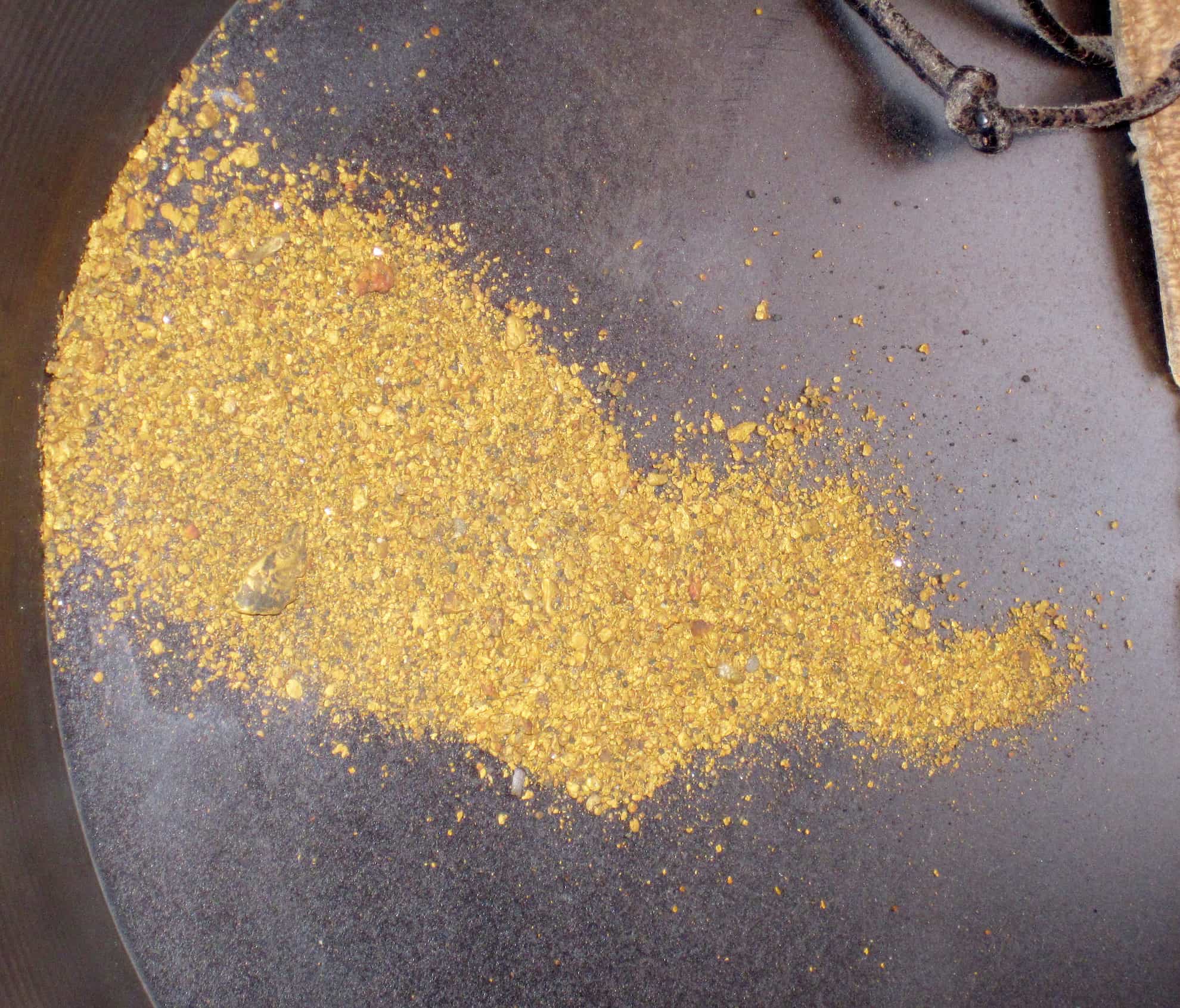
Alchemists in medieval times apparently believed it was possible to transmute matter into gold—or, at least, were attempting to find out if it was possible to do so through an early, rudimentary version of what would eventually become chemistry.
Typically, alchemists sought to turn lead into gold, largely because lead was common, and gold wasn’t.
Gold was precious, and if you had an unlimited supply of gold (or could turn a less finite supply of something else, such as lead, into gold), then you could make yourself wealthy—
—or that was the theory at least.
Personally, I’ve always wondered why alchemists didn’t think that through a little more.
It’s easy for me to say that, of course, with my 20th century education, which covered things like the economics of supply and demand. But it’s always seemed to me that infusing a market with an easily available supply of gold would be counterproductive, as that gold would immediately lose value in direct proportion with the infusion.
One real-world example of this phenomenon: salt. Salt was once a prized commodity, since it was very difficult to extract and transport, and because everyone needed it. It wasn’t on the level of gold, of course, but still rare and essential enough to make it highly valuable.
Today, however, salt is virtually disposable, for the simple reason that it’s incredibly common. Modern technology both made it easier to get, and less essential to have. Supply went up; demand went down; what was once prized is now almost literally everywhere.
These days, people aren’t trying to create gold out of other matter, but they are pursuing a slightly different version of alchemy: creating art from AI.
The materials are different, but the idea is the same: if the owners of AI can bypass the intensive process of procuring art, or music, or video, or any other sort of creative content, then they can, in a way, create their own gold.
Except: it won’t work that way.
In fact, it’s already working very much the opposite way.
The public reaction to AI-generated art, of every kind, might have been awe or joy at first. But the longer time goes on, and the more of this newly cheap material floods the figurative market, the more the reaction becomes decidedly negative.
The output of generative AI is novel, to be sure, and it can even be enjoyable at times. But what it isn’t any longer is: valuable.
An ever-growing segment of the population can now sniff out AI art. It’s obvious, when you know what to look for. It sticks out. It’s glaring. It’s immediately off-putting. People actively avoid it when they can, and instantly de-value everything associated with it.
I would be far from alone in saying that an otherwise excellent blog post can be ruined for me, only because it has an AI thumbnail image. A song I might have liked in a vacuum is dead to me, once I learn AI created it. Artwork that I previously found interesting is immediately and irrevocably meaningless to me the second I find out AI had something to do with its creation.
The market has long-since been flooded. The supply has been outpacing the demand by many orders of magnitude for years now.
Generative AI is not capable of creating that figurative gold, because gold is rare and difficult to come by, and that rarity is exactly what makes it valuable.
Art is valuable precisely because it is not easy to create.
Some have (quite reasonably) mistaken me to mean here that the value of art is correlated with its technical difficulty. That is not at all what I meant, though I see where my phrasing may have inadvertently inferred that.
I mean that art is not easy, in the sense that it requires lived human experience and struggle. Indeed, much of what I would consider to be high art is very technically simplistic—while, conversely, a great deal of AI art would be exceedingly difficult for a human artist to recreate, and yet, I still consider valueless.
And I am interested in art—we are interested in art, in any and all of its forms—because humans made it. That’s the very thing that makes it interesting; the who, the how, and especially the why.
The existence of the work itself is only part of the point, and materializing an image out of thin air misses the point of art, in very much the same way that putting a football into a Waymo to drive it up and down the street for a few hours would be entirely missing the point of sports.
The struggle that produced the art—the human who felt it, processed it, and formed it into this unique shape in the way only they could—is integral to the art itself. The story of the human behind it is the missing, inimitable component that AI cannot reproduce.
That’s what I and so many others find so repulsive about generative AI art; it’s missing the literal soul that makes art interesting in the first place.
We care about art because it’s a form of connection to other humans. Otherwise, we wouldn’t care who painted a painting, or when, or how, or why. We wouldn’t care which artist sings a song, or whether that song is about any experience we can relate to.
I might be able to enjoy a book or a movie or a TV show without thinking about how it was created, but eventually, inevitably, I want to know more about how it came to be, the writers behind it, and the people who helped bring it to life.
If this weren’t the case, we most certainly wouldn’t watch interviews with the creators, or read about their stories, or be interested in the origins of their work. We wouldn’t have entire genres of videos dedicated to those stories, as we do now.
There might not even be any such thing as a famous artist, if art could be so easily detached from the human who created it.
Art is interesting precisely because a human made it, through a long, difficult process that could be unique only to them. The human story behind the art is just as much a part of the work as the paint or the notes or the words or any other part of the medium.
And no, I’m sorry, but prompting your way to the finished piece absolutely does not count—
—Not that it matters. I’ve gotten a little off-topic, but whether AI-generated art is truly art isn’t the point, and it doesn’t really matter anyway. The zone is too flooded, regardless.
AI-generated content is everywhere; it’s inescapable; and it’s therefore made itself less than worthless.
AI will doubtlessly displace countless workers, because bosses with more power than taste are ubiquitous. Still:
AI will never fully displace creatives, because the moment AI can mass-produce any kind of creative work at scale, that work will stop being worth producing in the first place.
It will be toxic; a trend well past its prime, already rotten on the vine.
The more gold you make, the less the gold is worth.
Good luck with that lead, though.