惯性聚合 高效追踪和阅读你感兴趣的博客、新闻、科技资讯
阅读原文 在惯性聚合中打开

推荐订阅源

WordPress大学
WordPress大学
Cyberwarzone
Cyberwarzone
The GitHub Blog
The GitHub Blog
云风的 BLOG
云风的 BLOG
P
Proofpoint News Feed
小众软件
小众软件
Recent Announcements
博客园 - 三生石上(FineUI控件)
Security Archives - TechRepublic
W
WeLiveSecurity
Cloudbric
Cloudbric
博客园 - 司徒正美
美团技术团队
N
News and Events Feed by Topic
Exploit-DB.com RSS Feed
PCI Perspectives
PCI Perspectives
宝玉的分享
宝玉的分享
H
Help Net Security
H
Hackread – Cybersecurity News, Data Breaches, AI and More
Google DeepMind News
Help Net Security
Help Net Security
Last Week in AI
Last Week in AI
S
Schneier on Security
N
News | PayPal Newsroom
B
Blog RSS Feed
L
LINUX DO - 最新话题
T
Troy Hunt's Blog
S
Secure Thoughts
雷峰网
雷峰网
aimingoo的专栏
aimingoo的专栏
L
Lohrmann on Cybersecurity
G
Google Developers Blog
Microsoft Azure Blog
Hacker News - Newest:
Hacker News - Newest: "LLM"
T
Tenable Blog
S
Securelist
L
LangChain Blog
Recent Commits to openclaw:main
I
InfoQ
H
Heimdal Security Blog
Cisco Talos Blog
Cisco Talos Blog
F
Full Disclosure
Y
Y Combinator Blog
酷 壳 – CoolShell
酷 壳 – CoolShell
K
Kaspersky official blog
T
Tailwind CSS Blog
奇客Solidot–传递最新科技情报
奇客Solidot–传递最新科技情报
钛媒体:引领未来商业与生活新知
钛媒体:引领未来商业与生活新知
阮一峰的网络日志
阮一峰的网络日志
C
Cisco Blogs

Hacker News

Introducing Claude Opus 4.7 Qwen Studio The Future of Everything is Lies, I Guess: Where Do We Go From Here? GitHub - SeanFDZ/macmind: Single-layer transformer in HyperTalk for the classic Macintosh Show HN: Agent-cache – Multi-tier LLM/tool/session caching for Valkey and Redis Moving a large-scale metrics pipeline from StatsD to OpenTelemetry / Prometheus GitHub - Nightmare-Eclipse/RedSun: The Red Sun vulnerability repository GitHub - SethPyle376/hiraeth: Local AWS emulator focused on fast integration testing, with SQS support, SQLite-backed state, and a debug-friendly web UI. GitHub - macOS26/Agent: Any AI, replaces Claude Code, Cursor, OpenClaw. Over 18 LLM providers (Claude, OpenAI, Gemini, Ollama, Zai, HF, Qwen) wired into a native Mac app that writes code, builds Xcode projects, bumps versions, manages git, automates Safari, use AppleScript, JS or Accessibility, extend Agent! w/ MCP Servers, run tasks from your iPhone via Messages. YouTube now lets you turn off Shorts I Made a Terminal Pager Burgers | マクドナルド公式 Commands — HackerNews CLI documentation ChatGPT for Excel PiCore - Raspberry Pi Port of Tiny Core Linux Live Nation illegally monopolized ticketing market, jury finds Google Broke Its Promise to Me. Now ICE Has My Data. Founding Engineer at Adaptional | Y Combinator CRISPR takes important step toward silencing Down syndrome’s extra chromosome GitHub - saffron-health/libretto: The AI toolkit for building reliable browser automations US v. Heppner (S.D.N.Y. 2026) no attorney-client privilege for AI chats [pdf] Unexpected €54k billing spike in 13 hours: Firebase browser key without API restrictions used for Gemini requests Retrofitting JIT Compilers into C Interpreters IPv6 – Google The Accursèd Alphabetical Clock Cybersecurity Looks Like Proof of Work Now Fragments: April 14 Cal.com Goes Closed Source: Why AI Security Is Forcing Our Decision | Cal.com - Scheduling Software for Online Bookings Laravel raised money and now injects ads directly into your agent When moving fast, talking is the first thing to break Too much Discussion of the XOR swap trick – Heather Cafe Introduction to Spherical Harmonics for Graphics Programmers The Grand Line Building a Z-Machine in the worst possible language High-Level Rust: Getting 80% of the Benefits with 20% of the Pain GitHub - duguyue100/midnight-captain: Inspired by Midnight Commander, tailored to my taste. How to build a `git diff` driver · Jamie Tanna | Software Engineer Center for Responsible, Decentralized Intelligence at Berkeley The Local Universe’s Expansion Rate Is Clearer Than Ever, but Still Doesn’t Add Up - A new synthesis of astronomical measurements confirms a persistent mismatch that could point to physics beyond current models The air throughout our homes is infused with microplastics. But there are things you can do to breathe less of them The disturbing white paper Red Hat is trying to erase from the internet – OSnews The Future of Everything is Lies, I Guess: Annoyances ‘Abhorrent’: the inside story of the Polymarket gamblers betting millions on war Productive procrastination — Max van IJsselmuiden maps, territory and LMs 447 Terabytes per Square Centimetre at Zero Retention Energy: Non-Volatile Memory at the Atomic Scale on Fluorographane Show HN: Pardonned.com – A searchable database of US Pardons 20 Years on AWS and Never Not My Job The Seasons are Wrong Artemis II crew splashes down near San Diego after historic moon mission We gave an AI a 3 year retail lease in SF and asked it to make a profit | Andon Labs How a dancer with ALS used brainwaves to perform live On filing the corners off my MacBooks Installing every* Firefox extension OpenClaw’s memory is unreliable, and you don’t know when it will break Steve Blank Nowhere Is Safe Chimpanzees in Uganda locked in vicious 'civil war', say researchers watgo - a WebAssembly Toolkit for Go linux/Documentation/process/coding-assistants.rst at master · torvalds/linux GitHub - callumlocke/json-formatter: Makes JSON easy to read. Founding Product Engineer at Bild AI | Y Combinator A compelling title that is cryptic enough to get you to take action on it GitHub - Keychron/Keychron-Keyboards-Hardware-Design: Industrial design files for Keychron keyboards and mice. 100+ models with CAD assets in STEP, DXF, DWG, and PDF. Source-available, with commercial use allowed for original compatible accessories within the license terms. [ANNOUNCE] WireGuardNT v0.11 and WireGuard for Windows v0.6 Released 1D-Chess Helium Is Hard to Replace Cooperative Vectors Introduction | Evolve Keeping a Postgres queue healthy — PlanetScale Our response to the Axios developer tool compromise Do Americans read print books, e-books or audiobooks more? The Zettelkasten Method in Obsidian: A Practical Setup Guide Artemis II Is Competency Porn and We Are Starving For It WeakC4 Flight Viz — Cockpit View A Mexican surveillance giant you’ve never heard of is now watching the U.S. border Surelock: Deadlock-Free Mutexes for Rust RISC-V 101 – what is it and what does it mean for Canonical? | Ubuntu The Problem That Built an Industry How Much Linear Memory Access Is Enough? | Solidean Investigating Split Locks on x86-64 Simplest hash functions Sybilproof reputation mechanisms (2005) [pdf] What is a property? How Complex is my Code? Static code analysis in Kotlin — tools overview Toffoli gates are all you need PGLite evangelism dcmake: a new CMake debugger UI Clojure on Fennel part one: Persistent Data Structures Fragments: April 2 Python Release Python install manager 26.1 The Life and Death of the Book Review - Liberties Introducing Database Traffic Control — PlanetScale Bitcoin miners are losing $19,000 on every BTC produced as difficulty drops 7.8% God sleeps in the minerals Building slogbox Apple Silicon and Virtual Machines: Beating the 2 VM Limit Who was “Not Even Wrong” first? Pokemon Evolution Vs Darwinian Evolution The APL Programming Language Source Code
Why Has the Pointe Shoe Been So Resistant to Change?
Kyra Laubacher · 2026-06-20 · via Hacker News

Pointe shoes have looked and functioned about the same since the early 20th century: typically satin-covered, with fortified insoles and boxes made from fabric, paper, and paste. Few designs have strayed too far from this basic look and structure, despite huge advances in technology and sports medicine. Why has the pointe shoe been so resistant to change?

The process of designing a new shoe and thoroughly integrating it into the market is complex and costly. Pointe shoe manufacturing—which requires a delicate balance of science and aesthetics—runs the tortoise’s race. And ballet is an art form bound by tradition, with limited financial resources to support forward-thinking change.

But that hasn’t stopped artists and artisans from trying. And recently, some manufacturers have made waves with nontraditional designs that incorporate very 21st-century technologies.

Thinking Outside the Box

How have pointe shoes evolved over the past few decades? Most changes have involved small adjustments—tweaks to paste recipes, or to box or platform shapes to accommodate different types of feet. But since the 1990s, a few players have ventured into less-traditional territory.

Gaynor Minden was the first shoe on the market to innovate with synthetic ingredients, introducing its polymer shanks and boxes in 1993. Brands including Bloch, F.R. Duval, and Nikolay have since created hybrid shoes combining traditional and alternative materials, and Sansha introduced interchangeable shanks in 2006, a concept Só Dança later adopted. Beloved science educator William “Bill” Nye even patented his own model in 2005 after meeting dancers who’d sustained pointe-related injuries. Manufacturers have often cited injury prevention, as well as increased longevity, as upsides to their synthetic models.

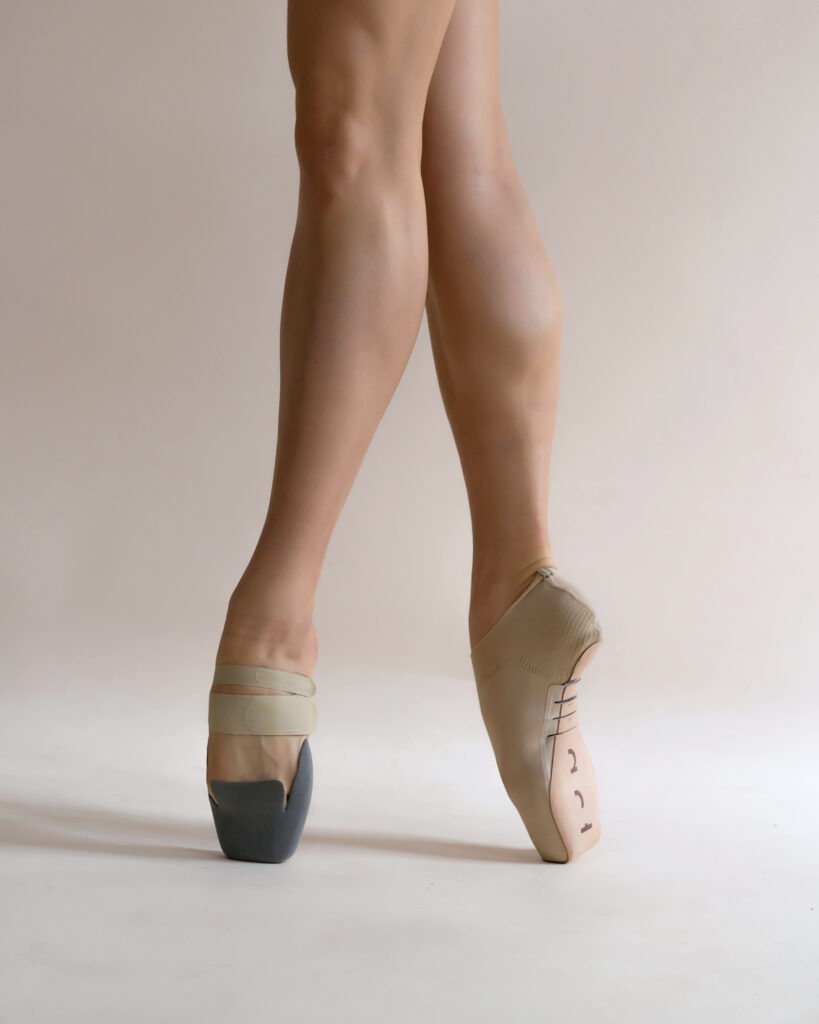
Recently, some manufacturers have begun to use new technologies to even more radically reimagine the pointe shoe. In 2023, the German company act’ble released a 3-D-printed and knit shoe, act’Pointe. The shoe features a scored sole made from a rubber-like elastomer and a compressive “skin” that covers the entire foot. Sophia Lindner, act’ble’s founder, explains that the aim is to meet dancers’ needs by using functional materials that are standard in other athletics. “For a very long time, we didn’t ask how a shoe might look if it were constructed from a blank page, with the knowledge and technology of sports and medicine we have today,” she says. “Dancers are taught to make everything look a certain way. There has been innovation in ballet, but always in a small angle, and in a very rigid system.”
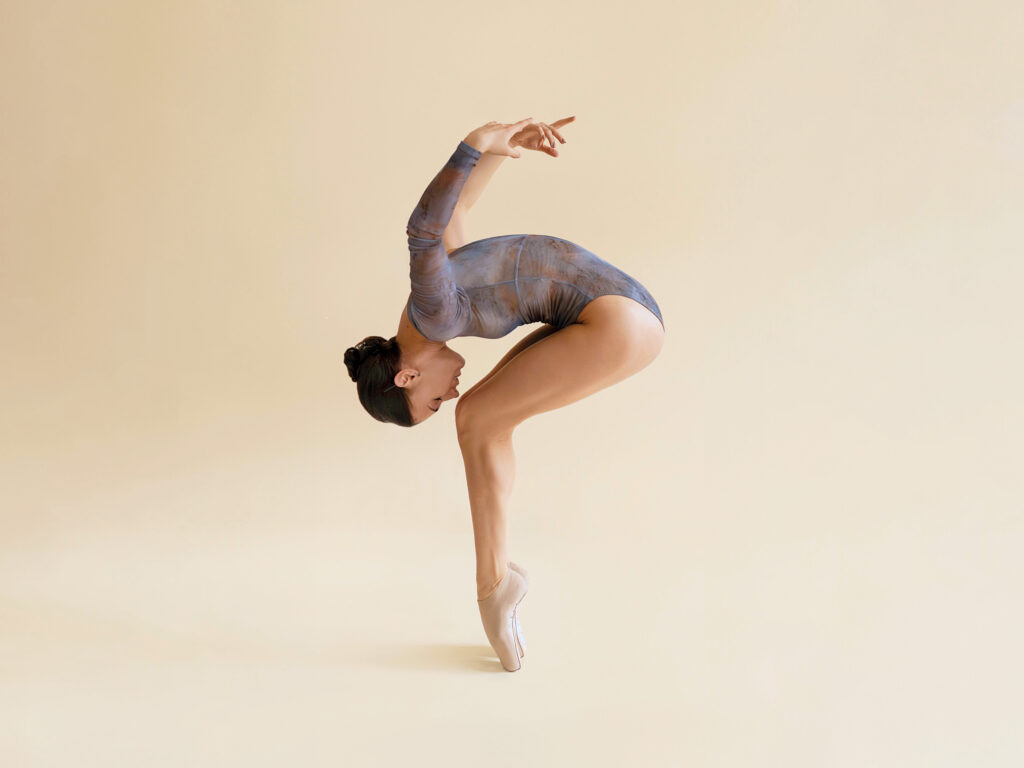
A dancer wearing a three quarter purple and brown leotard contracts over en pointe with their arms swinging backwards.
Dancer Anastasiya Didenko modeling the act’Pointe. Courtesy act’ble.
A dancer wears a 3-D printed shoe on one foot and a knitted tan pointe shoe on the other while standing in 4th position.
The act’Pointe 3-D-printed and knit shoe. Courtesy act’ble.
Sophia Lindner kneels on the floor while holding a 3-D printed shoe.
Act’ble founder Sophia Lindner. Photo by Carol Lancelloti, Courtesy act’ble.

Look the Part

No matter how comfortable or functional, unconventional shoe designs tend to be a hard sell in the ballet community—often because they look different, featuring nontraditional materials or shapes. Expert fitter Mary Carpenter emphasizes the importance of aesthetics: “In ballet, it has to be beautiful.” That’s why, she says, hybrid models tend to have more success in the market than fully synthetic shoes. Lindner says that traditional aesthetics has been one of act’Pointes’ biggest hurdles.

Expert fitter Riley Thomas Weber adds that many people believe synthetic shanks limit control and “pop” dancers on pointe. He explains that that’s often because of fitting errors; most dancers need softer alternative shanks than expected. “If it wasn’t for those errors, and the taboo-ness, I think a lot more people would be wearing them,” he says.

Tough Crowd

Sometimes resistance to shoe innovation is dancer-driven. Pacific Northwest Ballet production stage manager Sandy Barrack reports that none of the company’s dancers wear shoes with synthetic material, even though PNB has no policy prohibiting them. She says that some past company dancers wore Gaynor Mindens as students, but then switched to traditional shoes when they turned pro. “It was almost like they felt like, ‘If I’m going to be a professional ballerina, I have to wear a Freed or a Freed-like shoe,’ ” she says. Plus, she adds, company dancers often become attached to their preferred shoes. If they aren’t exposed to alternative options as young dancers, chances are they won’t pursue them as professionals.

Much of the time, however, hesitance about new pointe shoe styles trickles down from the top. Directors or educators often encourage—or mandate—their own preferences, sometimes mistrusting technology they’ve not tried themselves. “Resistance to change,” Weber says, “usually comes from the person at the front of the room.” Lindner has heard from several dancers who are interested in trying act’Pointe but fear their teacher or director would disapprove. “There’s always the gatekeepers,” she says. “But I would ask them if preserving tradition is more important than preserving the dancer.”
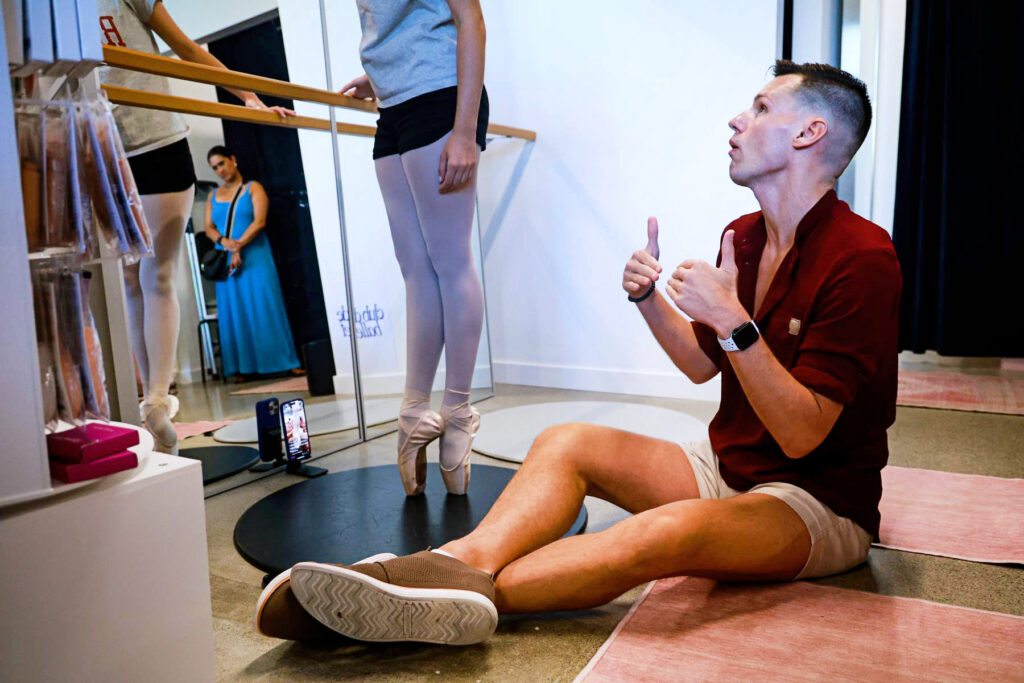
Riley Thomas Weber sits on the floor next to a barre and mirror. He gives a thumbs up to a dancer getting fitted for pointe shoes.
Pointe shoe fitter Riley Thomas Weber. Photo by Lauren West, Courtesy Weber.

Money, Money, Money

The other main obstacle to shoe innovation is finances. It costs thousands of dollars to manufacture a new shoe in just one size, not including the price of prototyping, materials, marketing, or distribution. And dance retail is a relatively small industry, making it less willing and able to take risks on new ideas. “Unlike Nike, we can’t just trash a line that doesn’t work,” Carpenter says. She believes the combination of ballet’s change-resistant culture and resource scarcity sets it behind not just in pointe shoe evolution but, more broadly, in sports-medicine development. “If there were bigger budgets involved and it had more public prestige, things may be different,” she says.

Even when a new shoe hits the market, retail stores often can’t risk stocking a new model. “Most people buy through retailers,” says Weber. “And a retailer can only bring in what they know is going to sell.” Without certain shoes in-store, dancers may not know they exist. That perpetuates a cycle of supply and demand, says Weber, because manufacturers also need to meet their bottom lines.
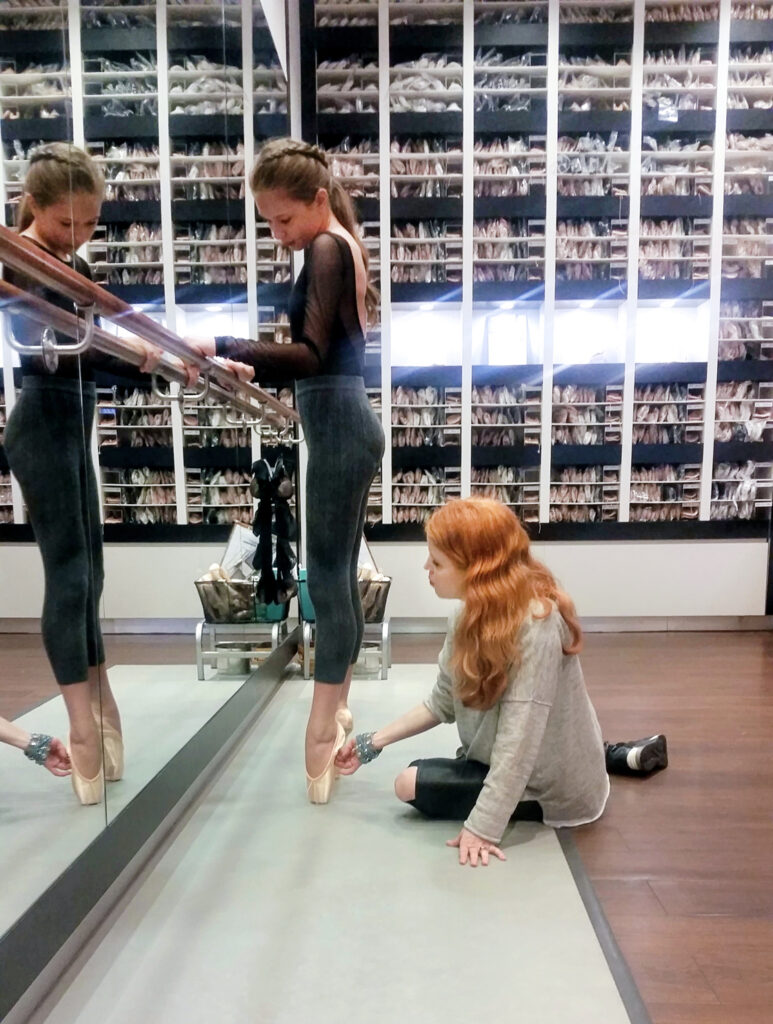
Mary Carpenter sits on the floor while helping a young dancer get fitted for pointe shoes in a store.
Pointe shoe fitter Mary Carpenter. Courtesy Carpenter.

Both Weber and Carpenter say that while developing new designs, brands need to prioritize feedback (especially constructive criticism) from a variety of artists. While Carpenter believes social media and recent pop-culture developments are helping to improve general education and bolster ballet’s place in the public eye, there’s still a long way to go. “In the grand scheme,” she says, “there’s potential. I think we’re muddling through.”

Inclusive Pointe Shoe Shades: Where Are They Now?

In 2020, as the Black Lives Matter movement pushed conversations about inclusivity into the spotlight, dancers and balletomanes called on shoe manufacturers to offer pointe shoes in a more diverse range of skin tones. Some brands, at least initially, answered that call. But in 2026—with tariffs squeezing the global market and diversity, equity, and inclusion initiatives dwindling—it’s worth asking: How real has progress actually been?

Today, inclusive pointe shoe shades are often harder to find than they were a few years ago. “It seems that some brands jumped on that as a marketing ploy, but then they realized how expensive it is to mass-produce shoes in different shades,” says expert fitter Riley Thomas Weber. The crux of the issue is supply and demand. Retailers have to spend thousands to stock new shoes in enough sizes, and Black and brown artists are still a minority in the art form. “With fewer dancers of color to begin with, there are fewer dancers to buy these shoes,” says Weber. “So fewer are stocked in-store.” Sandy Barrack, Pacific Northwest Ballet’s production stage manager, believes that the solution lies in consistent, committed efforts to celebrate dancers of color and make ballet more accessible. “The more that we embrace a more diverse community, the more kids will be in schools wanting these shoes,” she says.
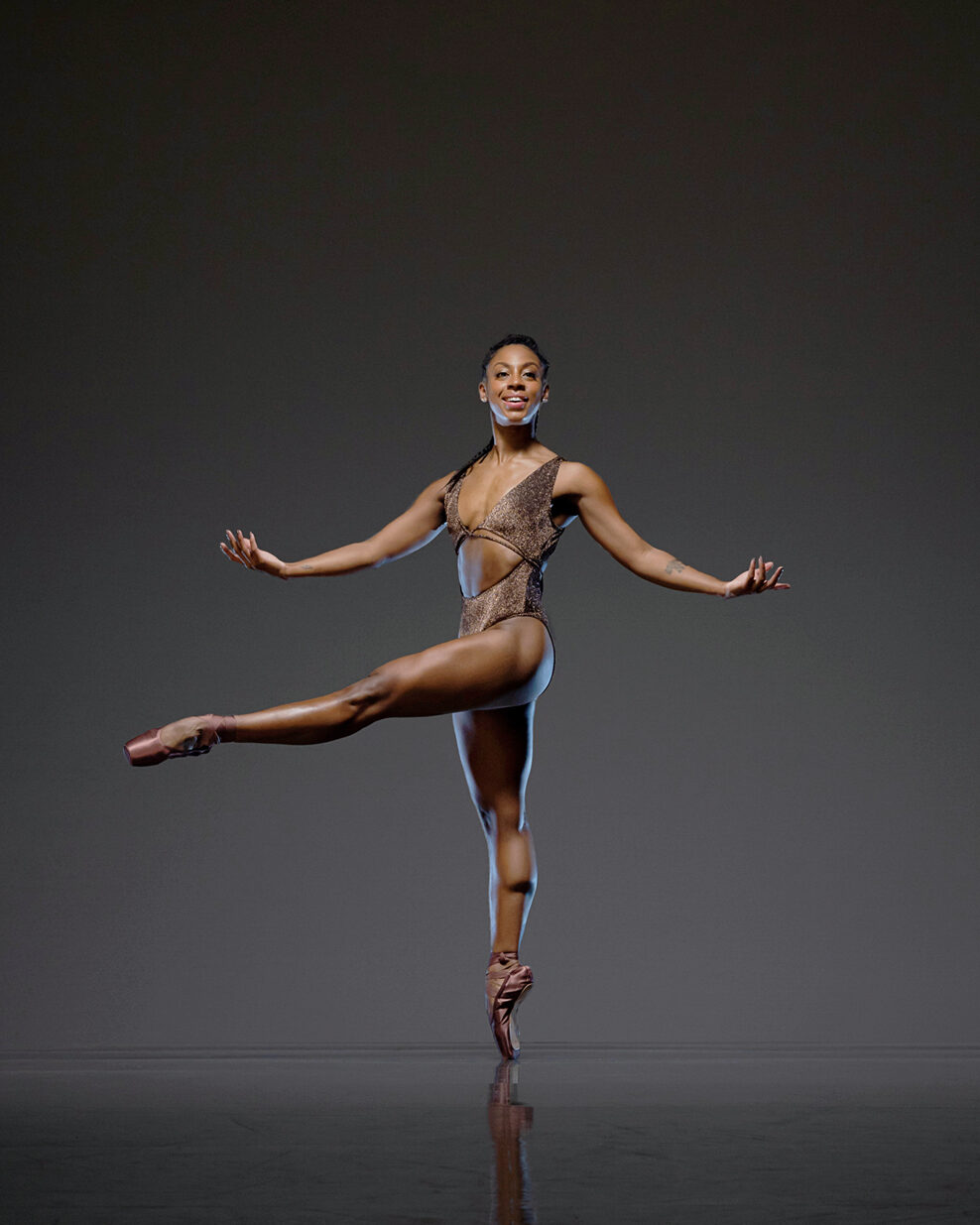
Isabela Coracy stands en ppinte with one leg extended devant and her palms up. She wears a skin tone leotard and brown pointe shoes.
Isabela Coracy. Photography by ASH, Courtesy Coracy.

Of course, the value of producing an inclusive range of shades goes far beyond finances. Isabela Coracy, a leading dancer with Ballet Black, understands the fiscal challenges manufacturers face. “But it would be a good change if production [of diverse shades] could be as normal as it is with pink shoes,” she says. Going forward, she hopes to see not only pointe shoes in a wider range of shades but also ribbons and elastic, which typically come in several variations of elasticity and width in pink shades, but only a few in bronze and brown. Barrack says a small startup, pointeshoeribbons.com, attempted to fill the gap—but the company recently folded.

Coracy emphasizes that diverse options cannot just be a trend. “I think of all the dancers who didn’t become professionals because they did not feel represented,” she says. “We have so many leotards. Why not pointe shoes?”