








We started off with a simple idea for a product; we wanted to re-use the chat interface for everything except chat. It was supposed to be just for photos but expandable later.
The idea was that most people already share their photos with others on WhatsApp or some other messaging service, which technically also ’tags’ the people who were there. So, why not turn the act of sharing into the act of organizing as well?
Whenever you want to find an old photo, your best bet for 100% accuracy is to remember the month/year the photo was taken - but this isn’t necessarily how we remember things. You don’t really remember the exact month something happened, but you always remember who was there. Therefore, since we already shared the photos with the people who were there, why can’t we retrieve them by who was there too?
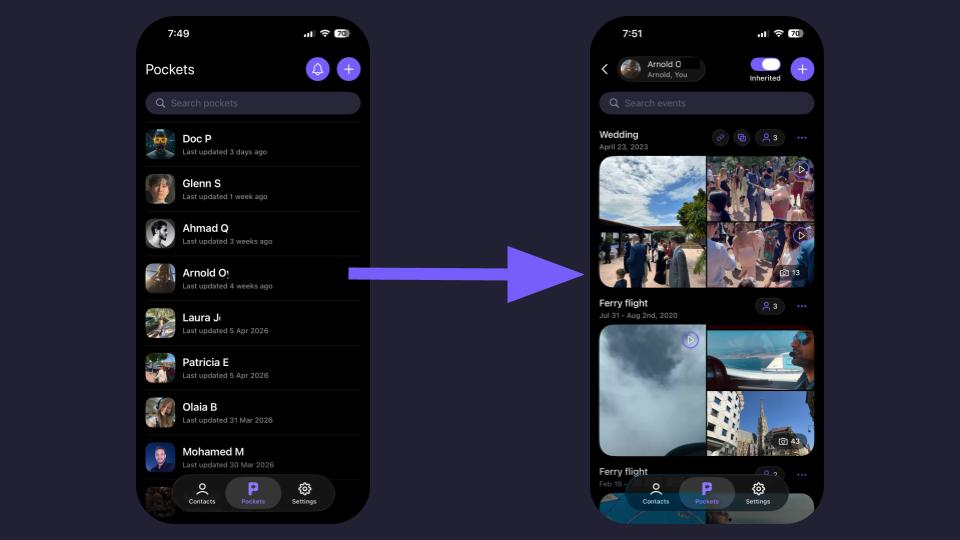 PicPocket.io’s mobile interface, with last names obscured for privacy
This worked great for organizing photos, once we culled the tens of thousands of photos we had on our phones and had them organized by people, finding a specific memory was a lot faster. The issue was that after you had already organized your photos, there was nothing left to do.
We decided to add a feed to the web client. This would serve two purposes:
The point was to have a place where you could send anything that wasn’t worth a message. A message in our humble opinion is too instant; it requires your immediate attention, and sometimes you just want to send something to someone that says “hey, when you’re bored, you might want to check this out.”
Since we already had the chat interface, this seemed like the perfect fit.
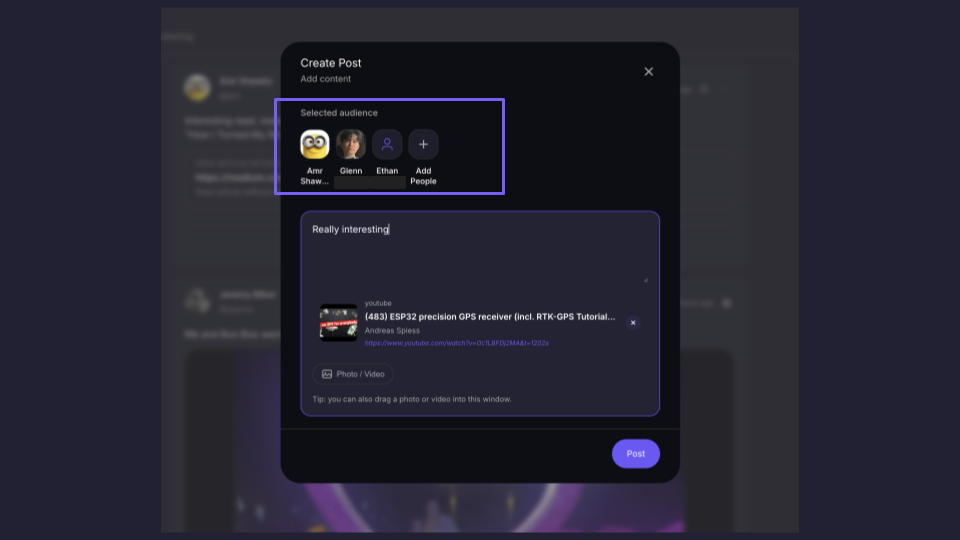 Screenshot of PicPocket.io’s dialogue box to create a post with a specific audience
While it wasn’t our intention, immediately after we started using it ourselves, we realized that this feels a lot like old FB - no ads, no ‘discover’, no algorithms. Just posts from people you know. Even the photo albums feel a lot like the albums from old FB. This isn’t necessarily a bad thing. It seems like FB really used to have the product that we wanted, and that slowly morphed into something else. Interestingly, once we had convinced our friends to give it a try, they would post things that they otherwise wouldn’t post on modern Instagram/FB (couple photos, trips, awkward selfies, etc.,), which was very reminiscent of the old(er) internet.
Another discovered benefit was that this worked like a nice sharing feature for YouTube too. There have been many times where I’ve personally found a mildly interesting YouTube video that I know somebody else would enjoy, but its not worth sending it to them in a message. Once others began reciprocating too, I would start being recommended videos I might not have found algorithmically.
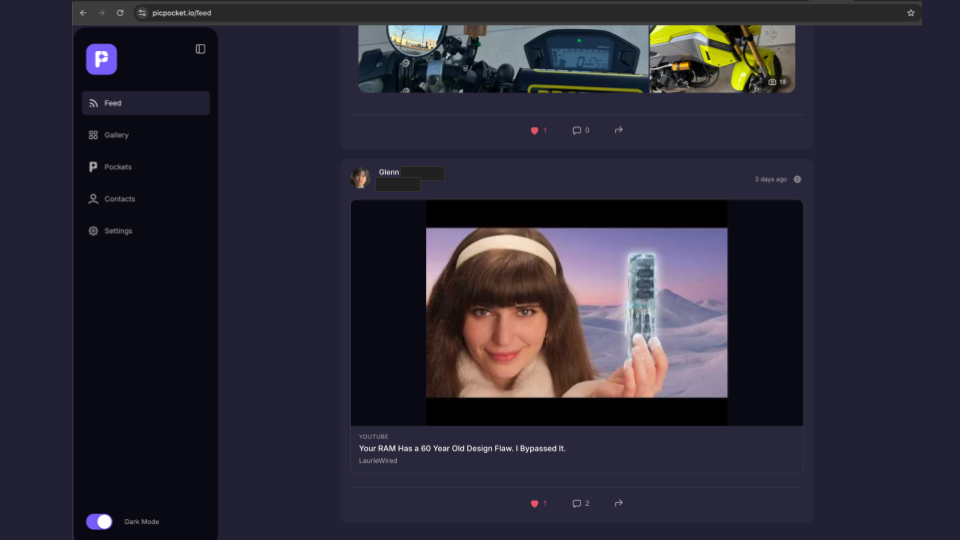 Screenshot of PicPocket.io’s web feed
I don’t necessarily think the fact that PicPocket now resembles something that used to exist is necessarily a bad thing. After all, old FB was immensely popular. We also do have plenty of our own unique features like placeholders. I’d also like to think that since our business model is based on photo storage, rather than selling ads/data, we could have a similar starting point but a different finishing line.
There’s still quite a lot to do, we’re in the middle of a major UX overhaul on the rest of the app/site, and we haven’t even brought the feed over to mobile yet. As a proof-of-concept though, it seems pretty fun.
If you’d like to check it out and don’t mind a few quirks, feel free to sign up at https://picpocket.io
此内容由惯性聚合(RSS阅读器)自动聚合整理,仅供阅读参考。 原文来自 — 版权归原作者所有。