


Chris Marshall

 Getty Images
Trials on veterans suggest the potent hallucinogen could provide a new treatment for PTSD, but scientists still don't know how it works.
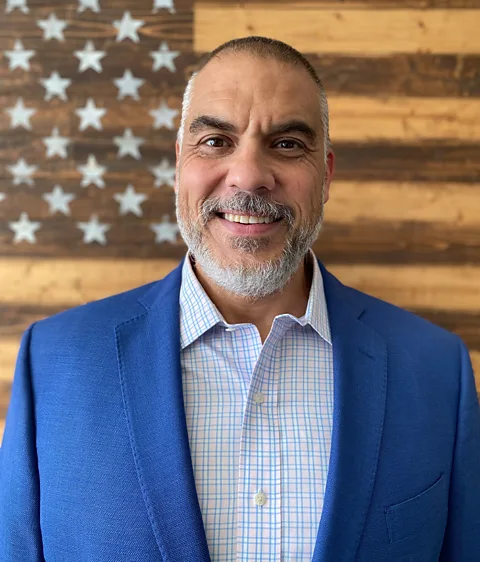
Elias Kfoury was making what he considered to be a last-ditch attempt to remedy years of deep psychological pain. Lying on his back in a clinic in Tijuana, Mexico, the former US Navy special operations medic was deep under the influence of ibogaine, a potent psychedelic taking him on an immersive journey through old memories.
"I started seeing people that I recognised from pictures, old family or friends that had passed a long time ago," says Kfoury, who was medically retired in 2016. "I watched so many events from my life and felt like 'this is happening right now'."
And scientists are still trying to unravel how it works. Crucially, they're stuck wondering whether the drug's chemical composition or the potent psychedelic experiences are driving its seemingly life-changing, therapeutic benefits.
Battle scars
Twenty-one years in the military had taken a severe toll on Kfoury. He describes injuries "from head to toe". Then there were the headaches. "It just never went away," says Kfoury, who now lives in Virginia Beach, on the Atlantic Ocean in the US.
A string of 12 surgical procedures did little to relieve his injuries or pain. Nor did the treatments he tried for other psychological battle scars. "I spent my childhood in war and then I found myself again as an adult in war," says Kfoury, who was born in Beirut, Lebanon, during the 1975-1990 civil war.
He was diagnosed with PTSD in 2012. After leaving the military, "I just declined further and further into darkness," he says. He tried a range of medications and different types of therapy, none of which worked. It was when he was close to giving up hope that Kfoury first heard about ibogaine: a friend put him in touch with another military veteran who planned to join a study in Mexico, where ibogaine is unregulated, to investigate the drug's potential benefits for treating traumatic brain injuries and PTSD. Kfoury signed up too.
When you see it for the first time, it's like magic – they take ibogaine and their withdrawal syndrome completely disappears – José Carlos Bouso
Kfoury was among 30 special forces veterans from the US to travel to the clinic in Mexico and have their treatment progress monitored by researchers at Stanford University.
At the clinic, groups of five veterans at a time received ibogaine pills, up to a maximum of 14 milligrams per kilogram of body weight, over three hours. Wearing eyeshades, they each lay on a mat, spread out across a large room, as the effects set in. Beforehand, participants had been coached about what to expect during the trip, which could last up to 72 hours, and they were supervised by medical staff throughout.
For Kfoury, the experience was lucid, personal and deeply challenging. At one point during the twelve or so hours he was under, he says he had a cathartic conversation with himself as a child.
 Elias Kfoury
Treatment for addiction
This wasn't the first time ibogaine had been linked to health improvements. Modern scientific interest in the African ceremonial drug dates back to 1962, when a 19-year-old heroin addict, Howard Lotsof, took a single dose – given to him informally by a chemist friend – and noticed that his heroin withdrawal symptoms disappeared.
Since then, there have been decades of research into ibogaine's ability to help addicts overcome cravings for substances, including opioids and cocaine.
"When you see it for the first time, it's like magic – they take ibogaine and their withdrawal syndrome completely disappears," says José Carlos Bouso, a clinical psychologist and pharmacologist who has been studying psychedelics for 30 years.
Understanding how ibogaine helps
But scientists are still getting to grips with how ibogaine might bring about therapeutic benefits. "We don't have a clear mechanism, not nearly as good as we do for the other psychedelics," says Clayton Olash, a researcher at Stanford University's Brain Stimulation Laboratory who worked on a 2026 analysis delving further into the findings from the Mexico trial on the 30 veterans, including Kfoury.
Ibogaine isn't like other psychedelic compounds. For instance, Olash points out that it doesn't interact much with 5-HT2A, a receptor that normally plays a big role in activity with other psychedelic drugs. Instead, it may have a stronger effect through other receptors such as kappa-opioid receptors, which are involved in stimulating the cells that restore the protective coating around brain nerve fibres called myelin.
 Getty Images
Other research suggests that ibogaine helps the brain recover from addiction by increasing growth proteins called neurotrophins, which support brain cell growth and help brain circuits adapt and heal – a process known as neuroplasticity.
The vivid experiences function like opening a window of opportunity in which people can make behavioural changes
Some research suggests that chemistry is all that is needed – that the intense psychedelic experiences may not even be necessary for ibogaine's healing effects.
Scientists at the University of California created a synthetic version of the drug, free of any hallucinogenic effects. Tests of the trip-free substance on rats showed it reduced alcohol and heroin-seeking behaviour, and produced antidepressant-like effects. Building on such research, some startups are working on drugs that mimic therapeutic effects without the hallucinations.
On the other hand, some scientists say ibogaine's rich, subjective psychedelic experiences – and particularly the so-called "life review", where many patients re-run old scenes from their life – are central to its health effects. For Bouso, the vivid experiences function like "opening a window of opportunity in which people can make behavioural changes".
In a 2017 survey of 88 patients who received ibogaine treatment in Mexico for chronic opioid use, 80% said it had helped reduce withdrawal symptoms, and more interestingly, 67% said the experience helped them unlock memories or insights into the root causes of their addiction. But it should be noted that such surveys are highly subjective.
Physically, intellectually, emotionally, spiritually, every part of me was touched by that medicine… it's like my life is completely different now – Elias Kfoury
The effects are also evident in measurements of brain activity. By measuring the neural electrical signals of the special forces veterans in the Mexico trial, researchers have found that the most intensely-hallucinogenic ibogaine trips coincided with a reduction in a type of brain wave linked with stronger PTSD symptoms. This was still the case in follow-up tests one month later.
"That kind of thing has been shown to happen in meditation… but here it is happening even one month after treatment," says Maheen Mausoof Adamson, clinical professor of neurosurgery at the Stanford School of Medicine, who worked on the 2024 experiment in Mexico that Kfoury participated in, as well as a follow-up study in 2026.
Adamson and team point to a theory suggesting ibogaine may, like other psychedelics, increase neural flexibility and break down unhealthy, rigid thinking patterns by surfacing suppressed or emotionally charged memories. This resembles the emotional processing in vivid dreams.
"We create these rigid maladaptive coping mechanisms and frames on how we see the world and then we maintain them," says Olash. But ibogaine's potential to induce a film-like replay of memories, means that people can "see things from a completely different vantage point, they are rewriting that schema".
 Getty Images
No miracle cure
Whatever its mechanisms of action, ibogaine is no silver bullet. "There's no uniform trajectory that unfolds after treatment," says Alan Davis, associate professor at the Center for Psychedelic Drug Research and Education at Ohio State University in the US. "There are some people who don't respond to the treatment."
For instance, in the 2017 study into the effectiveness of ibogaine for opioid addiction, which Davis led, 17% of patients reported no change and 6% said their opioid consumption increased after treatment. The majority (71%) said ibogaine treatment was better than other treatments they had tried and 30% reported never using opioids again following ibogaine treatment. The results, however, relied on self-reported data and so should be treated with caution.
So far, most of the data is observational and gathered from clinics in the few countries where ibogaine isn't illegal. For that to change, many more large-scale randomised clinical trials are needed, alongside a better understanding of how the drug works.
The two substances are said to complement each other. "I've heard it described as ibogaine being a power sander to your soul, and 5-MeO-DMT is like getting it polished," says Kfoury. But research to justify or explain the pairing is lacking, says Davis, who has published dozens of papers on psychedelics. He describes the challenge of distinguishing which of the two is truly helping patients as "one of the biggest limitations of any of the ibogaine research".
 Getty Images
In the Stanford trial, to protect their hearts, participants were given an intravenous infusion of 1g of magnesium sulfate – magnesium has been considered central to a healthy heart rhythm for decades. Screening and constant medical monitoring of patients during their ibogaine session is also considered essential.
This doesn't come cheap, which, for Davis, is one of the reasons ibogaine could be a long way from becoming a mainstream, regulated treatment. He says too much money is spent on ibogaine research that would be better directed towards other psychedelics that could be made available sooner.
Nevertheless, financial and scientific momentum seems to be growing. In April 2026, US President Donald Trump signed an executive order directing the US Food and Drug Administration to expedite their review of psychedelics as pharmaceuticals, decreeing that the US should dedicate $50m (£37m) in federal funding for research into ibogaine specifically. In 2025, the US state of Texas had already committed $50m in funding for clinical trials of ibogaine as a treatment for opioid use disorder, PTSD and traumatic brain injury.
More like this:
As scientists work to gather further evidence, many veterans, including Kfoury, are already confident that the drug changed their lives.
"Physically, intellectually, emotionally, spiritually, every part of me was touched by that medicine… it's like my life is completely different now," says Kfoury. The endless headaches are mostly gone and he speaks of an inner peace. "I felt like my mind was quiet… I realised I'd suffered for a long time and I needed to be gentle with myself."
However, just taking ibogaine isn't enough. "It gave me a roadmap… but you have to put the work in consistently," he says, noting he's since been journaling and meditating, as well as coaching other veterans who have tried the psychedelic too.
--