


The scientists behind the synthetic egg say it’s a crucial step to the de-extinction of species like the giant moa and the dodo.
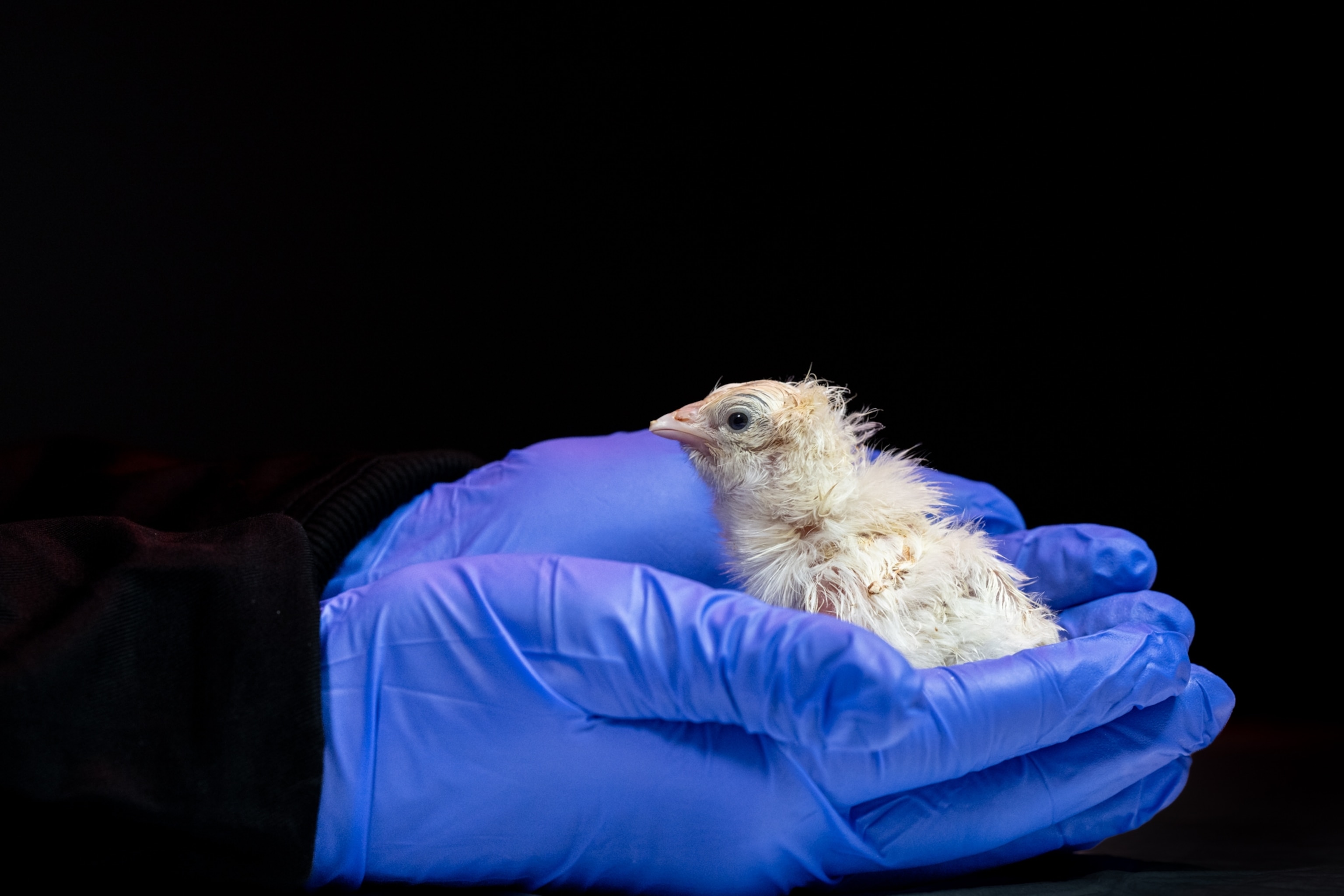
Colossal Biosciences announced that it successfully hatched 26 chickens from synthetic eggshells, including the chick above. It's a step toward their ultimate goal of recreating extinct bird species like the South Island giant moa and the dodo.
Colossal Biosciences
ByChristina Larson
Published May 19, 2026
Whether blue as a robin’s egg, or speckled like a Carolina wren’s, the humble eggshell is a masterpiece of natural design. For years, scientists studying evolution and developmental biology have tried various methods to recreate the eggshell, or to hatch birds without eggshells entirely, each scheme with key limitations. Now the private company Colossal Biosciences claims to have mastered a synthetic shell design—which they say is a key step toward their goal of resurrecting extinct species like New Zealand’s giant moa and Mauritius’s dodo.
On May 19, the Texas-based “de-extinction” company announced the birth of 26 healthy chickens using what it calls the “Colossal artificial egg” system. “We’re not just trying to recreate the egg … We’re really trying to reengineer it for our purposes,” says Colossal CEO and Co-founder Ben Lamm.
Beyond chickens, Colossal says this technology could be scaled up to eventually hatch the extinct species in bigger eggs. This isn’t the first time Colossal, which has fundraised over $600 million and is valued at more than $10 billion, has made headlines. Last year, it announced the birth of three white pups genetically engineered to resemble extinct dire wolves.
The report comes without a peer-reviewed paper or publicly released data for other scientists to critique. If everything the company says is accurate, then what they’ve done is an impressive feat, in redesigning the protective membrane of an egg, “which is a really cool piece of biotech development,” says Vincent Lynch, a University at Buffalo evolutionary biologist who was not involved in the work. But, he added, that’s just one part of an egg, and “they haven’t developed all the other parts.”
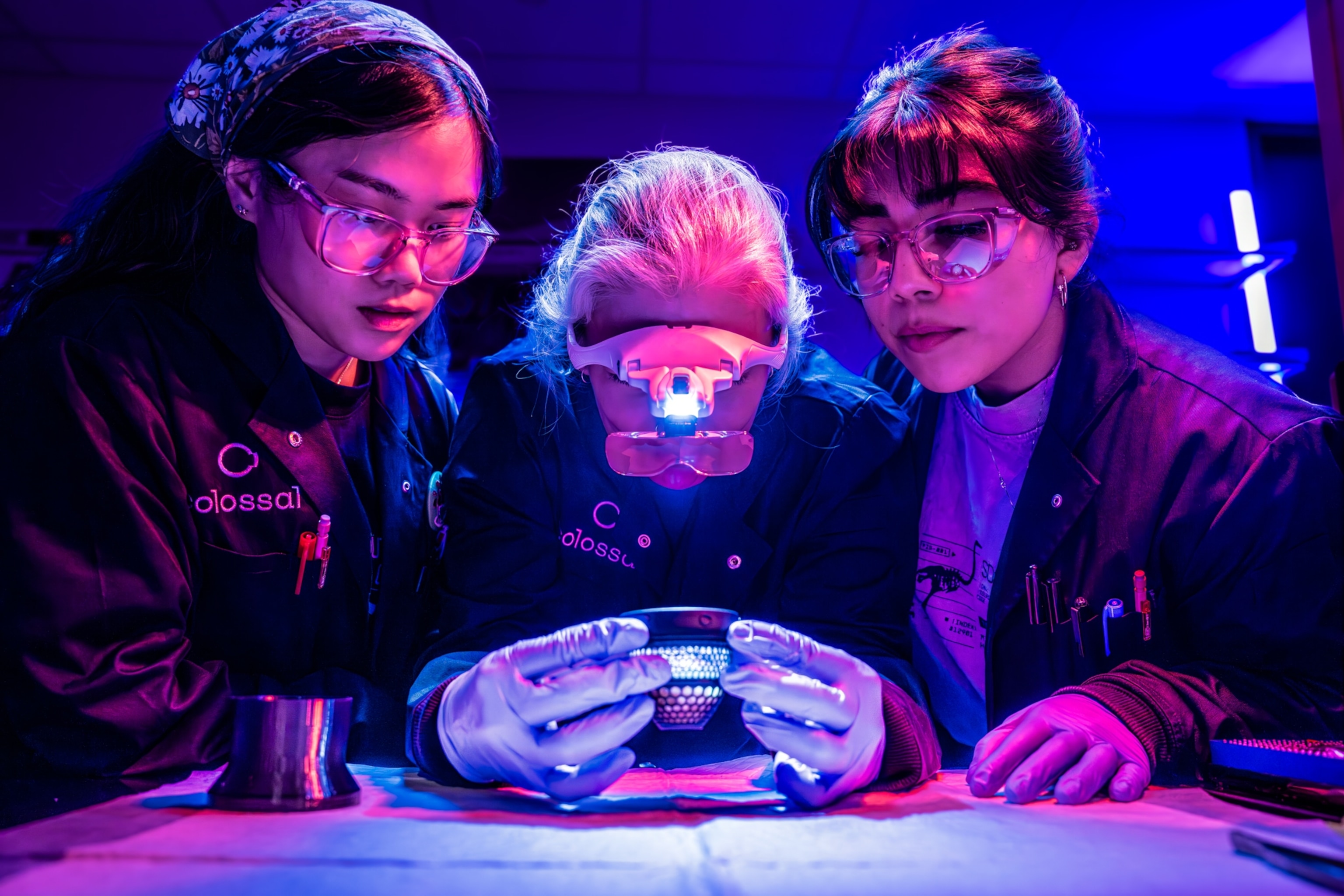
Researchers at Colossal examine a developing embryo.
Colossal Biosciences
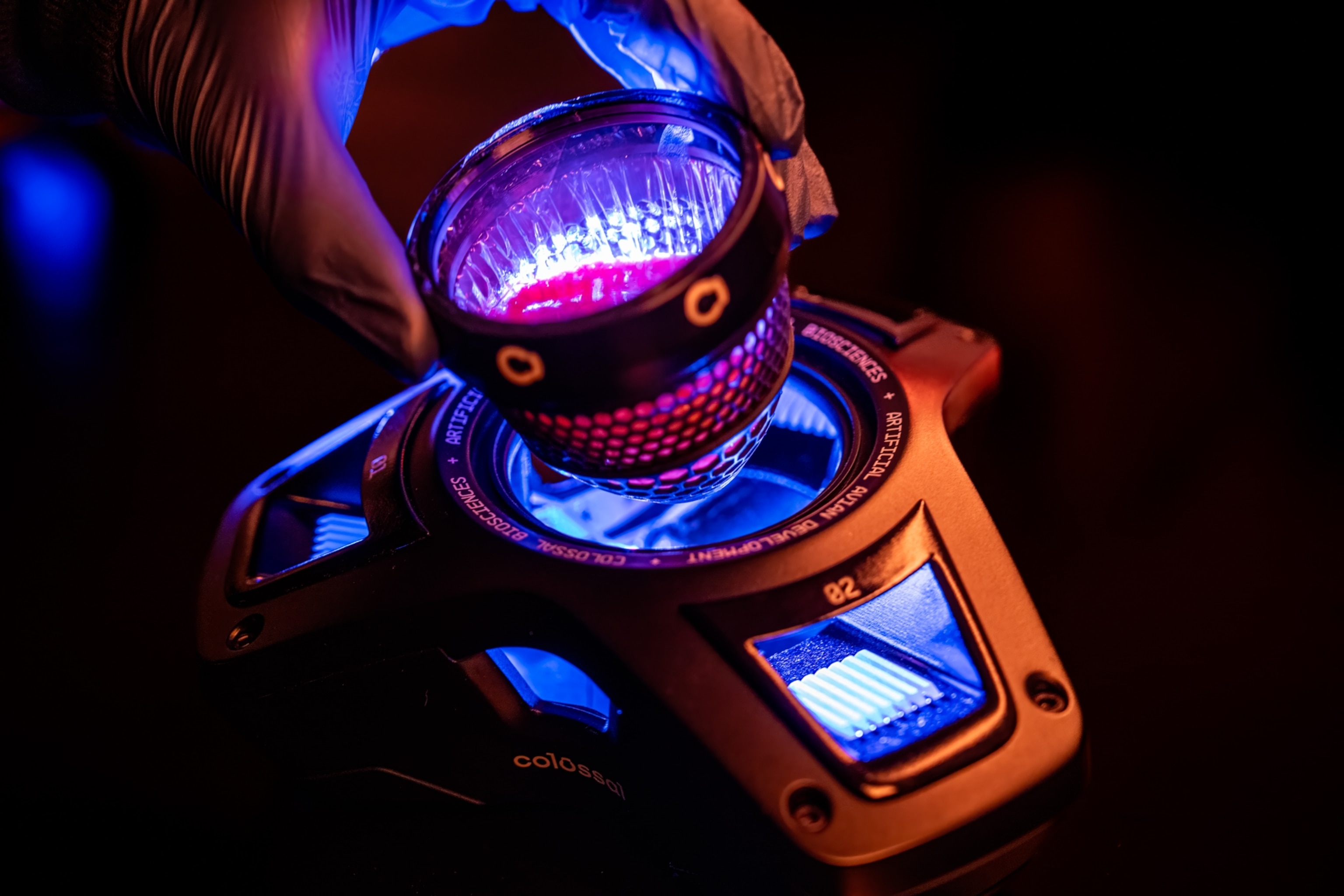
Colossal says their system can be scaled to make much smaller or much larger artificial eggs.
Colossal Biosciences
Compared to mammals, birds present unique challenges to recreate a lost species, if that’s even possible, experts say. “This is just one of many hurdles they have to overcome,” says Hans Cheng, a molecular geneticist retired from the United States Department of Agriculture’s Agricultural Research Service, who teaches at Michigan State University and was not involved in the research.
(Colossal is also working to bring back the Tasmanian tiger.)
A chicken eggshell is strong enough to hold a mama hen’s weight, yet light enough for a tiny chick to peck through while hatching. Oxygen can pass through the eggshell while the embryo is developing, but the protective barrier holds moisture in and keeps germs out. While researchers have successfully hatched chicks outside of their original eggs before, nature’s genius has proven difficult for scientists to fully replicate in a lab.
In 1988, geneticist Margaret Perry of the Roslin Institute, an animal sciences research center at the University of Edinburgh, first hatched chicks from embryos that she had grown in laboratory cultures and placed in “surrogate” eggshells from other chickens.
“Since then, scientists have tried to eliminate the need for a shell and used different artificial containers,” including plastic cups and saran wrap, says Mike McGrew, an embryologist at the Roslin Institute in the United Kingdom. But for each successful attempt, there were many failed efforts. “The hatching rates have not been very good using these different systems,” says McGrew, who is also a scientific advisor on avian stem cells to Colossal.
Most shell-less systems require large amounts of supplemental concentrated oxygen at later development stages, but that carries the risk of damaging DNA in the developing embryo.
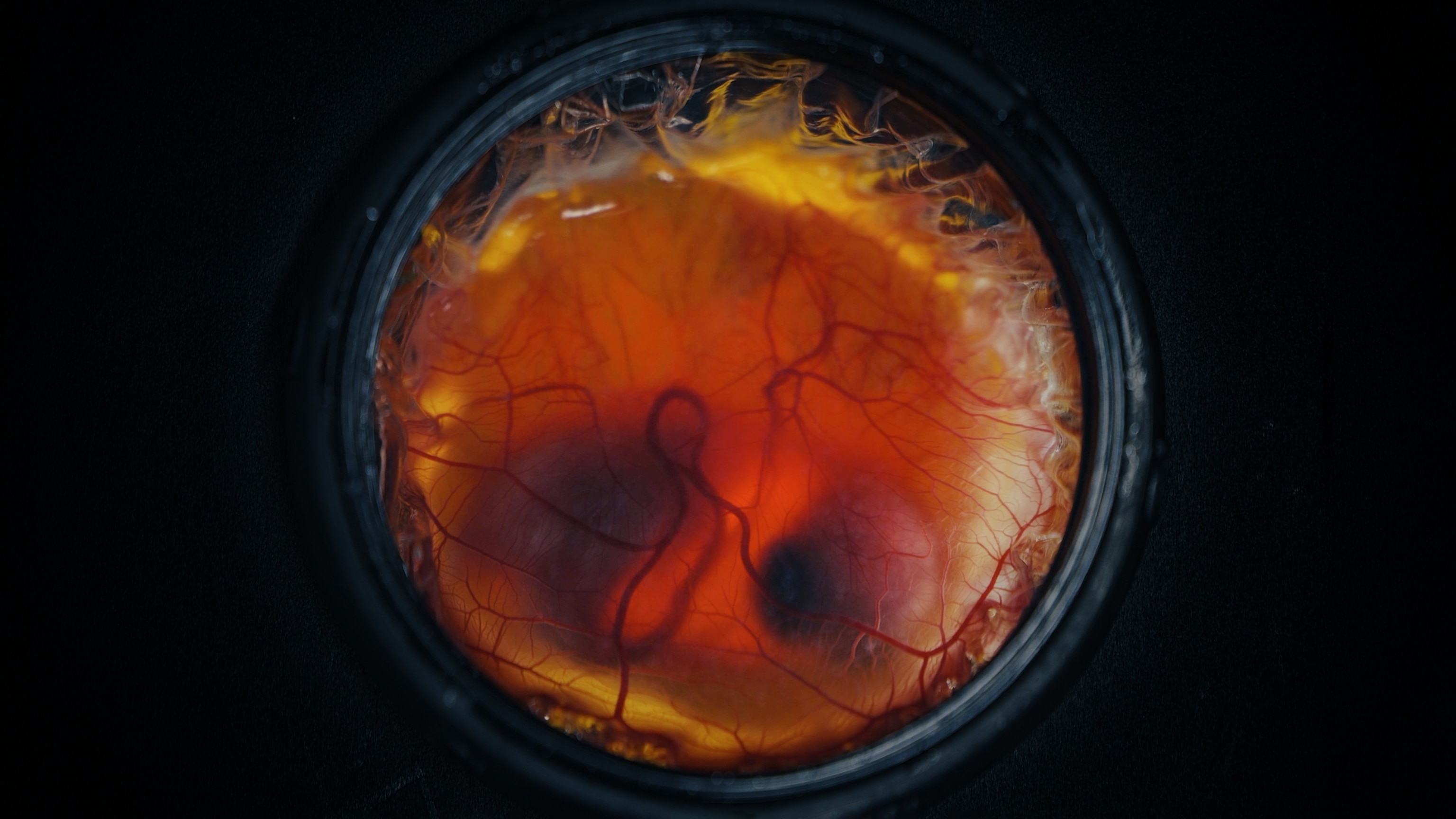
A healthy chicken embryo is seen developing in the new artificial egg device.
Colossal Biosciences
Colossal says it’s solved this problem by creating a new silicone-based membrane, which is placed inside a rigid hexagonal cup to provide support. The semi-permeable material allows oxygen to pass through it as easily as a real eggshell, while also holding moisture in, according to Colossal’s chief biology officer, Andrew Pask.
“It’s a really specialized very thin membrane that enables there to be really effective gas exchange, which is what the eggshell is unbelievably engineered for,” says Pask.
If that’s true, this is “an important feat of biotechnology,” says Lynch.
The company has not released the hatch rate to compare it to past efforts.
The Colossal design includes a clear window at the top of its artificial egg, to allow scientists to directly observe the developing embryo inside. They say the size of the egg is variable. In theory, it could be made much smaller, like a hummingbird egg, or much larger— like the soccer-ball-sized eggs of the extinct South Island giant moa, which once stood nearly 12 feet tall, exceeding modern ostriches or any other living bird today.
In a video released by the company, scientists inspect eggs newly laid by real hens within 24 to 48 hours. They select the most promising ones, crack them open, and delicately pour the contents—everything but the shell—into the artificial egg structure. But everything that happened before then, from fertilization to egg laying, required a real chicken.
Before the company can restore birds resembling extinct species, the scientists will need to genetically engineer bird DNA at a much earlier stage. “Once the fertilized egg is laid, the embryo already has around 50,000 cells—that’s way too many cells to bioengineer,” says Cheng. (Typically, scientists aim to genetically tweak very early embryos with just one or two cells.)
The process of creating genetically modified birds is much different and trickier than for mammals like mice and wolves, says Christopher Preston, a wildlife and environment expert at the University of Montana, who was not involved in the research.
Mammal embryos can be manipulated at a very early stage, then implanted into the stationary womb of a surrogate parent using in vitro fertilization techniques. “You can’t do that with a bird,” says Preston. Birds begin to develop the protective eggshell and nutritious yolk at the same as the embryo itself develops, all while inside the bird mother.
Other researchers, including McGrew, have developed painstaking ways of creating genetically modified chickens by isolating, growing and manipulating special stem cells called primordial germ cells—precursors to sperm and egg cells—in laboratory cultures, injecting them into birds to alter their reproductive organs to carry sperm or egg cells from transgenic birds, then mating two such birds together to create an egg that births a new genetically altered bird with different traits.
The same process has not succeeded for most other birds, and it has never been tried with DNA from extinct species. “It’s a very laborious process, and the success rate is low,” says Cheng.
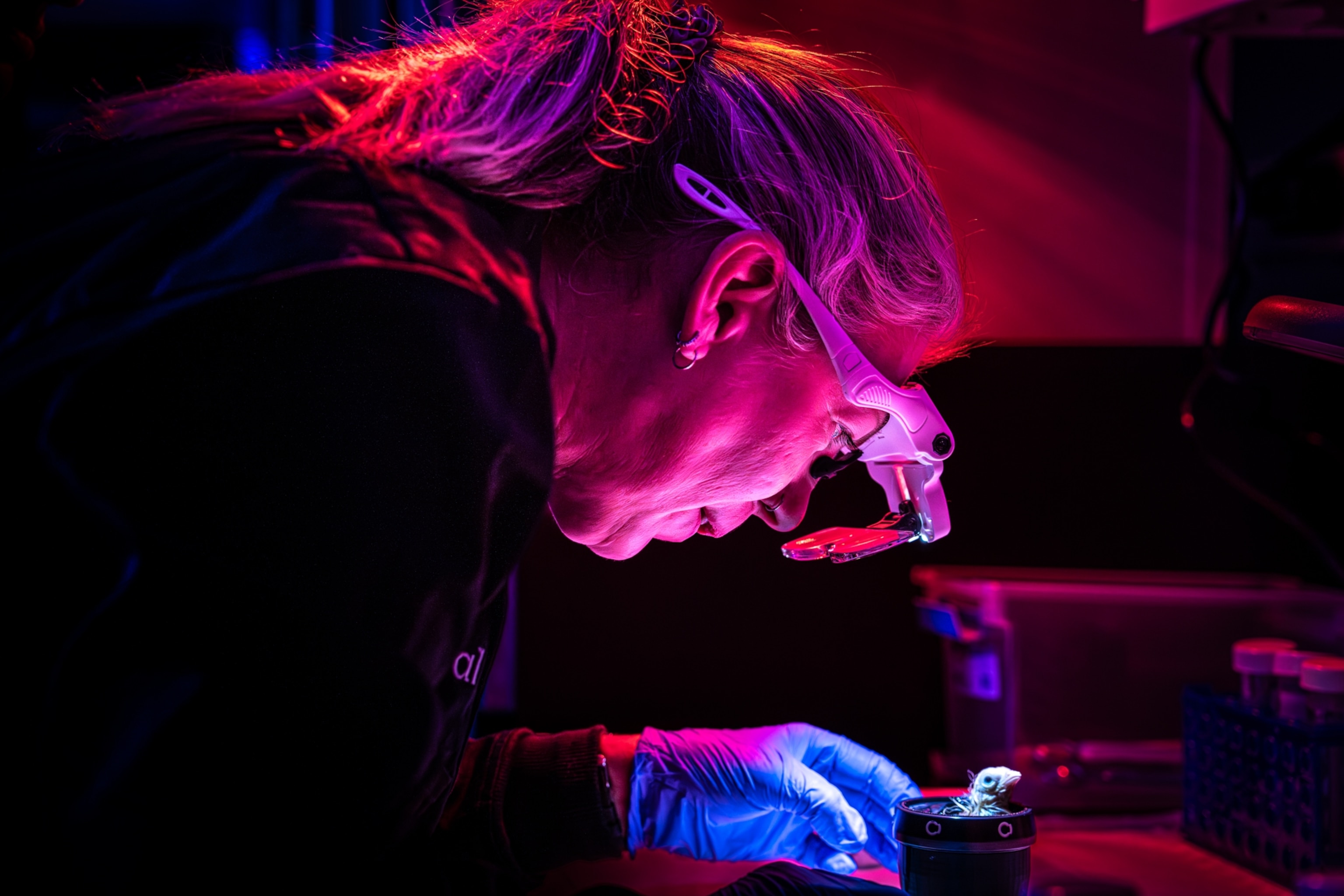
A scientist at Colossal Biosciences checks on the newborn chick.
Colossal Biosciences
Last fall, Colossal said it had achieved the first step, culturing primordial germ cells from a common pigeon, also known as the rock dove, which is genetically similar to the Nicobar pigeon that Colossal says could be a surrogate for the dodo. The company says it had not yet selected a surrogate egg-producer for the giant moa, but that the emu and tinamou are possible candidates. A moa would eventually outgrow any surrogate egg, so Colossal intends to transfer the developing embryo to their artificial egg system at some point in the process.
“I think they still have a long way to go,” says Cheng.
(See how depictions of the dodo have changed over the years.)
Beyond extinct birds, there may be other uses for the eggshell-membrane technology.
The commercial poultry industry probably won’t be interested, said Cheng, because real hens can already cheaply lay 300 eggs a year. But evolutionary biologists may appreciate a clear viewing-window to observe and better study complex biological processes, such as the early formation of organs and blood vessels during embryo development, says Lynch.
Meantime Colossal says that it hopes the technology could one day help conservationists revive populations of threatened bird species. “There could, in theory, be an argument for making a highly endangered bird more adapted to climate change, or more resistant to certain diseases,” says Preston, but he adds that would require avian genetic editing, not only an artificial egg.
(Read more about the ethical questions around resurrecting extinct animals.)
Whether or not that’s ever technically feasible, it wouldn’t solve the biggest problems facing threatened birds today, says Duke University ecologist Stuart Pimm, who was not involved in the research. “We could better help millions of birds every year by solving the more immediate threats of disappearing habitats, collisions with building windows, and prowling outdoor cats,” says Pimm.
此内容由惯性聚合(RSS阅读器)自动聚合整理,仅供阅读参考。 原文来自 — 版权归原作者所有。