





惯性聚合 高效追踪和阅读你感兴趣的博客、新闻、科技资讯
阅读原文 在惯性聚合中打开

推荐订阅源

Threat Intelligence Blog | Flashpoint
OSCHINA 社区最新新闻
OSCHINA 社区最新新闻
宝玉的分享
宝玉的分享
V
Visual Studio Blog
奇客Solidot–传递最新科技情报
奇客Solidot–传递最新科技情报
Recent Announcements
F
Fortinet All Blogs
MongoDB | Blog
MongoDB | Blog
Hugging Face - Blog
Hugging Face - Blog
H
Help Net Security
博客园 - 三生石上(FineUI控件)
博客园_首页
Jina AI
Jina AI
aimingoo的专栏
aimingoo的专栏
S
SegmentFault 最新的问题
T
Tor Project blog
云风的 BLOG
云风的 BLOG
T
Troy Hunt's Blog
K
Kaspersky official blog
T
Tenable Blog
Project Zero
Project Zero
有赞技术团队
有赞技术团队
S
Schneier on Security
P
Proofpoint News Feed
C
Check Point Blog
GbyAI
GbyAI
P
Proofpoint News Feed
C
Cyber Attacks, Cyber Crime and Cyber Security
Microsoft Security Blog
T
Threatpost
Know Your Adversary
Know Your Adversary
Help Net Security
Help Net Security
D
Docker
U
Unit 42
S
Securelist
月光博客
月光博客
博客园 - Franky
The Hacker News
The Hacker News
L
LangChain Blog
博客园 - 叶小钗
大猫的无限游戏
大猫的无限游戏
Hacker News: Ask HN
Hacker News: Ask HN
S
Security @ Cisco Blogs
AI
AI
人人都是产品经理
人人都是产品经理
The Last Watchdog
The Last Watchdog
Hacker News - Newest:
Hacker News - Newest: "LLM"
I
Intezer
The Register - Security
阮一峰的网络日志
阮一峰的网络日志

Hacker News

Introducing Claude Opus 4.7 Qwen Studio The Future of Everything is Lies, I Guess: Where Do We Go From Here? GitHub - SeanFDZ/macmind: Single-layer transformer in HyperTalk for the classic Macintosh Show HN: Agent-cache – Multi-tier LLM/tool/session caching for Valkey and Redis Bonsai 1-bit WebGPU - a Hugging Face Space by webml-community Moving a large-scale metrics pipeline from StatsD to OpenTelemetry / Prometheus GitHub - Nightmare-Eclipse/RedSun: The Red Sun vulnerability repository GitHub - SethPyle376/hiraeth: Local AWS emulator focused on fast integration testing, with SQS support, SQLite-backed state, and a debug-friendly web UI. GitHub - macOS26/Agent: Any AI, replaces Claude Code, Cursor, OpenClaw. Over 18 LLM providers (Claude, OpenAI, Gemini, Ollama, Zai, HF, Qwen) wired into a native Mac app that writes code, builds Xcode projects, bumps versions, manages git, automates Safari, use AppleScript, JS or Accessibility, extend Agent! w/ MCP Servers, run tasks from your iPhone via Messages. YouTube now lets you turn off Shorts I Made a Terminal Pager Burgers | マクドナルド公式 Commands — HackerNews CLI documentation ChatGPT for Excel PiCore - Raspberry Pi Port of Tiny Core Linux Live Nation illegally monopolized ticketing market, jury finds Google Broke Its Promise to Me. Now ICE Has My Data. Founding Engineer at Adaptional | Y Combinator CRISPR takes important step toward silencing Down syndrome’s extra chromosome GitHub - saffron-health/libretto: The AI toolkit for building reliable browser automations US v. Heppner (S.D.N.Y. 2026) no attorney-client privilege for AI chats [pdf] Retrofitting JIT Compilers into C Interpreters IPv6 – Google The Accursèd Alphabetical Clock Cybersecurity Looks Like Proof of Work Now Fragments: April 14 Cal.com Goes Closed Source: Why AI Security Is Forcing Our Decision | Cal.com - Scheduling Software for Online Bookings Laravel raised money and now injects ads directly into your agent When moving fast, talking is the first thing to break Too much Discussion of the XOR swap trick – Heather Cafe Introduction to Spherical Harmonics for Graphics Programmers The Grand Line Building a Z-Machine in the worst possible language High-Level Rust: Getting 80% of the Benefits with 20% of the Pain GitHub - duguyue100/midnight-captain: Inspired by Midnight Commander, tailored to my taste. How to build a `git diff` driver · Jamie Tanna | Software Engineer Center for Responsible, Decentralized Intelligence at Berkeley The Local Universe’s Expansion Rate Is Clearer Than Ever, but Still Doesn’t Add Up - A new synthesis of astronomical measurements confirms a persistent mismatch that could point to physics beyond current models The air throughout our homes is infused with microplastics. But there are things you can do to breathe less of them The disturbing white paper Red Hat is trying to erase from the internet – OSnews The Future of Everything is Lies, I Guess: Annoyances ‘Abhorrent’: the inside story of the Polymarket gamblers betting millions on war Productive procrastination — Max van IJsselmuiden maps, territory and LMs 447 Terabytes per Square Centimetre at Zero Retention Energy: Non-Volatile Memory at the Atomic Scale on Fluorographane Show HN: Pardonned.com – A searchable database of US Pardons 20 Years on AWS and Never Not My Job The Seasons are Wrong Artemis II crew splashes down near San Diego after historic moon mission We gave an AI a 3 year retail lease in SF and asked it to make a profit | Andon Labs How a dancer with ALS used brainwaves to perform live On filing the corners off my MacBooks Installing every* Firefox extension OpenClaw’s memory is unreliable, and you don’t know when it will break Steve Blank Nowhere Is Safe Chimpanzees in Uganda locked in vicious 'civil war', say researchers watgo - a WebAssembly Toolkit for Go linux/Documentation/process/coding-assistants.rst at master · torvalds/linux GitHub - callumlocke/json-formatter: Makes JSON easy to read. Founding Product Engineer at Bild AI | Y Combinator A compelling title that is cryptic enough to get you to take action on it GitHub - Keychron/Keychron-Keyboards-Hardware-Design: Industrial design files for Keychron keyboards and mice. 100+ models with CAD assets in STEP, DXF, DWG, and PDF. Source-available, with commercial use allowed for original compatible accessories within the license terms. [ANNOUNCE] WireGuardNT v0.11 and WireGuard for Windows v0.6 Released 1D-Chess Helium Is Hard to Replace Cooperative Vectors Introduction | Evolve Keeping a Postgres queue healthy — PlanetScale Our response to the Axios developer tool compromise Do Americans read print books, e-books or audiobooks more? The Zettelkasten Method in Obsidian: A Practical Setup Guide Artemis II Is Competency Porn and We Are Starving For It WeakC4 Flight Viz — Cockpit View A Mexican surveillance giant you’ve never heard of is now watching the U.S. border Surelock: Deadlock-Free Mutexes for Rust RISC-V 101 – what is it and what does it mean for Canonical? | Ubuntu The Problem That Built an Industry How Much Linear Memory Access Is Enough? | Solidean Investigating Split Locks on x86-64 Simplest hash functions Sybilproof reputation mechanisms (2005) [pdf] What is a property? How Complex is my Code? Static code analysis in Kotlin — tools overview Toffoli gates are all you need PGLite evangelism dcmake: a new CMake debugger UI Clojure on Fennel part one: Persistent Data Structures Fragments: April 2 Python Release Python install manager 26.1 The Life and Death of the Book Review - Liberties Introducing Database Traffic Control — PlanetScale Bitcoin miners are losing $19,000 on every BTC produced as difficulty drops 7.8% God sleeps in the minerals Building slogbox Apple Silicon and Virtual Machines: Beating the 2 VM Limit Who was “Not Even Wrong” first? Pokemon Evolution Vs Darwinian Evolution The APL Programming Language Source Code
Washington diary
wip-admin · 2026-05-22 · via Hacker News

I recently visited Washington DC, for the first time since I was a boy. Visiting Washington in person is like seeing the Mona Lisa: one has experienced it so many times in reproduction that it is almost eerie to see the real thing. I found the experience fascinating, and I have tried to write down a few of my thoughts and impressions.

Each of the monumental buildings of Washington sits on its own city block, with a border of lawn separating it from the street, like a great roast turkey sitting alone on a silver dish. This quality of distinctness and separateness is a common aspiration of nineteenth-century design, but it was hard for Europeans to achieve amidst their dense and historically layered cities. In London, tremendous monumental buildings are piled up along crowded narrow streets and chaotic traffic islands, like the British Museum on Great Russell Street and the Palace of Westminster on Parliament Square. Not so in Washington, where every grand building rests calmly at the end of a long perspective. This certainly does give the city dignity, though perhaps it loses something of vitality at the same time.
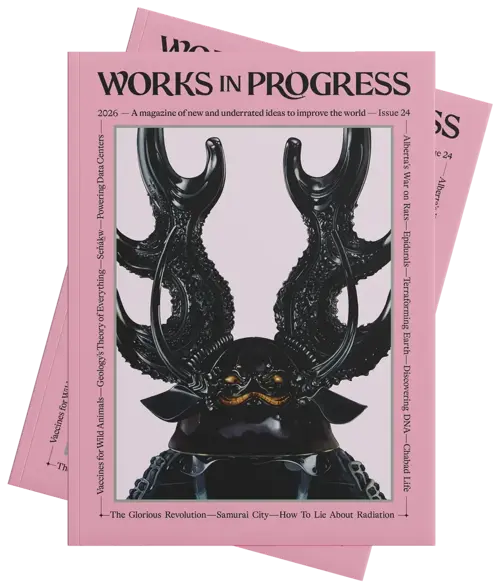
Get the print magazine


Subscribe for $100 to receive six beautiful issues per year.

Subscribe

The buildings themselves are distinctive too. For one thing, most of them are faced in marble. Marble was used extensively for monuments in ancient Rome, but it has not been the dominant building stone in any great city of Europe since then, and in fact very few of Europe’s major buildings feature much exterior marble. Indeed I believe there is only one significant marble structure in London, the Marble Arch, whose material was so distinctive the building was named for it. In every European city the dominant building stone is limestone, or sandstone if limestone is unavailable, or granite if neither is. But because Washington was built so late in history, when transport costs had fallen, the Americans could access the wonderful building marbles of Georgia and Vermont, and create the world’s first marble city since antiquity.

Pat Hanrahan.

A realistic approximation of the difference between surface and subsurface reflection, generated using a computer simulation.

Image

Pat Hanrahan.

Marble is favored by sculptors because of a feature called subsurface scattering. What this means is that marble is slightly translucent: sunlight not only illumines its surface, but a millimeter or so of its depth, creating a softly luminous quality in certain lights. Human flesh also has this feature, whence arises the special appeal of marble for sculptors of the human figure. I had read about subsurface scattering before, but I had never engaged seriously with the idea and slightly suspected it of being a pious canard. But in Washington, I became a believer. The monuments of Washington do seem to glow softly in the brilliant southern light: this does give them a sensuous quality, which becomes almost overwhelming when a whole city is built this way. I am not sure I am a good enough photographer to capture this effect, but I think you can see something of it in the contrast between the colonnade of the Jefferson Monument (Vermont marble) and the Church of the Madeleine in Paris (Lutetian limestone).

Author’s collection.

The Jefferson Memorial on the left, made of Vermont marble, appears to glow in a way that the Church of the Madeleine on the right, made of Lutetian limestone, does not.

Image

Author’s collection.

Washington’s monuments are stylistically unusual, too. For monumental architecture, the Americans traditionally favored the neoclassical style, drawn from Greco-Roman antiquity. Many people think of neoclassicism as, so to speak, the official style of Western civilization. There is an element of truth in this, but quite a limited one. When Europeans began to draw on ancient precedents in the Renaissance, they did so loosely and freely, and each country did so in its own way, such that French, German, Spanish and Italian Renaissance styles are highly distinct from each other. These national renaissance traditions continued in various forms for over three centuries. There was then a brief period of international neoclassicism in the late eighteenth and early nineteenth centuries, after which European architects mostly returned to their national idioms. 

The upshot of this is that the quantum of strictly neoclassical architecture in most European cities is actually very small. The most iconic form of classical architecture is the detached portico (the temple front with columns and a gable). I have had a go at counting detached porticos in the old city of Rome, in some sense the ‘world capital’ of classical architecture. I have found only two unambiguous examples, on the Pantheon and the Temple of Portunus, both of them survivors from antiquity. In Washington, by contrast, there are detached porticos in front of most major buildings, including, starting from the top, the Capitol, the White House, the Supreme Court, the Jefferson Monument, the National Gallery, and the Treasury Building.

This leads me to the curious idea that what Americans think of as traditional European architecture – marble neoclassicism – is actually characteristic of Washington in a way that it is not, and has never been, characteristic of any city of post-antique Europe. In the late nineteenth and early twentieth centuries, American thinkers worried that their architects were copying European precedents rather than developing a national style of their own. But perhaps, in their fervor to emulate European antiquity, they had developed an American national style after all.


I find longhaul flights extremely tedious, so I distract myself by watching films. Returning from Washington I watched Dune: Part One and Dune: Part Two, in which families of aristocratic spacemen compete to rule a Middle Eastern-themed planet called Arrakis. I enjoyed this very much, and I was fascinated by the architecture of the sets. There was something of the Sumerians, something of Boullée’s neoclassicism, a dash of Brazilian modernism, elements from Hindu temple architecture, lots of Islamic motifs, and maybe something of the Mayans, but all pared back, horizontal, massive and monochrome, blended together very harmoniously, plausibly futuristic and ancient at the same time. 

The designer of all this seems to be one Patrice Vermette, who has no historical or architectural training at all, having studied communications at Concordia University in Montreal. The star of Dune, an actor called Timothee Chalamet, recently generated something of a rumpus by criticizing the fustiness of opera and ballet. I find it pleasing that among his colleagues he has a historicist designer of some genius, who can draw upon a wide range of fusty sources with virtuosity.

Enjoyed this? There's more.

Get new articles from Works in Progress delivered to your inbox.