惯性聚合 高效追踪和阅读你感兴趣的博客、新闻、科技资讯
阅读原文 在惯性聚合中打开

推荐订阅源

Google Online Security Blog
D
Docker
人人都是产品经理
人人都是产品经理
Hugging Face - Blog
Hugging Face - Blog
腾讯CDC
让小产品的独立变现更简单 - ezindie.com
宝玉的分享
宝玉的分享
Last Week in AI
Last Week in AI
L
LangChain Blog
月光博客
月光博客
U
Unit 42
OSCHINA 社区最新新闻
OSCHINA 社区最新新闻
GbyAI
GbyAI
Recent Announcements
MyScale Blog
MyScale Blog
N
Netflix TechBlog - Medium
D
DataBreaches.Net
T
Tailwind CSS Blog
H
Help Net Security
MongoDB | Blog
MongoDB | Blog
V
Visual Studio Blog
B
Blog
G
Google Developers Blog
有赞技术团队
有赞技术团队
Y
Y Combinator Blog
freeCodeCamp Programming Tutorials: Python, JavaScript, Git & More
云风的 BLOG
云风的 BLOG
Recorded Future
Recorded Future
H
Hackread – Cybersecurity News, Data Breaches, AI and More
Google DeepMind News
Jina AI
Jina AI
Engineering at Meta
Engineering at Meta
C
Check Point Blog
V
V2EX
爱范儿
爱范儿
Microsoft Azure Blog
T
The Blog of Author Tim Ferriss
博客园 - 聂微东
钛媒体:引领未来商业与生活新知
钛媒体:引领未来商业与生活新知
F
Full Disclosure
奇客Solidot–传递最新科技情报
奇客Solidot–传递最新科技情报
P
Proofpoint News Feed
罗磊的独立博客
cs.CV updates on arXiv.org
Google DeepMind News
WordPress大学
WordPress大学
Apple Machine Learning Research
量子位
博客园 - 司徒正美
博客园 - 叶小钗

Hacker News

Introducing Claude Opus 4.7 Qwen Studio The Future of Everything is Lies, I Guess: Where Do We Go From Here? GitHub - SeanFDZ/macmind: Single-layer transformer in HyperTalk for the classic Macintosh Show HN: Agent-cache – Multi-tier LLM/tool/session caching for Valkey and Redis Bonsai 1-bit WebGPU - a Hugging Face Space by webml-community Moving a large-scale metrics pipeline from StatsD to OpenTelemetry / Prometheus GitHub - Nightmare-Eclipse/RedSun: The Red Sun vulnerability repository GitHub - SethPyle376/hiraeth: Local AWS emulator focused on fast integration testing, with SQS support, SQLite-backed state, and a debug-friendly web UI. GitHub - macOS26/Agent: Any AI, replaces Claude Code, Cursor, OpenClaw. Over 18 LLM providers (Claude, OpenAI, Gemini, Ollama, Zai, HF, Qwen) wired into a native Mac app that writes code, builds Xcode projects, bumps versions, manages git, automates Safari, use AppleScript, JS or Accessibility, extend Agent! w/ MCP Servers, run tasks from your iPhone via Messages. YouTube now lets you turn off Shorts I Made a Terminal Pager Burgers | マクドナルド公式 Commands — HackerNews CLI documentation ChatGPT for Excel PiCore - Raspberry Pi Port of Tiny Core Linux Live Nation illegally monopolized ticketing market, jury finds Google Broke Its Promise to Me. Now ICE Has My Data. Founding Engineer at Adaptional | Y Combinator CRISPR takes important step toward silencing Down syndrome’s extra chromosome GitHub - saffron-health/libretto: The AI toolkit for building reliable browser automations US v. Heppner (S.D.N.Y. 2026) no attorney-client privilege for AI chats [pdf] Retrofitting JIT Compilers into C Interpreters IPv6 – Google The Accursèd Alphabetical Clock Cybersecurity Looks Like Proof of Work Now Fragments: April 14 Cal.com Goes Closed Source: Why AI Security Is Forcing Our Decision | Cal.com - Scheduling Software for Online Bookings Laravel raised money and now injects ads directly into your agent When moving fast, talking is the first thing to break Too much Discussion of the XOR swap trick – Heather Cafe Introduction to Spherical Harmonics for Graphics Programmers The Grand Line Building a Z-Machine in the worst possible language High-Level Rust: Getting 80% of the Benefits with 20% of the Pain GitHub - duguyue100/midnight-captain: Inspired by Midnight Commander, tailored to my taste. How to build a `git diff` driver · Jamie Tanna | Software Engineer Center for Responsible, Decentralized Intelligence at Berkeley The Local Universe’s Expansion Rate Is Clearer Than Ever, but Still Doesn’t Add Up - A new synthesis of astronomical measurements confirms a persistent mismatch that could point to physics beyond current models The air throughout our homes is infused with microplastics. But there are things you can do to breathe less of them The disturbing white paper Red Hat is trying to erase from the internet – OSnews The Future of Everything is Lies, I Guess: Annoyances ‘Abhorrent’: the inside story of the Polymarket gamblers betting millions on war Productive procrastination — Max van IJsselmuiden maps, territory and LMs 447 Terabytes per Square Centimetre at Zero Retention Energy: Non-Volatile Memory at the Atomic Scale on Fluorographane Show HN: Pardonned.com – A searchable database of US Pardons 20 Years on AWS and Never Not My Job The Seasons are Wrong Artemis II crew splashes down near San Diego after historic moon mission We gave an AI a 3 year retail lease in SF and asked it to make a profit | Andon Labs How a dancer with ALS used brainwaves to perform live On filing the corners off my MacBooks Installing every* Firefox extension OpenClaw’s memory is unreliable, and you don’t know when it will break Steve Blank Nowhere Is Safe Chimpanzees in Uganda locked in vicious 'civil war', say researchers watgo - a WebAssembly Toolkit for Go linux/Documentation/process/coding-assistants.rst at master · torvalds/linux GitHub - callumlocke/json-formatter: Makes JSON easy to read. Founding Product Engineer at Bild AI | Y Combinator A compelling title that is cryptic enough to get you to take action on it GitHub - Keychron/Keychron-Keyboards-Hardware-Design: Industrial design files for Keychron keyboards and mice. 100+ models with CAD assets in STEP, DXF, DWG, and PDF. Source-available, with commercial use allowed for original compatible accessories within the license terms. [ANNOUNCE] WireGuardNT v0.11 and WireGuard for Windows v0.6 Released 1D-Chess Helium Is Hard to Replace Cooperative Vectors Introduction | Evolve Keeping a Postgres queue healthy — PlanetScale Our response to the Axios developer tool compromise Do Americans read print books, e-books or audiobooks more? The Zettelkasten Method in Obsidian: A Practical Setup Guide Artemis II Is Competency Porn and We Are Starving For It WeakC4 Flight Viz — Cockpit View A Mexican surveillance giant you’ve never heard of is now watching the U.S. border Surelock: Deadlock-Free Mutexes for Rust RISC-V 101 – what is it and what does it mean for Canonical? | Ubuntu The Problem That Built an Industry How Much Linear Memory Access Is Enough? | Solidean Investigating Split Locks on x86-64 Simplest hash functions Sybilproof reputation mechanisms (2005) [pdf] What is a property? How Complex is my Code? Static code analysis in Kotlin — tools overview Toffoli gates are all you need PGLite evangelism dcmake: a new CMake debugger UI Clojure on Fennel part one: Persistent Data Structures Fragments: April 2 Python Release Python install manager 26.1 The Life and Death of the Book Review - Liberties Introducing Database Traffic Control — PlanetScale Bitcoin miners are losing $19,000 on every BTC produced as difficulty drops 7.8% God sleeps in the minerals Building slogbox Apple Silicon and Virtual Machines: Beating the 2 VM Limit Who was “Not Even Wrong” first? Pokemon Evolution Vs Darwinian Evolution The APL Programming Language Source Code
Scoring 500 Show HN pages for AI design patterns
hubraumhugo · 2026-04-19 · via Hacker News

An attempt to detect 15 common design patterns in AI-generated landing pages.

When browsing Hacker News, I noted that many Show HN projects have a sterile feeling that tell me they are purely AI-generated. Initially I couldn’t tell what it was exactly, so I tried to quantify this feeling by scoring 500 Show HN pages for AI design patterns.

Accelerated by the vibe coding trend, there has been a large increase in Show HN projects. So much, that the moderators of HN had to restrict Show HN submissions for new accounts.

Here is how the Show HN submissions increased over the last few years: Monthly Show HN posts, 2022–2026
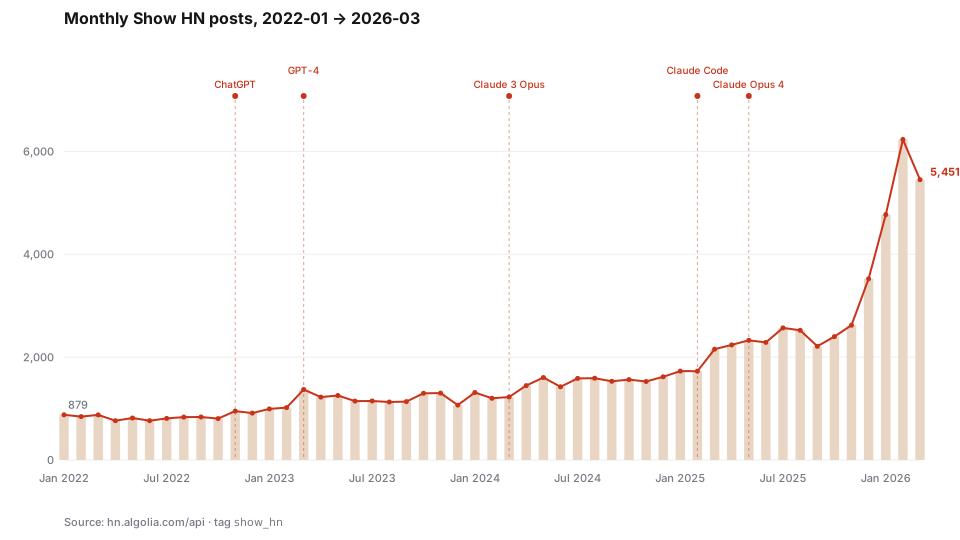
That should give us plenty of pages to score for AI design patterns.

AI design patterns

A designer recently told me that “colored left borders are almost as reliable a sign of AI-generated design as em-dashes for text”, so I started to notice them on many pages.

Then I asked some more designer friends what they think are common AI patterns. The answers can be roughly grouped into fonts, colors, layout quirks, and CSS patterns.

Fonts

  • Inter used for everything, but especially the centered hero headlines
  • LLM tend to use certain font combos like Space Grotesk, Instrument Serif and Geist
  • Serif italic for one accent word in an otherwise-Inter hero

Colors

  • “VibeCode Purple”
  • Perma dark mode with medium-grey body text and all-caps section labels
  • Barely passing body-text contrast in dark themes
  • Gradient everything
  • Large colored glows and colored box-shadows

Layout quirks

  • Centered hero set in a generic sans
  • Badge right above the hero H1
  • Colored borders on cards, on the top or left edge
  • Identical feature cards, each with an icon on top
  • Numbered “1, 2, 3” step sequences
  • Stat banner rows
  • Sidebar or nav with emoji icons
  • All-caps headings and section labels

CSS patterns

  • shadcn/ui
  • Glassmorphism

A few examples from the Show HN submissions:
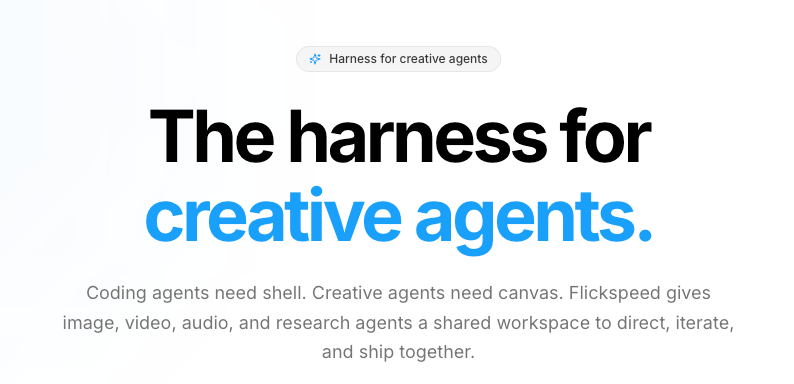
Uppercase badge above the hero H1
Badge above the Inter hero.
Another hero with an uppercase badge above the H1
Same, different page.
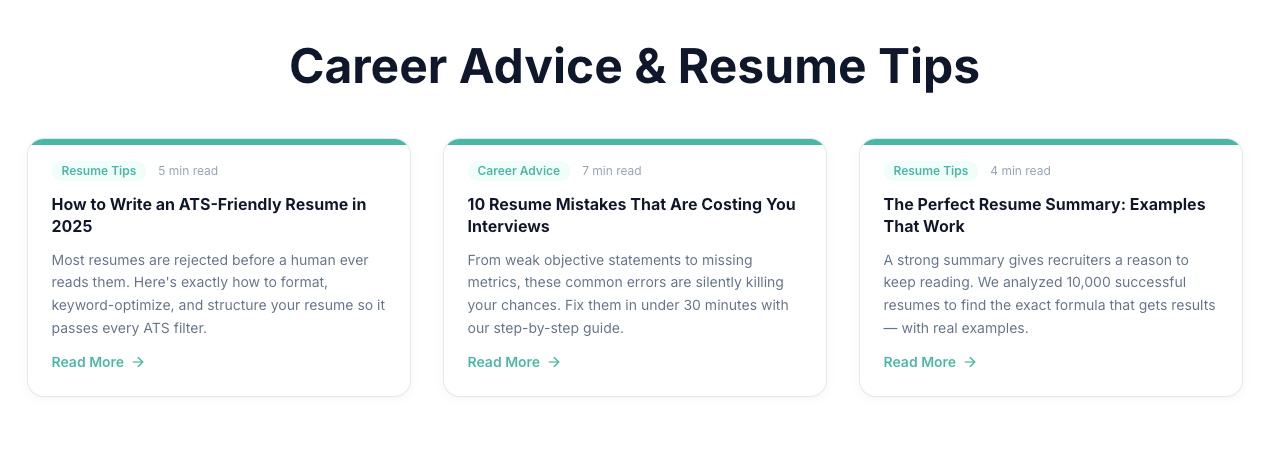
Cards with a colored top-border stripe and Inter copy
Colored border on top.
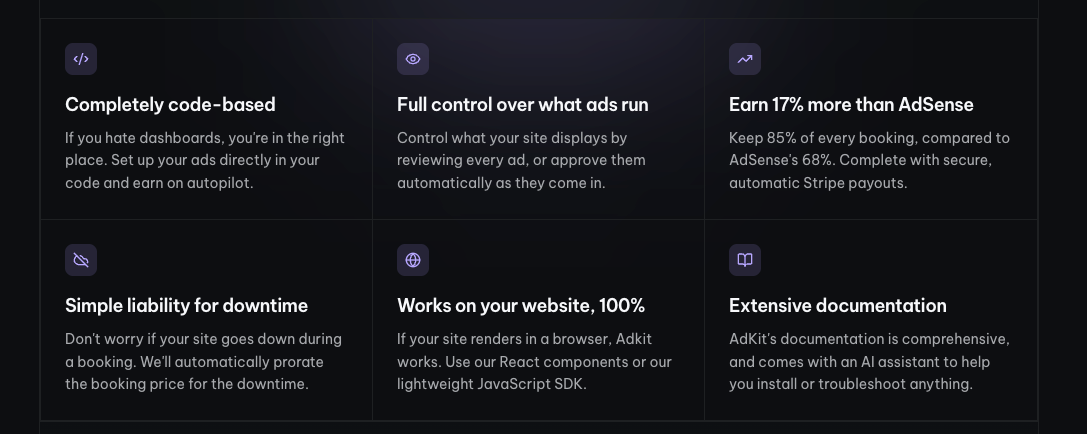
Templated feature grid of icon-topped cards
Icon-topped feature card grid.
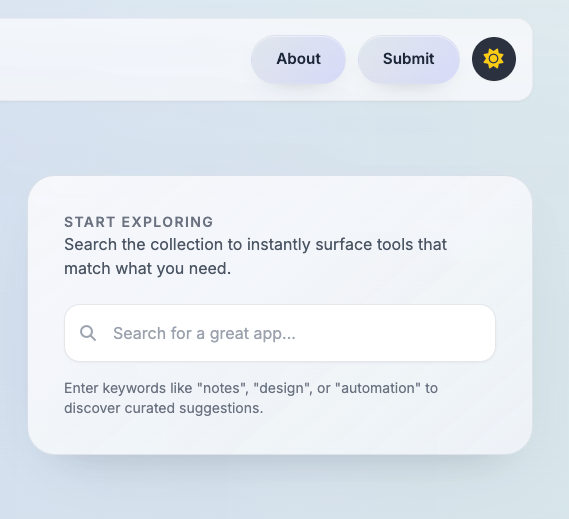
Gradient background with glassmorphism cards
Gradient background + glassmorphism cards.

Detecting AI design in Show HN submissions

Now we can try to systematically score for these patterns by going through 500 of the latest Show HN submissions and scoring their landing pages against the list above.

Here is the scoring method:

  • A headless browser loads each site (Playwright)
  • A small in-page script analyzes the DOM and reads computed styles
  • Every pattern is a deterministic CSS or DOM check. I intentionally do not take screenshots and let the LLM judge them.

This ultimately also leads to false positives, but my manual QA run verified it’s maybe 5-10%. If there is any interest in open sourcing the scoring code to replicate (and improve) the run or score your own site, let me know.

Results

A single pattern doesn’t necessarily make a site AI-generated, so I grouped them into three tiers based on how many of the 15 patterns they trigger:

Heavy slop (5+ patterns) · 105 sites · 21% Mild (2–4) · 230 sites · 46% Clean (0–1) · 165 sites · 33%

Is this bad? Not really, just uninspired. After all, validating a business idea was never about fancy design, and before the AI era, everything looked like Bootstrap or other web templates.

There is a difference between trying to craft your own design and just shipping with whatever defaults the LLMs output.

I guess people will get back to crafting beautiful designs to stand out from the slop. On the other hand, I’m not sure how much design will still matter once AI agents are the primary users of the web.


This post is human-written, the scoring and analysis were AI-assisted.