

惯性聚合 高效追踪和阅读你感兴趣的博客、新闻、科技资讯
阅读原文 在惯性聚合中打开

推荐订阅源

The Cloudflare Blog
Microsoft Security Blog
Threat Intelligence Blog | Flashpoint
L
LangChain Blog
W
WeLiveSecurity
P
Proofpoint News Feed
月光博客
月光博客
NISL@THU
NISL@THU
L
LINUX DO - 最新话题
Webroot Blog
Webroot Blog
T
Threatpost
Y
Y Combinator Blog
www.infosecurity-magazine.com
T
Threat Research - Cisco Blogs
Vercel News
Vercel News
Jina AI
Jina AI
阮一峰的网络日志
阮一峰的网络日志
S
Schneier on Security
J
Java Code Geeks
让小产品的独立变现更简单 - ezindie.com
小众软件
小众软件
MyScale Blog
MyScale Blog
N
News and Events Feed by Topic
Stack Overflow Blog
Stack Overflow Blog
有赞技术团队
有赞技术团队
The Hacker News
The Hacker News
Schneier on Security
K
KPMG report finds enterprise disconnect between AI and its ROI | CIO
Help Net Security
Help Net Security
Recent Announcements
S
Security @ Cisco Blogs
C
CXSECURITY Database RSS Feed - CXSecurity.com
S
Securelist
T
The Exploit Database - CXSecurity.com
云风的 BLOG
云风的 BLOG
C
Cisco Blogs
雷峰网
雷峰网
量子位
Google DeepMind News
OSCHINA 社区最新新闻
OSCHINA 社区最新新闻
Spread Privacy
Spread Privacy
L
Lohrmann on Cybersecurity
I
Intezer
T
The Blog of Author Tim Ferriss
G
GRAHAM CLULEY
D
DataBreaches.Net
V
Vulnerabilities – Threatpost
P
Privacy & Cybersecurity Law Blog
cs.AI updates on arXiv.org
罗磊的独立博客

Hacker News

Introducing Claude Opus 4.7 Qwen Studio The Future of Everything is Lies, I Guess: Where Do We Go From Here? GitHub - SeanFDZ/macmind: Single-layer transformer in HyperTalk for the classic Macintosh Show HN: Agent-cache – Multi-tier LLM/tool/session caching for Valkey and Redis Moving a large-scale metrics pipeline from StatsD to OpenTelemetry / Prometheus GitHub - Nightmare-Eclipse/RedSun: The Red Sun vulnerability repository GitHub - SethPyle376/hiraeth: Local AWS emulator focused on fast integration testing, with SQS support, SQLite-backed state, and a debug-friendly web UI. GitHub - macOS26/Agent: Any AI, replaces Claude Code, Cursor, OpenClaw. Over 18 LLM providers (Claude, OpenAI, Gemini, Ollama, Zai, HF, Qwen) wired into a native Mac app that writes code, builds Xcode projects, bumps versions, manages git, automates Safari, use AppleScript, JS or Accessibility, extend Agent! w/ MCP Servers, run tasks from your iPhone via Messages. YouTube now lets you turn off Shorts I Made a Terminal Pager Burgers | マクドナルド公式 Commands — HackerNews CLI documentation ChatGPT for Excel PiCore - Raspberry Pi Port of Tiny Core Linux Live Nation illegally monopolized ticketing market, jury finds Google Broke Its Promise to Me. Now ICE Has My Data. Founding Engineer at Adaptional | Y Combinator CRISPR takes important step toward silencing Down syndrome’s extra chromosome GitHub - saffron-health/libretto: The AI toolkit for building reliable browser automations US v. Heppner (S.D.N.Y. 2026) no attorney-client privilege for AI chats [pdf] Unexpected €54k billing spike in 13 hours: Firebase browser key without API restrictions used for Gemini requests Retrofitting JIT Compilers into C Interpreters IPv6 – Google The Accursèd Alphabetical Clock Cybersecurity Looks Like Proof of Work Now Fragments: April 14 Cal.com Goes Closed Source: Why AI Security Is Forcing Our Decision | Cal.com - Scheduling Software for Online Bookings Laravel raised money and now injects ads directly into your agent When moving fast, talking is the first thing to break Too much Discussion of the XOR swap trick – Heather Cafe Introduction to Spherical Harmonics for Graphics Programmers The Grand Line Building a Z-Machine in the worst possible language High-Level Rust: Getting 80% of the Benefits with 20% of the Pain GitHub - duguyue100/midnight-captain: Inspired by Midnight Commander, tailored to my taste. How to build a `git diff` driver · Jamie Tanna | Software Engineer Center for Responsible, Decentralized Intelligence at Berkeley The Local Universe’s Expansion Rate Is Clearer Than Ever, but Still Doesn’t Add Up - A new synthesis of astronomical measurements confirms a persistent mismatch that could point to physics beyond current models The air throughout our homes is infused with microplastics. But there are things you can do to breathe less of them The disturbing white paper Red Hat is trying to erase from the internet – OSnews The Future of Everything is Lies, I Guess: Annoyances ‘Abhorrent’: the inside story of the Polymarket gamblers betting millions on war Productive procrastination — Max van IJsselmuiden maps, territory and LMs 447 Terabytes per Square Centimetre at Zero Retention Energy: Non-Volatile Memory at the Atomic Scale on Fluorographane Show HN: Pardonned.com – A searchable database of US Pardons 20 Years on AWS and Never Not My Job The Seasons are Wrong Artemis II crew splashes down near San Diego after historic moon mission We gave an AI a 3 year retail lease in SF and asked it to make a profit | Andon Labs How a dancer with ALS used brainwaves to perform live On filing the corners off my MacBooks Installing every* Firefox extension OpenClaw’s memory is unreliable, and you don’t know when it will break Steve Blank Nowhere Is Safe Chimpanzees in Uganda locked in vicious 'civil war', say researchers watgo - a WebAssembly Toolkit for Go linux/Documentation/process/coding-assistants.rst at master · torvalds/linux GitHub - callumlocke/json-formatter: Makes JSON easy to read. Founding Product Engineer at Bild AI | Y Combinator A compelling title that is cryptic enough to get you to take action on it GitHub - Keychron/Keychron-Keyboards-Hardware-Design: Industrial design files for Keychron keyboards and mice. 100+ models with CAD assets in STEP, DXF, DWG, and PDF. Source-available, with commercial use allowed for original compatible accessories within the license terms. [ANNOUNCE] WireGuardNT v0.11 and WireGuard for Windows v0.6 Released 1D-Chess Helium Is Hard to Replace Cooperative Vectors Introduction | Evolve Keeping a Postgres queue healthy — PlanetScale Our response to the Axios developer tool compromise Do Americans read print books, e-books or audiobooks more? The Zettelkasten Method in Obsidian: A Practical Setup Guide Artemis II Is Competency Porn and We Are Starving For It WeakC4 Flight Viz — Cockpit View A Mexican surveillance giant you’ve never heard of is now watching the U.S. border Surelock: Deadlock-Free Mutexes for Rust RISC-V 101 – what is it and what does it mean for Canonical? | Ubuntu The Problem That Built an Industry How Much Linear Memory Access Is Enough? | Solidean Investigating Split Locks on x86-64 Simplest hash functions Sybilproof reputation mechanisms (2005) [pdf] What is a property? How Complex is my Code? Static code analysis in Kotlin — tools overview Toffoli gates are all you need PGLite evangelism dcmake: a new CMake debugger UI Clojure on Fennel part one: Persistent Data Structures Fragments: April 2 Python Release Python install manager 26.1 The Life and Death of the Book Review - Liberties Introducing Database Traffic Control — PlanetScale Bitcoin miners are losing $19,000 on every BTC produced as difficulty drops 7.8% God sleeps in the minerals Building slogbox Apple Silicon and Virtual Machines: Beating the 2 VM Limit Who was “Not Even Wrong” first? Pokemon Evolution Vs Darwinian Evolution The APL Programming Language Source Code
San Francisco Weighs PG&E Takeover Amid Soaring Utility Costs
Ella Jackson · 2026-06-16 · via Hacker News

Concerns over affordability and public safety have reignited San Francisco’s fight for public power. While PG&E has argued that a takeover would increase local electricity rates for decades, some advocates believe it might be the only way out.

Joe Dabit, owner of Pizza Joint, works in the kitchen at the restaurant in San Francisco's Richmond District on June 8, 2026. (Beth LaBerge/KQED)

The utility company initially offered him just $2,500, he said — which barely covered his typical electricity bill, let alone all the product and business that he lost. After more than three months of back and forth, he said he finally got PG&E to agree to something he found reasonable, but only after threatening to hire a lawyer.

Between December’s series of power outages and skyrocketing electricity bills, Dabit and other San Franciscans are growing increasingly frustrated with the utility company. In February, a group of residents and small businesses filed a class-action lawsuit against PG&E, alleging the utility failed to remediate major financial losses after major power outages in December.

Their discontent recently led the Board of Supervisors to reaffirm their commitment to cutting ties with PG&E, a process that’s been quietly underway for about five years.

Customers sit at Pizza Joint in San Francisco’s Richmond District on June 8, 2026. (Beth LaBerge/KQED)

While PG&E has said that a takeover would increase San Francisco electricity rates for decades, some advocates believe it might be the only way out. With the ever-increasing cost of living, would a takeover make life easier for Dabit?

Though many residents may not be aware of it, the city has been in a protracted battle over whether or not to leave PG&E since the start of the 20th century, said Josh Lappen, a researcher at the University of Notre Dame who studies utilities and energy. The last significant attempt took place in the early 2000s and failed as a ballot measure over concerns about government spending, questions about San Francisco’s ability to run a utility and significant campaigning from PG&E.

While similar ballot measures have been voted down for decades, the city may no longer have to go through voter approval. Since residents passed Proposition A in 2018, the San Francisco Public Utilities Commission can now issue revenue bonds to buy clean power facilities with approval by two-thirds of the Board of Supervisors. This means that, if San Francisco and PG&E agree on a price, the city could potentially buy PG&E’s wire, poles and other physical infrastructure without putting anything on the ballot, according to John Coté, a spokesperson for San Francisco Power and Water.

The city’s latest attempt to buy the utility officially started in 2019 when it offered $2.5 billion for PG&E’s infrastructure. The company rejected the offer outright, saying the offer was too low, but in 2021, the city asked the California Public Utilities Commission to set a fair price. After years of delays, the CPUC directed San Francisco to submit its valuation and for PG&E to file its response by Oct. 20, 2026.

In April, San Francisco submitted a valuation of $3.4 billion to acquire the land, infrastructure and equipment needed for a takeover. PG&E, which has repeatedly said its infrastructure is not for sale, said in a statement around the same time that San Francisco “greatly undervalues” the utility’s property, and doesn’t account for separation costs or costs of state-mandated programs that would be offloaded onto remaining customers.

If San Francisco ever gets to the end of this process, Jim Lazar, an economist with a five-decade career in utility regulation and an advocate for public power, estimated that rates could go down by 15%-20% in the 10 years following purchase. Lazar said that prices would go down primarily because investor-owned utilities come with some baked-in costs that make them more expensive to run than consumer-owned utilities.

For example, being a public, nonprofit company allows consumer-owned utilities to both borrow money for construction projects at a cheaper rate and to pay less in taxes.

Consumer-owned utilities also tend to pay their executives less than investor-owned utilities, and that’s certainly the case for PG&E. The CEO of the Sacramento Municipal Utility District, a consumer-owned utility, is set to earn $1.4 million in 2026. While that’s a lot, PG&E’s CEO made $19.8 million in 2025 alone. The skilled workers that maintain the grid, however, earn about the same regardless of ownership — about $79 per hour at SMUD and about $77 at PG&E.
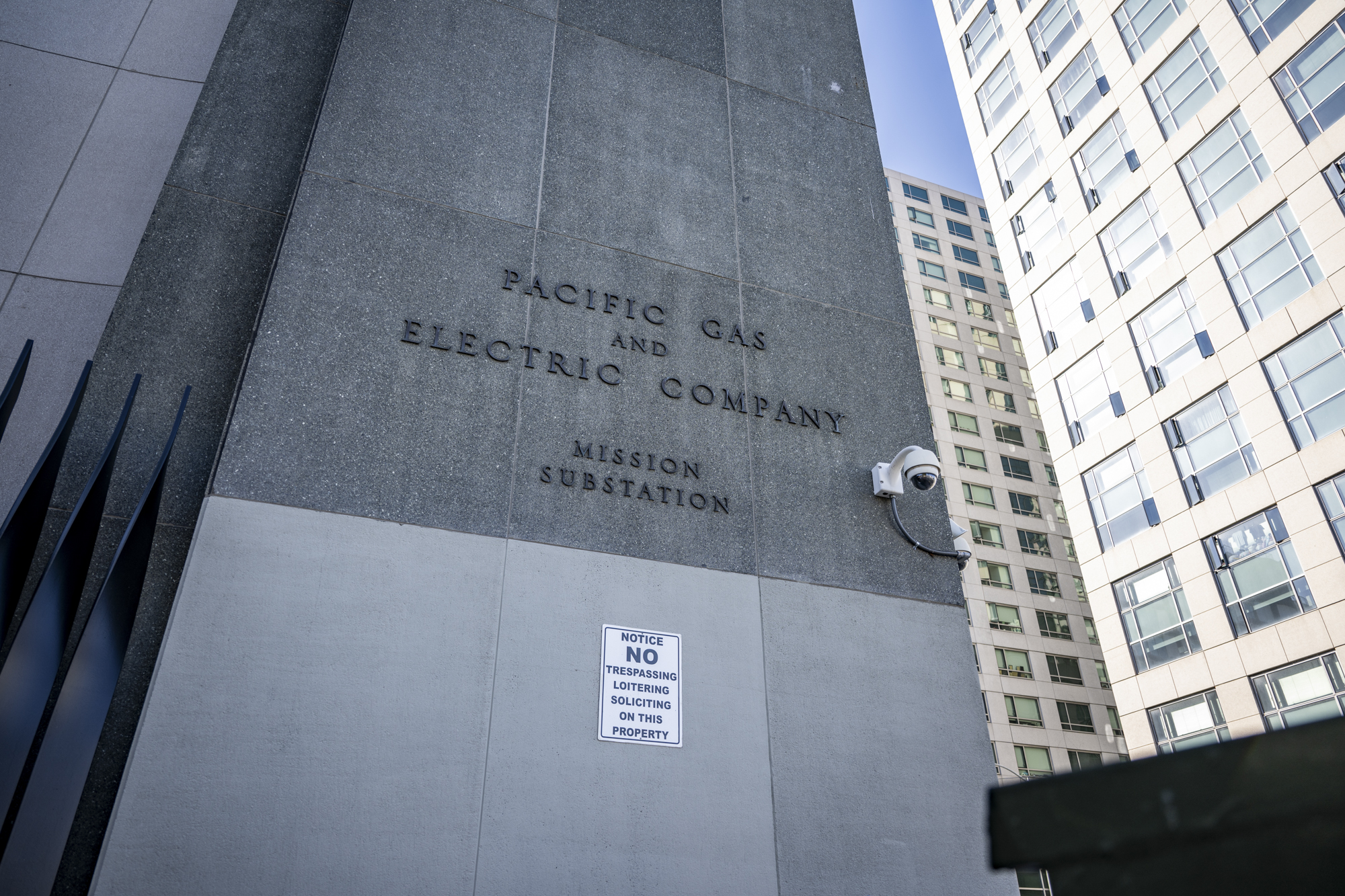
A PG&E substation on Mission and 8th Streets in San Francisco on June 11, 2026. (Beth LaBerge/KQED)

As an investor-owned utility, PG&E also pays dividends to shareholders. While PG&E said that those dividends make up less than 1% of a typical residential bill, the incentive to generate dividends creates one more expense for ratepayers — a never-ending need to increase profits by building more infrastructure. In 2024, they built enough to pay their shareholders $1.45 billion.

While ratepayers may see gains in the long run, Michael Wara, a senior research scholar at Stanford University’s Woods Institute for the Environment, said that the road ahead would be long, winding and costly.

And, Wara said, PG&E ratepayers outside of San Francisco, including places like Oakland and Marin, would take on the costs that San Francisco leaves behind.

Here’s why: San Francisco ratepayers heavily subsidize grid upgrades across Northern California, particularly in fire-prone areas. And PG&E increased its spending on wildfire prevention from $3.84 billion in 2019 to $6.17 billion in 2024. According to Wara, this wildfire spending was the “largest driver of rate increase for PG&E over the last decade,” and the majority of these investments happened outside of the city — where wildfires actually get started.
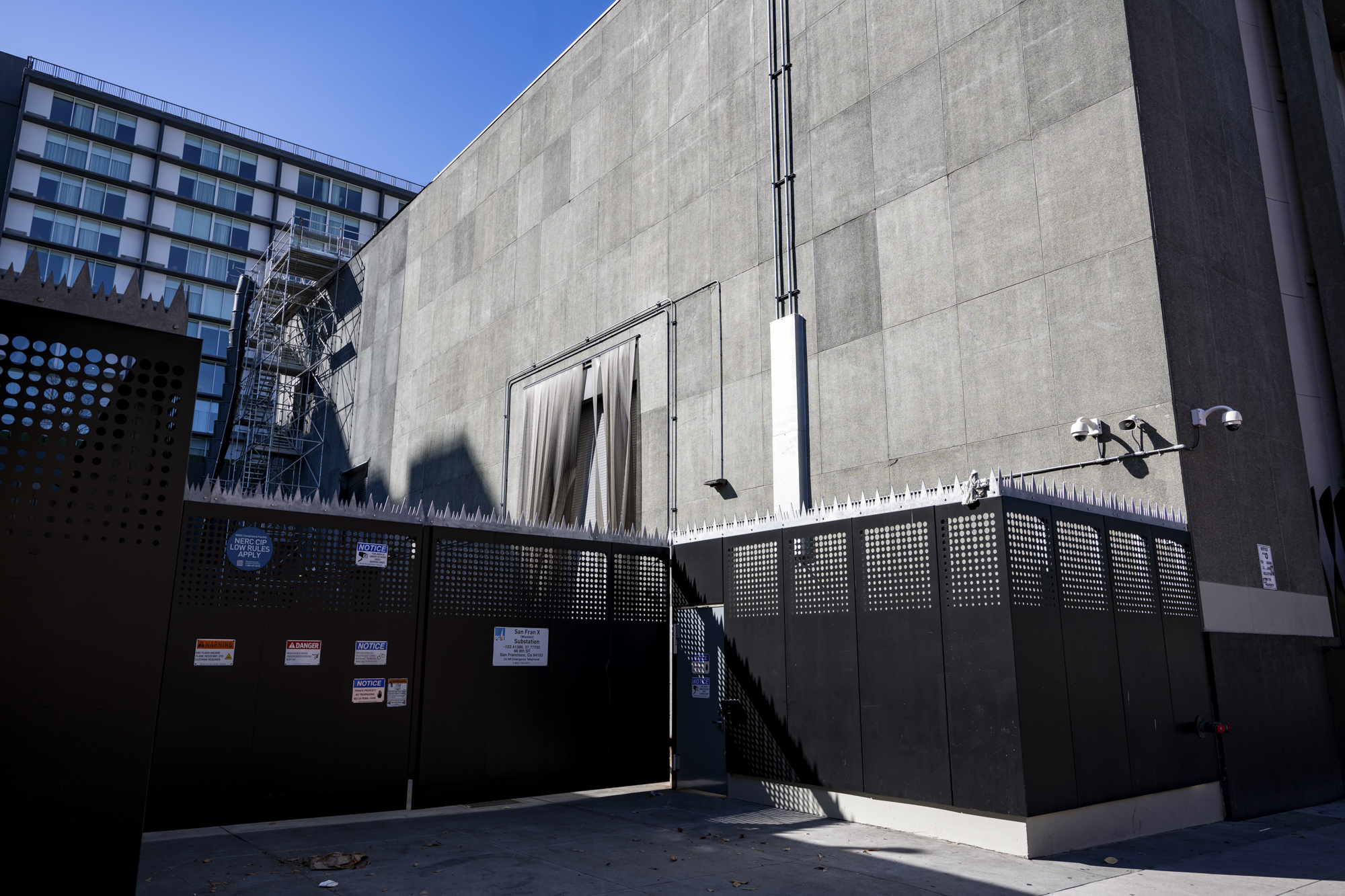
A PG&E substation on Mission and 8th Streets in San Francisco on June 11, 2026. (Beth LaBerge/KQED)

The investments still benefit San Franciscans by protecting them from the impacts of these natural disasters and making sure their energy gets to them safely.

“I know people that really think this is a great idea, but they tend to think about it solely from the perspective of San Francisco and the residents of San Francisco,” Wara said, referring to a takeover. “At the end of the day, the city is a regional entity that relies on energy that comes from oil refineries, electric dams and ports across the state.”

Wara said that because “electric power is this essential good that’s provided over a very large system,” more radical change — like turning all of PG&E into a public utility — would be better than cities leaving individually.

Jessica Tovar, a climate and environmental justice advocate in San Francisco, generally agreed with this take.

“I really would like to see a municipalization push that’s not solely big cities like San Francisco,” she said, “but other communities as well, because there is a lot of benefit to having control of the whole system.”
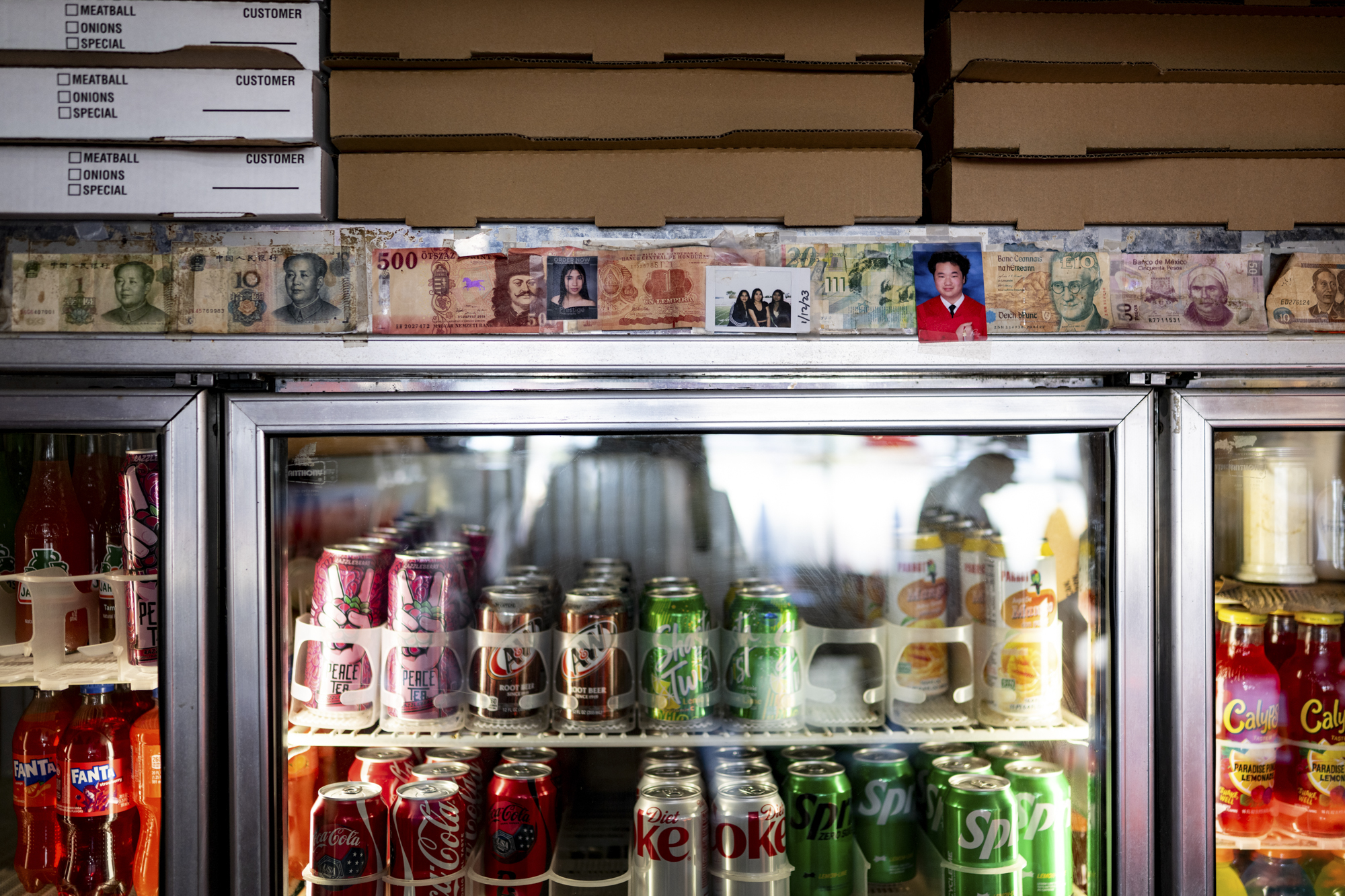
International currency and graduation photos from customers hang behind the counter at Pizza Joint in San Francisco’s Richmond District on June 8, 2026. (Beth LaBerge/KQED)

While experts and advocates agree that PG&E’s current structure does not always protect consumers, “there’s a lot less consensus among the voters on what to do than there is on the fact that something needs to be done,” Lappen said.

“These utilities really prop up daily life and any sort of change that risks increasing costs for any portion of the electorate would be really immediately and severely felt,” Lappen said.

Dabit, the Pizza Joint owner, said that while he had “heard about the government taking over PG&E, I don’t know if it’s going to be any better.”

“We just need PG&E, and whoever is providing electricity and gas to all these restaurants all over the city, to just be fair,” he said. “Just be fair, you know? We’re struggling. We really are.”