- POLICY BRIEF
A locally tailored, big-push intervention to educate unmarried adolescent girls in 18 communities in northern Nigeria reduced rates of marriage from 86% to just 21%. Interventions that address complex, entrenched social problems from various angles simultaneously might be considerably more effective than smaller-scale, cheaper alternatives are.
By
-
Isabelle Cohen
-
Isabelle Cohen is at the University of Washington, Seattle, Washington, USA.
-
-
Maryam Abubakar
-
Maryam Abubakar is at the Centre for Girls Education, Abuja, Nigeria.
-
-
Daniel Perlman
-
Daniel Perlman is at the University of California, Berkeley, Berkeley, California, USA.
-
You have full access to this article via your institution.
Messages for policy
• Multipronged programmes can have high upfront costs yet still have a net positive benefit.
• With the right programme and implementation, the age at which girls marry can be delayed.
• Creating opportunities for girls to attend school in cases in which that runs counter to the behaviour of most people in their communities might work only if cost and social barriers can be overcome.
• Educating girls has many benefits, not just for the girls themselves, but also for their families and communities.
The policy problem
Globally, around 650 million girls and women alive today were first married before 18 years of age1. A 2021 report2 estimated that nearly 80% of girls in northern Nigeria had married before they turned 18. Early marriage — particularly when it is arranged by parents, guardians or other parties without the involvement of the girl — has negative effects on many aspects of the futures of adolescent girls. It affects their agency, health and education adversely, as well as their level of income, and increases their risk of experiencing violence3. It has been estimated4 that ending early-marriage practices would reduce the share of girls who have a child before they are 18 by 75% and could also increase women’s earnings and productivity, providing large benefits to countries’ economies. For instance, in 2015, an estimated US$7.6 billion in extra earnings could have been generated in Nigeria4.
In many contexts, girls marry at a young age because feasible alternatives are lacking; systemic constraints can mean that marriage is the best choice available to them5. The existing resource constraints, attitudes and norms that enable child marriage are multifaceted and intertwined, yet many interventions that seek to address child marriage have a narrow focus. Multifaceted interventions could take strategic advantage of various programmes’ complementary components to succeed where others have failed.
The findings
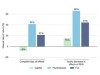
We found that the Pathways to Choice programme reduced by 80% the likelihood that girls in northern Nigeria would be married two years after receiving an intervention that encouraged them to attend school or other training. Girls in the control group, who did not have access to the programme, had a marriage rate of 86%; those in the intervention group, a rate of 21% (Fig. 1). Our intervention also increased the girls’ school attendance by 70 percentage points, and improved their access to social support, as well as their self-perception and ability to advocate for themselves. Moreover, it increased the likelihood that a participant’s younger siblings would be enrolled at school, with an increase of 87% for sisters and 41% for brothers. We find that the programme has net returns of $1,627 per $1,000 invested, and our estimates of its lifetime advantages for the participants show that the intervention has a benefit–cost ratio of 2.41.

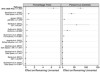
Figure 1 | Effects of the multipronged Pathways to Choice programme in northern Nigeria on rates of marriage among adolescent girls. a, The rate of adolescent girls remaining unmarried two years after girls aged 12–17 years started the Pathways to Choice programme, an education intervention in northern Nigeria. Girls are pooled in communities that received the intervention (Pathways) and those that did not (control). Data are the mean and standard error of the mean. The analysis includes the 1,056 girls (537 in the control group and 519 in the intervention one) who answered questions about their marital status at the end of the study period. b, The estimated effect of the Pathways to Choice programme (calculated from a regression of the girls who remained unmarried while participating in the programme) compared with other interventions focused on adolescent girls that used randomization and provided point estimates on marital outcomes. The comparison uses results from time points two to three years after the intervention. The number of girls included in each study is indicated. Data are from selected previous studies; references are provided in Fig. 4 of the main paper.
These results cover only a short period; understanding the programme’s full effects will require long-term data on participants’ lives. Context matters: we expect that settings in which education is a socially acceptable alternative to early marriage and schools are not currently meeting girls’ needs are more likely to benefit from our intervention than are settings in which high-quality education is already available or in which education is not viewed as a suitable alternative.
The study
The Pathways to Choice programme is a multipronged, community-focused intervention by Nigeria’s Centre for Girls Education in Abuja. It simultaneously tackles several constraints on girls’ education over two years, through community engagement, remedial education and social and in-kind support, encouraging participants to attend school or vocational training. To test its effects, we performed a randomized controlled trial between 2018 and 2020 in 18 communities in northern Nigeria’s Kaduna, Kano and Borno states. We focused on 1,181 unmarried girls who were aged between 12 and 17 years old and not at school at the start of the study. After a baseline survey, the communities were divided into nine pairs, with one of each pair receiving our intervention. Two years later, we conducted a follow-up survey with the same participants. Our results compare the outcomes of girls in communities that received our intervention with those in communities that did not.
doi: https://doi.org/10.1038/d41586-026-00720-8
Acknowledgements We acknowledge the work of the Centre for Girls Education in Abuja; funding from the Ford Foundation, the MacArthur Foundation and the Center for Studies in Demography and Ecology at the University of Washington; and OASIS (formerly L’Initiative OASIS in partnership with the University of California, Berkeley) for providing both financial support and technical assistance in the implementation and learning process of the Pathways to Choice programme. The views presented are our own and do not necessarily represent the views of the University of Washington, the Centre for Girls Education or the University of California, Berkeley. All errors are our own.
References
UNICEF. The Child Marriage Data Portal https://childmarriagedata.org/country-profiles (2026). This website provides current statistics on the prevalence of child marriage worldwide.
Save the Children Nigeria. State of the Nigerian Girl Report: An Incisive Diagnosis of Child Marriage in Nigeria (Save the Children, 2021). This report provides data on child marriage in Nigeria.
Parsons, J. et al. Rev. Faith Int. Aff. 13, 12–22 (2015). This review summarizes the results of many causal and correlational studies on the economic impacts of child marriage.
Wodon, Q. et al. Economic Impacts of Child Marriage: Global Synthesis Report (World Bank and International Center for Research on Women, 2017). This report synthesizes global evidence for the negative impacts of child marriage on: fertility and population growth; health, nutrition and violence; educational attainment and learning; labour-force participation and earnings; and participation, decision-making and in-vestments.
Schaffnit, S. B., Wamoyi, J., Urassa, M., Dardoumpa, M. & Lawson, D. W. Glob. Public Health 16, 1820–1833 (2021). This qualitative study sheds light on how adolescent girls in Tanzania perceive the benefits and opportunities of marriage.
Competing Interests
I.C. declares no competing interests. M.A. is an employee of the Centre for Girls Education. D.P. has consulted for the Centre for Girls Education and served as its first director until 2016.
Related Articles
-
 Read the paper: A big-push community intervention reduced rates of child marriage by 80%
-
 Addressing social, psychological and economic barriers helps people out of extreme poverty
-
 Changes in education levels across generations in Africa are linked to religion