





A wave of voter anger over massive data center projects is beginning to reshape U.S. politics, with local officials and senior lawmakers losing elections after backing controversial developments tied to the artificial intelligence boom.
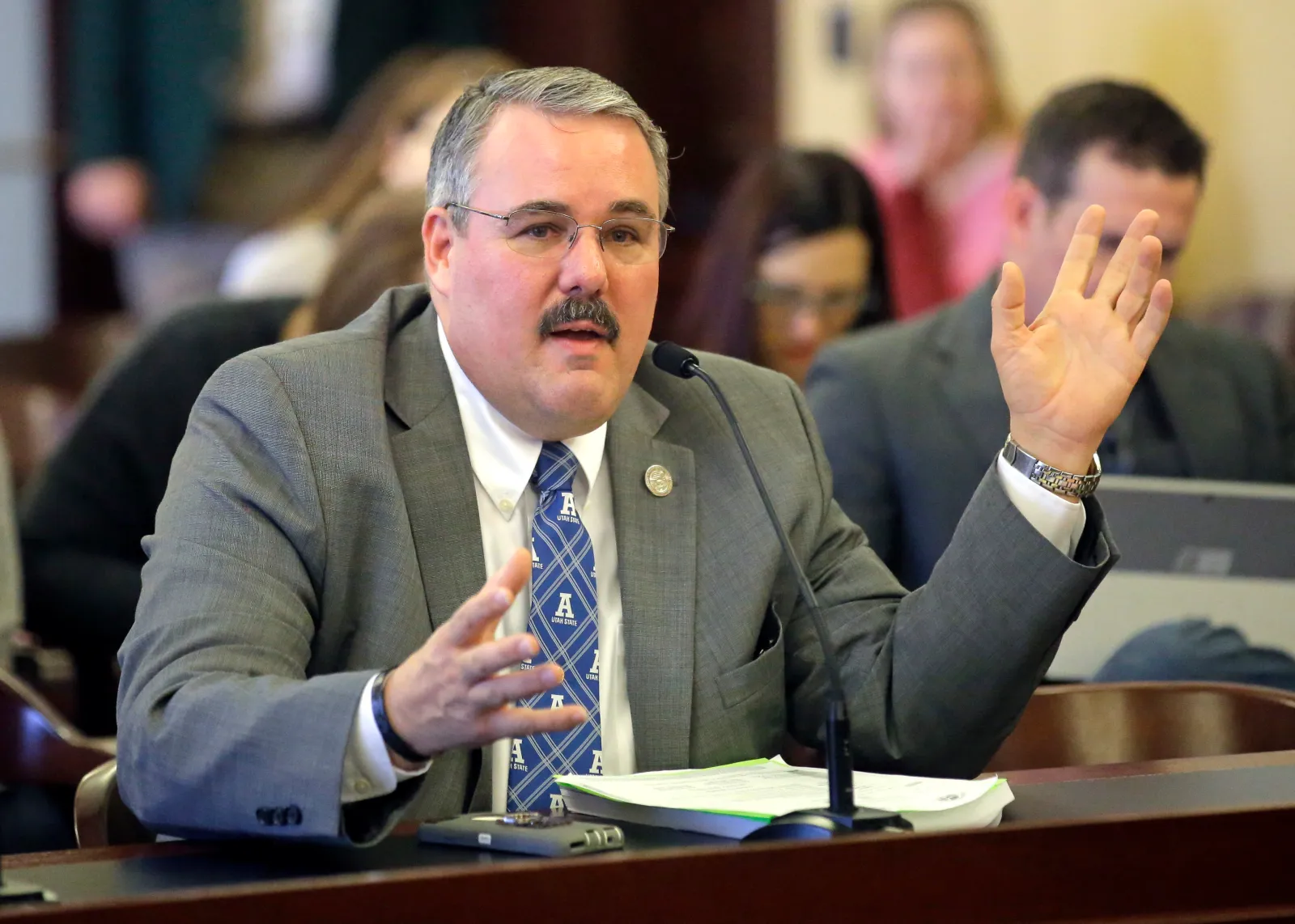
In Utah on Wednesday, State Senate President J. Stuart Adams—one of the most powerful Republicans in the state—lost his primary election after supporting a major data center development near the Great Salt Lake, in one of the clearest signs yet of the growing political risks tied to the industry.
At the local level, the fallout was just as direct. “Do I think that the data center vote cost me the election? Yes I do,” former Box Elder County Commissioner Lee Perry said after conceding his primary race, after voting to advance the same project.
The defeats of Adams and multiple county officials tied to the proposal suggest that opposition to data centers is no longer confined to planning disputes—but is emerging as a voting issue capable of reshaping elections.
Utah's Stratos Project Controversy Explained
The controversy in Utah centered on a sprawling proposed data center campus, known as the Stratos project, planned near the Great Salt Lake.
Described as one of the largest data centers in the world, and backed by Shark Tank investor Kevin O’Leary, the Stratos development would have spanned tens of thousands of acres in Box Elder County’s Hansel Valley. The project would ultimately require up to 9 gigawatts of power—more electricity than the entire state of Utah currently uses, according to The Guardian, although O'Leary later told NBC News he would be willing to shrink the project.
Adams became a focal point for opposition after backing the development in his role leading a state authority that approved early plans for the site, drawing criticism from residents who said officials ignored local concerns.
Those concerns translated into political consequences. Adams, who had previously won reelection comfortably, was defeated by a challenger who ran in part on opposing the project. At the county level, commissioners who voted to advance the project also lost their primaries.
Energy Prices Are the Current Face of Affordability
Dan Cassino, a professor of government and politics at Fairleigh Dickinson University and executive director of the FDU Poll, said data centers have already become a major issue in primary elections as affordability has become central to U.S. politics and energy prices have become “the current face of affordability.”
“Since the pandemic, affordability has become a key issue in U.S. politics, and energy prices are the current face of affordability,” Cassino told Newsweek. “In our polling, voters support anything to bring down their energy bills, but banning data centers is pretty much the most popular option.”
Cassino said data centers are not the only reason energy prices have risen, describing them as “only a small part of it.” But he said the argument that “’AI data centers are eating your electricity’” gives candidates a “simple and compelling story,” especially when voters are already skeptical of AI.
He said the politics of the issue do not fall neatly along partisan lines. Democrats who have traditionally emphasized balancing economic development with environmental concerns are facing pressure from the party’s left flank, while Republicans who have long argued that reducing regulation helps growth are now facing voters who believe new development could affect them personally through higher energy prices.
“None of this would matter if voters liked what they were getting from the data centers, but they don't see the benefit. ‘You'll pay higher energy prices, but either you'll lose your job or your 401k will collapse’ isn't a deal most voters are eager to take,” Cassino added.
Data Center Concerns Become Political Issue
Data centers—once promoted by politicians as economic wins—are becoming a political liability for elected officials across the country, cutting across party lines and shaping election outcomes in ways few expected just a year ago.
A Reuters/Ipsos survey in June found that 57 percent of Americans would oppose a data center being built in their community, with just 14 percent comfortable living near one. Meanwhile, a Gallup survey conducted earlier this year found that around seven in ten Americans oppose the construction of local data centers, highlighting a growing gap between national demand for AI infrastructure and local acceptance.
The projects promise jobs and tax revenue. But they also bring concerns about water use, electricity demand, land use and taxpayer subsidies—issues that are now driving organized opposition and, increasingly, votes.
A Pew Research Center survey of more than 8,500 U.S. adults found Americans are far more likely to view data centers negatively when it comes to their impact on energy bills, environmental strain and nearby living conditions, with significantly more people saying they are bad rather than good for the environment and household electricity costs.
The Utah results add to a small but growing list of elections in which data center projects have appeared directly in local campaigns. In Cascade Locks, Oregon, voters in June 2023 recalled two Port of Cascade Locks commissioners who had supported negotiations over a proposed Roundhouse Digital Infrastructure data center.
The Port of Cascade Locks and Roundhouse later announced in July 2023 that they would discontinue the project, saying “the level of community support required for its successful implementation was not achieved.”
In Warrenton, Virginia, opposition to an Amazon data center also became a campaign issue. The Fauquier Times reported after the November 2024 election that five incoming members of the Warrenton Town Council had been elected over the previous two years after pledging to oppose data centers. The outlet reported that all four council members who had voted to approve a plan for the Amazon project were set to be gone from the council in 2025.
In Missouri, voters in April removed half of the Festus city council members after they backed a $6 billion data center proposal. Rick Belleville, one of the local candidates who unseated a councilman who backed the data center, referred to the election results as an "uprising."
Data centers are also being used to drive midterms campaigns. In Florida’s governor’s race, Republican James Fishback has made opposition to data centers part of his campaign platform, saying on his campaign website that he would “ban them in all 67 counties” and arguing that the projects affect land, water and electric bills. Representative Byron Donalds, another Republican gubernatorial candidate, has supported data center expansion while calling for regulations such as closed-loop water systems, in remarks reported by WFLA.
In Michigan, data centers have become an issue in the Democratic Senate primary. Planet Detroit reported that candidates were asked about AI and data centers during a May debate, with former Detroit health director Abdul El-Sayed criticizing state Senator Mallory McMorrow for supporting data center tax breaks, while Representative Haley Stevens said the U.S. needed to compete with China but also protect Michiganders from data center costs.
Some elected officials are also moving to limit the costs of data center growth. Texas Governor Greg Abbott directed state regulators in June to prevent data center infrastructure costs from being passed on to residential ratepayers and to require data centers to fund electric infrastructure needed for their operations. His office also said Abott would work toward phasing out “outdated” tax incentives.
The move drew criticism from Democratic gubernatorial candidate State Representative Gina Hinojosa, who said Abbott was “backtracking” after previously promoting Texas as a center for AI development, while Houston Chronicle columnist Chris Tomlinson described the announcement as “little more than a campaign stunt.”
Democrats Focus on Power Bills
Democratic candidates are also linking data centers to electricity costs. In Michigan’s U.S. Senate race, Abdul El-Sayed released a data center plan calling for “No rate hikes,” saying data centers should pay for their own energy demand and that costs “cannot be passed onto ratepayers.”
In Georgia, Democrat Peter Hubbard, who won a seat on the Public Service Commission in 2025, argued that voters had rejected “high utility bills and data center risk-shifting” and criticized a 10,000-megawatt grid expansion approved to meet projected data center demand. During the campaign, Hubbard also said current commission policy would drive up consumer bills as more data centers were built, according to Capitol Beat.
Update, 06/25/2026, 9:22 a.m. ET: This article was updated with additional information