











In The Virtues Of The 8-bit Era : Eight Iconic Processor Designs we looked at eight of the most important microprocessor designs of the 1970s and early 1980s. This time we’ll look at more 8-bit designs from that era, that didn’t quite make it into that list.

The rules are broadly as before. The designs have to be for microprocessors and not microcontrollers. They don’t have to have made it into production though.
Most of these designs didn't have a big impact, but just because they weren’t commercially successful doesn’t mean that they weren't interesting. And sometimes we can learn as much from market failure as from success.
So here are some lesser known ‘8-bit era’ microprocessors.
The first entry in the list comes from Texas Instruments. The team that created the first microcontrollers, led by Gary Boone, had earlier worked on a custom design for the Control Terminal Corporation’s ‘Datapoint 2200’ terminal which led to the creation of the TMX-1795 microprocessor. A little later, Intel created the 8008 using the same instruction set architecture.
The TMX-1795 is one of a number of designs that can reasonably be claimed to be the first microprocessor. Ken Sheriff has written about the 1795 and the contesting claims here. It’s a great blog post, and I’m not going to spoil Ken’s conclusions!
The TMX-1795 didn't even make it into production, but it did make an impact decades later. The design was used in the patent lawsuit between Gilbert Hyatt and TI.
The TI laptop has been modified to use the TMX-1795 for all operations. Everything displayed is being executed on a 1971 vintage 8-bit microprocessor. This demo unit was built in 1993 to be used as a jury exhibit in a patent lawsuit, although it was never used for that purpose. Its first public demonstration occurred a few days later, at the 1996 Microprocessor Forum, during the 25th Anniversary of the Microprocessor celebration.
We can see the TMX-1795 booting up in this Computer History Museum video.
The Intel 8008 did make it into production, and the architecture evolved over the coming years into the dominant x86 architecture that we all use today.
Pioneering 8-bit design;
Helped to overturn Hyatt’s microprocessor patent;
A huge missed opportunity for TI?

We’ve encountered the Mostek 5065 already. In Motorola’s Pioneering 6800 : Origins and Architecture, Motorola struggled to manufacture their first microprocessor design, originally intended for use in Olivetti calculators. So they licensed it to Texas rival Mostek, where it became the Mostek 5065.
I think it must have been clear to potential users that the 5065 didn’t have much of a future. Motorola moved on to the 6800 and Mostek showed no interest in updating the design, possibly because the licensing didn't allow them.
The Mk 5065 was a dead-end, so why would you use it?
The Mk 5065 is interesting as it represents their first thoughts of the team that created the Motorola 6800 and the MOS Technology 6502. Some of the features that would make the later designs distinctive, appeared in the 5065 first. These included, for example, using page 1 of memory for the ‘stack’.
Page 1 of memory used as stack page (as in the 6502);
Fast interrupts, using three sets of registers.
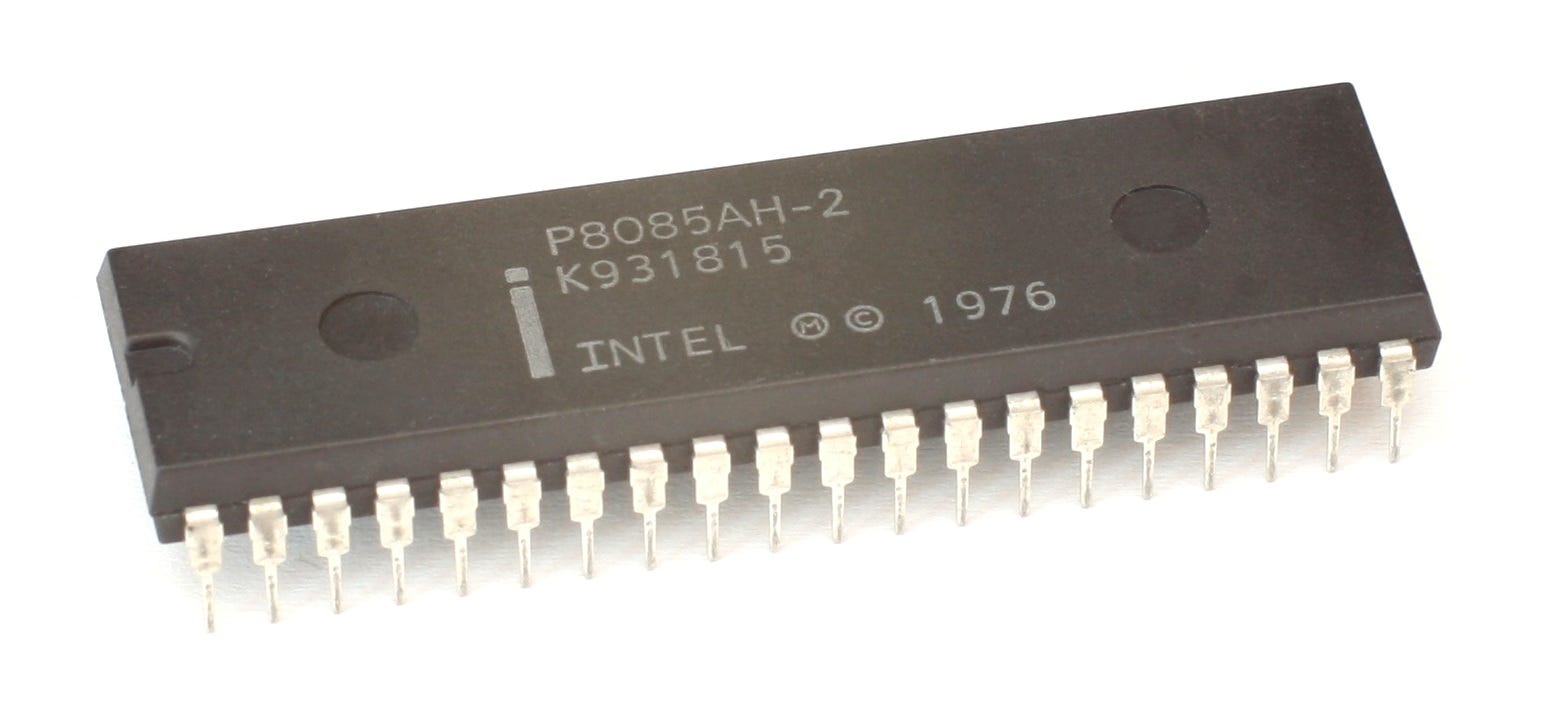
The Intel 8085 was Intel’s successor to the groundbreaking 8080. The 8080 had been the CPU that kick-started the whole personal computer revolution.
Federico Faggin, who had led the design of the 8080, had, after falling out with Andy Grove, left Intel to found Zilog. There he led the development of the Z80 which introduced multiple, major improvements on the 8080. These included IX and IY index registers, a complete set of alternate registers, DRAM refresh built in, lots of extra instructions and more.
The 8085, by contrast was a much more modest upgrade. Compared to the 8080 it incorporated a couple of support chips and upped the clock speed to 3,5 or 6 MHz. The 8085 wasn't a bad design. It was just very underwhelming when compared to Faggin’s Zilog Z80 and lost out to the Z80 in the market.
Not much, really, when compared to the Z80, and that was the problem.
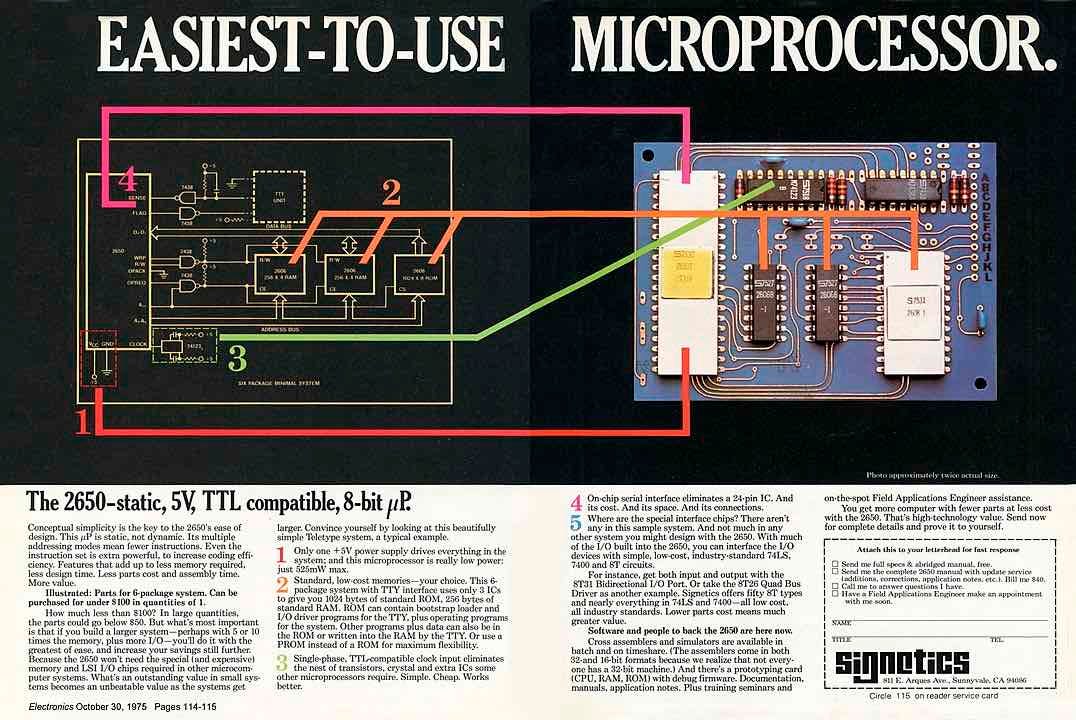
The Signetics 2650 was, in contrast to many other designs of the era, designed to compete with minicomputers, and was modelled on the IBM 1130 minicomputer.
It was competitive with the market leaders, including the Intel 8008, when it was first designed in 1972, but didn't make it into production until 1975. By then, the Motorola 6800 and Intel 8080 outclassed the 2650 which had significant limitations, including memory that was divided into 8k segments.
Vectored interrupts
On-chip call stack
Limited to 32k memory, split into 8k segments
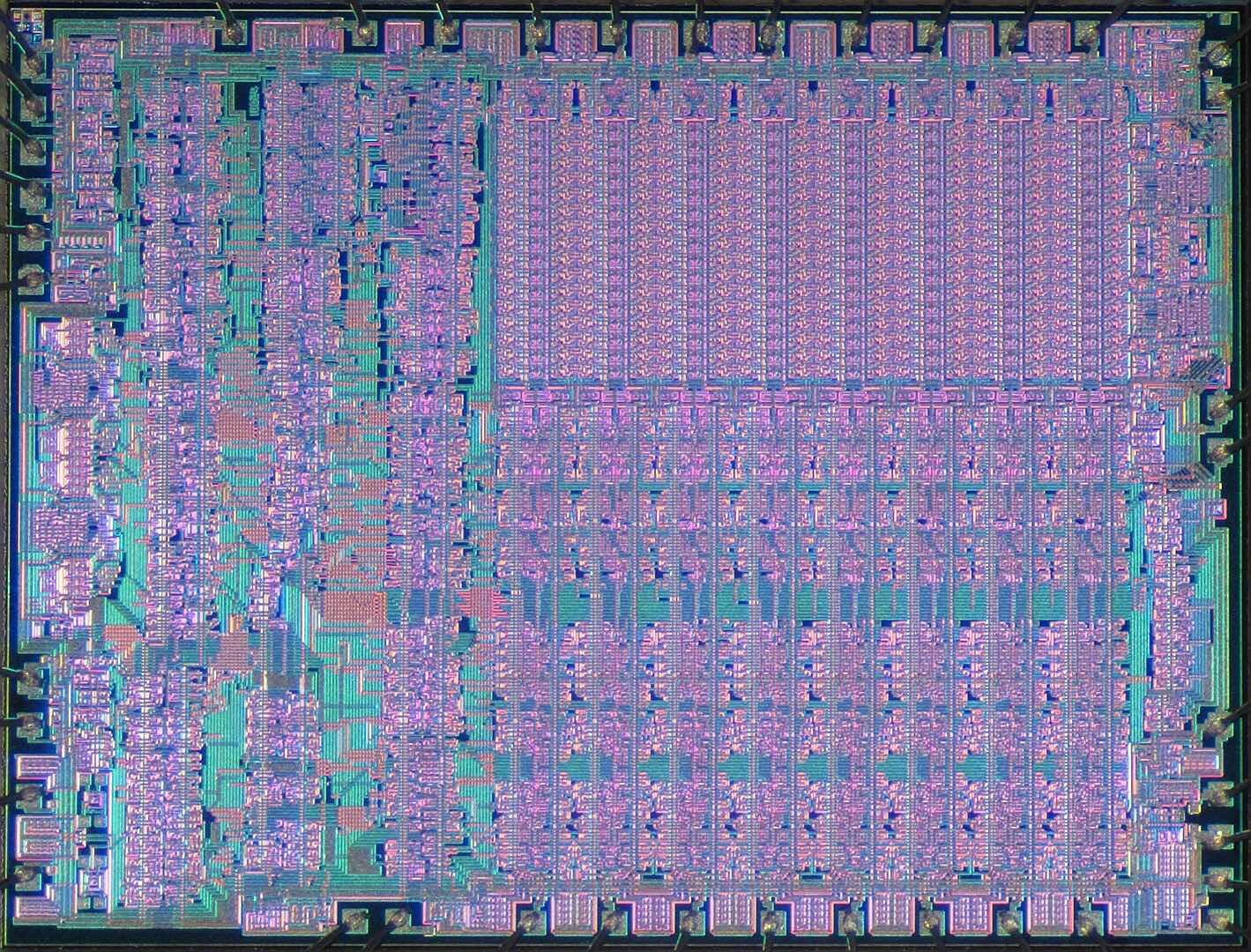
In many ways the RCA 1802 was ahead of its time. It was the first CMOS microprocessor, and its simple instruction set was quite RISC-like, almost a decade before the RISC concept became popular. However, this simplicity also meant that lots of common features, such as conditional branching and subroutine calls, were omitted. Perhaps this limited its popular adoption in an era when processors were marketed based on their instruction set features.
The 1802 was used in some video game consoles, though, and was used in a number of spacecraft because (according to CPU Shack):
… a version of the 1802 used silicon on sapphire (SOS) technology, which leads to radiation and static resistance, ideal for space operation.
First low power CMOS microprocessor;
Extreme simplicity;
Used in Voyager, Viking and Galileo Space probes.
After the paywall the final three of our ‘8-bit’ era designs.
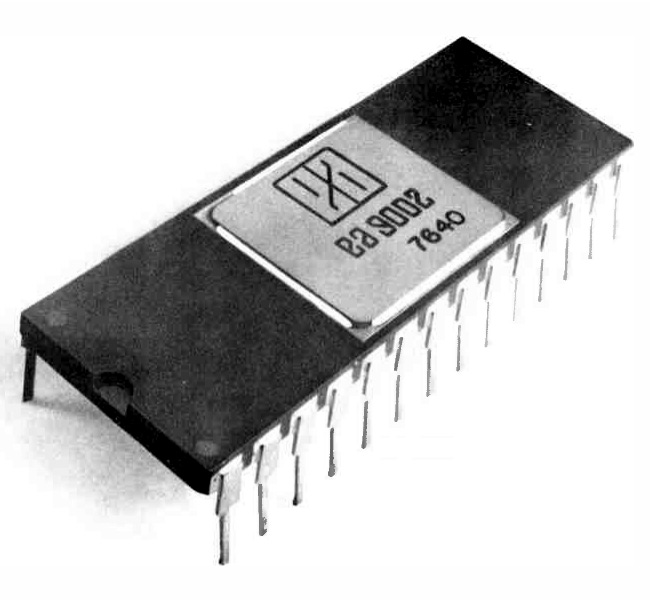
Possibly the least well known of the designs on this list, Wikipedia says that it would be considered a microcontroller, but I think that the lack of onboard ROM means that it was really a microprocessor.
Low cost was its selling point with an inexpensive 28-pin package. However, that limited it to 4k of address space.
Electronic Arrays had problems making the design and quickly failed, being sold to NEC in 1978.
64 bytes of on-chip RAM;
Low-cost 28 pin package
Limited to 4k memory.
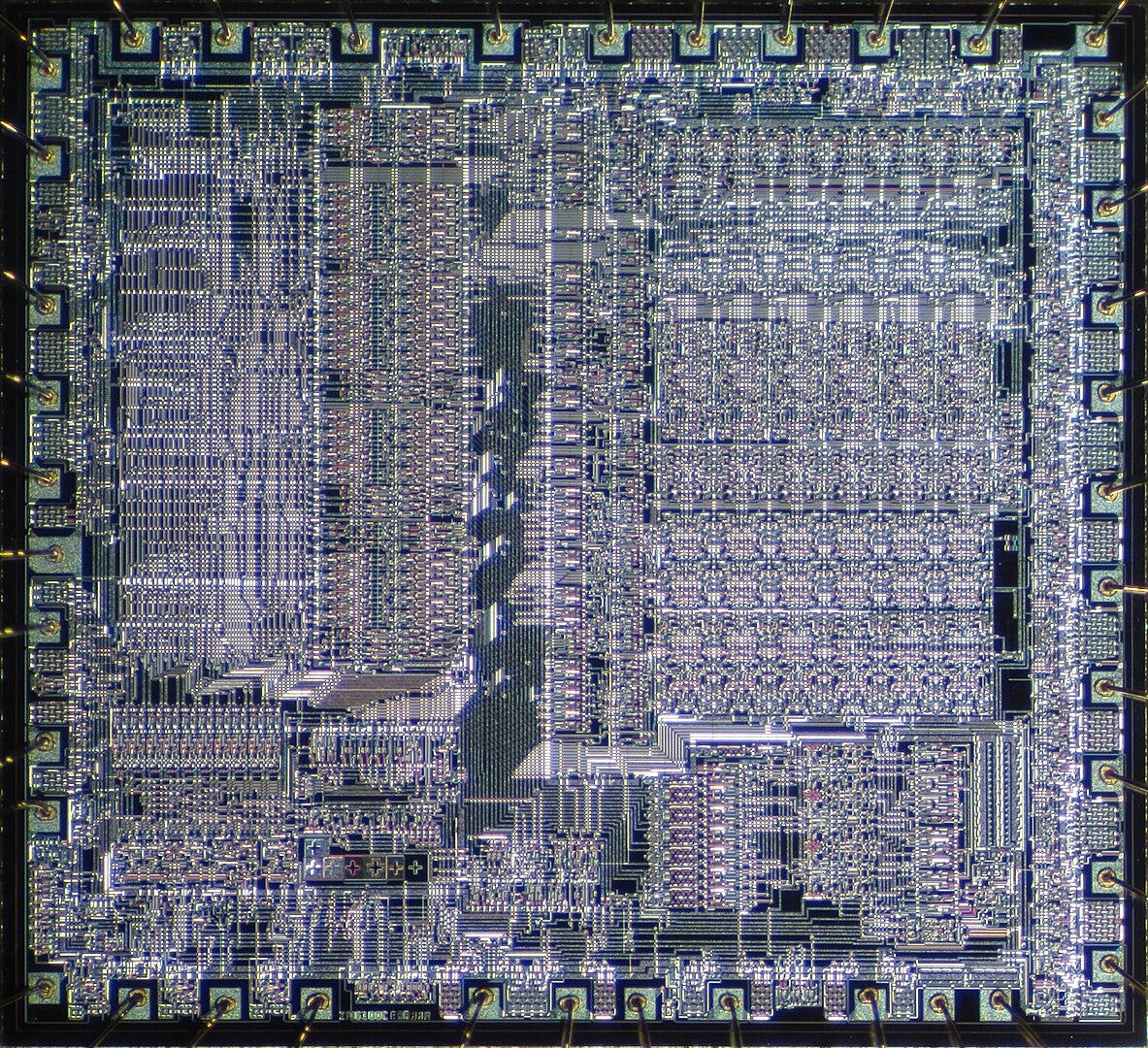
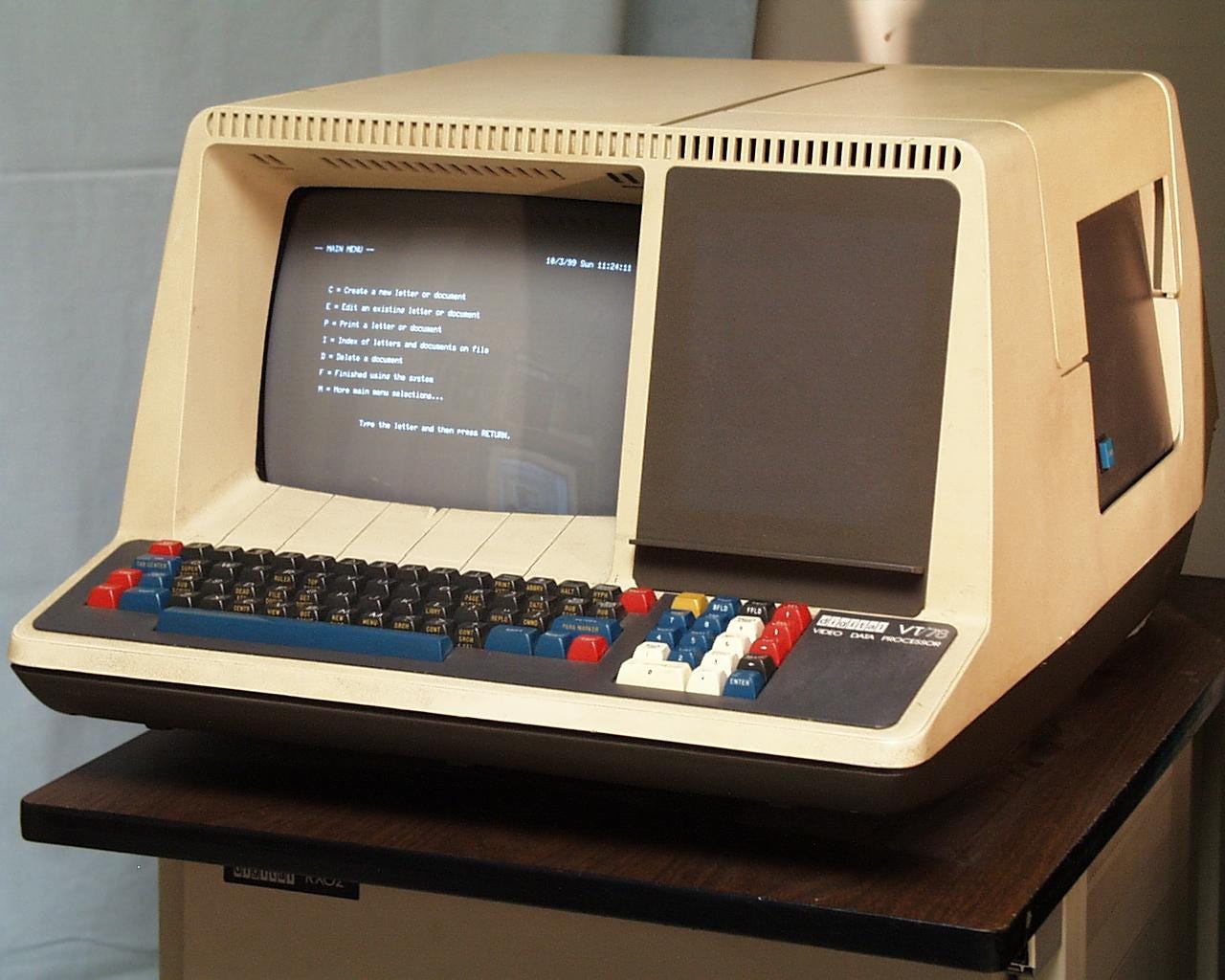
On the surface the Intersil 6100 had a lot going for it. It was based on, and largely compatible with, the popular DEC PDP-8 minicomputer architecture. It was built using low power CMOS technology. DEC even used it in their own ‘DECMate’ terminal / personal computer product.
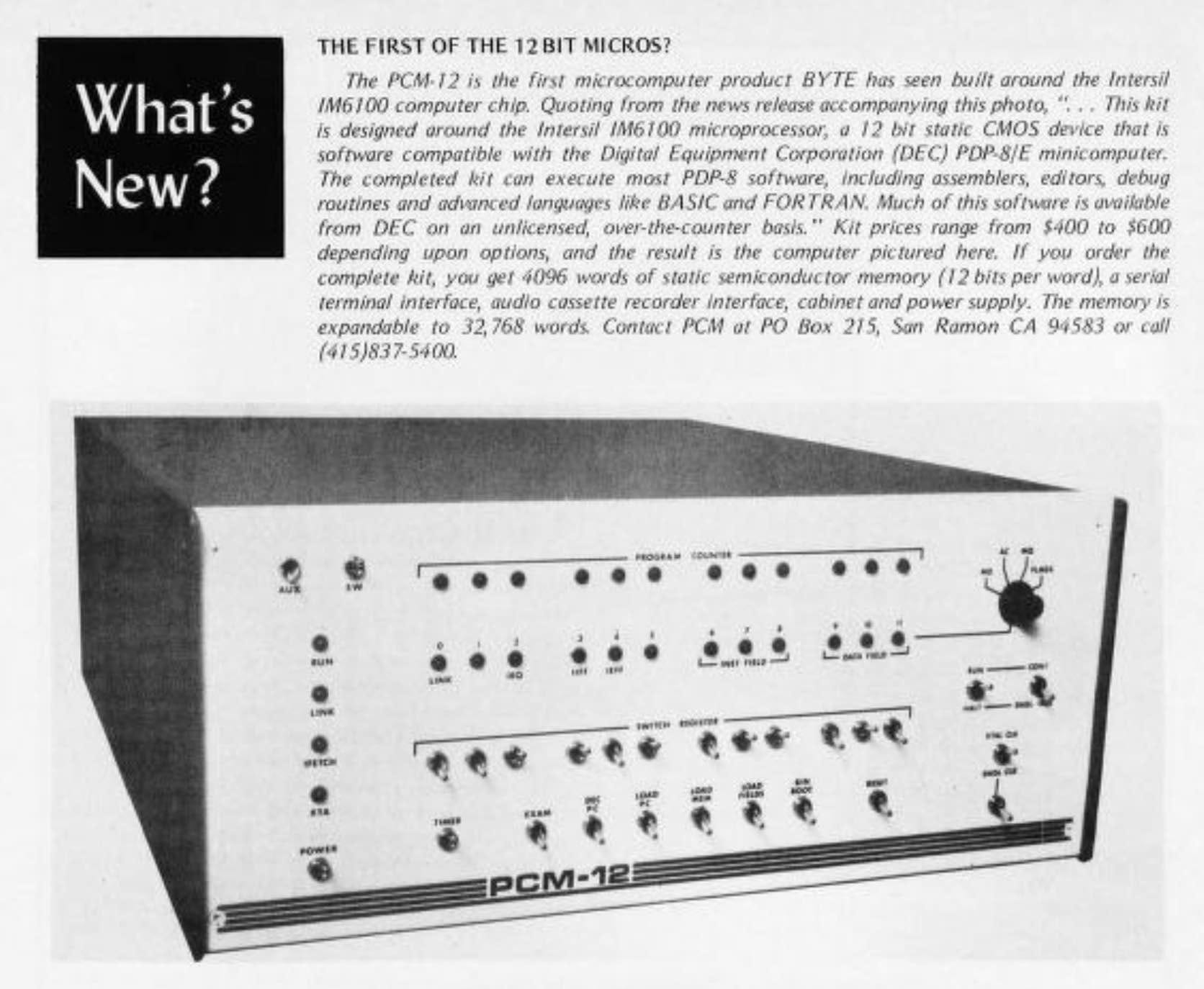
Byte Magazine (03/76) : The FIRST [AND LAST?] OF THE 12 BIT MICROS?
But the 6100 never made an impact; perhaps 12-bits was just too unfamiliar in an era dominated by 8-bit designs. The PDP-8 compatibility didn't help much as the microcomputer market was so new and most software was created from scratch.
Low power CMOS;
PDP-8 compatibility;
12-bits.
We’ll finish where we started, with Texas Instruments, and the TMS 9900.
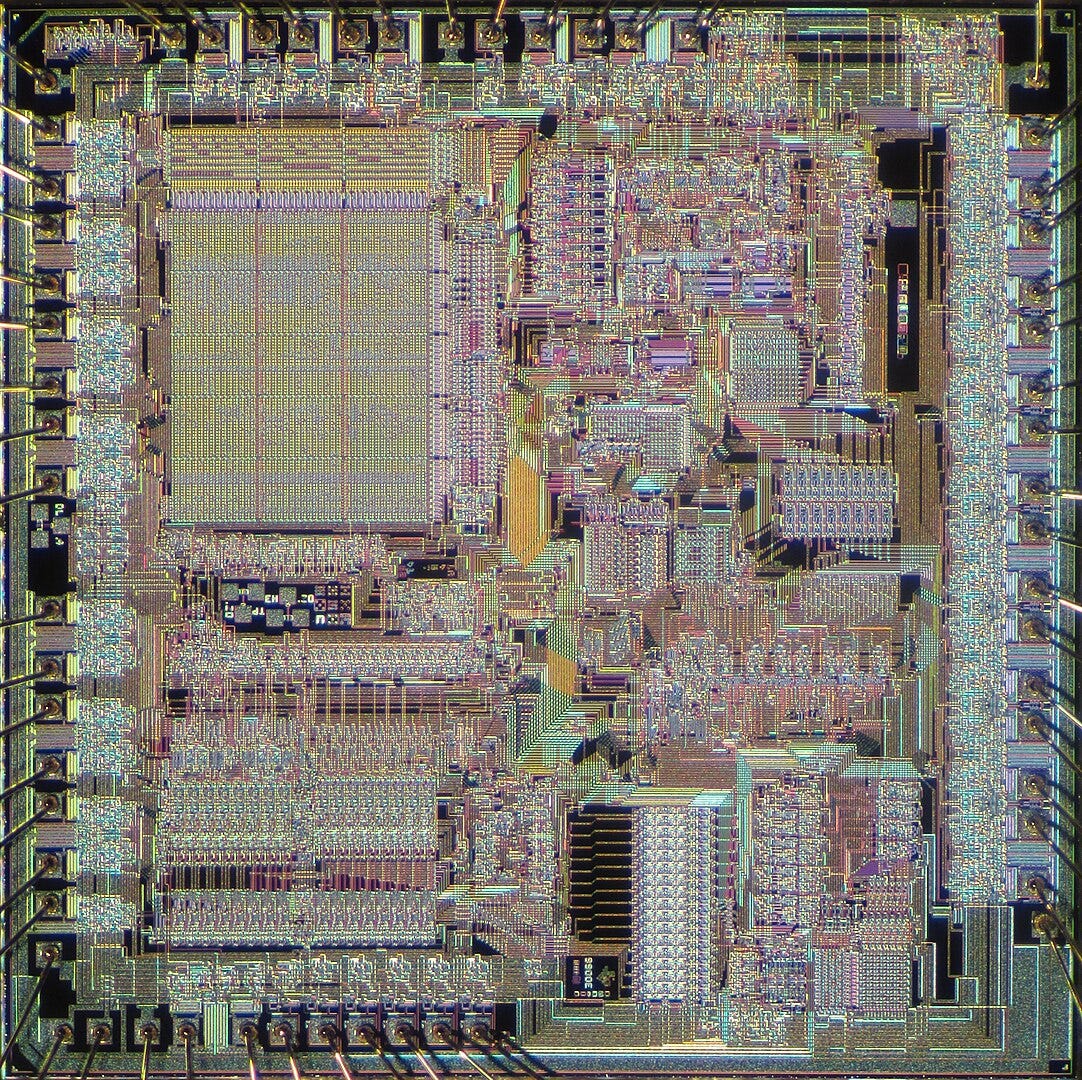
The inclusion of the TMS 9900 in this list may be controversial. The TMS 9900 was marketed as a 16-bit processor, but it appeared in the 8-bit era and really competed with 8-bit designs. Despite those extra eight bits, its performance was typically worse than its 8-bit competitors.
The TMS 9900 was actually a single chip shrink of the TI-990 minicomputer and part of TI’s strategy to build a series of designs around a single architecture.
With a highly successful calculator business, it was natural for TI to want to establish itself in the growing home / personal computer market. So it used the TMS 9900 to create the TI 99/4.
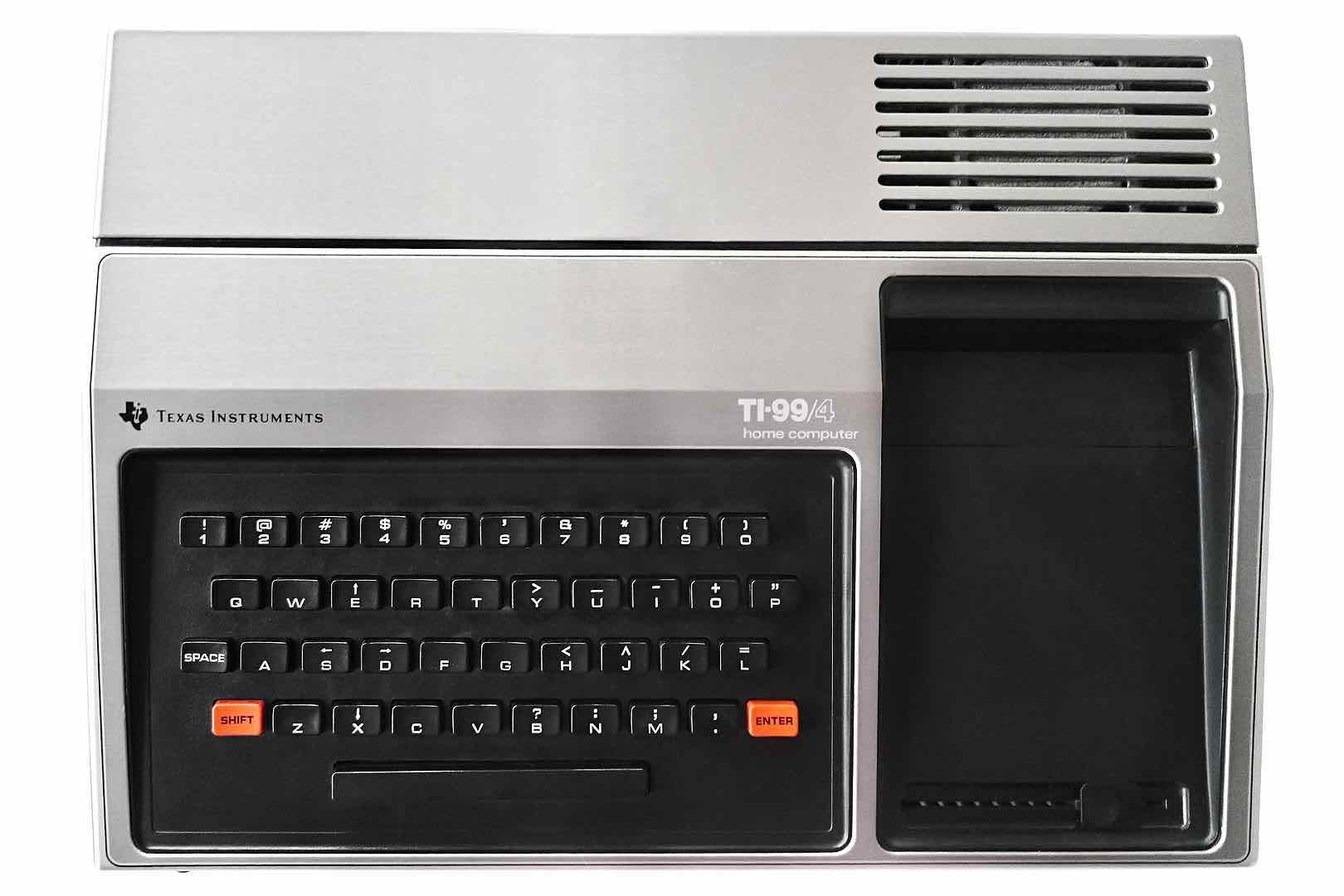
The TI99/4, and its successor the TI 99/4A were simultaneously, a huge success and a massive commercial failure. Quoting Wikipedia:
By late 1982, TI was dominating the U.S. home computer market, shipping 5,000 computers a day from their factory in Lubbock, Texas. By 1983, the 99/4A was selling at a loss for under US$100. Even with the increased user base created by the heavy discounts, Texas Instruments lost US$330 million in the third quarter of 1983 and announced the discontinuation of the TI-99/4A in October 1983. Production ended in March 1984.
On the surface TI’s strategy for the TMS 9900 was attractive. TI had the brand, the distribution and the financial resources to make it a success. But the implementation of the design was problematic and TI made a huge mess of the whole project.
There are so many lessons to be drawn from the TMS 9900 and TI 99/4 that they really deserve a follow-up post. Watch this space!
16 bits;
Slow!
Ken Sheriff on the origins and design of the 1795. Great reading as usual!
http://www.righto.com/2015/05/the-texas-instruments-tmx-1795-first.html
A fantastic, detailed exposition of the story of the TMS 9900 from IEEE Spectrum.
Mk-5065 Datasheet at Bitsavers
http://www.bitsavers.org/components/mostek/_dataBooks/1974_Mostek_Integrated_Circuit_Guide.pdf
More on the RCA 1802 at CPU Shack.
https://www.cpushack.com/CPU/cpu2.html
More on the Signetics 2650 at CPU World.
https://www.cpu-world.com/CPUs/2650/index.html
https://www.cpu-world.com/Arch/6100.html
Thanks so much for supporting the Chip Letter!
此内容由惯性聚合(RSS阅读器)自动聚合整理,仅供阅读参考。 原文来自 — 版权归原作者所有。