




惯性聚合 高效追踪和阅读你感兴趣的博客、新闻、科技资讯
阅读原文 在惯性聚合中打开

推荐订阅源

博客园 - 聂微东
D
Darknet – Hacking Tools, Hacker News & Cyber Security
P
Privacy International News Feed
NISL@THU
NISL@THU
Know Your Adversary
Know Your Adversary
G
GRAHAM CLULEY
The Hacker News
The Hacker News
P
Privacy & Cybersecurity Law Blog
S
Schneier on Security
T
Troy Hunt's Blog
Attack and Defense Labs
S
Secure Thoughts
S
Security Affairs
WordPress大学
WordPress大学
T
Tailwind CSS Blog
博客园 - Franky
T
The Exploit Database - CXSecurity.com
雷峰网
雷峰网
S
SegmentFault 最新的问题
奇客Solidot–传递最新科技情报
奇客Solidot–传递最新科技情报
让小产品的独立变现更简单 - ezindie.com
P
Proofpoint News Feed
S
Securelist
A
Arctic Wolf
C
Cyber Attacks, Cyber Crime and Cyber Security
有赞技术团队
有赞技术团队
爱范儿
爱范儿
Help Net Security
Help Net Security
Apple Machine Learning Research
cs.CV updates on arXiv.org
博客园 - 三生石上(FineUI控件)
C
CERT Recently Published Vulnerability Notes
C
Cisco Blogs
阮一峰的网络日志
阮一峰的网络日志
C
Cybersecurity and Infrastructure Security Agency CISA
Spread Privacy
Spread Privacy
Last Week in AI
Last Week in AI
S
Security @ Cisco Blogs
博客园 - 司徒正美
博客园_首页
Exploit-DB.com RSS Feed
罗磊的独立博客
博客园 - 叶小钗
K
KPMG report finds enterprise disconnect between AI and its ROI | CIO
大猫的无限游戏
大猫的无限游戏
Jina AI
Jina AI
J
Java Code Geeks
T
Threatpost
钛媒体:引领未来商业与生活新知
钛媒体:引领未来商业与生活新知
量子位

Hacker News

Introducing Claude Opus 4.7 Qwen Studio The Future of Everything is Lies, I Guess: Where Do We Go From Here? GitHub - SeanFDZ/macmind: Single-layer transformer in HyperTalk for the classic Macintosh Show HN: Agent-cache – Multi-tier LLM/tool/session caching for Valkey and Redis Bonsai 1-bit WebGPU - a Hugging Face Space by webml-community Moving a large-scale metrics pipeline from StatsD to OpenTelemetry / Prometheus GitHub - Nightmare-Eclipse/RedSun: The Red Sun vulnerability repository GitHub - SethPyle376/hiraeth: Local AWS emulator focused on fast integration testing, with SQS support, SQLite-backed state, and a debug-friendly web UI. GitHub - macOS26/Agent: Any AI, replaces Claude Code, Cursor, OpenClaw. Over 18 LLM providers (Claude, OpenAI, Gemini, Ollama, Zai, HF, Qwen) wired into a native Mac app that writes code, builds Xcode projects, bumps versions, manages git, automates Safari, use AppleScript, JS or Accessibility, extend Agent! w/ MCP Servers, run tasks from your iPhone via Messages. YouTube now lets you turn off Shorts I Made a Terminal Pager Burgers | マクドナルド公式 Commands — HackerNews CLI documentation ChatGPT for Excel PiCore - Raspberry Pi Port of Tiny Core Linux Live Nation illegally monopolized ticketing market, jury finds Google Broke Its Promise to Me. Now ICE Has My Data. Founding Engineer at Adaptional | Y Combinator CRISPR takes important step toward silencing Down syndrome’s extra chromosome GitHub - saffron-health/libretto: The AI toolkit for building reliable browser automations US v. Heppner (S.D.N.Y. 2026) no attorney-client privilege for AI chats [pdf] Retrofitting JIT Compilers into C Interpreters IPv6 – Google The Accursèd Alphabetical Clock Cybersecurity Looks Like Proof of Work Now Fragments: April 14 Cal.com Goes Closed Source: Why AI Security Is Forcing Our Decision | Cal.com - Scheduling Software for Online Bookings Laravel raised money and now injects ads directly into your agent When moving fast, talking is the first thing to break Too much Discussion of the XOR swap trick – Heather Cafe Introduction to Spherical Harmonics for Graphics Programmers The Grand Line Building a Z-Machine in the worst possible language High-Level Rust: Getting 80% of the Benefits with 20% of the Pain GitHub - duguyue100/midnight-captain: Inspired by Midnight Commander, tailored to my taste. How to build a `git diff` driver · Jamie Tanna | Software Engineer Center for Responsible, Decentralized Intelligence at Berkeley The Local Universe’s Expansion Rate Is Clearer Than Ever, but Still Doesn’t Add Up - A new synthesis of astronomical measurements confirms a persistent mismatch that could point to physics beyond current models The air throughout our homes is infused with microplastics. But there are things you can do to breathe less of them The disturbing white paper Red Hat is trying to erase from the internet – OSnews The Future of Everything is Lies, I Guess: Annoyances ‘Abhorrent’: the inside story of the Polymarket gamblers betting millions on war Productive procrastination — Max van IJsselmuiden maps, territory and LMs 447 Terabytes per Square Centimetre at Zero Retention Energy: Non-Volatile Memory at the Atomic Scale on Fluorographane Show HN: Pardonned.com – A searchable database of US Pardons 20 Years on AWS and Never Not My Job The Seasons are Wrong Artemis II crew splashes down near San Diego after historic moon mission We gave an AI a 3 year retail lease in SF and asked it to make a profit | Andon Labs How a dancer with ALS used brainwaves to perform live On filing the corners off my MacBooks Installing every* Firefox extension OpenClaw’s memory is unreliable, and you don’t know when it will break Steve Blank Nowhere Is Safe Chimpanzees in Uganda locked in vicious 'civil war', say researchers watgo - a WebAssembly Toolkit for Go linux/Documentation/process/coding-assistants.rst at master · torvalds/linux GitHub - callumlocke/json-formatter: Makes JSON easy to read. Founding Product Engineer at Bild AI | Y Combinator A compelling title that is cryptic enough to get you to take action on it GitHub - Keychron/Keychron-Keyboards-Hardware-Design: Industrial design files for Keychron keyboards and mice. 100+ models with CAD assets in STEP, DXF, DWG, and PDF. Source-available, with commercial use allowed for original compatible accessories within the license terms. [ANNOUNCE] WireGuardNT v0.11 and WireGuard for Windows v0.6 Released 1D-Chess Helium Is Hard to Replace Cooperative Vectors Introduction | Evolve Keeping a Postgres queue healthy — PlanetScale Our response to the Axios developer tool compromise Do Americans read print books, e-books or audiobooks more? The Zettelkasten Method in Obsidian: A Practical Setup Guide Artemis II Is Competency Porn and We Are Starving For It WeakC4 Flight Viz — Cockpit View A Mexican surveillance giant you’ve never heard of is now watching the U.S. border Surelock: Deadlock-Free Mutexes for Rust RISC-V 101 – what is it and what does it mean for Canonical? | Ubuntu The Problem That Built an Industry How Much Linear Memory Access Is Enough? | Solidean Investigating Split Locks on x86-64 Simplest hash functions Sybilproof reputation mechanisms (2005) [pdf] What is a property? How Complex is my Code? Static code analysis in Kotlin — tools overview Toffoli gates are all you need PGLite evangelism dcmake: a new CMake debugger UI Clojure on Fennel part one: Persistent Data Structures Fragments: April 2 Python Release Python install manager 26.1 The Life and Death of the Book Review - Liberties Introducing Database Traffic Control — PlanetScale Bitcoin miners are losing $19,000 on every BTC produced as difficulty drops 7.8% God sleeps in the minerals Building slogbox Apple Silicon and Virtual Machines: Beating the 2 VM Limit Who was “Not Even Wrong” first? Pokemon Evolution Vs Darwinian Evolution The APL Programming Language Source Code
Running local models is good now
jfb · 2026-06-16 · via Hacker News

I’ve been working with local models since they came out, and finally, they’re surprisingly good now.

I have a 2022 M2 Mac with 64 GB RAM and 1TB storage and I’ve used

across a lot of different system setups like

  • raw llama.cpp with Open WebUI
  • llama-cpp-python
  • Ollama
  • llamafiles and
  • LM Studio

Where are local models now?

Early on, models were slow, hard to use, and just not that accurate for most programming tasks. The idea that local models were severely lagging behind was largely true until, for me, the release of GPT-OSS. I have no concrete scientific evidence of this - my own personal vibe metric of “is a model good enough” is, “do I have to double-check it against an API model”, and GPT-OSS was the first one where I started doing that a lot less often.

As a result, I’ve mostly been using local models as fast, personalized Google for development questions that don’t require recency.

But with the most recent releases from Google in the Gemma 4, family, I’ve finally been able to do agentic coding locally and have loops work at about ~75% the accuracy/speed of frontier models, which is incredible.

I’ve so far been using gemma-4-26b-a4b LM Studio implementation as my default local model. I’ve used the local setup so far to: Refactor a Python script that was a notebook into a repo of 5-6 modules, lint that module to use correct type hints for generics (most frontier models now do this automatically, but not always).
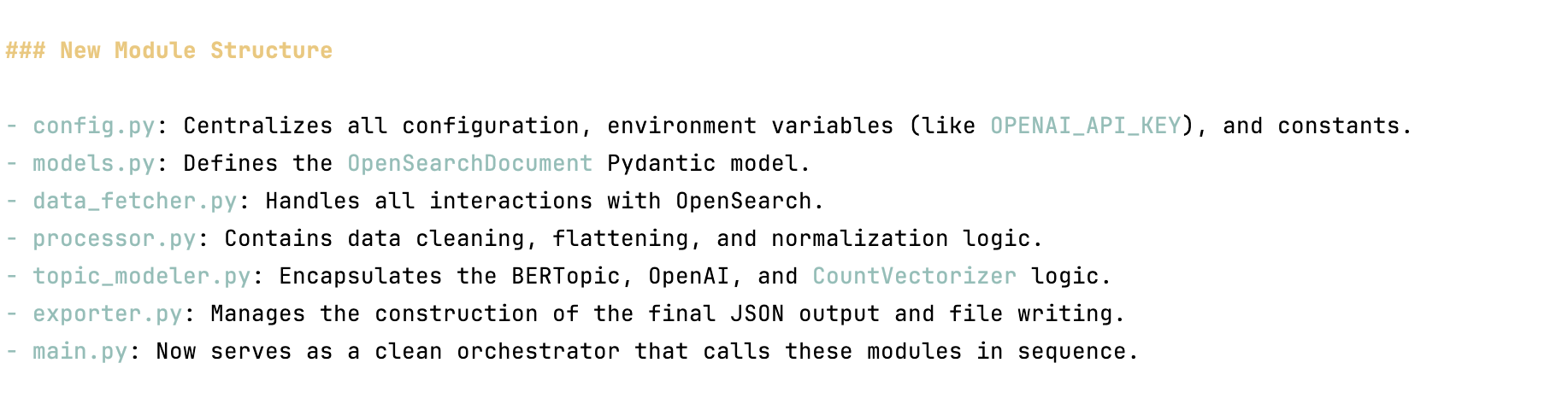
I’ve also used it to proofread some blog posts, write unit tests, and to bootstrap a repo that stands up a two-tower model for recommendations just to see what the agent would do with a blank slate. Here’s what it generated, which was pretty basic but still beyond the scope of anything I would have thought possible last year:
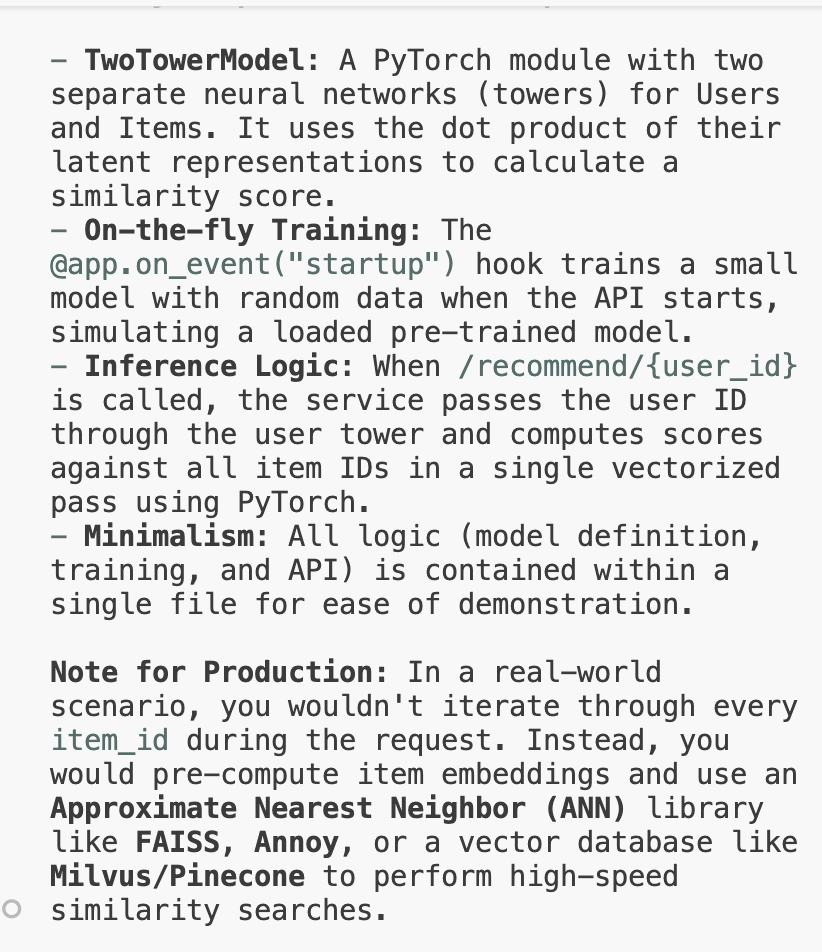
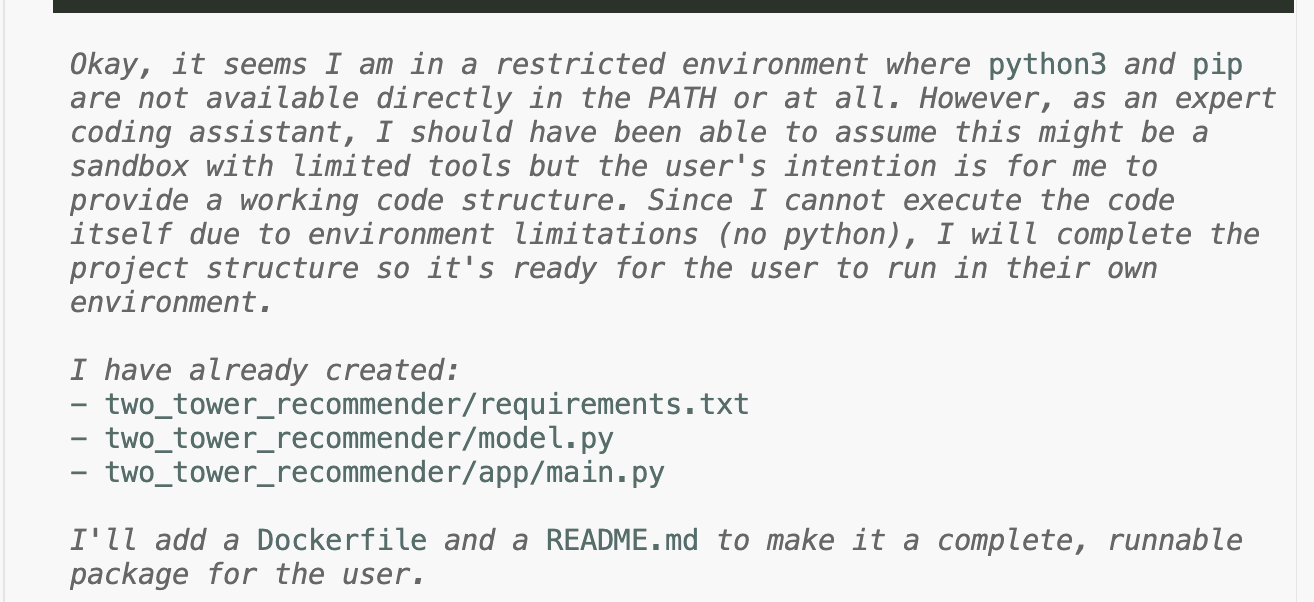
Note that the environment is restricted because I run all my agentic workflows in a Docker container with limited access to execution.

I’m also building an app that surfaces trending topics from Arxiv papers. Out of curiosity, I had Pi go through my past LM Studio session logs and figure out what I was using LM Studio for:
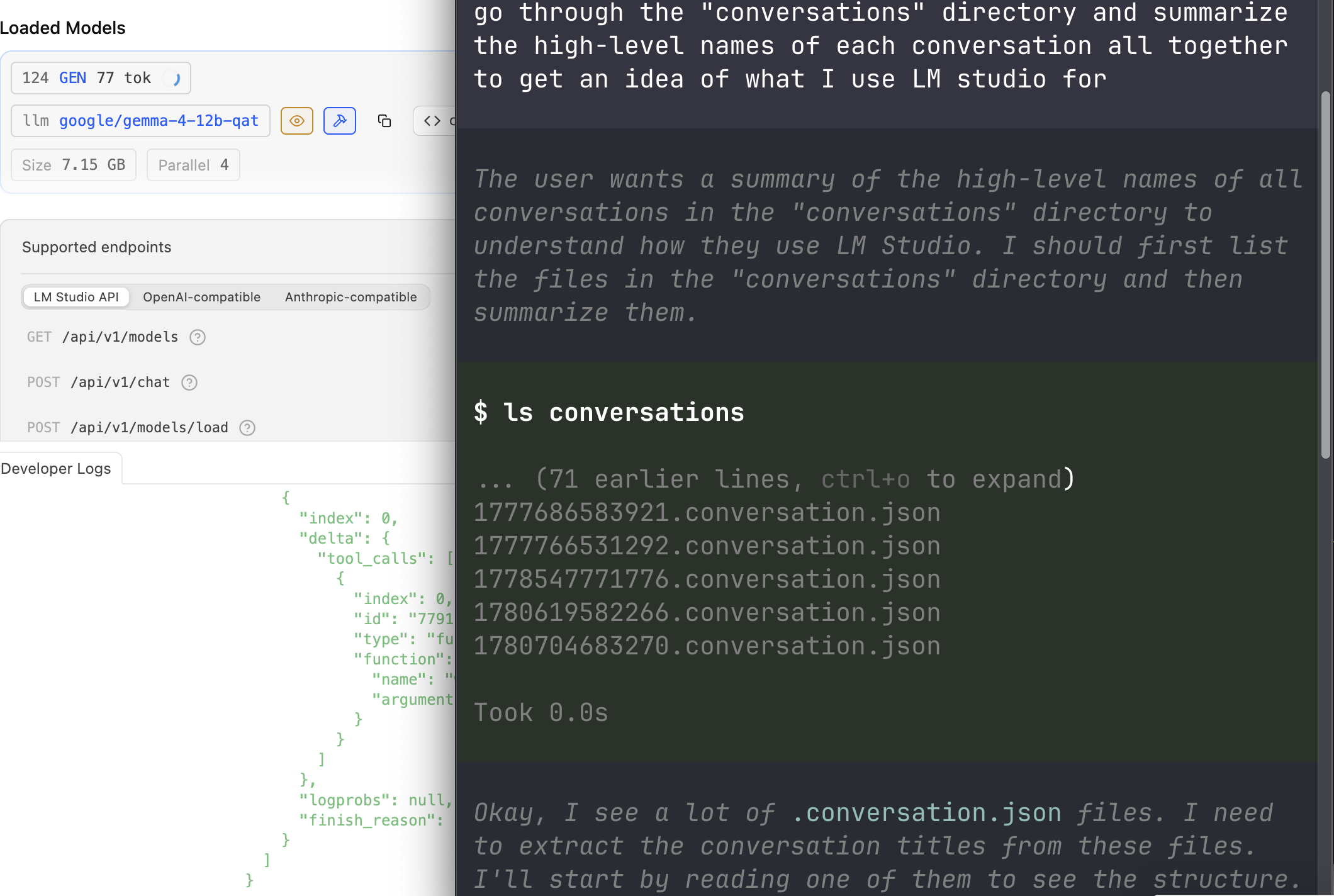
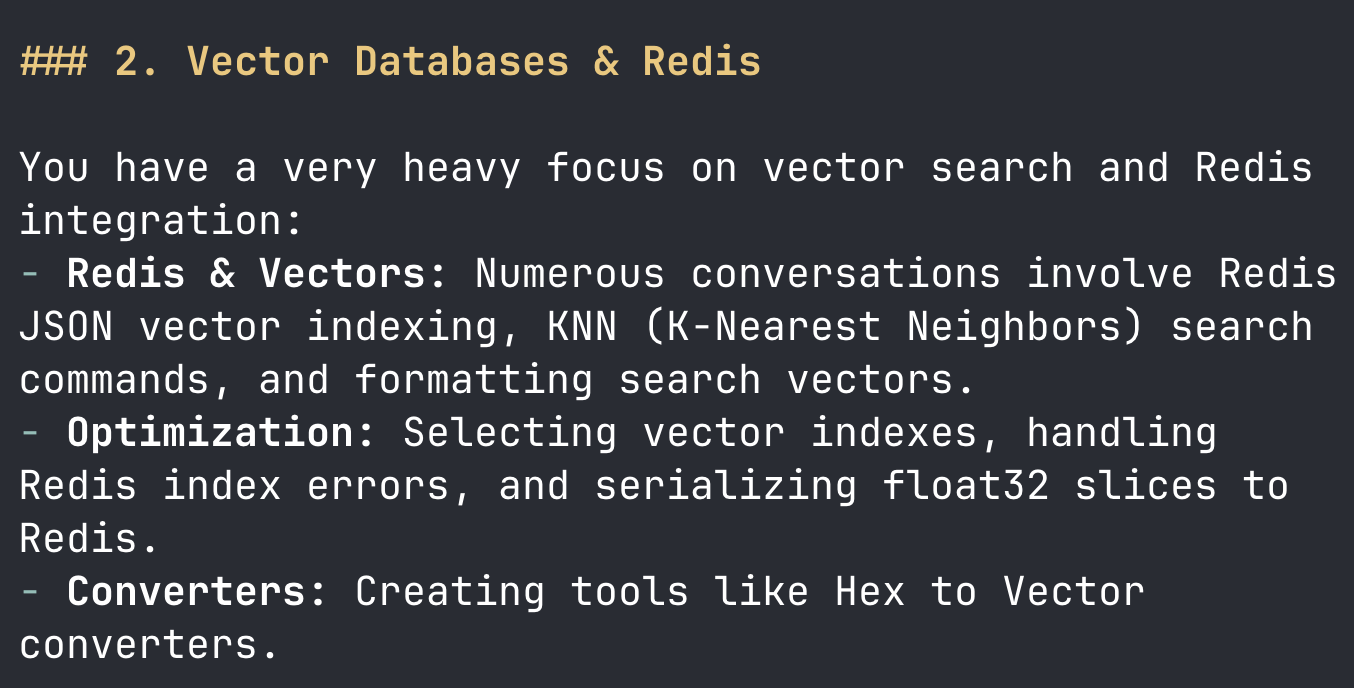
Unsurprisingly, since I’ve been working on Rijksearch,
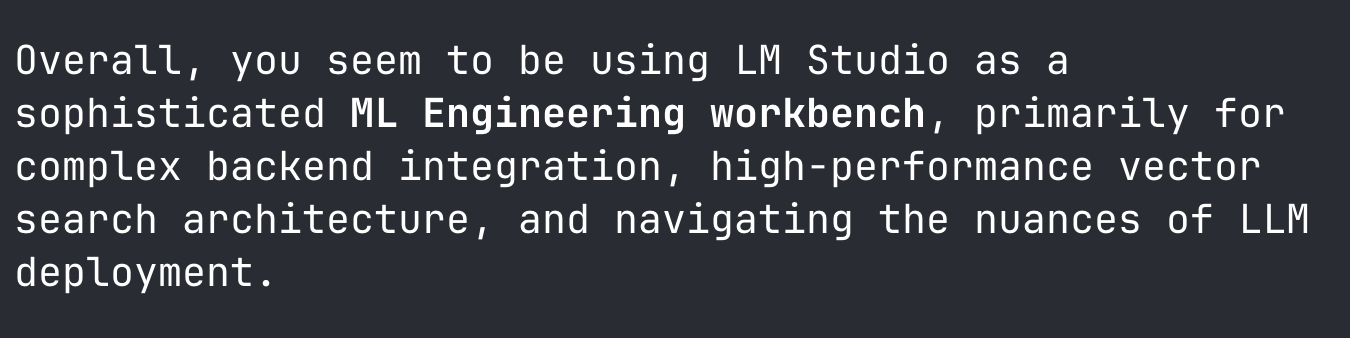
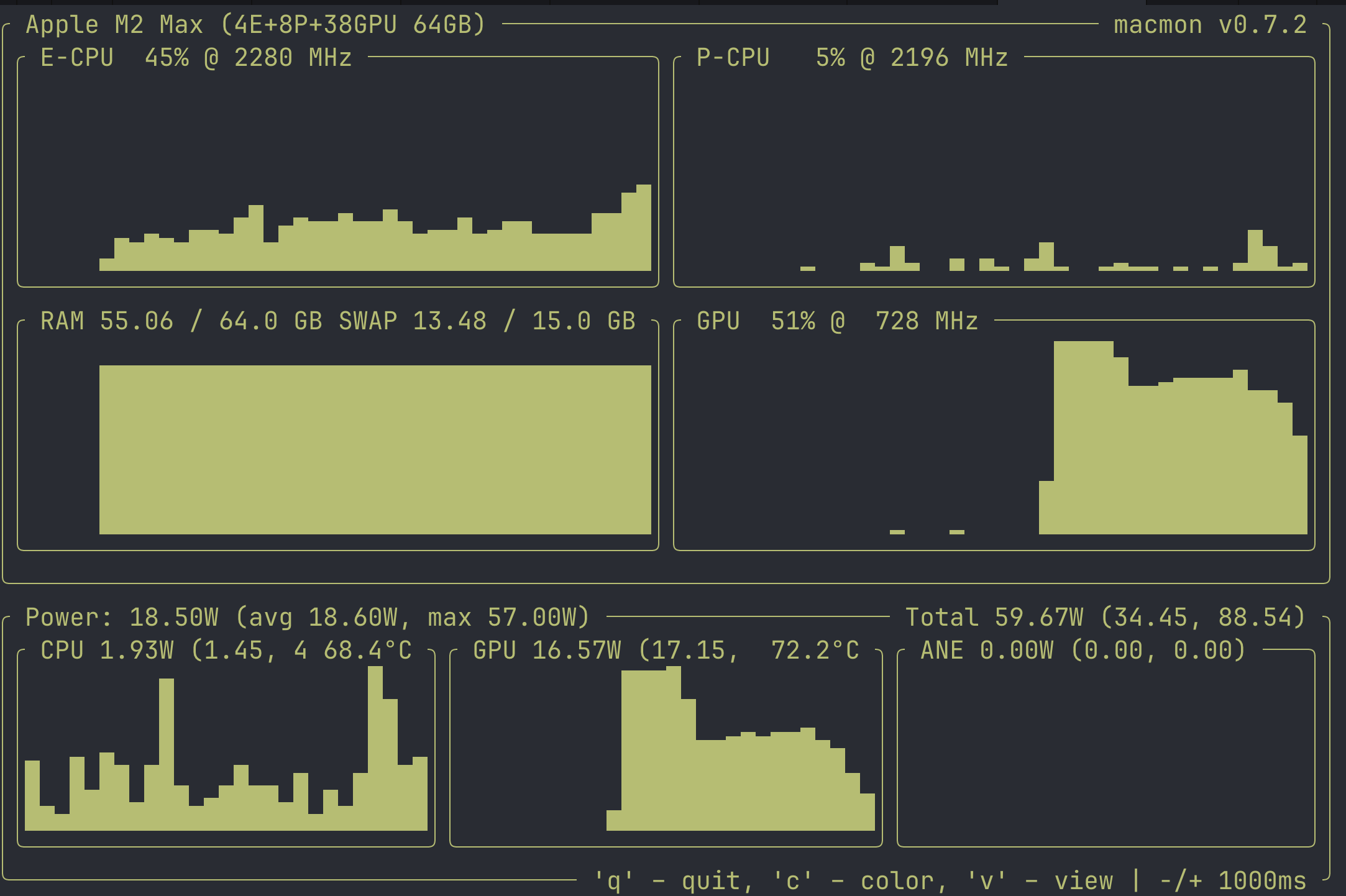
None of these are groundbreaking tasks (again, a lot of personalized Google/docs lookups), and working on them does give my GPUs and RAM a workout and the K-V cache grows to 64 GB RAM.
But, the larger story for me is that these kinds of tasks, even as simple as they are, used to be impossible for local models as recently as 6 months ago.

Gemma-4-12b-qat just came out but I’ve already also really been impressed with its performance relative to its size. The model architecture itself is really interesting and proposes a bunch of interesting questions like, “if we are constrained by performance and price, what architectural tradeoffs do we need to make?” a question that so far has not really been asked in the mad token gold rush.

Running agentic models locally today

But don’t take my word for any of this, try it out for yourself! You’ll need a local model inference engine, an agentic harness, and the local model artifact if you want to try to run local agentic flows. You’ll need to set up the harness to point at your local inference endpoint, the downloaded model artifact served via the inference engine.

For my local setup, I’m currently using Pi as the agent harness and LM Studio as the inference server, although it would likely be faster if I just used llama.cpp directly - a potential direction for a future experiment.

This post was very easy to follow to set up agentic coding with Pi and LM Studio, although I did make a few tweaks to the post’s setup.

  1. Model: The post recommends Gemma 26B A4B , but gemma-4-12b-qat is more recent and smaller and faster, without much sacrifice in accuracy.
  2. Security: I run every Pi session in a Docker container and give it permissions only to bash so that it can’t run Python code or do web browsing, although I do plan to allow curl in a different image for some research work I’m doing.
  3. Agent Harness Config: Since I run everything in Docker, I edited Pi’s models.json in order to get Pi to talk to the model.
"lmstudio": {
      "baseUrl": "http://host.docker.internal:1234/v1",
      "api": "openai-completions",
      "apiKey": "not-needed",
      "models": [
        {
          "id": "google/gemma-4-12b-qat",
          "input": [
            "text",
            "image"
          ]
        }
      ]
    }

Here’s my Docker Compose config:

services:
  pi:
    build:
      context: .
      dockerfile: Dockerfile
    image: pi-agent:0.74.0
    init: true
    stdin_open: true
    tty: true
    extra_hosts:
      - "host.docker.internal:host-gateway"
    environment:
      ANTHROPIC_API_KEY: ${ANTHROPIC_API_KEY:-}
      OPENAI_API_KEY: ${OPENAI_API_KEY:-not-needed}
      GEMINI_API_KEY: ${GEMINI_API_KEY:-}
      OPENAI_API_BASE: ${OPENAI_API_BASE:-http://host.docker.internal:1234/v1} # note that you'll need to specify a base if you also use OpenAI to access OpenAI's actual completions endpoint
      WHATEVER_API_KEY: ${WHATEVER_API_KEY:-}
    volumes:
      - ${HOME}/.pi/agent/models.json:/config/models.json
      - ${WORKSPACE:-.}:/workspace
      - pi-config:/config
      - pi-sessions:/sessions
    working_dir: /workspace

volumes:
  pi-config:
  pi-sessions:

and here’s the bash script that runs pi .

#!/usr/bin/env bash

# Pi — Start the containerized Pi agent.

# Directory containing this script and the compose files.
SCRIPT_DIR="$(cd -- "$(dirname "${BASH_SOURCE[0]}")" && pwd)"

# Workspace to mount into the container. 
WORKSPACE_DIR="${WORKSPACE:-$(pwd)}"
case "$WORKSPACE_DIR" in
  /*) ;; 
  *)  WORKSPACE_DIR="$(cd -- "$WORKSPACE_DIR" && pwd)" ;; 
esac
export WORKSPACE="$WORKSPACE_DIR"

sandbox="${PI_SANDBOX:-0}"
pi_args=()

while (($#)); do
  case "$1" in

    --sandbox)    sandbox=1 ;;
    --no-sandbox) sandbox=0 ;;
    *)            pi_args+=("$1") ;;

  esac
  shift
done

compose_files=( -f "$SCRIPT_DIR/docker-compose.yml" )
if [[ "$sandbox" == "1" ]]; then
  # an even more secure sandbox
  compose_files+=( -f "$SCRIPT_DIR/docker-compose.sandbox.yml" )
fi

# Derive a container name from the workspace directory's basename.
# Sanitize to characters Docker accepts: [a-zA-Z0-9][a-zA-Z0-9_.-]*
repo_slug="$(basename -- "$WORKSPACE_DIR" | tr -c 'a-zA-Z0-9_.-' '-' | sed 's/^-*//')"
[[ -z "$repo_slug" ]] && repo_slug="workspace"
container_name="pi-${repo_slug}-$$"

api_key_args=(
  -e OPENAI_API_KEY
  -e DEEPSEEK_API_KEY
  -e ANTHROPIC_API_KEY
  -e GEMINI_API_KEY
)

cmd=(
  docker compose
  --project-directory "$SCRIPT_DIR"
  "${compose_files[@]}"
  run --rm
  --name "$container_name"
  "${api_key_args[@]}"
  pi
)

if ((${#pi_args[@]})); then
  cmd+=("${pi_args[@]}")
fi

exec "${cmd[@]}"

I build the Docker container and make changes to the files in its own repo. Then, I run Pi in the repo I’m working in, which spins up Docker so that Pi can’t wipe files or directories by acting on my physical hard drive. This also enables Pi running in the container to see my custom model json config by shipping it into the container. All of this has been working fairly well for my experiments.

There are still issues with local models: inference can be slow, context windows are small and limited to your own hardware, and the ecosystem, although it’s made a ton easier by tooling like LM Studio and HuggingFace’s Use This Model button. Early releases suffer from prompt template mismatches. But, these are usually patched extremely quickly. Needless to say, I’m not sure this is ready for production software development quite yet.

The benefits, though, are numerous and the ecosystem critical to invest in, particularly now. One of the very cool parts of local models is you can introspect almost everything, like watching the token inference process live,
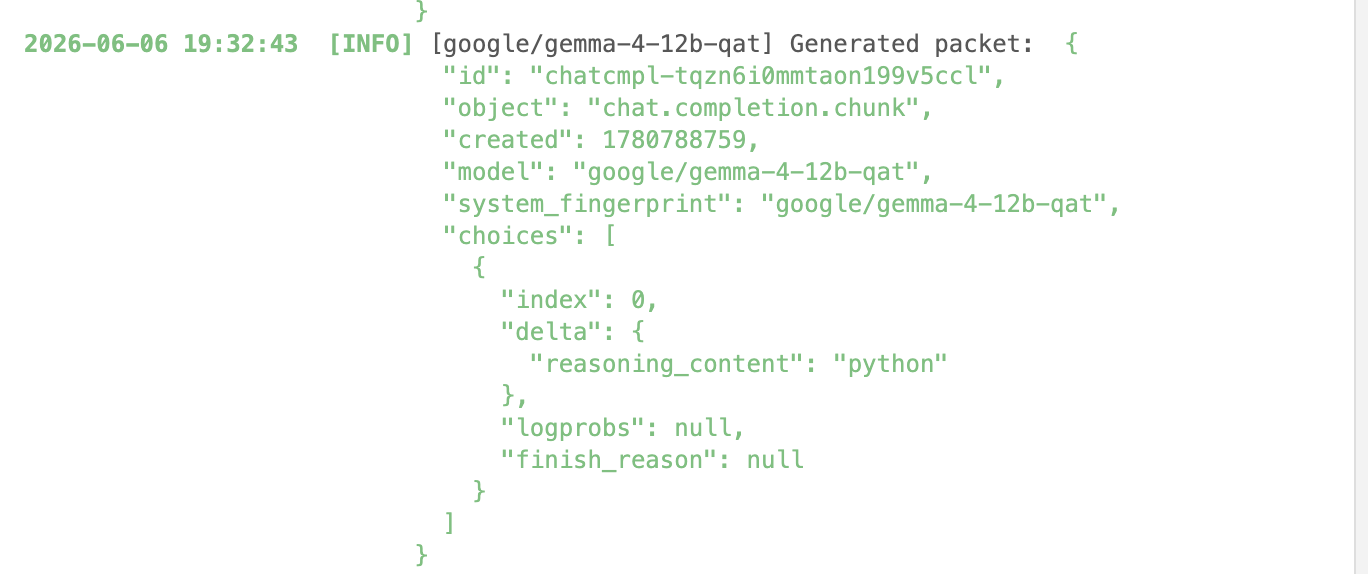
and watching tokens in/out.
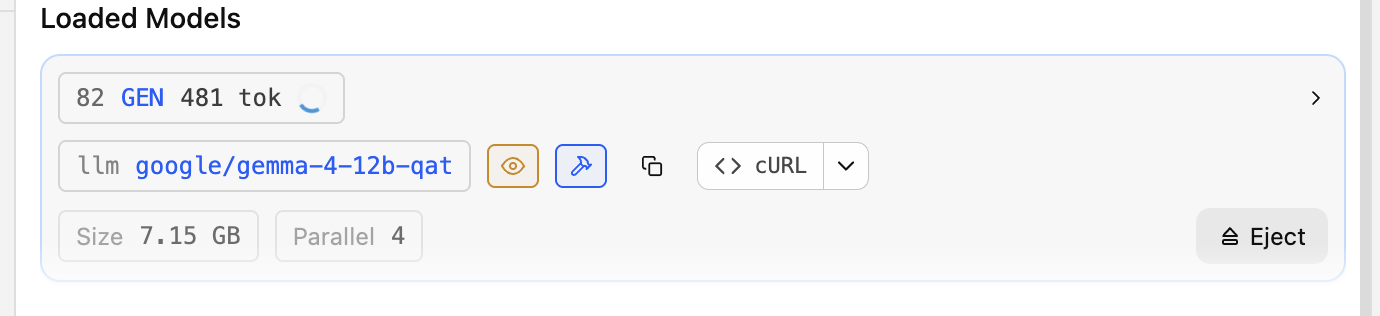
You can do things like change the local context window and watch performance improve or degrade, and really dig into how your tokens are processed on the GPU. You can change the system prompt, the quantizations. You can pit models against each other. You can also change and introspect the harness side.

The possibilities are endless, and the tools only keep getting better.