


It is arguable that, for all our other achievements in the sphere of gardening, the most important and iconic contribution of British horticulture to the world is the lawn. Lawns possess obvious appeal as an element in landscape design. Of all soft landscaping features, they are by far the most tolerant of wear. This means they can bridge the huge chasm in practicality between the severe utility of hard landscaping and the majority of soft landscaping that is designed to be looked at, rather than as a space to be inhabited.
You may also like
- Why you shouldn't mow the lawn in May
- The best grass seed for your garden
- Here's why you need to let a bit of wild into your garden
Lawns provide a strong visual link to the pastoral English landscape, which may be visible beyond our boundary, but if not will certainly hold a deeply entrenched position within our mind’s eye. They are pleasant to look at and to lounge on and provide an excellent setting for other landscape features.
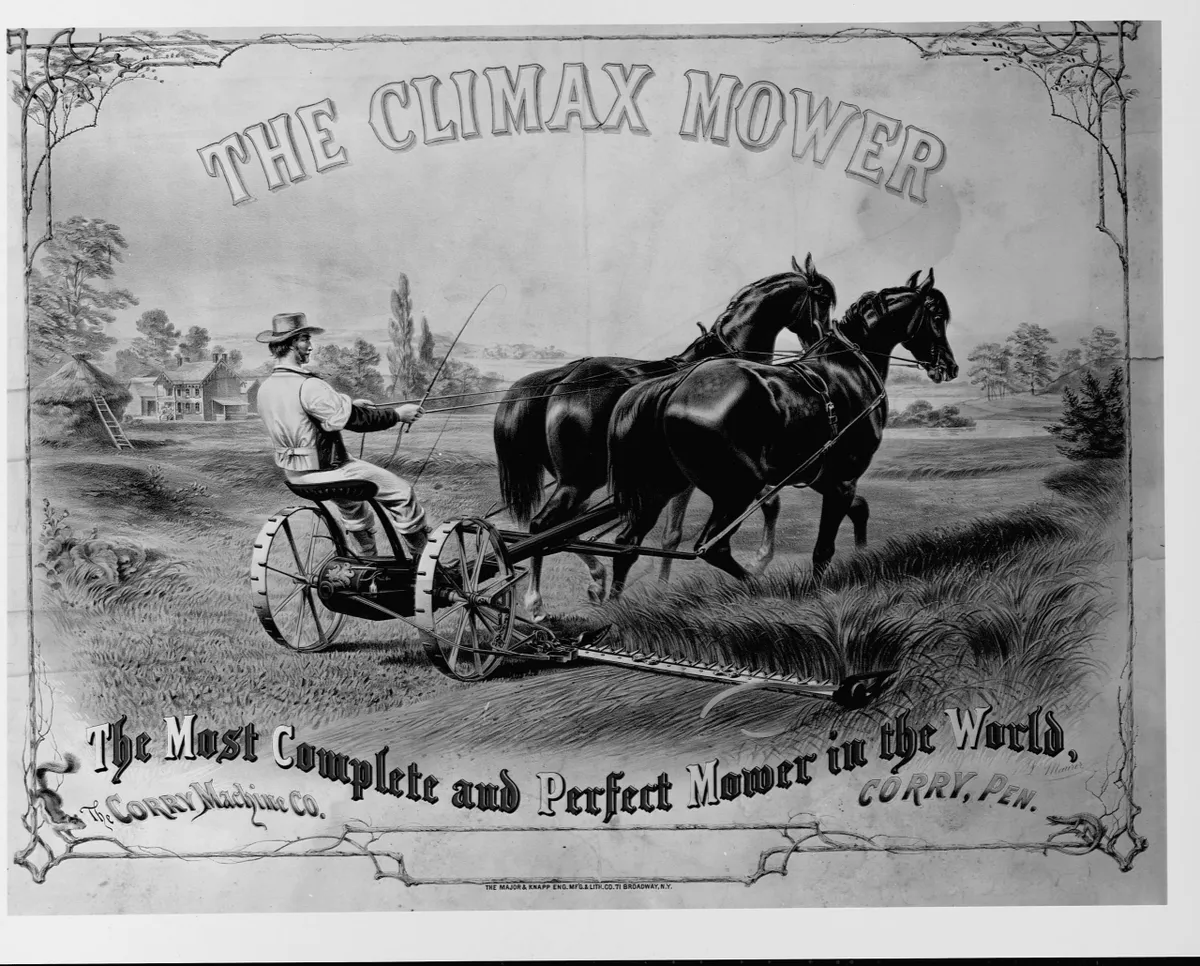
Lawn care in itself has achieved cult status as an activity. The act of pushing a mower around possesses an almost primordial appeal. Our interaction with and manipulation of ‘nature’ is a defining characteristic of humanity. Nature’s response is invariably to mount a sustained attempt towards unruliness and reversion. Mowing the lawn is an immediate paradigm of our relationship with nature and it is to be expected that as a recently industrialised society we should cling to such activities as a vestige of our agricultural past. Lawn maintenance is an accessible activity, as it does not require specialised plant knowledge. In practical terms it occupies a gap between ‘gardening’ proper and the built environment – a world of straight lines, sharp edges, levels, of hard and fast rules. But a forgiving and soft world nonetheless.
You may also like
The eighteenth-century origin of the lawn
Lawns were established as an indispensable element of garden design during the 18th century. Eighteenth-century landscape designers stylised English pastoral scenery – by far the most prominent surface treatment in their idiom was cropped grass. Beyond the ha-ha, sheep cattle or deer may have maintained the sward. But next to the house, it was required that men with scythes regularly trim the herbage, an extremely labour intensive and skilled task. The aesthetic demanded as smooth a surface as possible. When you consider that grass was predominantly a resource for feeding livestock, the notion of constantly employing men to remove it can be considered an outrageous act of ostentation. The modern history of the lawn can be said to really get going once lawn-mowing technology was developed and adopted during the 19th century. But it is important to remember that the earliest lawns were very much the preserve of the elite. Lawns have held a powerful aspirational appeal ever since.
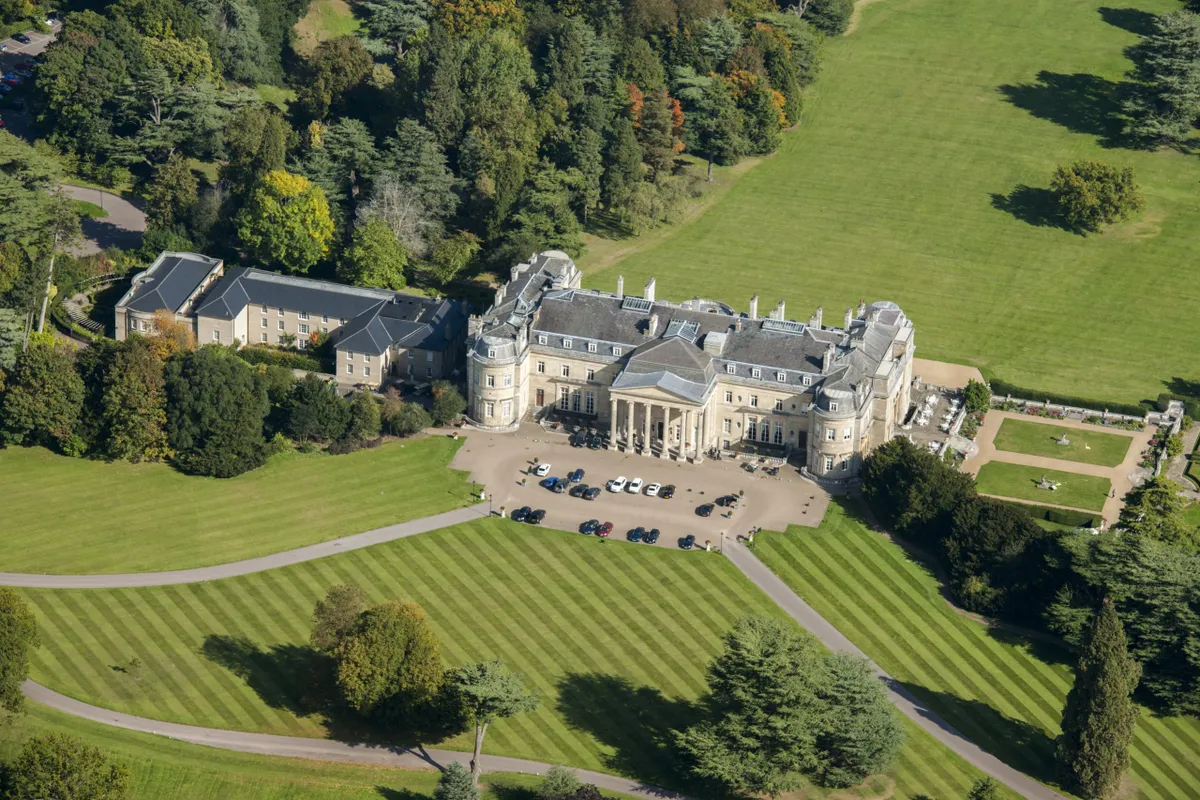
The earliest lawns were very much the preserve of the elite
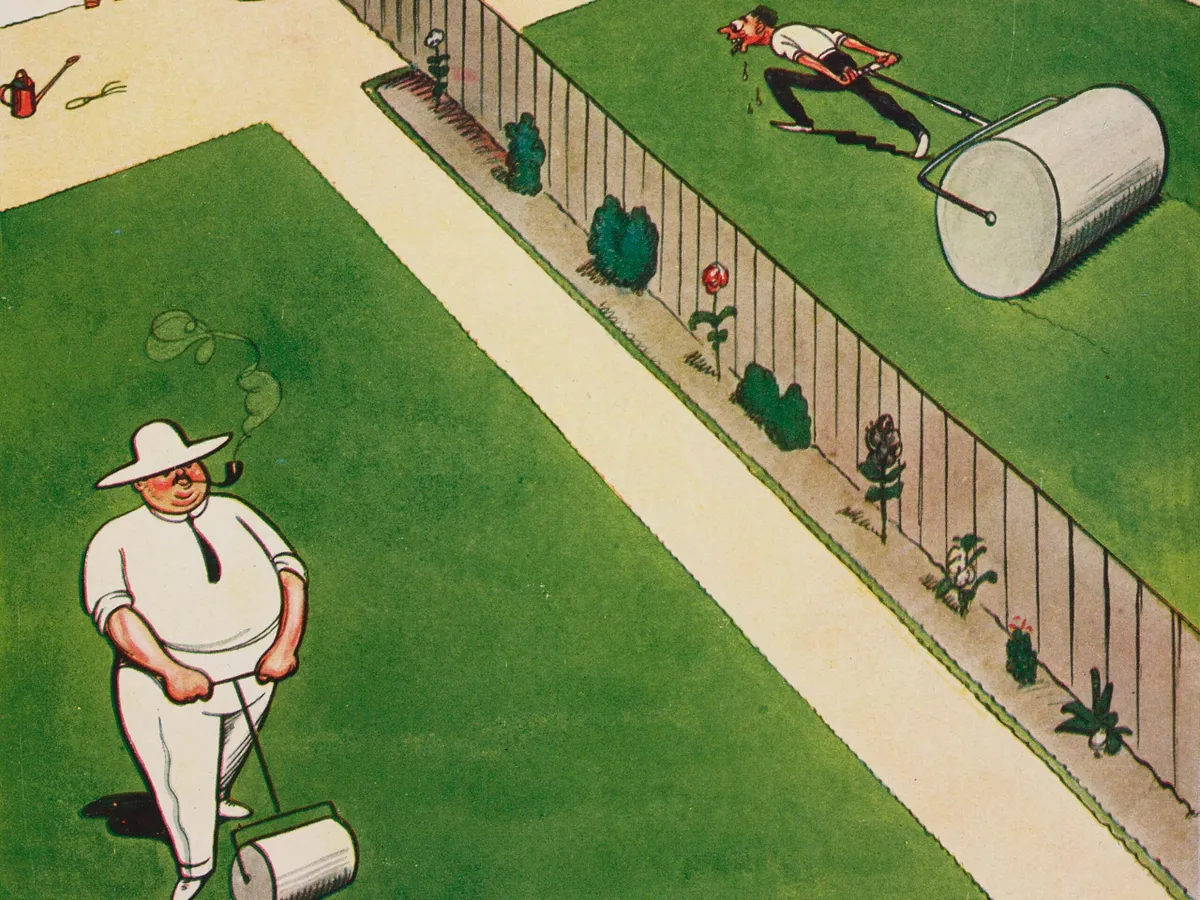
The cylinder mower was invented in Gloucestershire in the 1830s, almost as a by-product of the industrial revolution in cloth-making. The technology was essentially sound, though initially somewhat cumbersome to use, and it was adopted fully with some modifications over the course of a few decades. This gradually democratised the ownership of lawns in concert with the development of suburbia. Would this lessen the allure? The new technology begat refinement, and as long as further refinement was possible, lawn maintenance remained an aspirational activity even for those who had to perform the labour themselves. Lawn mowing machines and accoutrements became status symbols in themselves.
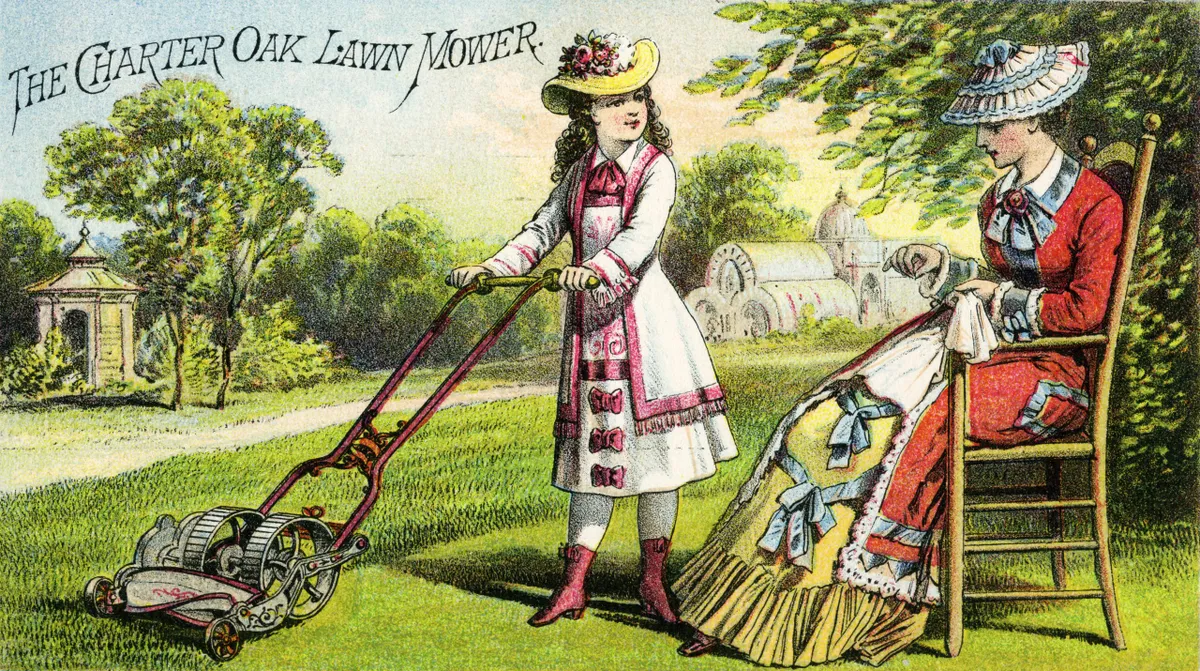
The 18th-century ideal of a landscape garden is imprinted firmly on the American psyche
The lawn fetish flourished with the British Empire and was transferred to the wider world in combination with a number of the turf-based sports, such as cricket and football, for which Britain is famous. It was adopted and transmuted nowhere more avidly than in the USA. Rather like the English language, we can attribute much of the current global hegemony of lawns to our American cousins. There is no doubt that the 18th-century ideal of a landscape garden is imprinted firmly on the American psyche. Urban parks, golf courses and suburban developments were consciously based on this ideal. To a nation that had to struggle to define itself and impose its own order on a hostile continent, the cultivation of lawns became an important symbol of nationhood and civic pride as well as personal aspiration. The climate in much of the USA is poorly adapted to lawn culture – nevertheless an increasingly uncompromising lawn aesthetic was vigorously pursued throughout the 20th century. The establishment and maintenance of lawns was conceived and enacted as a war against nature. Extraordinary excesses in the consumption of chemicals and water use were encouraged in pursuit of the ideal.
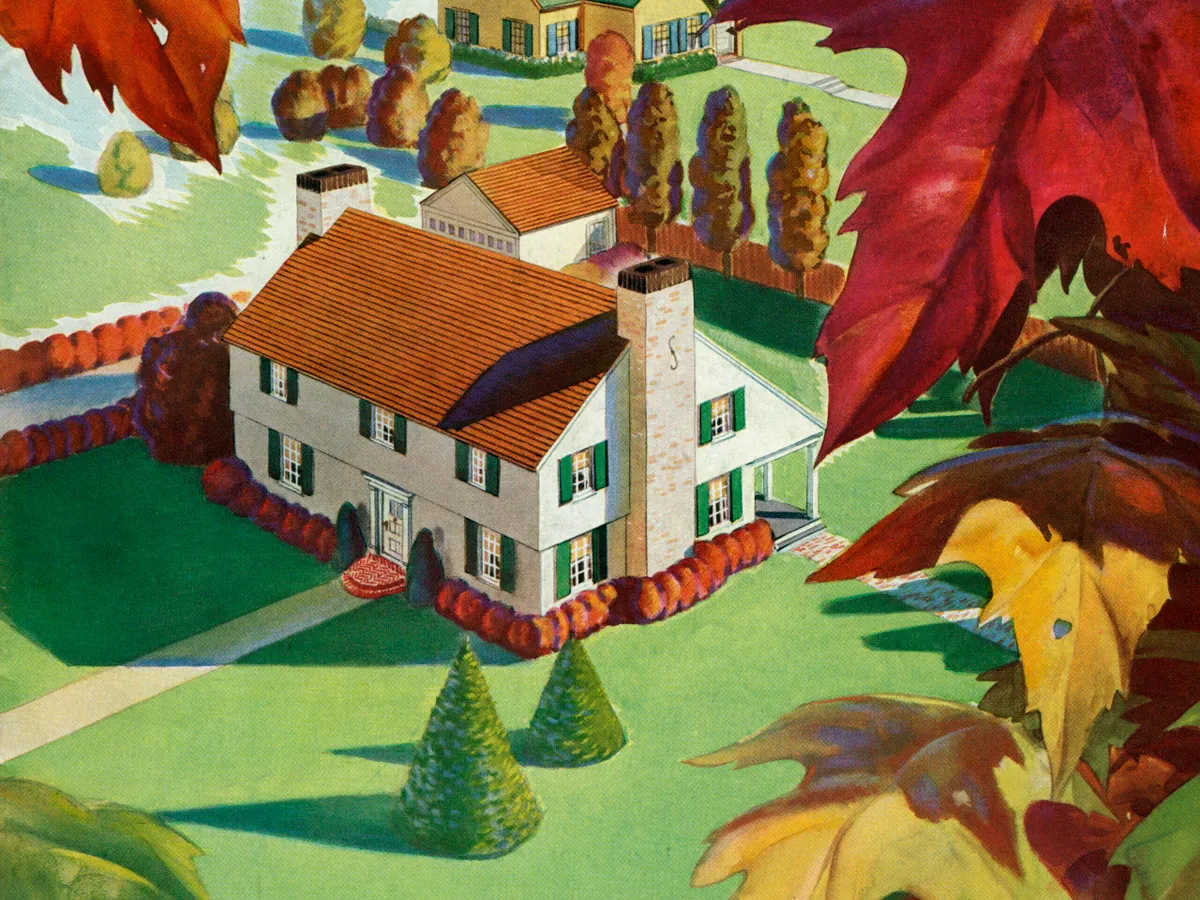
Conspicuous consumption or destruction of natural resources is thankfully no longer as fashionable in the West as it was. At one time the lawn was a totem both of the British Empire and the American Dream. Neither now viewed with unalloyed positivity. In films such as Blue Velvet and American Beauty, a well-tended, suburban American lawn represents sterile, oppressive conformity.
Extraordinary excesses in the consumption of chemicals and water use were encouraged in pursuit of the ideal
Nevertheless, lawns still have a powerful global currency as a symbol of prosperity and it is almost impossible to envisage a world without them. Lawns carry a huge weight of cultural and environmental baggage, but where does the future lie? At Chatsworth House in Derbyshire, seat of the Duke of Devonshire, there are twin lawns known as ‘the Salisburys’, which run up to the east side of the house. They were established by sowing hay seed in the 18th century and have not been ‘improved’ since – as a result they contain an astonishing multiplicity of species. The Duke and Duchess declined the invitation to rectify them in the 1980s, following intervention from a Dr Gilbert of Sheffield University. Such lawns were smooth enough to satisfy ‘Capability’ Brown – perhaps we should be equally accepting of nature’s foibles, in spite of our hard-won power to impose a stricter will?
Don't miss our feature on Plantlife's No Mow May campaign
The history of the lawn: timeline
1700s
Landscape designers, including William Kent, Charles Bridgeman and Lancelot ‘Capability’ Brown, begin what becomes known as the English Landscape Garden movement. Their designs for gardens, such as Stowe, Rousham and Chatsworth, feature vast sweeping lawns.
1830
Edwin Budding, an engineer from Thrupp in Gloucestershire, patents the first lawn mower, bringing the perfectly cropped lawn within reach of the middle classes. 1893
James Sumner of Leyland, Lancashire, designs the world’s first steam-powered lawn mower. He later produces a modified version of his design through his newly founded Lancashire Steam Motor Company, which eventually morphs into British Leyland.
1902
The Suffolk-based firm Ransomes introduces the first petrol-driven lawn mower.
1945
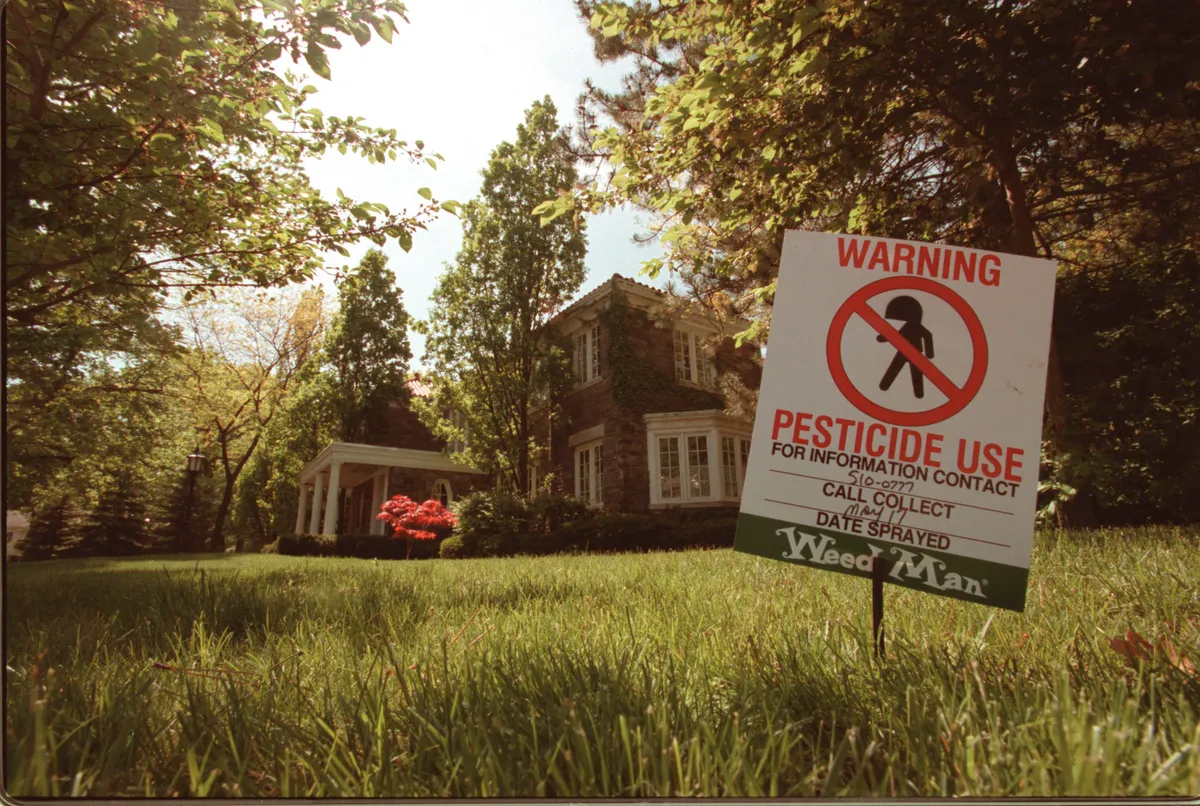
Dichlorodiphenyltrichloroethane, better known as DDT, goes on general sale in the USA as a lawn pesticide. At the time it was considered efficient and benign compared to many of the poisons that had previously been in use.
1962
American biologist Rachel Carson publishes Silent Spring, which examines the environmental impact of DDT, linking this and other pesticides to cancer.
1963
Flymo introduces its labour-saving hover mower, which floats on a cushion of air. It signals a decline in the appetite for maintaining the highest standards of lawn care.
Books to read about lawns
The Grass is Greener
by Tom Fort
(Harper Collins, 2000).
An engaging historical account of the British Lawn, mingled with personal musings on the nature of manhood.
The Lawn – A History of an American Obsession
by Virginia Scott Jenkins
(Smithsonian Books, Washington, 1994).
A rigorous examination of the lawn in the USA. Scott Jenkins tracks the social and commercial forces that drove our American cousins to extraordinary excess in pursuit of a largely unobtainable ideal.
The Lawn Expert
by Dr DG Hessayon
(Expert Publications, 1993).
An unreconstructed take on perfect lawns and how to achieve them.
Silent Spring
by Rachel Carson
(Houghton Mifflin, 1962).
This influential book, a seminal text of environmentalism, still casts a shadow over the lawn industry to this day.
Meadows
by Christopher Lloyd
(Cassel, 2004).
A long time before the environmental movement, the Lloyd family established ornamental flower meadows at Great Dixter. Here Christopher Lloyd shares his wisdom.
Check out our selection of the best ride-on mowers for your garden