





There is a peculiar theater to the internet’s culinary landscape, and if you spend enough time observing it, you will inevitably stumble into a warzone over authenticity. For example, no action incites internet fury faster than recipes of spaghetti carbonara that includes a splash of cream (or, god forbid, garlic). The discourse inevitably devolves into discussion about the ‘authentic’ way to cook something, with self-appointed gate-keepers stating (if they are feeling generous) “this looks delicious, but you can’t call this carbonara”.
But food authenticity, as we so rigidly police it today, is largely a modern illusion — and if you think even more deeply about it, doesn’t even make sense. Why do we decry home cooks for adapting a Roman pasta with French ingredients (sparking international incidents such as ‘carbonara-gate’), while simultaneously lauding fusion creations such as udon carbonara?
More glaringly, why do we apply these rules so unevenly across the map? Step into the realm of Asian cuisine, and you often see the exact opposite phenomenon. A content creator will be widely celebrated for an authentic Hainanese chicken rice recipe that, while undeniably delicious looking on camera, fundamentally ignores the key regional flavors that make the Singaporean dish what it actually is1. We demand absolute historical fidelity from a bowl of Italian pasta, yet happily accept an aesthetic homogenization of Asian food.
Why are we shouting about authenticity without pausing to consider a dish’s history, its cultural context, or its natural evolution? When we yell about cream on the internet (or lambast the substitution of bacon for guanciale) we are rarely protecting an ancient, unbroken culinary lineage.
More often than not, we are simply fetishizing a recent consensus.
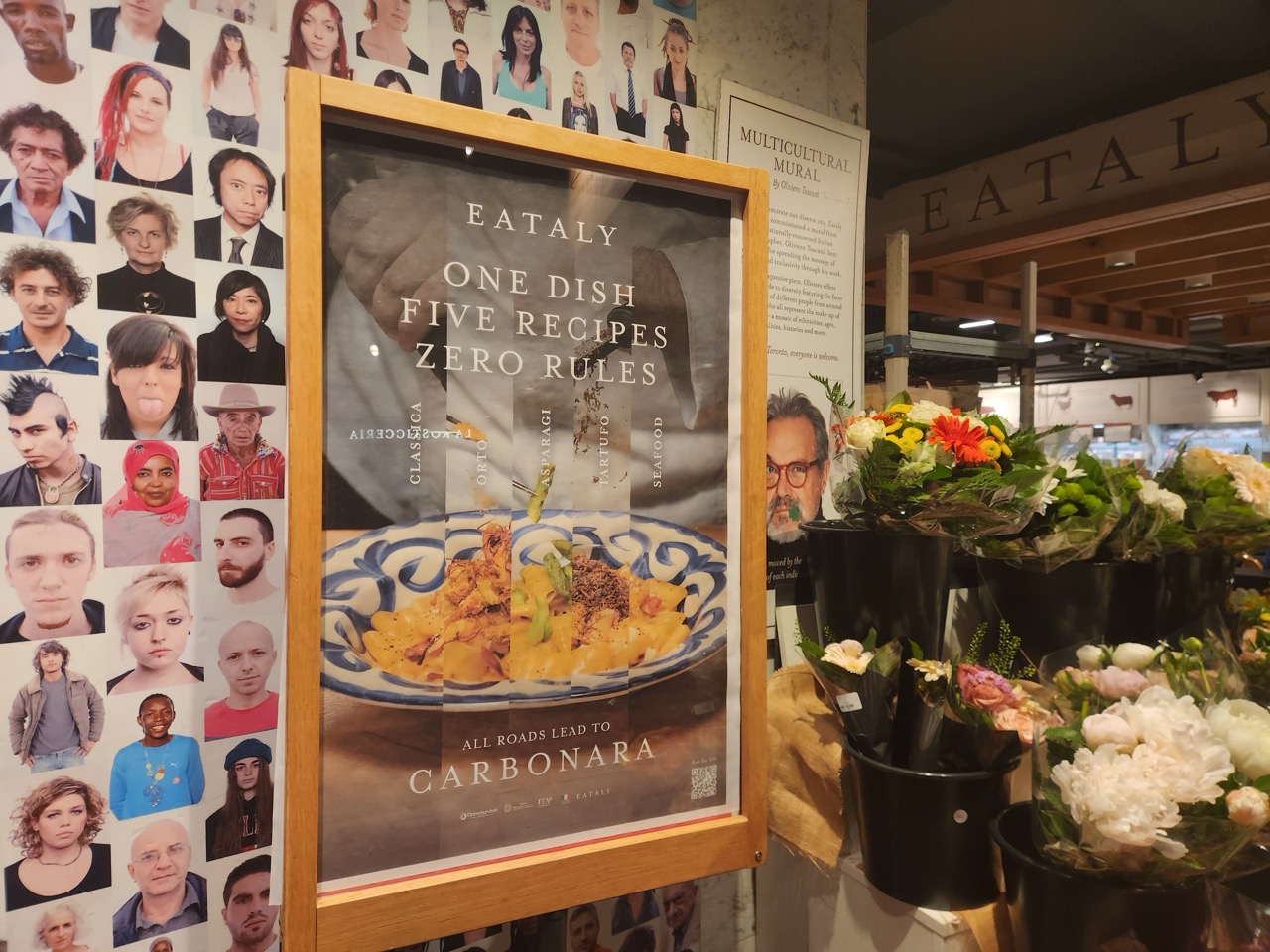
The most famous example of this phenomena is certainly the aforementioned carbonara — so well known that it has become a meme beyond food media (‘if my grandmother has wheels she would have been a bike!’).
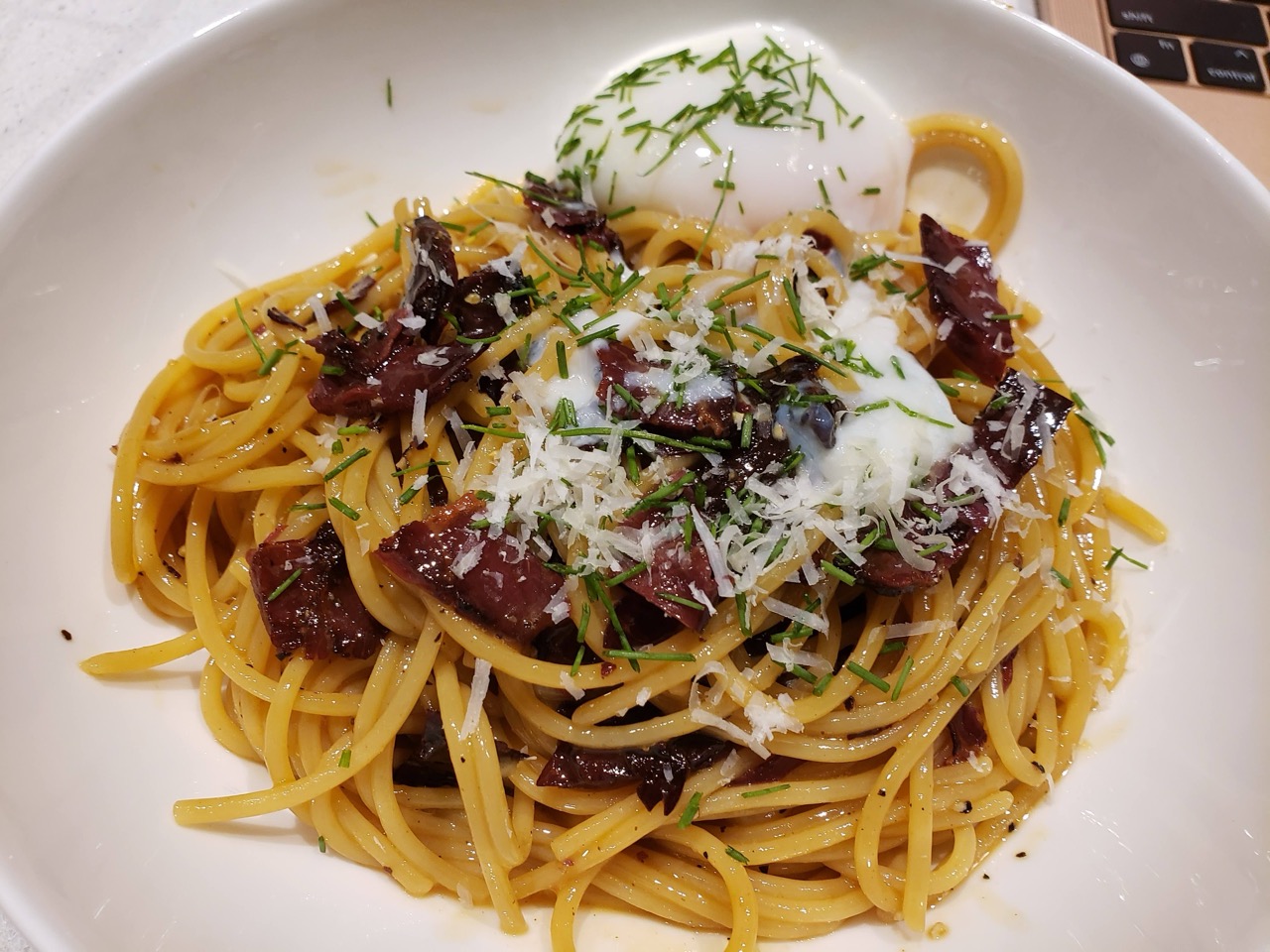
Today, the authorized version of the dish is fiercely guarded: strictly guanciale (not bacon or ham!), pecorino romano, eggs, and black pepper. But peel back the historical record, and you find that this purity is a relatively modern invention. Food historian Alberto Grandi has pointed out that carbonara was practically non-existent in Italy before the 1940s (although thickening sauces with eggs has a long culinary tradition). The first recorded recipes don’t even appear in Italy. There is a scant mention in a French newspaper in 1952, with the first detailed recipe appearing not in Italy, but across the Atlantic in Chicago (Chicago!) later the same year, using pancetta, egg yolks, parmigiano reggiano, and tagliatelle (however interestingly no pasta water).
Throughout the late 20th century, the dish remained fluid and diverse. Cooks experimented with different cheeses, incorporated various herbs, and freely used cream. In Italian recipes, this variation was embraced:
It wasn’t until the late 1990s and early 21st century that the recipe crystallized into its current, rigid dogma; but even this process was complex. Up until the 2010s, recipes were still appearing in Italian cookbooks and newspapers that treated carbonara as a living, breathing dish with natural substitutions. In 2013, La Cucina Italiana — the long-lived monthly Italian food and cooking magazine that you might recognize from the list above — was still recommending pancetta as a substitute for guanciale, grana padana in addition to pecorino, and a splash of milk (if you are so inclined). It wasn’t until 2020 that their recipe officially morphs into the ‘authentic’ carbonara we fight about today2.
The sudden elimination of cream might coincide with a wave of ‘gastronationalism’ — an effort to construct a specific, unyielding national identity through the sanctity of food — as well as social media and food snobbery. Whatever the cause, we find ourselves in an odd situation where the fierce defense of ‘authentic’ carbonara is simply enforcing a standard that we only universally agreed upon perhaps one or two decades ago.
To see how global media, migration, and memory distort our culinary context, we can look at a dish with an entirely different trajectory: Hainanese chicken rice.
My father’s ritual, upon sliding into the back of any Singaporean taxi, was invariable. He would lean forward and ask the driver where to find the island’s absolute best chicken rice. (Of course, this was a leading question — he knew the islands best chicken rice — Boon Tong Kee or Five Star. Moreso he just wanted to see if he could trust the driver for recommendations.)
Interestingly, though, he rarely received the same answer twice (aside from some taxi drivers mourning the loss of Swee Kee). The truth was, the ‘best’ was a deeply personal, fiercely guarded truth, debated endlessly and based often on what you remembered from childhood.
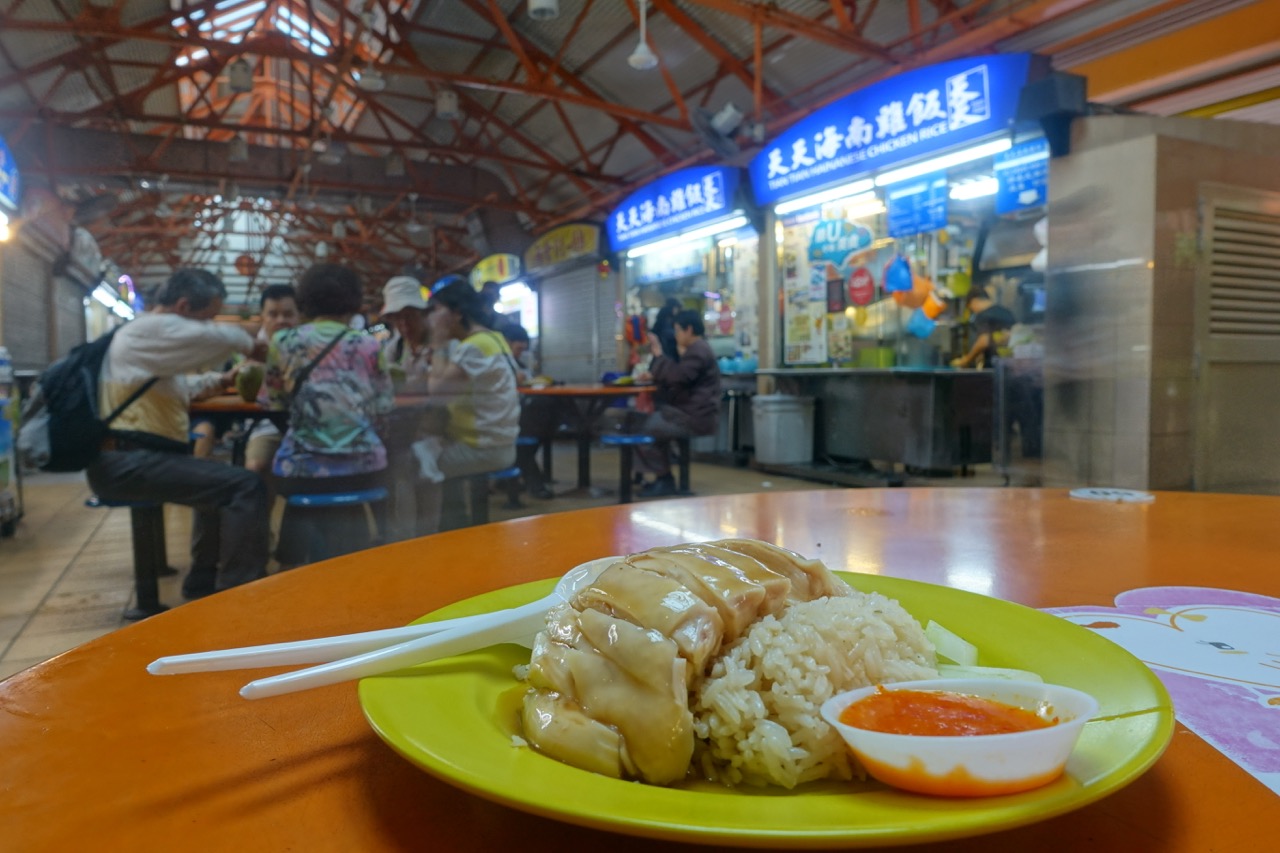
For my family, the best chicken rice was a place I never actually got to experience (well, maybe — I likely was just too young and don’t remember). Swee Kee Chicken Rice, operating out of a bustling shophouse on Middle Road starting in the 1940s, was widely credited with pioneering the modern, hawker-style incarnation of the dish. Long after Swee Kee shuttered its doors in 1997, my extended family on Friday nights would speak of it with the kind of passionate, mournful reverence usually reserved for a lost homeland. Oddly, while I was too young to remember the taste of Swee Kee chicken rice myself, I will never forget the lore of its glistening, perfect dish. Chicken slowly poached in a broth of ginger, garlic, spring onions; dunked into ice water to develop a jelly-like skin; and rice that is almost the main character — cooked in chicken fat, the poaching liquid, and perfumed with pandan leaves.
My own foundational memories of the dish were forged slightly later, via the kids’ serving at the Rasa Sentosa Shangri-La’s Silver Shell Cafe. Strangely, I remember the plating more than the taste of the dish — the chicken rice was served on a specialized plate with separate sections for the cold poached chicken and hot, fragrant rice. Between them, three distinct, molded divots built into the plate itself.
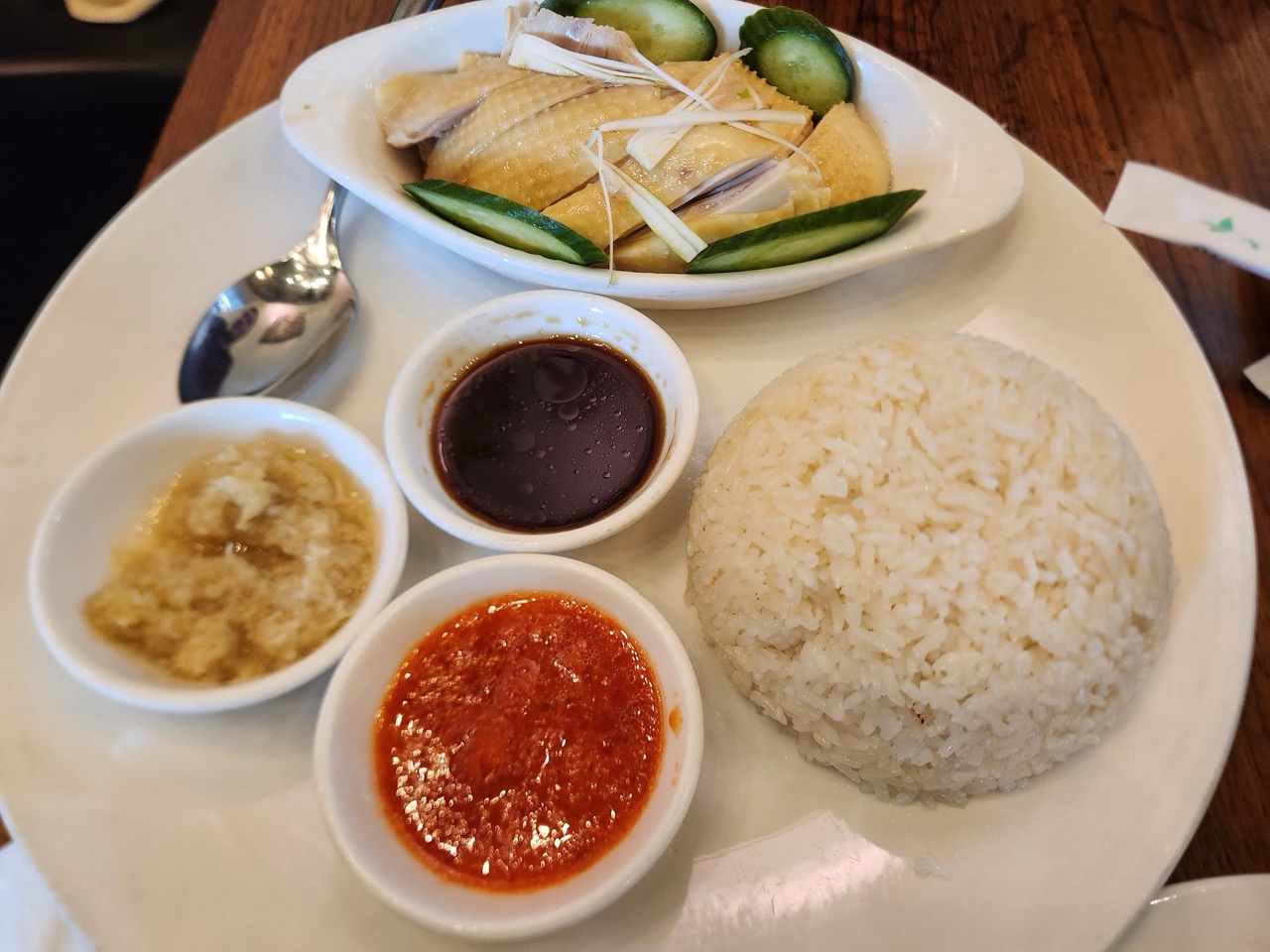
That physical architecture dictated the (more-of-less) ‘holy trinity’ of condiments that must accompany a Singaporean plate of chicken rice: a bright, tangy garlic-chili sauce electric with calamansi lime; a thick, viscous pool of dark, sweet kecap manis; and a pungent, watery paste of minced ginger3.
To trace the genealogy of this dish is to chart a map of immigration and diaspora. In 2016, I traveled to the island of Hainan and tasted the dish’s undisputed ancestor: Wenchang chicken.
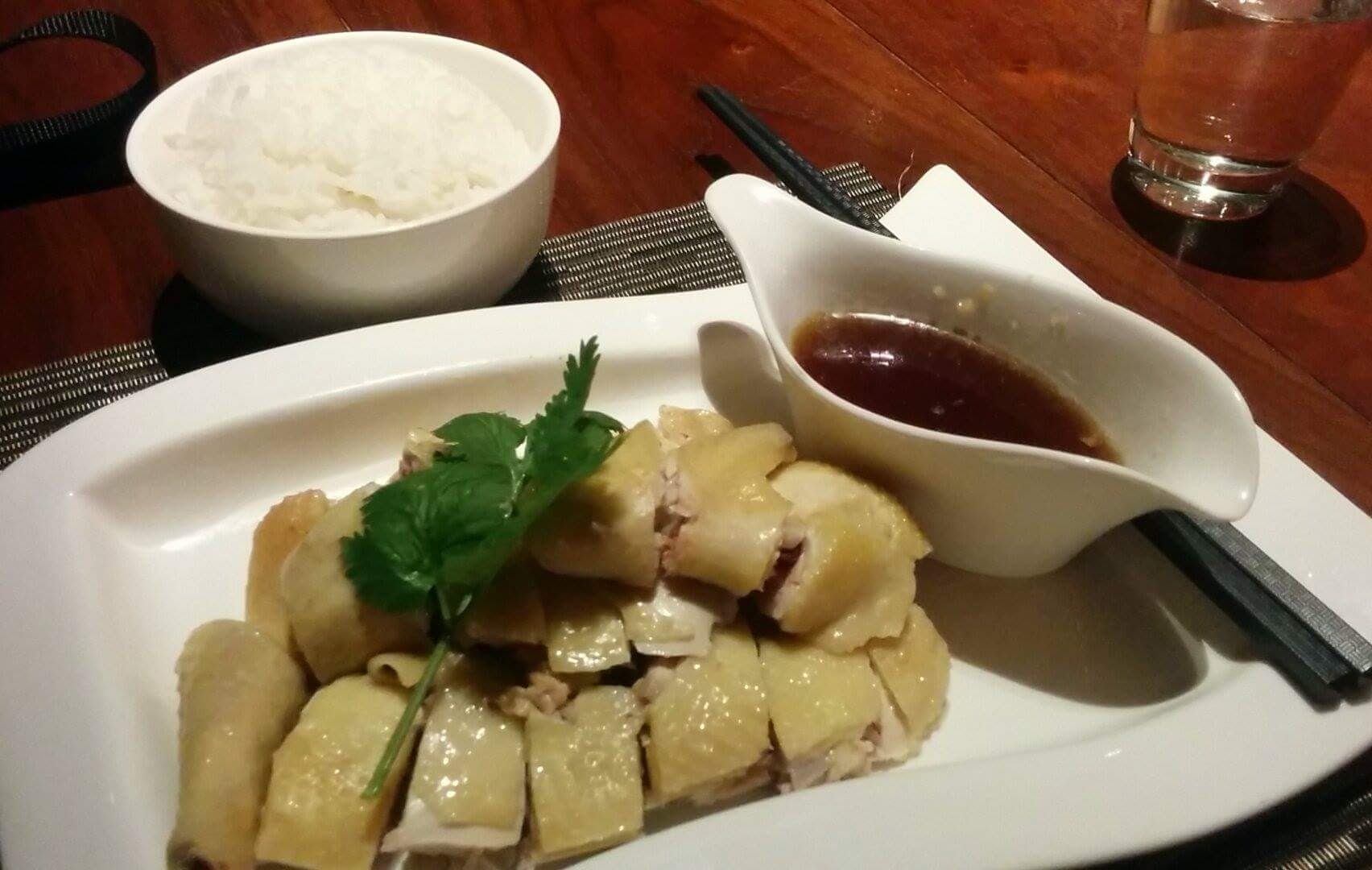
It is a fundamentally different experience — a leaner, earthier bird, poached plain (a process known as ‘white cutting’), and served cold with sesame oil and white pepper, alongside plain rice. When Hainanese immigrants arrived in Singapore and British Malaya a century ago, they carried this culinary memory with them — but the dish evolved. Local Cantonese chefs in Singapore heavily influenced the technique, introducing the ice bath method that gives the Singaporean bird its signature jelly-like skin, alongside flavours such as pandan leaf and the selection of sauces.
Yet, if you browse global food media today, you will notice a strange addition. Many internet recipes for Hainanese chicken rice feature a vibrant green ginger-scallion oil in place of the kecap manis or ginger paste — a sauce you will never see at a neighborhood hawker center in Singapore.
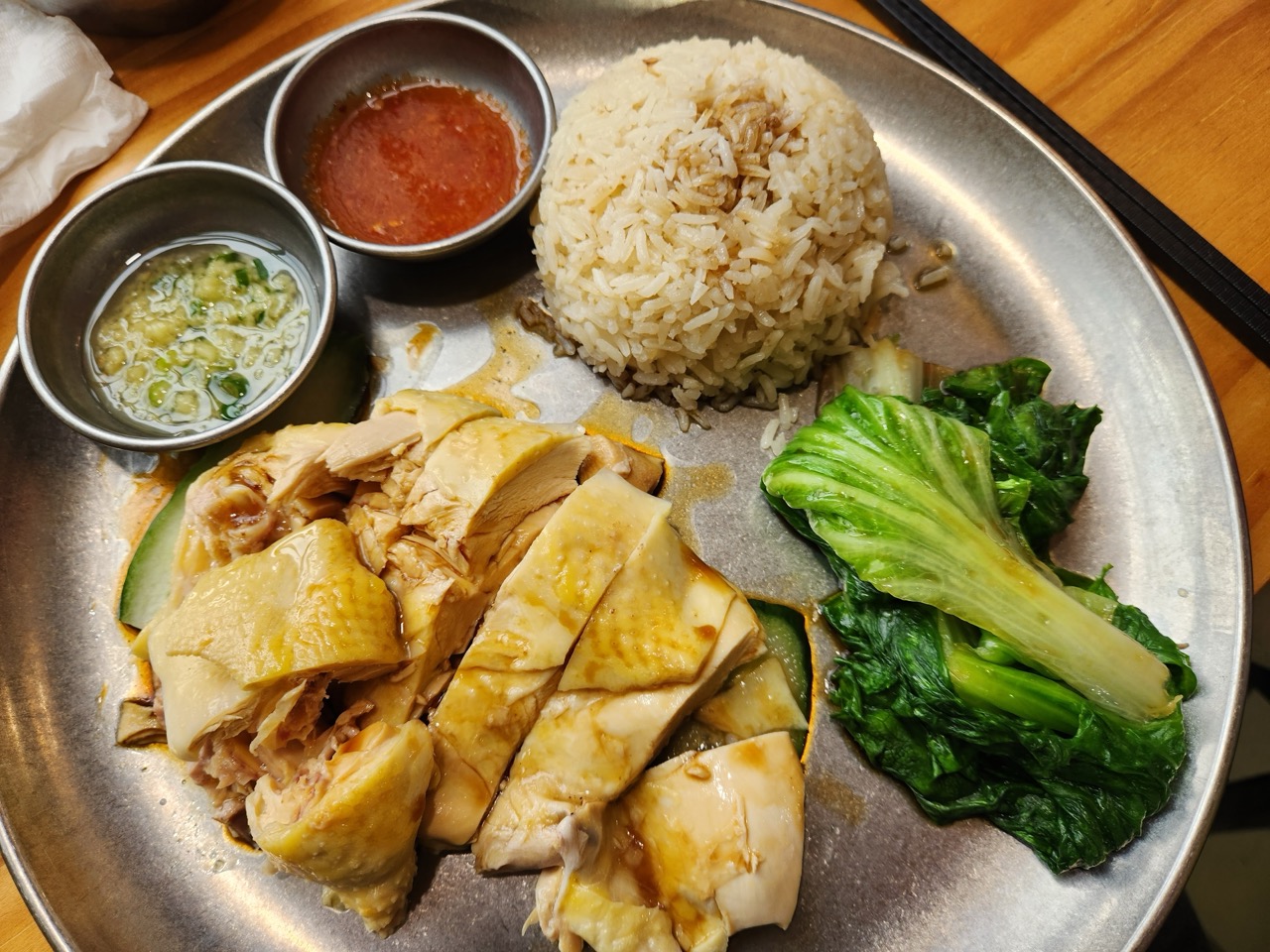
So how did this green scallion oil become the default garnish in the digital consciousness? Outside of Southeast Asia, and with a large Cantonese diaspora in North America and the UK, Hainanese chicken rice frequently gets conflated with a culinary cousin of Wenchang chicken: classic Cantonese white cut chicken (Pak Cham Kai). And white cut chicken is frequently served with a condiment known as geung yung — consisting of mixing finely minced ginger, finely minced garlic, spring onion, salt and sizzling hot oil (sound familiar?).
Because the poaching methods are practically identical, the dishes merge. Rather than reproducing the intense ginger paste and sweet kecap manis of a Singaporean hawker stall, global recipe creators simply swap in geung yung — the milder, universally recognized Cantonese scallion-and-hot-oil sauce that admittedly is very flashy to put together on camera. (The knotted pandan leaves, too, often quietly disappear.)
With so much food media being driven by video these days (e.g., YouTube Shorts, Instagram Reels, and TikTok), sometimes these visually-driven modifications extend to the rice itself. Singaporean chicken rice gets its subtle, pale ivory color strictly from frying the raw grains in rendered chicken fat, garlic, and ginger, before simmering them in the rich chicken-poaching liquid with knotted pandan leaves. But in many recipes, tumeric is often added, forcing the rice a sunshine yellow that pops brilliantly in thumbnails.
And all of this is perfectly fine!
This exact kind of cross-pollination is how Hainanese chicken rice was born, and I am thrilled that Singaporean cuisine (one of my great loves) is getting its moment in the spotlight. I have memories of excitingly inviting school friends in Australia for my mum’s chicken rice; only to worry they will find it too boring or bland, and putting in work ahead of time to explain ‘the chicken is meant to be cold’. So seeing it take Instagram by storm is heartening.
But a part of me keeps returning to carbonara. Why are we on the brink of the next Italian Wars whenever carbonara is mentioned, yet chicken rice is endlessly re-interpreted and adapted (with sauces swapped and flavours modified) with little more than a polite correction from a proud Singaporean buried deep in the comments section?4
There is nothing inherently wrong with serving poached chicken with ginger scallion oil; it is a delicious condiment. Food is inherently fluid, and culinary drift is the very mechanism that gave us these dishes in the first place. Carbonara is an Italian masterpiece (perhaps) born from American rations, and Singaporean chicken rice exists because of the cultural melting-pot that Singapore is5.
We should stop locking recipes into immutable, imaginary vaults. But abandoning purity doesn’t mean abandoning context. Presenting a recipe to a global audience as an authentic hawker classic while serving it with a Cantonese condiment and turmeric-stained rice loses the context and history of the dish.
When we drop the obsession with purity, we can actually start having interesting conversations about how recipes travel, merge, and adapt. We can stop arguing over whether a dish is perfectly authentic, and start asking the far more interesting question: how did it get to be the way it is?
此内容由惯性聚合(RSS阅读器)自动聚合整理,仅供阅读参考。 原文来自 — 版权归原作者所有。