


Getty
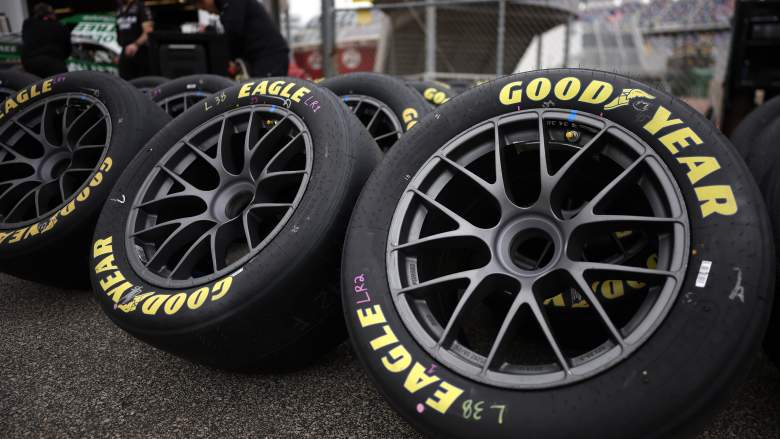
Goodyear tires and Next Gen wheels sit on pit road during practice for the Daytona 500 at Daytona International Speedway.
NASCAR’s superspeedway fuel-saving game isn’t just strategy — it’s baked into the car. And according to Ricky Stenhouse Jr., it’s not changing anytime soon.
The veteran driver, long known for his prowess at Daytona and Talladega, pointed to a core issue with the Next Gen car that continues to dictate how races unfold at NASCAR’s biggest tracks.
At the center of the conversation is NASCAR’s move to a single, center-locking lug nut with the Next Gen car.
The current Cup Series wheel is larger, wider, and made of forged aluminum, attaching with a single lug nut. By comparison, the O’Reilly Auto Parts Series uses a smaller steel wheel with a traditional five-lug system.
That difference has had a significant impact on pit stops — and, in turn, race strategy.
With the single lug nut, four-tire pit stops can be completed in roughly 10 seconds. That efficiency has made it easier for teams to prioritize fuel mileage, particularly at drafting tracks like Talladega and Daytona.
Stenhouse made it clear the current system continues to drive the fuel-saving approach seen in recent superspeedway races.
“If you don’t have to pit in a Stage, I’ll still save fuel because when you do come down pit road, you’re still gonna want the least amount of fuel as possible,” Stenhouse said. “NASCAR Cup victories have all been at Talladega or Daytona. That’s still our limiting factor. Until you go back to five lug nuts, the fuel is gonna be the issue.”
As Stenhouse describes it, the ability to minimize time on pit road — combined with the importance of staying in the draft — naturally leads teams to manage fuel early rather than push the pace.
That approach is most noticeable at the start of runs, where drivers often settle into a measured pace instead of racing aggressively from the green flag.
Spire Motorsports competition director Matt McCall said that opening stretch often becomes a strategic feeling-out period.
“There probably will be a little cat-and-mouse to figure that out within the first five to 10 laps,” McCall said. “I really think it dictates how the pace of the race starts.”
Because teams closely monitor each other’s fuel windows, drivers are constantly adjusting based on what the field is doing.
“So, you can always kind of pick and choose who you feel like you need to pit with,” Stenhouse continued. “If you have to take a second less fuel than other people, you’re going to come off pit road by yourself. You want to pit with the people that need the same amount of fuel so you can leave pit road and get hooked up as quick as you can.”
In recent years, NASCAR has made tweaks aimed at reducing fuel-saving, including changes to stage lengths at Talladega.
For example, the Jack Link’s 500 featured a 188-lap race with stages split into 45, 98, and 45 laps — a structure designed to limit opportunities to stretch fuel or eliminate pit stops.
Even with those adjustments, the underlying dynamic hasn’t changed.
As long as pit stops remain quick and predictable, the incentive to save fuel — and avoid losing track position — continues to shape how races begin and unfold.
For fans expecting constant aggression at Talladega, the early laps can feel controlled.
But that restraint is strategic.
Drivers are managing fuel, aligning with drafting partners, and positioning themselves for when the race tightens up — typically later in stages or in the closing laps.
Because once the fuel windows close and track position becomes critical, the intensity ramps up quickly.
Until then, the fuel-saving game isn’t going anywhere.
Maggie MacKenzie Maggie MacKenzie covers NASCAR for Heavy.com. She previously worked for NASCAR.com, where she reported, wrote, and edited race-weekend coverage and traveled to key events throughout the season. She has more than ten years of experience in sports media and is based in Boston, Massachusetts. More about Maggie MacKenzie
此内容由惯性聚合(RSS阅读器)自动聚合整理,仅供阅读参考。 原文来自 — 版权归原作者所有。