Ted Turner, the billionaire media entrepreneur and philanthropist who launched the 24-hour cable TV news revolution when he founded CNN in 1980, has died. He was 87. t.co/61G2Kuh8Vz





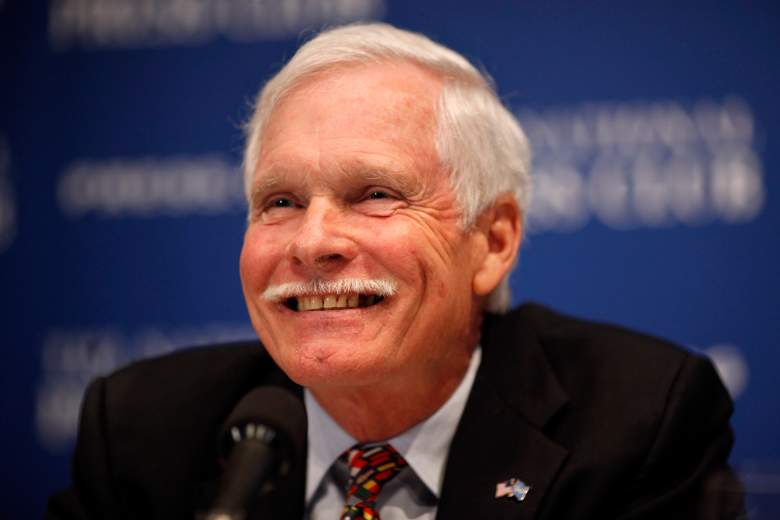
Getty
Ted Turner died at age 87, his company announced on May 6. He had deep dies with the Atlanta Braves.
Ted Turner, the media mogul whose cable television empire helped turn the Atlanta Braves into a national baseball brand, has died at age 87.
Turner Enterprises announced Turner’s death on Wednesday, May 6, according to CNN’s report. Turner was best known nationally as the founder of CNN, but in Atlanta sports history, his impact is inseparable from the Braves’ rise from regional franchise to “America’s Team.”
Turner purchased the Braves in 1976, the same year he launched TBS Superstation, according to his official biography. That combination changed the franchise’s reach. Braves games were no longer just local programming; they became a nightly cable fixture for fans far outside Georgia.
For Braves fans, Turner’s death is not just the death of a famous former owner. It is a reminder that the modern Braves brand — the national following, the 1990s dynasty visibility and the ballpark that carried his name — was shaped by a broadcaster who saw baseball as both a team and a television product.
Ted Turner, the billionaire media entrepreneur and philanthropist who launched the 24-hour cable TV news revolution when he founded CNN in 1980, has died. He was 87. t.co/61G2Kuh8Vz
Turner died Wednesday, May 6, at age 87, according to a Turner Enterprises news release cited by CNN. CNN chairman and CEO Mark Thompson called Turner “the presiding spirit of CNN” and said the network stood on his legacy.
Turner had revealed in 2018 that he had Lewy body dementia, a progressive brain disorder, according to CNN’s report. Additional details about his death were not immediately available in early reports.
In sports, Turner’s legacy stretched far beyond one purchase. The Braves became part of his broader media experiment. TBS carried games across the country, building a fan base in places with no natural Atlanta connection. The Society for American Baseball Research noted that Turner’s satellite television superstations made Braves fans across the United States and helped create a model for modern sports broadcasting.
That mattered long before the Braves became a powerhouse. Turner’s clubs endured plenty of losing seasons, but the broadcasts kept the team in front of viewers. When Atlanta finally surged in the 1990s, the Braves already had a national audience ready to watch Tom Glavine, John Smoltz, Greg Maddux, Chipper Jones and Bobby Cox’s teams chase pennants.
The Braves won the 1995 World Series while Turner still owned the club. SABR notes Atlanta won division titles every season from 1991 through 1999, excluding the strike-shortened 1994 season, and captured the 1995 championship before later World Series losses to the New York Yankees in 1996 and 1999.
Turner’s name also remained physically attached to the franchise. After the 1996 Olympics, Atlanta’s Olympic Stadium was converted into Turner Field, which served as the Braves’ home through the 2016 season.
Turner’s net worth was estimated at $2.2 billion by Celebrity Net Worth in January 2026, while Forbes listed him on its 2026 Billionaires list.
His fortune came from a wide range of industries, but the foundation was media. Turner built Turner Broadcasting, founded CNN, created or helped develop major cable brands and used TBS to reshape how sports could be distributed. CNN’s report described his media empire as including “cable’s first superstation” and channels for movies and cartoons, along with sports properties such as the Braves.
Turner’s personal life also drew public attention, including his marriage to actress and activist Jane Fonda.
Fonda and Turner married in December 1991 and divorced in 2001, according to CBS News. It was the third marriage for both.
Erik Anderson is an award-winning sports journalist covering the NBA, MLB and NFL for Heavy.com. He also focuses on the trading card market. His work has appeared in nationally-recognized outlets including The New York Times, Associated Press , USA Today, and ESPN. More about Erik Anderson
此内容由惯性聚合(RSS阅读器)自动聚合整理,仅供阅读参考。 原文来自 — 版权归原作者所有。