







Getty
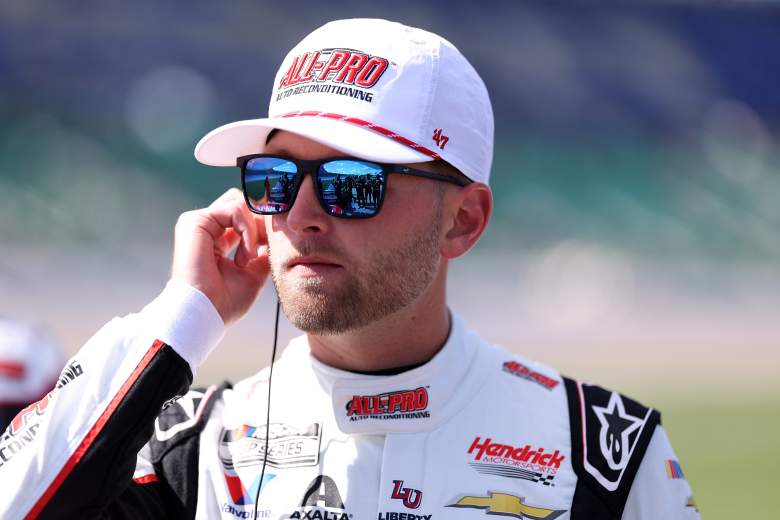
KANSAS CITY, KANSAS - APRIL 18: William Byron, driver of the #24 All-Pro Reconditioning Chevrolet, looks on during qualifying for the NASCAR Cup Series AdventHealth 400 at Kansas Speedway on April 18, 2026 in Kansas City, Kansas. (Photo by David Jensen/Getty Images)
Christopher Bell walked away from one of the hardest crashes of the NASCAR Next Gen era, but the discussion around the wreck has not slowed down. Ahead of this weekend’s NASCAR Cup Series race at Pocono Raceway, William Byron shared his view on what caused the violent Michigan crash that left Bell with a fractured left wrist.
The incident happened late in last Sunday’s FireKeepers Casino 400 at Michigan International Speedway. Bell was battling near the front on a restart when Chase Elliott got loose while racing beside him. Elliott had received a push from Byron before the contact occurred. The chain reaction sent Bell’s No. 20 Toyota spinning and crashing head-on into the Turn 4 wall at high speed.
The impact damaged the SAFER barrier, forcing NASCAR to stop the race with a red flag for repairs. Bell later confirmed he suffered a fractured left wrist but was cleared to race at Pocono while wearing a brace.
While Elliott accepted responsibility for the accident after the race, Byron said the characteristics of the NASCAR Next Gen car contributed to the severity of the incident.
“I don’t know how to answer that. I feel like I’ve had this conversation before,” Byron said. “You wouldn’t see a guy in the Gen 6 car overcorrecting like that. You wouldn’t see a crash that violent with the Gen 6 car. You’re seeing that crash because of the nature of the tire, the aero, and everything with these cars.”
Byron explained that the combination of aerodynamic effects and the current tire package can make the cars difficult to save once they become unstable. According to him, the crash developed differently than it likely would have in NASCAR’s previous generation of race cars.
The NASCAR Next Gen car was introduced in 2022 with the goal of lowering costs and creating closer competition through common parts across teams. The platform has produced tight racing, but some drivers have raised concerns about how sensitive the cars can be when racing in traffic.
Even while discussing the factors that may have led to the wreck, Byron praised the safety performance of the NASCAR Next Gen car.
“It’s a violent impact. Fortunately, the car is capable of taking that, and Christopher was able to get out, so that’s a good thing,” Byron said.
Byron also noted that the impact appeared more severe than crashes from the Gen 6 era.
“That impact, to me, is way larger than what we would have had in the past with a bigger sidewall and a different tire.”
He said both the positive and negative aspects of the situation should be considered when evaluating the wreck.
“You’ve got to think about it from both sides of the coin. The car took the impact, but I think that wreck was caused by the nature of this car.”
The Christopher Bell crash has added another chapter to the ongoing discussion about the NASCAR Next Gen car. While Elliott took responsibility for the contact that triggered the wreck, Byron believes the car’s aerodynamic and tire characteristics played a significant role in how quickly the situation escalated.
Bell is expected to compete this weekend at Pocono Raceway despite his wrist injury. Meanwhile, NASCAR continues to receive feedback from drivers and teams as discussions about the NASCAR Next Gen car remain active throughout the garage.
As the season moves deeper into the summer, the Christopher Bell crash is likely to remain part of the conversation surrounding the strengths and limitations of the NASCAR Next Gen car.
Dogli Wilberforce is a writer covering NASCAR, Formula 1, and the IndyCar Series for Heavy Sports. He has also written for Sportsnaut, FanSided, Total Apex Sports, and Last Word on Sports. Wilberforce focuses on the NASCAR Cup Series, breaking down news, driver stories, and key moments with a clear, fast, and engaging style. His work connects headlines to context, helping readers understand what matters most in the sport. More about Dogli Wilberforce
此内容由惯性聚合(RSS阅读器)自动聚合整理,仅供阅读参考。 原文来自 — 版权归原作者所有。