











Getty
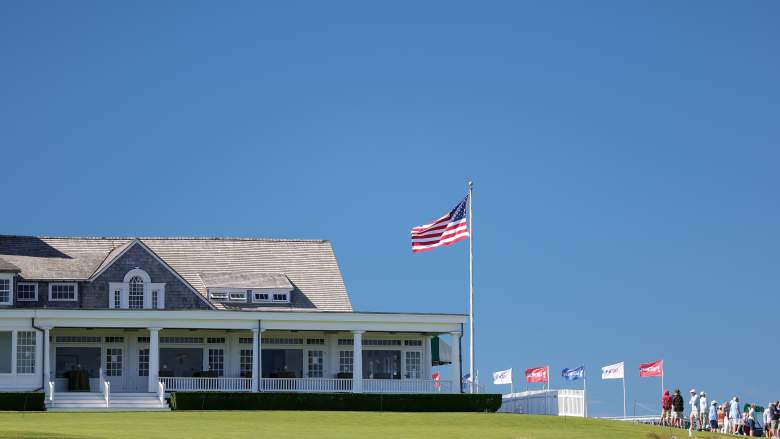
View of the clubhouse prior to the 126th U.S. OPEN at Shinnecock Hills Golf Club on June 16, 2026.
As golf celebrates another U.S. Open week, few venues embody the championship’s history quite like Shinnecock Hills Golf Club.
Set atop the windswept hills of eastern Long Island, Shinnecock is one of the most revered courses in the world and one of the most important sites in American golf history. The club helped shape the sport in the United States, hosted some of the game’s earliest national championships, and remains a cornerstone of the U.S. Open rotation.
With the U.S. Open scheduled for June 18-21, the occasion offers an opportunity to reflect on a venue whose story stretches far beyond fairways and scorecards.
Founded in 1891, Shinnecock Hills stands among the oldest and most influential golf clubs in the United States. It holds the distinction of being the nation’s oldest incorporated golf club and was one of the five founding clubs that helped establish the United States Golf Association.
Its clubhouse, completed in 1892 and designed by the renowned architectural firm McKim, Mead & White, remains one of the most recognizable structures in the sport. While modern restorations have preserved and updated the building over the decades, its character remains remarkably faithful to the vision that greeted golfers more than 130 years ago.
The club’s first course was a modest 12-hole layout designed by Willie Davis. By 1895, the course had expanded to 18 holes, reflecting golf’s rapidly growing popularity in America. Multiple redesigns followed over the next several decades before architect William Flynn created the routing that largely defines Shinnecock today.
Opened in 1931, Flynn’s masterpiece embraced the natural contours of the rolling hills, creating a layout often compared to the great links courses of Scotland and England.
More than nine decades later, Flynn’s design remains one of the most admired championship tests in the world.
The club hosted both the U.S. Open and U.S. Amateur in 1896, making it one of the earliest venues to welcome the nation’s biggest championships. It later staged the U.S. Women’s Amateur and numerous other significant USGA competitions before becoming a regular stop in the modern U.S. Open rotation.
The U.S. Open returned to Shinnecock in 1986 after a 90-year absence and has since been contested there in 1995, 2004, and 2018. Each edition produced memorable moments, from Corey Pavin’s famous 4-wood into the 72nd hole in 1995 to Brooks Koepka’s victory amid brutally difficult conditions in 2018.
The course’s reputation is built on its ability to challenge every aspect of a golfer’s game. Firm fairways, unpredictable winds, dramatic runoffs, and lightning-fast greens create a test that rewards creativity as much as power. When conditions become severe, Shinnecock can push even the world’s best players to their limits.
Members of the Shinnecock Nation have maintained a connection to the land for generations, and their role in the history of the golf course extends far beyond geography.
Tribal members helped build and maintain the property during its early years, and several generations worked as groundskeepers and superintendents responsible for preserving the course’s championship condition.
Among the most notable figures was the Smith family. George T. Smith worked on the grounds during the early decades of the 20th century, while his son Elmer Smith became one of the most respected superintendents in American golf.
Elmer’s reputation for turf management excellence helped establish Shinnecock’s standing among elite championship venues. His son Peter Smith later followed him into the role and oversaw preparations for major championships, including the successful 1986 and 1995 U.S. Opens.
According to the New York Times, “at previous U.S. Opens at Shinnecock, the tribe had received only about $100,000 of the millions earned by the tournament. This year, tribal leaders have negotiated a much more generous deal: upward of $800,000 from a variety of deals for tournament week.”
The relationship between the club, the USGA, and the Shinnecock Nation has not always been without tension. Land disputes, economic disagreements, and debates surrounding Indigenous representation have periodically surfaced, particularly during major championships. Those conversations remain an important part of the broader story surrounding the property.
“We’re very excited to work with the Nation in terms of delivering a successful 2026 U.S. Open,” Beth Major, a spokeswoman for the USGA, said. “They’re an important part of the local community, and we feel good about our relationship heading into this year’s championship.”
Alyssa Polczynski Alyssa Polczynski is a multimedia journalist covering Major League Baseball and golf for Heavy.com. She has experience as an editorial producer for MLB.com and contributed to the Society for American Baseball Research (SABR). More about Alyssa Polczynski
此内容由惯性聚合(RSS阅读器)自动聚合整理,仅供阅读参考。 原文来自 — 版权归原作者所有。