


It’s rare that a film artisan attains such a level of craft that they wind up becoming an artist themselves. It’s even rarer that you get to spend hours and hours sitting by that artist’s side, learning firsthand how he pulled off all that movie magic over the years.
In the case of legendary production designer Dean Tavoularis, who died Thursday at the age of 93, I had the privilege of doing just that: talking at length with Dean about his remarkable life and career, which began with his childhood as the son of Greek immigrants during the Great Depression; shifted through World War II and into the 1950s when he was a budding animator, and then an assistant art director, at Walt Disney (sometimes working with the chain-smoking Walt Disney himself); and reached its apex a decade or so later when he designed masterpieces like Bonnie and Clyde, The Godfather trilogy and Apocalypse Now.
Our talks culminated in a book that delves into those films, plus many others, in great detail, mixing Dean’s reflections with those of his most famous collaborators: Francis Ford Coppola, Warren Beatty, the cinematographer Vittorio Storaro and the costume designer Milena Canonero, all of whom held Dean in the highest esteem.
Rather than simply rehashing our discussions here, I thought I could offer up other reflections that aren’t necessarily in the book — things culled from talks that continued well after the book was published, until just a few weeks ago, actually.
I first saw Dean in 2020, after he had sold his gorgeous house in Hancock Park and moved permanently to Paris with his wife, the actress Aurore Clément, whom he had met on the set of Apocalypse Now. At the time, I pitched him the idea of doing a short interview for the French magazine So Film. A few weeks later, and after spending less than an hour talking with him for the article, I called my publisher David Frenkel and told him we had a new book project. He immediately agreed and we started the next week.
Our extended conversations took place in a ground-floor apartment, nestled away in the calm and residential 17th arrondissement, which Dean had converted into an artist’s studio after working on his final film, Roman Polanski’s Carnage — a movie that takes place entirely in a Brooklyn condo that Dean masterfully recreated on a soundstage outside of Paris.
To give you one idea of how obsessive he could be about detail, all the furnishings on the Carnage set, down to every single doorknob, light fixture and electrical outlet, were shipped over from the U.S. and installed by the art department. The appliances, which were shipped in as well, only worked on an American-compatible circuit, so Dean had the entire set rewired to accommodate that. This was all because of one scene in which the Jodie Foster character might or might not use a hairdryer in the bathroom.
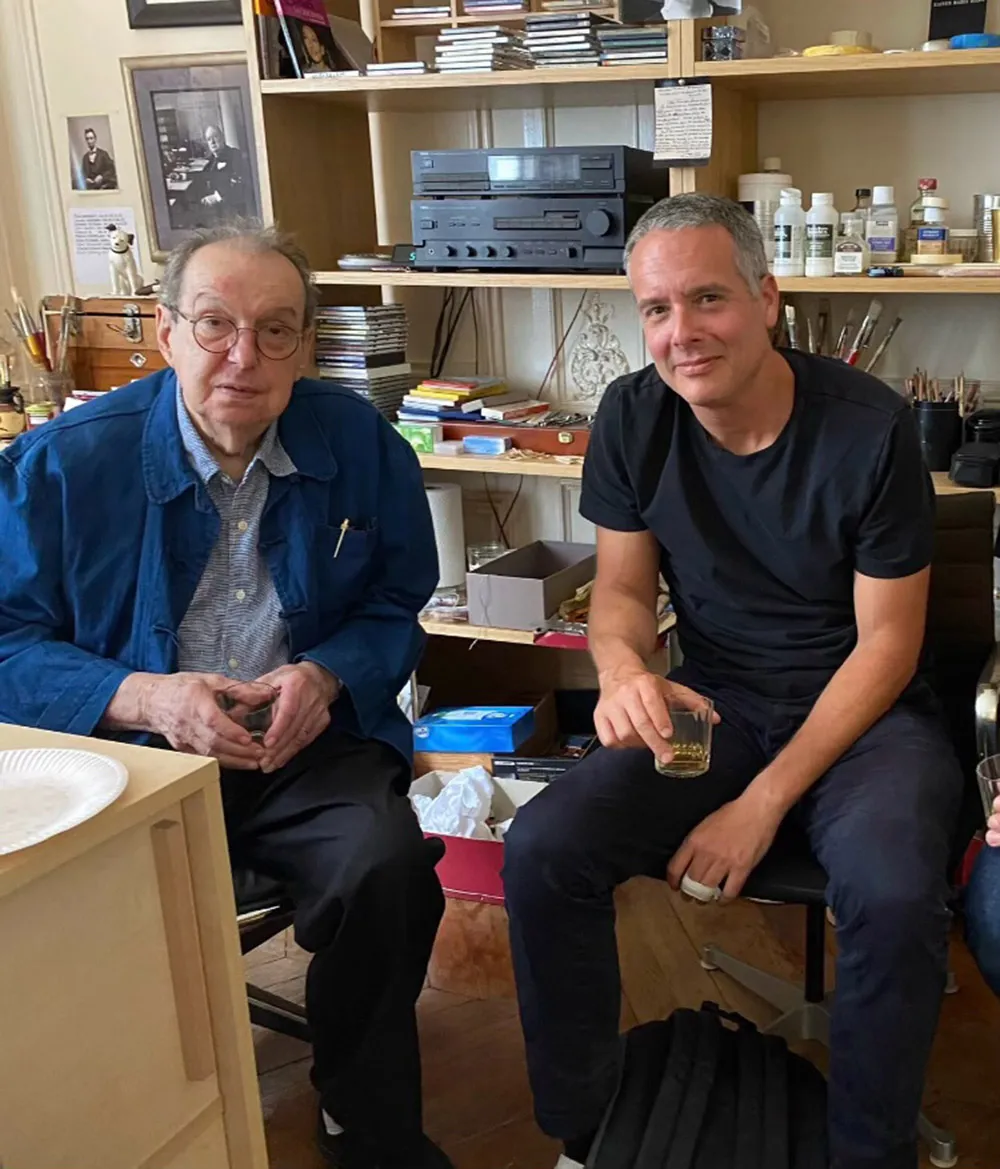
Dean told me tidbits like this as we sat together for months in his studio, surrounded by tubes of paint, jars of turpentine, brushes, canvases, all kinds of masking tape that he used for his collages and, typically, a bottle of scotch and a bucket of ice. “I’m living the dream I had when I was in my teens: painting my days away in a studio in Paris,” Dean said between sips of whiskey. He was already in his late 80s and still going strong.
When he answered questions about his work, he thought carefully about what he was saying; every word seemed to count. He usually had a single strong idea in mind and then carried it through till the end. This, I learned, was also the way Dean approached his craft.
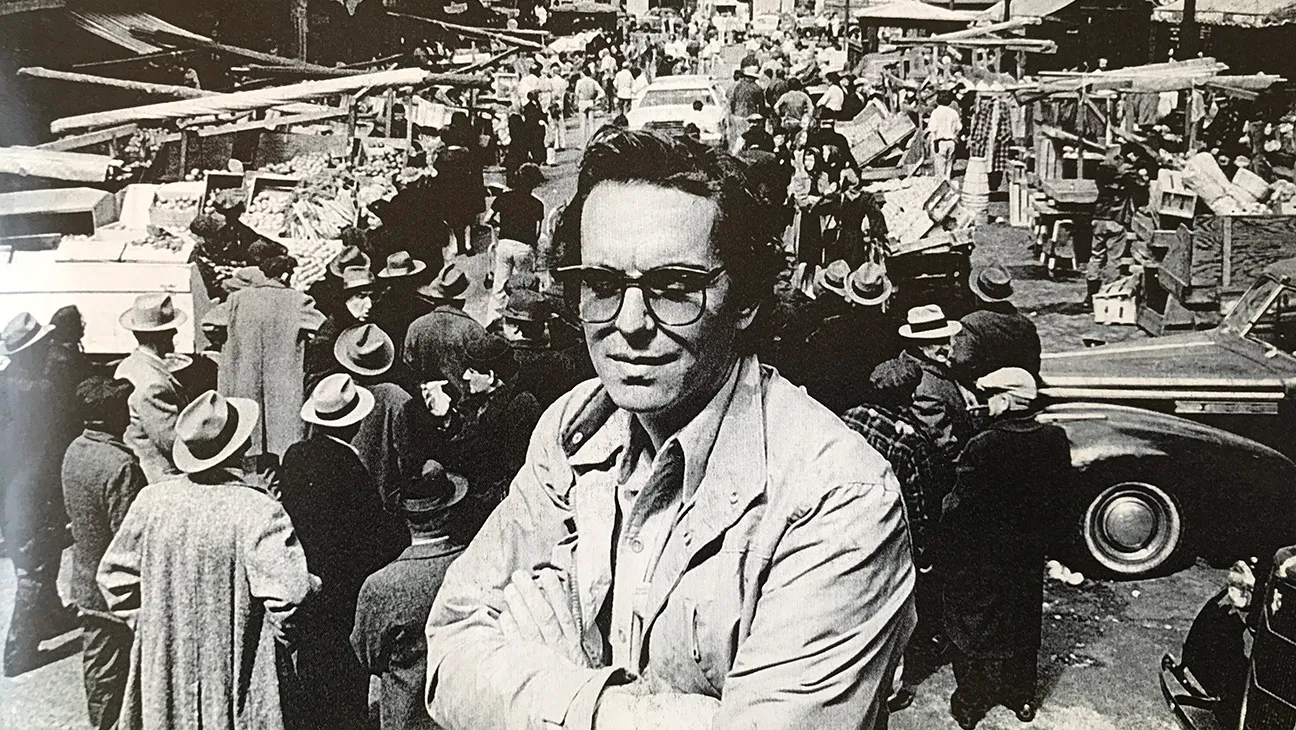
It’s what allowed him to hold fast during the insane two-year production of Apocalypse Now, when, among many other crazy things, colossal sets that took months to build were destroyed by one of the biggest typhoons in the history of the Philippines and had to be built all over again. It’s what allowed him to resist Paramount’s insistence on shooting the first Godfather movie on their backlot, or in St. Louis of all places, rather than on the streets of New York as Dean and Coppola wanted — and finally achieved. It’s what allowed him to design the dizzying Las Vegas strip of One From the Heart, which took up every soundstage in the newly christened, and soon to fall, Zoetrope Studios.
“The job is roughly 20% creativity and 80% logistics,” he told me, insisting on the fact that an idea was only as good as its execution, which was the much harder part. And yet, it’s Dean’s ideas that would define his work, making him — along with the great Richard Sylbert (Chinatown), who preceded him by a good decade — a conceptual artist whose visual creations, both big and small, stunning and sometimes unseeable, marked a major shift in American movies from the studios to the streets, from illusion to realism, from the old Hollywood to the new.
“I remember when I was starting out as an assistant, I asked an art director why the décor on movie sets was so beefed up, why everything looked so big and fake,” Dean said, referring to the classic studio productions he cut his teeth on in the ’50s. “Let’s take mouldings: In real life they’re usually a certain size, but on the movies I worked on as an assistant they were way too big…When I asked the art director why, he said they would be too small and the camera wouldn’t pick them up — which is 100% bullshit. It’s just a little detail, but it explains the whole mentality in Hollywood back then.”
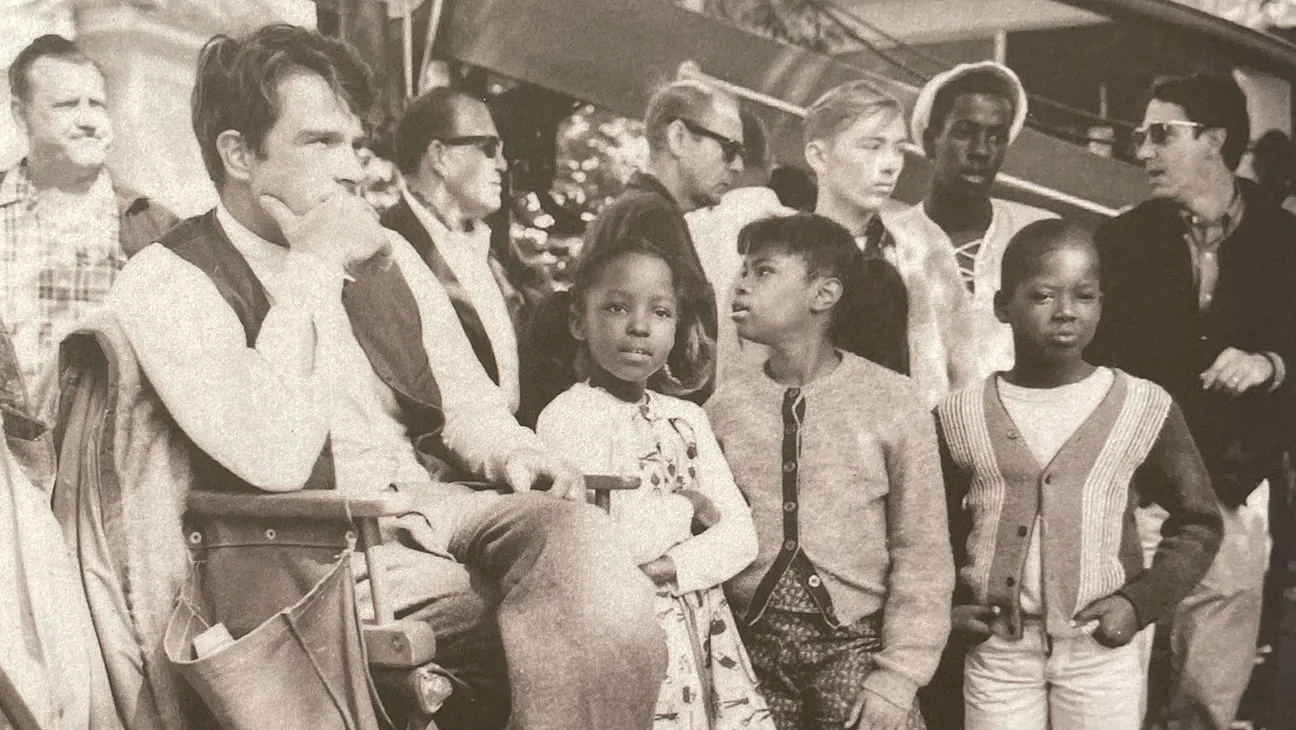
When Dean was hired by Beatty and Arthur Penn for Bonnie and Clyde, which was his first job as production designer (still credited as “art director” back then), he attempted to undo all the bullshit he’d seen before. Much to studio head Jack Warner’s ire, the film wasn’t shot on the Warner Bros. backlot in Burbank but on location in the same Texas towns that Bonnie Parker and Clyde Barrow robbed in the 1930s — towns that Dean visited and photographed himself, because back then the art director was usually the location scout as well. When interiors were used, they were designed to look real: “I made the ceilings deliberately low because I wanted to give the feeling that the characters were more and more trapped,” he told me. “They were staying in these crummy hotels and everything was small and claustrophobic.”
I recorded these and other reflections while Dean poured out yet another glass of scotch for us, which he’d serve in his studio along with a bag of Fritos that he had folks bring over from the U.S. whenever they visited. (Some habits die hard.) “Dean,” I’d complain. “It’s only three in the afternoon. If I drink another whiskey, I won’t be able to work anymore.” He looked at me with his sly grin, and, after a considerable pause, said: “How do you think we made all these movies we’re talking about?”
I learned much more from Dean beyond how to try (and mostly fail) to hold my liquor. “Everything that people see in a movie, as opposed to hear, comes from a collaboration with the production designer,” Coppola told me when I interviewed him. Gradually, I began to understand how much Dean not only turned the visions of auteurs like Coppola (13 features together!) into reality, but how he brought his own vision to each project, usually through months of intensive research, an impeccable sense of detail and a willingness to experiment — to create “brilliant visual ideas of illusion,” per Coppola.
The most memorable, and certainly the most mesmerizing, of those experiments was the series of slow-motion explosions that close out Michelangelo Antonioni’s Zabriskie Point, which was only Dean’s second credit as production designer (he also designed Penn’s Little Big Man that year). More than any other sequence, the end of Zabriskie Point illustrated the countercultural yearnings and cinematic freedoms of New Hollywood in its most radical form. Not only was a life-size model of a house built and blown up in the Arizona desert, but so were lots of other things, from televisions to tomatoes to chickens.
I’ll let Dean talk about it: “The idea was that in the explosions there would be details of American consumerism…They were done when Michelangelo was already back in Rome, and I was more or less left to handle them on my own. We did them all on the backlot of MGM, where we dug a big hole and put these huge sewer pipes into the ground, and then the effects people placed explosives inside, along with compressed air and gas jets. It was a Hollywood explosion but most of it was real…Every morning on the way to MGM, I’d stop by Ralph’s supermarket to buy raw chickens and other food products, and then stuff them into the pipes. We spent about a week on that backlot blowing things up all day long.”
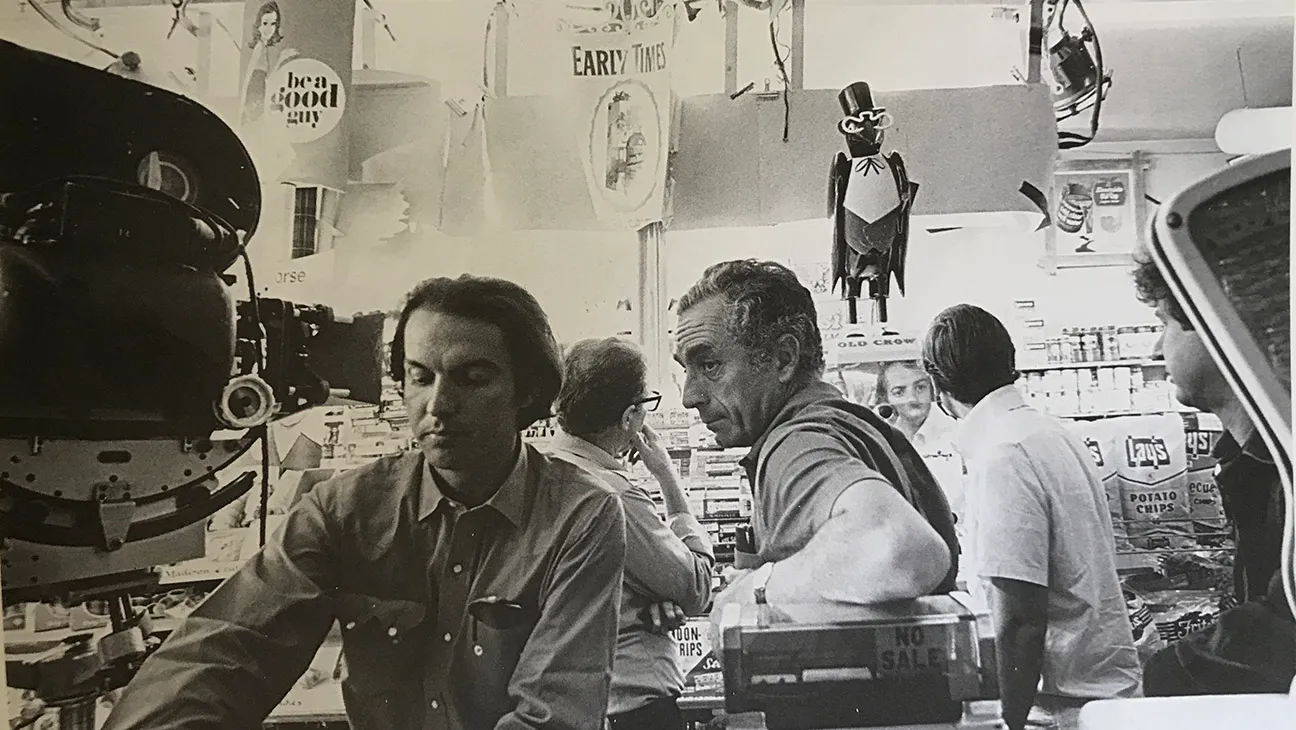
The Zabriskie Point sequence sits alongside other visual monuments Dean created during the 1970s — from Don Corleone’s office in The Godfather to Colonel Kurtz’s temple in Apocalypse Now — as lasting testaments to his genius. But perhaps the greatest thing I learned during my talks with Dean is how the role of the production designer also extends, in the best cases, to things we never wind up seeing at all.
When he began working on Coppola’s classic paranoid thriller The Conversation, Dean decided to subscribe the film’s main character, Harry Caul, to dozens of periodicals in the months before the shoot started. “I placed a few of them into desk drawers once we had the set put together,” he told me. “The first time Gene Hackman came on set for the shoot, he opened some drawers and saw these spy magazines with his character’s name on the mailing labels…Okay, the camera didn’t see that, and there were no close-ups of the interiors of the drawers. But maybe it did something to him as an actor.”
For the Italian grocery store in William Friedkin’s The Brink’s Job — an underrated working-class crime flick worth another look — Dean had his art department crush garlic and oregano onto the floor so that the place smelled less like a freshly painted movie set and more like an actual grocery store. The attention to unseen details stretched to the costumes as well (Dean was both production and costume designer on Apocalypse Now): “I never understood why the wardrobe department would give an actor a jacket to wear with nothing in the pockets, and I would say to them: ‘This character is a nervous wreck, so why don’t you put a roll of Tums in there? Or give him five or six heavy keys to carry around?'”
It may seem like a contradiction, but of the many things Dean said about art direction in movies, these ingenious concepts, which most people never noticed, stuck with me the most. They reminded me that artists can impact films in myriad ways through their ideas and working methods — or by simply infiltrating them through the sheer force of their personalities, whether they’re directors or actors or master craftspeople like Dean. The best movies work like that on the viewer as well, infiltrating us while we watch them and remaining with us long afterward, blending into our memories as if we were part of them.
I remember as much about what Dean told me as I do about the way he told it to me, sitting in his Paris studio on all those sweltering afternoons, sharp and extremely funny, wise and generous, the ice melting into his whiskey glass before he poured us yet another drink. What started off as a brief interview eventually blossomed into a relationship that continued for several years, lasting all the way up until we had our last round of scotch and Fritos only a few weeks ago.
It’s rare indeed that a film artisan becomes an artist, leaving their mark on some of the greatest movies ever. It’s even rarer that you get to spend so much time learning by their side. Rarest of all is when you can also call that person your friend.
此内容由惯性聚合(RSS阅读器)自动聚合整理,仅供阅读参考。 原文来自 — 版权归原作者所有。