





In 2021, I began following a group of conservative climate activists for a documentary. The film, titled The [Conserv]atives, grew out of months I spent in Louisiana on a Smithsonian project about coastal erosion, where I watched conservatives engage seriously on environmental issues, on their own terms and in their own language. I saw the ways they had contributed to conservation progress, mostly from inside the Republican tent.
I am ashamed to say I was surprised. Any historian can tell you that conservatives have a long legacy of environmental engagement. Yet that commitment has been lost in our national discourse, drowned out by years of media attention trained on Republican legislators who have largely abandoned those historical values in service of a deregulatory corporatism. What I was experiencing, I would later learn, is what researchers call the “perception gap,” a roughly 30 percentage point distance between what Americans actually believe about climate policy and what they imagine their fellow citizens believe. With this administration rolling back dozens of environmental protections, understanding how our media landscape contributes to that perception gap has never been more urgent. Focusing on subjects and crafting storylines from in-group voices living and breathing in-group values may be our best remaining tool for building a more durable coalition of environmentally concerned voters.
When I began casting for this film, I interviewed more than a dozen self-described conservative leaders engaging on climate. They approached environmental action through market competition, personal responsibility, stewardship and a pro-life ethic that extends to how extreme heat and environmental degradation threaten the health of the unborn, the elderly and the broader community. I learned that their connection to conservation is not in spite of their conservatism but rather an expression of it. These are the cultural representatives who can reach audiences that progressive environmental storytelling never does.
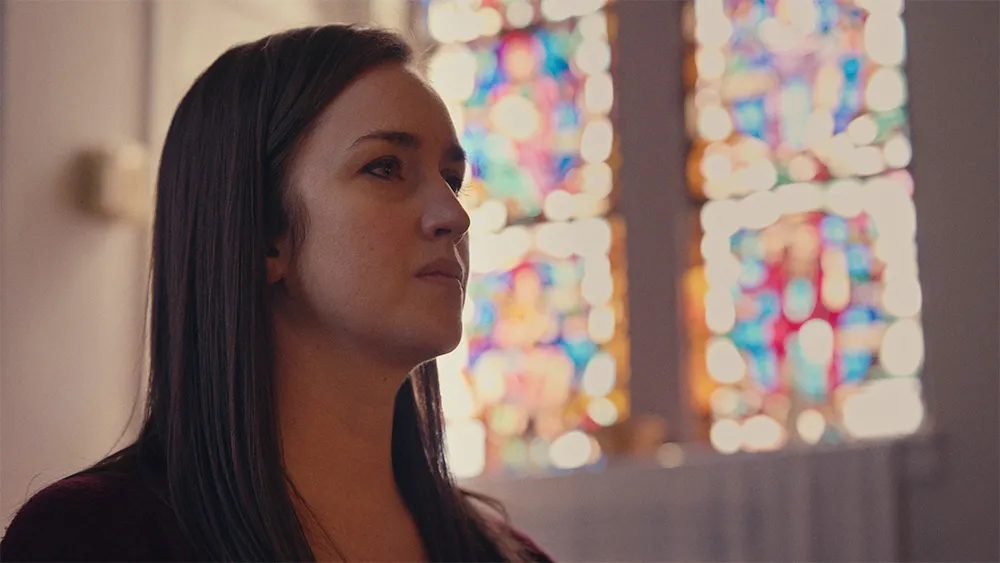
So I embarked on what would become a five-year journey to document them. I followed them from Iowa to Wisconsin, Tennessee to Ohio, South Dakota to Florida. I met dozens more like them, but more importantly I watched them work in the spaces where polarization had done its damage, reaching conservatives who hadn’t abandoned their connection to the land but who had long since stopped identifying with a movement that had never spoken their language. Between the fieldwork and the research that surrounds it, a few clear lessons emerged that I think every environmental storyteller should sit with.
Conservative audiences extend their trust to people with firsthand knowledge and physical skills, rooted in a specific, nameable place. The most effective messengers are not grassroots activists or rising politicians but farmers, wildland firefighters, fishermen, cowboys, hunters, game wardens and foresters. They care deeply about family and legacy. Speaking broadly about what is good for “society” or the “planet” is unconvincing, but talking about leaving a single plot of land in better condition for their children is not. These are people whose relationship to the land is not ideological but practical, daily and inherited. For storytellers, they are among the most compelling subjects in America, and as it turns out, they are already on television.
From Yellowstone to Joe Pickett, Ransom Canyon to Untamed, the rural, land-connected American viewer has already been found. For environmentalists, these worlds are full of people whose livelihoods depend on healthy land, clean water and thriving ecosystems. What has been missing is the deliberate, skilled hand of storytellers willing to draw those threads out and make them visible to an audience that is already watching and already primed to care. Documentary filmmakers in particular have been slow to reckon with this. Where scripted television followed the audience by instinct, documentary filmmaking claims to lead by conviction, and yet we have done more than anyone to widen the very perception gap we claim to want to close. We have the tools, the access and the tradition of bearing honest witness. What we have lacked is the willingness to point the camera in a different direction.
Republican legislators and corporate interests bear much of the responsibility for misguiding the public on climate. But the failure of media and storytellers to distinguish between people and politics has set the movement back in ways that are harder to see and slower to correct. When story after story presents conservation and climate change as a progressive cause, it doesn’t just preach to the converted. It actively reinforces the fiction that conservatives don’t care, making the perception gap wider, the partisan divide harder to cross, and durable climate action more remote. Our storytelling has contributed to the very polarization that is the root of legislative failure, and yet the path forward is not complicated. Authentic cross-partisan storytelling is not a compromise. It is, at this point, the only approach we haven’t tried.
This story appears in The Hollywood Reporter’s 2026 Sustainability Issue. Click here to read more.
此内容由惯性聚合(RSS阅读器)自动聚合整理,仅供阅读参考。 原文来自 — 版权归原作者所有。